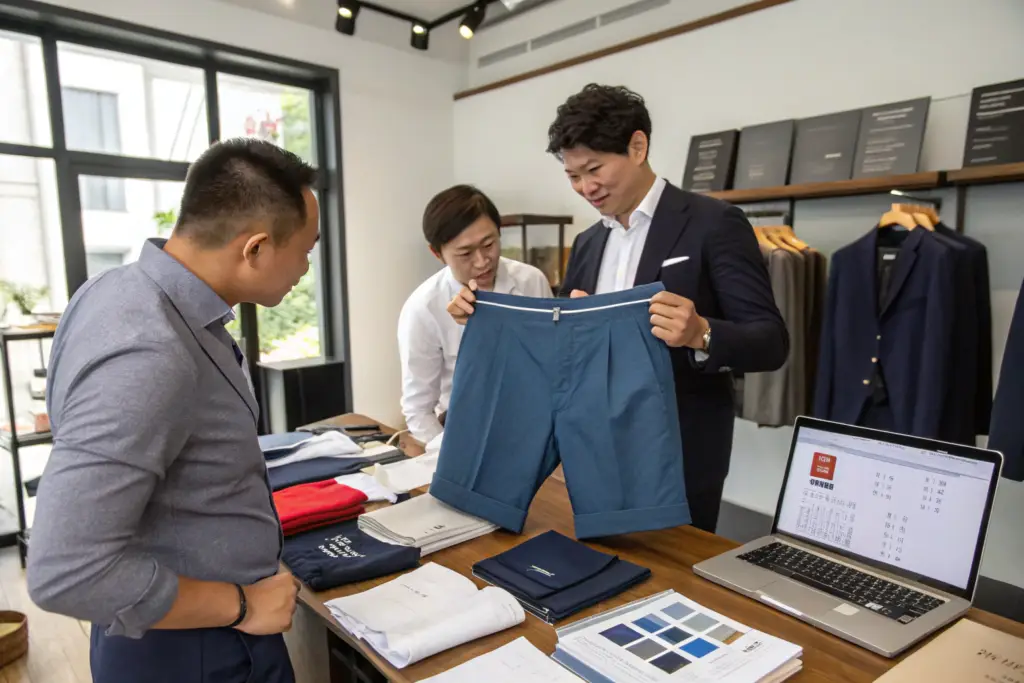
You have sourced shorts from other factories. You have dealt with late deliveries, inconsistent sizing, fabric substitutions, and sales reps who disappear after the deposit is paid. You have learned that a low FOB price means nothing if the product arrives unsellable or three weeks late. You are now searching for something different. Not just a supplier, but a partner. A factory that understands the B2B relationship. One that provides consistency, transparency, and proactive communication. One that treats your brand's quality standards as seriously as you do. You have heard about Shanghai Fumao Clothing. You wonder what actually makes our classical shorts line different from the dozens of other factories offering "premium quality" and "best price." You want the specifics. The operational truths, not the marketing slogans.
Fumao Clothing's classical shorts line stands apart in B2B through five integrated differentiators: a vertically managed supply chain with in-stock greige fabric inventory that cuts lead times and ensures fabric consistency, a pattern library of refined, market-proven classical blocks that eliminate fit risk, a rigorous multi-gate quality control system verified by third-party certifications, a transparent and proactive client communication model with dedicated account management, and flexible customization services from fabric to trim to branding, all supported by low minimum order quantities for emerging brands. We do not just sew shorts. We engineer a reliable, repeatable, and profitable product pipeline for our brand partners. Our B2B clients stay with us for years, not seasons, because we solve the core problems that destroy brand trust: inconsistent quality, unpredictable delivery, and unresponsive service.
I am the owner of Shanghai Fumao. I built this factory to be different. I started with a frustration, seeing how many brands were burned by transactional, low-accountability suppliers. I decided to build a factory that operates on long-term partnership principles. This article is a direct explanation of what makes our classical shorts line different. It is written for professional buyers who value substance over sales language. It covers our supply chain, our quality systems, our pattern development, our communication model, and our customization capabilities.
How Does Our Vertically Managed Supply Chain Ensure Fabric Consistency and Speed?
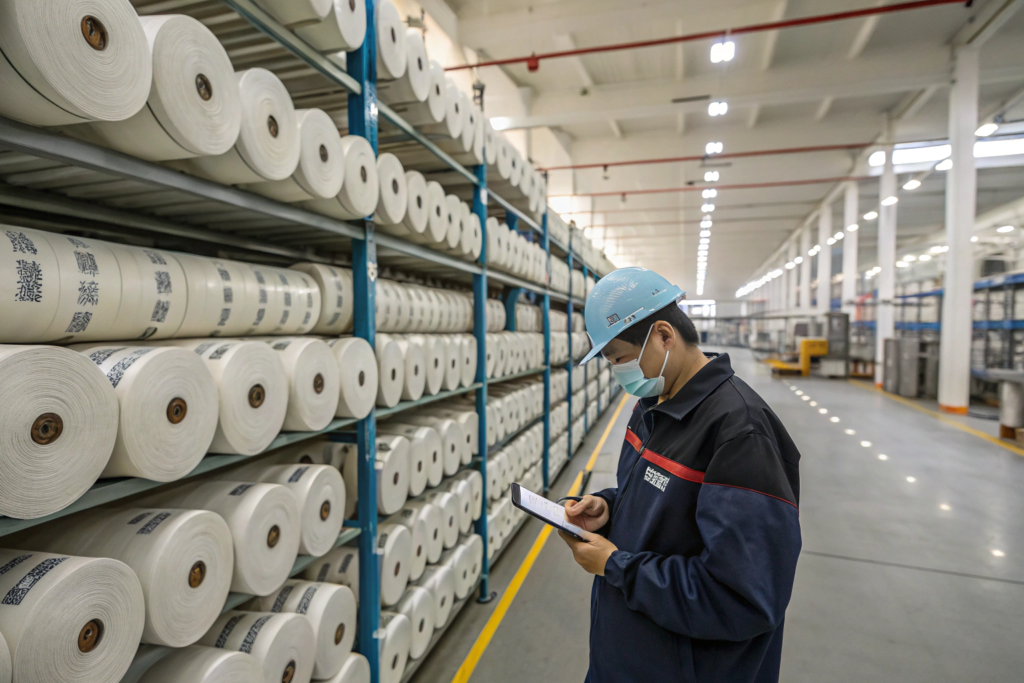
The most common cause of production delays and quality inconsistency in the apparel industry is the fabric supply chain. Most factories buy fabric on the open market, order by order, chasing the lowest price. This leads to inconsistent fabric weight, varying shrinkage rates, and unpredictable lead times. We do things differently. We have built long-term relationships with specific, audited fabric mills. We stock greige inventory of our core classical short fabrics: 280 GSM cotton twill, 240 GSM linen-cotton blend, 260 GSM cotton ripstop. This inventory allows us to cut fabric lead times from 20-30 days to 3-5 days for dyeing. It ensures that the fabric on order number fifty is the same as the fabric on order number one.
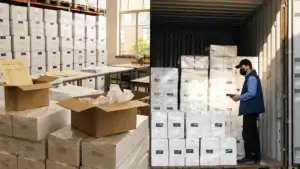
This vertical control extends to our incoming inspection. Every fabric roll that enters our warehouse is inspected on a light table using the 4-point system. It is weighed with a GSM cutter. It is tested for shrinkage. It is checked for color consistency under a lightbox. A roll that fails any test is quarantined and returned. Our brand partners receive a fabric inspection report with their order. The fabric inspection 4-point system is our standard. Our vertical supply chain means our clients do not gamble on fabric quality. They specify it. We deliver it, consistently.
Our fabric inventory is not just a stockpile. It is a strategic asset for our clients. It enables rapid reorders and protects against mill delays. Let's explain the greige inventory model and our mill relationships.
What Is Our Greige Fabric Inventory and How Does It Accelerate Your Reorders?
Greige fabric is fabric in its raw, unfinished state. It has been woven but not dyed, bleached, or finished. We stock greige rolls of our core fabrics in our warehouse. When a client places an order, we pull the greige fabric, dye it to the exact Pantone color specified, and move it to cutting. The dyeing process takes 5 to 7 days. If we had to weave new fabric from scratch, it would take 20 to 30 days. The greige inventory cuts three weeks off the production lead time.
This is a game-changer for our clients. A brand that sells through a color in early June can reorder and receive new stock by early July, capturing the peak summer selling weeks. Without greige inventory, that reorder would arrive in August, too late for the season. The greige inventory and quick response manufacturing model is a core part of our B2B value proposition. We invest in the inventory so our clients can be agile.
Why Do Our Long-Term Mill Relationships Matter for Your Brand's Quality?
We do not shop for the cheapest fabric on the open market for each order. We have long-term, exclusive relationships with specific mills. I personally visit our key mills twice a year. I audit their weaving floors, their dye houses, and their quality labs. I know the mill owners by name. They know our quality standards. When I order 5,000 meters of 280 GSM twill, I know exactly which cotton bales are being used, which looms are weaving it, and what finishing processes will be applied. The mill reserves capacity for us. We get priority during busy seasons. The fabric is consistent, roll after roll, order after order. Our clients never experience the "fabric lottery" where one shipment is perfect and the next is thinner, rougher, or a different shade. The strategic fabric mill partnerships benefit is consistency. Consistency builds brand trust.
What Quality Control Systems Guarantee Consistent Bulk Production?
A beautiful sample proves nothing. The test of a manufacturer is whether the 500th pair of shorts in the bulk order is identical to the approved pre-production sample. This requires a quality control system that operates at every stage of production, not just a final inspection. Our QC system is the backbone of our factory. It is documented, audited, and continuously improved. It is why our brand partners report defect rates consistently below 1%.
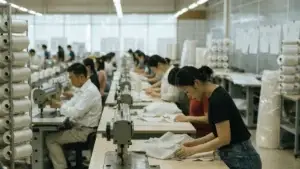
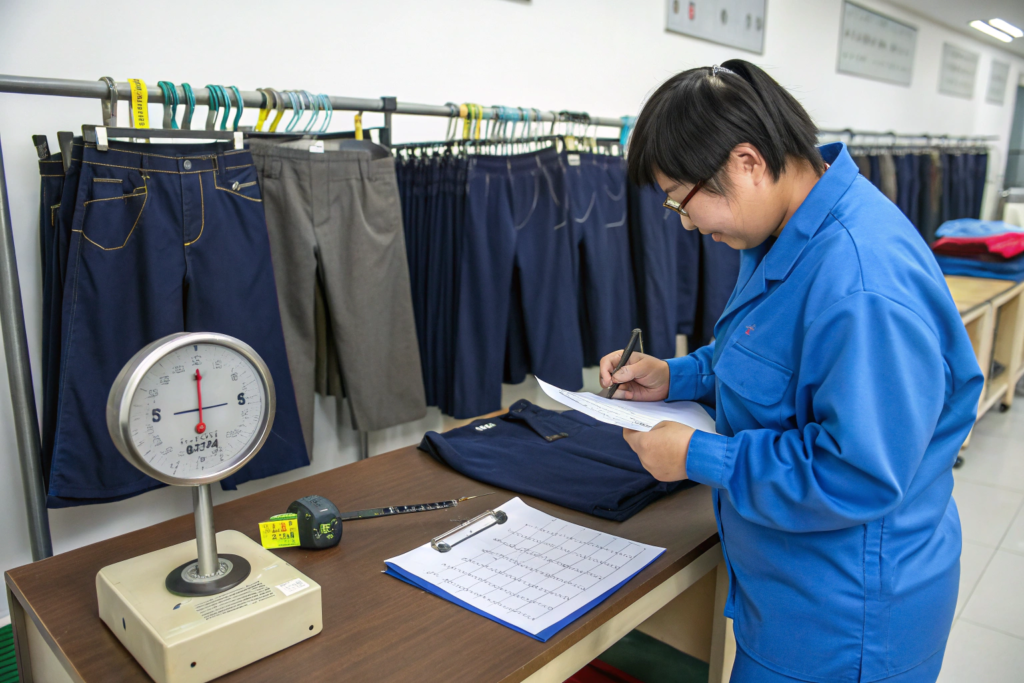
Our system has five gates. Incoming fabric inspection, where every roll is checked before cutting. Cut panel inspection, where cut pieces are checked against pattern markers. Inline sewing inspection, where QC staff walk the lines every two hours, pulling garments for measurement and visual checks. Finishing inspection, where every piece is checked for loose threads, stains, and pressing quality. Final AQL random sampling inspection, where a statistically valid sample is pulled from packed cartons and inspected to the AQL 2.5 standard. A gate is only passed if the documentation is signed. The ISO 9001 quality management standard is the framework we operate within. Our certification is current and verified by SGS. We share our QC manual and sample inspection reports with any client who asks.
Our QC system is verified by third-party certifications. We do not just claim quality. We prove it. The certifications and the inline inspection process are the two pillars of our quality assurance.
What Third-Party Certifications Back Up Our Quality and Ethical Claims?
We hold an ISO 9001:2015 certificate for quality management, issued by SGS. This certificate is renewed annually after a rigorous external audit. We hold a BSCI social compliance audit report with a passing grade. This audit verifies fair wages, safe working conditions, reasonable hours, and no forced or child labor. We hold an Oeko-Tex Standard 100 certificate for our core fabrics, certifying they are free from harmful substances. For clients ordering organic cotton or recycled content, we provide GOTS and GRS transaction certificates. These are not wall decorations. They are independently verified documents that our clients use to satisfy their own retail partners and to make credible marketing claims. The BSCI audit standards and Oeko-Tex certification are recognized globally.
How Does Our Inline Inspection Catch Defects Before They Multiply?
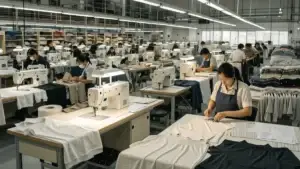
Inline inspection means quality is checked during production, not after. Our QC team walks the sewing lines every two hours. They randomly pull garments from the line. They check the stitch quality, the seam alignment, the zipper setting, the pocket placement. They measure critical points against the tech pack. If a defect is found, they trace it back to the specific workstation and operator. The defect is corrected immediately. The operator receives coaching. The problem does not repeat across the rest of the batch. This is fundamentally different from a final inspection, where the entire order is already made and defects can only be found, not prevented. The inline quality control in garment manufacturing prevents the multiplication of errors. It is the reason our bulk consistency is so high.
How Does Our Classical Pattern Library Reduce Development Time and Fit Risk?
Fit is the number one reason customers return online clothing purchases. For a brand, an inconsistent fit destroys trust and erodes margin through returns. Many factories ask the brand to provide the pattern or the full measurements. We are different. We have invested years in developing and refining a library of proven classical short patterns. These blocks have been tested on real bodies, adjusted based on wearer feedback, and optimized for specific fabric types. A brand can select a block from our library and know the fit is already dialed in. The development time is cut from months to weeks.
Our pattern library includes flat-front chino blocks, tailored pleated blocks, relaxed elastic-waist blocks, high-waisted women's blocks, and unisex drawstring blocks. Each block is graded across a full size range. The grading rules have been refined to ensure consistent proportion across sizes. We maintain a digital fit mannequin database for our key markets, US, UK, and EU, so the fit is targeted to the right body shapes. The garment pattern development and fit standardization guide explains the value of proven blocks.
Our pattern library is not a restriction. It is a launchpad. Brands can customize from a proven base, saving time and eliminating fit risk. Let's explain how this works and what options are available.
Can We Customize from Our Base Patterns to Create Your Unique Short?
Absolutely. Our base patterns are starting points, not limitations. A brand can select our classic flat-front chino block. Then they customize the pocket style, the hem finish, the waistband construction, the inseam length, and the trim details. The core fit is proven. The customizations make it unique to the brand. This approach reduces sampling rounds from 4-5 to 2-3. It gets the product to market faster. It eliminates the anxiety of wondering if the first sample will fit.
We have helped brands create hundreds of unique shorts from our base blocks. A brand changed the standard back welt pocket to an asymmetrical patch pocket. Another brand shortened the inseam to 5 inches and widened the leg opening for a modern silhouette. Another brand added a hidden elastic back waistband to the flat-front block. The fit was reliable. The design was theirs. The customizing from base patterns approach is how we balance speed and uniqueness.
What Fit Standards Do Our Blocks Target for the US, UK, and EU Markets?
Our US blocks target a more generous fit through the seat and thigh, reflecting the average American body type. The rise is slightly longer. The leg opening is slightly wider. Our UK blocks target a trimmer, more tailored fit, with a higher armhole equivalent in the seat and a closer leg line. Our EU blocks target a fit between the two, with a focus on a clean, elongated silhouette. We grade our patterns using market-specific grade rules. A size medium in our US block is not the same as a size medium in our EU block. The measurements reflect the actual body dimensions of the target population. The international sizing and fit standards are embedded in our pattern library. We ask our clients which market they serve, and we use the corresponding block.
What Communication and Partnership Model Defines Our B2B Relationships?
The number one complaint I hear from brands about their previous suppliers is poor communication. Emails go unanswered for days. Questions are dodged. Problems are hidden until they become disasters. The brand feels anxious, ignored, and powerless. Our communication model is designed to be the opposite. We believe proactive, structured, transparent communication is as important as the product itself. A brand that knows exactly what is happening with its order is a brand that trusts its factory. Trust is the foundation of a long-term B2B partnership.
Every client of Shanghai Fumao is assigned a dedicated English-speaking account manager. This person is the single point of contact for everything. They send a structured weekly update every Friday, with production status, milestone progress, and photos. They answer questions within 24 hours, usually within a few hours during business hours. They proactively flag any potential issues, with proposed solutions. The client never chases for information. The information is pushed to them. The supplier communication best practices guide describes this proactive model. It is how we build trust.
Our partnership model includes specific services that reduce the client's workload and provide peace of mind. The weekly update and the DDP shipping service are two key examples.

What Does a Dedicated Account Manager and Weekly Update Look Like?
Every client has a named account manager. This is a real person they speak to on video calls, who knows their brand, their product specifications, their color preferences, and their delivery deadlines. The weekly update email is structured and consistent. It references the order number and the style name. It states the current production stage against the milestone schedule. "Fabric: Dyeing complete, passed inspection. Cutting: Started Monday, 60% complete. Estimated finish Wednesday. Sewing: Scheduled to start Thursday." The email includes 3 to 5 photos. The cut fabric on the cutting table. The shorts being sewn on the line. The QC inspector checking measurements. The photos are timestamped. They are proof of progress. The account manager is available for a call if the client wants to discuss anything. This is not a premium service for large clients. It is standard for every client, regardless of order size.
How Does Our DDP Shipping Service Simplify the Import Process for You?
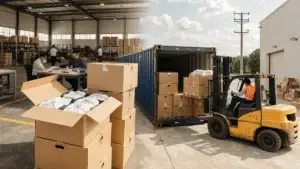
We offer DDP, Delivered Duty Paid, shipping to the United States. We handle everything from our factory floor to the client's warehouse door. Ocean freight, US customs clearance, duty payment, and final trucking. The client pays one all-inclusive price per unit. They receive the goods at their door. They do not need a customs broker. They do not file ISF forms. They do not pay surprise port fees or customs exam charges. The landed cost is predictable. The process is simple. This service is managed by our in-house logistics team and our long-term freight forwarder partner. The DDP shipping explained guide provides the details. We remove the logistics headache so our clients can focus on marketing and sales.
Conclusion
What makes Fumao Clothing's classical shorts line different in B2B is not a single feature. It is an integrated system designed to solve the core problems that apparel brands face when sourcing from overseas. Fabric inconsistency? Solved by our vertically managed supply chain, long-term mill relationships, and rigorous incoming fabric inspection. Fit risk? Solved by our library of proven, market-specific classical pattern blocks. Quality inconsistency in bulk? Solved by our five-gate QC system and third-party certifications. Communication anxiety? Solved by our dedicated account manager model and proactive weekly updates. Logistics complexity? Solved by our DDP shipping service. Customization needs? Solved by our flexible minimums and base pattern customization process.
This system is the product of years of investment and a genuine commitment to being a partner, not just a vendor. Our client retention rate is over 85% year over year. Our brands grow with us. They start with a test order of 300 pieces and scale to 3,000 pieces and beyond. They trust us because the system delivers, order after order.
If you are a brand owner or a distributor looking for a classical shorts manufacturing partner that operates differently, I invite you to experience the Fumao difference. Contact our Business Director, Elaine, at elaine@fumaoclothing.com. She will schedule a video walkthrough of our factory, share our client references, and prepare a customized proposal for your classical shorts program. Let us show you what a true B2B partnership feels like.