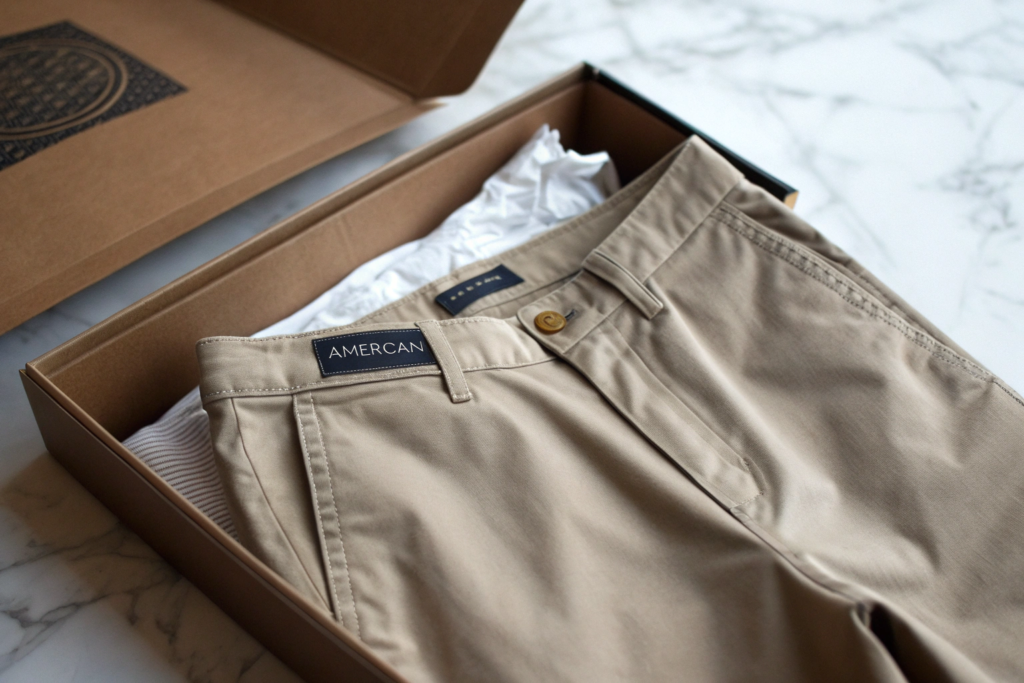
You have found a factory in China that makes an excellent classic short. The fabric is a beautiful 280 GSM cotton twill. The stitching is clean. The fit is perfect. The price allows you a healthy margin. You know the product is as good as anything sold by the premium American brands at triple the retail price. But you also know the market reality. The "Made in China" label carries a perception challenge with a segment of the premium US consumer. You worry that your quality product will be undervalued, dismissed as cheap, or lumped in with fast-fashion imports. You need a strategy. Not to hide the product's origin, but to position it so that its quality, its story, and its value are what the customer sees first. You need to rebrand Chinese-made from a liability into an asset.
Rebranding Chinese-made classic shorts for a premium US audience requires a multi-layered strategy that shifts the narrative from country of origin to quality of construction, material provenance, and brand values. The physical product must be elevated with premium trims, custom branding, and luxurious packaging. The marketing must tell a specific, authentic story about the fabric mill, the craftsmanship, and the ethical production. The price must reflect the premium positioning and be supported by the product details and the brand experience. "Made in China" is not a fixed perception. It is a narrative that can be reshaped by the quality of the product and the sophistication of the brand story. Many premium global brands manufacture in China. The difference is how they frame it.
At Shanghai Fumao, we manufacture classic shorts for brands that sell at premium price points in the US market. I have seen how these brands position their products. They do not hide the manufacturing origin. They elevate the manufacturing story. They talk about the skilled workers, the generations-old fabric mill, the ethical certifications. They make the customer feel good about where the product came from. This article is a practical guide to rebranding a Chinese-made classic short for a premium US audience. It covers product elevation, brand storytelling, marketing language, and pricing strategy.
How Do You Elevate the Physical Product to Signal Premium Quality?
The customer's first impression is physical, not intellectual. Before she reads the brand story, she touches the product. She feels the fabric. She sees the button. She reads the hang tag. These physical touchpoints must scream quality. A generic plastic button, a scratchy polyester label, and a thin paper hang tag undermine a premium price. A custom-engraved natural button, a soft woven label, and a thick, textured hang tag support it. The physical product must be elevated to match the premium positioning.
I work with brand owners to select trims and packaging that align with their target retail price. A brand selling at $88 can use a high-quality resin button and a good paper hang tag. A brand selling at $148 should use a natural Corozo nut button, a leather hang tag string, and a custom-printed tissue wrap. The cost difference between basic trims and premium trims is often less than $1.50 per unit. The perceived value difference is $30 to $50. The premium garment trim and packaging guide explains the options and the cost-value equation. Premium trims are the most cost-effective way to elevate a product.
The elevation starts with the invisible details. The inside of the garment should be as clean as the outside. The seams should be finished. The pocket lining should be soft. Let's examine the key physical elevation points.
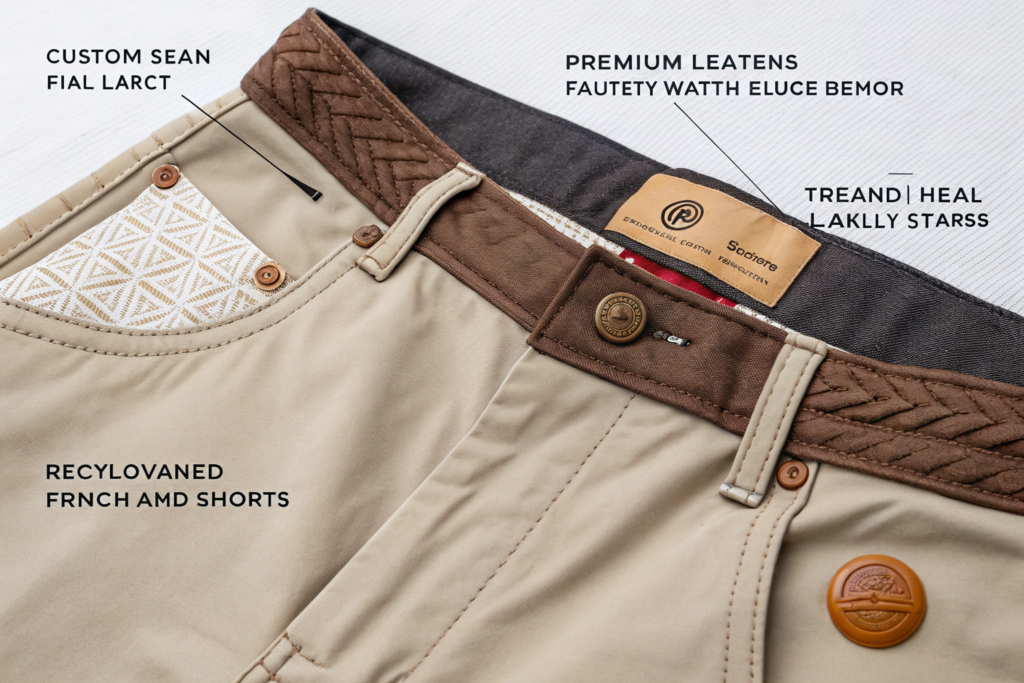
What Trims and Finishes Instantly Elevate a Short from Generic to Premium?
A natural button, Corozo nut, mother-of-pearl, or polished horn, instantly signals quality. A custom engraving, even a simple brand initial, adds an exclusive touch. A YKK zipper with a custom leather pull tab is a tactile luxury point. The internal seams should be clean-finished with French seams or bound seams, not raw overlock. The pocket lining should be a soft cotton voile or a modal blend, not a scratchy polyester. The hem should be a clean double-turn topstitch, with no visible raw edges.
These details are noticed by the customer, consciously or subconsciously. They communicate that someone cared enough to finish the garment properly. The premium garment construction details guide explains the difference between standard and premium finishing. A premium brand specifies these details in the tech pack and verifies them on the pre-production sample.
How Does Custom Packaging Transform the Unboxing into a Brand Experience?
The unboxing is the customer's first physical interaction with the brand. It should feel like opening a gift. The short should be wrapped in tissue paper, not crammed into a polybag. The tissue paper can be custom-printed with the brand's logo or a subtle pattern. A sticker sealing the tissue adds a thoughtful touch. The hang tag should be on a thick, textured paper stock, perhaps with letterpress or foil-stamped details. A hand-signed thank-you card from the brand founder adds a personal, human connection. The outer shipping box should be clean and branded, not a generic brown carton.
This packaging elevates the entire product experience. It generates social media shares. It builds brand loyalty. The premium ecommerce packaging experience guide provides ideas and suppliers. The packaging cost is a marketing investment, not a logistics expense.
What Brand Story Reframes "Made in China" as a Mark of Craftsmanship?
The story is the bridge between the product and the customer's values. A generic "Made in China" label tells no story. It leaves the customer to fill in the blanks with stereotypes. A specific, authentic story replaces the blank with a narrative of craftsmanship, quality, and ethical production. The story does not need to apologize for the manufacturing origin. It needs to celebrate the manufacturing expertise. China has a textile manufacturing tradition that spans centuries. The factories that produce premium goods are modern, certified, and staffed by skilled professionals. This is the story that needs to be told.
I have helped brand partners craft their origin stories. The best stories are specific. "Our shorts are sewn by a team of 80 skilled operators in Shanghai, led by a master tailor with 25 years of experience. Our cotton twill is woven in a third-generation family mill in Jiangsu province. We visit the factory four times a year. We know the names of the people who make our clothes." This level of specificity is disarming. It transforms an anonymous supply chain into a network of real people and real places. The brand storytelling for fashion labels guide explains the power of specific, transparent origin stories.
The story must be authentic. It must be backed by the reality of the factory. A brand that tells a story about ethical production without a BSCI audit is vulnerable to exposure. The story and the reality must align.
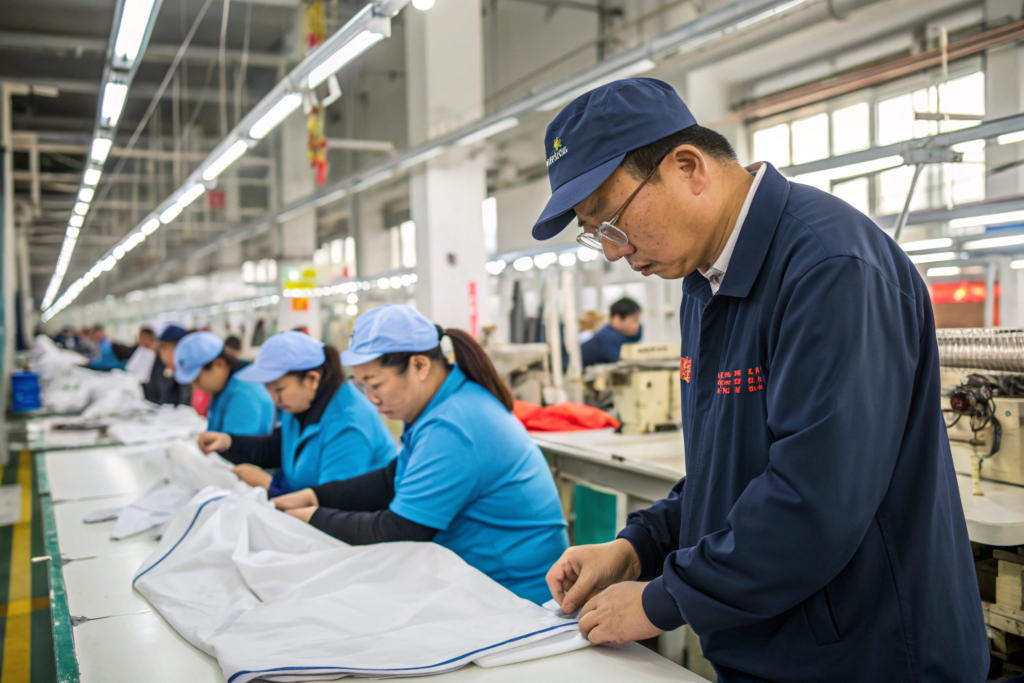
How Can You Authentically Highlight the Factory's Craftsmanship and Ethics?
Visit the factory. Take photos and videos. Show the skilled operators at work. Show the quality control station. Show the bright, clean, organized production floor. Interview the factory owner or the production manager. Get quotes about their philosophy, their commitment to quality, their relationship with their workers. Publish this content on the brand's website. It is proof.
Obtain the third-party certifications. BSCI or WRAP for social compliance. Oeko-Tex for product safety. GOTS for organic cotton. Publish the certificates. The supply chain transparency marketing article documents the consumer trust-building power of certification transparency. A brand that shows the audit report is light-years ahead of a brand that makes vague ethical claims.
Why Does the "Designed in California, Crafted in Shanghai" Narrative Work?
This narrative frames the relationship as a partnership between American design sensibility and Asian manufacturing expertise. It acknowledges both locations. It does not hide the manufacturing origin. It elevates it by associating it with the word "crafted," which implies skill and care. "Designed in" locates the creative vision. "Crafted in" locates the technical execution. Both are valued.
This framing is used successfully by many premium brands. It is honest. It is specific. It avoids the negative connotations of "Made in China" by using the more specific and evocative "Shanghai" or "Crafted in our Shanghai workshop." The country of origin labeling and consumer perception research shows that specificity and positive framing can mitigate negative country-of-origin bias. The narrative controls the frame.
What Marketing Language Sells Quality Instead of Price?
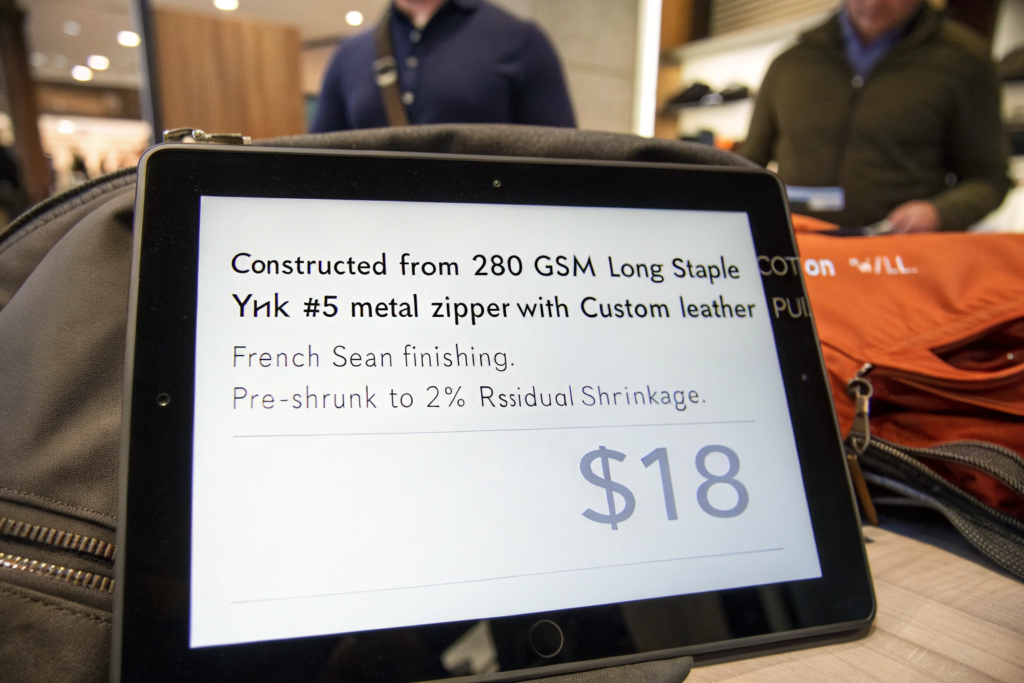
Premium customers buy with their heads as much as their hearts. They want to know what they are paying for. Vague marketing language like "high quality" or "luxurious feel" does not answer that question. Specific, technical language does. "280 GSM cotton twill" answers it. "YKK #5 metal zipper" answers it. "Pre-shrunk to 2% residual shrinkage" answers it. This language communicates competence and transparency. It treats the customer as an intelligent buyer who deserves the facts.
I advise our brand partners to write product descriptions that read like a specification sheet, translated into accessible language. Every specification in the tech pack is a potential marketing point. The fabric weight, the stitch density, the zipper brand, the shrinkage rate. These are not secrets. They are selling points. The specification-driven product marketing approach is particularly effective for classic, durable products like shorts. The customer is buying longevity. The specifications are the proof of longevity.
The marketing language should avoid clichés and focus on facts. The facts are more persuasive than the superlatives. Let's look at how to talk about the product and the price.
How Do You Describe Fabric, Fit, and Finish to Justify a $100+ Price Point?
Describe the fabric by its weight, its fiber, its weave, and its origin. "Our 280 GSM twill is woven from long-staple Xinjiang cotton in a third-generation mill outside Shanghai. The diagonal twill weave provides natural stretch and exceptional durability. A gentle enzyme wash gives it a soft, lived-in hand feel from the first wear." Describe the fit with specific measurements. "The 11-inch front rise sits at the natural waist. The 22-inch leg opening creates a clean, straight silhouette." Describe the finish. "The internal seams are French-seamed for a clean finish that will not fray. The pocket corners are bar-tacked for reinforcement."
This language is factual, detailed, and confident. It answers the customer's unspoken question: "What exactly am I paying for?" The premium product description writing guide provides templates and examples. Every sentence should convey information that justifies the price.
What Words and Phrases Should You Avoid to Escape the "Cheap Import" Perception?
Avoid the word "cheap" and its synonyms, "affordable," "budget-friendly," "bargain." Avoid vague superlatives that sound like generic marketplace copy: "top quality," "best material," "amazing value." Avoid overly promotional language: "hot sale," "limited offer," "hurry." This is the language of discount retail. It repels the premium customer.
Avoid hiding the country of origin. Do not say "imported" without saying from where. That sounds evasive. Do not use only "Designed in USA" if the product is made in China. That can be perceived as deceptive if the manufacturing origin is not also stated. Honesty and specificity are the antidotes to the cheap import perception. The language of premium brand marketing article explains the difference between discount language and premium language. The premium brand speaks with calm confidence and specific detail.
What Pricing and Positioning Strategy Commands a Premium in the US Market?
Pricing is a positioning tool. The price communicates value before the customer reads a single word. A price that is too low, say $48, signals to the premium customer that the product is not for her. It is too close to the fast-fashion price point. A price that is too high, say $248, requires a level of brand equity that a new brand does not have. The sweet spot for a direct-to-consumer premium classic short from a new or growing brand is $88 to $128. This price range signals quality without requiring a luxury brand name.
I work with brand owners to set their retail price based on their landed cost, their target margin, and the competitive landscape. A DDP landed cost of $18 to $24 for a premium-quality classic short supports a retail price of $88 to $118 with a healthy direct-to-consumer margin of 65 to 75 percent. The premium apparel pricing strategy guide provides a margin calculator. The price must be supported by the product quality and the brand story. The customer must feel she is getting a good value, even at the premium price.
The pricing strategy can be framed as a value proposition. The brand explains why the price is what it is. This transparency builds trust. Let's examine the value equation and the competitive landscape.
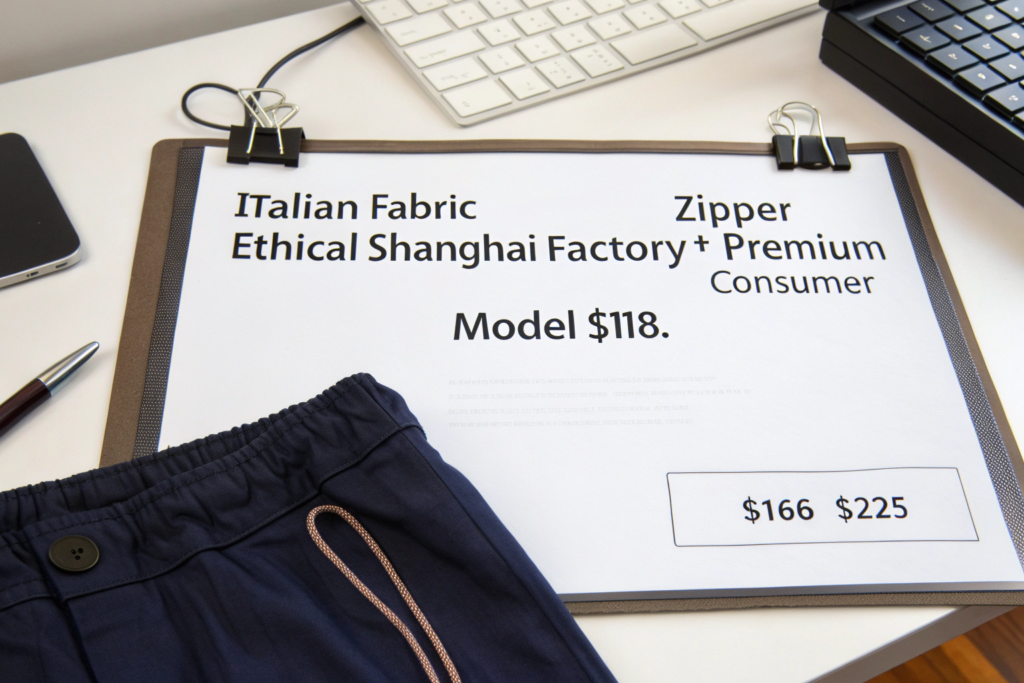
How Do You Frame the Price as a Value Equation Against $200+ Competitors?
Create a transparent value equation. "Our $118 short is made with the same 280 GSM Italian-milled cotton twill, the same YKK zipper, and the same French seam construction as the $225 heritage brand short. We sell direct to you, without the retail markup. That is the only difference." This framing positions the brand as the smart choice for the informed customer. It is not cheaper because it is worse. It is cheaper because the distribution model is more efficient.
This value equation is persuasive. It appeals to the customer's intelligence and her desire for value. The value-based pricing communication guide explains how to construct and communicate a value equation. The key is that the comparison must be genuine. The materials and construction must actually be comparable.
What Distribution Channels Are Best for a Premium Chinese-Made Brand?
Direct-to-consumer via a branded e-commerce website is the most effective channel for a new premium brand. It allows the brand to control the narrative, tell the full story, and capture the full retail margin. Wholesale to carefully selected independent boutiques that align with the brand's aesthetic and values is a strong secondary channel. The boutique provides physical retail presence and third-party credibility.
Avoid discount marketplaces and flash sale sites. These channels erode the premium positioning. The brand should be where the premium customer shops. The distribution channel strategy for premium fashion brands article explores the options. The brand should start narrow and deep, with its own website and a few key wholesale accounts, before expanding broadly.
Conclusion
Rebranding Chinese-made classic shorts for a premium US audience is entirely achievable. It requires a deliberate strategy of elevation, storytelling, and transparent communication. The physical product must be elevated with premium trims, clean finishing, and luxurious packaging. The brand story must reframe the manufacturing origin as a mark of specific, authentic craftsmanship, backed by factory transparency and third-party certifications. The marketing language must be specific, technical, and confident, avoiding the clichés of discount retail. The pricing must be positioned in the premium sweet spot of $88 to $128, supported by a clear value equation against higher-priced competitors. The distribution should be direct-to-consumer and selective wholesale.
The perception of "Made in China" is not fixed. It is a legacy of decades of low-cost commodity exports. The new reality is that China is home to some of the world's most skilled garment factories, producing for the world's most demanding luxury brands. The brand that tells this story authentically, and backs it up with a genuinely premium product, will succeed. The origin is not the liability. The failure to tell the right story is.
At Shanghai Fumao, we are proud of our factory, our workers, and our craftsmanship. We support our brand partners with the factory photos, the certification documents, and the quality specifications they need to tell an authentic premium story. We produce shorts that can stand confidently next to any global brand. If you are building a premium brand and want a manufacturing partner who understands quality and storytelling, contact our Business Director, Elaine, at elaine@fumaoclothing.com. She will share our brand partner resources, including factory imagery and certification files. Let us help you build a brand that commands a premium.