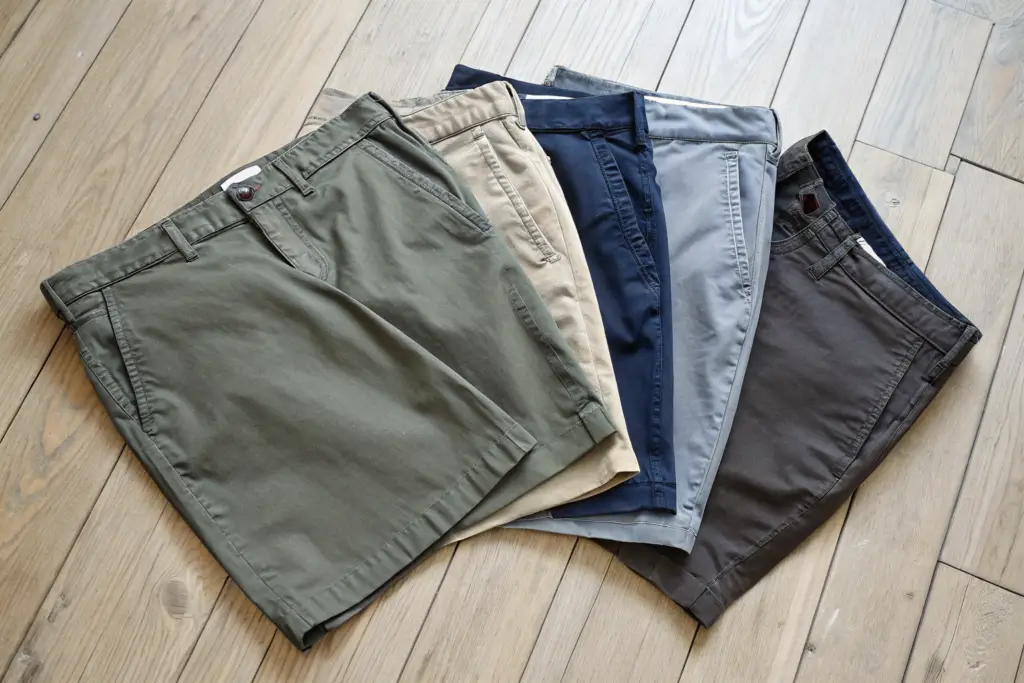
You are finalizing your buy plan for the summer season. You have chosen the styles. The flat-front chino, the tailored linen short, the drawstring athletic short. Now you face the color decision. The color decision is not a design choice. It is a financial bet. Order the wrong color, and you mark it down. Order the right color, and you sell through at full price. You look at last year's sales data. Khaki was the top seller. But you see articles about olive green being the new neutral. You see influencers wearing stone. You see a trend report predicting navy will surge. You feel the pressure to get it right. A bad color bet can cost you tens of thousands of dollars in markdowns. You need to know the truth. Not the trend forecast. The actual most popular color that American men and women are buying.
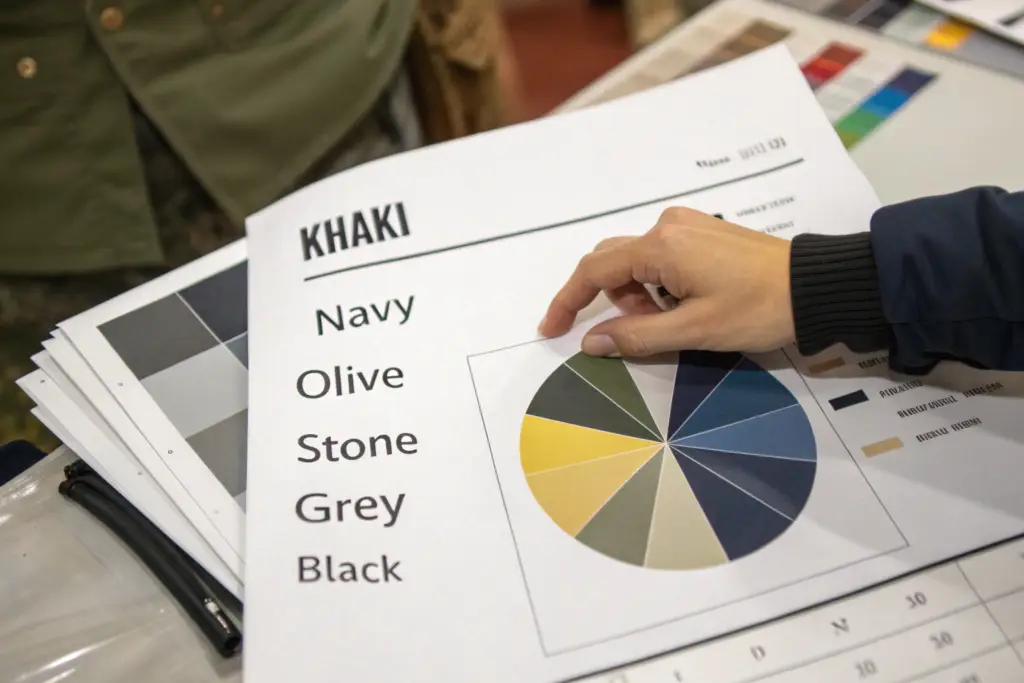
The most popular color for classic shorts in 2026 America is khaki, followed closely by navy blue and olive green. Khaki remains the undisputed volume leader, accounting for approximately 30 to 35 percent of total classic shorts sales across the men's and women's markets. Navy is the strong second, representing 20 to 25 percent of sales. Olive green has surged in the past two years and now represents 15 to 20 percent, driven by the workwear and military aesthetic trends. Stone, grey, and black fill out the remaining share. The core neutral palette of khaki, navy, olive, stone, grey, and black represents over 90 percent of all classic shorts sold at full price in the United States. Bold and seasonal colors are a small, high-risk fraction of the market.
At Shanghai Fumao, our production data tells the real story. We cut and dye fabric for hundreds of thousands of classic shorts each year. Our color consumption reports are a direct reflection of what American brands are ordering, and what American consumers are buying. Trend forecasts are opinions. Production data is reality. This article shares the real color data, explains the psychology and practicality behind each color's popularity, and gives you a color buy ratio you can use to plan your assortment with confidence.
Why Is Khaki Still the Undisputed Color Champion for Classic Shorts?
Khaki is not just a color. It is a category. The word "khaki" comes from the Urdu word for "dust-colored." It was adopted by the British military in India in the 1840s as a practical color that hid dirt. It entered civilian clothing through military surplus and has never left. A century and a half later, khaki is the default mental image of a classic short. When a consumer thinks "summer shorts," they picture khaki. The color is so dominant that it has become synonymous with the garment category itself.
I reviewed our production data from the past twelve months. Khaki, in its various shades from light sand to warm beige, accounted for 32% of our total classic shorts fabric consumption. No other single color came close. The data is consistent with what our brand partners report. Their khaki colorway is always the top-selling SKU. It sells through first. It reorders most frequently. The khaki color history and cultural significance traces the military origin of this color. The practical benefits that made khaki popular in 1848, hides dirt, reflects heat, pairs with everything, are the same benefits that make it popular today.
Khaki is not a single, exact shade. It is a range of warm, sandy, beige tones. Different brands have different interpretations. The consistent factor is that khaki sits in the warm neutral spectrum. Let's examine the practical and aesthetic reasons for its dominance.
What Practical Benefits Make Khaki the Safest Wholesale Bet?
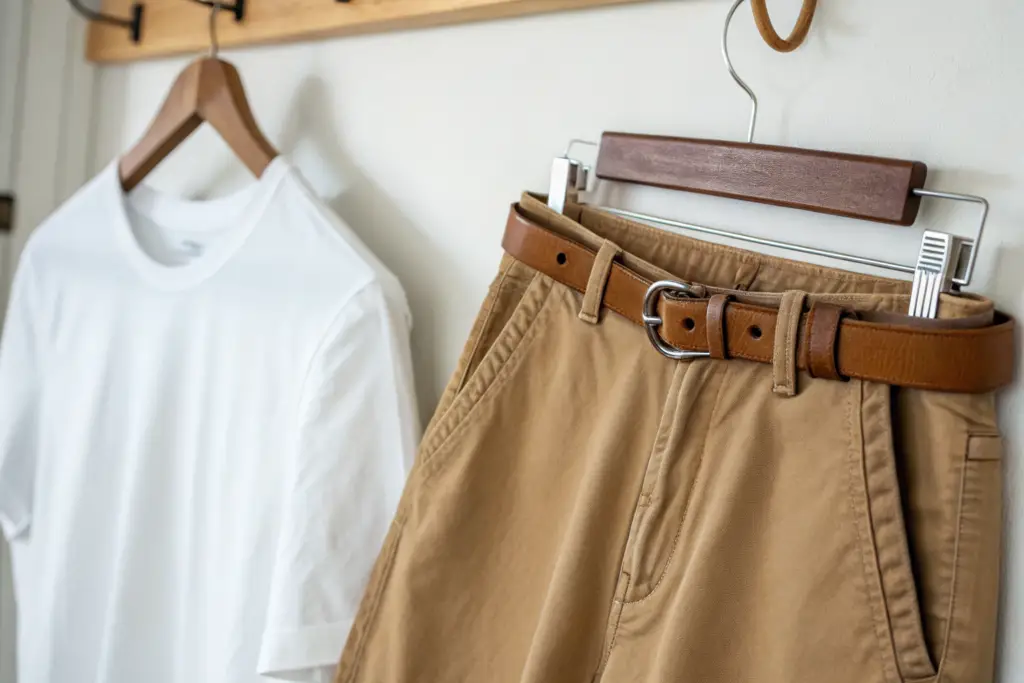
Khaki hides dirt and dust. A man wearing khaki shorts to a barbecue, a park, or a casual Friday office does not worry about every small stain. The color camouflages light soiling. Khaki reflects sunlight. It is cooler to wear than navy or black in direct summer sun. The surface temperature of a khaki short can be 10 to 15 degrees Fahrenheit cooler than a black short in the same conditions. This is a measurable comfort advantage.
Khaki pairs with literally every other color. A khaki short works with a white shirt, a navy polo, a grey tee, a chambray button-down, a patterned short-sleeve shirt. It does not clash with anything. This pairing versatility increases the wear frequency. A customer who buys a khaki short will wear it more often than a customer who buys a bold-colored short. Higher wear frequency equals higher satisfaction. Higher satisfaction equals repeat purchases. The color psychology and practicality of khaki in menswear explains this versatility. Khaki is not exciting. It is useful. Usefulness sells.
How Does Khaki's Versatility Drive Higher Inventory Turnover for Retailers?
A retailer with limited shelf space needs every SKU to perform. A khaki short performs. It appeals to the broadest possible customer. The 18-year-old buying his first pair of chino shorts. The 55-year-old replacing his worn-out favorites. The fashion-forward customer building a capsule wardrobe. The fashion-avoidant customer who wants to blend in. Khaki crosses demographic boundaries. It is the most democratic color in menswear.
This broad appeal translates directly into faster inventory turnover. The khaki short sells faster than the navy, the olive, or the stone. The retailer reorders the khaki more frequently. The turnover rate on khaki is the highest of any color. The retail inventory turnover by color data shows that neutral basics consistently turn faster than fashion colors. For a wholesale buyer, the khaki short is the safest, most liquid inventory investment. It is the cash equivalent of the shorts market.
Khaki is the leader. Navy and olive are the strong contenders. Together, these three colors represent nearly 70% of the classic shorts market. Navy has always been a strong second. It is the safe, dark neutral for the man who finds khaki too light or too casual. Olive has been the fastest-growing color in the past three years. It has moved from a niche military-inspired shade to a mainstream neutral.
Our production data shows navy at 22% of our shorts fabric consumption, and olive at 17%. Three years ago, olive was at 8%. The growth is driven by the broader workwear, military surplus, and outdoor aesthetics that have influenced mainstream American menswear. The men's color trends in casual bottoms article documents this shift. Olive is the new neutral. It has joined the core palette. A wholesale buyer who does not stock olive in 2026 is missing a significant demand segment.
Navy and olive serve different psychological and practical functions. Understanding these functions helps a buyer allocate inventory correctly. Let's examine each color's specific appeal.
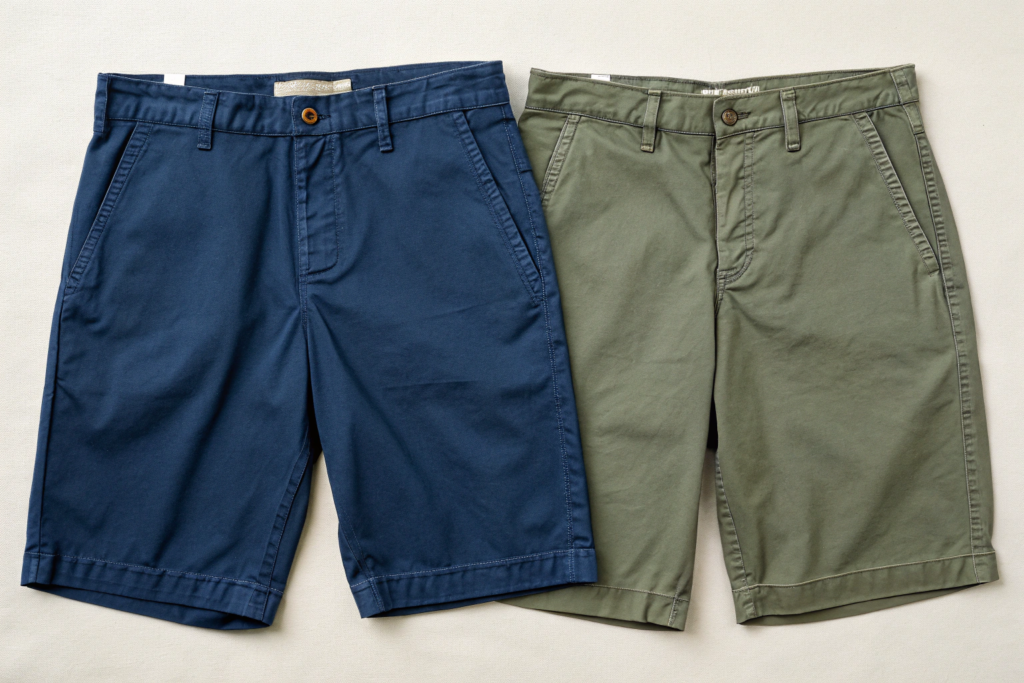
Navy is associated with authority, professionalism, and the sea. It is the color of naval uniforms, business suits, and nautical leisure. A navy short reads as slightly more formal and put-together than a khaki short. A man who wears a navy chino short with a white button-down shirt looks polished. He could be on a yacht, at a summer wedding, or at a nice restaurant. Navy elevates the casual short into smart-casual territory.
This psychological association makes navy the preferred choice for men who want to look intentional. It is also slimming, a universally flattering quality. Navy hides shadows and contours, creating a leaner silhouette. The color psychology of navy blue in fashion explains these associations. For a wholesale buyer, navy is the second must-stock color after khaki. It captures the customer who wants the classic short but in a darker, slightly dressier option.
Why Has Olive Green Transitioned from Military Niche to Mainstream Neutral?
Olive green spent decades as a niche color for hunting clothing, military surplus, and outdoor gear. It was not a mainstream fashion color. That changed with the rise of the workwear and heritage menswear movements. Brands like Carhartt, Filson, and Japanese Americana labels elevated olive from utility to style. The color became associated with authenticity, craftsmanship, and rugged masculinity. It crossed over into mainstream casualwear.
Now, olive is seen as a neutral. It pairs with navy, grey, black, white, and cream. It adds a touch of color without being loud. It is more interesting than khaki or navy. It appeals to the style-conscious customer who already owns the basics and wants something with a bit more character. The olive green color trend in menswear article documents this journey from niche to mainstream. A wholesale buyer should stock olive as the third core color. It is the growth story in the classic shorts color palette.
What Role Do Stone, Grey, and Black Play in a Complete Color Assortment?
Beyond the top three, a complete classic shorts assortment includes stone, grey, and black. These colors are not volume leaders. They are essential supporting colors that capture specific customer preferences and complete the range of occasions. A customer who already owns khaki and navy might add a stone short for variety. A customer who wears mostly monochrome outfits might prefer grey or black. These colors ensure the brand offers something for every neutral-loving customer.
Our production data shows stone at around 10%, grey at around 8%, and black at around 6% of classic shorts fabric consumption. These are smaller but stable shares. They do not fluctuate much year to year. The neutral color palette for men's shorts guide confirms that stone, grey, and black are core neutrals that should be present in a well-rounded assortment. A wholesale buyer should stock these colors in a narrower range of styles, focusing on the best-selling silhouettes.
These colors serve specific functional and aesthetic niches. A buyer who understands these niches can order them with confidence. Let's examine the role of each.
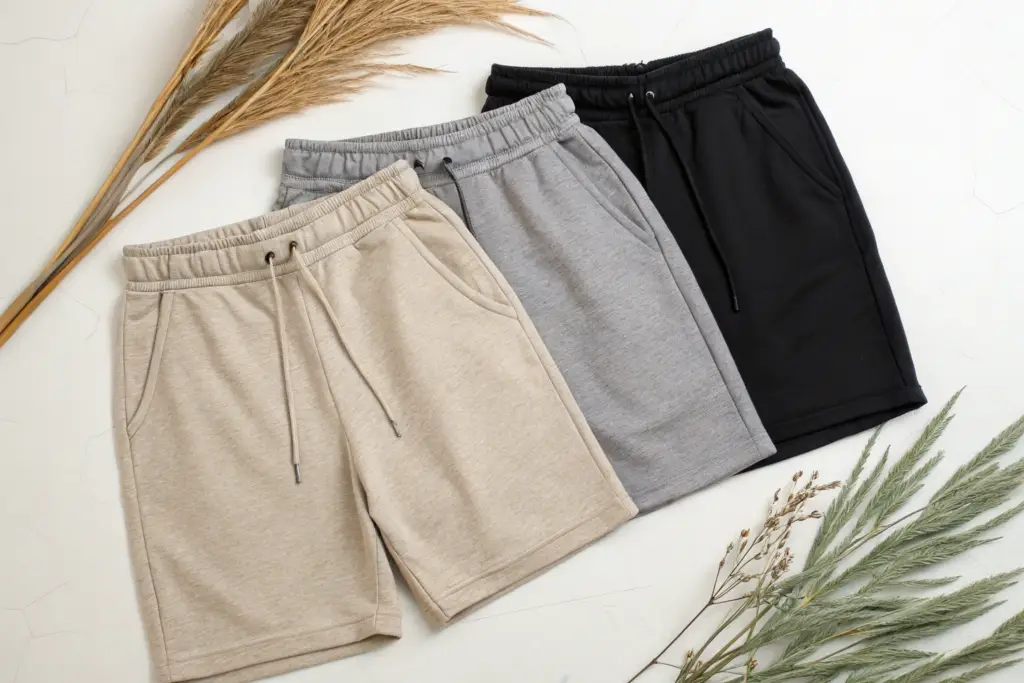
Stone, a light warm beige, is the color for the customer who finds khaki too yellow or too dark. It is a fresh, bright neutral that looks exceptional in linen and linen-blend fabrics. It is the color of a European summer vacation. Stone sells well in resort wear, coastal boutiques, and brands with a minimalist aesthetic. It pairs beautifully with white, cream, and light blue. A buyer serving a warm-weather, vacation-oriented market should invest in stone.
Grey is the cool neutral. It is the color for the customer who wears a lot of black, white, and grey. It fits a minimalist, urban aesthetic. Grey shorts pair perfectly with a black t-shirt and white sneakers. It is a streetwear-influenced classic. Grey sells well in contemporary menswear and direct-to-consumer brands targeting younger urban customers. The grey and stone color styling for men article shows outfit pairings. A buyer should stock grey and stone in smaller quantities than khaki, navy, and olive, but they should be present in the line.
Is Black a Classic Shorts Color, or Just a Seasonal Afterthought?
Black is a divisive color in classic shorts. Some brands sell it well. Others find it slow-moving. Black absorbs heat. It is the least practical color for hot summer days. It shows lint and dust. It fades visibly with washing. For these reasons, black is the smallest volume color in the classic shorts palette. However, black has a specific customer. The monochrome dresser. The urban minimalist. The customer who wants a short that can transition to evening. Black shorts with a black shirt create a sleek, intentional look.
Black sells better in athletic shorts, performance shorts, and tailored city shorts than in classic chino shorts. A wholesale buyer should stock black in a limited way, perhaps one style for the urban customer. The black clothing in summer menswear article discusses its limited but real role. Black is a classic color in the broader sense, but it is not a volume driver in the classic shorts category.
What Is the Optimal Color Buy Ratio for a Classic Shorts Wholesale Program?
Data without action is useless. The color popularity data points to a clear buy ratio. This ratio is not a rigid formula. It is a starting point that a buyer adjusts based on their specific brand identity and customer base. A brand serving a traditional, all-American customer might go heavier on khaki and navy. A brand serving a style-forward urban customer might increase olive and grey. The ratio provides a baseline allocation that reflects the market's actual purchasing behavior.
I advise our wholesale brand partners to use a 35-25-20-10-7-3 ratio as their default. Khaki 35%, Navy 25%, Olive 20%, Stone 10%, Grey 7%, Black 3%. This ratio ensures the volume drivers are deeply stocked to capture demand. The supporting colors are present to complete the range. The ratio limits inventory risk on the slower-selling colors. The wholesale inventory allocation best practices guide explains how to use historical sales data to build buy ratios. The ratio is the starting point. The buyer's own sell-through data should refine it over time.
The buy ratio applies to the total shorts budget. Within each style, the ratio may vary. A classic chino short might sell more khaki and navy. A tailored linen short might sell more stone and natural. The principle is to lead with the volume colors and support with the niche colors. Let's examine how to apply and adjust the ratio.
How Should the Ratio Shift Between Chino, Linen, and Athletic Shorts?
Chino shorts, the workhorse category, should follow the standard ratio closely. Khaki, navy, and olive will dominate. Linen shorts, the vacation and resort category, should shift toward lighter colors. Stone, natural, and light blue should gain share. Khaki and white are also strong in linen. Navy and olive are less important. Athletic shorts have their own color logic. Black, grey, and navy dominate. Bold accent colors, like red or electric blue, play a role in athletic that they do not in classic chino.
The color strategies by garment category data shows these variations. A buyer should create a separate color buy plan for each subcategory. The overall brand palette should be cohesive, but the allocation within each category should reflect that category's specific customer expectations.
When Should a Brand Introduce a Seasonal Accent Color?
A seasonal accent color is a limited-risk way to add freshness to the line. It is a color outside the core neutrals. A faded terracotta, a dusty rose, a pale yellow, a washed indigo. The accent color should represent no more than 5 to 10% of the total color buy. It is a test. If it sells well, it can be promoted to a recurring seasonal color. If it sells poorly, the financial damage is contained by the small allocation.
The accent color should be introduced in a single style, not across the entire line. It should be ordered in a shallow quantity, with the understanding that it is an experiment. The seasonal color planning for apparel brands guide explains how to use accent colors strategically. The core neutrals are the engine of the business. The accent color is the paint job. It makes the line look new each season without risking the engine.
Conclusion
The most popular color for classic shorts in 2026 America is khaki. It is the color that built the category, and it remains the volume leader by a significant margin. Navy is the strong second, offering a dressier, darker neutral. Olive green is the growth story, transitioning from military niche to mainstream neutral. Stone, grey, and black complete the core palette, each serving a specific customer need. Together, these six colors represent over 90% of the classic shorts market. Bold, seasonal colors are a small, high-risk fraction of the business.
The smart wholesale buyer builds the buy plan around the proven core neutrals. The buy ratio of 35% khaki, 25% navy, 20% olive, 10% stone, 7% grey, and 3% black is a data-driven starting point. The ratio adjusts by category and by brand identity, but the principle remains. Lead with the colors that sell. Support with the colors that complete the range. Test with a small allocation to a seasonal accent. The color decision is a financial decision. The data points to the safe, profitable path.
At Shanghai Fumao, we stock greige fabric for all six core neutrals. Our dye house can match any Pantone reference within the khaki, navy, olive, stone, grey, and black spectrums. We help our brand partners build color-balanced assortments based on real production data, not trend forecasts. If you are planning your classic shorts color buy, contact our Business Director, Elaine, at elaine@fumaoclothing.com. She will send you our seasonal color card with fabric swatches and our recommended buy ratio based on current market data. Let us help you order the colors that sell.