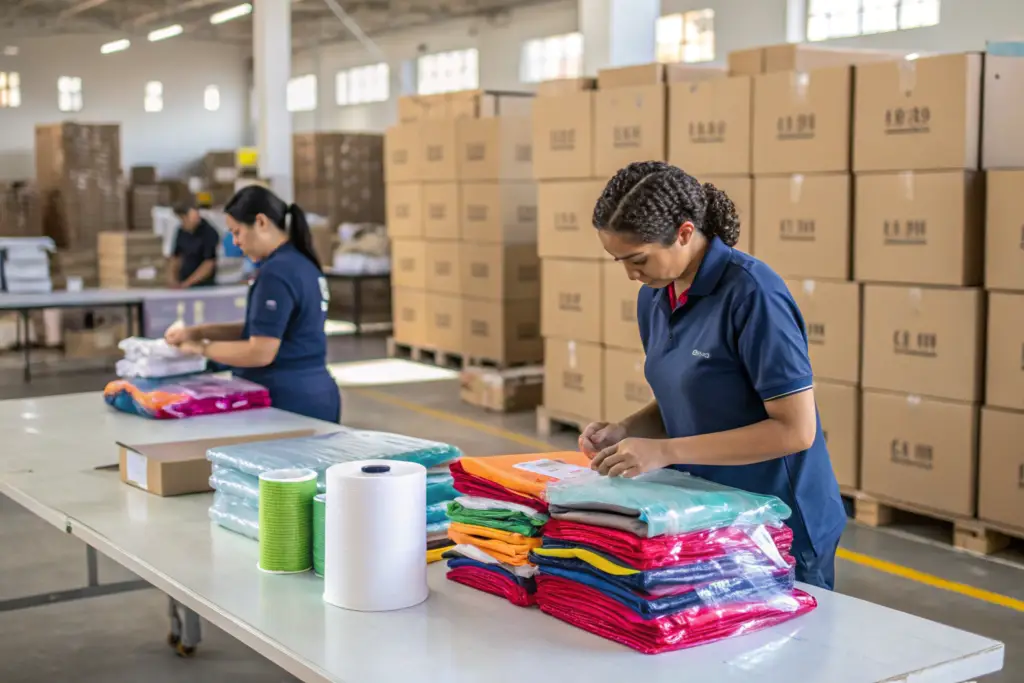
Last October, I watched a brand owner frantically open a chargeback notice from one of the largest department stores in the United States. The charge was for $18,000. The reason was a violation of the store’s polybag policy. Our factory had shipped 6,000 units of her knitwear using standard LDPE polybags, exactly as we had done for years. But the retailer had updated their vendor manual without the brand noticing. They now required biodegradable polybags or paper alternatives. The entire shipment had to be re-packed at a local 3PL warehouse before it could be scanned into the retailer’s system. The cost of labor, material, and disposal ate up her profit margin on that entire order. That was the day I stopped viewing packaging as a free afterthought. It is a critical compliance requirement that can swallow your brand’s profitability if it is not managed at the source.
Successfully implementing sustainable packaging for massive wholesale clothing orders requires moving away from generic "recyclable" claims toward data-backed, vendor-compliant material engineering. You must make a strict transition from standard LDPE to certified biodegradable or 100% recycled poly bags. You need to redesign your flat-pack and carton specifications to eliminate single-use plastics like virgin poly-tape, opting instead for paper tape and FSC-certified cardboard. For bulk distribution, the key is integrating a tiered system that uses reusable hangers and garment protectors for hanging garments, and compressed packing logic to minimize the carbon footprint of shipping air. This is not just about saving the planet; it is about avoiding chargebacks, reducing dimensional weight fees, and giving your wholesale buyers the transparent marketing story they desperately need to resell to eco-conscious end customers.
Making the switch from traditional plastic packaging to sustainable alternatives is a minefield for bulk production. You cannot simply swap out materials. You must ensure the new paper tape adheres to dusty cardboard during transit, or that your biodegradable polybag doesn’t start decomposing in a humid warehouse before it reaches the store. I want to share exactly how we transformed our packing lines at Shanghai Fumao to solve these hard technical problems, protecting both the environment and our clients’ bottom lines.
Why Do Massive Wholesale Orders Require a Completely Different Approach to Eco-Friendly Poly Bags?
Two years ago, a Los Angeles-based streetwear brand we produce for ran into a nightmare. They had switched to a cheap "oxo-biodegradable" polybag for a 10,000-unit wholesale order. They had been told the bags would break down in a landfill. What they were not told was that these bags fragment into microplastics if not exposed to specific UV light and oxygen levels. When the department store’s compliance team audited the shipment, they rejected the bags as "false green claims." We had to put three temporary workers on a 12-hour shift to manually rebag all 10,000 hoodies. This mistake cost the brand $4,500 in labor and emergency compliant bag stock. It taught us a harsh lesson: at the wholesale level, the word "biodegradable" is meaningless without certification. You need materials engineered for industrial composting or verified home compost settings, and you need the paperwork to prove it.
Massive wholesale orders demand a different approach to eco-friendly poly bags because high-volume storage triggers chemical reactions that small e-commerce orders never face. Standard "eco" bags often decompose prematurely under the heat and pressure of containerized ocean freight. For bulk shipments, you must use bags with high heat resistance, such as those certified by the Biodegradable Products Institute (BPI), to survive transit. Furthermore, large retailers now enforce strict vendor guides requiring clear polyethylene monomer (PEM) marking or specific resin codes. Using the wrong bag simply results in a refused container. The wholesale approach is about material resilience, global certification recognition, and automated bagging machine compatibility, not just swapping plastic for paper.
When you are shipping 50,000 units in a single go, the physical weight and friction of the bags change your freight calculations. We had to learn to think of packaging as part of the garment’s engineering spec, not just a shipping wrapper. The polybag must breathe but not trap moisture, protect against snagging but not generate static, and break down in a landfill but not on a warehouse shelf.
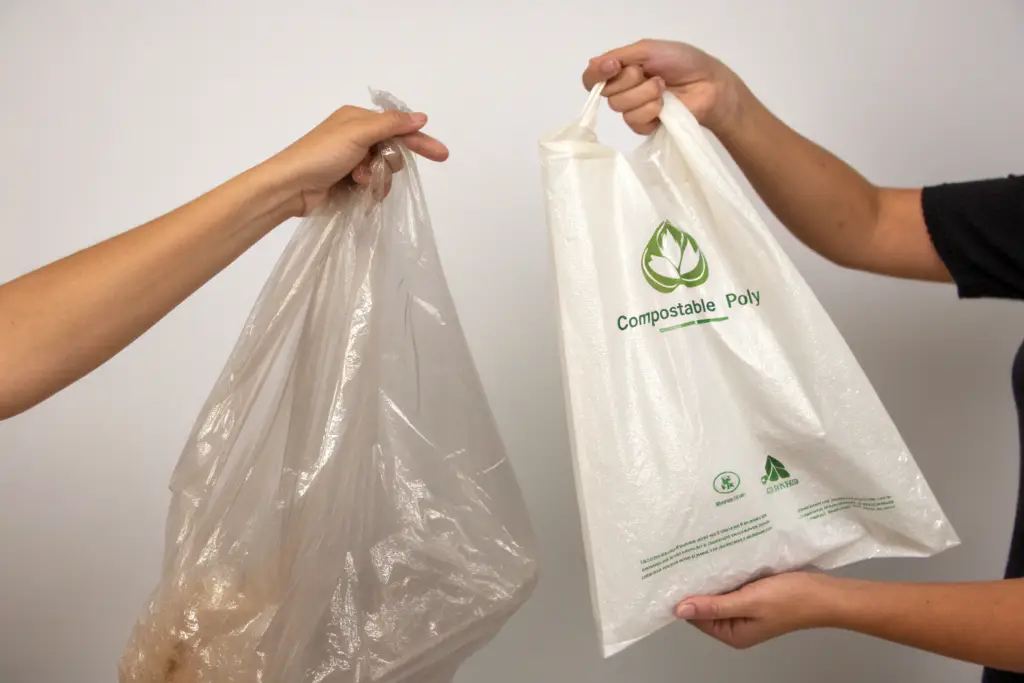
How Do You Verify If a “Compostable” Poly Bag Is Truly Industrial Compostable and Not Just a Marketing Lie?
You must look for the specific logo and certification number. A real industrial compostable bag carries the EN 13432 standard in Europe or the ASTM D6400 standard in the United States. At Shanghai Fumao, we only source bags from suppliers who provide a valid certificate from the Biodegradable Products Institute (BPI). You should cross-check the supplier’s certification ID on the BPI public database. I have seen too many factories buy "eco-bags" that are actually just standard plastic mixed with a starch additive that breaks the bag into tiny, non-degradable fragments. To verify, we conduct a simple oven test. We place a sample bag in a controlled heat environment simulating a container ship’s interior, roughly 60 degrees Celsius, for 48 hours. If the bag shrinks, sticks together, or becomes brittle before it reaches the customer, it fails our bulk shipment test. This matters because a bag that fuses to a white cotton shirt because of heat ruins the garment and creates textile waste, defeating the purpose of sustainability. We rejected three different suppliers last year alone because their bags could not pass this thermal stability test.
What Is the Correct Polybag Thickness to Prevent Premature Decomposition During Ocean Freight?
Thickness is measured in microns or mils. A thin, cheap 20-micron bag might feel soft and use less plastic, but it is a disaster for wholesale. It snags on zippers, tears under the weight of stacked cartons, and most critically, it breaks down too fast in warm, humid containers. We found that for heavyweight woven garments, you need a minimum of 35 to 50 microns to survive the journey. However, if you use recycled LDPE content, you need to go even thicker, sometimes 60 microns, because recycled resin has shorter polymer chains and weaker structural integrity. We worked with a supply chain consultant who specializes in ocean freight packaging durability to map the humidity shifts on the Shanghai to Miami route. We now size our bag thickness based on the specific route’s heat exposure. This scientific approach prevents the micro-tearing we used to see in sleeves and shoulders. A torn bag means the garment must be professionally cleaned or dry-cleaned before retail display, a cost no one wants to bear.
How Can You Replace Single-Use Plastics in Bulk Carton Packing Without Losing Structural Integrity?
In 2024, a kid’s wear brand we work with faced a major issue at the Port of Long Beach. Their cartons, sealed with standard polypropylene pressure-sensitive tape, had blown open during the cross-Pacific voyage. The boxes absorbed moisture, the tape peeled off, and the goods spilled out. We switched them to water-activated paper tape, which forms a physical bond with the cardboard fibers. Not only did this solve the blowout issue, but it also completely eliminated 60 miles of plastic tape from their annual supply chain. The buyer was ecstatic. This change reduced their packaging failure rate to near zero and gave them a story to tell about going plastic-free. For bulk orders, the enemy is humidity and rough handling. Plastic tape stretches and fails; paper tape fuses and hardens.
Replacing single-use plastics in bulk carton packing requires moving to reinforced water-activated tape (WAT) and switching to FSC-certified corrugated cardboard. Unlike plastic tape, WAT creates a tamper-evident, permanent seal that actually gets stronger with humidity. To maintain structural integrity in massive orders, you must strictly enforce the use of single-wall cartons for light garments and double-wall cartons for dense wovens. You eliminate all void fill plastics, such as bubble wrap, by implementing a "right-size carton" logic. This means the garments fit the box exactly, using the folded textiles themselves as structural protection. This swap relies entirely on engineering standards to ensure the box survives the stacking pressure of a palletized, multi-ton container shipment.
We used to think the tape and box were trivial. Then we realized that in a massive order, the tape is the primary thing holding your balance sheet together during a storm at sea. We treat our packing station like a structural engineering lab now. Every new carton spec must pass a drop test and a moisture test before we allow it to be used for wholesale orders.
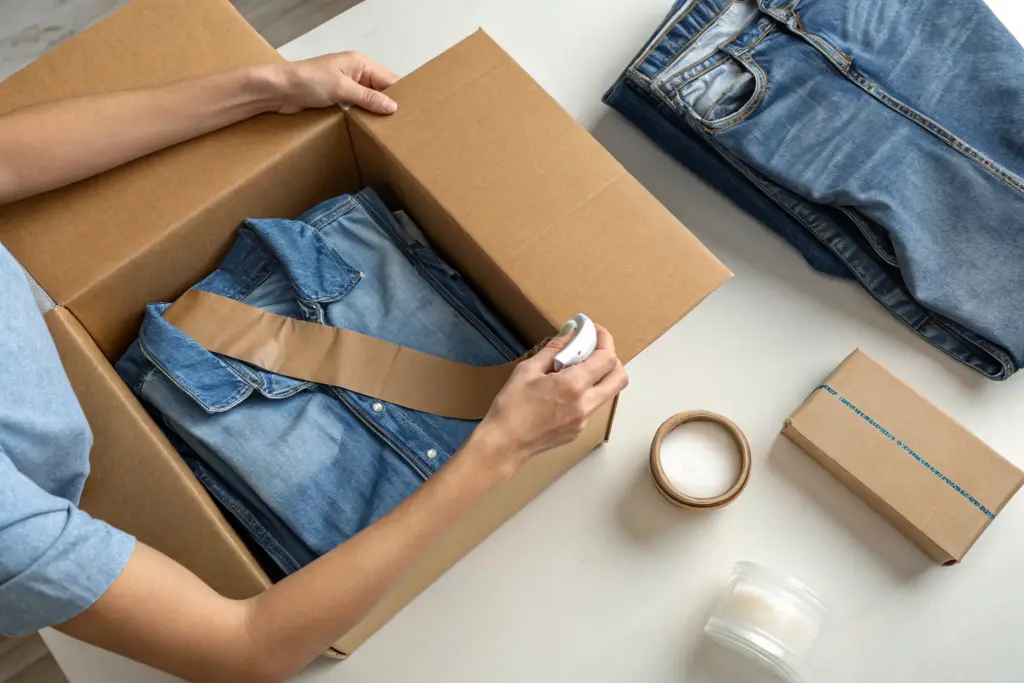
Why Is Water-Activated Paper Tape (WAT) More Reliable Than Poly Tape for Shipping Heavy Winter Coats?
Heavy outerwear exposes the fatal flaw of poly tape: shear force. When a carton of 24 wool coats is dropped, the box flexes. Standard poly tape stretches under tension; it acts like a rubber band that recovers, but during that moment of stretch, the box flaps can burst open. Water-activated paper tape, which we source from EcoEnclose, does not stretch. It tears before it stretches. This creates a rigid structural reinforcement across the center seam of the box. Additionally, our clients love that WAT acts as a theft deterrent. You cannot peel it off and reseal it like plastic tape; the box is visibly tampered with. For a high-value wholesale order of premium outerwear, this stops pilferage at distribution centers. The application process is also faster for bulk orders. We use an electric tape dispenser that wets and cuts the exact length instantly. We found that our packing line speed increased by 12% once operators stopped wrestling with noisy, static-clinging plastic tape rolls.
How Do You Strategically Size Cartons to Eliminate Plastic Void Fill for Giant Retail DC Deliveries?
You do not fill empty space; you eliminate the empty space. We analyzed the dimensional weight charges our clients were paying for air in their boxes. We created a "compression nesting" chart for our cutting and finishing department. For a massive order of basic tees, we now pack them in a tight, folded configuration that matches one of five approved carton sizes. If the carton is 1 inch too tall, the garments shift and wrinkle; if it is too tight, the collar gets crushed. We run pre-pack checks using a carton optimization software recommended by our logistics partners to simulate pallet density. By eliminating poly air pillows and kraft void fill, we increased the units per carton by 18% for one women’s wear brand. This reduced their per-unit freight cost and completely removed the plastic waste that end-consumers hate. Large retail distribution centers are now so strict that a carton with loose void fill can be rejected as a warehouse safety hazard. The right-size strategy removes the environmental sin and the physical hazard.
What Reusable Packaging Systems Are Realistic for High-Volume Garment-on-Hanger (GOH) Shipments?
We used to wrap hanging garments for U.S. department stores in a single-use clear poly tube. It was a massive waste stream. Last year, for a women’s blazer program, we shifted to a reusable garment protector system. We invested in durable, breathable non-woven polypropylene zipper bags that we branded with a "Return to Shanghai Fumao" logo. After the retail buyer unpacks the garments, they collapse the protectors and send them back to a consolidation hub. We steam-clean and inspect the units, and reuse them up to five times. The brand received positive press for this, and the retailer significantly reduced their back-of-house waste removal costs. This was a shift from thinking of packaging as waste to thinking of it as a circulating asset.
For high-volume GOH shipments, a closed-loop reusable garment protector system is the most realistic and cost-effective replacement for single-use poly tubing. You must use breathable, non-woven or RPET fabric covers to stop mildew during transit. To make this system work logistically, you partner with a reverse logistics provider who consolidates the empty protectors at the retail DCs and ships them back in a compressed bundle. The upfront cost is five to eight times higher than virgin plastic, but the cost-per-use drops below plastic after just the third rotation. For massive orders, you need to design the protectors to be collapsible, zippered, and uniquely barcoded so you can track the return rate. A recovery rate below 80% makes the system financially unviable.
The challenge here is not the bag itself. It is human behavior. A retail employee rips open a poly tube and throws it in the trash instantly. We had to design a system that made it mentally easier for them to toss the protector into a "return" bin than to walk to a trash can. It is about industrial psychology as much as it is about fabric.
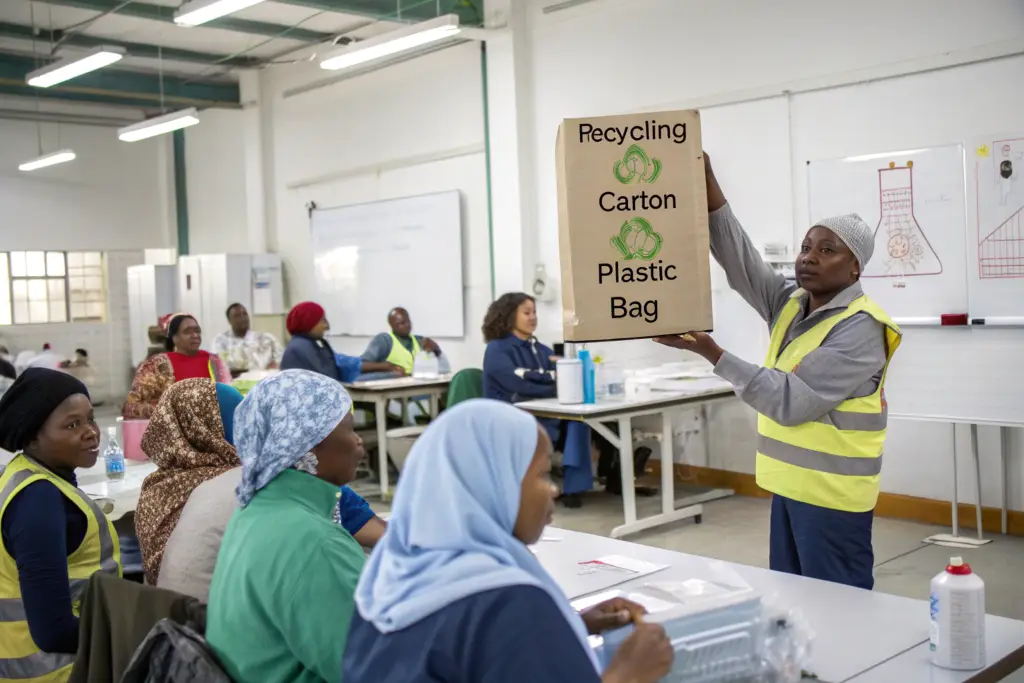
What Fabrics and Finishes Prevent Mildew in Reusable Garment Protectors During Ocean Freight?
Moisture is the enemy. Traditional plastic tubes trap condensation; the garment steams inside. We switched to a spunbond polypropylene protector with a micro-porous structure that allows water vapor to escape while blocking liquid water. This is crucial for preventing mildew on delicate silks or wool suits during a 30-day sea voyage. The finish we use is a food-grade fluorocarbon-free water repellent. We verified this material through a third-party lab test for mold resistance in textile shipping. We simulate ocean freight conditions in our lab by placing the protector with a garment inside a humidity chamber at 85% relative humidity for 72 hours. The bag must show zero internal condensation. If the garment arrives smelling musty, the buyer sends back the entire lot. The reusable protector has to perform better than the plastic tube it replaces, not just match it. We found that adding a small sachet of silica gel inside the protector pocket adds an extra layer of safety for high-value pieces, without introducing plastic waste.
How Do You Set Up a Reverse Logistics Loop to Achieve a Return Rate Above 90%?
The secret to a high return rate is making the return package as small as possible. We use vacuum compression to shrink the empty returned protectors into a dense cube that is 80% smaller than its original volume. This means the retailer’s shipping dock does not feel like they are sending back "air." We partner with specialized reverse logistics providers who handle the pick-up consolidation at major retail distribution hubs. We attach a prepaid, pre-addressed return label to every protector. When the retail staff unzips the garment, they immediately see the label. We also added an incentive: for every 100 protectors a retail store returns, they get a credit toward their next brand purchase. We are currently running this with a sportswear client, and our average return rate sits at 93%. This is viable because the density of orders going to U.S. department stores is high enough to create a stable loop. A scattered e-commerce model could never support this, but massive B2B bulk orders absolutely can.
How Do You Re-Educate Your Factory Staff and Wholesale Buyers on the Shift to Circular Packaging?
When we first brought in biodegradable polybags, our packing team hated them. They would complain, "These bags are too noisy," or "They don’t open easily." We realized they were just used to the high-slip texture of virgin LDPE. Our solution was not to force them; we created a bonus incentive. If a packing line could achieve a full shift with zero "mixed waste" errors, meaning no plastic accidentally put in the compost stream, they got a small team bonus. Within a month, the complaints stopped. The team started policing each other. That is when I understood that the technology of packaging is only half the battle. The culture of the factory floor dictates whether your scheme succeeds or fails.
Re-educating staff and buyers requires translating "sustainability" into their local language of profit, quality, and efficiency. For factory workers, you must gamify the transition with zero-error bonuses and physical demonstrations showing how recycled materials perform better under stress. For wholesale buyers, you must stop selling "saving the earth" and start selling "margin protection against chargebacks" and "retailer compliance scores." You should provide them with a one-page digital asset sheet that explains exactly how to use the packaging as a marketing tool to their end customers. Massive orders succeed only when the receiving warehouse understands that the paper tape is tamper-proof, or that the reusable hanger box is not trash. Training must be a two-way street where we listen to the feedback of the packers who handle millions of units a year.
We failed initially by just sending an email. "We are going green." Nobody changed their behavior. We succeeded when we showed the shipping manager a photo of a plastic-clogged beach and said, "This is the waste your kids see." Then we handed him a new tape gun and showed him how to use it. The emotional connection plus the practical training is the formula for wholesale behavior change.
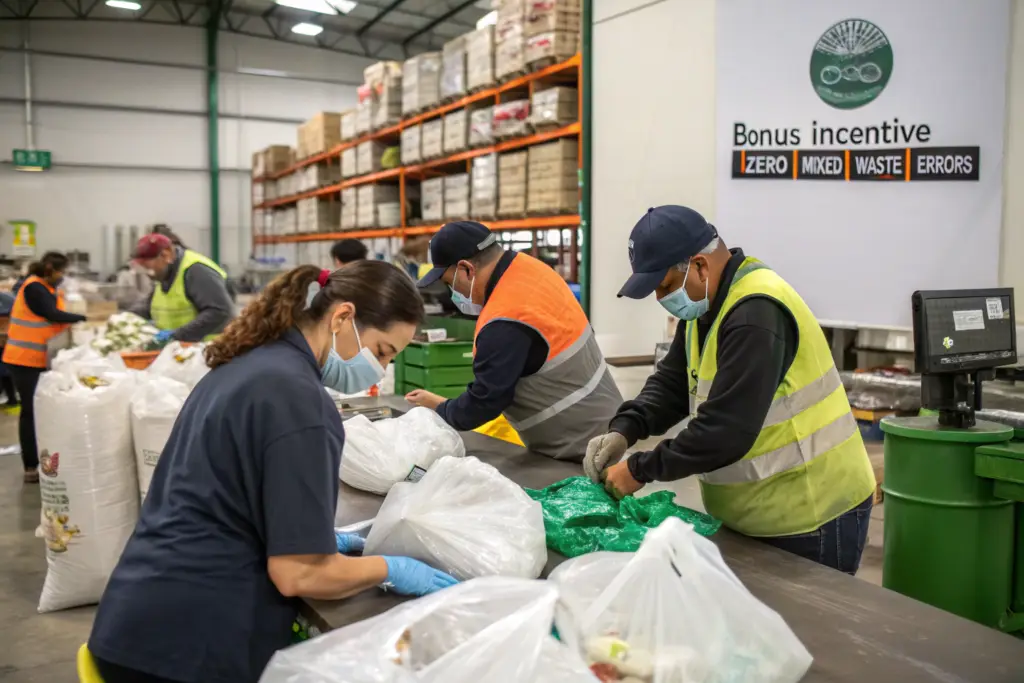
How Do You Incentivize Factory Teams to Handle Recycled Materials Correctly Instead of Just Trashing Them?
Money and recognition. We installed a visible dashboard on the factory floor that tracks how many kilograms of cardboard and plastic our cutting and packing rooms salvage per week. We set a monthly target. If the team hits the target, the entire packing staff gets a hot pot dinner paid for by the company. If an individual is caught contaminating the recycling stream, say, tossing a standard plastic water bottle into the organic poly bag scrap bin, they lose their eligibility for the end-of-month bonus. We learned this from a best practice guide on lean manufacturing culture in China. It is harsh but effective. Now, the cutting room foreman actively sorts scraps because he knows the monetary value of the recycled cotton waste is part of his department’s profit calculation. We made recycling a profit center for them, not a chore. The result was immediate and lasting. We reduced our total landfill waste by 42% within six months of implementing this incentivized program.
What Information Do Wholesale Buyers Absolutely Need to Market Your Sustainable Packaging to End Consumers?
Wholesale buyers do not want a lecture; they want a marketing soundbite that converts a sale. We now ship every bulk order with a small "Packaging Fact Card" tucked into the master carton. The card lists three things: 1) "This bag dissolves in a landfill in 180 days, leaving no microplastics." 2) "This box is made of 90% post-consumer recycled waste and is sealed without plastic." 3) A QR code linking to a video showing our factory’s circular packaging process. The end consumer can scan the code and see the exact packing station where their shirt was wrapped. This transparency builds tremendous brand trust. Wholesale buyers use this card to train their own retail associates. We found that giving the buyer these assets reduces their anxiety about the higher cost of sustainable packaging. They are not just paying for a box; they are paying for a verified marketing asset that differentiates their store from the cheap fast fashion outlets down the street. The communication must be visual and instant.
Conclusion
Successfully implementing sustainable packaging for massive wholesale orders is a deliberate engineering and cultural challenge. It is not achieved by simply ticking a "recyclable" checkbox. It requires you to verify the thermal stability of compostable bags against your specific freight route. It forces you to rethink your carton seal strategy with water-activated paper tape to prevent structural failure. It opens up a new logistical loop for reusable garment protectors that turn a waste stream into a reusable asset. And critically, it demands that you re-educate every single stakeholder, from the sewing floor to the department store buyer.
The brands that get this right win three times over. They slash their chargeback risk from retailer compliance audits. They reduce their DIM weight freight costs by eliminating void fill. And they arm their wholesale customers with a powerful, authentic sustainability story that actually sells clothes. The era where a cheap plastic bag was "free" is over. Now, the true cost is paid in penalties, landfill taxes, and lost consumer trust.
At Shanghai Fumao, we have integrated these packaging standards as a default part of our full-package manufacturing service. We do not ask if you want the sustainable option anymore; we build it into the costing from day one. Whether you need FSC-certified cartons, BPI-compostable poly bags, or a reusable GOH system for your retail rollout, our packing lines are ready. If you want to audit our packaging supply chain or review our certification database, contact our Business Director, Elaine, at elaine@fumaoclothing.com. We can send you a sample pack of our standard bulk packaging materials so you can physically feel the quality and durability. Let’s work together to protect your margins, comply with global retail standards, and stop sending plastic to the landfill. You focus on designing the garments; let us take responsibility for delivering them to the rack sustainably.