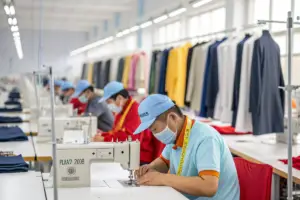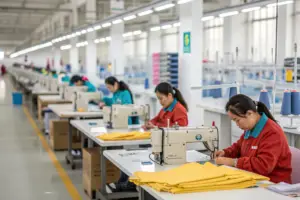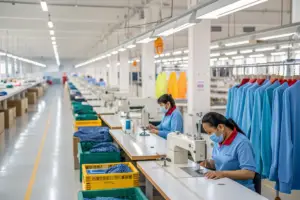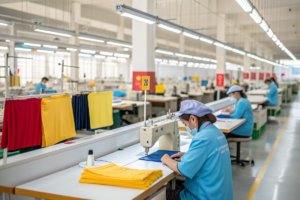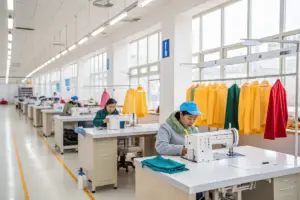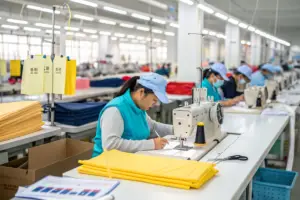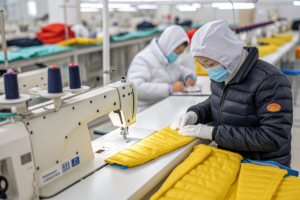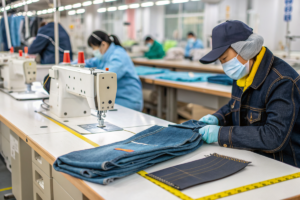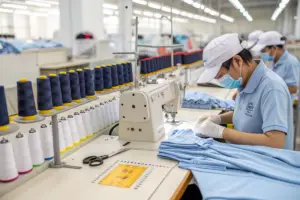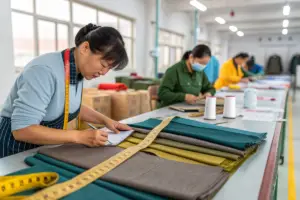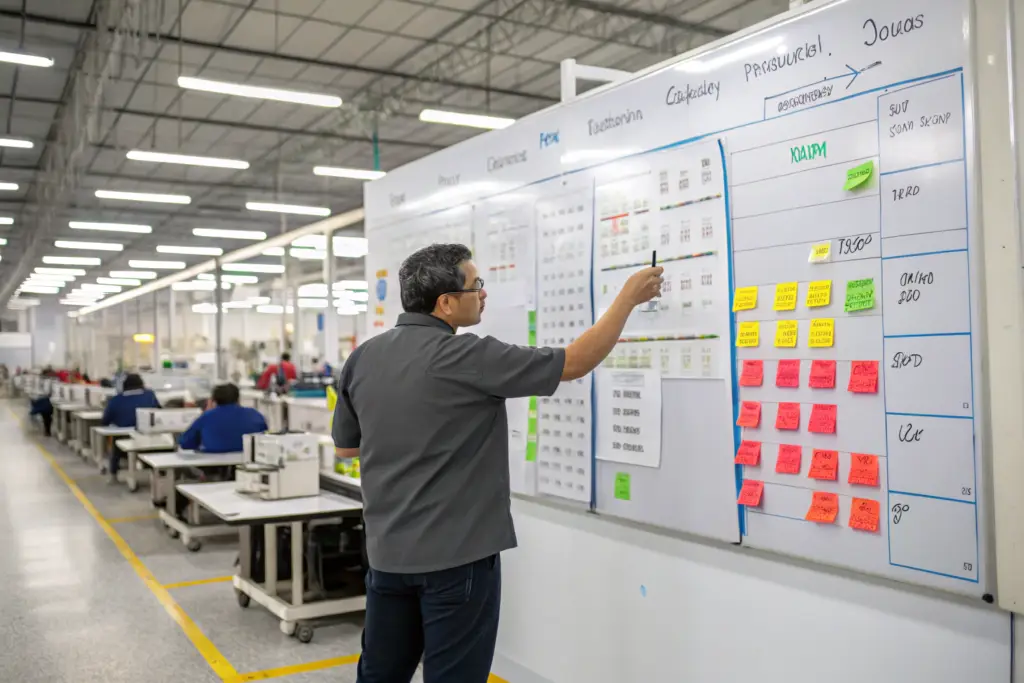
I received a phone call on October 3rd two years ago that I still think about whenever someone mentions the word "planning." A brand owner we had worked with for three seasons was on the line. Her voice was tight. She had just received a purchase order from a major department store. The order was for 4,500 units of her bestselling knit dress. The delivery deadline was November 15th. That was six weeks away. Her normal production lead time with us was eight weeks. She needed us to compress two weeks out of a process that was already running at full speed, during peak season when every factory in China was already oversold. I told her I would call her back in one hour. I pulled our production schedule, our fabric inventory report, and our capacity load chart. I called our fabric supplier. I called our dye house. I walked the sewing floor and spoke to the line supervisors directly. I called her back in 52 minutes. We could do it. But only because we had prepared for this moment months before she even knew the order was coming.
You properly handle massive seasonal demand spikes with your current clothing manufacturer by building a pre-negotiated surge capacity agreement that reserves production line hours and fabric inventory before the peak season begins. You share your sales forecast and promotional calendar with the factory 90 days in advance so they can pre-book greige fabric and allocate operator capacity. You commit to a minimum volume guarantee in exchange for priority production scheduling. And you structure your product line so that best-selling carryover styles can be replenished through a rapid restock program that bypasses the full sampling and development process. The brands that survive seasonal spikes are not the ones who react fastest when the spike hits. They are the ones who prepared for the spike before it was visible.
A seasonal demand spike feels like an emergency when you are in it. The purchase order arrives. The deadline is tight. The factory says they are at capacity. Panic sets in. But the spike was not created on the day the purchase order arrived. It was created on the day the brand's sales team pitched the department store, or the day the influencer's video went viral, or the day the Black Friday promotion was planned. The spike was predictable. The preparation should have started when the possibility of the spike was first discussed, not when the purchase order hit the inbox. I want to share exactly how we work with our brand partners at Shanghai Fumao to build the infrastructure that turns seasonal spikes from crises into executed orders.
How Should a Brand Negotiate a Surge Capacity Agreement Before Peak Season Arrives?
A brand owner I work with learned about surge capacity the hard way. In August 2023, she asked us to produce 2,000 additional units of a jacket that was performing well. We were already fully booked through October. Every production line was committed. Every fabric supplier was at capacity. We could not accept her order without displacing another brand's order, which we would not do. She had to find a second factory on extremely short notice. The quality was inconsistent. The delivery was late. She lost retail accounts. In August 2024, she did something different. In June, she signed a surge capacity reservation agreement with us. The agreement reserved 1,500 units of production capacity in September and October, the exact window when she had needed it the previous year. She paid a 10% deposit on the reserved capacity. When her reorder materialized in August, we had the capacity waiting. The goods shipped on time. The retail accounts were restocked. The season was saved.
A brand negotiates a surge capacity agreement by committing to a minimum production volume in exchange for a factory reserving specific production line hours during the peak season window. The agreement includes a base volume that the brand guarantees, a surge volume that the factory reserves the right to produce if the brand exercises the option by a specified date, and a deposit structure that compensates the factory if the brand does not utilize the reserved capacity. The factory benefits from predictable revenue. The brand benefits from guaranteed access to production during the period when capacity is scarcest. The negotiation should happen 60 to 90 days before the peak season window begins, because that is when the factory is building its production schedule and allocating capacity across brand partners.
The surge capacity agreement is not a standard purchase order. It is a financial instrument that trades cash commitment for capacity insurance. The brand pays a reservation fee for the option to use production capacity during a specific window. If the brand exercises the option, the reservation fee is credited against the production invoice. If the brand does not exercise the option, the factory keeps the reservation fee as compensation for holding capacity that could have been sold to another brand. This structure aligns incentives. The brand has a financial reason to forecast accurately. The factory has a financial reason to honor the capacity reservation.

What Deposit and Commitment Structures Make a Surge Capacity Agreement Fair for Both Parties?
The fair agreement balances risk between the brand and the factory. The factory's risk is turning away other orders to hold capacity for a brand that might not use it. The brand's risk is paying for capacity that might not be needed if the demand spike does not materialize. The standard structure we use at Shanghai Fumao has three components. First, the brand commits to a base volume that they are confident they will need. This base volume is priced at the standard production rate and requires a 30% deposit. The factory schedules this volume as firm production. Second, the brand reserves a surge volume above the base. The surge volume requires a 10% reservation deposit that is non-refundable if the brand does not exercise the surge option. If the brand exercises the surge option by the specified deadline, typically 21 days before the production window, the reservation deposit is credited toward the production invoice and the surge volume is priced at a 5% premium above the standard rate. The premium reflects the overtime and expedited material costs the factory incurs to add volume above the base plan. Third, the brand provides a rolling production forecast that updates monthly. The forecast shows the brand's best estimate of demand for the next 90 days, broken down by style. The forecast is not a commitment, but it helps the factory plan material procurement and labor allocation. The more accurate the brand's forecast, the more capacity the factory is willing to reserve for them.
Many brands treat their sales plans as confidential information. They do not want the factory to know they are planning a big promotion because they fear the factory will raise prices. This is a mistake. The factory that does not know about a planned promotion cannot prepare for the resulting demand spike. The factory that is surprised by a sudden reorder is a factory that has no fabric, no capacity, and no ability to deliver on time. The brand suffers the consequence of their own secrecy. We encourage our brand partners to share their promotional calendars and sales forecasts with us. When we know a brand is planning a Black Friday email blast, we pre-position greige fabric for their best-selling styles. When we know a brand is pitching a major retail account, we soft-reserve production capacity for the potential order. This information does not cause us to raise prices. It causes us to prepare. The prepared factory delivers on time. The unprepared factory delivers late. The price difference between the two is zero. The value difference is the entire season's profit. One of our longest-standing brand partners sends us a demand planning calendar every quarter. It shows their planned promotions, their expected reorder dates, and their high and low demand scenarios for each style. We use this calendar to align our material purchasing and production scheduling with their anticipated needs. In five years of this partnership, we have never missed a delivery window during a demand spike. The information flow is the foundation of the reliability.
How Can a Brand Structure Its Product Line to Enable Rapid Replenishment Manufacturing?
A brand I manufacture for carries 40 styles each season. Four of those styles generate 60% of their revenue. For years, they treated all 40 styles equally in their production planning. Every style was made to order with the same lead time. When a retail buyer placed a reorder for one of the four best-selling styles, the brand had to wait the full eight-week production cycle. They lost sales every single season because their best products were out of stock during the peak selling window. Two years ago, we helped them restructure their product line into two tiers: rapid replenishment styles and seasonal fashion styles. The four best-selling carryover styles are now maintained in a rapid replenishment program. Greige fabric is kept in stock. Production slots are reserved monthly. Reorders ship in 14 days instead of 56 days. The remaining 36 fashion styles follow the standard production timeline. The brand's revenue increased 22% in the first year after the change, entirely from capturing reorder demand that was previously lost to stockouts.
A brand structures its product line for rapid replenishment by identifying the 20% of styles that generate 80% of reorder demand and separating them from the seasonal fashion styles that follow a traditional production timeline. The rapid replenishment styles are manufactured using a pre-stocked greige fabric program where un-dyed fabric is held in inventory and can be colored, cut, and sewn on an accelerated schedule. The design of rapid replenishment styles is frozen for multiple seasons to eliminate the sampling and development time that consumes the first four weeks of a standard production cycle. The brand accepts slightly higher fabric carrying costs in exchange for the ability to restock best-sellers in two weeks instead of eight. The math almost always favors speed over cost savings.
Rapid replenishment is not appropriate for every style. A highly seasonal fashion piece with a short selling window does not need rapid replenishment because there is no reorder window. By the time the reorder arrives, the season is over. Rapid replenishment is for the carryover styles, the basics, the core franchise products that sell season after season with minimal design changes. These are the styles that consistently generate reorders, and these are the styles that benefit most from a compressed production timeline.

What Fabric Pre-Positioning Strategy Enables a 14-Day Production Turnaround?
The 14-day turnaround is only possible if the fabric is already in the factory when the reorder is placed. A standard production cycle spends the first three to four weeks on fabric sourcing, ordering, weaving or knitting, dyeing, and finishing. The actual cutting, sewing, and packing takes two to three weeks. By pre-positioning greige fabric, the brand eliminates the longest segment of the lead time. The greige fabric is purchased in bulk at the beginning of the season and stored in the factory's warehouse. When a reorder arrives, the greige fabric is pulled from inventory, dyed in the required color, and delivered to the cutting table within three to four days. The cutting, sewing, and finishing proceed on the standard timeline. The total production cycle compresses from eight weeks to two weeks. The cost of this speed is the carrying cost of the greige inventory. A brand that stocks 2,000 meters of greige cotton jersey at $3.80 per meter has $7,600 tied up in fabric inventory. If the fabric sits for three months, the carrying cost is roughly $190 at a 10% annual cost of capital. The gross profit from a single rapid replenishment order of 500 units at a $15 wholesale price and a $5 landed cost is $5,000. The $190 carrying cost is 3.8% of the profit from one order. The fabric pre-positioning economics are compelling. The brand that refuses to tie up cash in greige inventory is choosing to lose reorder sales worth far more than the carrying cost.
How Should a Brand Decide Which Styles Qualify for a Never-Out-of-Stock Core Program?
Not every style that sells well deserves a spot in the core program. The qualification criteria should be based on data, not intuition. A style qualifies for the never-out-of-stock program if it meets three conditions. First, the style has demonstrated consistent sell-through across at least two seasons. A style that was a hit in autumn but bombed in spring is a seasonal success, not a core staple. Second, the style has a stable design that will not change significantly next season. If the brand plans to update the fit, change the fabric, or redesign key details, the greige fabric pre-positioned for the current version becomes obsolete. Third, the style has a predictable reorder pattern with a known average order quantity and frequency. The brand can forecast that they will need approximately 300 units every four weeks during the selling season. This predictability allows the factory to maintain the right level of greige inventory and schedule recurring production slots. We work with our brand partners to run a core style qualification analysis at the end of each season. We review the sell-through data, the reorder history, and the design plans for the upcoming season. The styles that meet all three criteria are added to the rapid replenishment program. The styles that do not remain on the standard production timeline. The analysis removes the emotion from the decision.
What Communication Protocols Prevent Demand Spike Orders from Falling Through the Cracks?
A brand owner once sent me a reorder request via Instagram direct message. I did not see it for three days. Instagram is not a business communication channel. By the time I saw the message and routed it to our production team, three production days had been lost. The order shipped late. The brand owner was frustrated. I was frustrated. The system failed because the communication channel was informal. We fixed the problem immediately by establishing a single, formal communication channel for all production orders and by implementing a confirmation protocol that requires acknowledgment within four business hours. The Instagram message incident never repeated.
Communication protocols prevent demand spike orders from falling through the cracks by establishing a single, designated channel for all order communications, a mandatory acknowledgment response within a defined time window, and a weekly status call that reviews all open orders, in-process production, and upcoming capacity availability. The protocol eliminates the ambiguity of informal communication. The brand knows exactly where to send a reorder request. The factory knows exactly who is responsible for acknowledging it and executing it. The weekly call creates a recurring checkpoint where issues are surfaced and resolved before they become delays. During a demand spike, when pressure is high and time is short, the communication protocol is the safety net that catches the details that would otherwise be lost.
Demand spikes create communication chaos. The brand is urgently trying to place reorders while simultaneously managing wholesale accounts, running marketing campaigns, and handling customer service. The factory is juggling multiple brands, all of whom have urgent reorders during the same peak season window. Without a protocol, messages get lost, assumptions get made, and deadlines get missed. The protocol is boring. It is also the difference between a reorder that ships on time and a reorder that ships two weeks late.

What Should a Spike-Readiness Communication Cadence Look Like During Peak Season?
During peak season, the standard weekly check-in is not enough. A demand spike compresses the decision-making timeline. A question that can sit for three days during the off-season must be answered in three hours during peak season. The spike-readiness communication cadence we use at Shanghai Fumao has three elements. First, a daily production status email sent every morning at 8 AM Shanghai time. The email lists every active order for the brand, the current production stage, the percentage complete, and any issues requiring brand input. The brand owner reads the email over their morning coffee and responds to any flagged items. Second, a 24-hour acknowledgment requirement for all order-related communications. Any email, WeChat message, or production system notification related to an active order must receive an acknowledgment within 24 hours. The acknowledgment can be a single sentence: "Received, will review and respond by tomorrow." The acknowledgment is not the resolution. It is the confirmation that the message has been seen and is being processed. Third, a weekly video call every Monday that reviews the upcoming two weeks of production. The call is 30 minutes maximum. It follows a fixed agenda: review of orders shipping this week, review of orders entering production next week, review of fabric and trim availability for upcoming orders, identification of any risks or delays. The peak season communication protocol eliminates the back-and-forth of "just checking in" emails and replaces it with structured, predictable information flow.
The status update email is the most common email in the apparel supply chain. "What is the status of order 1042?" "Order 1042 is in sewing, expected to finish Thursday." This email exchange consumes time on both sides and provides information that is accurate only at the moment it was sent. Six hours later, the status might have changed. A shared digital production dashboard eliminates these emails entirely. The dashboard is a live, read-only view of the factory's production tracking system. The brand logs in and sees exactly where their order is: fabric received, cutting complete, 65% through sewing, finishing scheduled for Wednesday. The data is the same data the factory's production manager sees. It updates automatically as barcode scans and production milestones are recorded on the shop floor. At Shanghai Fumao, we provide every brand partner with access to a shared production dashboard. The dashboard shows the live status of every active order, the scheduled completion date, the actual versus planned progress, and any exception flags. A brand owner can check the dashboard at 10 PM from their home instead of sending an email and waiting until the next morning for a response. The dashboard does not replace human communication. Urgent issues still require a phone call. But it eliminates 80% of the routine status inquiry emails, freeing time on both sides for actual problem-solving.
What Backup Manufacturing Options Should a Brand Have When Their Primary Factory Is at Capacity?
A brand I manufacture for had a nightmare scenario in 2022. They had a 3,000-unit order with us for their winter collection. In September, a fabric shortage hit our region. The specific wool blend they had specified was unavailable. Our mill could not produce it. The brand had a choice: wait six weeks for the fabric to become available and miss their delivery window entirely, or find an alternative fabric and an alternative factory that had the capacity to run the order immediately. They had no backup plan. They had never qualified a second factory. They waited for the fabric. The order shipped five weeks late. The retail accounts canceled 40% of their orders. The brand lost $28,000 in revenue. The following year, they had two qualified backup factories and an alternative fabric specification for every style. The lesson cost $28,000 to learn.
A brand should have backup manufacturing options qualified and ready before the primary factory reaches capacity. The backup strategy includes identifying one or two alternative factories that can produce the brand's product categories, qualifying those factories with a small test order outside of peak season, and maintaining a relationship with the backup factories through a minimum annual order volume that keeps the relationship active. The backup factory should not be a direct competitor to the primary factory in the same geographic region, because regional disruptions like energy rationing, port closures, or material shortages affect all factories in the area simultaneously. A true backup is geographically diversified. A brand producing primarily in China might qualify a backup factory in Vietnam, Bangladesh, or even a domestic cut-and-sew operation for small emergency runs.
The backup factory strategy is insurance. The brand pays a premium for the insurance through the cost of qualifying the factory, the slightly higher price of the small test orders, and the management overhead of maintaining the relationship. The insurance premium is wasted if no emergency occurs. It is priceless if an emergency does occur. The brand that views the backup factory cost as unnecessary overhead is making the same calculation as a homeowner who cancels their fire insurance to save on premiums. The math works beautifully until the house burns down.

How Can a Brand Qualify a Secondary Factory Without Jeopardizing the Primary Relationship?
Factory relationships are sensitive. A primary factory that discovers the brand is working with a competitor may feel threatened and deprioritize the brand's orders. The brand must handle the secondary factory qualification with transparency and clear communication. The best approach is to inform the primary factory directly. "We value our partnership with you. We are building a backup production option for emergency situations and for product categories that may not be your specialty. This is not a replacement strategy. It is a risk management strategy. You remain our primary partner, and we will continue to place the majority of our volume with you." Most factory owners understand this logic. They have their own backup suppliers for fabric and trims. They understand the concept of diversification. The brand should also structure the secondary factory relationship to avoid direct competition. The secondary factory might handle the basic replenishment styles while the primary factory handles the complex fashion styles. Or the secondary factory might handle a specific product category that the primary factory is less efficient at producing. The dual factory sourcing strategy creates a clear division of labor that prevents the factories from viewing each other as rivals.
What Criteria Should a Brand Use to Evaluate a Factory's Spike Absorption Capability?
Not every factory can handle a demand spike, even if they have open capacity on paper. A factory's spike absorption capability is a function of their workforce flexibility, their supplier relationships, and their management systems. The evaluation criteria should include cross-trained operator percentage. A factory where 60% of operators can work on multiple stations can rebalance their lines to absorb a spike order without disrupting existing production. A factory where each operator only knows one station cannot. The evaluation should include fabric supplier depth. A factory that has relationships with three fabric mills for each major fiber category can source material for a spike order even when one mill is at capacity. A factory that relies on a single mill cannot. The evaluation should include weekend and overtime shift policies. A factory that has established relationships with operators for voluntary weekend shifts can add 20% to 30% capacity during a spike. A factory that has never run weekend shifts will struggle to staff them. The evaluation should include a test order placed during the factory's peak season to observe how the factory performs under real pressure. The factory capability assessment should be conducted before the emergency, not during it.
Conclusion
Seasonal demand spikes are not random events. They are the predictable consequence of a successful brand doing successful things: launching a popular product, winning a retail account, running an effective promotion, building a loyal customer base. The spike is a sign of health. The inability to fulfill the spike is a sign of inadequate preparation. The brands that handle spikes well are the brands that planned for the spike when it was still a possibility, not when it was already a problem. They negotiated surge capacity agreements before peak season arrived. They restructured their product lines to enable rapid replenishment of best-selling styles. They established communication protocols that prevent orders from falling through cracks during high-pressure periods. They qualified backup factories for the worst-case scenario when their primary factory cannot absorb the volume.
At Shanghai Fumao, we have built our production model around the reality that our brand partners will have demand spikes, and that our job is to absorb those spikes without breaking. Our surge capacity reservation system allows brands to secure production slots during peak season. Our greige fabric pre-positioning program enables 14-day reorder turnaround on carryover styles. Our shared production dashboard gives brands real-time visibility into their order status without a single status inquiry email. Our production planning team reviews promotional calendars with brand partners quarterly to align capacity with anticipated demand. These are not premium services. They are standard operating procedures because we believe a factory's value is measured by how reliably it delivers when the pressure is highest.
If your brand is entering a growth phase where seasonal demand spikes are becoming a recurring challenge, or if you have been burned by a factory that could not scale with you, reach out to us. At Shanghai Fumao, we will walk you through our surge capacity agreement structure, our rapid replenishment program requirements, and our production dashboard capabilities. Contact our Business Director, Elaine, at elaine@fumaoclothing.com. She can share a case study of how one of our brand partners used our greige pre-positioning program to capture an additional $45,000 in reorder revenue during a single peak season. Demand spikes are not problems to survive. They are opportunities to capture. Prepare for them, and they become the most profitable weeks of your year.