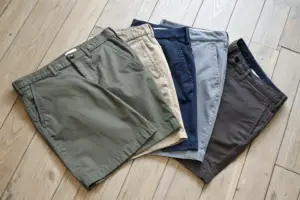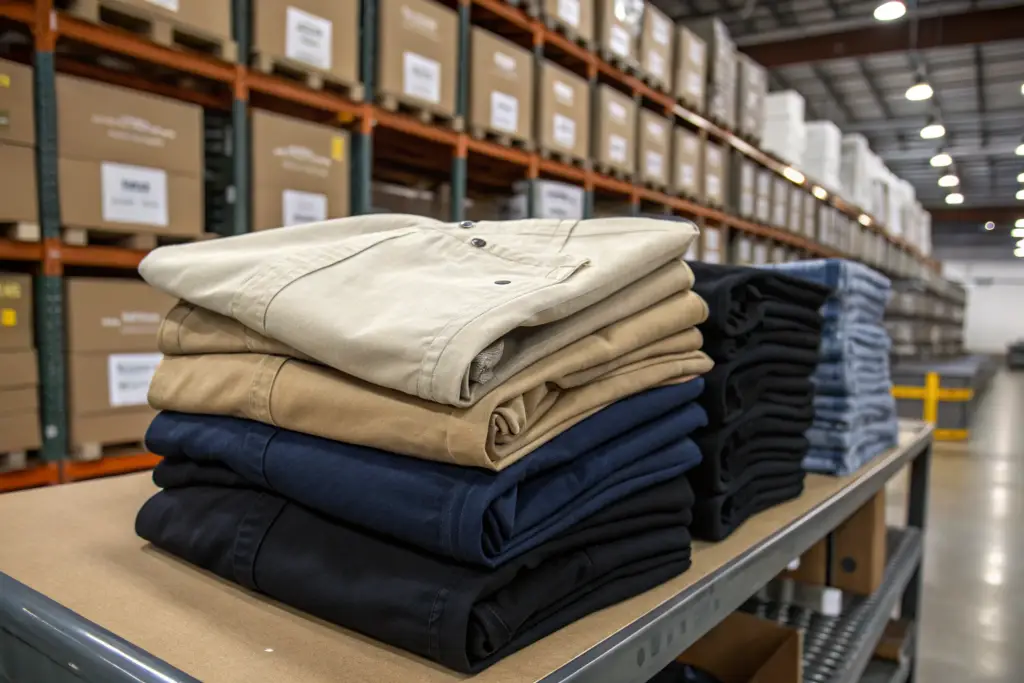
You are a clothing distributor. Your business is not about one hot season. It is about building a catalog of products that retailers reorder year after year. You live by the repeat purchase. A product that spikes and crashes is a headache. A product that sells steadily, season after season, with predictable margins and low returns, is the foundation of your business. You look at your sales data. One category consistently outperforms the others in stability and profitability. The classic twill short. It is not exciting. It is not trendy. It is reliable. It is the product that pays the rent. You have never questioned why it works. You just know it does. But understanding why it works allows you to invest in it more intelligently, to explain its value to your retail accounts, and to source it more effectively.
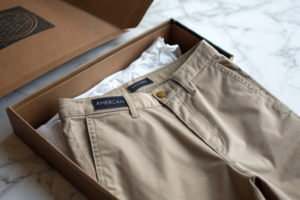
Classic twill shorts are a staple for American clothing distributors because the cotton twill fabric delivers an unmatched combination of durability, comfort, and versatile appearance that serves the broadest possible American consumer base. The diagonal twill weave resists abrasion and holds its shape through repeated wear and washing. The cotton fiber breathes in summer heat. The fabric surface has a subtle texture that looks equally appropriate on a golf course, at a backyard barbecue, or in a casual Friday office. For the distributor, twill shorts offer predictable year-over-year demand, strong wholesale margins, low return rates, and a long selling window from March through September. They are the closest thing to a guaranteed revenue stream in the apparel industry.
At Shanghai Fumao, classic twill shorts are our single largest product category by volume. We produce them for distributors, brands, and retailers across the United States. I have watched the order patterns for years. The twill short is the backbone of our production schedule. It fills our lines from February through July. It reorders reliably. This article explains the fabric science, the consumer psychology, the distributor economics, and the sourcing specifications that make the classic twill short an indispensable product for American distributors.
What Makes Cotton Twill Fabric Uniquely Suited for the American Market?
The fabric is the product. The cotton twill weave is not an arbitrary choice. It is an engineered structure that delivers specific performance benefits that align perfectly with the American consumer's lifestyle and expectations. The American consumer wears shorts hard. He wears them to backyard work, to sporting events, to park outings with his kids. He washes them frequently. He expects them to last multiple summers. He expects them to look presentable enough for a casual restaurant. The cotton twill fabric delivers on all of these demands.
I have supplied twill shorts to distributors in every region of the United States. The feedback is consistent. The customer wants a short that feels substantial, not flimsy. He wants it to survive the washing machine without shrinking or fading excessively. He wants it to have enough structure to look like a real garment, not pajamas. The 260 to 300 GSM cotton twill that we use for our classic shorts meets every one of these criteria. The cotton twill fabric properties are well-documented. The diagonal weave provides abrasion resistance. The cotton fiber provides breathability. The weight provides drape and durability.
The twill weave is a specific construction. It is not a plain weave. It is not a satin weave. Its diagonal structure gives it unique properties that make it the default fabric for classic shorts. Let's examine these properties in detail.
Why Does the Twill Weave Outperform Plain Weave for Durability and Drape?
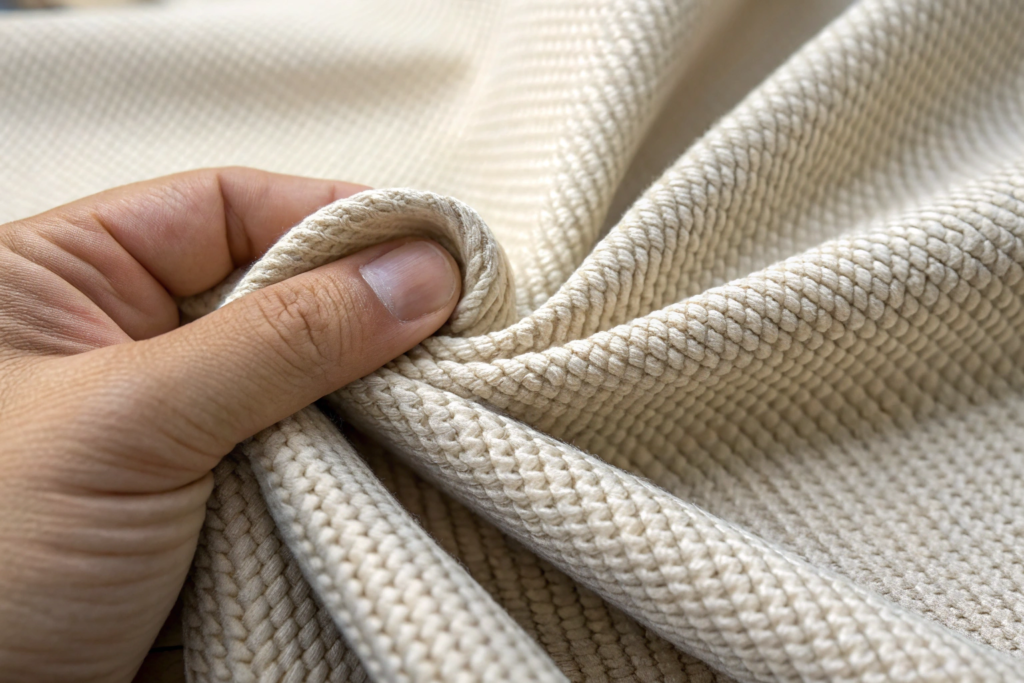
A twill weave is characterized by a diagonal rib pattern. The weft yarn passes over multiple warp yarns before going under one. This creates a fabric with long floats on the surface. These floats distribute friction across multiple yarns, making the fabric more abrasion-resistant than a plain weave, where each yarn intersection takes the full force of friction. The twill weave also gives the fabric a natural bias stretch. It moves with the body slightly, even in 100% cotton without spandex. This improves comfort.
The drape of a twill fabric is superior to a plain weave of the same weight. The diagonal structure allows the fabric to hang in smoother, more fluid folds. A twill short looks tailored. A plain weave short of the same weight looks stiffer and wrinkles more sharply. The twill weave versus plain weave for apparel comparison explains the structural differences. The twill weave is the reason a chino short looks and feels like a chino short.
How Does the 260-300 GSM Weight Range Balance Breathability and Structure?
GSM, grams per square meter, is the objective measure of fabric weight. A 260 GSM twill is the lighter end of the classic range. It is breathable, comfortable in high heat, and has a soft drape. A 280 GSM twill is the sweet spot. It has excellent body, hangs cleanly, resists wrinkling, and feels substantial. A 300 GSM twill is the heavier end. It is almost a lightweight work pant. It is incredibly durable and holds a crease beautifully.
Below 240 GSM, the twill loses its structure. The shorts feel flimsy. The pockets show through the fabric. The garment wrinkles excessively. Above 320 GSM, the shorts become too heavy for summer wear in most climates. The 260 to 300 GSM range is the Goldilocks zone. It provides the hand feel of quality, the durability of a workwear fabric, and the breathability of a summer garment. The fabric weight GSM guide for shorts explains the weight ranges. A distributor should specify the GSM in the purchase order. It is the single most important fabric specification.
Why Does the American Consumer Trust the Twill Short Year After Year?
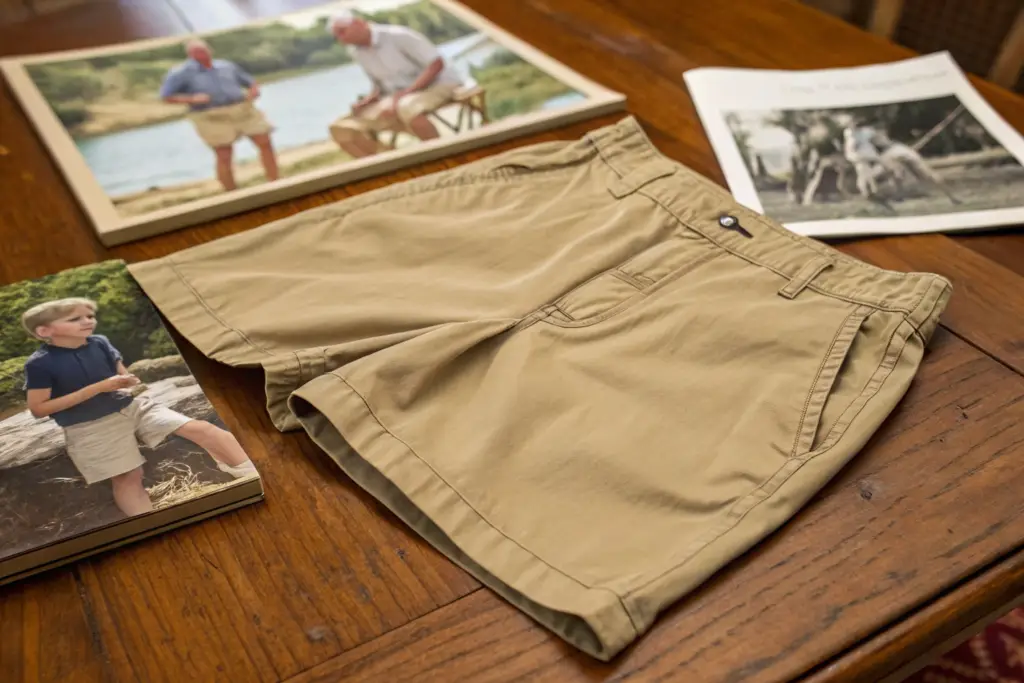
The twill short is not just a piece of fabric. It is a cultural artifact. It is the uniform of the American weekend. The American man has been wearing some version of the khaki twill short since the 1950s. His father wore them. His grandfather wore them. They are associated with leisure, family, and comfort. This generational trust is a powerful commercial force. A consumer who has worn a product for decades does not need to be convinced to buy it. He needs to be reminded that it is available in his size and preferred color.
I spoke with a distributor who has been selling twill shorts to the same family-owned menswear stores for over twenty years. He told me, "My retailers have customers who come in every May and ask for the same twill short. They do not want a different style. They do not want a different fabric. They want the same short they bought last year, in a fresh color. My job is to have it for them." This customer loyalty is the distributor's dream. It is predictable, profitable, and requires minimal marketing effort. The history of khaki and chino in American menswear traces this cultural evolution. The twill short is woven into the fabric of American casual life.
The consumer trust is built on practical experiences. The short performs. It washes well. It pairs with everything. These practical virtues create repeat purchase behavior. Let's examine the key consumer benefits.
How Does the "Washes Well, Wears Well" Experience Drive Repeat Purchases?
A man buys a twill short. He wears it. He washes it in warm water. He dries it in the dryer. He pulls it out. It looks almost the same as when he bought it. The color has not faded significantly. The fabric has not shrunk into a different size. The seams are still intact. The short is ready to wear again. This positive experience builds trust. The next time he needs shorts, he buys the same brand. He buys it in another color. He tells his friend.
This experience is engineered by the fabric quality and the pre-shrinking process. A 280 GSM twill that has been properly sanforized or pre-washed will not shrink beyond 2%. The color fastness will be high if the dyeing process was done correctly. The fabric care and performance expectations are met or exceeded. The product delivers on its implicit promise.
Why Does the Twill Short's Versatility Justify a Higher Wholesale Price?
A twill short is not a single-use garment. It is not for the gym only, or the beach only. A man can wear the same twill short to a casual lunch, a family barbecue, a walk in the park, and a trip to the hardware store. It pairs with a polo shirt, a t-shirt, a button-down, or even a casual blazer. This versatility means the short is worn more frequently than a specialized garment. The cost-per-wear is low. The consumer feels he is getting good value.
This perceived value allows the retailer, and the distributor upstream, to command a higher price than for a less versatile garment. The consumer is willing to pay $55 for a twill short he will wear fifty times a year. He is less willing to pay that for a trend short he will wear five times. The consumer value perception and pricing for basics analysis shows this relationship. The twill short's versatility justifies its price.
What Is the Distributor Business Case for the Classic Twill Short?
Distributors make decisions on numbers. The numbers for the classic twill short are compelling. The gross margin is strong. The return rate is low. The reorder rate is high. The inventory risk is low because the product does not go out of style. Unsold stock from August can be stored and sold next March at full price. The cash conversion cycle is healthy. The twill short is a financial asset, not a financial risk.
I reviewed the aggregate sales data from our distributor clients over three years. Twill shorts had an average gross margin of 48 to 55%. The return rate from retailers was consistently below 4%. The reorder rate, the percentage of retail accounts that placed a second order within the same season, was over 80%. These are exceptional metrics for any apparel category. The wholesale distribution metrics for apparel benchmarks show that core basics like twill shorts consistently outperform fashion categories on profitability and inventory productivity.
The financial case is built on stable demand, high inventory turnover, and low markdown pressure. Let's examine the two most powerful financial drivers for the distributor.

How Does the Long Selling Window from March to September Maximize Inventory Turns?
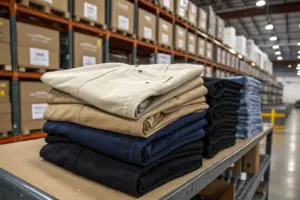
The twill short sells for seven months of the year in most of the United States. In the South and Southwest, it sells for nine or ten months. The first shipments go to retailers in March for the spring break and early Easter traffic. Reorders happen in May for the Memorial Day push. Further reorders happen in June and July for the peak summer season. The last reorders happen in August for the back-to-school traffic in warm climates. A single SKU can turn over three or four times in one season.
This long selling window is unique to core basics. A trendy short might have a six-week selling window. The twill short has a six-month window. The inventory investment generates revenue multiple times. The inventory turnover and seasonal selling windows guide explains the financial impact of an extended selling season. The twill short is the most efficient user of inventory dollars.
Why Do Twill Shorts Generate the Highest Reorder Rates Among Shorts Categories?
The twill short is a replenishment item. It is not a one-time purchase. A retailer stocks the khaki twill short. It sells through in three weeks. The retailer reorders the same SKU. The reorder process is simple. No new style number. No new vendor setup. A repeat purchase order. The distributor's cost to process a reorder is much lower than the cost to sell a new style. The margin on a reorder is higher because the sales cost is lower.
The reorder rate on twill shorts is higher than on linen shorts, denim shorts, or athletic shorts. Linen is more seasonal and niche. Denim has more style variation. Athletic shorts are more trend-driven. The twill chino short is the most consistent, repeatable purchase in the shorts category. The reorder rate analysis by product category confirms this. The twill short is the distributor's most efficient revenue generator.
How Should a Distributor Source a Quality Twill Short for Maximum Margin?
The product is proven. The margin opportunity is clear. The distributor's challenge is sourcing a twill short that delivers the quality the retailer expects at a cost that preserves the distributor's margin. This is a specification and negotiation challenge. The distributor must know the exact fabric weight, the minimum stitch density, the zipper brand, and the pre-shrinking process. These specifications must be in the purchase order. The factory must be audited for quality and compliance.
I advise our distributor clients to lead with specifications, not with price. A distributor who asks "What is your best price for a twill short?" gets a price based on the factory's standard, which might be a 220 GSM fabric with a generic zipper. A distributor who asks "Can you produce a 280 GSM twill short with a YKK zipper, 12 SPI at stress points, and pre-shrunk fabric?" gets a price for a quality product. The wholesale sourcing specifications for twill shorts guide provides a template. The specification is the quality contract.
The cost structure of a twill short is transparent. The fabric is the largest cost, followed by labor, trims, and overhead. A distributor who understands these proportions can negotiate intelligently.
What Minimum Specifications Should a Distributor Demand for a Wholesale Twill Short?
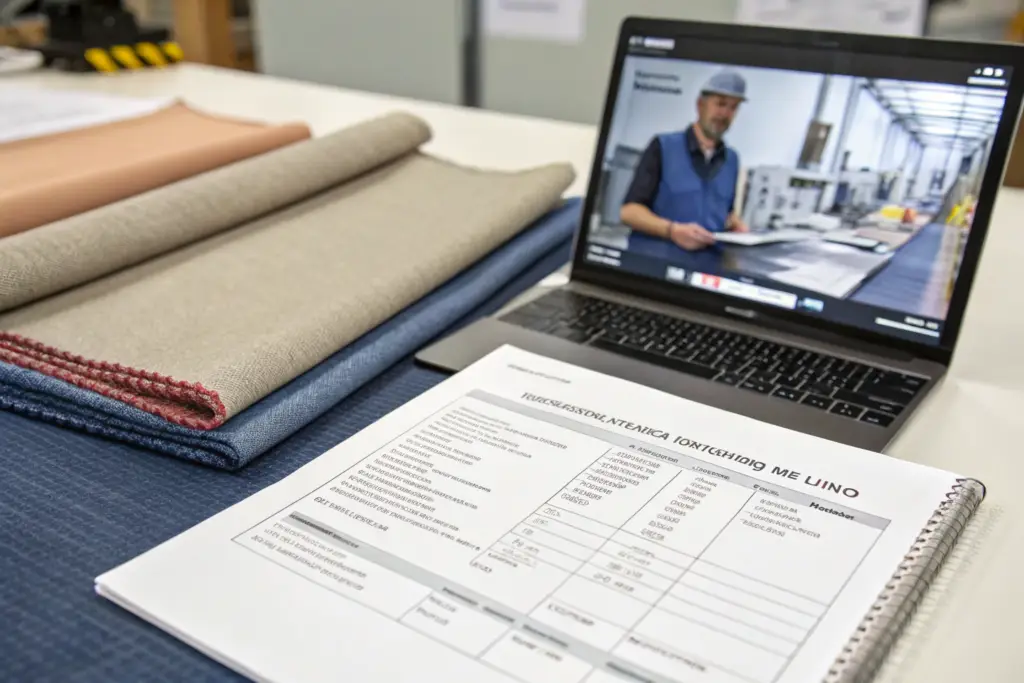
The minimum specifications for a quality wholesale twill short are a fabric weight of 260 to 300 GSM in 100% cotton twill, pre-shrunk to a residual shrinkage of under 2%, a YKK #5 metal zipper or equivalent, a minimum stitch density of 10 to 12 stitches per inch at main seams and stress points, bartack reinforcements at pocket corners and the zipper fly base, and consistent sizing with a graded measurement chart and agreed tolerances of plus or minus half an inch on circumferences.
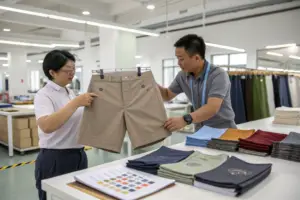
The distributor should require a pre-production sample made with the exact bulk fabric and trims. The sample should be measured against the spec sheet. It should be washed three times and re-measured. Only after the sample passes all checks should the bulk order be released. The garment specification minimums for wholesale guide provides a comprehensive list.
How Can a Core Fabric Program Reduce Cost and Lead Time?
A core fabric program is an agreement between the distributor and the factory. The factory stocks greige, undyed, 280 GSM cotton twill in its warehouse. The distributor places orders throughout the season. The factory dyes the greige fabric to the distributor's color specifications and cuts the shorts. This eliminates the fabric weaving lead time, which is the longest part of the production process. The lead time drops from 45 days to 25 days. The distributor can reorder faster and capture in-season demand without carrying excess inventory.
The core fabric program also reduces the per-unit cost because the factory buys the greige fabric in large volumes for multiple orders. The cost saving is shared with the distributor. The core fabric program benefits for distributors guide explains this model. A distributor with a consistent, year-after-year twill short program should negotiate a core fabric program with their factory.
Conclusion
The classic twill short is a staple for American clothing distributors because it is an almost perfect commercial product. The cotton twill fabric delivers durability, comfort, and a presentable appearance that the American consumer has trusted for generations. The consumer wears the short frequently, washes it with confidence, and returns to buy more. The distributor enjoys a long selling season, high reorder rates, low return rates, and strong margins. The product is not subject to trend volatility. It is a reliable, predictable revenue stream.
The key to maximizing the twill short opportunity is sourcing it correctly. The distributor must specify the fabric weight, the stitch density, the zipper brand, and the pre-shrinking process. The distributor must build a relationship with a factory that can deliver consistent quality and offer a core fabric program for faster reorders and lower costs. The twill short is not a product to be sourced on price alone. A cheap twill short will underperform, generate returns, and damage the distributor's retail relationships. A quality twill short, sourced at a fair price, will build the distributor's reputation and generate profits for years.
At Shanghai Fumao, classic twill shorts are our core competency. We stock greige 280 GSM cotton twill. We use YKK zippers as standard. We pre-shrink all fabric before cutting. We have a dedicated QC process for twill shorts. Our distributor clients reorder season after season. If you are a clothing distributor looking to build or strengthen your twill short program, contact our Business Director, Elaine, at elaine@fumaoclothing.com. She will send you our twill fabric swatch book, our wholesale pricing, and a sample of our quality. Let us be your twill short supply partner.