You are launching a new line of custom team uniforms. You have the perfect lightweight, moisture-wicking fabric. The design is bold. But when the sample arrives, the print is a disaster. It is stiff, plastic-like, and blocks the breathability of the mesh. Or worse, it cracks and peels after the first game. A distributor of custom activewear told me, "I lost a whole soccer club account because the player names cracked after one wash. I didn't realize printing on performance polyester was so different." He learned the hard way that sports jersey printing is a specialized science.
The best printing techniques for sports jersey fabrics in 2026 are those that preserve the fabric's performance properties. Sublimation remains the undisputed king for all-over, edge-to-edge graphics on white polyester. For spot logos and numbering on any color jersey, High-Elasticity Screen Printing and Premium Heat Transfers (Sports Flex Vinyl) are the most durable and professional choices.
At Shanghai Fumao, we produce thousands of custom sports jerseys for teams, leagues, and activewear brands. We have tested every method on the market. We know what survives the season and what fails after the first laundry cycle. Let me break down the science and the art of decorating high-performance fabrics so your team looks sharp and professional, game after game.
Why Is Sublimation the Gold Standard for All-Over Jersey Prints?
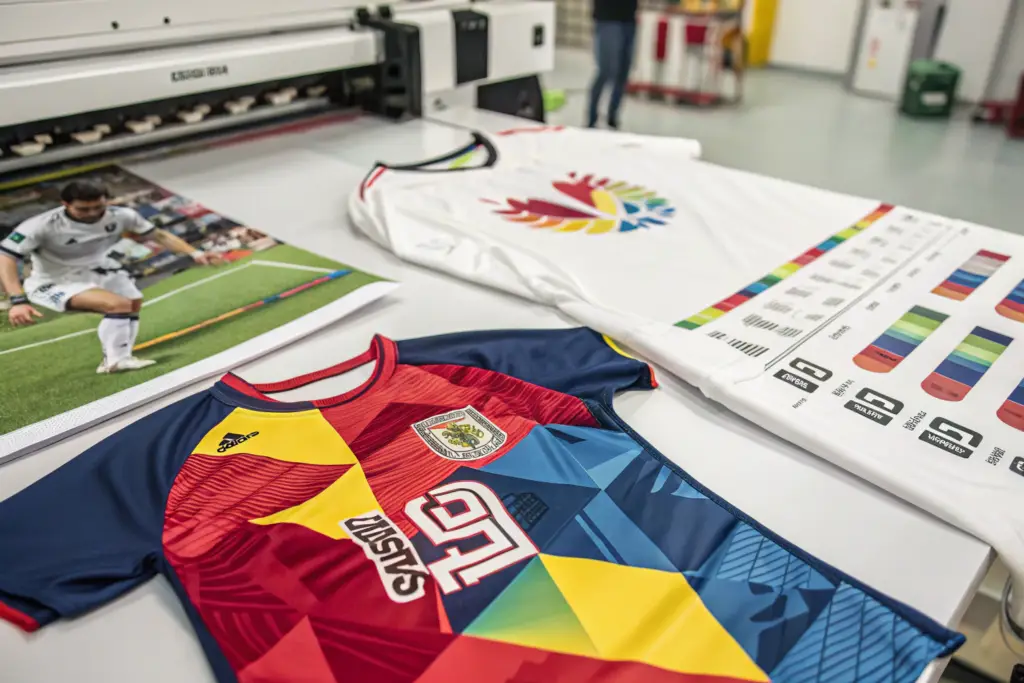
If you have ever admired a professional cycling jersey or a vibrant soccer kit with complex gradients and sponsor logos seamlessly integrated into the fabric, you have seen Sublimation. It is not a print that sits on top of the cloth. It is a dye that becomes part of the cloth. This is the defining characteristic that makes it perfect for performance wear.
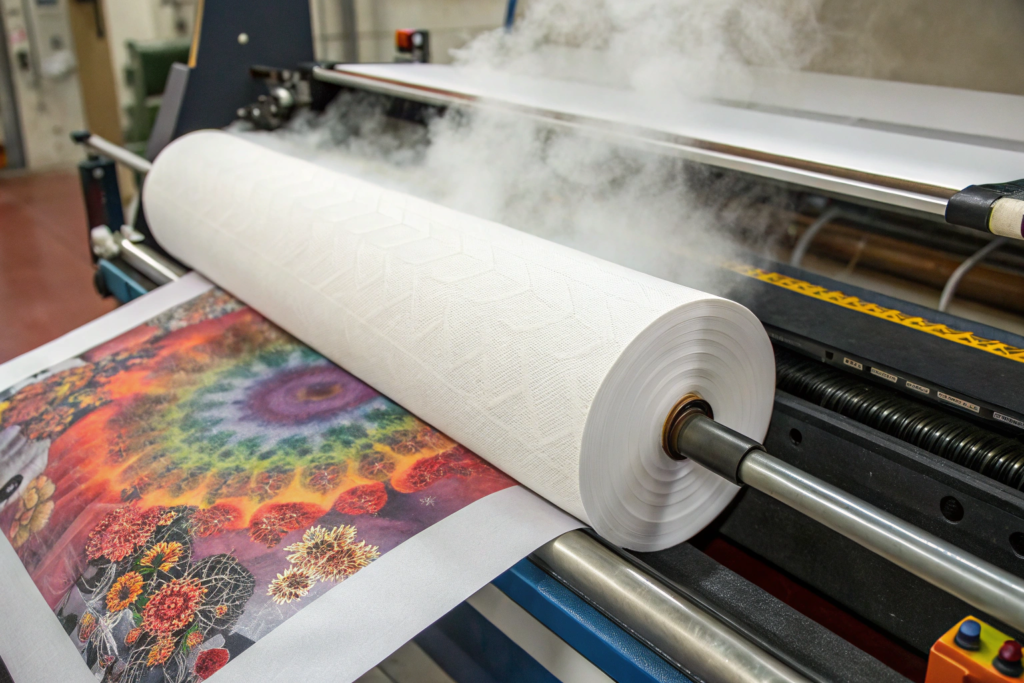
Sublimation is the gold standard for all-over jersey prints because the dye penetrates the polyester fiber and becomes permanent. The result is a print with zero handfeel, 100% breathability, and absolute colorfastness. It will never crack, peel, or fade, even after hundreds of washes. It allows for edge-to-edge, photorealistic designs in unlimited colors.
I recall a startup activewear brand that wanted to create a line of unique, artist-designed cycling jerseys. They initially tried to use screen printing for the complex designs. The results were heavy, stiff, and the fine details were lost. We switched them to Sublimation. The difference was transformative. The jerseys were lightweight and breathable. The colors were incredibly vibrant. The intricate, painterly details of the artwork were perfectly reproduced. The brand was able to command a premium price because the product looked and performed like professional-grade gear. This is the power of choosing the right technique for the fabric.
What Are the Limitations of Sublimation?
Sublimation is incredible, but it is not magic. It has two primary limitations:
- Fabric Content: It only works on polyester or polymer-coated surfaces. The higher the polyester content, the more vibrant the colors. It does not work on natural fibers like cotton. For sports jerseys, this is usually a perfect match (100% polyester).
- Fabric Color: The process is like dyeing. You can only dye a white or very light-colored fabric effectively. You cannot sublimate a light, vibrant design onto a black jersey. The black base color will overpower the translucent sublimation dye.
For these scenarios—dark-colored jerseys or spot logos on any color jersey—you need a different technique.
How Does Sublimation Allow for "Any Number, Any Name" Customization?
This is a massive advantage for team sports. With Screen Printing, every different number and name combination requires a separate screen, which is prohibitively expensive and slow for custom orders. With Sublimation, the name and number are simply part of the digital design file. Each jersey can have a completely unique name and number printed on it with no additional setup cost or time. This is why sublimation is the backbone of the custom team uniform industry. It allows for true mass customization.
How Do You Screen Print on Stretchy, Moisture-Wicking Mesh?
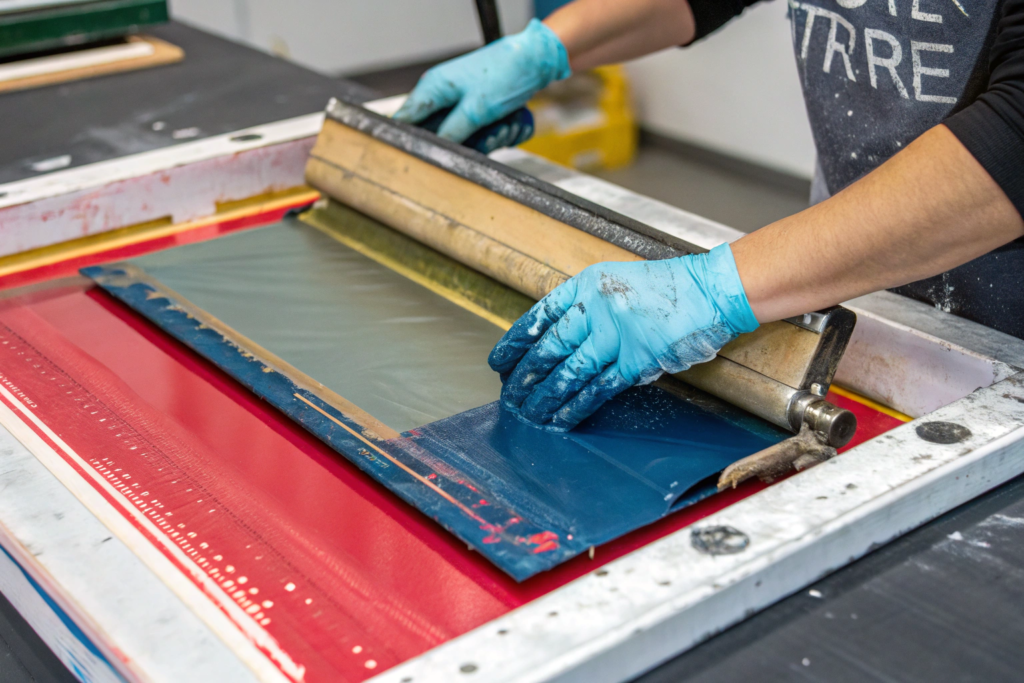
You have a dark-colored polyester jersey. You need a crisp, solid white team logo on the chest. Sublimation will not work on the dark fabric. This is where Screen Printing comes in. But you cannot use the same ink you would use on a cotton t-shirt. You need specialized inks and techniques designed for performance fabrics.
Screen printing on sports mesh requires specialty High-Elasticity Inks (often silicone-based or specific Plastisol with a stretch additive) and precise curing control. These inks are formulated to stretch with the fabric without cracking and to resist "bleeding" (where dye from the polyester fabric migrates into the ink during curing). A lower mesh count screen is often used to deposit a thicker, more durable ink layer.
We produce thousands of team jerseys with screen-printed sponsor logos. The key to our success is the Stretch Test. We test every new ink batch and every new fabric combination. The printed fabric must stretch to 30% elongation with zero cracking. We also use Low-Bleed Inks for dark polyester. These specialty inks contain a dye-blocking agent that prevents the dark dye from the jersey from turning the white print pink over time. This is the level of technical detail required for professional activewear decoration.
What Is "Silicone Ink" and Why Is It Superior for Performance Wear?
Silicone Ink is a premium screen-printing ink that is becoming the industry standard for high-end activewear and jerseys. Unlike traditional Plastisol, which is PVC-based and can feel like a plastic sticker, Silicone Ink is incredibly soft, flexible, and durable. It has a "rubbery" feel that is pleasant to the touch. More importantly, it has exceptional elongation and recovery. It stretches with the fabric seamlessly and snaps back without cracking. It also offers superior wash fastness and chemical resistance (important for withstanding sweat and frequent washing). It is more expensive than standard Plastisol, but for a brand focused on top quality performance wear, it is well worth the investment.
How Do You Prevent "Dye Migration" on Dark Polyester Jerseys?
Dye Migration is the scourge of screen printing on polyester. It happens when the heat from the curing process causes the dye in the dark fabric to turn into a gas and "migrate" into the wet ink layer, tinting the print (e.g., turning a white logo pink or grey). To prevent this, we use a multi-pronged approach:
- Low-Bleed Inks: We use inks specifically formulated to block dye migration.
- Lower Curing Temperatures: We cure the ink at the lowest possible temperature for the required time.
- Grey Underbase: For white prints on very dark or problematic fabrics, we print a special grey blocker base layer first. This acts as a physical and chemical barrier.
This is a non-negotiable part of our quality control process for any dark polyester garment.
What Role Do Premium Heat Transfers Play in Team Customization?
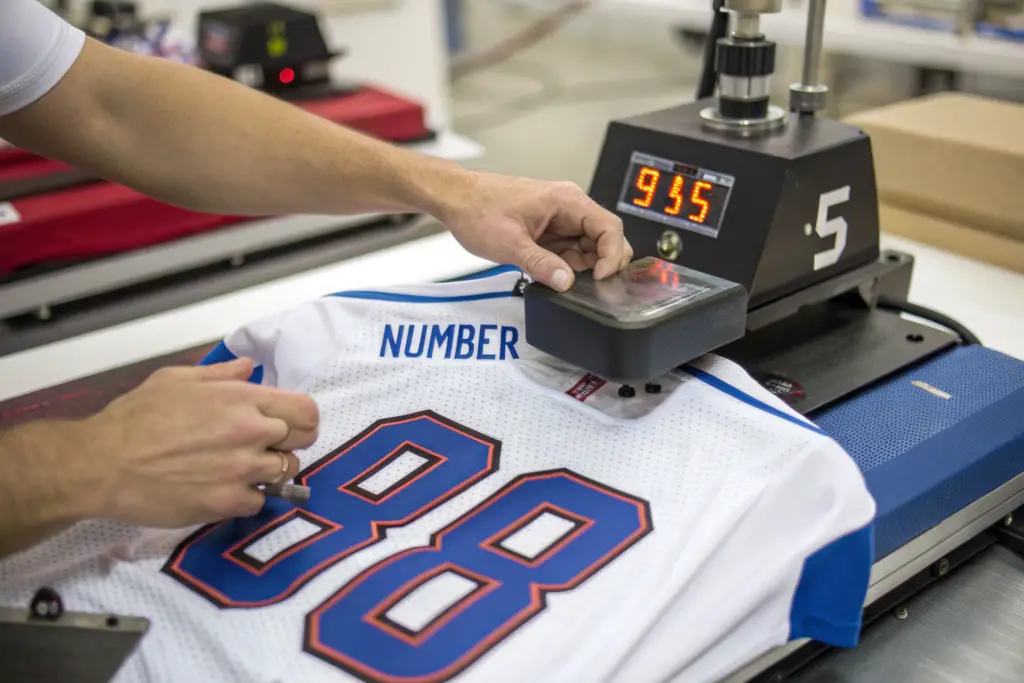
For many teams, leagues, and small brands, the ultimate need is flexibility. They need to be able to produce a single custom jersey with a specific player name and number, quickly and profitably. This is the domain of Premium Heat Transfers, specifically Sports Flex Vinyl.
Premium Heat Transfers (Sports Flex Vinyl) are the go-to solution for on-demand player personalization. They offer a durable, professional-looking matte finish, are available in a vast array of colors and special effects (metallic, holographic, glow-in-the-dark), and require minimal equipment—just a heat press. They are perfect for low-volume, high-mix customization.
A local sports distributor we work with keeps a stock of blank jerseys and a wide inventory of colored Sports Flex Vinyl. When an order comes in for a youth soccer team, they cut the names and numbers on a small plotter cutter in their shop and heat-press them onto the jerseys in minutes. They can turn around a full team order in a single day. This business model would be impossible with screen printing. The durability of modern Sports Flex is excellent, typically lasting the life of the garment when applied with the correct heat and pressure.
How Does Heat Transfer Vinyl Differ from Cheap, Crack-Prone Transfers?
The term "heat transfer" covers a vast range of quality. Cheap, "digital" transfers that you can print on an inkjet printer are essentially a thin layer of plastic glue with ink on top. They crack and peel quickly. Premium Sports Flex Vinyl is a thick, solid, polyurethane (PU) film. It is not printed. The color is the material itself. It is cut into the shape of the letters or numbers using a plotter cutter. When applied with a heat press, it melts into the fabric of the jersey, creating an incredibly strong mechanical bond. It is soft, flexible, and designed for the rigors of athletic competition and industrial laundering. This is what professional teams use for player names.
Can Heat Transfers Be Used for Complex, Multi-Color Logos?
Yes, with a technique called Screen-Printed Transfers (or Plastisol Transfers) . This hybrid approach combines the best of both worlds. The complex, multi-color logo is screen-printed in reverse onto a special release paper, using high-quality, stretchy inks. A powdered adhesive is applied. This "transfer" is then shipped to the customer or the decorator. They simply position it on the jersey and apply it with a heat press for a few seconds. The result is a screen-printed look with the application ease of a heat transfer. This is a popular and cost-effective method for teams and smaller brands who need a professional logo but cannot meet the MOQs or setup costs of traditional screen printing.
How Do We Ensure Print Durability for Athletic Performance and Laundering?
A sports jersey is not a fashion garment that is worn gently and washed occasionally. It is a piece of athletic equipment. It is subjected to extreme stress: stretching, pulling, sweat, friction, and frequent, aggressive laundering with strong detergents. The print durability requirements are exponentially higher.
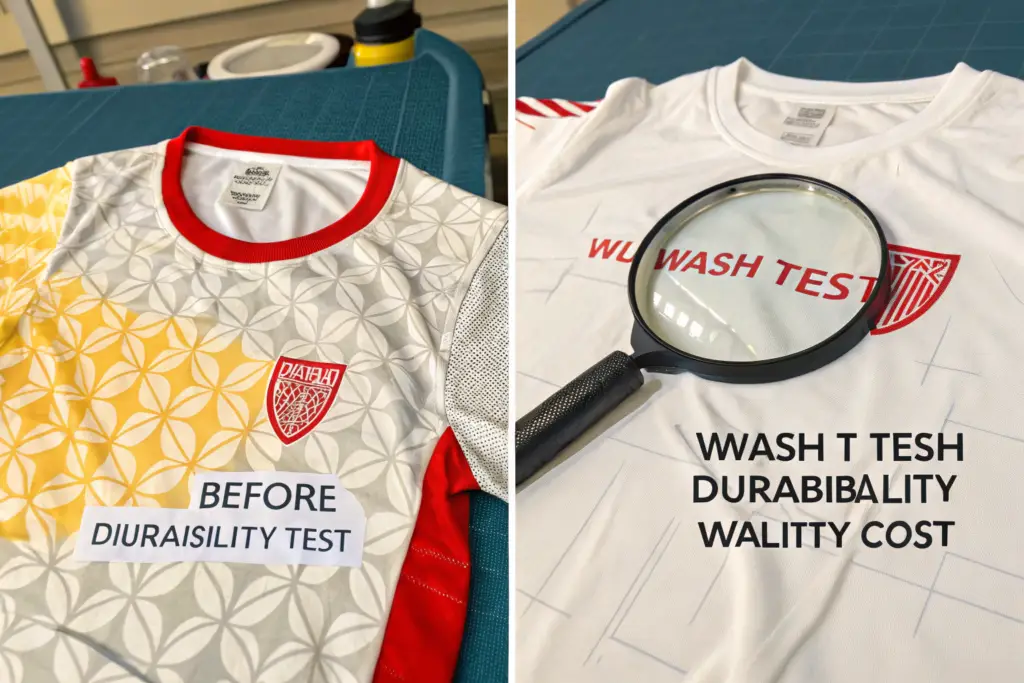
Ensuring print durability for sports jerseys requires a rigorous testing protocol that simulates real-world athletic use. This includes the Stretch & Recovery Test (ensuring the print does not crack when the fabric is elongated), the AATCC Wash Fastness Test (simulating 20-50 home or industrial launderings), and the Crocking Test (ensuring the print does not rub off onto other fabrics).
We do not rely on manufacturer claims. We test every new decoration method and every new fabric combination in our own lab. We recently tested a new eco-friendly water-based ink for a client. It looked great initially but showed unacceptable fading after our 20-wash accelerated test. We rejected it and reverted to our proven, high-durability Silicone Ink formulation. The client never knew there was a potential issue. They just received jerseys that lasted. This is the value of a clothing manufacturer who prioritizes long-term quality over short-term trends.
What Is the "Stretch Test" Protocol for Jersey Prints?
The Stretch Test is non-negotiable. We take a sample of the printed jersey fabric. We measure the print. We stretch the fabric to 30% elongation in both the length and width directions. We hold it for 10 seconds. We release. We repeat this cycle 10 times. The print must show absolutely no cracking, splitting, or delamination. This test simulates the stress of a player pulling the jersey over their pads or a defender grabbing the fabric. If a print passes this test, it will survive the game.
How Does the Fabric Itself Impact Print Longevity?
The fabric and the print are a system. A cheap, low-quality polyester mesh might have a slick, uneven surface that prevents ink from adhering properly. The fiber itself might be weak, causing the print to "pull away" from the surface over time. We only source high-quality, performance-grade polyester fabrics from reputable mills. We know which fabrics are compatible with which inks. This holistic understanding of the garment system—fabric, ink, and construction—is what ensures the final product meets the demands of the athlete. This is the difference between a promotional giveaway jersey and a true piece of performance activewear.
Conclusion
Printing on sports jersey fabrics in 2026 is a sophisticated blend of material science and athletic engineering. It is about understanding the unique demands of performance polyester and selecting the decoration method that enhances, rather than hinders, the garment's function. Whether it is the all-over, permanent beauty of Sublimation, the crisp durability of Silicone Screen Printing, or the on-demand flexibility of Sports Flex Vinyl, the right technique exists for every need.
At Shanghai Fumao, we combine our deep expertise in performance fabrics with a mastery of these specialized decoration techniques. We ensure that the team jerseys and activewear we produce not only look incredible on day one but continue to perform and look professional season after season. We sweat the details—the stretch, the wash, the cure—so your team can focus on the game.
If you are developing a line of custom sports jerseys or performance activewear and need a partner who understands the science of the print, let's talk. Our Business Director, Elaine, can discuss the best decoration options for your specific design and performance requirements. Please email Elaine at: elaine@fumaoclothing.com.