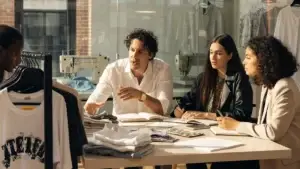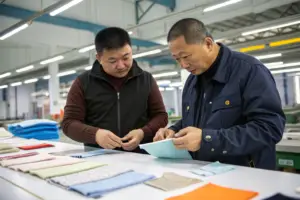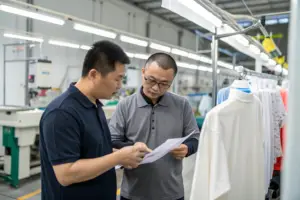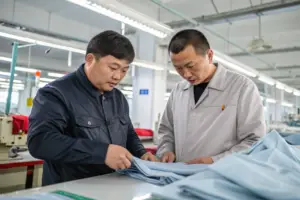
You have a design. It is not a basic t-shirt. It is not a simple hoodie. It has an unusual sleeve, a complex draping detail, a rare style of pocket, a unique combination of fabrics. You have been told by other factories, "Sorry, too complicated. Our line is set up for basic runs." You start to wonder if your vision is too ambitious. A brand owner with a fiercely unique aesthetic told me, "I was afraid I'd have to compromise my design to fit a factory's limitations. I thought 'rare style' meant 'can't be made.'"
Yes, a skilled Chinese manufacturer can absolutely produce rare style clothing designs. In fact, the concentration of specialized expertise, flexible modular production lines, and comprehensive trim and fabric supply chains in China makes it one of the best places in the world to manufacture complex, non-standard garments. The key is finding a partner with the right flexible production model, a multi-skilled workforce, and a culture that embraces challenges rather than avoiding them.
At Shanghai Fumao, we do not run from complex designs. We lean into them. Our 5 production lines are structured specifically to handle the intricate women's wear, detailed men's wear, and unique outerwear that mass-market factories reject. Let me show you exactly how we turn "too complicated" into "beautifully made."
How Do Flexible Production Cells Enable Complex Garment Construction?
The reason many factories say "no" to a rare style is because their production line is a rigid, high-speed highway designed for one type of vehicle: the basic tee. Trying to send a complex, multi-piece outerwear jacket down that line causes a traffic jam. It kills their efficiency and their profit. This is why flexibility is the non-negotiable requirement for complex manufacturing.
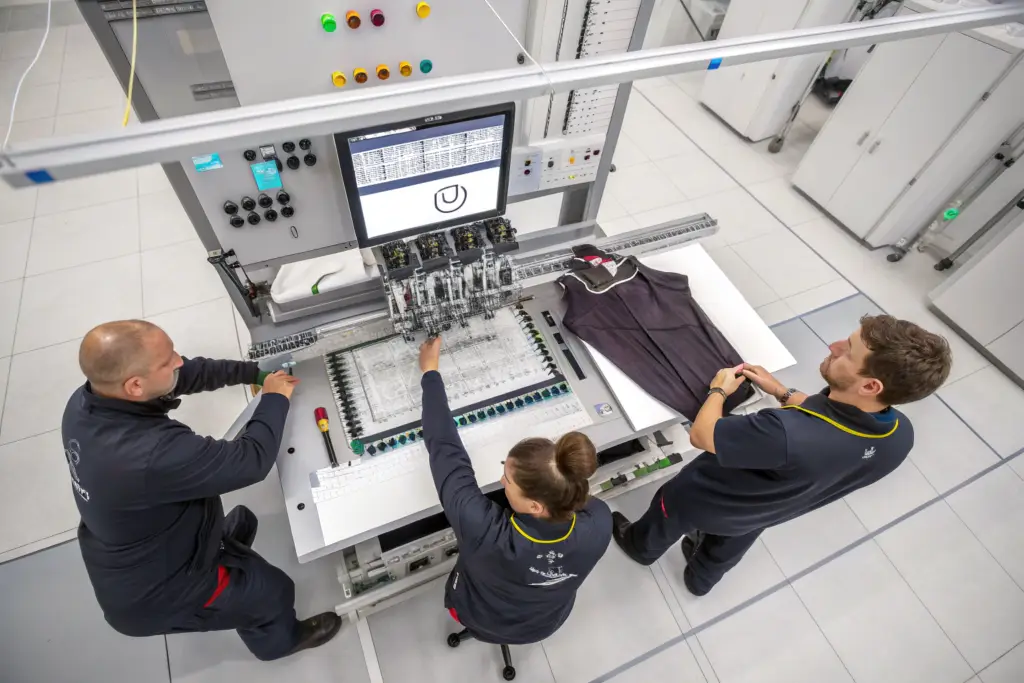
Flexible, modular production cells are the key to manufacturing complex garments. These small, U-shaped teams of multi-skilled operators can handle the frequent stops, specialized machine changes, and intricate handwork that a rare style demands. They are not penalized by the slower pace required for quality and complexity.
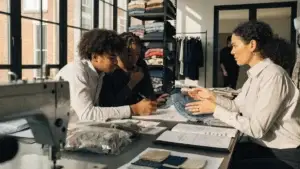
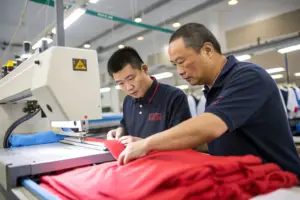
We have a dedicated "Special Projects Cell" for our most complex private label orders. This cell is staffed by our most experienced, cross-trained sewers. They are masters of multiple machine types and are comfortable with complex construction techniques like French seams, complex draping, and delicate embellishment attachment. This cell recently produced a women's wear capsule of deconstructed, asymmetrical blazers. Each jacket had 42 pattern pieces and required multiple hand-finished details. A traditional line would have rejected the order outright. Our Special Projects Cell executed it beautifully and profitably. This is the power of the right production model.
What Is the Difference Between a "Production Line" and a "Modular Cell"?
This is the core operational difference.
- Production Line (Straight Line): Designed for maximum speed on a single, simple style. Operators perform one repetitive task. Changeover between styles is slow and costly. This is for high-volume basics.
- Modular Cell (U-Shape): A self-contained team that handles a garment from start to finish. Operators are multi-skilled. Changeover between styles is fast (under an hour). This is for lower-volume, high-complexity rare styles.
We maintain both types of lines. This hybrid model allows us to say "yes" to a 10,000-unit basic tee order on Line 1, while simultaneously saying "yes" to a 200-unit avant-garde dress order in Cell #5. This is how we serve the full spectrum of B2B needs.
How Does Multi-Skilled Labor Make Complex Designs Possible?
You cannot sew a complex, draped women's wear gown with an operator who only knows how to sew a straight side seam. Complex designs require operators who understand fabric behavior, who can operate a blind hemmer, a coverstitch machine, and a single-needle lockstitch with equal proficiency. They need to know when to use a specialized presser foot or adjust the differential feed. This is the "brain trust" of a flexible factory. We invest heavily in cross-training our workforce and retaining our most skilled artisans. They are the secret weapon behind our ability to execute rare style designs. This commitment to craft is what separates a true clothing manufacturer from a simple sewing factory.
How Does the "Kit System" Manage Complex Trim and Component Sourcing?
A rare style often involves rare trims. Unique buttons, custom zipper pulls, specialty drawcords, or intricate appliqués. Managing the sourcing, quality control, and precise allocation of these components for a small, complex order is a logistical challenge. A mass-market factory's systems are not set up for this level of detail.
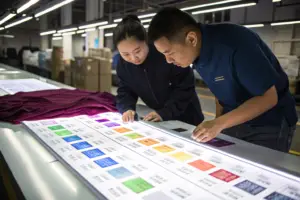
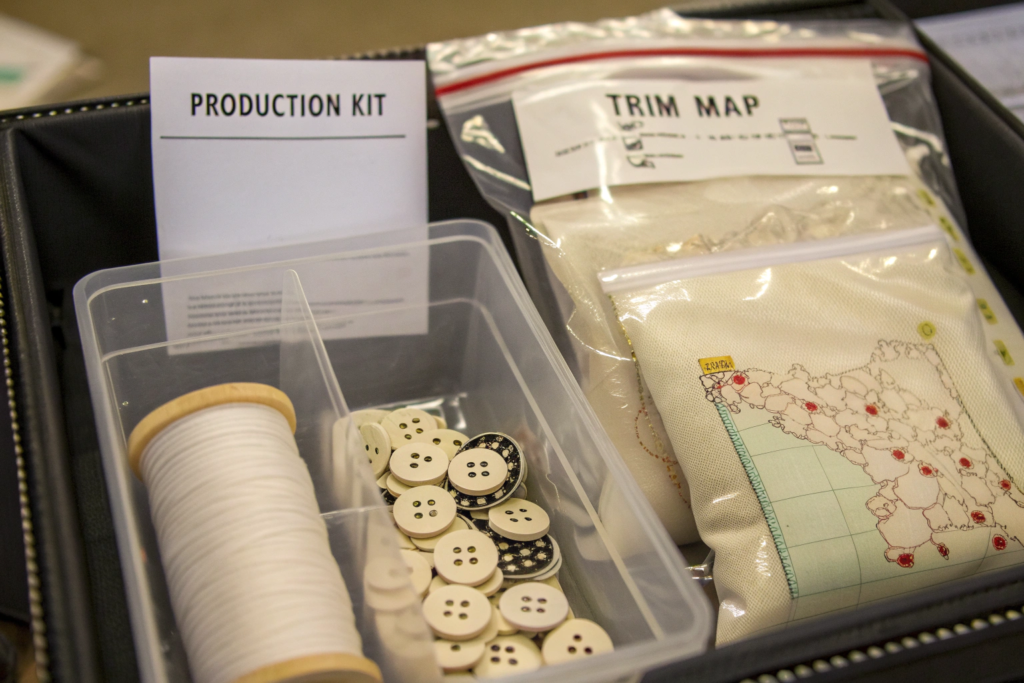
Fumao's "Kit System" is designed specifically to de-risk complex trim management. Before the cut fabric reaches the sewing cell, all required trims for that specific batch are pre-assembled into a single, barcoded kit. This ensures the skilled operators have exactly the right components at their fingertips and eliminates the risk of using the wrong trim on a complex, multi-style run.
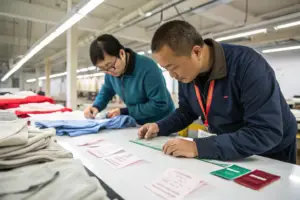
We recently produced a men's wear capsule of workwear-inspired jackets. Each jacket had a unique combination of branded snaps, a custom leather patch, and contrast stitching. The trim list was extensive. Our warehouse team kitted each jacket's components individually. When the kits arrived at the Special Projects Cell, the operators simply opened the bin and had everything they needed. There were zero trim errors. This system provides the organizational backbone that allows us to manage the complexity of rare style production without mistakes.
How Do You Source Unique Buttons, Zippers, and Embellishments?
Our location within the Chinese manufacturing ecosystem is a massive advantage here. If a client wants a specific, vintage-style metal button, or a zipper with a custom-shaped puller, or a unique beaded embellishment, we have access to a vast network of specialized component suppliers. We can source almost anything. We manage the entire process: finding the right vendor, negotiating the MOQ (which can often be flexible for small-batch specialty items), inspecting the quality, and ensuring the components arrive on time. This service saves our private label partners countless hours and prevents them from having to navigate a foreign supply chain on their own.
What Happens If a Specialized Trim Is Delayed or Defective?
This is where proactive communication and parallel sourcing become critical. If a custom button is delayed, we flag it immediately. We explore alternatives: Can we use a temporary substitute for samples? Can we air freight a partial quantity to start production? Because we track every trim in our system, we know the instant a delay threatens the critical path. We do not wait for the sewing line to run out of buttons to tell you there is a problem. This proactive risk management is essential when dealing with the long lead times and unique vulnerabilities of rare style components.
How Do We Handle Complex Pattern Making and Grading for Unique Silhouettes?
A beautiful sketch of a rare style is just a dream until it is translated into a precise, manufacturable pattern. Complex designs—asymmetrical hems, unusual sleeve constructions, intricate seaming—require a level of pattern-making expertise that goes far beyond basic blocks. This is where many projects fail before they even begin.
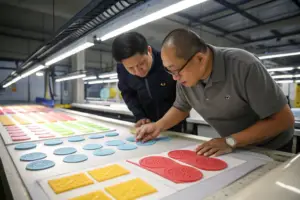
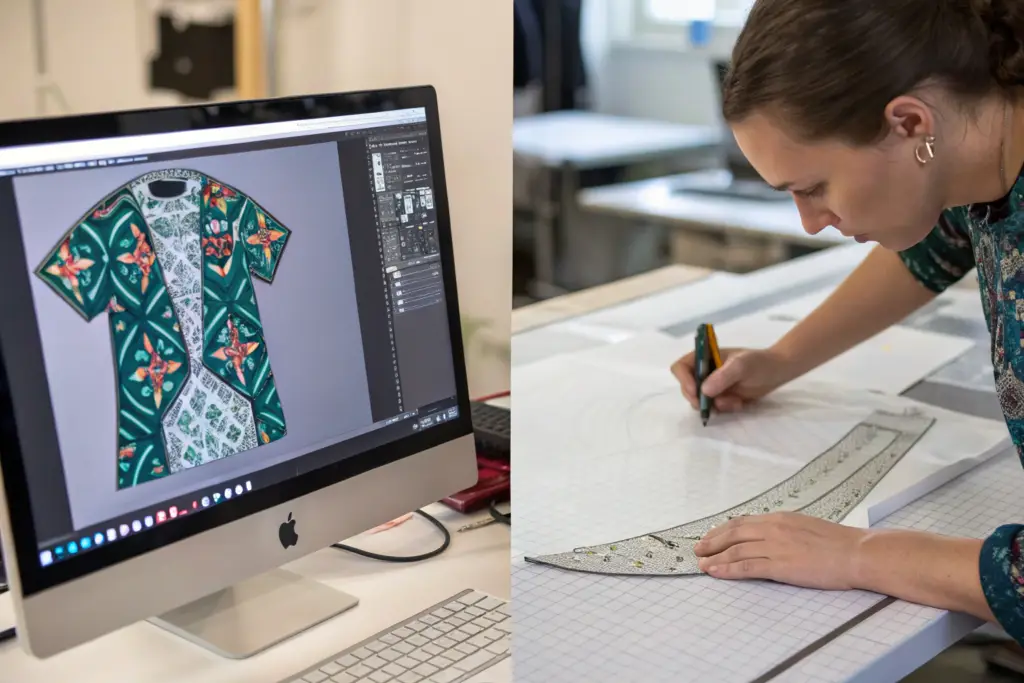
Our in-house pattern making team specializes in complex garments. We use a combination of advanced CAD software for initial drafting and meticulous hand-finishing of physical patterns. We understand how to add the necessary ease and construction details that allow a complex design to be sewn efficiently and fit the body beautifully in bulk production.
I recall a women's wear designer who came to us with a sketch of a dress with a spiraling, single-sleeve construction. It was a beautiful concept, but structurally challenging. Our head pattern maker studied the sketch. She created a 3D simulation to understand the fabric torsion. She then built a series of physical prototypes, adjusting the seam angles and the grain lines. The final pattern was a work of art in itself. The bulk production went smoothly because the foundation—the pattern—was rock solid. This deep technical expertise is what makes rare style manufacturing possible.
What Is the Process for Creating a Pattern from a Complex Sketch?
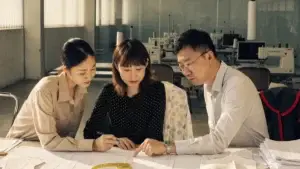
It is an iterative, collaborative process. You provide the sketch, inspiration images, and any specific measurement guidelines. Our pattern maker analyzes the design for manufacturability. They might suggest a slight modification to a seam line to make it easier to sew without compromising the aesthetic. They create the first digital pattern and a 3D simulation. We review this with you. Once approved, we cut the first Proto Sample. We evaluate the fit and drape on a fit model. The pattern is then refined. This loop repeats until the fit is perfect. This process requires patience and expertise, but it is the only way to ensure a rare style looks as good in bulk as it does on paper.
How Do You Grade a Complex, Asymmetrical Pattern for Multiple Sizes?
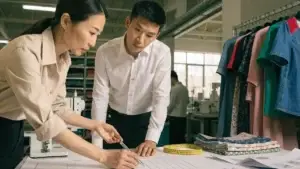
Grading a standard t-shirt is relatively simple. Grading a complex, asymmetrical garment is a mathematical and artistic challenge. You cannot just click a button in the software and hope for the best. The asymmetrical design elements must be scaled proportionally, and the fit must be maintained across all sizes. Our pattern makers manually review and adjust each size grade. They check the critical Points of Measure (POMs) . They ensure that the unique design details remain balanced and visually harmonious, whether the garment is a Size XS or a Size XXL. This is a level of precision that mass-market grading services often miss.
Why Is Communication Even More Critical for Rare Style Production?
When you are making a basic garment, the spec sheet does most of the talking. When you are making a rare style, the nuances are everything. The exact way a drape falls. The precise angle of a pocket. These subtle details are difficult to capture in a static Tech Pack. They require a higher bandwidth of communication.
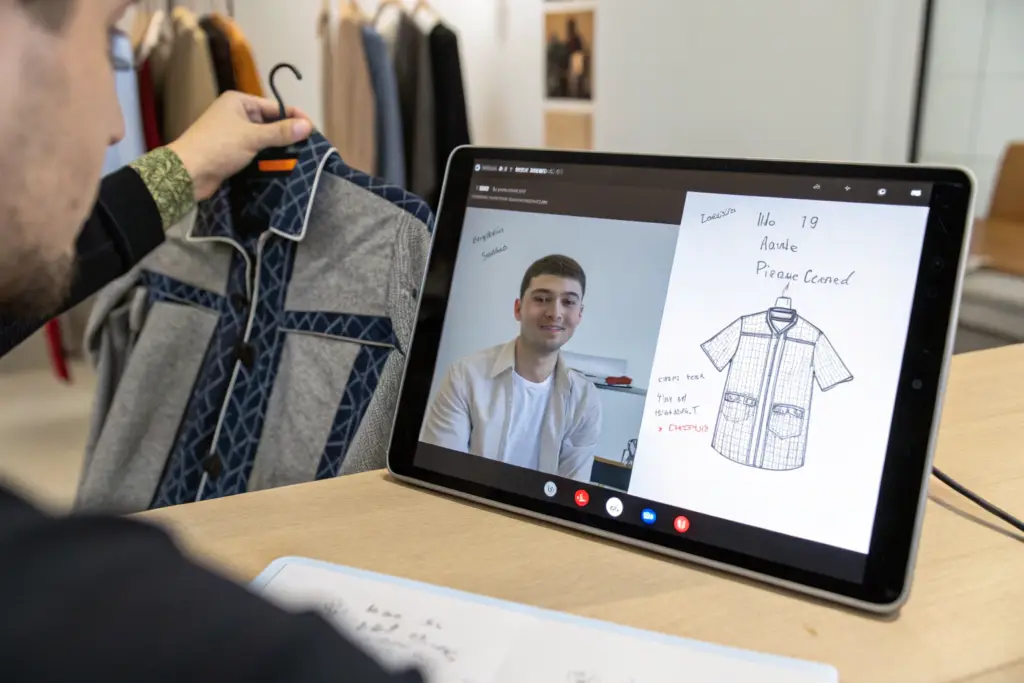
Producing rare styles successfully requires a shift from transactional email updates to collaborative, visual communication. At Fumao, we rely heavily on live video calls, annotated photos, and short video clips to bridge the distance. Our Project Managers become an extension of the brand's design team, understanding the creative intent, not just the technical specs.
We were working on a men's wear shirt with a unique, "hidden" placket construction. The initial sample did not quite capture the designer's vision for the "roll" of the fabric at the button closure. Instead of a lengthy email chain, we scheduled a 15-minute video call. The designer showed us exactly what he wanted using a similar shirt he had. Our sample room manager held the sample up to the camera, and we discussed the adjustment in real-time. The next sample was perfect. This is the kind of agile, high-fidelity communication that brings rare styles to life across 7,000 miles.
How Do You Convey "Drape" and "Handfeel" Remotely?
This is one of the hardest challenges in remote manufacturing. You cannot touch a photo. We use a combination of techniques:
- High-Quality Video: We send short video clips of the garment on a moving fit model, so you can see how the fabric flows and drapes with body movement.
- Comparison Swatches: We often ship a "handfeel standard" swatch alongside the physical sample. You can touch the swatch to understand the fabric, even if the sample fit is off.
- Descriptive Language: Our team uses specific, calibrated language to describe handfeel (e.g., "a dry, papery hand" vs. "a slick, cool hand").
How Does Fumao Become an Extension of Your Design Team?
This is the ultimate goal for rare style production. We do not just want your Tech Pack. We want to understand your brand aesthetic. We want to know why you love that specific vintage wash or that particular collar roll. Over time and multiple projects, our team develops an intuitive understanding of your taste. We can anticipate issues. We can proactively suggest construction techniques or fabric alternatives that align with your vision. This is the difference between a vendor and a true B2B partner. This deep collaboration is where the most innovative private label collections are born.
Conclusion
So, can a Chinese manufacturer produce rare style clothing designs? The answer is a resounding Yes—for the right manufacturer. The capability exists, but it is not evenly distributed. It resides in factories like Shanghai Fumao that have intentionally invested in flexible production models, multi-skilled labor, sophisticated pattern-making expertise, and high-bandwidth communication protocols.
Making the unique and the complex is not the easiest path in apparel manufacturing. It requires more time, more skill, and more attention than churning out basics. But it is infinitely more rewarding. It is how brands differentiate themselves. It is how they command premium prices and build cult followings. We are proud to be the behind-the-scenes partner that turns bold, creative visions into tangible, beautifully made clothes.
If you have a rare style design that other factories have called "too complicated," we invite you to show it to us. Our Business Director, Elaine, can connect you with our pattern-making team to discuss the feasibility and bring your unique vision to life. Please email Elaine at: elaine@fumaoclothing.com.