I once watched a brand owner open a chargeback notice from a major department store for $18,000. The violation was not about the quality of her garments. The clothes were beautiful. The charge was for packaging. She had shipped 3,000 units in standard, non-recyclable LDPE polybags, just as she had done for years. The retailer, however, had updated their vendor manual. They now required either biodegradable polybags or FSC-certified paper alternatives. Her entire shipment was rejected at the distribution center. She had to pay for the shipment to be returned, repackaged, and reshipped. The $18,000 was the cost of the packaging violation. The packaging, which she had always treated as an afterthought, had just consumed a significant portion of her season’s profit.
To perfectly implement highly sustainable eco-friendly packaging for all your wholesale clothing orders, you must build a three-layer packaging system that eliminates single-use plastic, protects the garments during transit, and complies with the specific vendor requirements of your retail buyers. Layer one is the "Product Protection Layer," where you replace standard LDPE polybags with certified home-compostable bags made from plant-based resins or recycled LDPE with a minimum 50% post-consumer waste content. Layer two is the "Carton Sealing Layer," where you abandon polypropylene packing tape and switch to water-activated paper tape reinforced with fiberglass threads, which bonds permanently to the carton and eliminates the plastic waste stream at the retail store. Layer three is the "Void Fill Layer," where you eliminate plastic air pillows and instead use a "right-size" carton strategy combined with recycled kraft paper or corrugated cardboard inserts. The entire system must be documented with supplier certifications and communicated to your retail buyers with a one-page "Sustainable Packaging Data Sheet."
Sustainable packaging is no longer a marketing choice. It is a compliance requirement enforced by the world’s largest retailers. The brands that embrace this shift and implement it systematically win retail contracts. The brands that resist are charged back, rejected, or replaced. I want to share exactly how Shanghai Fumao helps our brand partners transition to sustainable packaging, protect their margins, and satisfy the most demanding retail vendor manuals.
What Are the Only Certifications You Need to Trust a “Compostable” Polybag Is Not Greenwashing?
A brand owner once showed me a polybag her supplier had sold her as "biodegradable." It was a standard LDPE bag with a chemical additive. The supplier claimed it would break down in a landfill. The claim was false. The additive simply caused the bag to fragment into tiny microplastics. The bag was a greenwashing scam. The brand owner had paid a premium for a lie. The department store’s compliance team tested the bag and rejected it. The brand had to repackage the entire order.
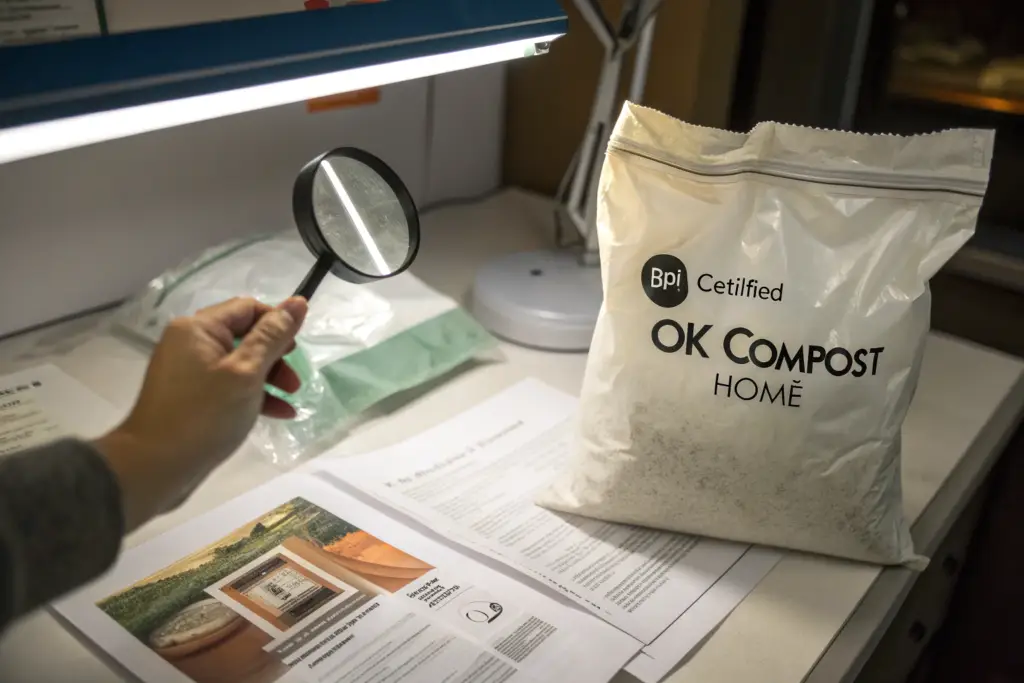
You trust a compostable polybag only if it carries an active, verifiable certification from either the Biodegradable Products Institute (BPI) in North America, TÜV AUSTRIA’s "OK Compost HOME" or "OK Compost INDUSTRIAL" scheme in Europe, or the AS 5810 standard in Australia. These certifications are not just logos on a box. They are backed by a unique certification number that you can cross-reference on the certifier’s public database. The certification guarantees that the bag will completely biodegrade into water, carbon dioxide, and biomass within a specific timeframe (180 days for industrial compost, 365 days for home compost) without leaving toxic residues or microplastics. You must demand a copy of the valid certificate from your packaging supplier every year. You must check the expiration date. You must verify the certification number online. A bag without an active, verifiable certification is just a plastic bag with a green story.
The compostable polybag is the single most visible packaging component. It is the first thing the retail store employee touches when they unpack the carton. A bag that claims to be sustainable and is not destroys the brand’s credibility more than a standard plastic bag ever would.
Why Must You Check the “Expiration Date” on a BPI or TÜV Compostability Certificate?
The certification is valid for a specific period, typically one to three years. After that, the supplier must re-certify. A bag sold as "BPI Certified" might have been produced with a certified resin, but if the certificate has expired, the bag is no longer guaranteed to meet the standard. Always check the expiration date.
What Is the Critical Difference Between “Home Compostable” and “Industrial Compostable” for Consumer Perception?
A "Home Compostable" bag can be placed in a backyard compost bin and will break down naturally. An "Industrial Compostable" bag requires the high heat and controlled conditions of a municipal composting facility. If a brand markets an industrial compostable bag as simply "compostable," and the consumer puts it in their home compost where it does not break down, the brand can be accused of misleading marketing. The distinction must be clearly communicated.
How Does Switching to Water-Activated Paper Tape (WAT) and FSC Cartons Eliminate the “Wholesale Waste Mountain”?
A brand owner once calculated that her wholesale shipments were generating 12 miles of polypropylene packing tape waste every year. 12 miles of plastic, just from her brand. She switched to water-activated paper tape. Her packing team initially resisted. The new tape required a different dispenser and a slightly different technique. Within a week, they preferred it. The paper tape bonded to the carton more securely, creating a tamper-evident seal. The plastic tape rolls disappeared from the packing station. The brand’s retail buyers noticed. One buyer told her it was the first shipment she had received that year without plastic tape.
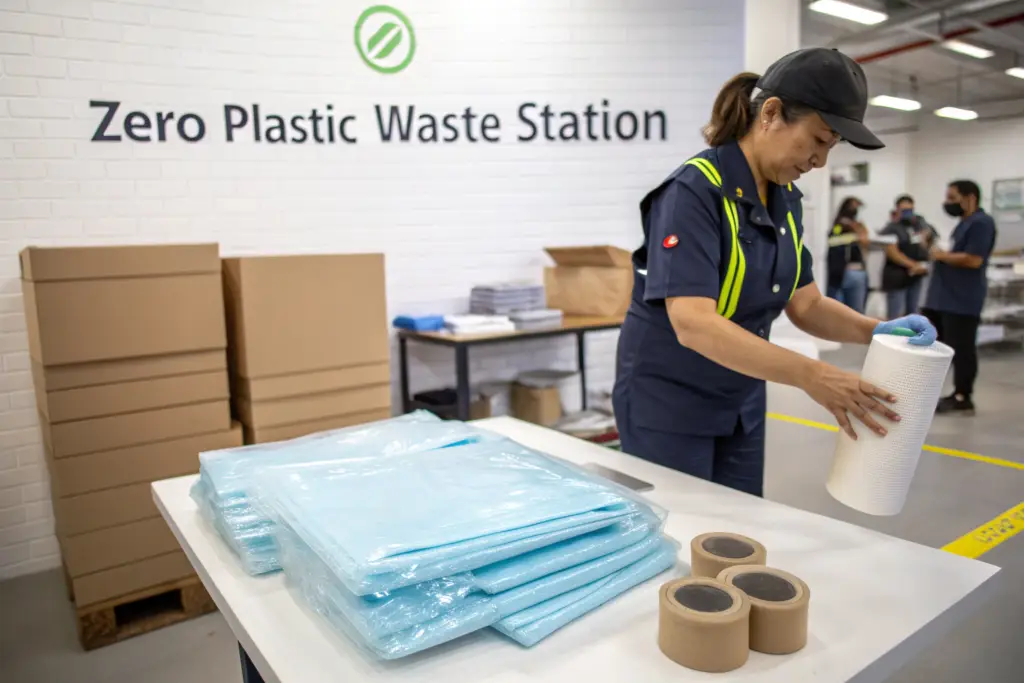
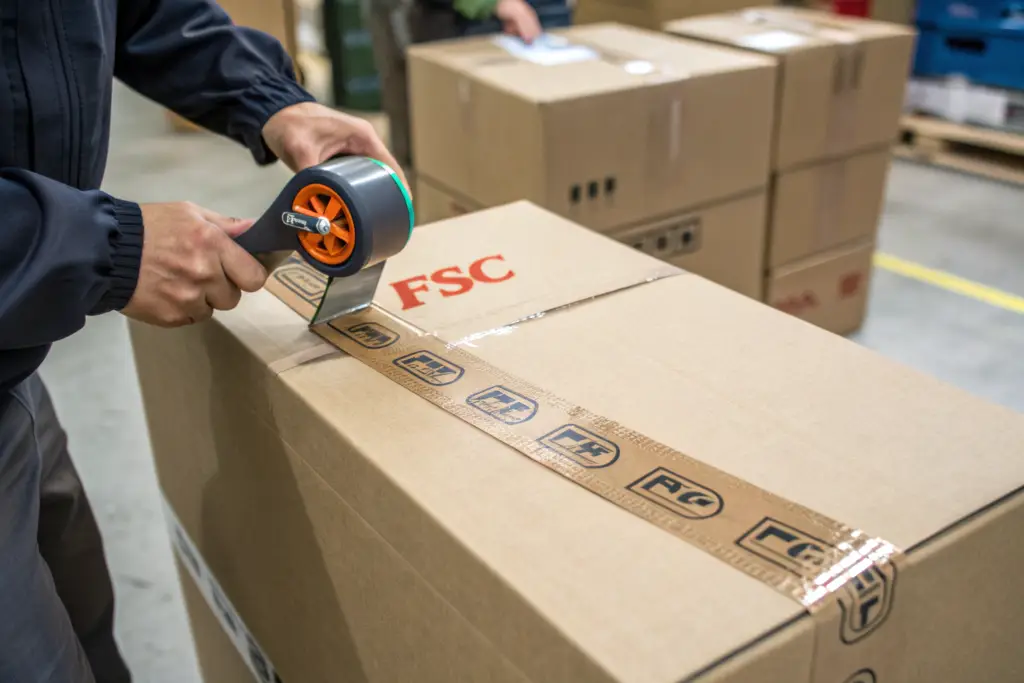
Switching to water-activated paper tape and FSC-certified cartons eliminates the two largest sources of packaging plastic in wholesale shipping. Water-activated paper tape is a kraft paper tape with a starch-based adhesive that is activated by water. Unlike plastic tape, which sits on the surface of the carton and can peel off, WAT bonds permanently to the cardboard fibers. It creates a strong, tamper-evident seal that cannot be removed and replaced without visibly damaging the carton. FSC-certified cartons guarantee that the cardboard comes from responsibly managed forests and recycled sources. Together, these two changes transform your wholesale carton from a mixed-material waste problem into a single-material, fully recyclable, plastic-free package. The retail buyer can collapse the carton and place it directly into their cardboard recycling stream without removing any plastic tape.
The plastic tape is the hidden villain of wholesale packaging. It is invisible to the brand owner, who never sees the carton opened. It is highly visible to the retail buyer, who must strip it off before recycling the box. The paper tape solves the problem at both ends.
How Do You Test the Adhesion of a Water-Activated Tape on a Dusty, Recycled Corrugated Carton?
Apply a strip of the tape to the carton. Let it cure for 24 hours. Attempt to peel it off. A good bond will tear the surface fibers of the carton before the tape releases. If the tape peels off cleanly, the adhesive is not penetrating the dusty, recycled surface. You may need a tape with a heavier adhesive coating or a slightly textured carton surface.
Why Do Retail Distribution Centers Now Penalize Suppliers for Using Plastic Packing Tape?
Retail distribution centers process massive volumes of cardboard for recycling. Plastic tape contaminates the cardboard recycling stream. It gums up the recycling machinery and reduces the value of the recycled bale. Many major retailers now explicitly require paper tape in their vendor manuals and issue chargebacks for non-compliance.
What Is a “Right-Size” Carton Strategy and How Does It Eliminate Void Fill Waste?
A brand owner once paid to ship a container where 25% of the volume was air pillows. She was literally shipping air across the ocean. The air pillows protected the garments from shifting, but they added significant dimensional weight costs and created a mountain of plastic waste at the retail store. We analyzed her product dimensions and developed a "right-size" carton matrix. We identified five carton sizes that could accommodate 95% of her product assortment with a tight, secure fit. The air pillows were eliminated. Her freight costs dropped by 12%.
A right-size carton strategy uses a limited number of precisely sized cartons to match your product assortment, eliminating the need for plastic void fill. You analyze the folded dimensions of every SKU in your collection. You identify a set of three to five carton sizes that can accommodate every SKU, either individually or in multi-unit packs, with a snug fit. The garments themselves, folded and packed tightly, act as the structural cushion. No air pillows, no bubble wrap, and no loose fill are required. The benefits are immediate: lower freight costs, faster packing times, zero void fill waste, and a cleaner unboxing experience for the retail buyer. The right-size strategy is the most elegant solution to the void fill problem.
Air pillows are a sign of a broken packing process. They are a tax on a poorly designed carton strategy. The right-size approach eliminates the tax and the waste simultaneously.
How Do You Analyze Your “Product Mix” to Determine the Fewest Possible Carton Sizes Needed?
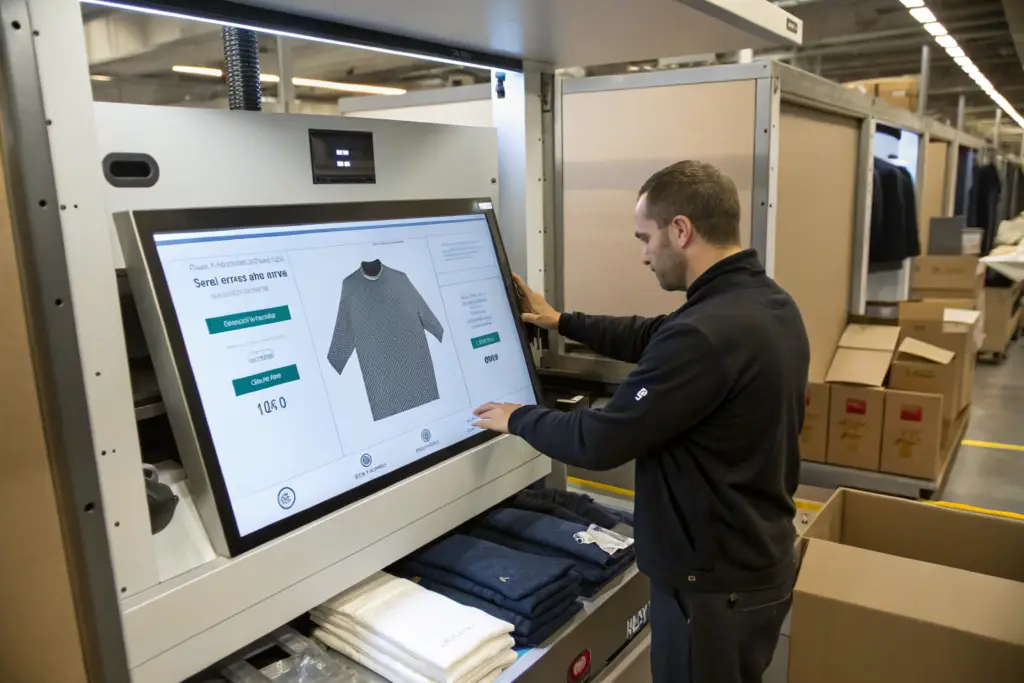
Measure the folded dimensions of every SKU. Group SKUs by similar folded widths and lengths. Use a carton optimization software or a manual grid to test which combinations of SKUs fit into standard carton sizes. The goal is to cover the maximum percentage of your assortment with the minimum number of carton sizes.
What Is the “Wine Bottle” Shipping Logic That Uses Heavyweight Garments to Protect Lightweight Ones?
Place heavier, denser garments, such as denim jeans or thick knit sweaters, at the bottom and along the outer edges of the carton. Place lighter, more delicate garments, such as silk blouses or linen shirts, in the center. The heavier garments act as a structural buffer, absorbing the shocks and vibrations of transit and protecting the lighter garments. This technique eliminates the need for additional protective void fill.
Conclusion
Perfectly implementing sustainable eco-friendly packaging for your wholesale orders is a systematic, three-layer process. The compostable polybag protects the garment and satisfies retailer requirements for product-level packaging. The water-activated paper tape and FSC-certified carton eliminate the plastic from the shipping container and simplify recycling. The right-size carton strategy eliminates the void fill waste and reduces freight costs. Together, these three layers create a packaging system that is compliant, cost-effective, and genuinely sustainable.
The $18,000 chargeback that brand owner paid was the cost of treating packaging as an afterthought. The packaging is the first physical interaction the retail buyer has with your brand. A sustainable, well-executed packaging system communicates quality, responsibility, and attention to detail. A non-compliant, wasteful system communicates the opposite.
At Shanghai Fumao, we have integrated sustainable packaging into our standard wholesale fulfillment process. We offer certified compostable polybags from BPI-verified suppliers. We use water-activated paper tape and FSC-certified cartons for all our shipments. We work with our brand partners to develop right-size carton strategies for their specific product assortments. We also provide the compliance documentation that retailers demand.
If you want to transition your wholesale packaging to a sustainable, compliant system, we can help. At Shanghai Fumao, we will review your current packaging, provide a sample pack of our sustainable materials, and share the certification documentation you need for your retail buyers. Contact our Business Director, Elaine, at elaine@fumaoclothing.com. She can send you a sustainable packaging specification sheet and a compliance checklist for major retailers. Protect your product. Satisfy your buyers. Eliminate the plastic waste.