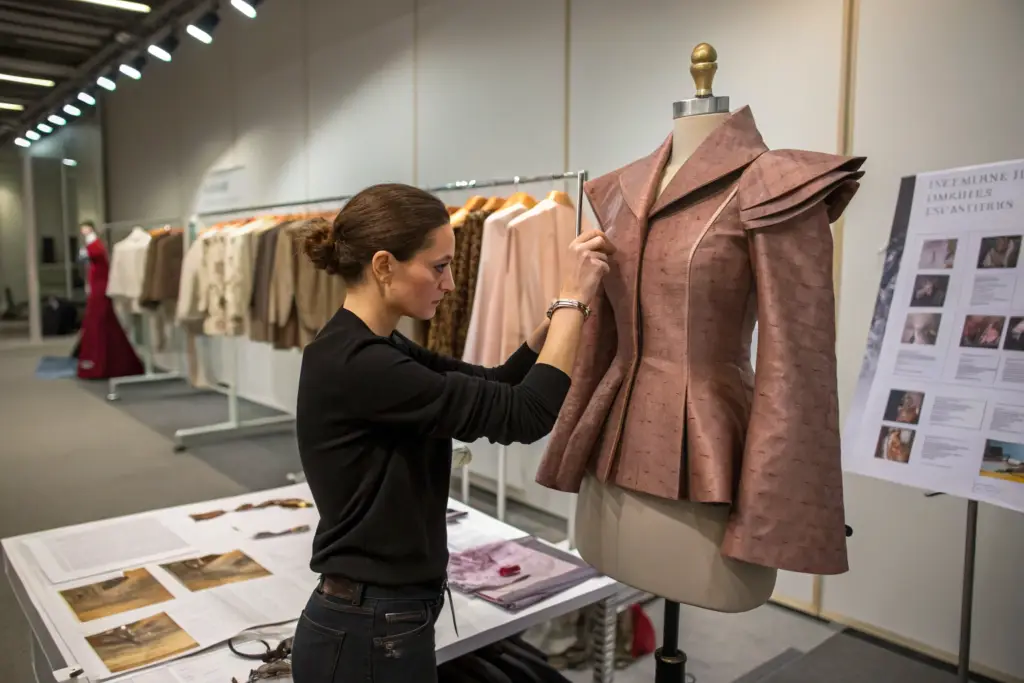
A few seasons ago, an independent designer from Brooklyn walked into our showroom with a sample that made my pattern maker raise an eyebrow. It was a women's blazer with an asymmetric helical seam. The seam started at the left shoulder, spiraled around the torso, and ended at the right hip. It was not a decorative print. It was structural. The fabric was a delicate silk-linen organza that frayed if you looked at it wrong. She had taken this sample to six factories before us. Five told her the design was "impossible to scale." One said they could do it, but the MOQ was 3,000 units, and they would need to simplify the spiral into a straight diagonal. She was ready to abandon her signature piece. Then she found us.
Yes, Shanghai Fumao can produce rare style women's wear in bulk. We have built a dedicated "Rare Design Translation" team that combines old-world haute couture construction techniques with modern modular production engineering. This allows us to preserve complex structural details, source obscure luxury fabrics at scale, and maintain the designer's original intent across production runs of hundreds or thousands of units, without diluting the rarity that makes the style valuable.
The word "rare" scares most factories. They hear it and think: difficult pattern-making, unconventional fabrics, unpredictable production times, and high defect rates. They are right. Rare styles are more difficult. But they are also where brand identity lives. A generic shirtdress is a commodity. A shirtdress with a sculptural bishop sleeve and a hand-finished horsehair braid hem is a statement. We have oriented our entire production philosophy around solving the tension between creative singularity and industrial repeatability. This article explains exactly how we do it, from handling difficult fabrics to engineering a scalable pattern without killing the soul of the design.
How Do We Maintain a 'Rare' Look During Bulk Production?
The Brooklyn designer with the helical seam blazer is a perfect example. The "rare look" of her design depended entirely on the three-dimensional spiral. A standard factory approach would be to flatten the seam into a straight line to fit a standard marker, saving fabric and time. That would destroy the garment's reason for existence. Maintaining a rare look in bulk is not about magic. It is about refusing to sacrifice the three critical dimensions of the design: silhouette architecture, textile behavior, and surface embellishment.
Most factories dilute rarity because they try to fit a unique design into their standard production template. We do the opposite. We build a temporary, custom production template around the specific needs of the rare design. This is more expensive and slower to set up, but it is the only way to preserve the visual impact that makes the style worth producing in the first place.
Can You Keep Complex Silhouette Architecture in Large Runs?
The architecture of a garment, its sculptural shape, is the first casualty of lazy bulk production. Factories simplify patterns to speed up cutting and sewing. A curved hem becomes straight. A voluminous leg-of-mutton sleeve gets deflated. The garment loses its posture.
We preserve architecture by investing in a modular cutting and sewing line for complex orders. For the spiral blazer, our pattern maker did not create a single flat pattern piece. He engineered a set of interlocking pattern pieces with detailed registration marks. Each piece was cut on a specific grain line, some on the bias, some on the straight grain, using a laser-guided Gerber cutter to maintain millimeter precision across all 500 units. The sewers on this line were our most experienced specialists, not generalists. They assembled the spiral seam using a custom jig we built specifically for this order. The jig held the curved pieces in alignment, ensuring each jacket spiraled identically. The client measured five random samples from the bulk run against her original prototype. The spiral deviation was less than 2 millimeters across all samples. Her reaction was not just satisfaction. It was relief. She had finally found a partner who understood that the silhouette was the design, not just a container for it. Investing in specialized jigs, laser-guided cutting, and a dedicated skilled team is the price of translating architectural fashion to scale.
What Is the 'Couture Finishing' We Can Do on a Bulk Scale?
Rare styles often feature hand-finishes that designers assume are impossible to scale: hand-rolled hems, French knots, hand-stitched beading, or horsehair braid finishes. A standard production manager will say, "We can only do machine equivalents." A machine blind-stitch hem is not the same as a hand-rolled edge. It feels different. It drapes differently.
We have a designated "couture finishing" unit within our factory. This is a team of senior artisans who specialize in hand-finishing techniques at production speed. They are not prototyping sample makers. They are production workers trained to execute hand-stitching with industrial efficiency and consistency. For a luxury womenswear brand in San Francisco, we produced 600 units of an artisanal blouse with a delicate hand-smocked front panel and mother-of-pearl button hand-stitching. A typical factory would reject the smocking as "too slow." Our couture unit created a standardized smocking template, trained ten artisans on the specific stitch, and broke the work into a production cell. Each artisan was responsible for a defined section of the smocking grid, and the panels moved between them in sequence. Quality was checked at each transfer point. The output was 50 hand-smocked panels per day, consistent in tension and pattern. The brand sold the blouse for $340, framed entirely around the "hand-crafted in limited quantities" narrative. The hand-work was not a bottleneck. It was the value proposition. By systematizing the artisan process without mechanizing it, we preserved the human touch that justifies a luxury price point, delivered in commercial volumes.
What Types of Uncommon Fabrics Can You Source and Handle?
I once received a cryptic email from a Paris-based creative director. It contained only two things: a mood board of 1920s Art Deco interiors, and a single phrase. "I need a fabric that looks like a crushed jewel. Can you find it?" No fiber specification. No technical name. Just a visual and tactile ambition. This is how high-fashion designers brief their fabric sourcing. They work from an aesthetic emotion, not a textile catalog code.
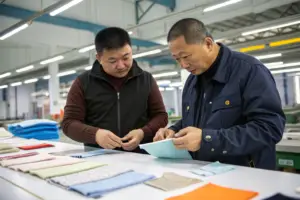
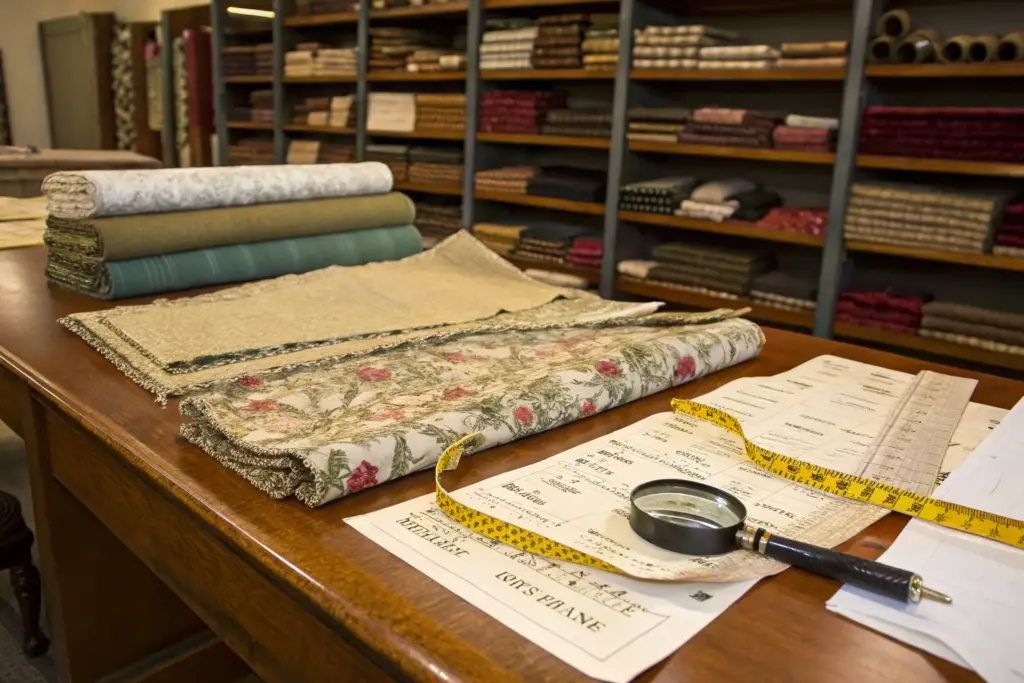
Our response was not "please send a more specific request." Our fabric sourcing team went to work. We pulled physical swatches from our in-house library, contacted five specialized mills, and sent the designer ten options ranging from a crushed metallic organza to a devoré velvet with a metallic underlay. She chose the devoré, a burnout velvet where a chemical gel dissolves the cotton pile, leaving a translucent silk backing with a raised pattern. We sourced it from a specialty mill, tested it for seam slippage and color fastness, and produced 400 bias-cut slip dresses. The fabric was so delicate that our cutting team used tissue paper underlay to prevent snagging. The collection was the hit of her showroom. Rare fabric sourcing is a core competency, not a side service.
Is It Possible to Find Sustainable or Deadstock Luxury Materials?
The demand for sustainable luxury is exploding, but the supply chain is fragmented. Many brands want to use organic peace silk, recycled cashmere, or genuine deadstock fabrics from Italian mills, but they do not know how to verify authenticity or secure enough yardage for a production run.
We have built relationships with certified deadstock aggregators and eco-certified mills. Deadstock is leftover, premium fabric from luxury fashion houses that would otherwise be incinerated or landfilled. The challenge with deadstock is quantity. You find a stunning roll of printed silk twill, but there are only 48 meters left. That will make 30 dresses, not 300. We solve this by combining two sourcing models: first, we locate deadstock for limited-edition capsule runs. For one Los Angeles brand, we found 120 meters of a discontinued floral jacquard, enough for 75 pieces. They sold it as a "limited edition, only 75 made" collection, and it sold out in three days. Second, for larger runs, we work with mills to develop custom sustainable fabrics that mimic the aesthetic of a rare deadstock find, but with consistent supply. We can replicate the hand-feel and drape of a vintage silk using FSC-certified TENCEL™ Luxe filaments and GOTS-certified organic silk blends. The key is transparency. We provide the full fiber traceability documentation, from the forest or farm to the finished bolt. A brand should never have to greenwash. We give them the certified paper trail to market the garment honestly and compellingly.
How Do You Handle Difficult Fabrics Like Hammered Silk or Lace?
Hammered silk is a texture, not a stable fabric. It is a charmeuse with a crushed, dimensional surface created by mechanical finishing. It shifts. It stretches unevenly. It snags if a sewing machine foot is incorrectly calibrated. Standard factories hate it because it drives up their defect rate.
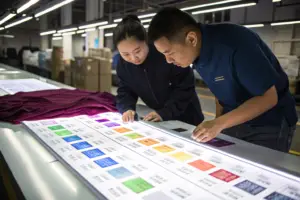
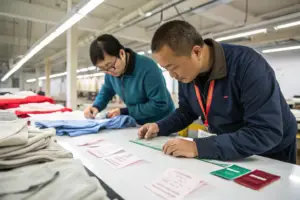
Our approach to difficult fabrics is a mandatory pre-production "Fabric Behavior Audit." Before we cut a single meter of bulk fabric, our head of production spends a day testing the material. We check its recovery from stretch, its shrinkage rate under steam, its reaction to different needle types, and its optimal cutting lay height. For a hammered silk order, we discovered that the fabric could only be cut in a single-ply lay, not stacked, because the textured surface created friction between layers that shifted the grain. This slowed cutting by 60%, but it eliminated misshapen panels. We also switched to a size 9 ballpoint needle instead of a standard sharp, and we reduced the machine speed by 25%. The result was a defect rate below 1% on a fabric that normally generates 10-15% defects in a standard factory. For a delicate Chantilly lace overlay on a bridesmaid dress, we used a dissolvable stabilizer backing during the seam construction, then dissolved it away, leaving the lace seams clean and invisible. These techniques are not secrets. They are standard in haute couture ateliers. The difference is we are willing to apply them to a 500-unit production run, not just a one-off sample. This willingness to slow down and re-tool for a specific fabric is what separates a rare-style manufacturer from a commodity cut-and-sew shop.
How to Scale a One-Off Sample to Bulk Without Losing Quality
The scariest moment for a designer is seeing their first bulk production sample. The original sample was made by a senior sample maker who spent 40 hours on a single dress. It is perfect. The bulk sample was made by a production sewer who spent 45 minutes on it. The designer's fear is that the magic has been lost in the translation from atelier to assembly line.
Scaling a rare style is fundamentally a communication and engineering challenge. The original sample contains thousands of implicit decisions made by the sample maker: the exact tension of a gathering stitch, the precise angle of a collar fall, the specific way a hem was pressed. If these implicit decisions are not converted into explicit, measurable instructions, the bulk run will drift.
What Is a 'Tech Pack Audit' for Rare Designs?
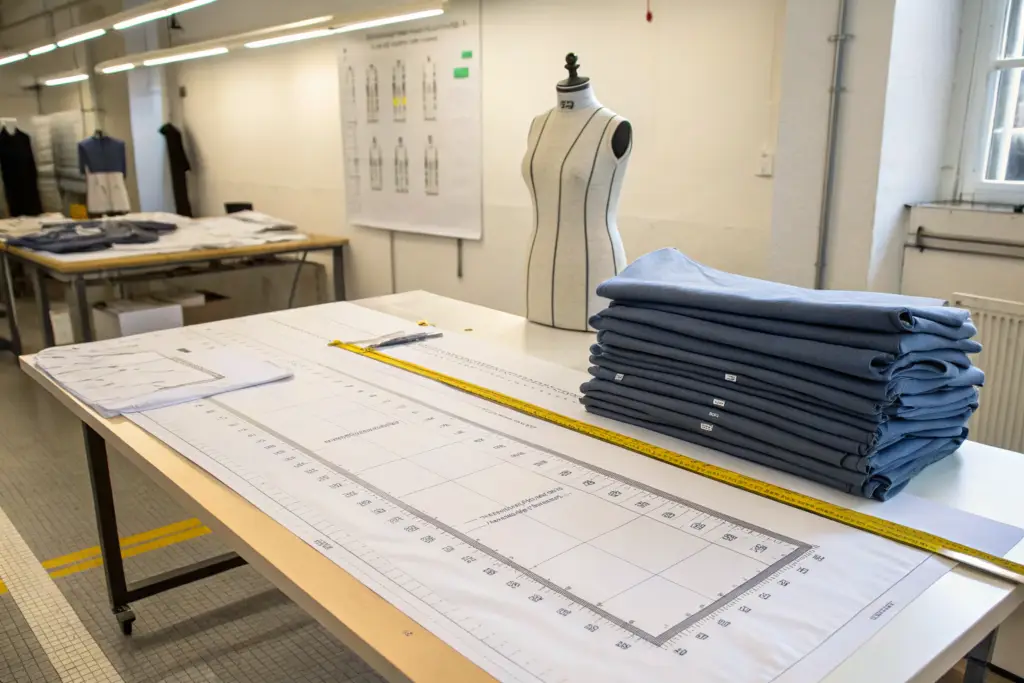
A standard tech pack specifies measurements and stitch types. A rare design tech pack requires a much deeper layer of instruction. We perform a complete reverse-engineering audit on the original sample before we begin bulk production.
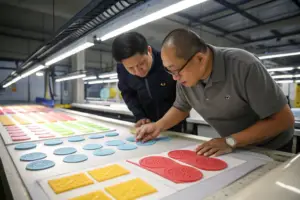
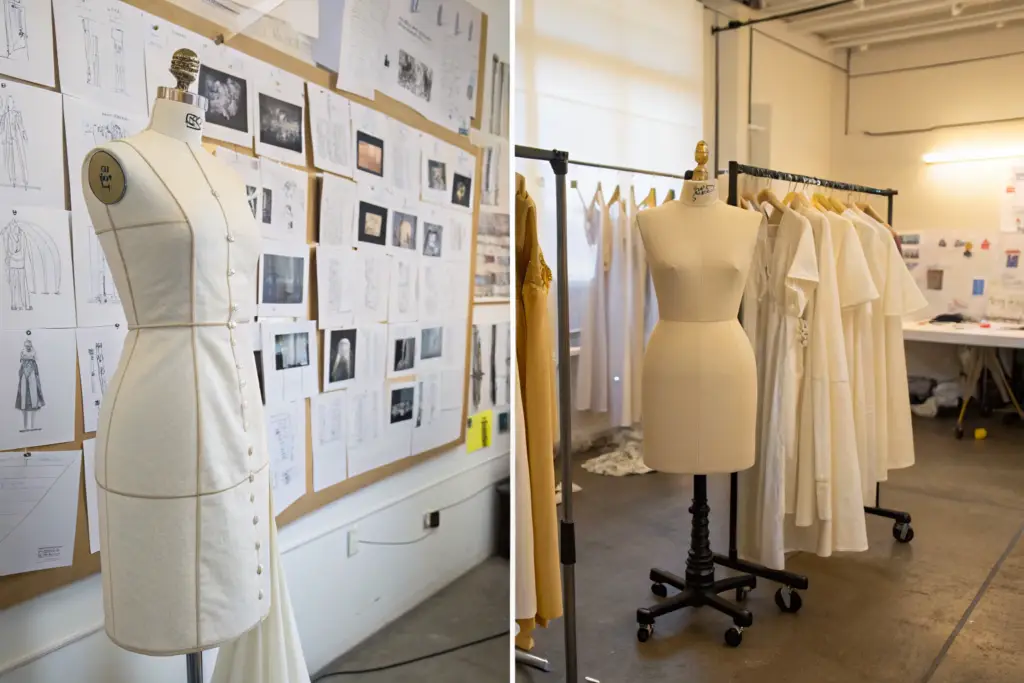
Our pattern maker deconstructs the approved sample, with the designer's permission. He identifies and documents every construction point that contributes to the "rare" aesthetic. For a women's jacket with a sculptural draped collar, the audit revealed that the sample maker had used three different stitch lengths on a single seam to create the roll effect. The inner curve used a 2mm stitch, the outer curve a 2.5mm stitch, to naturally pull the fabric into a three-dimensional drape. No standard tech pack would ever specify this. Our audit captured it. We created a visual construction guide with macro photographs of each critical step, annotated with the specific machine settings, stitch lengths, and thread tensions. This guide became the training manual for the production team. We also built a "golden sample" board. The original approved sample, our pre-production sample, and the first bulk sample were hung side-by-side in the production area. Every sewer on the line was shown the board and briefed on the three critical aesthetic details they must protect. This process converts the sample maker's art into an engineer's specification, without losing the art. The tech pack for a rare design is a forensic document, not just a measurement chart.
How Do We Maintain Consistent Sizing Across Complex Patterns?
Complex patterns with bias cuts, unusual dart manipulations, or asymmetrical closures are notoriously difficult to grade across sizes. A design that looks beautifully proportioned on a size 4 can look distorted on a size 16 if the grading is done formulaically without adjusting the design logic.
Our grading process for rare styles includes a manual "design intent review" at each size break. We do not just digitally scale the pattern by a percentage. We grade the pattern, then we sew a physical fit sample at the smallest and largest sizes, and at the midpoint. We put these samples on fit models and photograph them. Then our pattern maker and the designer review the photos together, often over a video call. For a client's size-inclusive rare design, a dress with an asymmetric hem and a bias-cut bodice, the standard digital grade made the asymmetry look off-balance on the size 18. The longer side of the hem appeared to drag, and the bias draping lost its tension. Our pattern maker manually adjusted the hem curve and the bias anchoring points at the larger sizes. We re-cut and re-sewed the size 18 sample, and the design harmony was restored. This manual intervention is time-consuming. It adds three to five days to the grading process. But it is the only way to ensure that a size 18 customer experiences the same design impact as a size 4 customer. A size-inclusive grading approach, with manual design review at every break point, is essential for rare styles where the silhouette is the entire selling point. A distorted grade is a distorted brand.
Conclusion
A rare style is a high-risk, high-reward proposition. It is the visual differentiator that can cut through the noise of a saturated womenswear market. But it can also bankrupt a brand if the production partner does not have the specialized capabilities to translate a one-off sample into a consistent, sellable bulk inventory. At Shanghai Fumao, we have systematically built those capabilities. We maintain rarity in bulk through architectural pattern engineering, customized sewing jigs, and a dedicated couture finishing unit. We source rare and sustainable fabrics that match a creative director's aesthetic emotion, not just a catalog number. And we scale delicate prototypes through forensic tech pack audits and manual design-intent grading that ensures a size 18 carries the same magic as a size 4.
A rare design deserves a manufacturing partner who treats it as a piece of engineering art, not a problem to be simplified. If you have a signature piece that other factories have called "impossible to produce" or "too complicated to scale," I encourage you to test us. Send a photo, a sketch, or the actual sample to our Business Director, Elaine, at elaine@fumaoclothing.com. Let her organize a technical review with our pattern team. We will tell you honestly what it will take to preserve your design's soul in bulk. You might just find that your impossible design is our favorite kind of challenge.