You receive your 2,000-unit bulk order. The garments are perfect. You stack the cartons in the corner of your garage. You are proud of your inventory. Six weeks later, you open a carton to fulfill an order. You pull out a white cotton blouse. It has a yellow tinge around the collar. You pull out a leather jacket. The sleeves are covered in a fine, white dust. You pull out a knit sweater. It smells like a damp basement. Your stomach drops. Your inventory is damaged. Not by a flood or a fire. By time, humidity, and bad storage. You have just lost thousands of dollars in unsellable stock. This is the silent killer of small apparel brands. You focus on getting the goods made. You forget that they must survive the journey to the customer's closet.
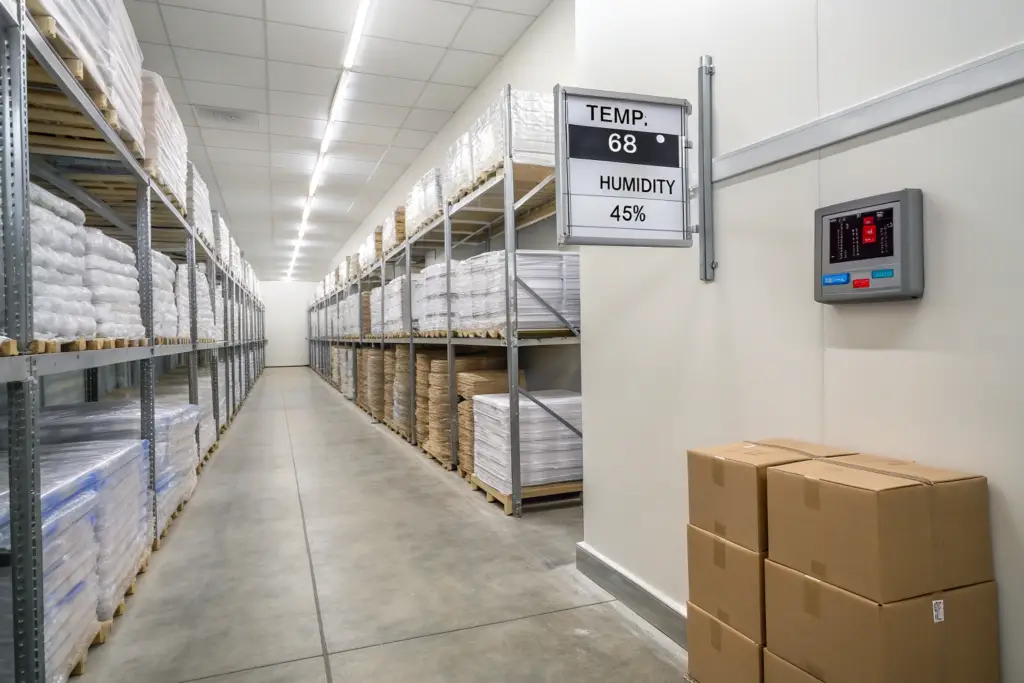
Safely storing bulk apparel inventory to prevent fabric damage requires controlling three environmental enemies: Light, Humidity, and Pressure. The specific protocols are: (1) Climate Control. Maintain a consistent temperature between 65-75°F (18-24°C) and relative humidity between 45-55%. High humidity breeds mold and mildew, especially on natural fibers. Low humidity dries out leather and elastic, causing cracking. (2) Light Management. Block all sources of natural and fluorescent UV light. Light fades dyes and yellows white fabrics through a process called photodegradation. Store garments in opaque poly bags or solid cartons, not clear plastic bins. (3) Proper Stacking and Support. Never store heavy folded knits on top of delicate wovens. Heavy stacks compress fabric, creating permanent crease lines. Use shelving to distribute weight. Store hanging garments on padded or contoured hangers to prevent shoulder bumps. (4) Pest Deterrence. Use sealed cartons and avoid food in the storage area. Silverfish and moths are attracted to starch and protein fibers (wool, silk).
At Shanghai Fumao, we pack our exports to withstand a month at sea and warehouse storage. But we also advise our clients on how to protect that inventory once it arrives. Let me walk you through the science of keeping your clothes pristine.
Why Does White Cotton Turn Yellow in Storage and How Can You Stop It?
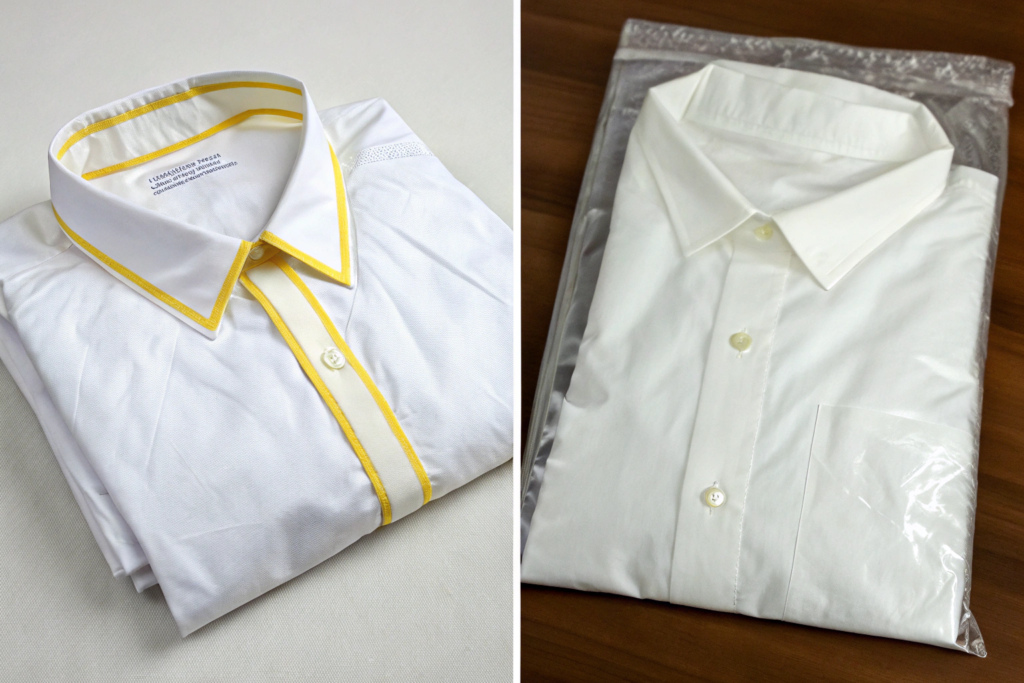
You open a box of white t-shirts. They were brilliant white when they arrived. Now, they have a faint, ugly yellow tint. The edges of the folds are especially yellow. You blame the factory. You think they used bad dye. The problem is probably your storage. This yellowing is a chemical reaction. It is called Phenolic Yellowing or Gas Fading. It happens when certain chemicals in the air—often from cardboard boxes, plastic bags, or even pollution—react with the optical brighteners and finishes on the cotton. It is accelerated by heat and light. The factory cannot prevent this six months later in your garage. You have to prevent it in your storage.
Yellowing of white cotton in storage is primarily caused by the interaction of Butylated Hydroxytoluene (BHT) from packaging materials with Nitrogen Oxides (NOx) in the air. BHT is an antioxidant used in the manufacture of cardboard and some poly bags. When BHT off-gasses and mixes with polluted air, it forms a yellow compound that binds permanently to the fabric finish. The specific prevention methods are: (1) Use Acid-Free, Unbuffered Tissue Paper. Wrap white garments in this archival-grade paper. It acts as a barrier between the fabric and the cardboard or poly bag. (2) Avoid Recycled Cardboard. Recycled cardboard has higher levels of lignin and BHT. Use virgin kraft cartons if storing long-term. (3) Ensure Poly Bags are "Non-Yellowing" Grade. Specify poly bags with "BHT-Free" or "Anti-Yellowing" additive. (4) Maintain Airflow. Storing sealed cartons in a hot, stagnant garage concentrates the off-gassing. Climate-controlled storage with mild air circulation reduces the concentration of reactive gases.
At Shanghai Fumao, we use high-quality poly bags for export, but we always advise clients: "If storing more than 30 days, remove from poly bags and cover with cotton sheets, or use acid-free tissue."
What Is the "Tissue Paper Test" for Your Cardboard Boxes?
You cannot control the cardboard your factory uses for the outer master carton. It is designed for shipping strength, not archival storage.
The test is simple: Do not let the white garment touch the cardboard.
When you unpack the container, if you are not selling the goods immediately, take them out of the shipping carton. Either store them on open shelving covered with a breathable cotton drop cloth, or if you must re-box them, line the inside of the new box with Acid-Free Archival Tissue Paper.
This tissue creates a barrier. The acidic gases from the cardboard hit the tissue first. The tissue yellows. The garment stays white.
I recall a client who stored 500 white linen shirts in their original shipping cartons in a storage unit over the summer. The unit got hot. Every single shirt had a brown line where it touched the cardboard. The loss was $8,000. A $50 roll of acid-free tissue would have saved the entire inventory.
How Does Light Cause "Invisible" Damage to Stored Garments?
You put the carton in a room with a window. The sun hits the side of the box. The box gets warm. You think, "The box is closed. The clothes are fine." You are wrong.
Light, especially UV light, penetrates cardboard and even some poly bags. It fades the dye on the top layer of the folded garment. You open the box six months later. The top shirt has a distinct, lighter stripe across the fold. This is "Sun Fade."
The solution is absolute darkness. A windowless interior room. If the room has windows, they must be covered with blackout curtains or UV film.
This is why high-end archival storage facilities are in basements. Darkness is the cheapest insurance policy for your colorfastness.
How Does Humidity Destroy Elastic, Leather, and Natural Fibers?
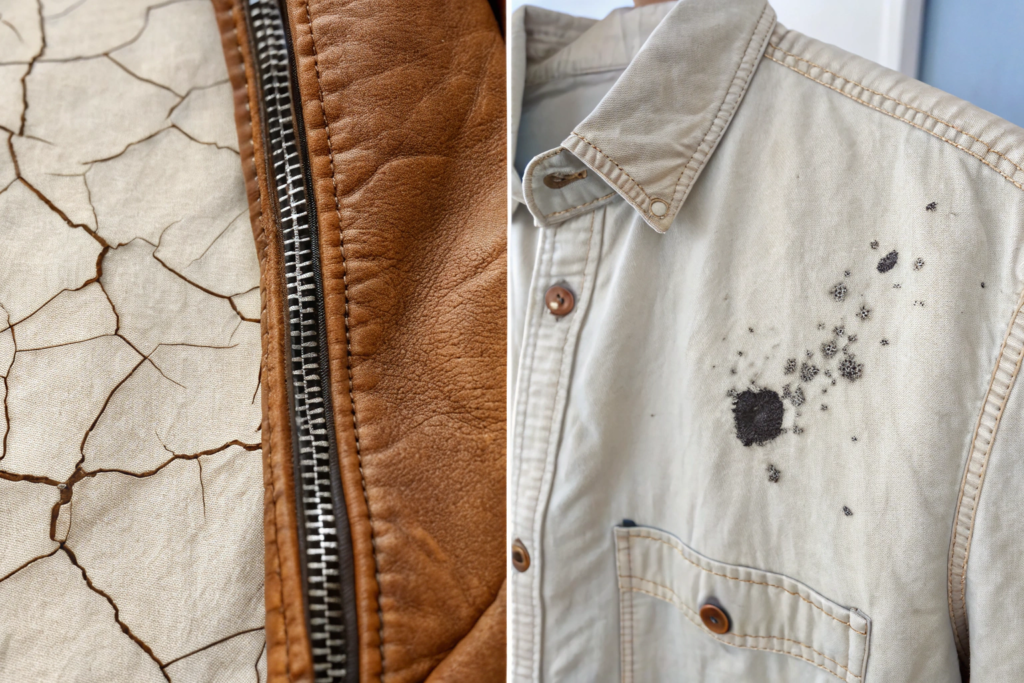
You store your activewear leggings in a damp basement. Six months later, you go to sell them. You stretch the waistband. It makes a crunching sound. The elastic has no stretch left. It is brittle and snaps. You store a leather jacket in a hot attic. The leather becomes stiff and cracks at the elbows. You store linen shirts in a humid garage. They develop black specks of mold. These are all humidity failures. Fabric is an organic material. It needs to breathe, but it also needs a specific Goldilocks zone of moisture in the air. Too much, and it rots. Too little, and it desiccates.
Humidity destroys different materials through specific mechanisms. The ideal range for mixed apparel storage is 45-55% Relative Humidity (RH). (1) High Humidity (>65% RH). Promotes mold and mildew growth on cellulosic fibers (cotton, linen, rayon). The starch in the sizing feeds the mold. It also causes metal zippers and rivets to corrode and rust. (2) Low Humidity (<35% RH). Desiccates leather, causing the natural oils to evaporate and the fibers to become brittle and crack. It also degrades the polymer chains in elastic (spandex, rubber), causing loss of stretch and "dry rot" where the elastic turns to powder. (3) Fluctuating Humidity. Repeated cycles of swelling (high humidity) and shrinking (low humidity) stress the fibers and seams, leading to premature wear and seam slippage. A consistent environment is more important than a perfect one.
At Shanghai Fumao, we use climate-controlled warehouses for our deadstock fabric storage. We know that a few degrees of temperature change can ruin a roll of premium wool.
Why Does Elastic "Dry Rot" Even If It's Just Sitting in a Box?
Elastic is made of long polymer chains. These chains are held together by plasticizers—chemicals that keep them flexible.
In low humidity and high heat, these plasticizers evaporate. The polymer chains lock together and become rigid. The elastic loses its ability to stretch and recover.
This is a time-dependent process. It happens whether the garment is worn or not. Storing activewear in a hot attic for a year will destroy the elastic, even if the tags are still on.
The solution is cool, moderate humidity storage. And Inventory Rotation. Do not buy 2,000 units of activewear and expect to sell them over three years. The elastic in year three will not be the same as year one. This is a hidden cost of overbuying inventory.
I had a client who bought a huge stock of sports bras on closeout. They stored them in a non-climate unit. After 18 months, the elastic in the bands was dead. They could not sell them. They had to donate the entire lot. The "deal" cost them more than buying fresh inventory at full price.
How Do You Prevent Mold on Linen and Cotton in Humid Climates?
If you are in Florida, Louisiana, or anywhere with high summer humidity, a standard garage or storage unit will breed mold.
The only defense is a Dehumidifier. You need a commercial-grade dehumidifier that drains continuously. You need to keep the relative humidity below 55%.
You can also use Silica Gel Desiccant Packs inside sealed cartons. But these are for small, enclosed spaces. They will saturate quickly in a large, leaky garage.
The best practice is to Never Store Garments in Plastic Totes with Latching Lids. This is a common mistake. People think sealing out the air is good. But if any moisture is trapped inside (from the air on a humid day), that tote becomes a terrarium. Mold will explode inside.
Use breathable storage. Cardboard boxes on pallets (to allow air circulation underneath) covered with a cotton sheet. The fabric needs to breathe to prevent condensation.
What Are the Best Practices for Long-Term Storage of Hanging Garments?
You have tailored jackets, silk dresses, and wool coats. You cannot fold them. They must hang. You put them on wire hangers from the dry cleaner. You cram them together on a rolling rack. You push the rack against the wall. Six months later, you pull out a jacket. It has a permanent bump at the shoulder from the wire hanger. The back of the sleeve is crushed and wrinkled. The wool smells musty. Hanging storage is not just "putting it on a hanger." It is about supporting the garment against gravity and protecting it from dust and light.
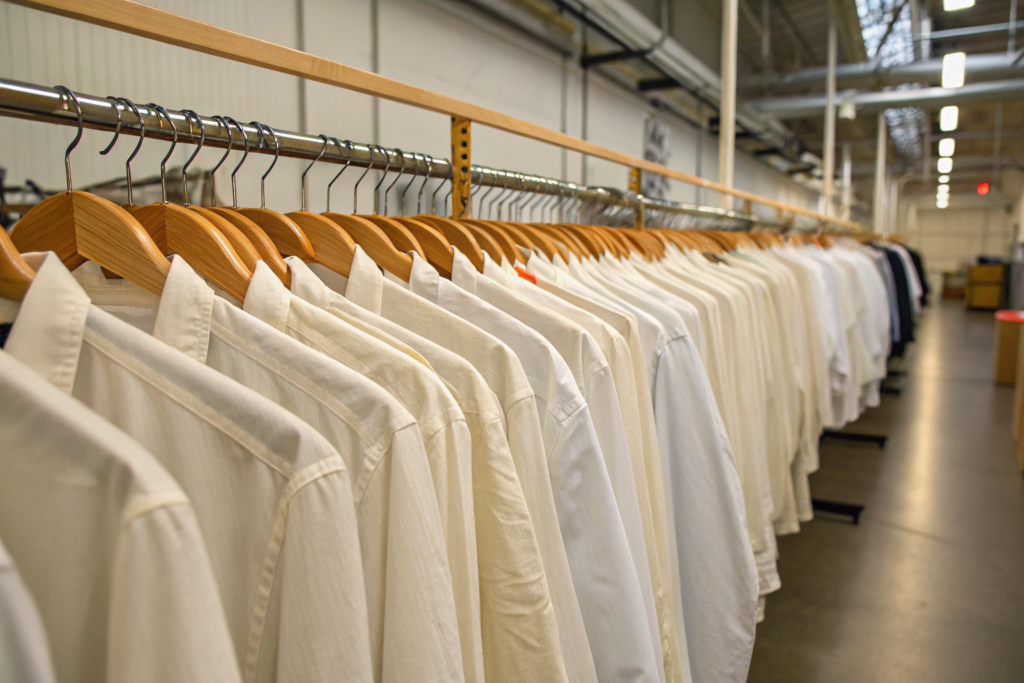
Best practices for long-term hanging storage focus on Weight Distribution, Dust Prevention, and Fiber Support. The specific protocols are: (1) Use Contoured or Padded Hangers. For tailored jackets and coats, use wide, contoured wooden hangers that support the shoulder shape. For delicate knits and silks, use padded hangers to prevent shoulder bumps. Never use wire hangers for storage longer than a week. (2) Use Breathable Garment Bags. Cover each garment with a cotton muslin or Tyvek garment bag. Plastic dry cleaner bags trap moisture and off-gas, causing yellowing. Breathable bags allow air circulation while blocking dust and light. (3) Space Garments Apart. Do not crush the rack. Allow at least 1-2 inches between garments. This allows air to circulate and prevents crushing of sleeves and collars. (4) Support Heavy Hems. For bias-cut dresses or heavy beaded gowns, the weight of the hem can distort the fabric over time. Store these garments flat if possible, or use internal waistband hangers to distribute the weight.
At Shanghai Fumao, when we store finished goods for clients, we use padded hangers for all hanging items. We treat the inventory like it is already in a retail boutique.
Why Do Wire Hangers Create "Shoulder Horns" on Knits?
A wire hanger concentrates all the weight of the garment on a tiny, sharp point. Gravity pulls the heavy, folded sweater down. The wire pushes up. The knit fibers stretch and distort.
After a few weeks, that stretch becomes permanent. You have a pointy "horn" sticking out of the shoulder seam.
The solution is to Never Hang Knits Long-Term. Knits should be folded. If you must hang a knit (e.g., a delicate cashmere cardigan), use a thick, padded hanger and fold the sweater over the bar of the hanger, not hanging from the shoulders.
This is a rule I enforce strictly. A beautiful cashmere sweater destroyed by a wire hanger is a tragedy of laziness.
How Do You Store Leather and Suede Jackets to Prevent Creasing?
Leather has "memory." If you fold a leather jacket, the crease will never come out. If you hang it on a narrow hanger, the shoulder will collapse.
Leather must be hung on a Wide, Contoured Wooden Hanger that mimics the curve of a human shoulder.
It must be covered with a Breathable Cotton Bag. Plastic will cause the leather to "sweat" and develop mildew or a sticky surface called "spew" (plasticizer migration).
It must be stored in a Dark, Cool Place. Heat and light are the enemies of leather.
I have a client who makes premium leather jackets. He includes a contoured wooden hanger and a cotton storage bag with every purchase. He educates his customers on storage. He knows that a jacket that lasts ten years builds a customer for life. A jacket that cracks in year two generates a bad review.
How Should You Store Embellished and Beaded Garments?
You have a beautiful beaded top. The beads are heavy. You hang it on a padded hanger. You come back weeks later. The garment has stretched. The shoulder seams are sagging under the weight. The beads have snagged on the neighboring garment. Embellished garments are the highest maintenance items in your inventory. They are heavy. They are fragile. They are snag magnets. They demand special handling. Gravity is their enemy. Friction is their enemy.
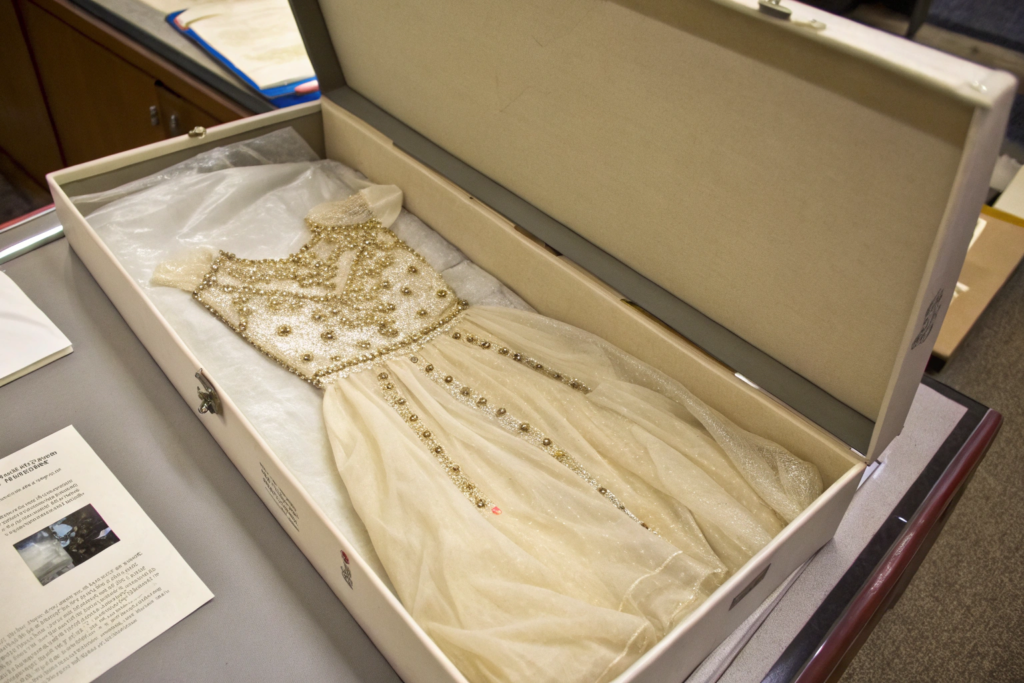
Storing embellished and beaded garments requires "Flat Storage" and "Isolation." The specific protocols are: (1) Store Flat Whenever Possible. The weight of beads, sequins, or crystals will stretch and distort the base fabric if hung vertically. Use acid-free archival boxes. (2) Interleave with Tissue. Place a layer of unbuffered, acid-free tissue paper between the folds of the garment to prevent beads from snagging on the fabric or on each other. (3) Isolate the Garment. Store heavily beaded items in their own individual box or a separate compartment on a shelf. One loose sequin can snag an entire rack of silk blouses. (4) Pad Sharp Edges. If beads have sharp metallic edges (common with some crystal rhinestones), ensure they are not pressing against delicate fabrics. The pressure alone can cut the fibers over time.
At Shanghai Fumao, we use a specific "Beaded Garment" flag in our inventory system. These items are never hung. They are always flat-packed in tissue for shipment to the retailer.
Why Does Gravity Destroy Beaded Garments on Hangers?
A beaded gown can weigh 5-10 pounds. All of that weight is hanging from two small shoulder seams.
The fabric (often a delicate silk chiffon or georgette) is not strong enough to support that weight over time. The weave stretches. The seams slip. The neckline distorts.
This is not a defect. It is physics.
The only way to store these garments long-term is flat. If you are a retailer, you hang them only for the short time they are on the sales floor. In the back stockroom, they go in a flat bin.
I worked with a bridal boutique that was losing thousands on damaged sample gowns. We redesigned their stockroom with flat-file cabinets for the beaded gowns. The damage rate dropped to near zero. The cost of the cabinets was recouped in one season of saved markdowns.
How Do You Prevent Sequin Rust and Tarnish?
Sequins are often made of metalized plastic or actual metal. Metal sequins can rust or tarnish, leaving brown or black stains on the surrounding fabric.
The cause is humidity and contact with acidic materials.
Prevention:
- Silica Gel Packs: Place a small packet in the storage box to absorb ambient moisture.
- Acid-Free Environment: Use unbuffered tissue. Buffered tissue (which is alkaline) can react with metallic sequins.
- Avoid Direct Contact: The tissue barrier prevents the rust from transferring to the fabric if it does occur.
This is a detail that separates a professional brand from an amateur. A customer who buys a beaded top and finds rust stains after storing it in their closet for a season will blame the quality of your garment, not their closet conditions. You must build in the defenses.
| Storage Threat | Garment Type Most At Risk | Prevention Protocol |
|---|---|---|
| Yellowing | White Cotton, Linen | Acid-Free Tissue, Virgin Cardboard |
| Mold/Mildew | Linen, Rayon, Wool | Dehumidifier (<55% RH), Airflow |
| Dry Rot/Elastic Crunch | Activewear, Swimwear | Cool Storage (<75°F), Rotation |
| Shoulder Bumps | Knits, Tailored Jackets | Padded/Contoured Hangers, Fold Knits |
| Stretching/Sagging | Beaded, Bias-Cut | Flat Storage Only |
Conclusion
Safe storage of bulk apparel inventory is the final, critical chapter of your product's journey from factory floor to customer closet. You have invested in design, fabric, and manufacturing. Allowing that investment to degrade in a damp garage or a sunlit storage unit is a preventable financial loss. We have examined the chemical reaction that yellows white cotton, the atmospheric conditions that breed mold and rot elastic, the structural support required for hanging garments, and the delicate flat care needed for embellished pieces.
At Shanghai Fumao, we package every order to arrive in pristine condition. But we also care about what happens after the container is unloaded. We want our clients to sell every single unit at full price, not liquidate damaged stock at a loss.
If you are scaling your brand and need guidance on setting up a proper inventory storage system—or if you want to discuss how we package bulk orders for optimal shelf life—we are here to share our knowledge. Protecting your inventory is protecting your brand.
For more information on our export packaging standards or to discuss your specific storage concerns, please reach out to our Business Director, Elaine. She can advise you on best practices for your specific product category.
Email: elaine@fumaoclothing.com