If you import clothing long enough, you will eventually open a carton and feel your stomach drop. It happened to a client of mine who runs a menswear brand in Seattle. He had received a shipment of 500 oxford shirts from another country. On the surface, they looked fine. But when he held one up to the light, he saw it. The left sleeve was twisted. The grain line was off. Every single shirt in that carton was cut wrong. He had paid the supplier 100% upfront via wire transfer. The supplier in that country stopped answering his WhatsApp messages after three days. He lost $22,000 on that shipment and had nothing to sell. That is the moment a brand owner realizes they need a plan for defects before the container even leaves the foreign port.
Handling defective wholesale garments from an international supplier requires a multi-step process that begins before the goods leave the factory. This process includes a clear purchase order with AQL standards, third-party inspection documentation, a negotiated chargeback or replacement clause, and a logistics plan for rework or disposal. The key to protecting your cash flow is to never pay the full balance until a final inspection report clears the shipment.
Let me be direct with you. I run Shanghai Fumao, a clothing factory with five production lines in China. I have seen this problem from both sides of the table. I have seen suppliers try to hide defects with clever packaging. And I have seen buyers make demands that were not written in the contract. The goal here is not to create an adversarial relationship with your supplier. The goal is to create a system of accountability that protects both parties. If you are currently sourcing from Vietnam, India, Bangladesh, or even here in China, the steps below will help you turn a potential disaster into a manageable business expense.
What Should a Purchase Order Specify to Prevent Defect Disputes?
The biggest mistake I see independent brand owners make is treating the Purchase Order like a formality. They write "500 pcs Men's Shirt Style #101" and call it a day. That is not a contract. That is an invitation for confusion. When I receive a PO from a large U.S. buyer like a department store, it is 12 pages long. It specifies everything from the exact Pantone color code to the number of stitches per inch. You do not need a 12-page PO to protect yourself, but you do need the critical five clauses that define what "defective" actually means.
A purchase order that prevents defect disputes must clearly define the Acceptable Quality Limit (AQL) level, provide objective criteria for major versus minor defects, specify the approved pre-production sample as the benchmark, state the exact payment terms tied to inspection, and outline the remedy for non-compliance (either discount or rework). Without these specific terms, a dispute becomes a "he said, she said" argument that you will likely lose.
How Do I Define "Major Defect" vs "Minor Defect" in My Contract?
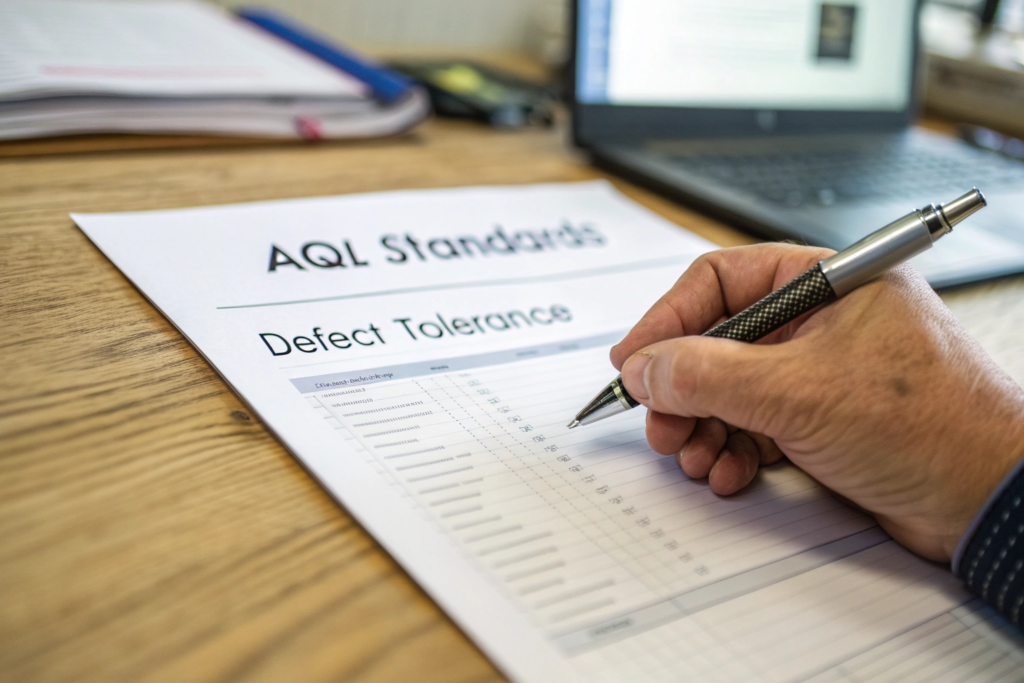
You cannot simply say "the quality must be good." That is subjective and unenforceable. You must use objective, measurable language. In the apparel industry, we use a standardized checklist based on the AQL (Acceptable Quality Limit) system. This is the same system used by Walmart, Nike, and every major retailer. When you issue a PO to Shanghai Fumao, we attach this exact definitions list so there is zero confusion.
Here is a practical table that breaks down the difference. This is the standard we adhere to on our cutting and sewing floor. Print this out and attach it to your next PO.
| Defect Type | Measurement Standard | Example in Garment | Consequence if Found |
|---|---|---|---|
| Critical | Zero Tolerance | Sharp object (broken needle tip); Mold or mildew smell; Bloodstain. | Entire shipment rejected immediately. Must be re-inspected 100%. |
| Major | AQL 2.5 or 4.0 | Seam opening more than 1 inch; Zipper does not function; Shade variation greater than one step on grey scale; Hole in fabric. | Shipment fails inspection. Supplier must repair or replace. |
| Minor | AQL 4.0 or 6.5 | Untrimmed thread ends over 1cm; Slight wrinkle from pressing; Button slightly off mark (within 2mm). | Shipment passes but with notation. Usually accepted if quantity is small. |
I had a situation last fall with a women's wear brand in New York. They were buying a satin blouse. The fabric was very delicate. They had written "no pulls" in the PO. We went a step further. We defined a pull as "any visible distortion of warp or weft thread longer than 3mm." During inline inspection, our QC team found that the satin was snagging on a rough edge of a metal table guide. Because the definition was clear, we stopped the line immediately, filed down the table edge, and saved the production run. Vague language would have allowed that issue to continue until the final inspection, costing time and fabric.
Why Is the Pre-Production Sample the Most Important Legal Document?
This is a secret that seasoned buyers use but rarely share with newcomers. The Pre-Production Sample (PP Sample) is not just a "sneak peek." It is a legally binding benchmark.
Let me explain how we use it at Shanghai Fumao. Once we agree on price and terms, we make one perfect sample. It uses the exact fabric, exact trims, exact labels, and exact construction method that we will use in bulk. We send this sample to you via DHL. You sign off on it.
If a dispute arises later about bulk production—let's say you think the collar is too stiff—we pull out the sealed duplicate of the PP Sample we kept in our office. We compare the bulk shirt to the PP Sample. If the bulk shirt matches the sample you approved, the shipment passes quality control. It does not matter if you "changed your mind" about the collar stiffness. The sample is king.
This process protects you, too. If the bulk collar is floppy and the sample was crisp, you have a physical piece of evidence to say, "This does not match the approved standard." This eliminates the "falsified certificates" pain point mentioned earlier. A certificate can be forged. A physical garment cannot be argued with. We encourage all our clients, especially those dealing with garment manufacturers for the first time, to treat the PP Sample sign-off with the same seriousness as signing a bank loan. Keep that sample in a plastic bag in your office. It is your insurance policy against "factory drift," where quality slowly declines over repeat orders.
What Are My Options When I Receive a Bad Shipment of Clothing?
The container arrived. You opened the carton. The color is off. Or the sizing is wrong. Or the stitching is coming undone on 10% of the pieces. Panic is the natural first reaction. But panic leads to bad decisions like dumping the goods at a flea market for pennies on the dollar. Let's walk through the actual, practical options you have based on my fifteen years of handling these situations from the supplier's side. Your leverage depends entirely on one factor: Did you pay the full balance yet?
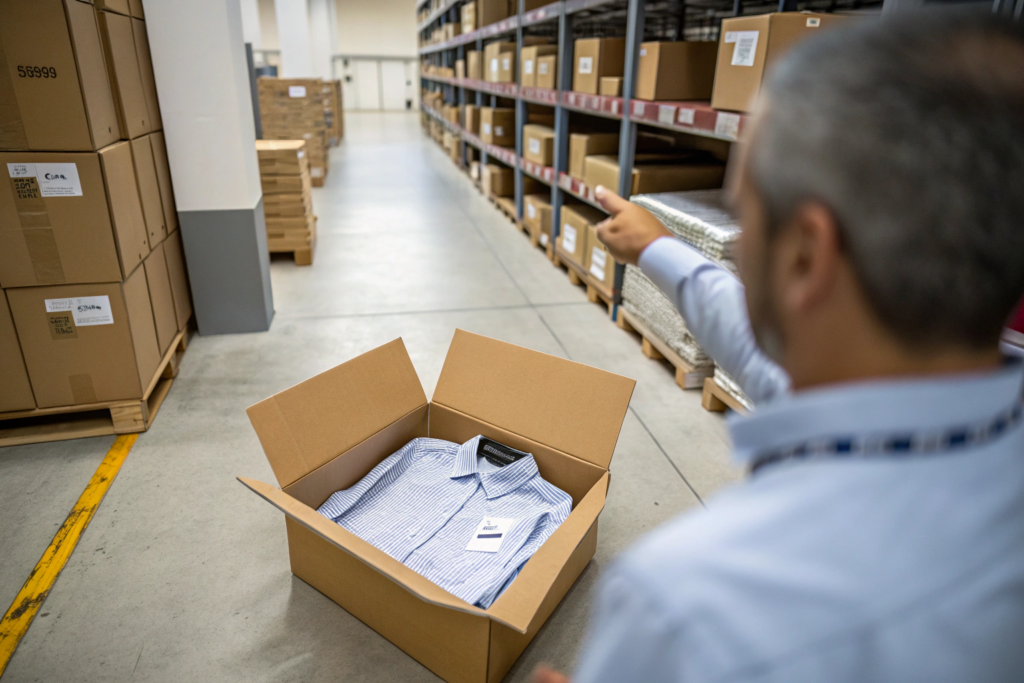
When you receive a bad shipment of clothing, your options depend on the payment terms and the location of the goods. If you have not paid the balance, you have significant leverage to demand a discount, a rework, or a credit on future orders. If you have paid in full via wire transfer, your options are limited to filing a claim with your cargo insurance (if applicable) or negotiating a goodwill credit with the supplier for future business. The most important action is to document the defects with high-resolution photos and video immediately upon opening the carton.
Can I Get a Refund or Credit for Defective Apparel?
Let me be brutally honest about the financial reality of international sourcing. Getting cash back from a foreign factory is extremely difficult. It is like trying to squeeze water from a stone. Factories operate on thin margins. They have already spent the money on fabric and labor. A refund means they lose money not just on profit, but on the actual cash outlay.
That does not mean you have no recourse. It means the form of that recourse changes. Here is a matrix of what is realistic to expect based on my experience handling these negotiations at Shanghai Fumao and witnessing how other vendors operate.
| Defect Severity | Payment Status | Realistic Outcome | Action You Should Take |
|---|---|---|---|
| Minor Defects (Loose Threads) | Not Paid / LC at Sight | 10% Discount on affected styles. | Accept discount; use savings to hire local seamstress to clean up. |
| Major Defects (Wrong Color/Sizing) | Not Paid | Hold Shipment. Demand Rework in China (3-4 weeks) OR 30% Discount. | If you need goods now, take the deep discount. If you have time, make them fix it at their cost. |
| Major Defects | Paid in Full (TT) | Goodwill Credit Memo. | Negotiate 20-30% credit applied to next order. Factory keeps cash flow; you get future value. |
| Critical Defects (Mold/Broken Needles) | Any Status | Reject Shipment / File Insurance Claim. | Do NOT accept delivery. This is a health hazard. Use marine cargo insurance if you have it. |
I had a situation where a client of ours received a batch of hoodies where the zipper puller was the wrong shape. It was a custom trim order, and our trim supplier had made a substitution without telling us. The client had not paid the balance yet because we use 30% Deposit / 70% Against Copy of Documents terms. We caught the error in photos before shipping. I gave the client two choices: Wait 3 weeks for us to rip out and replace 500 zippers (free of charge), or take a 15% discount off the invoice and accept the alternate puller. He took the discount because his customers were waiting. We applied the credit immediately to the invoice. He saved $1,800. We kept the client relationship intact. That is how a good supplier partnership handles a defect.
When Should I Just Cut My Losses and Liquidate the Stock?
There is a point where the cost of fixing the problem exceeds the value of the goods. This is a cold, hard calculation. Let's use a real example. You have 800 t-shirts that came in and the print on the chest is slightly crooked. Not enough for a full refund claim, but enough that you cannot sell them on your premium website.
Option A: Ship them back to China for reprinting.
- Return Freight Cost: $950
- Rework Labor Cost in China: $0 (if supplier is fixing their error)
- Inbound Freight Back to US: $950
- Total Cost: $1,900 plus Time Lost: 6-8 weeks. Selling season is over.
Option B: Sell to an Off-Price Retailer (Liquidation).
- You sell the lot for 20% of the wholesale cost.
- You recover some cash immediately.
- You clear warehouse space.
In most cases, Option B is smarter. You write off the loss as a business expense. You learn the lesson about the specific factory's quality control, and you move on to a better supplier.
This is why the first order with a new factory should always be a small one. If you had tested that t-shirt order with 100 pieces first, the crooked print would have been a $300 problem, not an $8,000 problem. At Shanghai Fumao, we actively encourage new brands to start with a smaller trial run of 50-100 units. We want to catch these issues early on a small scale. It builds trust for the 1,000-unit orders down the road. Do not let a factory pressure you into a massive first order. That is a red flag. A confident factory knows that if they do a good job on the trial, the big orders will follow naturally.
How Does Third-Party Inspection Protect My Clothing Brand's Reputation?
You cannot be in China, Vietnam, and India at the same time. Even if you could, you probably do not know how to check seam strength or colorfastness. This is where third-party inspection companies come in. I want to be upfront with you. As a factory owner at Shanghai Fumao, I welcome third-party inspections. Some factories hate them. They see them as an intrusion or an accusation of incompetence. I see them as a marketing tool. If I know an independent inspector from SGS or Bureau Veritas is coming on Tuesday, I make sure my floor is spotless and my QC binder is up to date. It keeps us sharp. It also gives you, the brand owner sleeping 8,000 miles away, a pair of eyes on the ground.
Third-party inspection protects your brand's reputation by providing an impartial, documented assessment of your production before it leaves the factory. These inspections verify quantity, check workmanship against AQL standards, and confirm packaging integrity. The resulting report serves as a binding document that either authorizes shipment or forces the factory to correct issues before you incur international freight costs and U.S. customs duties.
What Is the Difference Between Inline and Final Random Inspection?
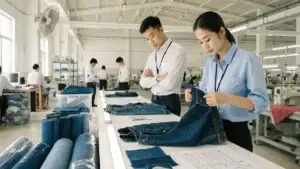
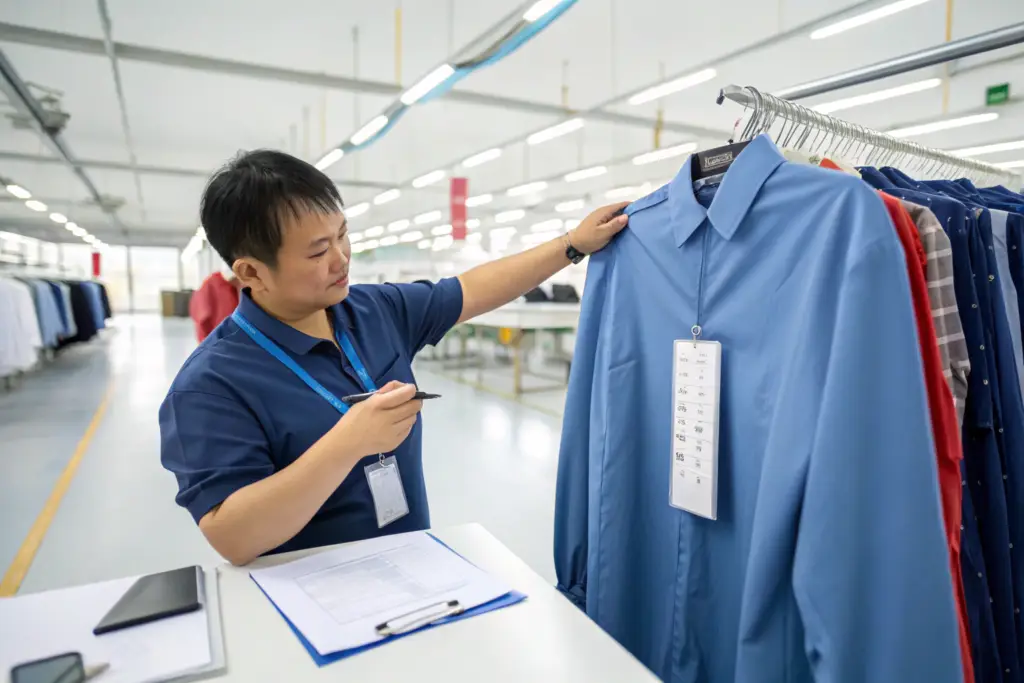
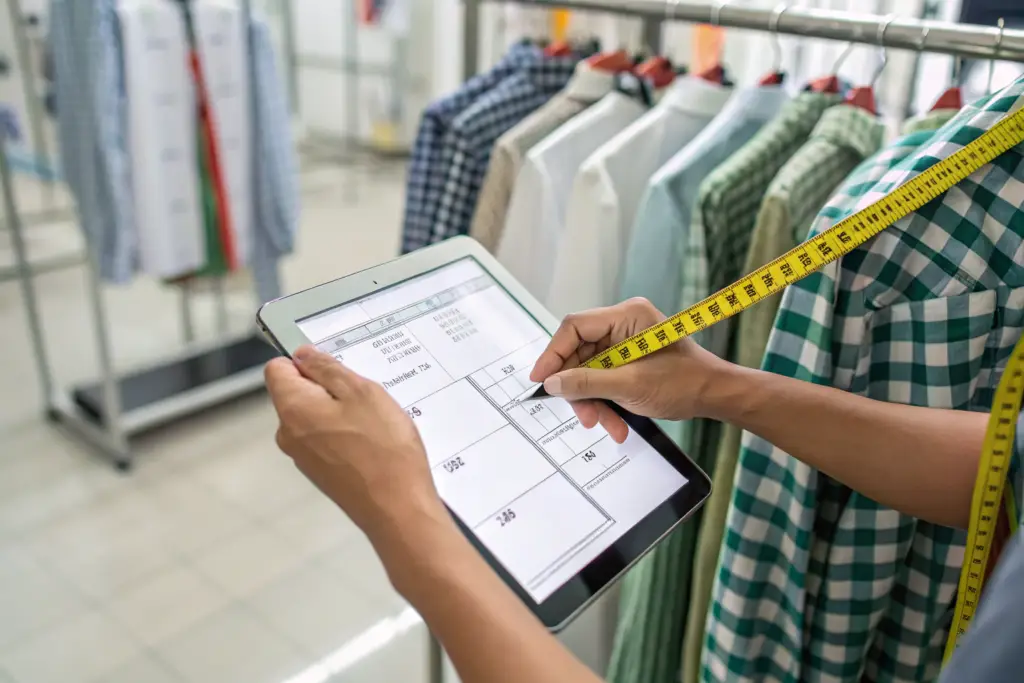
This is a crucial distinction that affects how many defects make it into the box. Many new buyers only pay for a Final Random Inspection (FRI) . This happens when 100% of the goods are packed and ready to ship. The inspector opens 10% of the cartons and checks the garments inside.
The problem with FRI is that it is like doing an autopsy. You find out what went wrong after the patient is dead. If the inspector finds that the stitching is bad on all those 10%, what happens? The factory has to un-pack 50 cartons, rework the goods, re-press them, and re-pack them. This adds two weeks to your delivery schedule.
Inline Inspection (DUPRO) is done when about 20-40% of the order is sewn. The inspector walks the production line. They check the sewing in real-time. Here is a comparison based on real data from our factory floor:
| Inspection Type | Timing | Defect Detection Rate | Cost | Impact on Delivery |
|---|---|---|---|---|
| Inline (During Production) | 20% - 40% Complete | High (Catches issues early) | Moderate | No Delay (Fixed immediately) |
| Final Random (Pre-Shipment) | 100% Packed | Medium (Only sees packed goods) | Low | High Delay Risk (Unpacking required) |
| Both (Inline + Final) | Both Stages | Highest | Higher | Lowest Risk |
I advise all clients of Shanghai Fumao who are ordering more than 500 units of a complex garment, like a tailored jacket or a waterproof outerwear piece, to invest in both. The extra $300 for the inline check saves thousands in potential air freight if the ship date is missed due to rework. The report from the inspector becomes the document we use to release the 70% balance payment. If the report says "FAIL," the money stays with you until I fix the problem. That is a powerful motivator for any factory to get it right the first time.
How Do I Choose a Reliable QC Agency in China?
There are many companies offering "inspection services." Some are excellent, with trained textile engineers. Some are just a guy with a camera who knows nothing about sewing. You need to choose wisely. The agency should be accredited to ISO 17020, which is the international standard for inspection bodies.
The major global players are:
- SGS
- Bureau Veritas (BV)
- Intertek
- QIMA
These companies are not cheap. An inspection day might cost $300 - $400 USD. But consider the cost of a failed shipment. That $400 is cheap insurance.
There is another layer to this. You must ensure the inspector is fluent in Mandarin and English. If the inspector cannot explain the seam puckering issue to the sewing line supervisor in Chinese, the report is useless. At Shanghai Fumao, our production manager speaks English, but the woman operating the buttonhole machine does not. The inspector needs to bridge that gap.
I also recommend you request a copy of the inspector's "Golden Sample" confirmation. The Golden Sample is the approved sample with all your comments. If the inspector does not have this in hand when they arrive at my factory, I send them away. They must know what "good" looks like before they can spot "bad."
What Should I Do If the Supplier Falsified Compliance Certificates?
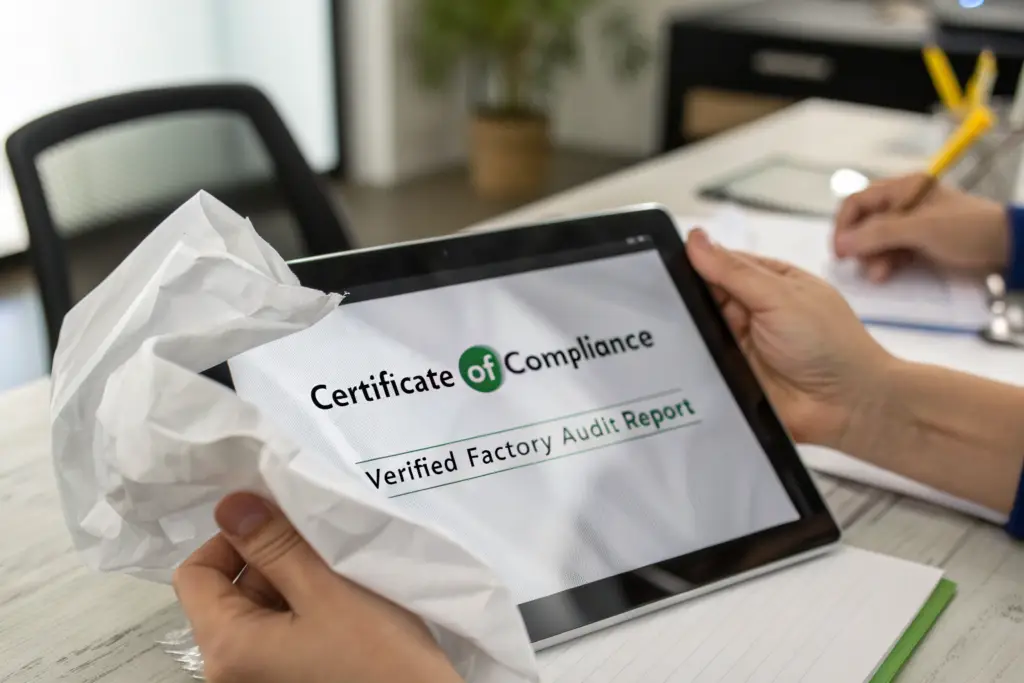
This is the dark side of global sourcing. I will be honest with you: it happens more often than the industry wants to admit. A brand owner finds a supplier on Alibaba. The price is great. The supplier sends over a WRAP certificate and a BSCI audit report. The brand places the order. Then, a U.S. retailer asks for a copy of the audit. The retailer checks the database and finds the certificate is expired, or worse, belongs to a different factory with a similar name. The brand's order gets canceled by the retailer. This is a nightmare scenario I have heard from buyers who eventually came to Shanghai Fumao seeking a reliable partner.
If a supplier has falsified compliance certificates, you must immediately halt all payments and future orders. Verify the certificate number directly on the issuing body's public database (e.g., WRAP or amfori BSCI platform). If the certificate is invalid, use this as grounds to cancel the contract for breach of warranty. Furthermore, consult with a customs attorney regarding the legal implications of importing goods made in a facility that may be using forced labor, as U.S. Customs and Border Protection can seize such goods regardless of payment status.
How Can I Verify a WRAP or BSCI Certificate on My Own?
You do not need a private investigator. You just need the certificate number and an internet connection. Do not trust the PDF that the sales representative sends you. PDFs can be edited in Photoshop in five minutes.
Here is the exact, step-by-step process you should follow before sending a deposit to any new factory, including a factory like mine.
Step 1: Ask for the "Audit Report" not just the "Certificate."
The certificate is a one-page summary. The audit report is the full 10-15 page document with detailed findings and photos of the factory. A factory with a clean audit will share this willingly. A factory with something to hide will make excuses.
Step 2: Verify WRAP Certificates Online.
Go to the WRAP Compliance website. Look for the "Find a Certified Facility" search tool. Enter the factory name exactly as it appears on the certificate. If the certificate is valid, the factory will appear in the search results with the exact same address and expiration date. If it does not appear, the certificate is fake or expired.
Step 3: Verify BSCI Audits.
BSCI is managed by amfori. You cannot search this database publicly unless you are a member of amfori. However, you can ask the supplier for a "Sedex Member ID" . Most reputable factories have a Sedex account where the audit is uploaded. You can be invited to view the audit on the Sedex platform for free as a buyer. This is the gold standard for transparency.
I share our Shanghai Fumao Sedex reference number in our initial email signature. I want you to check. I want you to see that our fire exits are clear and our workers are wearing masks. That transparency builds the kind of long-term partnership that avoids the "falsified certificates" pain point entirely.
What Are the Legal Risks for My U.S. Business If I Import from a Non-Compliant Factory?
This is not just a moral issue. It is a hard legal and financial risk. Under the Uyghur Forced Labor Prevention Act (UFLPA) , U.S. Customs and Border Protection (CBP) operates under a rebuttable presumption that any goods made in whole or in part in Xinjiang are produced with forced labor and are therefore prohibited from entering the United States.
What does this mean for you, the independent brand owner? It means if you source cotton t-shirts or polyester jackets from a supplier who cannot prove their cotton supply chain, CBP can detain your shipment at the port of Long Beach. You will receive a "Notice of Detention." You then have the burden of proof to show where every fiber came from.
This is why the "cheapest price" is sometimes the most expensive mistake you can make. If your goods are detained for three months while you fight with CBP, you will pay storage fees of $50-$100 per day. And if you cannot prove the supply chain is clean, your goods are excluded from entry. They are either re-exported (at your cost) or destroyed.
At Shanghai Fumao, we maintain a Cotton Supply Chain Traceability File for every U.S. bound shipment. We use third-party certified organic cotton or cotton from clearly documented sources in other regions of China or Australia. We do this not because it is easy, but because it is necessary to protect our clients' businesses. When you are evaluating a new supplier, ask them: "Can you provide a traceability document for the raw material if CBP asks?" If they hesitate or do not understand the question, walk away. The legal risk to your brand is too great.
Conclusion
Handling defective garments from an international supplier is a reality of the apparel business, but it does not have to be a financial disaster. The difference between a minor inconvenience and a business-ending loss comes down to the systems you put in place before you ever send a wire transfer.
We have covered the four pillars of protection. First, a detailed Purchase Order that defines defects and ties the balance payment to a passing inspection report. Second, a clear understanding of your negotiation leverage regarding refunds, credits, and liquidation, based on your payment status. Third, the critical role of third-party inspections in acting as your impartial eyes on the ground. And fourth, the absolute necessity of verifying compliance certificates to protect your brand from legal seizure at the border.
I have seen too many talented designers and passionate entrepreneurs lose their savings to a bad batch of shirts with twisted seams or a factory that disappeared after payment. That is why I built Shanghai Fumao differently. We do not hide from defects. We document them. We fix them. We use DDP shipping to maintain control until the goods reach your door, and we rely on transparent audits to prove our ethical standing.
If you are currently dealing with a defective shipment from another supplier and you feel stuck, or if you are planning your next production run and want to ensure you never have to read another article like this out of desperation, we should talk. My team and I specialize in de-risking the production process for independent U.S. brands. We offer realistic small-batch solutions and the kind of direct, honest communication that eliminates the pain of international sourcing.
You can reach out to our Business Director, Elaine, for a no-pressure consultation. She can walk you through our quality control checklist and show you real-time video of our factory floor. Contact Elaine at: elaine@fumaoclothing.com. Let us help you build a supply chain that you can sleep soundly with.