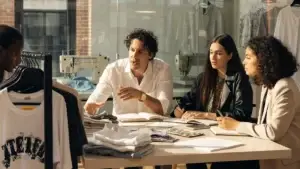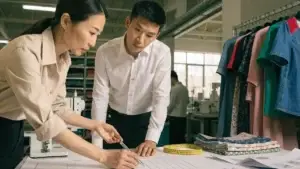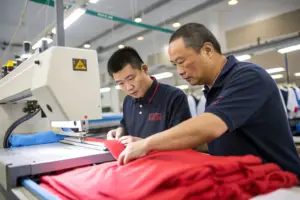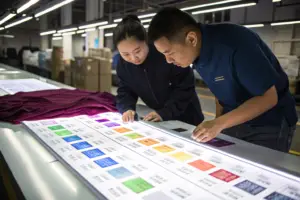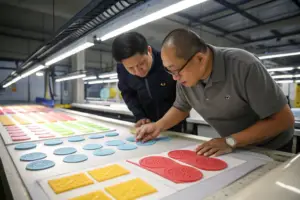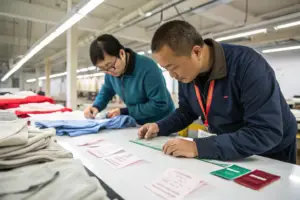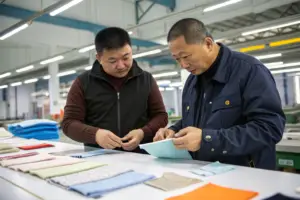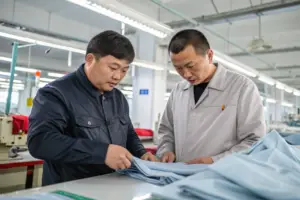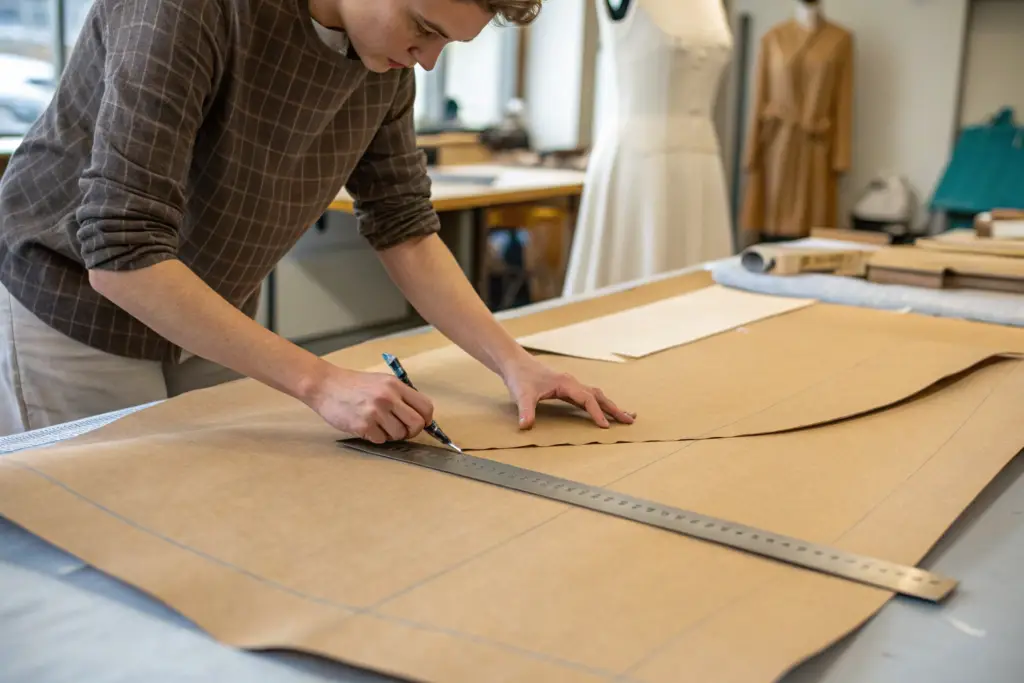
You have a beautiful sketch. The fabric is luxurious. The sewing is clean. You put the garment on a fit model. It pulls across the bust. The armhole gapes. The shoulder seam slides down the back. It looks... homemade. Not designer. You are frustrated. You blame the sewing. You blame the fabric. You are wrong. The problem was determined weeks before a single stitch was sewn. The problem is the Pattern. The pattern is the architectural blueprint of the garment. It dictates the shape of every piece of fabric. If the blueprint is flawed, the building will lean, no matter how good the bricks are. Expert pattern making is the silent, invisible foundation that separates a "nice dress" from a "signature fit." It is the geometry of flattery.
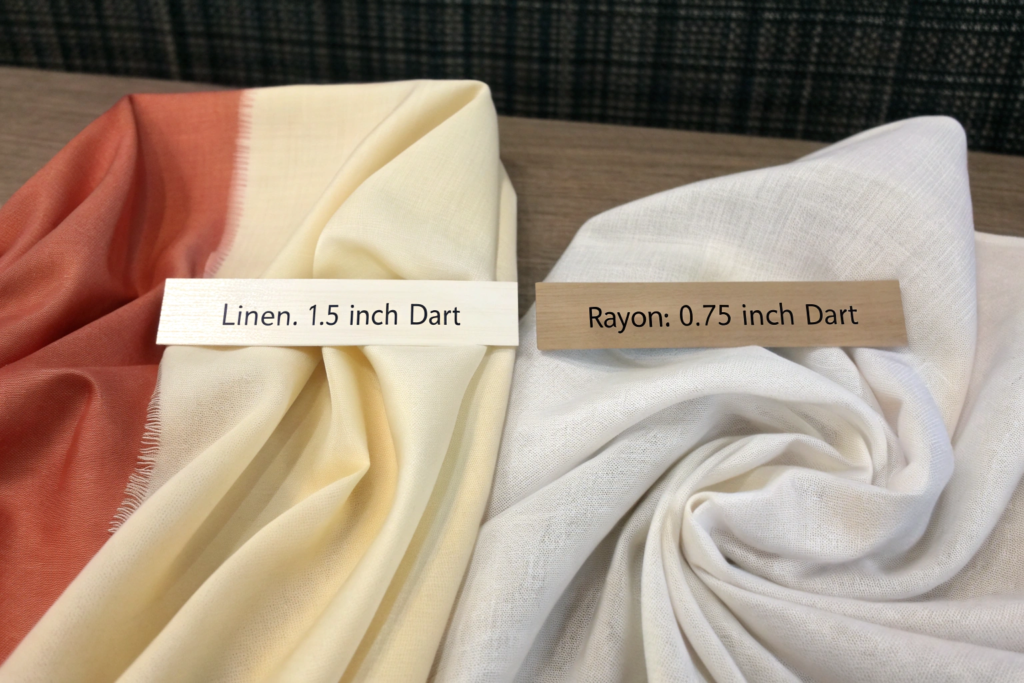
Expert pattern making is the foundation of a great clothing brand because it translates a two-dimensional design sketch into a three-dimensional form that fits the human body consistently. The specific functions of expert pattern making that build brand equity are: (1) Fit Consistency Across the Size Run. An expert pattern maker understands grading—the mathematical rules for increasing or decreasing a pattern across sizes. Amateur grading results in a Size 2 that fits well and a Size 14 that fits terribly. Expert grading ensures the brand's "signature fit" is maintained from XXS to XXL. (2) Fabric Behavior Translation. A great pattern maker knows that a pattern for stiff linen must be different than a pattern for slinky rayon, even if the design sketch is identical. They adjust ease and dart intake to match the fabric's drape and stretch. (3) Production Efficiency. An expertly engineered pattern minimizes fabric waste through smart nesting and reduces sewing labor by designing seams that are easy for operators to assemble. This directly lowers Cost of Goods Sold (COGS) without sacrificing design.
At Shanghai Fumao, our in-house pattern room is the most valuable square footage in our factory. It is where we solve fit problems before they become returns. Let me show you exactly why this craft matters so much.
Why Does "Grading" Separate Amateur Fit from Signature Brand Fit?
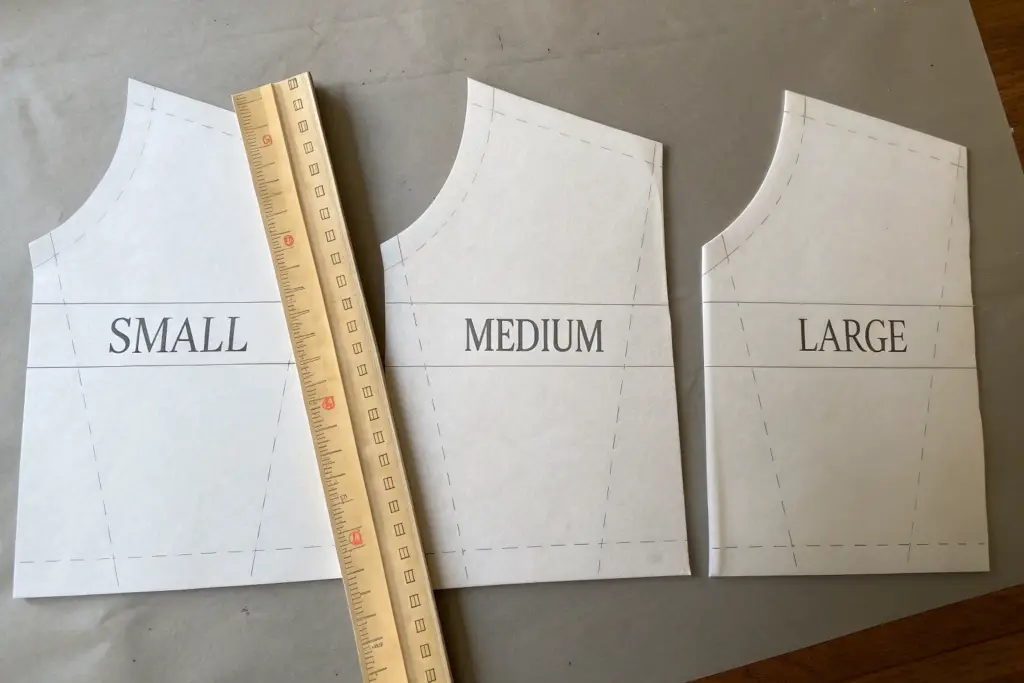
You nail the fit on a size Medium sample. You are thrilled. You send it to the factory to grade to a full size run. The bulk arrives. The Smalls are tight in the shoulders. The Larges are baggy in the waist. The XLs have armholes down to the elbow. You are baffled. The factory used "Standard Grade Rules." They just clicked a button in the computer. They did not think about how a human body actually grows. Grading is not just making everything bigger. It is adjusting specific points of the body at different rates. An expert pattern maker knows that the shoulder width only increases slightly from Small to Large, but the bust circumference increases significantly. A computer algorithm does not know this. It just scales everything proportionally, creating fit disasters in extended sizes.
Expert grading separates amateur fit from signature fit by applying "Anthropometric Data" rather than just linear scaling. The specific knowledge an expert pattern maker applies includes: (1) Differential Growth Rates. A human armhole depth does not increase at the same rate as chest width. An expert grade rule might add 0.25 inches to the armhole per size but 1.0 inch to the bust circumference. An amateur rule adds 0.5 inches to both, distorting the fit. (2) Maintaining Dart Apex Position. As the bust size increases, the point of the dart must shift slightly outward and downward to remain pointing at the apex of the bust. Amateur grading keeps the dart in the same place, causing pulling and gaping. (3) Vertical Adjustments. Taller sizes need more length, but not just in the hem. An expert adds length at the waistline and armhole depth to maintain proportion. An amateur just adds it all to the hem, making the garment look stretched. These micro-adjustments are the "feel" of the brand that customers cannot articulate but fiercely loyal to.
At Shanghai Fumao, our pattern team grades manually for critical fit points. We do not trust the auto-grade button for our clients' core styles.
What Happens When a Factory Uses "Auto-Grade" on a Plus Size Pattern?
This is one of the most common failures in the industry. A brand wants to be inclusive. They ask the factory to grade the sample up to 3X. The factory hits "Auto-Grade."
The result is a 3X garment that fits like a circus tent in the shoulders and is tight in the hips. The proportions are wrong. The customer feels like the brand just made a bigger version of a skinny garment, rather than a garment designed for a larger body.
An expert pattern maker knows that for plus sizes, you need to "Open the Armhole" rather than just lowering it. You need to add width across the Back Rise for pants. You need to adjust the Dart Intake to shape the fabric around curves.
I worked with a brand that was struggling with their plus size fit. Returns for sizes 2X and 3X were triple the rate of sizes S and M. We had our pattern room re-grade their block. We adjusted the shoulder slope and the armhole curve specifically for the 2X and 3X patterns. The next season, the return rate for those sizes dropped by 40%. The customers noticed the difference immediately. They felt seen by the fit. That is brand loyalty built on pattern geometry.
How Do You Verify a Factory's Grading Expertise During Vetting?
Ask a specific, technical question. Do not ask, "Can you grade?" Ask, "What is your grade rule for the Cross Back measurement between a Medium and an Extra Large?"
An expert will answer with a specific number, like "0.25 inches per size" or "0.5 inches total." An amateur will say, "We just use the computer" or "We follow the standard."
Also, request a "Graded Spec Chart" for a style similar to yours. Look at the increments between sizes. Do they make sense? Does the Armhole Depth increase by 0.25 inches while the Chest increases by 2 inches? That is a sign of thoughtful grading. If every measurement increases by exactly the same percentage, it is auto-grade. It will not fit well across the full size range.
This is a key part of our due diligence at Shanghai Fumao. We can show you our grade rule tables and explain the logic behind them.
How Does Pattern Making Translate "Fabric Hand" into Fit?
You make a beautiful blouse in crisp cotton poplin. It sells out. You decide to make the exact same blouse in silk charmeuse for the holiday season. You use the exact same pattern. The silk version arrives. It is saggy. The neckline droops. The armhole gapes. It looks like a nightgown. The pattern was not the problem. The application of the pattern to the wrong fabric was the problem. Fabric has mass and behavior. Crisp cotton holds its shape. Silky charmeuse drapes and clings. A pattern must be adjusted—sometimes subtly, sometimes dramatically—to account for this behavior. This is the art of Fabric Translation.
Expert pattern making translates fabric hand into fit by adjusting the "Ease" and "Dart Equivalents" built into the pattern. The specific adjustments for different fabrics include: (1) Reducing Ease for Drapey Fabrics. A woven cotton blouse needs 2-3 inches of wearing ease at the bust to be comfortable. A silk charmeuse blouse needs only 1-2 inches. If you use the cotton pattern for silk, the garment will look two sizes too big. (2) Adjusting Dart Intake. Stiff fabrics require deeper darts to force the fabric into a three-dimensional curve. Soft fabrics can mold around the body with smaller darts. Using a deep dart on a thin silk creates a bulky, puckered point. (3) Adding Seam Stabilization. For bias-cut garments (cut on the diagonal grain), the pattern must include extra seam allowance and specific "Stay Stitching" instructions to prevent the fabric from stretching out of shape during sewing. (4) Hem Adjustments. A circular hem on a stiff fabric stands out. On a drapey fabric, it droops. The pattern must be adjusted to create a level hemline based on the fabric's "drape coefficient."
At Shanghai Fumao, we never cut a new fabric without having the pattern maker review the swatch. They adjust the digital file before it ever goes to the cutting table.
Why Does "Bias Cut" Require a Completely Different Pattern Mindset?
Cutting fabric "on the bias" means cutting it at a 45-degree angle to the straight grain. This is what gives a slip dress that beautiful, liquid drape.
But bias cut fabric grows. It stretches under its own weight. A skirt cut on the bias will "drop" and become longer and narrower after hanging overnight.
An expert pattern maker knows this. They will adjust the pattern to be shorter and wider than the final intended measurement. They will let the cut panels hang for 24-48 hours before sewing to allow the fabric to "relax" to its final shape. Then they will trim the hem and sew the seams.
An amateur factory cuts the pattern to the exact spec, sews it immediately, and ships it. The customer wears it once. The hem drops three inches. It is now uneven and too long. The customer is unhappy.
I recall a client who made a bias cut satin skirt. The first factory delivered skirts with hems that were all over the place. We took over the production. Our pattern room added a "Drop Allowance" to the pattern and we implemented a mandatory 24-hour hang time before hemming. The skirts were perfectly level. The client's return rate dropped to near zero. This is the invisible work of expert pattern making.
What Is "Ease" and How Does It Define a Brand's Aesthetic?
Ease is the difference between the body measurement and the garment measurement.
- Negative Ease: The garment is smaller than the body. It stretches to fit (e.g., activewear leggings).
- Zero Ease: The garment exactly matches the body (e.g., a tailored blazer).
- Wearing Ease: A small amount added for comfort (e.g., 2 inches in a shirt).
- Design Ease: Extra fabric added for style (e.g., an oversized, slouchy look).
A brand's signature fit is defined by its Ease Philosophy. Is it a brand of slim, tailored fit? Or relaxed, oversized fit? This philosophy is encoded in the pattern blocks.
An expert pattern maker helps you define and document this philosophy. They say, "For your classic blazer, we will use a 4-inch chest ease. For your relaxed blazer, we will use 8 inches." This becomes a standard. Every designer who works for the brand in the future can apply this standard.
Without this documented ease philosophy, the fit of the brand drifts season to season, designer to designer. Customers get confused. Loyalty erodes. The pattern room is the keeper of the brand's fit DNA.
How Does Expert Nesting and Pattern Engineering Reduce Production Costs?
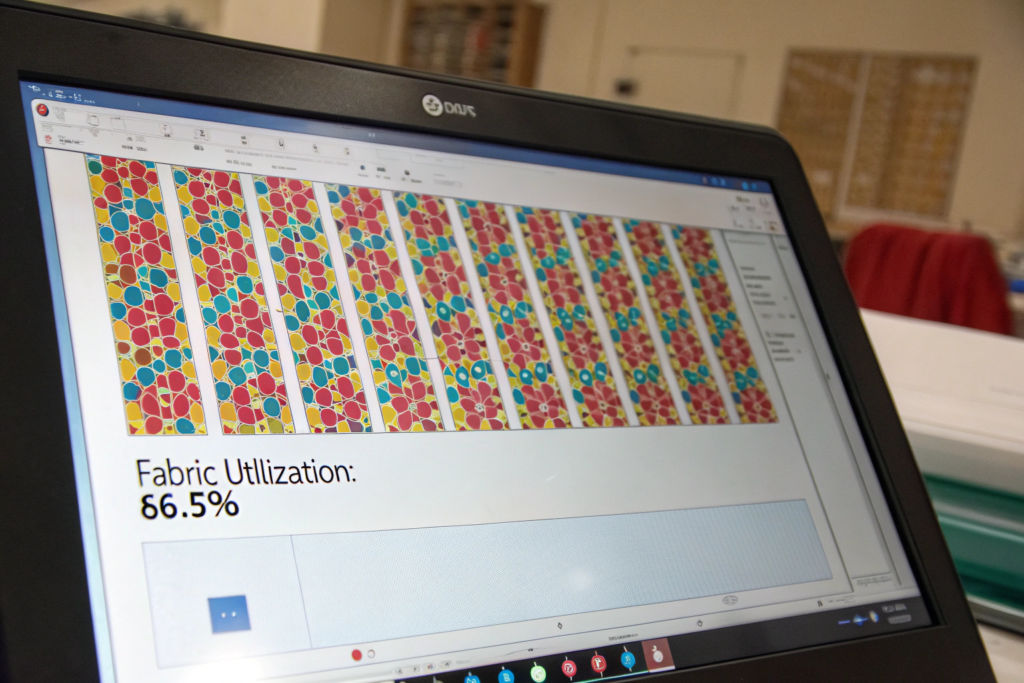
You think pattern making is just about fit. It is also about money. The way a pattern is shaped and arranged on the fabric determines how much fabric is wasted. A small change to the angle of a side seam or the placement of a pocket can save 2-3% on fabric costs. Over 10,000 units, that is thousands of dollars. This is called Pattern Engineering for Production. An expert pattern maker designs the garment not just for the body, but for the cutting table. They think about Nesting Efficiency while they are drafting the pattern. They avoid weird, jagged edges that leave large gaps in the marker. They design seam placements that allow pieces to fit together like a puzzle.
Expert nesting and pattern engineering reduce production costs through three specific design interventions: (1) Optimized Seam Placement. Moving a side seam slightly forward or backward can change the shape of the panel, allowing it to "nest" closer to adjacent pieces. (2) Common Line Cutting. Designing straight edges that can be shared between two pieces (e.g., a pocket facing and a front band). This eliminates the fabric gap required for a separate cut. (3) Reducing Notch Waste. Traditional patterns have deep V-notches for alignment. An expert uses shallow "I-notches" or laser marks that consume less fabric and are faster to cut. (4) Piece Count Reduction. An expert asks, "Does this facing need to be a separate piece, or can it be an extension of the main pattern?" Reducing the number of pieces reduces handling time and seam sewing time. These savings compound across bulk production, directly increasing gross margin.
At Shanghai Fumao, our pattern makers work closely with our cutting room. They review marker efficiency reports and adjust patterns for future runs to hit target utilization rates.
How Much Fabric Can a "Bad" Pattern Actually Waste?
This is a real-world example. A client brought us a pattern for a wrap dress that was made by a freelance designer. The pattern had a strange, swooping hem curve on the skirt panel.
When we nested it for production, the fabric utilization was only 78%. For every 100 yards of fabric, 22 yards were going into the scrap bin. The fabric was $6.00 per yard. That waste cost $1.32 per dress.
Our pattern room re-engineered the skirt panel. We straightened the hem curve slightly and added a center back seam. The design looked identical to the consumer. The fabric utilization jumped to 86%.
The savings: $0.48 per dress. On an order of 3,000 dresses, that was a savings of $1,440. That paid for the pattern work and then some.
This is the value of an expert pattern maker. They see dollars on the cutting room floor that a purely "creative" designer misses.
What Is "Cutting Room Drift" and How Does a Good Pattern Prevent It?
Cutting room drift happens when a manual cutter veers slightly off the marker line. A good pattern anticipates this.
An expert pattern maker avoids "Knife Point Intersections" —places where three seams meet at a single, sharp point. If the cutter drifts by 1mm, that point becomes a hole or a weak spot.
Instead, they design "Jump Seams" or "Offset Intersections." They slightly stagger the seams so the cutter has a margin for error.
This is a level of detail that is invisible to the consumer but critical to the sewer and the durability of the garment. It prevents tiny holes at the neckline or the crotch point. It makes the garment stronger.
I see this in fast fashion garments all the time. A tiny hole appears at the V-neck after two washes. That is a knife point intersection that failed. Expert pattern making eliminates this risk.
How Do You Collaborate Effectively with a Factory Pattern Maker?
You cannot fly to the factory. You need to communicate a fit correction. You send an email: "The armhole feels tight." The factory receives it. They do not know what "feels tight" means. They do nothing. You get frustrated. You need to speak the language of the pattern room. You need to provide specific, measurable feedback that a pattern maker can act on. You also need to understand the limits of a remote pattern change. Some changes are simple "digital tweaks." Others require a completely new physical pattern and should be charged accordingly.
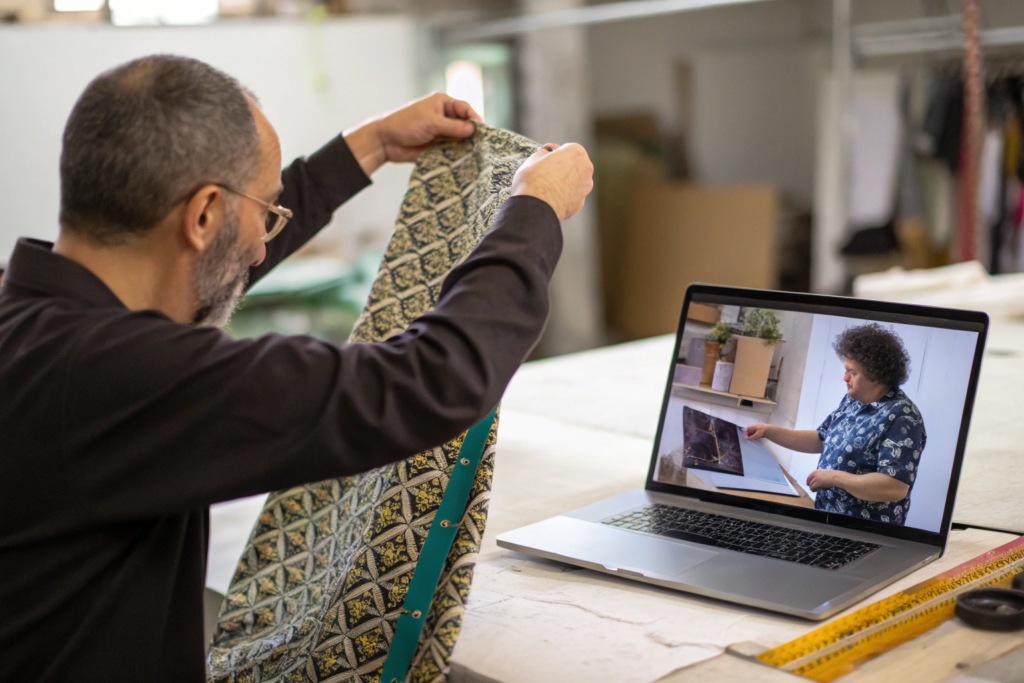
Effective collaboration with a factory pattern maker requires using "Points of Measure" (POM) language and providing visual evidence. The protocol for a remote fit correction is: (1) Photo Documentation. Take photos of the garment on a fit model (or yourself) from Front, Side, and Back. Use a timer and stand in a neutral posture. (2) Annotated Images. Use a simple photo editing tool to draw arrows or circles on the image. For example, circle the drag lines pointing to the armhole. (3) POM Reference. Refer to the specific measurement on the tech pack. "The Armhole Depth (POM F) currently measures 9.5 inches on the size Medium. Please increase to 10.0 inches." (4) Request a Pattern Adjustment Confirmation. Ask: "Will this change require a new sample, or can it be applied to bulk?" This sets expectations for cost and timeline. Clear, visual, and data-driven communication makes the remote pattern process work.
At Shanghai Fumao, we encourage clients to send us these annotated fit photos. We review them in our weekly pattern meeting. It is the most efficient way to get to the correct fit.
What Is the Difference Between a "Pattern Tweak" and a "Pattern Reslope"?
This is about managing expectations on cost and time.
A Pattern Tweak is minor. "Shorten sleeve by 1 inch." "Widen hem circumference by 2 inches." These are quick digital adjustments. Most factories do not charge for a couple of tweaks during sampling.
A Pattern Reslope is major. "The shoulder angle is wrong. It is sliding off." Changing the shoulder slope requires re-drafting the armhole, the sleeve cap, and possibly the neckline. This is hours of skilled labor. It often requires a new physical sample to verify.
You should expect to pay a fee for a pattern reslope. It is fair. The pattern maker is essentially re-engineering a portion of the garment.
I always tell clients: Be specific in your first fit review. Bundle all minor tweaks into one request. If you request a sleeve length change on Monday, a hem change on Tuesday, and a neckline change on Wednesday, you will be charged for three separate pattern touches. Bundling is respectful of the pattern maker's time and saves you money.
How Do You Protect Your Pattern Intellectual Property?
This is a concern for many brands. You have spent thousands developing the perfect fit. You do not want the factory using your block for another client.
You need a contractual agreement. The Manufacturing Agreement should state: "All patterns, graded nests, and fit blocks developed for [Brand Name] remain the sole intellectual property of [Brand Name] and shall not be used for any other client."
Operationally, you can ask: "How do you segregate client pattern files?" A professional factory will have a secure server with client-specific folders and access restrictions.
At Shanghai Fumao, we treat client patterns as confidential IP. Our pattern makers understand that Client A's fit is not Client B's shortcut. This is a basic tenet of ethical manufacturing.
Conclusion
Expert pattern making is the quiet genius behind every garment you love to wear. It is the reason a blazer makes you feel powerful and a dress makes you feel beautiful. It is not the fabric. It is not the color. It is the invisible geometry that maps the textile to the human form. We have seen how expert grading ensures the brand promise of fit scales from a size 2 to a size 22. We have learned how a pattern maker translates the drape of silk versus the crispness of linen into a blueprint that respects the fabric's nature. We have uncovered the financial dimension—how smart pattern engineering saves thousands of dollars in fabric waste. And we have built the communication bridge, learning to speak POM and send annotated photos.
At Shanghai Fumao, our pattern room is the heart of our operation. It is where we honor the craft of fit. We believe that a great factory is defined not just by its machines, but by its mastery of the paper pattern.
If you are building a brand that will be defined by how it fits, not just how it looks, you need a partner who values pattern making as much as you do. We invite you to collaborate with our pattern team.
To discuss your fit goals or to get a quote on pattern development and grading for your collection, please contact our Business Director, Elaine. She can connect you with our head pattern maker for a technical consultation.
Email: elaine@fumaoclothing.com