You have designed the perfect kids' activewear line. The colors are vibrant. The fabrics are soft and sustainable. The fit is spot on. You ship the first orders. Then the emails start coming in. "My son wore these twice, and the seam split." "The crotch ripped during gymnastics." Your heart sinks. You realize that in the world of active kids, a weak seam is a broken promise. A brand owner in the children's space told me, "I learned the hard way that a kid can find the weakest point in a garment faster than any lab machine. Seams are everything."
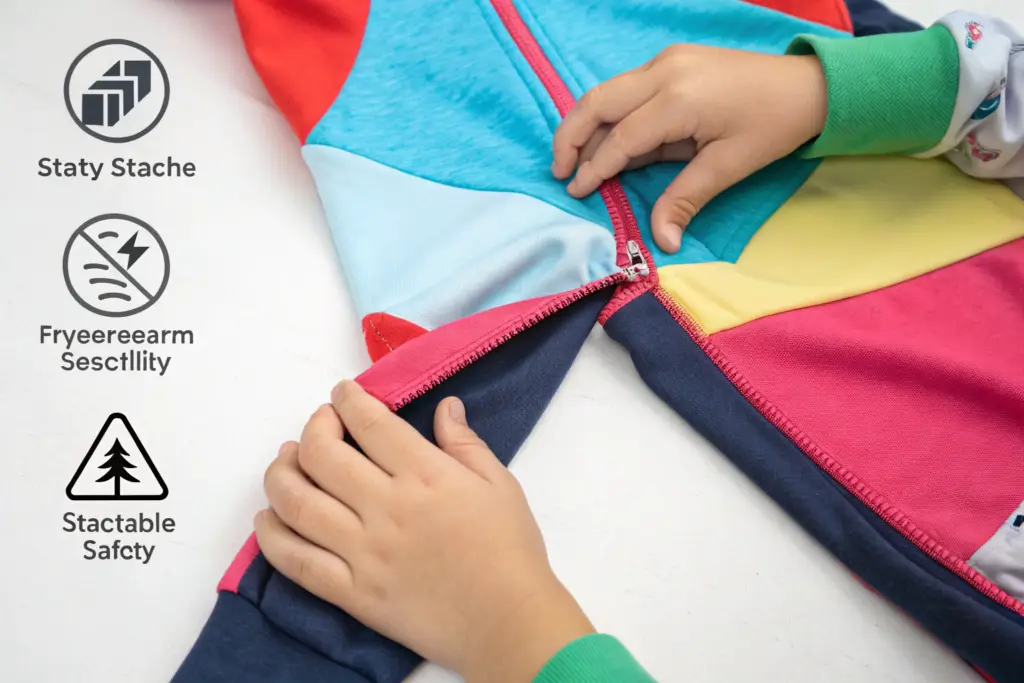
Ensuring strong seams in kids' active clothes requires a three-part engineering approach: 1) Stitch Type Selection (using inherently strong and elastic stitches like the 5-thread Safety Stitch and Coverstitch), 2) Seam Reinforcement (employing techniques like bar tacks, gussets, and reinforced knee patches at high-stress points), and 3) Material Synergy (matching the correct thread type and tension to the stretch fabric to prevent "grinning" and cracking).
At Shanghai Fumao, we know that kids' clothes must survive the playground, the washing machine, and being passed down to a sibling. We engineer our B2B partners' activewear for this reality. Let me break down the specific, technical details that transform a fragile seam into an unbreakable bond, ensuring your brand is known for durability, not disappointment.
What Are the Best Stitch Types for Maximum Durability and Stretch?
The single biggest factor in seam strength is the stitch type. You cannot sew a pair of stretch leggings with the same straight stitch you would use on a woven cotton shirt. The stitch itself must have inherent elasticity to move with the child. Using the wrong stitch is the primary cause of seams "popping" during activity. This is non-negotiable for kids' activewear.
The gold standards for strong, elastic seams in activewear are the 5-thread Safety Stitch (for joining seams) and the Coverstitch (for hems). The Safety Stitch combines an overlock stitch with a chainstitch, creating a seam that is both incredibly strong and highly elastic. The Coverstitch creates the professional, flexible double-row of stitching seen on athletic hems. Avoid the basic Lockstitch (straight stitch) for primary construction seams on stretch fabrics.
I recall a distributor who had a disastrous run of kids' leggings with a previous factory. The factory had used a simple Lockstitch on the side seams to save time. After one wear, the seams were splitting. The return rate was over 20%. When he moved production to us, we used a 5-thread Safety Stitch for all main seams. The difference was immediate and dramatic. The return rate for seam failure dropped to less than 1%. The kids could not break them. This is the power of engineering the right stitch from the start. This is standard practice in high-quality activewear manufacturing .
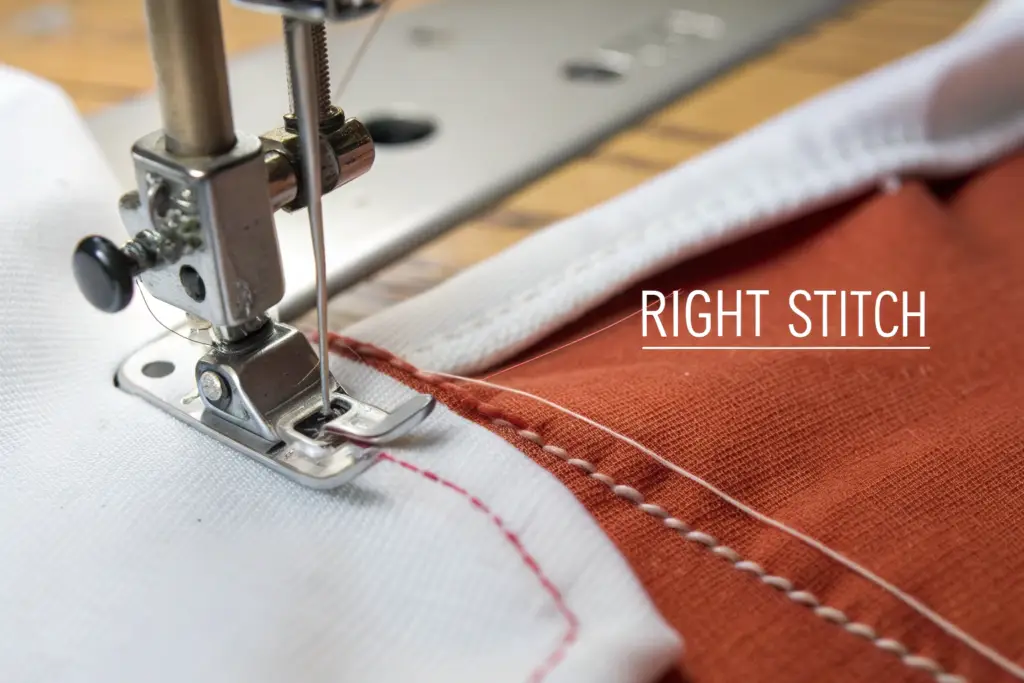
Why Is a Safety Stitch (ISO 516) Superior to a Basic Overlock?
A basic 3-thread or 4-thread overlock stitch trims the fabric edge and wraps it with thread. It is good for preventing fraying, but it has limited strength and stretch. The 5-thread Safety Stitch (ISO 516) adds a separate, independent chainstitch line right next to the overlock. This double-line of defense is what gives it its name—it is a "safety" net. If the overlock stitch breaks, the chainstitch holds. It provides 20-30% more seam strength and elasticity than a basic overlock. It is the industry standard for any performance garment that will be subjected to stress.
Where Should a Coverstitch Be Used on Kids' Activewear?
The Coverstitch is the stitch you see on the hem of a t-shirt or the bottom of a pair of leggings. It is created by a specialized machine that produces two or three parallel lines of stitching on the top side and a "looper" thread on the back that allows the stitch to stretch. It should be used for:
- Bottom Hems
- Sleeve Hems
- Waistband Attachment (in some constructions)
It provides a clean, professional finish that moves with the child and will not snap when pulled on over a wiggly body.
How Do We Reinforce High-Stress Points Like Crotches and Knees?
Even the strongest stitch can fail if the fabric itself gives way or if the stress is concentrated on a single point. Kids' activewear has specific "hot spots" that endure extreme forces: the crotch, the knees, and pocket corners. A standard seam in these areas is a guaranteed failure point. Reinforcement is not an option; it is a requirement for a top tier product.
We reinforce high-stress points using a combination of techniques: Functional Crotch Gussets (an extra panel of fabric that redistributes stress and allows for a full range of motion), Bar Tacks (dense, zig-zag stitches placed at the ends of seams to prevent tearing), and Double-Layer Reinforced Knees (adding a second layer of durable fabric to the area that takes the most abrasion).
A brand we work with that specializes in outdoor kids' wear has built their entire reputation on durability. Their signature is a reinforced knee patch on all their pants. It is not just a design feature; it is an engineering solution. We use a durable, abrasion-resistant fabric for the patch and attach it with a flatlock seam to minimize bulk. Parents specifically seek out this feature. They know these pants will survive a season of playgrounds and hiking. The reinforced knee is a tangible symbol of the brand's commitment to quality and understanding their customer's life.
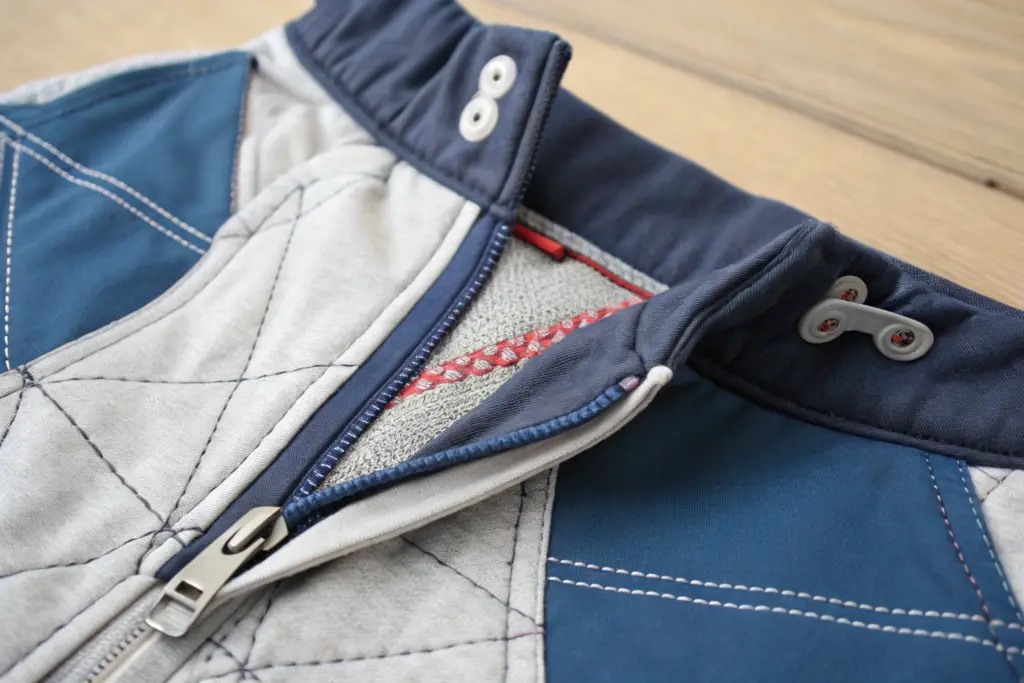
What Is the Purpose of a Crotch Gusset?
A gusset is a separate, often diamond-shaped or oval, piece of fabric sewn into the crotch seam. It serves two critical functions:
- Eliminates the 4-Way Seam Intersection: Without a gusset, four seams (front, back, and two legs) meet at a single, bulky, and weak point. The gusset replaces this with smoother, stronger, offset seams.
- Improves Fit and Mobility: The gusset adds extra room and allows the legs to move more freely without pulling or stressing the seams. For active kids doing cartwheels and climbing, this is essential for both comfort and durability.
How Are Bar Tacks Used to Prevent Rips?
A bar tack is a very dense, short, zig-zag stitch. It is typically 1/2" to 1" long and about 1/8" wide. You see them on belt loops, the corners of pockets, and the base of zipper flies. Their purpose is to reinforce the end of a seam, which is a natural stress point where a tear is most likely to start. The concentrated stitching acts like a rivet, distributing the force and preventing the seam from pulling apart. We apply bar tacks liberally to our kids' activewear at all critical stress points.
What Role Does Thread Type and Tension Play in Seam Integrity?
You can choose the perfect stitch and reinforce every stress point, but if you use cheap, weak thread, or if the machine tension is off, the seam will still fail. The thread is the literal glue holding the garment together. Tension is the precise balance of forces that creates a strong, interlocking stitch. These "invisible" factors are where a truly expert clothing manufacturer distinguishes itself.
Strong seams rely on high-quality thread and perfect tension. We use high-tenacity corespun polyester thread, which has a strong filament core wrapped in a softer sheath, providing the ideal combination of strength, elasticity, and sewability. Correct thread tension—balanced between the needle and bobbin threads—is critical. Too loose, and the seam will "grin" (gaps open). Too tight, and the thread will snap or cause the fabric to pucker.
A client once questioned why our sewing cost was slightly higher than another factory's quote. We explained the "thread factor." The other factory was using a cheap, fuzzy spun poly thread that breaks easily. We use a premium corespun thread that costs more but is exponentially stronger. We also have dedicated mechanics who calibrate the tension on every machine daily. This investment in materials and precision is invisible to the end customer, but they feel it every time the garment survives a wash and a wear. This is the definition of top tier quality control. The importance of thread selection is well-documented in textile science .
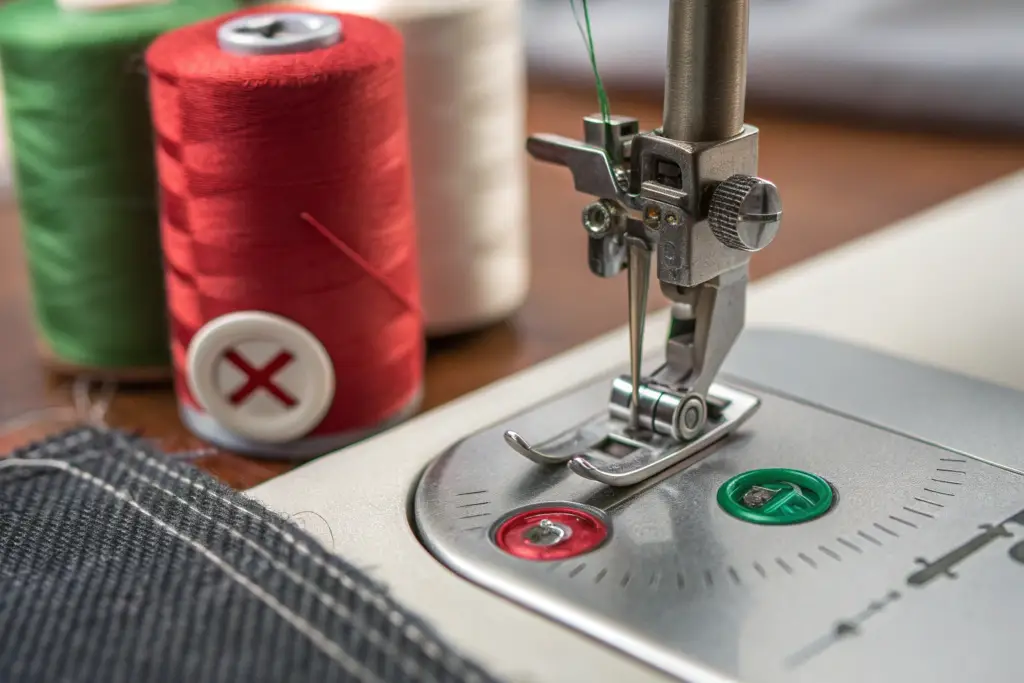
What Is "Seam Grinning" and How Is It Prevented?
Seam Grinning (also called "seam opening" or "seam gapping") is when you stretch a seam, and the stitches pull apart, exposing the bare thread between the two pieces of fabric. It is unsightly and a sign of a weak seam. It is caused by:
- Insufficient Thread Tension: The stitch is too loose.
- Wrong Stitch Type: Using a lockstitch on a stretch fabric.
- Too Few Stitches Per Inch (SPI): The stitches are spaced too far apart.
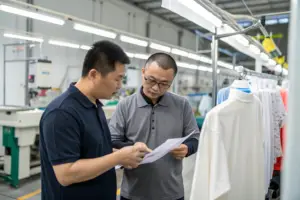
We prevent grinning by using the correct Safety Stitch with a high SPI (12-14 stitches per inch) and by meticulously maintaining correct thread tension. Our QC inspectors perform a Stretch Test on seams from every production run to check for grinning.
Why Is Corespun Thread Superior for Active Kids' Wear?
Standard Spun Polyester Thread is made from short, twisted fibers. It is fuzzy and has lower tensile strength. It breaks more easily under stress. Corespun Thread has a core of continuous filament polyester (like a tiny, strong rope) that is wrapped in a sheath of spun polyester or cotton. This gives it:
- High Tensile Strength: It resists breaking.
- Excellent Elasticity: It stretches with the fabric.
- Good Sewability: The outer sheath protects the needle from heat and friction.
It is the only thread we use for main seams in our activewear and kids' wear production.
How Do We Test Seam Strength to Simulate Real-World Kid Wear?
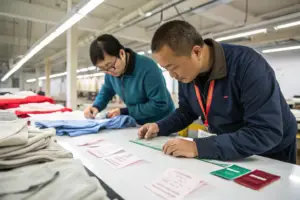
You cannot wait for a 7-year-old to tell you the seam is weak. You need to know before the garment leaves the factory. This is where standardized, rigorous testing comes in. We simulate the worst-case scenarios of the playground, the washing machine, and the "tug-of-war with a sibling" in our lab. Data, not hope, is our guide.
We test seam strength using a combination of methods: ASTM D1683 (Standard Test Method for Failure in Sewn Seams of Woven Apparel Fabrics) using a tensile testing machine to measure the exact force required to rupture a seam, a Manual Stretch and Recovery Test over a calibrated dome to simulate body movement, and repeated Wash Testing to ensure seam integrity is maintained after laundering.
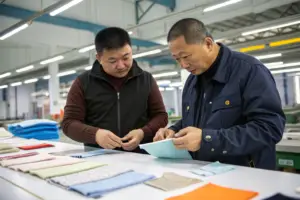
Before we approve a new activewear style for bulk production, we send seam samples to a certified lab for ASTM D1683 testing. The report tells us the exact pounds of force required to break the seam. We have established minimum performance standards for different garment types. A kids' legging seam must withstand significantly more force than a fashion top seam. If a sample fails, we adjust the stitch type, thread, or seam construction and test again. This is the data-driven discipline that ensures our B2B partners' products are built to last.
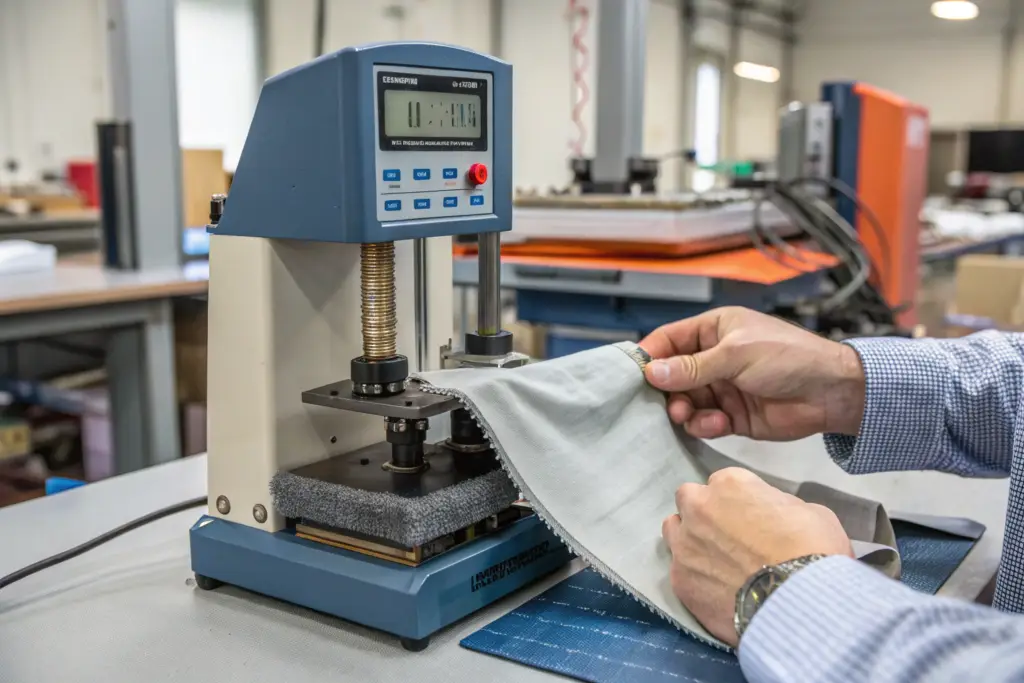
What Is the ASTM D1683 Seam Strength Test?
This is the industry-standard test. A specialized machine grips the fabric on either side of the seam and pulls it apart at a controlled speed until the seam breaks. The machine measures the Maximum Force (lbf or N) required to cause failure. It provides objective, comparable data. It removes all subjectivity from the question, "Is this seam strong enough?"
How Does the "Stretch and Recovery" Test Mimic Active Play?
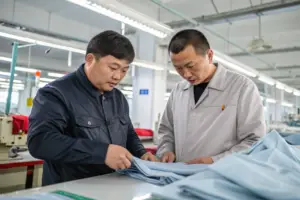
We also perform a practical, visual test. We take a finished garment and stretch the critical seams over a calibrated dome or mannequin that simulates the body. We stretch it to a specific percentage (e.g., 30% for leggings). We hold it, then release. We repeat this 20-30 times. The seam must not crack, grin, or show any permanent distortion. This test simulates the repetitive stress of a child squatting, running, and climbing. It is a fast, effective way to screen for obvious construction flaws before moving to more formal lab testing.
Conclusion
A strong seam in a kid's active garment is a silent promise. It is a promise to the child that they can climb higher, run faster, and play harder without their clothes holding them back. It is a promise to the parent that their investment will last through countless adventures and washes. It is the most fundamental expression of quality and respect for your customer.
At Shanghai Fumao, we do not take this promise lightly. We engineer it into every stitch, every reinforcement, and every test. From the precision of our 5-thread safety stitches to the durability of our corespun thread, we build kids' activewear that is ready for the beautiful chaos of childhood.
If you want a clothing manufacturer who obsesses over the details that make your kids' wear durable and beloved, let's talk. Our Business Director, Elaine, can walk you through our seam engineering standards and share our testing protocols. Please email Elaine at: elaine@fumaoclothing.com.