You have decided that your private label brand will be different. It will not just be about beautiful designs. It will be about beautiful materials, responsibly made. You write "Sustainable Fabrics" at the top of your sourcing plan. Then you stare at the blank page. Where do I even start? How do I know what's real? How do I not get ripped off? A brand owner told me, "I wanted to do the right thing, but the sustainable fabric market felt like a minefield of confusing certifications and greenwashing. I was paralyzed."
Sourcing sustainable fabrics for your private label brand requires a three-pronged approach: Understanding the Hierarchy of Preferred Materials (knowing which fibers have the lowest impact), Verifying Claims with Third-Party Certifications (GOTS, GRS, OEKO-TEX, FSC), and Partnering with a Transparent Manufacturer who has a vetted network of compliant mills and can provide the necessary chain-of-custody documentation.
At Shanghai Fumao, we have made sustainable sourcing a core competency. We guide our B2B partners through this complex landscape every day. Let me demystify the process and give you a clear, actionable framework for sourcing fabrics that are genuinely better for people and the planet, and that will form the authentic foundation of your brand's story.
What Are the Key Categories of Preferred Sustainable Fabrics?
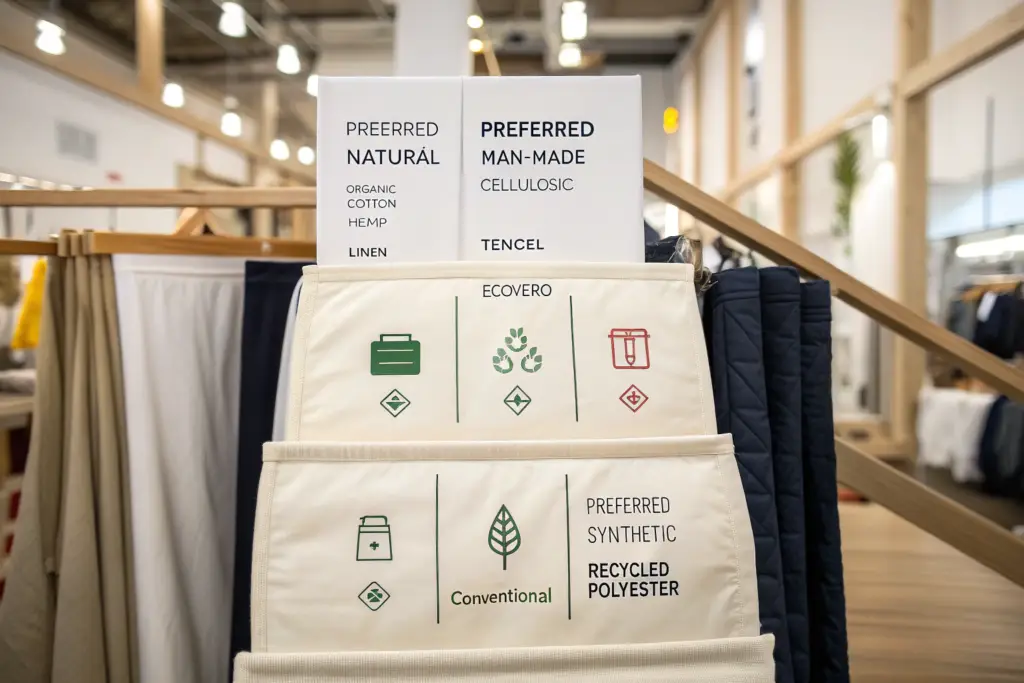
Not all "eco-friendly" claims are created equal. The first step is understanding the landscape of better materials. This is often visualized as a hierarchy, with the most preferred, lowest-impact options at the top. Knowing this hierarchy allows you to make strategic decisions based on your product category, performance needs, and budget.
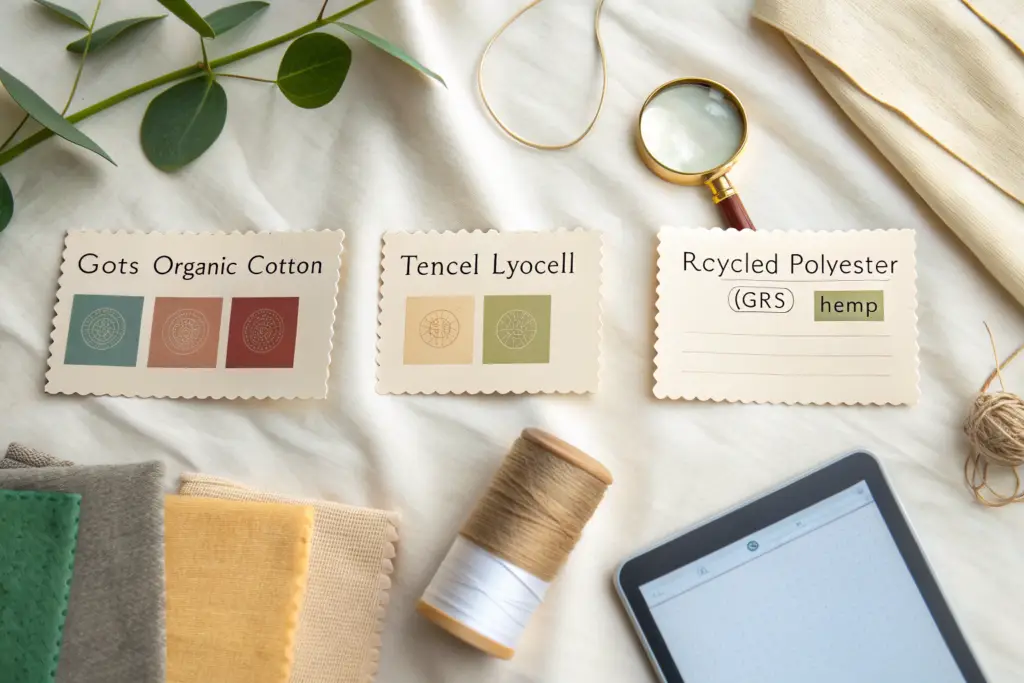
The key categories of preferred sustainable fabrics are: 1) Preferred Natural Fibers (GOTS-certified organic cotton, hemp, linen) which avoid synthetic pesticides and often use less water. 2) Preferred Man-Made Cellulosic Fibers (Tencel Lyocell, Livaeco Viscose) which are derived from wood pulp from sustainably managed forests and produced in a closed-loop process. 3) Preferred Synthetic Fibers (GRS-certified Recycled Polyester, Recycled Nylon) which divert plastic waste from landfills and oceans.
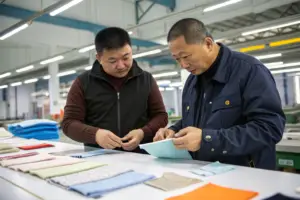
I recall a women's wear client who wanted a "sustainable dress." She initially thought only of organic cotton. We showed her swatches of Tencel Lyocell. She was amazed by the fluid drape and soft handfeel. For her specific design, a flowy midi dress, Tencel was not only more sustainable than conventional cotton but also performed better aesthetically. The key is matching the right sustainable fiber to the right garment. A rigid hemp canvas is perfect for a structured tote bag but wrong for a soft baby onesie. This is where expert guidance is essential. The Textile Exchange provides excellent resources on the hierarchy of preferred fibers.
What Is the Difference Between Organic Cotton and Conventional Cotton?
This is the most common starting point. The differences are profound:
- Pesticides: Conventional cotton uses a massive amount of synthetic pesticides and insecticides. GOTS-certified organic cotton prohibits these, protecting farmer health and local ecosystems.
- Water: While both need water, organic farming practices (like crop rotation and cover cropping) build healthier soil that retains moisture better, often reducing the need for irrigation.
- GMOs: Organic cotton prohibits genetically modified seeds.
- Certification: The key is the GOTS certification, which ensures the organic status is maintained from farm through processing.
For a brand, choosing GOTS organic cotton is a powerful, verifiable statement about your values.
Why Are Tencel and Recycled Polyester Considered "Preferred" Materials?
- Tencel Lyocell: It is a branded lyocell fiber made from eucalyptus wood, typically from sustainably managed forests (often FSC-certified). The production process uses a non-toxic solvent that is 99% recovered and recycled in a closed-loop system. It uses significantly less water and energy than conventional cotton. It is a high-performance fiber with a beautiful drape and natural breathability.
- Recycled Polyester (rPET): This is typically made from melted-down post-consumer plastic bottles. The key benefit is waste diversion—keeping plastic out of landfills and oceans. It also uses significantly less energy and water to produce than virgin polyester. The key is ensuring it is GRS-certified to verify the recycled content and responsible manufacturing.
How Do You Verify the Authenticity of Sustainable Fabric Claims?
This is the most critical step. The market is flooded with "green" marketing language that means nothing. A supplier might tell you their cotton is "natural" or "eco-friendly." These are not regulated terms. You need objective, third-party proof. Relying on a supplier's word is how brands get caught up in greenwashing scandals.
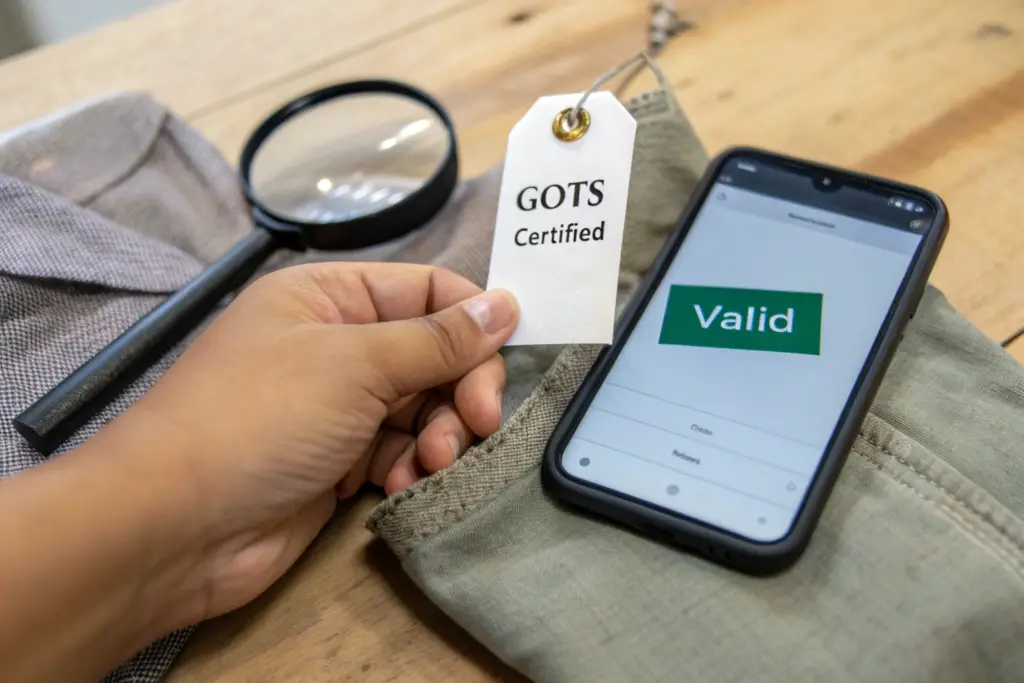
Authenticity is verified through third-party certifications. For organic fibers, look for the GOTS (Global Organic Textile Standard) label and a valid scope certificate. For recycled content, look for the GRS (Global Recycled Standard) label. For overall chemical safety, look for OEKO-TEX Standard 100. And for wood-based fibers like Tencel, look for FSC (Forest Stewardship Council) certification. You must check the validity of these certificates on the certifying body's public database.
A kids' wear brand we work with was offered a "great price" on "organic cotton" from a new mill. Before placing the order, we checked the mill's GOTS certificate number on the official GOTS public database . The certificate had expired six months earlier. The mill was still using the logo illegally. We rejected the material. The client was disappointed but protected. Six months later, that same mill was publicly called out for fraudulent organic claims. Our due diligence saved the brand from a reputational disaster. This is the value of rigorous verification.
What Is a "Transaction Certificate" (TC) and Why Do You Need It?
A Transaction Certificate (TC) is the official document issued at each step of the supply chain for certified materials (GOTS, GRS). It is the "passport" for the fiber. The certified farm sells the raw cotton to the gin, issuing a TC. The gin sells to the spinner, issuing a TC. This chain of TCs continues all the way to the final garment manufacturer. We provide our clients with the final TC, which is the legal proof that the finished product contains certified organic or recycled content. Without this paper trail, the claim is unsubstantiated.
How to Use the OEKO-TEX Label Check?
OEKO-TEX Standard 100 is a certification that tests the finished fabric for harmful substances. It is essential for ensuring the product is safe for human health, especially for kids' wear. Every valid certificate has a unique license number. Go to the OEKO-TEX Label Check website, enter the number. It will instantly tell you if the certificate is valid, who it was issued to, and what product class it covers (e.g., Class I for babies). This is a 30-second check that provides immense peace of mind.
What Are the Cost and Minimum Order Quantity Realities of Eco-Fabrics?
Let's be realistic. Sustainable fabrics are generally more expensive than their conventional counterparts. The raw material costs more to farm or produce. The certification process adds cost. And MOQs (Minimum Order Quantities) can sometimes be higher, especially for custom colors. However, viewing this solely as a "cost increase" misses the strategic value.
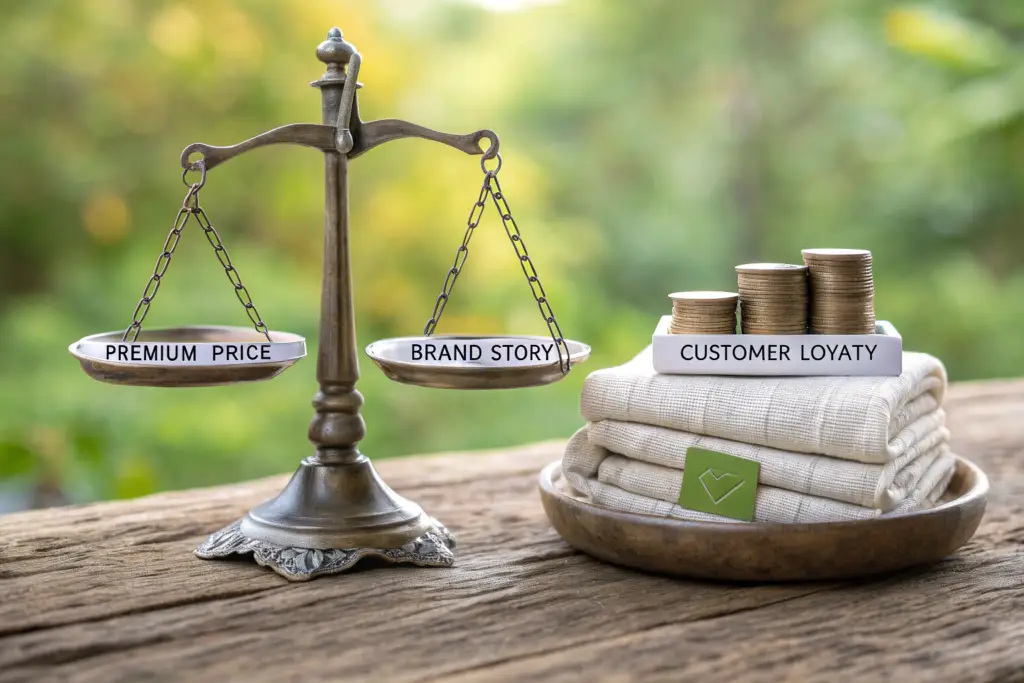
While sustainable fabrics typically have a 15-40% cost premium and may require higher initial MOQs for custom dye lots, these challenges are manageable. Strategies include: using "stock" colors of certified fabrics to lower MOQs, blending a percentage of recycled fiber with conventional fiber to balance cost and story, and leveraging the higher perceived value to justify a premium retail price. The investment often yields a higher net margin and stronger brand loyalty.
A men's wear brand we partner with switched their best-selling t-shirt from conventional cotton to GOTS organic cotton. Their material cost increased by 22%. They raised their retail price by 15%. They marketed the change transparently, telling the story of the farmers and the certification. Their sales of that SKU increased by 30% the following season. The customer wanted the sustainable option and was willing to pay for it. The brand's profit margin per unit actually improved. This is the economic reality of smart sustainable sourcing.
How to Mitigate High MOQs for Custom Sustainable Fabrics?
As we discussed in MOQs , custom dyeing is the main driver of high minimums. To mitigate this for sustainable fabrics:
- Start with Stock Colors: Many mills now hold inventory of popular GOTS and GRS fabrics in core colors (Black, White, Navy, Natural). This allows you to order as little as 100-200 yards.
- Use a "Greige" Program: Work with a manufacturer who can hold greige (undyed) sustainable fabric for you, allowing for smaller custom dye lots later.
- Collaborate: Partner with non-competing brands to share a custom dye lot of a popular sustainable color.
How Does Blending Fibers Impact Cost and Sustainability?
A 100% GOTS organic cotton garment is the gold standard. But a 60% Organic Cotton / 40% Recycled Polyester blend can be a smart strategic choice. It can lower the overall material cost, improve performance characteristics (like durability and wrinkle resistance), and still tell a powerful sustainability story. The key is transparency. You must accurately label the blend and explain the benefits of the combination. This is often a great entry point for brands new to sustainable sourcing.
How Does Fumao Simplify the Sustainable Sourcing Journey?
The world of sustainable fabric sourcing can feel overwhelming. That is why we have done the hard work of vetting, organizing, and building relationships with compliant mills. We have transformed this complex landscape into a curated, accessible library for our B2B partners. You do not need to become a certification expert. You just need to partner with a manufacturer who is one.
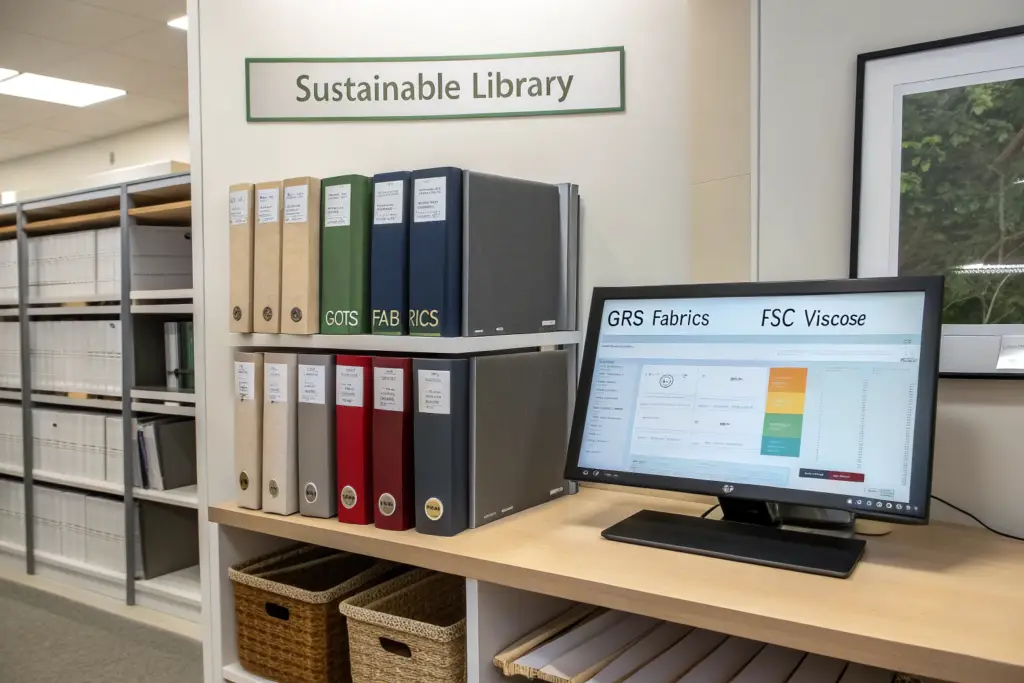
Fumao simplifies sustainable sourcing by providing a pre-vetted network of certified mills. We maintain an in-house library of sustainable fabric options, complete with technical specs and certification documentation. We manage the complex process of ordering, inspection, and chain-of-custody paperwork, providing our private label partners with the final Transaction Certificate and a clear, authentic story to tell their customers.
A new brand owner came to us wanting to use "some kind of eco-friendly fleece." She did not know the difference between GRS and GOTS. We sat down with her (virtually) and showed her our library. We explained the performance and cost differences between a GRS recycled polyester fleece and a GOTS organic cotton fleece. She chose the recycled poly for its technical performance and price point. We handled the sourcing, the QC, and the documentation. Her launch was successful, and her "Eco-Fleece" hoodie became a best-seller. She didn't need to become a sourcing expert. She just needed a partner she could trust.
What Documentation Will You Receive with a Sustainable Order?
When you place a sustainable order with us, you do not just receive garments. You receive a Compliance Package. This typically includes:
- The final Transaction Certificate (TC) for GOTS or GRS orders.
- A copy of the mill's valid Scope Certificate.
- The relevant OEKO-TEX Standard 100 certificate for the fabric and trims.
- A summary of the fiber's sustainability attributes for your marketing team.
We give you the tools to tell your brand's story with authenticity and legal backing.
How Does Our Mill Vetting Process Protect Your Brand?
We do not just accept a PDF certificate. We verify it. We check the mill's audit history on platforms like Sedex. We consider their reputation in the industry. We may even conduct our own virtual or in-person audit. This rigorous vetting process is our commitment to brand protection . We are the first line of defense against greenwashing in your supply chain.
Conclusion
Sourcing sustainable fabrics for your private label brand is a journey, not a single transaction. It is a journey that requires knowledge of preferred materials, a disciplined approach to verifying claims, and a pragmatic understanding of the economic realities. It is also one of the most rewarding journeys a modern brand can take.
At Shanghai Fumao, we are your guide and your partner on this path. We have built the infrastructure—the vetted mills, the certification library, the documentation systems—to make sustainable sourcing accessible and trustworthy. We help you navigate the complexities so you can confidently build a brand that is not only beautiful and profitable but also a force for good.
If you are ready to explore the world of sustainable fabrics for your next collection, let's talk. Our Business Director, Elaine, can share our sustainable fabric library and walk you through the options that align with your vision and budget. Please email Elaine at: elaine@fumaoclothing.com.