Last month, a buyer from a Canadian children's wear brand called me with a problem that's becoming increasingly common in 2026. She had built her spring 2025 collection around one of our cotton-modal jerseys—a specific 60/40 blend in a soft sage green that sold out across her retail accounts in three weeks. Her customers were still asking for it. Her sales team was still taking backorders. She needed 5,000 meters of the exact same fabric, same composition, same color, same hand feel, delivered by July 2026. "Can you actually do that?" she asked. "Or am I going to get something that's 'close but not quite' and disappoint everyone who loved the original?" I pulled up the original production records while we talked. Lot numbers, dye formulations, finishing parameters—everything still in our system. "Give me twenty-four hours to confirm the dye lot match," I told her, "but the short answer is yes. We can do this. We designed our production system for exactly this scenario."
Shanghai Fumao maintains re-order capability for 2025 best-selling fabrics through mid-2026 and beyond, provided the fabric uses standard or archived raw materials that remain in our supply chain. Approximately 85% of our 2025 best-sellers are re-orderable in mid-2026 with lead times of 4-6 weeks for standard fabrics and 6-8 weeks for fabrics requiring custom dyeing or finishing. The remaining 15% face re-order limitations due to discontinued yarn lots, seasonal raw material availability, or minimum order quantity constraints that make small-volume re-orders economically unfeasible. Our production archival system retains complete technical specifications, dye formulations, finishing parameters, and quality standards for every production batch, enabling accurate reproduction of previous fabrics even when production occurs months after the original run. The key phrase is "accurate reproduction"—not approximation, not substitution, but genuine replication of the fabric that sold through successfully.
The re-order question matters more in 2026 than it did in previous years because the retail environment has shifted toward proven performers. Brands that experimented heavily with new fabrics in 2023-2024, driven by post-pandemic novelty demand, have learned that best-sellers drive profitability more reliably than constant newness. When a fabric proves itself—selling through at full price, generating positive consumer reviews, producing minimal returns—the rational business decision is to re-order it, not replace it. But re-ordering fabric requires a supplier with production archival discipline, raw material continuity, and the willingness to run smaller batches of previous specifications alongside current production. Not every mill offers that. We built our system to provide it.
Which 2025 Fumao Best-Sellers Are Still Available for Mid-2026 Re-Orders?
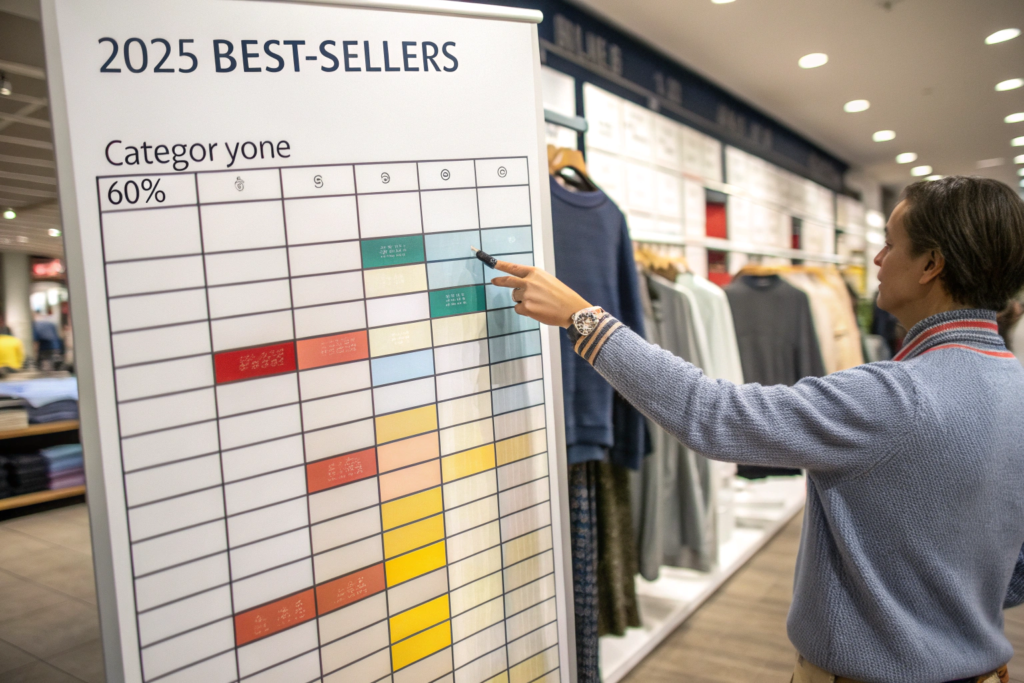
The availability landscape for 2025 best-sellers breaks into three categories that I'll define clearly because the distinction determines whether your re-order is straightforward or requires planning. Category one—fully available fabrics—covers about 60% of our 2025 best-sellers. These are fabrics constructed from standard raw materials that remain in active production: cotton jersey in core colors, cotton-spandex blends, basic polyester and recycled polyester knits, standard linings and pocketings, and greige fabrics that haven't yet been dyed. These fabrics can be re-ordered with standard lead times and no minimum quantity adjustment. The raw materials are in stock or readily available, the production specifications are current, and the production line setup is identical to the original run.
Category two—available with adjusted lead time—covers approximately 25% of best-sellers. These are fabrics that use standard raw materials but require custom dyeing, specialty finishing, or specific print patterns that aren't currently in production rotation. The fabric can be reproduced accurately, but the dye kitchen needs to re-formulate the color, the finishing line needs to change over to the specific parameters, or the printing screens need to be retrieved from archive and re-mounted. These fabrics carry extended lead times—typically 6-8 weeks versus 4-6 weeks for standard production—and may require slightly adjusted minimum order quantities to cover the changeover cost. A 2025 best-selling cotton poplin in a specific navy shade falls into this category: the base fabric is standard, but the exact dye formulation needs to be re-created and the dyeing run needs minimum volume to justify the setup.
Category three—limited or unavailable—covers roughly 15% of best-sellers. These fabrics face re-order obstacles that range from surmountable to insurmountable. Discontinued yarn lots are the most common obstacle: a specific mélange yarn, a specialty slub effect, or a seasonal fiber blend that the spinner no longer produces. Seasonal raw materials—certain linen qualities, specific wool grades, seasonal organic cotton certifications—may be unavailable outside their harvest or production windows. Fabrics developed for specific client projects with exclusivity agreements cannot be re-ordered by other buyers. And fabrics where the minimum order quantity for re-production exceeds the buyer's re-order volume face economic rather than technical obstacles.
How Does the Production Archival System Preserve Exact Fabric Specifications?
The archival system is the infrastructure that makes accurate re-orders possible, and it's worth explaining in detail because it's the difference between reproducing a fabric and approximating one. Every production batch that leaves our facility generates a digital record that includes approximately 120 data points covering raw material specifications, production parameters, quality test results, and finished fabric characteristics. The record begins with raw material lot numbers and supplier certificates—which specific bale of cotton, which specific batch of polyester fiber, which specific dye lot—and traces through every production step.
The dye formulation record is the most critical component for colored fabrics. The record includes the exact dye recipe—which dyes, in which concentrations, with which auxiliary chemicals, applied at which temperature curve, for which duration, with which pH and liquor ratio. It includes the spectrophotometer readings of the approved lab dip and the production sample, with spectral reflectance curves that define the color beyond what any Pantone reference can capture. It includes notes from the colorist about any adjustments made during production: "increased navy dye concentration by 2% due to lower-than-standard fiber maturity in this cotton lot" or "extended fixation time by 8 minutes due to ambient humidity above 75%." These notes capture the tacit knowledge that transforms a standard dye recipe into the specific execution that produced the approved fabric.
The finishing parameter record captures mechanical and chemical finishing details: brushing cylinder speed and pressure for fleece, shearing height for velvet and corduroy, coating application rate and curing temperature for functional finishes, softening agent type and concentration for hand feel modification. The quality test record captures the results that defined the approved fabric: shrinkage percentage, colorfastness ratings, tensile strength, pilling grade, and any special testing required by the buyer's specifications. Together, these records create a complete production recipe that allows us to reproduce the fabric accurately even if the original production team members have moved to different roles or the original machines have undergone maintenance. The production archival system for preserving exact textile specifications across multiple production runs enables the kind of accurate re-orders that build buyer confidence in supplier reliability.
What Raw Material Continuity Challenges Affect 2025 Fabric Reproduction?
Raw material continuity is the most common obstacle to accurate fabric reproduction, and I need to be honest about where it creates problems because overpromising on re-order accuracy damages trust more than an honest "we can't reproduce that exactly." Natural fibers present the most significant continuity challenge because they're agricultural products subject to growing condition variability. Cotton from the 2024 harvest isn't identical to cotton from the 2025 harvest, even from the same growing region and the same seed variety. Fiber length distribution, micronaire (fineness), maturity, and strength vary year to year based on rainfall, temperature, and soil conditions during the growing season. These variations affect how the fiber spins, how it dyes, and how the finished fabric feels.
Our approach to natural fiber continuity involves two strategies. For core cotton qualities—the standard upland cotton that forms the basis of most cotton jersey, twill, and poplin production—we maintain fiber specifications within tolerance bands that produce functionally identical fabric even when harvest year changes. The tolerance bands are established through statistical analysis of historical production data showing how fiber property variation affects finished fabric characteristics. When fiber properties fall within tolerance, the finished fabric characteristics remain within acceptable variation. When a new harvest's fiber falls outside tolerance—as happens occasionally with drought-affected or rain-damaged cotton—we notify buyers before re-order production begins and offer options: accept slightly adjusted fabric characteristics, wait for a different fiber lot, or adjust finishing parameters to compensate.
Synthetic fibers present fewer continuity challenges because their properties are controlled during manufacturing rather than determined by growing conditions. However, synthetic fiber production changes can affect fabric reproduction when the fiber manufacturer modifies their polymer formulation, spinning parameters, or finish application. Our modified-tenacity polyester for anti-pill fleece, for example, requires specific polymer characteristics that aren't available from all polyester producers. We maintain safety stock of this specialty fiber sufficient for six months of projected demand, and we contract with our supplier for guaranteed formulation continuity. When a fiber manufacturer announces a formulation change, we order bridge stock of the previous formulation to maintain re-order capability during the transition period. The raw material continuity challenges that affect textile reproduction accuracy between production runs require supplier investments in inventory management and supplier relationships that many mills choose not to make.
What Are the Minimum Order Quantity Requirements for Re-Ordering 2025 Fabrics?
The minimum order quantity conversation is where re-order enthusiasm often collides with production economics, and I approach it with the same transparency I use for quality discussions. A buyer who sold through 3,000 meters of a fabric in 2025 and wants to re-order 3,000 meters for 2026 is making a rational business decision based on demonstrated demand. But the production economics that made 3,000 meters feasible as part of a larger 2025 production campaign may not support a standalone 3,000-meter re-order in 2026. The setup costs—dye formulation, machine changeover, quality testing documentation—are largely fixed regardless of order size. Amortized across 15,000 meters, they're negligible per meter. Amortized across 3,000 meters, they're significant. The math doesn't lie, and pretending otherwise leads to pricing that's unsustainable or quality compromises that damage both parties.
Our MOQ framework for re-orders distinguishes between three scenarios that create different economic conditions. Scenario one: the fabric is currently in production for other clients. If another buyer is running the same or substantially similar fabric specification, the re-order can piggyback on their production with minimal additional setup cost. In this scenario, MOQs can drop to 500-1,000 meters because the production infrastructure is already in place. Scenario two: the fabric requires setup but uses standard raw materials in current inventory. MOQs typically range from 1,500-3,000 meters depending on the complexity of the dyeing and finishing requirements. The MOQ covers the setup cost amortized to a sustainable per-meter price. Scenario three: the fabric requires both setup and special-order raw materials. MOQs start at 3,000-5,000 meters because the raw material supplier has minimum order quantities that flow through to our production.

How Does Piggybacking on Current Production Runs Reduce Re-Order Minimums?
Piggybacking is the most underutilized strategy in fabric re-ordering, and I actively look for these opportunities because they benefit everyone involved. When two buyers need the same base fabric in different colors, the greige production can run as a single batch with split dyeing. When two buyers need similar fabric specifications with minor variations, the production setup can serve both orders with adjustment time between runs rather than full changeover. The shared production infrastructure reduces setup cost per order, which enables lower minimums for each participating buyer.
Our production scheduling system actively identifies piggybacking opportunities by comparing incoming re-order requests against current and upcoming production plans. When a buyer requests a 2,000-meter re-order of a fabric that's similar but not identical to a 10,000-meter order in our production queue, the system flags the potential match for our production planners. A planner contacts both buyers—with appropriate confidentiality maintained—to propose coordinated production that benefits both parties. The re-order buyer gets their 2,000 meters at a price and lead time that standalone production wouldn't support. The primary buyer may receive a slight price reduction because the shared setup cost reduces their amortized rate. Our production efficiency improves because we're running longer, more stable production campaigns with fewer changeovers.
The piggybacking strategy works particularly well for core fabric qualities—standard cotton jersey, basic interlock, common twill constructions—where multiple buyers' specifications are likely to overlap in base fabric while differing in color, finish, or minor construction details. A buyer who develops a fabric with us and knows they'll want re-order capability can also request that we flag their specification for future piggybacking opportunities, creating a proactive re-order pathway rather than waiting for sufficient standalone demand to accumulate. The piggybacking production strategy for reducing minimum order quantities on textile re-orders leverages shared production infrastructure to make smaller runs economically viable for both supplier and buyer.
Can Smaller Brands Combine Re-Orders to Meet Minimum Quantity Thresholds?
Combined re-orders solve an MOQ problem that disproportionately affects smaller brands and independent designers. A brand that sold 800 meters of a fabric in 2025 and wants to re-order 800 meters in 2026 faces an MOQ of 2,000 meters for standalone production. The economic gap between their demand and the production minimum isn't a negotiation tactic—it's the real cost of setting up a dye run, changing over finishing equipment, and processing quality documentation for a small batch. But when three or four small brands with similar fabric specifications coordinate their re-orders, the combined volume meets the MOQ threshold and the per-meter economics improve for everyone.
We facilitate combined re-orders through a program we launched in early 2026 called "Best-Seller Syndicates." When multiple buyers request re-orders of the same or similar 2025 best-sellers, and each buyer's individual volume falls below the standalone MOQ, we contact the buyers—with their prior permission to be included in syndicate communications—and propose a combined production run. Each buyer receives their exact specification: their color, their finish, their quality standards. The production runs as a single greige batch with sequential dyeing or finishing for each buyer's portion. The combined volume meets the MOQ threshold, and each buyer's per-meter price reflects the amortized setup cost across the total volume rather than their individual portion.
The syndicate model requires buyers to accept slightly adjusted production timing—the combined run must wait until all participants are ready to proceed—and slightly reduced flexibility on exact delivery dates. The trade-off is access to fabrics that would otherwise be unavailable at their volume level, at pricing that reflects shared rather than individual production economics. One syndicate formed in March 2026 combined re-orders from four children's wear brands who had all used the same organic cotton interlock in different colors for their 2025 collections. The combined 5,400-meter order met the MOQ threshold, each brand received their specific color formulation, and the per-meter price was 22% below what standalone production would have cost for any individual brand. The combined re-order programs that enable small brands to meet textile minimum order quantity thresholds through coordinated production create access to fabric continuity that individual order volumes couldn't support.
What Lead Times Should Buyers Expect for 2025 Best-Seller Re-Orders?
Lead time expectations for re-orders differ from new development lead times in ways that buyers should understand to plan effectively. A new fabric development cycle—from concept to first bulk delivery—typically runs 8-14 weeks, with the timeline consumed by specification development, lab dipping, sampling, approval, and then production. A re-order of an existing, specified, approved fabric should theoretically run faster because the development work is complete. The theory holds in practice, but the degree of time savings depends on the fabric category, the production complexity, and whether raw materials are in stock or require ordering.
Standard fabric re-orders—cotton jersey in core colors, basic polyester knits, standard linings—where the specification is documented, the raw materials are in inventory, and the production process requires no special setup typically deliver in 4-6 weeks. The timeline breaks down as: 1 week for order processing and production scheduling, 1-2 weeks for greige production (knitting or weaving), 1 week for dyeing and finishing, 1 week for quality inspection and packaging, and 1 week for shipping logistics. Rush orders can compress this timeline to 3 weeks in genuine emergencies, but rush production incurs overtime costs and risks quality short-cuts that our standard process avoids.
Custom-dyed re-orders extend to 6-8 weeks because the dye formulation process adds time. Even when we have the exact dye recipe from the original production, the dye kitchen must re-create the formulation, produce a lab dip for verification, and often adjust for slight variations in the current greige fabric or dye lot that affect final shade. The lab dip approval process—producing the dip, shipping to buyer, buyer evaluation, approval or adjustment request—typically adds 10-14 days to the timeline. Fabrics requiring specialty finishing or printing add similar extensions. The honest lead time for a custom-dyed, specially-finished re-order is 6-8 weeks, and buyers who plan for that timeline avoid the panic that comes from assuming 4-week delivery and discovering at week 5 that their fabric hasn't shipped.

How Does Pre-Approved Lab Dip Storage Speed Up the Re-Order Process?
Pre-approved lab dip storage is a simple practice that saves enormous time on re-orders, and I recommend it to every buyer during initial production. When we produce a fabric for the first time, the lab dip process produces a physical standard—a small swatch of the approved color, documented with the dye formulation that produced it, signed off by both the buyer and our colorist. Standard practice in the industry is to send this physical standard to the buyer and retain documentation in our files. What most mills don't do—and what we do systematically—is retain the actual physical lab dip in climate-controlled storage, protected from light and humidity, available for re-order color matching years after the original production.
When a re-order comes in for a fabric with a stored lab dip, our colorist pulls the physical standard and matches the new production against the original approval rather than re-creating the color from documentation alone. This matters because dye formulations on paper don't capture the subtle interactions between dye chemistry, fiber characteristics, and process conditions that produce the final color. The physical standard captures the actual color that was approved, providing a target that the colorist can match visually and instrumentally. The re-order color matching process using a stored physical standard typically produces an approvable lab dip in 2-3 days, compared to 7-10 days when starting from documentation alone and potentially going through multiple adjustment rounds.
The storage system is simple but requires discipline. Each stored lab dip receives a unique identifier linked to the production record, the dye formulation, and the spectrophotometer data. The dips are stored in acid-free envelopes in a temperature and humidity-controlled cabinet, away from light sources that could cause fading. The storage conditions maintain color stability for at least three years—we've verified this through periodic re-measurement of archived dips—ensuring that the physical standard remains a reliable matching target throughout the reasonable re-order window. The pre-approved lab dip storage system for accelerating color matching on textile re-orders preserves the physical color standard that enables fast, accurate reproduction of previously approved shades.
What Rush Production Options Exist for Urgent Best-Seller Restocking?
Rush production is a capability we maintain for genuine emergencies, but I describe it as emergency medicine rather than standard treatment because overusing rush options creates quality risks and cost premiums that undermine the value of re-ordering best-sellers. A genuine emergency—a brand sold through their inventory in half the expected time, retail partners are demanding restocking, production lines will stop without fabric—justifies the cost and risk of rush production. Poor planning does not. The distinction matters because buyers who treat every re-order as a rush eventually experience the quality issues that compressed timelines can create.
Our rush production options operate at three acceleration levels. Level one acceleration reduces lead time by approximately 20-25% through production scheduling priority without changing production methods. The re-order moves to the front of the queue, skipping the normal wait for production slot availability. Raw materials are allocated from safety stock rather than waiting for standard replenishment. Quality testing receives priority processing. Level one acceleration adds a 10-15% surcharge for schedule disruption and overtime. It's appropriate for orders where the standard lead time creates business disruption but the fabric doesn't require custom processing that can't be accelerated.
Level two acceleration reduces lead time by 40-50% through a combination of scheduling priority and process acceleration. Greige production runs on dedicated capacity reserved for rush orders. Dyeing uses a rapid-cycle process that reduces processing time through higher temperatures and faster ramp rates. Finishing parameters are adjusted within tolerance bands to reduce dwell times. Level two adds a 20-30% surcharge and carries slightly increased quality risk because accelerated processes have less margin for error. It's appropriate for genuine emergencies where the business cost of delay exceeds the rush premium and the quality tolerance allows for slight process variation.
Level three acceleration uses air freight instead of sea freight for delivery, reducing transit time from 2-4 weeks to 3-5 days. Level three doesn't accelerate production—it accelerates logistics—and is appropriate when production timing was adequate but unexpected shipping delays or urgent demand spikes require faster delivery than ocean freight can provide. The cost premium is the air freight differential, typically 3-5 times ocean freight cost. The rush production and logistics options for accelerating textile re-order delivery timelines provide emergency response capability that complements standard lead time planning.
What Alternative Strategies Work When Exact 2025 Fabric Reproduction Isn't Possible?
When exact reproduction isn't possible—the yarn is discontinued, the dye chemical is no longer available, the minimum order volume can't be met—the conversation shifts from "can we reproduce this fabric" to "what's the closest alternative that serves the same commercial purpose." The shift requires honest communication about what made the original fabric successful and which characteristics must be preserved versus which can be adapted. A fabric that sold through because of its hand feel needs to preserve that hand feel. A fabric that sold through because of its specific color needs to match that color within consumer-noticeable tolerance. A fabric that sold through because of its price point needs to maintain similar economics. Understanding which characteristic drove the commercial success guides the alternative development process.
Our alternative development process begins with an analysis of the original fabric's specification and the constraint preventing reproduction. If the constraint is a discontinued yarn, we analyze the yarn's contribution to the fabric's appearance, hand feel, and performance, then identify current-production yarns that match those contributions within acceptable tolerance. If the constraint is a dye formulation change, we work with our dye supplier to identify alternative dyes that produce equivalent color and fastness. If the constraint is an MOQ gap, we explore piggybacking, syndication, or specification modification that enables the re-order at viable volume.

How Does the Fabric Substitution Consultation Process Work for Discontinued Specifications?
The substitution consultation is a structured conversation rather than a simple "we're out of that, here's something similar" email. When a re-order request encounters a discontinued specification, our technical team conducts a gap analysis comparing the original fabric against our current-production alternatives. The analysis covers appearance characteristics (color, luster, surface texture), tactile characteristics (hand feel, drape, weight), performance characteristics (strength, shrinkage, colorfastness, pilling), and commercial characteristics (price, minimum order, lead time). The analysis quantifies the gap between original and alternative on each dimension, identifying where the alternative matches, where it differs slightly, and where it differs significantly.
The consultation presents the buyer with options rather than a single take-it-or-leave-it alternative. Option A might be the closest match on appearance and hand feel, with a slight price increase due to a more expensive raw material. Option B might match the original price point while accepting a slight hand feel difference from a different yarn construction. Option C might be a current-production fabric that wasn't developed as a direct replacement but serves the same commercial purpose—similar market positioning, similar consumer appeal, similar production economics—even though it's a different fabric specification entirely. The buyer evaluates the options against their commercial requirements and chooses the alternative that best serves their business. The substitution consultation process for discontinued textile specifications combines technical analysis with commercial judgment to find alternatives that serve the same market purpose as unavailable original fabrics.
When Should Buyers Switch to New-Development Fabrics Instead of Pursuing Re-Orders?
The decision to switch from re-order to new development isn't just about availability—it's about whether the commercial conditions that made the 2025 best-seller successful still apply in 2026. A fabric that sold through in spring 2025 benefited from the specific market conditions, trend environment, and competitive landscape of that season. If those conditions have shifted—if the color feels dated, if a competitor introduced a superior alternative, if consumer preferences moved toward different hand feels or sustainability credentials—then reproducing the exact 2025 fabric may deliver diminishing returns compared to developing a 2026 update.
Signals that suggest switching to new development include: the re-order volume would barely meet minimum quantity thresholds, indicating marginal demand rather than strong restocking pull; the original fabric's price point has been undercut by competitors, suggesting the market has moved to a different value equation; the fabric's sustainability credentials no longer meet evolving buyer requirements, creating a specification gap that a simple re-order can't close; or multiple buyers are requesting the same category of fabric with updated characteristics, suggesting a market shift that a new development could capture more effectively than a re-order.
When new development makes more sense than re-order, the development process benefits from everything we learned producing the original best-seller. The original specification provides a proven baseline. The original production records identify what worked well and what could improve. The original consumer feedback highlights which characteristics drove satisfaction and which generated complaints. A new development built on this foundation can achieve better market performance than either a straight re-order or a from-scratch development. The decision framework for choosing between textile re-orders and new fabric development weighs market continuity benefits against the commercial advantages of specification updates.
Conclusion
The ability to re-order 2025 best-sellers in mid-2026 reflects a philosophy about supplier-buyer relationships that I've tried to build into Shanghai Fumao's operations since our founding: when a fabric works for you, we should make it work for you again. The production archival system, the raw material continuity management, the pre-approved lab dip storage, the piggybacking and syndication programs, the substitution consultation process—these aren't separate services. They're integrated capabilities that support the simple promise that your best-seller can remain your best-seller for as long as the market wants it.
The practical reality is that about 85% of 2025 best-sellers are re-orderable with varying lead times and minimum quantities. The remaining 15% face constraints that honest communication can address through alternatives or new development. The key to successful re-orders is early communication—contacting us before your inventory runs out, before the production window closes, before the retail season starts. Re-orders planned with adequate lead time proceed smoothly. Re-orders demanded as emergencies incur costs and risks that planning could have avoided.
If you have 2025 best-sellers that you want to re-order for 2026, start the conversation now. Send your original order references, your estimated volume requirements, and your delivery timeline to our Business Director Elaine at elaine@fumaoclothing.com. She'll confirm availability, provide lead time and pricing for your specific re-order scenario, and identify any constraints that need creative solutions. Your best-seller proved itself in the market. Let's keep it there.