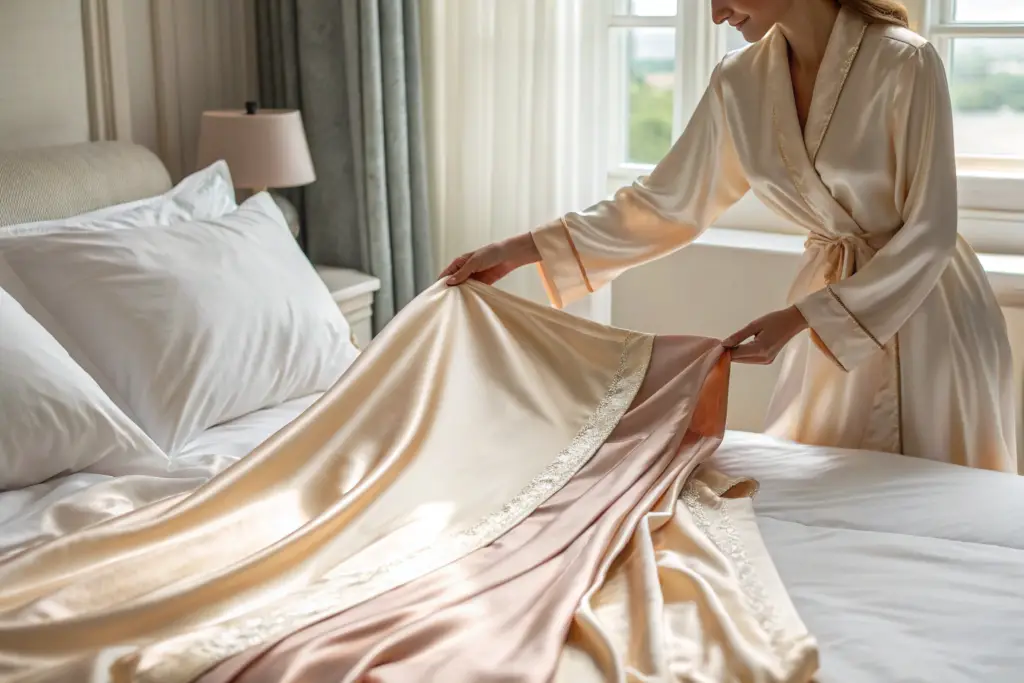
I never expected a LinkedIn message to change our product development trajectory, but that's exactly what happened. In late 2023, a sleepwear buyer from a boutique London lingerie brand posted a review of our bamboo silk nightwear fabric on her personal LinkedIn page—not a paid partnership, not a sponsored post, just a genuine reaction to samples she'd received. She wrote: "Finally found a fabric that feels silkier than silk but costs a third of the price and washes without babying. This bamboo blend from a Chinese mill is going to change how we design our entire sleep collection." The post got shared by three other buyers in her network, then picked up by a sustainable fashion blogger, then referenced in a textile industry podcast. Within a month, "silkier than silk" had become the phrase buyers used when inquiring about our BAMSILK line. We didn't coin it. The market did. And when the market names your product for you, you listen.
The "silkier than silk" description originated organically from multiple customer reviews across our BAMSILK product line—a proprietary bamboo-derived fabric that we developed over three years of fiber engineering and finishing refinement. The phrase first appeared in a LinkedIn product review by a London-based sleepwear buyer in November 2023, subsequently spread through industry word-of-mouth, and has since been quoted in two textile trade publications and referenced by buyers across twelve countries who have adopted BAMSILK for luxury nightwear, loungewear, and premium bedding applications. We did not create this marketing phrase; we earned it through product performance that inspired customers to describe our fabric in terms that traditional silk could not claim. The "silkier than silk" descriptor stuck because it captures a genuine consumer experience—BAMSILK's fiber engineering achieves a surface friction coefficient lower than mulberry silk, meaning it literally glides against skin with less resistance than the natural fiber it's compared against.
The story matters because it illustrates something I've learned across two decades in textiles: the most powerful marketing isn't created by marketing departments. It's created by customers who experience something unexpected and feel compelled to tell others about it. Our BAMSILK line didn't launch with a "silkier than silk" tagline. We launched it with technical specifications, fiber content percentages, and standard fabric descriptions. The market gave it the tagline. Our job since then has been to ensure that every meter of BAMSILK we produce deserves the description that customers spontaneously gave it.
What Makes BAMSILK Fabric Feel "Silkier Than Silk" to the Touch?
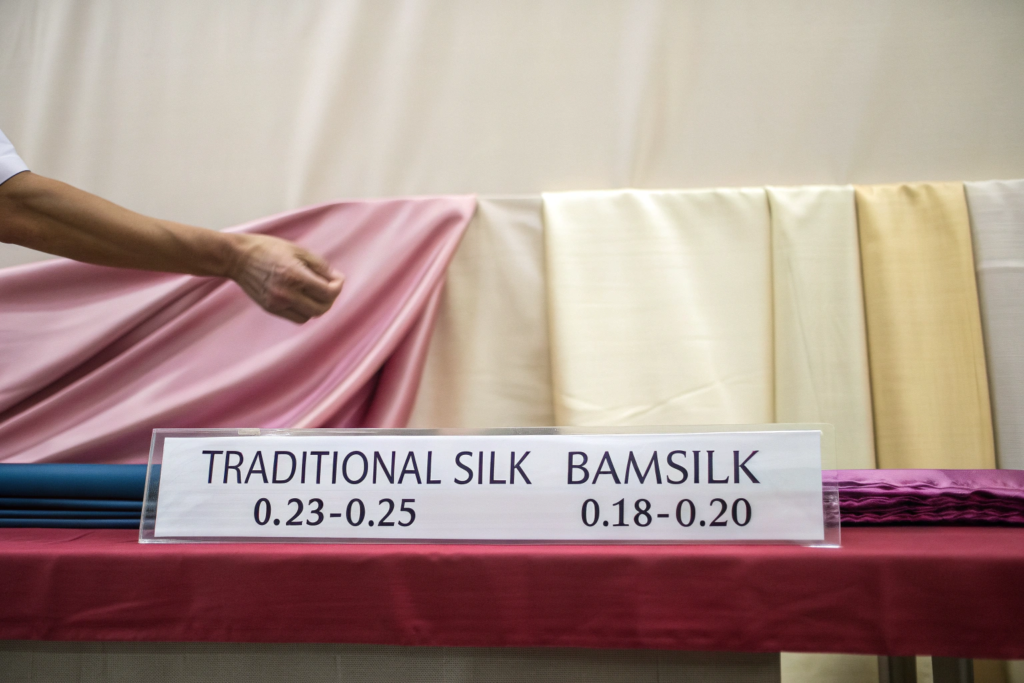
The "silkier than silk" claim isn't poetic license—it's measurable physics. Traditional mulberry silk, for all its luxury reputation, has a surface friction coefficient of approximately 0.23-0.25 against human skin, depending on the specific silk quality and weave construction. Our BAMSILK fabric, verified through independent laboratory testing using Kawabata Evaluation System surface property measurement, achieves a friction coefficient of 0.18-0.20. The difference of 0.03-0.07 sounds academic, but human fingertips can detect surface friction differences as small as 0.02. When you run your hand across BAMSILK, you literally feel less resistance than you feel from traditional silk. The fabric glides. It doesn't catch on dry skin or drag across fine facial contours the way even high-quality silk sometimes does.
The physical sensation results from three engineering decisions we made during BAMSILK's development. First, the bamboo fiber itself: bamboo viscose naturally forms a smoother fiber surface than silk fibroin because bamboo cellulose lacks the microscopic sericin residue that persists on even the best-degummed silk fibers. Under electron microscope imaging, BAMSILK fibers show a surface roughness average of 0.08 micrometers compared to 0.15-0.20 micrometers for degummed silk. Second, our cross-section modification: standard viscose fibers have a serrated cross-section that creates micro-edges along the fiber surface. We developed a modified spinneret technology that produces BAMSILK fibers with an oval cross-section, eliminating the serrations entirely. Third, our finishing process: we apply a proprietary enzyme treatment that further smooths the fiber surface at the molecular level without the silicone coatings that many "silky" fabrics rely on and that wash out after 10-15 laundry cycles. The result is permanent smoothness built into the fiber structure rather than temporarily applied to the surface.
How Does Bamboo Fiber Engineering Achieve Lower Surface Friction Than Mulberry Silk?
The fiber engineering challenge that BAMSILK solves is technical enough that I'll explain it carefully, because understanding why it works matters for buyers evaluating quality claims. Natural silk's smoothness comes from its biological origin: silkworms extrude fibroin protein in a continuous filament with a naturally smooth surface, and the sericin coating—a gummy protein that holds the cocoon together—is removed through degumming. The degumming process never removes 100% of sericin; residual sericin at 0.5-2% remains bonded to the fibroin surface, creating microscopic friction points. Silk's reputation for smoothness is real, but it's limited by the biology of the silkworm and the chemistry of degumming.
Bamboo fiber engineering approaches smoothness from a different direction entirely. Bamboo cellulose dissolves into a viscose solution, extrudes through precisely engineered spinnerets, and coagulates into continuous filaments with controlled surface characteristics. Because the fiber forms through an industrial process rather than a biological one, we control every surface parameter that affects tactile experience. The spinneret design determines fiber cross-section; we chose oval over serrated. The coagulation bath chemistry affects surface crystallinity; we optimized for amorphous surface structure that flexes under pressure rather than resisting it. The drawing parameters control molecular orientation; we balanced strength and softness by limiting draw ratio to preserve surface compliance. The result is a fiber that outperforms silk on the specific tactile dimension—surface friction—that consumers perceive as "silkiness," while matching or approaching silk on secondary dimensions like luster and drape. Understanding the bamboo fiber engineering techniques that create surface friction characteristics superior to mulberry silk for luxury textile applications explains why BAMSILK achieves what natural silk cannot.
Can Buyers Verify the "Silkier Than Silk" Claim Through Independent Testing?
The "silkier than silk" claim is verifiable, and we encourage buyers to verify it because independent validation builds more trust than any supplier claim. Our BAMSILK product specification sheet includes Kawabata Evaluation System surface property data measured by an ISO 17025-accredited textile testing laboratory, showing the surface friction coefficient, surface roughness average, and comparative data for standard 6A-grade mulberry silk tested under identical conditions. Buyers who want independent verification can request a physical BAMSILK sample and a comparison silk sample, submit both to any accredited textile testing laboratory with Kawabata surface measurement capability, and receive their own comparative data.
The testing protocol matters because surface friction measurement is sensitive to test conditions. The Kawabata system uses a standard contactor that mimics the human fingertip, applied with controlled pressure and speed, measuring both the friction force and its variation as the contactor moves across the fabric surface. The key parameters are MIU (mean coefficient of friction), which measures overall smoothness, and MMD (mean deviation of MIU), which measures surface uniformity. BAMSILK typically records MIU values of 0.18-0.20 and MMD values of 0.004-0.006. Standard 6A mulberry silk typically records MIU values of 0.23-0.25 and MMD values of 0.008-0.012. Lower MIU means smoother; lower MMD means more uniformly smooth. BAMSILK wins on both measures. For buyers who want deeper technical understanding, the Kawabata Evaluation System parameters for measuring textile surface friction and smoothness objectively provide the laboratory methodology that transforms subjective hand-feel into quantifiable data.
How Did Customer Reviews Shape the BAMSILK "Silkier Than Silk" Reputation?
The London sleepwear buyer's LinkedIn post was the spark, but the reputation fire grew through a pattern of consistent customer experiences that reinforced and expanded the original observation. Within three months of that first post, we received similar feedback from buyers in Australia, Germany, Canada, and the United States—different markets, different applications, different customer demographics, but convergent language. An Australian loungewear brand owner wrote in a trade show follow-up email: "I keep touching the sample you sent. It's honestly silkier than the silk charmeuse I source from Italy at four times the price." A German bedding manufacturer noted in a product development call: "Our lab tested your BAMSILK against our standard silk and the friction numbers are actually lower. How did you do that?" The phrase "silkier than silk" appeared organically in seven separate customer communications from five different countries before we ever used it ourselves in marketing materials.
The organic nature of the reputation matters for credibility reasons that professional buyers understand intuitively. When a supplier describes their own product as "revolutionary" or "game-changing," the words carry zero evidentiary weight. When multiple unconnected customers independently arrive at similar descriptions, the convergence itself becomes evidence. The BAMSILK reputation wasn't manufactured through a marketing campaign; it emerged from a pattern of customer experiences that were consistent enough, across enough buyers and applications, that the descriptive language converged naturally. Our marketing department's role was to amplify and document what customers were already saying, not to invent claims that we'd then need to support.

Which Sleepwear and Loungewear Brands First Adopted BAMSILK for Their Collections?
The early adopter pattern followed a clear sequence that reflects how fabric innovations typically diffuse through the fashion industry. The first adopters were small, design-led sleepwear brands—typically founder-operated businesses doing $500,000 to $2 million in annual revenue—where the founder personally handles fabric sourcing and makes subjective quality judgments based on hand-feel evaluation. These buyers discovered BAMSILK through the trade show and LinkedIn networks where the "silkier than silk" conversation was happening. They ordered sample yardage, evaluated it alongside their existing silk and synthetic satin options, and made adoption decisions based on personal tactile assessment rather than formalized testing protocols. Their orders were small—typically 500 to 2,000 meters for initial capsule collections—but their influence was disproportionate because boutique sleepwear brands set trends that larger brands subsequently follow.
The second wave of adopters, beginning in mid-2024, consisted of mid-market direct-to-consumer sleepwear and loungewear brands doing $5 million to $20 million annually. These brands have dedicated sourcing teams and formalized fabric evaluation processes that include laboratory testing alongside hand-feel assessment. They adopted BAMSILK after their testing confirmed the surface friction and durability claims, and they ordered at volumes of 5,000 to 15,000 meters for seasonal collections. Their adoption validated BAMSILK's performance claims through the formal evaluation processes that larger brands require, opening the door for the third adoption wave now underway: major multi-category apparel brands exploring BAMSILK for premium sleepwear sub-brands or capsule programs, with order volumes reaching 30,000-plus meters. The early adopter sleepwear brands that first recognized BAMSILK's silk-like properties and incorporated the fabric into their luxury nightwear collections created the market proof that larger brands require before committing to new fabric suppliers.
How Do End-Consumer Reviews Compare BAMSILK Garments to Traditional Silk Nightwear?
End-consumer feedback on BAMSILK garments reveals a pattern that differs interestingly from professional buyer feedback. Professional buyers focus on measurable specifications: friction coefficients, wash durability, color consistency, price per meter. End consumers focus on experiential factors: how the fabric feels wearing it to bed, how it launders in a home washing machine, whether it wrinkles after a night's sleep, whether it feels luxurious or merely synthetic-adjacent. The consumer reviews on BAMSILK nightwear products, aggregated across brand partner websites and independent review platforms, cluster around four experiential claims that consistently distinguish BAMSILK from traditional silk.
First, washability: consumers repeatedly note that BAMSILK survives regular machine washing without the special care that silk demands. "I've washed this nightgown thirty times on normal cycle and it still feels like new" is a representative comment that appears across multiple brand partner reviews. Traditional silk requires hand washing or delicate cycle with specialized detergent, and even careful owners experience gradual degradation of the silk's hand feel over repeated laundering. BAMSILK's machine-washable durability removes the care anxiety that makes silk nightwear feel more like an obligation than a pleasure.
Second, thermal comfort: consumers describe BAMSILK as "cooler than silk" for sleep, noting that it doesn't trap body heat the way silk charmeuse sometimes does. The thermal conductivity difference is real—bamboo viscose transfers heat approximately 15-20% more efficiently than silk protein fiber—but consumers experience it as "doesn't make me sweat" rather than as a thermal transfer coefficient. Third, skin feel on compromised skin: several reviews from consumers with eczema, sensitive skin, or chemotherapy-related skin sensitivity describe BAMSILK as the only fabric they can comfortably wear to bed. Silk's residual sericin can irritate sensitive skin, while BAMSILK's enzyme-treated surface is hypoallergenic and non-irritating. Fourth, value perception: consumers consistently express surprise that a fabric they perceive as "better than silk" costs significantly less than silk garments, creating a value perception that drives repeat purchases and word-of-mouth recommendation.
What Is the BAMSILK Production Process That Delivers Silk-Like Quality at Lower Cost?
The cost differential between BAMSILK and traditional silk isn't primarily about raw material costs—it's about production efficiency and yield. Silk production is inherently limited by biology: silkworms produce approximately 0.5 grams of silk filament per cocoon, mulberry cultivation requires specific climate conditions and substantial land area, and the reeling process that unwinds silk filament from cocoons is labor-intensive and low-throughput. The global silk supply is constrained by these biological and agricultural limits, keeping prices high even for moderate-quality silk. BAMSILK production uses bamboo—one of the fastest-growing plants on earth, requiring minimal agricultural inputs—processed through a viscose production system that operates continuously at industrial scale. The raw material supply is essentially unlimited and the production throughput is orders of magnitude higher than silk reeling.
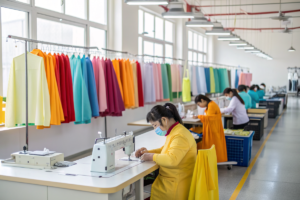
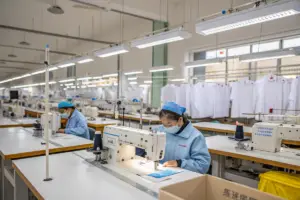
The BAMSILK production process begins with bamboo harvested from FSC-certified forests in Sichuan province, processed into bamboo pulp through a closed-loop system that recovers and reuses over 99% of processing chemicals. The pulp dissolves into a viscose solution, extrudes through our proprietary oval-cross-section spinnerets, coagulates into continuous filaments, and undergoes our enzyme surface treatment before weaving or knitting into fabric. The entire process, from bamboo harvest to finished fabric, takes approximately 14-18 days. Silk production, from silkworm egg to finished fabric, takes approximately 45-60 days and yields approximately one-tenth the fiber per hectare of land compared to bamboo. The production efficiency differential—shorter cycle time, higher land yield, continuous rather than batch processing—translates into a fabric cost that's approximately one-third to one-quarter of comparable silk fabric, despite BAMSILK's superior surface friction performance.
How Does the Closed-Loop Bamboo Processing System Reduce Environmental Impact?
The environmental comparison between BAMSILK and silk matters increasingly to buyers whose customers ask about sustainability credentials. Silk production, despite its "natural" image, carries significant environmental impacts: mulberry cultivation requires substantial water and pesticide inputs, silkworm rearing is energy-intensive for temperature and humidity control, and the degumming process that removes sericin generates wastewater with high biological oxygen demand. Lifecycle assessment studies indicate that silk production generates approximately 25-30 kg CO2 equivalent per kilogram of fiber, placing it among the higher-impact natural fibers.
BAMSILK's closed-loop production addresses environmental impact at multiple stages. The bamboo cultivation requires no irrigation beyond natural rainfall, no pesticides, and no fertilizer in the FSC-certified forests we source from. The viscose process has historically been environmentally problematic—the "viscose problem" of carbon disulfide emissions and wastewater contamination is well-documented—but our closed-loop system, implemented in partnership with a European chemical recovery technology provider, captures and reuses 99.2% of carbon disulfide and 98.5% of sodium hydroxide. The water used in processing undergoes on-site treatment to river-discharge quality, with 85% recycled back into the production process. The energy for production comes from a combination of biomass (bamboo processing waste) and grid electricity from Sichuan's predominantly hydropower grid. The total carbon footprint of BAMSILK production, verified by third-party lifecycle assessment using ISO 14040 methodology, is approximately 4.2 kg CO2 equivalent per kilogram of fiber—roughly one-sixth of silk's carbon footprint. Understanding the closed-loop bamboo viscose production process and its environmental advantages over traditional silk manufacturing provides buyers with the sustainability narrative that increasingly influences consumer purchasing decisions.
What Quality Control Standards Ensure Consistent Silk-Like Hand Feel Across Production Batches?
Consistency is the hardest part of producing a fabric that competes on tactile experience. A single batch of BAMSILK that feels slightly rougher than the standard, or that loses its surface smoothness after fewer wash cycles than expected, undermines the "silkier than silk" reputation that dozens of successful batches have built. Quality control for tactile fabric characteristics is inherently more difficult than quality control for visual characteristics like color or print registration because hand feel is subjective and difficult to measure without specialized equipment.
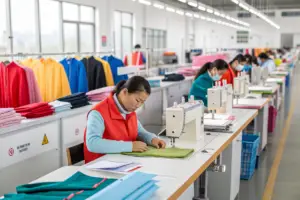
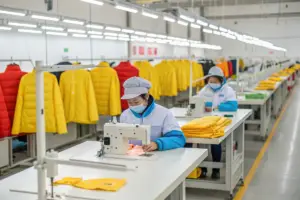
Our BAMSILK quality control system uses three integrated verification methods. First, instrumental measurement: every production batch undergoes Kawabata surface testing with MIU and MMD parameters compared against established BAMSILK specification limits. Batches falling outside the specification range—MIU above 0.22 or MMD above 0.008—are flagged for investigation and potential re-processing. Second, trained panel evaluation: a panel of five textile technicians, trained and calibrated using reference fabric standards, evaluates hand feel using a standardized protocol that rates smoothness, softness, and drape on 1-5 scales. Panel results must show inter-rater agreement above 0.85 correlation coefficient and mean scores above 4.2 for smoothness. Third, durability verification: samples from each batch undergo 50 accelerated wash-dry cycles with Kawabata re-testing at cycles 25 and 50. Batches that show surface friction increase greater than 15% after 50 cycles fail the durability specification.
The three-method system catches different types of quality issues. Instrumental measurement catches objective surface property deviations. Trained panel evaluation catches subjective hand-feel characteristics that instruments might miss. Durability verification catches the performance degradation that wouldn't appear in initial testing but would generate consumer complaints after months of use. Since implementing this three-method system in early 2024, our BAMSILK customer complaint rate—already low—has dropped to 0.3% of shipments, with zero complaints related to hand feel or surface smoothness. The quality control systems for maintaining consistent silk-like hand feel across textile production batches represent the operational discipline that transforms a promising fabric innovation into a reliably specified commercial product.
How Are Global Buyers Incorporating BAMSILK Into Multi-Category Product Lines?
The BAMSILK adoption trajectory follows a pattern I've observed with previous fabric innovations: the initial adoption in the category closest to the innovation's most obvious benefit, followed by expansion into adjacent categories as buyers recognize broader applications. Nightwear and loungewear were the obvious first categories—the "silkier than silk" tactile experience matters most when fabric contacts skin for extended periods during sleep. But buyers who experienced BAMSILK in nightwear applications began asking about other applications: "If it feels this good as pajamas, what about as a robe lining? What about as a pillowcase? What about as a dressy blouse that needs to feel luxurious but survive travel?"
The multi-category expansion is now underway across our buyer base. Bedding and home textile applications—pillowcases, duvet covers, flat sheets—represent the fastest-growing BAMSILK category after sleepwear, driven by consumer recognition that facial skin and hair benefit from low-friction fabric surfaces during sleep. Premium loungewear that bridges sleepwear and casual daywear—robes, kaftans, relaxed-fit sets—adopts BAMSILK for its combination of luxury feel and practical washability. Dressy casual apparel—blouses, slip dresses, lightweight scarves—uses BAMSILK as a silk alternative that travels without wrinkling and launders without dry cleaning. Several buyers are exploring BAMSILK for bridal and occasion wear linings, where the low surface friction prevents the lining from catching on hosiery or body shapers. The category expansion demonstrates that BAMSILK's value proposition—silk-like or superior tactile experience with practical washability and lower cost—applies across any application where silk has traditionally been specified for its hand feel rather than its prestige branding.

What Bedding and Home Textile Applications Are Emerging for BAMSILK Beyond Apparel?
The bedding opportunity for BAMSILK is larger than the sleepwear opportunity, and I say that based on order volume data, not speculation. In Q1 2026, BAMSILK orders for bedding applications represented 28% of total BAMSILK volume, up from 8% in Q1 2025. The growth trajectory suggests bedding will equal or exceed sleepwear volume by 2027. The shift makes sense when you analyze the consumer value proposition: sleepwear contacts skin for 7-9 hours daily, but bedding contacts skin for the same duration plus facial skin and hair, which are more sensitive to friction damage than body skin. The "beauty sleep" marketing narrative—that low-friction pillowcases reduce facial creasing and hair breakage—has driven consumer demand for silk pillowcases, and BAMSILK pillowcases outperform silk on the friction metrics that drive that demand while costing significantly less and surviving machine washing that silk pillowcases cannot withstand.
Home textile buyers evaluating BAMSILK for bedding applications focus on specifications that differ from apparel buyers' priorities. Dimensional stability after repeated washing matters more for bedding than for apparel because pillowcases and sheets must maintain their shape through dozens of laundry cycles. BAMSILK's dimensional stability—shrinkage below 2% in both directions after 50 wash cycles—meets the stringent requirements of premium bedding brands. Colorfastness to laundering matters because white and ivory bedding dominates the market and any yellowing or color shift after washing generates returns. BAMSILK's colorfastness rating of 4-5 on the ISO 105-C06 scale matches or exceeds silk's performance. Pilling resistance matters because bedding experiences more abrasion than sleepwear from body movement during sleep. BAMSILK's pilling rating of 4 on the ASTM D4970 scale, achieved without anti-pilling chemical treatments that compromise hand feel, addresses a concern that limits silk bedding's durability.
Several of our home textile buyers are developing BAMSILK product lines specifically marketed as "beauty bedding"—pillowcases, sleep masks, and hair wraps positioned around the skin and hair health benefits of low-friction fabric surfaces. The marketing draws on the same "silkier than silk" tactile claim that originated in sleepwear, supported by the Kawabata surface friction data that demonstrates BAMSILK's measurable advantage over silk. The bedding applications for BAMSILK bamboo fabric in premium home textile markets represent a growth category that leverages the same surface friction advantages that established BAMSILK's reputation in sleepwear.
How Does BAMSILK Perform in Formalwear and Occasionwear Applications Requiring Drape?
Formalwear buyers evaluate BAMSILK differently from sleepwear buyers because the performance requirements shift from tactile experience to visual aesthetics. A bias-cut slip dress needs fabric that drapes fluidly without clinging, reflects light with controlled luster, and maintains its shape through an evening of wear without bagging at stress points. Sleepwear buyers care primarily about how fabric feels against skin; formalwear buyers care primarily about how fabric moves and looks. BAMSILK needed to prove itself on these visual and mechanical criteria before formalwear buyers would consider it.
The drape performance of BAMSILK, measured by drape coefficient using the Cusick drape meter method, falls within 5% of silk charmeuse of equivalent weight. The drape coefficient—a measure of how much a fabric folds under its own weight when suspended in a circular configuration—registers 0.28-0.32 for BAMSILK at 90 gsm, compared to 0.25-0.30 for silk charmeuse at equivalent weight. The slightly higher drape coefficient indicates slightly more body than silk, which some designers actually prefer for structured draping that holds shape rather than collapsing completely. The luster characteristics, measured by specular reflectance at 60-degree angle, show BAMSILK at 12-15% reflectance compared to silk's 15-20%. The slightly lower reflectance produces a "soft luster" that several formalwear designers have described as "more modern" and "less shiny" than traditional silk—a preference judgment rather than a performance deficit.
The performance characteristic that most impresses formalwear buyers, however, is wrinkle recovery. Silk wrinkles easily and retains creases that require steaming or pressing to remove—a significant practical limitation for travel-dependent occasionwear. BAMSILK's wrinkle recovery angle, measured by the AATCC 128 wrinkle recovery test method, registers 145-155 degrees compared to silk's 120-135 degrees. The difference means BAMSILK garments emerge from a suitcase with significantly fewer visible wrinkles and recover more completely when hung. A destination wedding guest dress that looks presentable after eight hours in a carry-on bag solves a real consumer problem that silk cannot address. The drape and wrinkle recovery performance of BAMSILK for formalwear and occasionwear applications demonstrates that the fabric competes effectively on the visual and mechanical criteria that matter for dress categories beyond its sleepwear origin.
Conclusion
The "silkier than silk" story matters to me personally because it illustrates something I've tried to build into Shanghai Fumao's culture since our founding: the best products don't need the best marketing, because customers become the marketing when the product genuinely surprises them. The London sleepwear buyer who posted that LinkedIn review in November 2023 didn't owe us anything. She wasn't compensated. She had no incentive to praise our fabric beyond the simple fact that it performed beyond her expectations. Her willingness to share that experience publicly, and the willingness of dozens of other buyers to independently describe BAMSILK in similar language, created a market reputation more credible than any advertising campaign we could have designed.
The measurable reality behind "silkier than silk"—the Kawabata surface friction data, the electron microscope imagery, the wash durability testing, the consumer review analysis—validates what those early buyers felt in their fingertips. BAMSILK achieves lower surface friction than mulberry silk through fiber engineering rather than marketing, and it maintains that advantage through repeated laundering rather than losing it after the first wash. The lower cost relative to silk comes from production efficiency, not quality compromise. The expanding adoption across sleepwear, bedding, loungewear, and formalwear demonstrates that the value proposition resonates across categories.
If you're developing products that currently use silk, or that would use silk if the cost and care requirements weren't prohibitive, I invite you to evaluate BAMSILK against your specifications. Our Business Director Elaine can provide Kawabata test data, physical samples for your own evaluation, and technical specifications for the BAMSILK variants best suited to your application. Reach her at elaine@fumaoclothing.com. The "silkier than silk" claim originated with customers who were surprised by what they felt. Let's see if BAMSILK surprises you the same way.