A first-time buyer called me last month with a problem that almost derailed her entire production before it started. She'd spent six months designing a capsule collection—eight pieces of womenswear in linen and Tencel blends—and found a cut-and-sew factory in Los Angeles that agreed to produce it. The factory asked for her tech packs. She sent them her design sketches, some Pinterest reference images, and a spreadsheet with approximate measurements. The factory's response was polite but firm: "We can't quote from this. We need actual tech packs." She called me in a panic. "I thought a tech pack was just the design specification," she said. "No one told me I needed engineering documents." She'd already sold the collection to two boutiques based on her samples. Her delivery deadline was fourteen weeks away. Without tech packs, her factory wouldn't cut a single meter of fabric. I explained what tech packs actually contain, connected her with a technical designer from our network who could build them from her samples, and got her production back on track. But the experience revealed a knowledge gap that costs emerging brands time, money, and market opportunities.
Shanghai Fumao provides complimentary tech pack development as an integrated service for buyers who place bulk fabric orders with us, effectively making the tech pack "free" as part of the fabric sourcing relationship. For buyers who are still in the sampling or evaluation phase and haven't yet committed to bulk orders, we offer tech pack development at cost—typically $150-350 per style depending on complexity—with the fee credited toward the first bulk fabric order. The service covers complete technical specification packages including detailed flat sketches with measurement callouts, material specifications with our fabric references, construction and stitching details, trim and component specifications, grading rules for size scaling, quality standards and inspection criteria, and packaging and labeling requirements. Our in-house technical design team of four specialists, each with 8-15 years of apparel industry experience, develops tech packs that garment factories can execute without ambiguity, reducing sampling iterations, production errors, and costly miscommunication between design intent and manufacturing reality.
The tech pack question matters because it sits at the intersection of design creativity and production reality. A beautiful sketch expresses what a garment should look like. A complete tech pack specifies how to make that garment repeatedly, consistently, and at scale, across multiple sizes, using specific materials and construction methods. The gap between sketch and tech pack is where production disasters happen—garments that don't fit, seams that fail, fabrics that behave differently than expected, costs that spiral because construction methods weren't optimized for production. Bridging that gap is a service we offer because our fabric business depends on our buyers succeeding with their production. A buyer whose production fails because of inadequate specifications won't reorder fabric, regardless of how good our fabric quality is.
What Exactly Is a Tech Pack in Garment Manufacturing?
A tech pack—short for technical package—is the complete set of specifications that tells a garment factory exactly how to manufacture a garment. It's the engineering document of the fashion industry, analogous to an architectural blueprint in construction. Just as a builder cannot construct a house from a watercolor painting of the facade, a garment factory cannot produce a garment from a fashion illustration or a reference photo. The tech pack translates design intent into manufacturing instruction with sufficient precision that different factories, in different countries, using different equipment, can produce garments that match the designer's specifications.
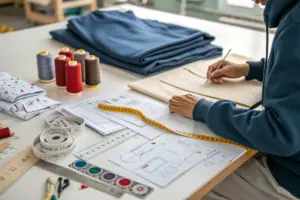
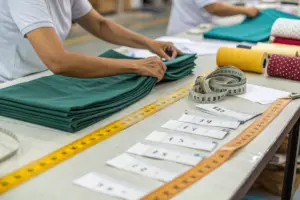
The essential components of a complete tech pack include flat sketches showing the garment from front, back, and side views, with all design details visible and all measurements called out with tolerances. The sketches are technical drawings, not fashion illustrations—they show seam placements, stitch types, pocket constructions, closure details, and every other construction element without stylistic embellishment. Material specifications list every fabric, trim, thread, interlining, and component used in the garment, with reference codes that connect to supplier catalogs or approved samples. Construction details specify seam types, stitch densities, hem finishes, reinforcement methods, and assembly sequence with notes about which operations happen in which order. Measurement specifications provide point-to-point measurements for every size in the range, with tolerance bands that define acceptable variation. Quality standards define inspection criteria, acceptable defect types and frequencies, and testing requirements for fabric performance, colorfastness, and safety. Labeling and packaging specifications detail brand labels, care labels, hang tags, folding methods, and packaging configuration for shipping.
The tech pack's function extends beyond manufacturing instruction. It serves as the basis for factory quotations—factories estimate production costs by analyzing the construction complexity, material requirements, and labor hours specified in the tech pack. It serves as the quality control standard—inspectors compare finished garments against tech pack specifications to determine acceptance or rejection. It serves as the legal specification in purchase agreements—if a factory produces garments that deviate from the tech pack, the tech pack provides the objective standard for dispute resolution. Understanding the complete technical specification package required for garment manufacturing demonstrates why the document must be comprehensive, precise, and unambiguous to function effectively across the design-to-production workflow.
What Core Components Must Every Professional Tech Pack Include?
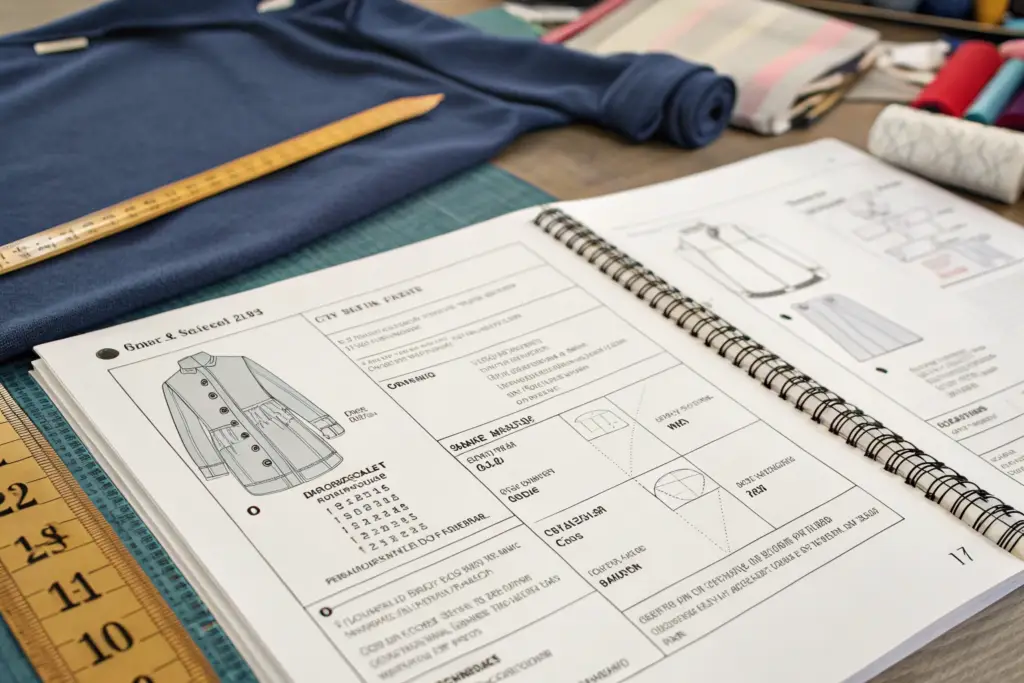
Every professional tech pack must include seven core components that collectively provide complete manufacturing instruction. The cover page establishes the garment identity—style number, style name, season, designer, date, revision number—and provides the reference information that everyone in the supply chain uses to identify the correct document version. The cover page seems administrative, but version control is essential when a garment goes through multiple sampling iterations and the factory must know which specification represents the current approved standard.
The flat sketch page provides the visual specification. Technical flat sketches show the garment in front, back, and side views with all design lines, seam placements, pocket positions, closure locations, and construction details clearly visible. Measurement callouts connect specific points on the sketch to the measurement specification table, ensuring that every measurement has a defined start point and end point. The sketch style is standardized—solid lines for seam lines, dashed lines for stitching, different line weights for different information categories—so that anyone trained in technical design can read the sketch regardless of language or cultural background.
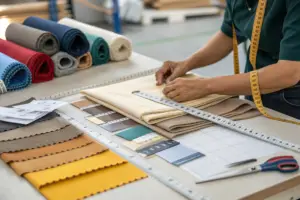
The bill of materials lists every physical component used in the garment. Shell fabric, lining fabric, interfacing, thread, zippers, buttons, snaps, elastic, drawcords, labels, hang tags, packaging materials—every item receives a specification reference, a supplier code, a color code, and a placement description. The bill of materials connects the design to the supply chain, ensuring that production uses the correct materials and that reorders can source identical components.
The measurement specification table provides the dimensional specification for every size in the range. Measurements are defined by reference to specific points on the garment—chest measured 1 inch below armhole, sleeve length measured from shoulder point to cuff edge—to eliminate ambiguity about measurement methodology. Each measurement includes the base specification and the tolerance band. The tolerance band is critical: it defines what variation is acceptable in production and what variation constitutes a defect.
The construction detail page provides manufacturing instruction beyond what the flat sketch communicates. Seam types specified by industry standard classification (ISO 4916 or ASTM D6193), stitch densities in stitches per inch, hem depths and finishes, reinforcement methods for stress points, pressing instructions for production, and assembly sequence notes indicating which components join in which order. The construction detail page translates the designer's aesthetic intent into the factory's operational language.
The quality standards page defines the acceptance criteria for finished garments. Inspection standards reference recognized systems (AQL 2.5 for major defects, AQL 4.0 for minor defects is common), specify the defect classification system, and define the sampling plan. Fabric performance standards reference test methods and minimum performance requirements for the specific fabric and garment type. Safety standards reference applicable regulations for the target market—CPSIA for US children's wear, REACH for EU markets, flammability standards for sleepwear.
The labeling and packaging page specifies brand label placement and attachment method, care label content following regional labeling requirements, size label format and placement, hang tag design and attachment, folding specification for packaging, polybag specification and sealing method, carton dimensions and packing configuration. The labeling and packaging details ensure that finished garments are retail-ready upon delivery, not requiring additional processing before they can be sold.
How Does a Tech Pack Differ From a Spec Sheet or Design Sketch?
The distinction between a tech pack, a spec sheet, and a design sketch is the distinction between a construction blueprint, a measurement summary, and an artistic rendering. Each serves a different purpose and contains different information, and confusing them is a common and costly mistake among emerging brands.
A design sketch is the creative starting point—a fashion illustration or technical drawing that communicates the garment's aesthetic vision. It shows the silhouette, the design details, the proportion, and the stylistic intent. A design sketch might indicate that a dress has a fitted bodice, a full skirt, a back zipper, and a collar style. What it typically doesn't show—and isn't intended to show—is how the collar is constructed, what seam type joins the bodice to the skirt, what stitch density secures the zipper, or what measurement the "fitted bodice" requires at each size. The design sketch communicates what the garment looks like; it doesn't communicate how to make it.
A spec sheet—specification sheet—is a measurement document. It provides the point-to-point measurements for the garment at each size, typically in a table format with measurement points defined by reference to garment landmarks. A spec sheet answers the question "what size is this garment" but doesn't answer "how is this garment constructed." Many emerging brands mistakenly believe that a spec sheet plus a design sketch constitutes a complete tech pack. The combination provides aesthetic direction and dimensional requirements, but it lacks the construction instructions, material specifications, quality standards, and component details that factories need to produce garments accurately and consistently.
A tech pack includes everything a spec sheet includes plus everything the spec sheet omits. The measurement table that forms the entirety of a spec sheet is one section within the complete tech pack, alongside the flat sketches, bill of materials, construction details, quality standards, and labeling specifications. The tech pack is the comprehensive document; the spec sheet is one component of it. The distinction between design sketches, specification sheets, and complete technical packages for garment production clarifies why only the complete tech pack provides sufficient information for manufacturing.
Does Fumao Clothing Provide Complimentary Tech Pack Development?
Shanghai Fumao provides tech pack development as a value-added service integrated with our fabric supply business. The service is complimentary—effectively free—for buyers who place bulk fabric orders with us. For buyers in the sampling or evaluation phase who haven't yet committed to bulk orders, we provide tech pack development at cost, with the full fee credited against the first bulk fabric order. The pricing structure reflects our business logic: we invest in tech pack development because accurate specifications lead to successful production, successful production leads to fabric reorders, and fabric reorders are our core business. The tech pack service isn't a profit center; it's a customer success investment.
The complimentary service covers the complete tech pack development process from initial design review through production-ready specification. Our technical design team works from whatever starting materials the buyer provides—design sketches, reference garments, measurement specifications, photographs, verbal descriptions—and develops the comprehensive technical package that factories require. The process typically involves 2-3 rounds of review and refinement, with the buyer approving each section before the tech pack is finalized. The completed tech pack is the buyer's property; they can use it with any factory they choose, not just factories we recommend or introduce.
The at-cost pricing for pre-bulk-order tech pack development typically ranges from $150-350 per style, depending on garment complexity. A simple t-shirt with basic construction might cost $150. A tailored jacket with multiple lining pieces, complex construction, and detailed finishing might cost $350. The pricing covers our technical designer's time and the software and systems used to produce the specification. The fee is fully credited against the buyer's first bulk fabric order of $3,000 or more, making the tech pack effectively free once the fabric relationship is established.

What Is the Process for Getting a Tech Pack Developed Through Fumao?
The tech pack development process follows a structured workflow designed to translate the buyer's design vision into manufacturing specification with maximum accuracy and minimum iteration. The process begins with an initial consultation—typically a 45-60 minute video call—where our technical designer reviews the buyer's design concept, existing materials, production goals, and timeline. The consultation establishes the scope of work, identifies any gaps in the buyer's design information, and sets expectations for the development timeline.
The design intake phase follows the consultation. The buyer provides all available design materials: sketches, reference images, existing samples, measurement specifications, fabric preferences, construction notes, trim selections, labeling requirements. Our technical designer reviews the materials, identifies what's complete and what's missing, and creates a development plan with specific questions for the buyer about ambiguous or incomplete specifications. The quality of the intake materials significantly affects the development speed and accuracy—buyers who provide detailed information receive faster, more accurate tech packs—but our team can work from minimal starting materials when necessary.
The initial tech pack development phase produces a first-draft specification typically within 5-8 business days of receiving complete intake materials. The first draft includes all core tech pack components—flat sketches, bill of materials, measurement specifications, construction details, quality standards, labeling specifications—at a level of detail sufficient for factory quotation and sample development. The first draft goes to the buyer for review, with specific questions and decision points highlighted.
The revision phase involves typically 2-3 rounds of buyer review and technical designer refinement. The buyer reviews each section of the tech pack, notes any corrections or changes, and returns feedback to our technical designer. The designer implements the changes, updates affected sections (a measurement change in one area often requires corresponding adjustments elsewhere), and returns the revised tech pack for further review. The revision phase continues until the buyer approves the complete specification.
The finalization phase produces the production-ready tech pack in the buyer's preferred format—typically PDF for factory distribution, with source files (Adobe Illustrator or compatible format) provided if the buyer wants to make future modifications independently. The finalized tech pack includes version control information, approval signatures, and a revision history that documents the development process. The buyer receives both the complete document and a summary sheet that factories can use for quick reference during production. The step-by-step process for obtaining professional tech pack development through a fabric supplier demonstrates how the service integrates with the material sourcing relationship.
What Design Materials Do Buyers Need to Provide for Tech Pack Creation?
The design materials required for tech pack creation depend on how fully developed the buyer's design concept is when they engage our service. The minimum viable starting point is surprising to many buyers: we can develop a complete tech pack from a reference garment and verbal description of desired changes. If a buyer sends us a dress they bought at retail and says "I want this silhouette in our fabric, with these sleeve changes, and a different neckline," our technical designer can reverse-engineer the reference garment's construction, apply the specified design changes, and develop a tech pack for the modified design. The process takes longer and requires more revision rounds than working from complete design materials, but it's entirely feasible.
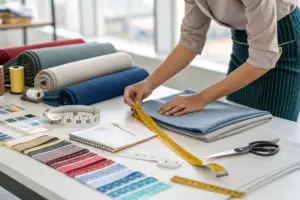
Ideal starting materials significantly accelerate the process and improve first-draft accuracy. The ideal package includes technical flat sketches showing front and back views with design details, a measurement specification with point-to-point measurements for the base size, identification of the specific fabrics being used (ideally with our fabric reference codes), photographs of reference garments that capture the desired fit, silhouette, and construction quality, trim and component specifications with supplier information if available, labeling and packaging requirements, and target retail price or production cost target. The target price information is particularly valuable because it allows our technical designer to make construction and material decisions that align with the buyer's commercial objectives—a garment targeting a $48 retail price requires different construction approaches than a garment targeting a $248 retail price.
For buyers who lack any of these materials, our technical design team can fill the gaps through the consultation and revision process. A buyer who can describe their design verbally and provide rough sketches can work with our team to develop the precise specifications their factory requires. The process takes longer—typically 3-4 weeks rather than 2-3—and requires more active buyer participation in the revision rounds, but the endpoint is the same: a production-ready tech pack that factories can execute. The design materials required for professional tech pack development range from comprehensive technical documentation to reference garments and verbal descriptions, with the development timeline adjusting to the starting point quality.
What Value Does Professional Tech Pack Development Add Beyond DIY Approaches?
The value of professional tech pack development becomes visible in what doesn't happen: the sampling rounds that aren't needed, the production errors that don't occur, the cost overruns that don't materialize, the delivery delays that don't happen. These avoided problems are difficult for a first-time producer to appreciate because they haven't experienced them yet. Experienced production managers value professional tech packs precisely because they've experienced the costly consequences of inadequate specifications.
A professional tech pack reduces sampling iterations by communicating the complete specification in the factory's technical language from the first submission. When a factory receives a complete tech pack, the first sample typically requires 1-2 fit corrections. When a factory receives a design sketch and partial specifications, the first sample typically requires 3-5 iterations before achieving acceptable fit and construction. Each iteration consumes 2-3 weeks and $100-300 in sample costs. The professional tech pack saves 4-8 weeks and $200-600 in direct sample costs, plus the opportunity cost of delayed market entry.
Professional tech packs reduce production errors by eliminating the ambiguity that causes factories to make assumptions. When a tech pack doesn't specify seam type, the factory uses their standard construction—which may differ from the designer's intent. When a tech pack doesn't specify stitch density, the factory uses their standard setting—which may produce seams that fail durability testing or create puckering that the designer rejects. When a tech pack doesn't specify tolerance bands, the factory's interpretation of "acceptable variation" may differ from the designer's. Professional tech packs specify these details explicitly, removing the ambiguity that causes errors.
Professional tech packs enable competitive bidding by providing multiple factories with identical, complete specifications. When three factories quote on the same tech pack, the price differences reflect genuine differences in efficiency, labor costs, and margin structure—not different interpretations of what the garment requires. Without a complete tech pack, factory quotes are not comparable because each factory is pricing a slightly different interpretation of the design. The competitive bidding enabled by professional tech packs typically reduces production costs by 15-25% compared to single-factory negotiation with incomplete specifications.

How Do Professional Tech Packs Prevent Costly Sampling and Production Errors?
Sampling errors that professional tech packs prevent fall into predictable categories that experienced technical designers anticipate and address in the specification. Fit errors occur when the factory's interpretation of the designer's fit intent doesn't match the designer's expectation. A specification that says "fitted bodice" is ambiguous; a specification that provides waist suppression measurement, dart intake, and stretch allowance at each size is precise. Professional tech packs provide the precise specification, eliminating the fit interpretation error.
Construction errors occur when the factory uses standard construction methods that conflict with the designer's aesthetic or performance requirements. A factory's standard t-shirt construction might use a coverstitch hem, but the designer specified a blind hem for a cleaner finish. If the tech pack doesn't specify the hem construction, the factory uses their standard and the sample comes back wrong. Professional tech packs specify construction methods explicitly, preventing the standard-versus-specified error.
Material usage errors occur when the factory estimates material consumption based on assumptions about fabric width, pattern layout efficiency, or cutting tolerances. If the tech pack doesn't specify the fabric width and the marker efficiency target, the factory's consumption estimate—and therefore their price quote—may differ significantly from actual consumption. Professional tech packs specify these parameters, ensuring that factory quotes reflect realistic material consumption.
Grading errors occur when the factory applies their standard grading rules to the base size measurements, producing size scaling that doesn't match the designer's fit intent or target customer body shape. A factory's standard grade rule might add 2 inches of chest circumference per size, but the designer's fit model data shows that their customer base requires 1.5 inches per size with specific adjustments to shoulder slope and armhole depth. Professional tech packs include the grade rules, preventing the standard-grade error. The sampling and production error prevention capabilities of professional technical specification packages demonstrate that the investment in specification quality returns multiples in avoided correction costs.
What Factory Communication Benefits Come From Standardized Technical Specifications?
The factory communication benefits of standardized technical specifications extend beyond error prevention to relationship quality and production efficiency. When a factory receives a complete, professional tech pack, several positive dynamics emerge that are absent when specifications are incomplete or ambiguous.
The factory's estimation and quotation process becomes faster and more accurate. A factory estimator reviewing a complete tech pack can calculate material consumption, labor hours, and production costs with precision. A factory estimator reviewing incomplete specifications must make assumptions, add contingency to cover the uncertainty, or submit clarifying questions that delay the quotation. The complete tech pack typically generates a quotation within 3-5 business days; incomplete specifications can extend the quotation process to 2-3 weeks of back-and-forth clarification.
The factory's production planning benefits from unambiguous specifications. The production manager can sequence operations, allocate equipment, and schedule labor with confidence that the specification won't change mid-production. When specifications are incomplete, production planning incorporates flexibility for expected changes—which means scheduling less tightly, allocating backup resources, and building in time buffers that increase cost and extend lead time. The unambiguous specification enables leaner, faster production planning.
The factory's quality control process operates more effectively against objective standards. An inspector comparing finished garments against a complete tech pack has specific, measurable criteria for acceptance or rejection. An inspector working from vague specifications makes subjective judgments that may not align with the designer's expectations. The objective quality standard reduces disputes because both parties agreed on the acceptance criteria before production began.
The factory relationship benefits from the professionalism that a complete tech pack communicates. Factories allocate their best production teams to clients who provide professional specifications, because professional specifications indicate a professional client who understands manufacturing and will be reasonable to work with. The factory allocates their less experienced teams to clients who provide incomplete specifications, because those clients typically require more hand-holding and generate more disputes. The professional tech pack signals that the buyer is a serious production partner, not a novice who will blame the factory for problems caused by inadequate specifications. The factory communication and relationship benefits of professional technical specification packages demonstrate that specification quality affects not just the technical outcome but the commercial relationship quality.
Conclusion
A tech pack is the bridge between design creativity and production reality—the complete set of specifications that tells a garment factory exactly how to manufacture a garment repeatedly, consistently, and at scale. It includes flat sketches with measurement callouts, material specifications, construction details, quality standards, and labeling requirements. It differs from a design sketch (which shows what the garment looks like) and a spec sheet (which provides measurements only) by providing the comprehensive manufacturing instruction that both of those partial documents omit.
Shanghai Fumao provides tech pack development as an integrated service with our fabric supply business. For buyers placing bulk fabric orders, the service is complimentary—a value-added investment in production success that drives fabric reorders. For buyers in the sampling and evaluation phase, we provide tech pack development at cost, with the full fee credited against the first bulk order. The service reflects our conviction that successful garment production depends on accurate specifications, and that fabric suppliers have both the capability and the incentive to help buyers get those specifications right.
If you're developing a collection and need tech packs that factories can execute without ambiguity, I encourage you to contact our technical design team. Whether you have complete design documentation or just a reference garment and a vision, we can develop the specifications your production requires. Reach our Business Director Elaine at elaine@fumaoclothing.com to discuss your tech pack needs, your fabric requirements, and how our integrated approach to material supply and technical specification can streamline your path from design to delivery.
Your designs deserve specifications that match their quality. Let's build them together.