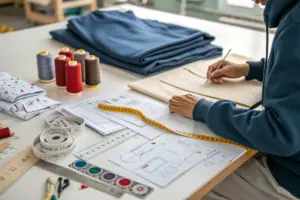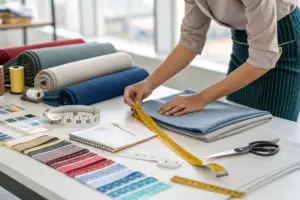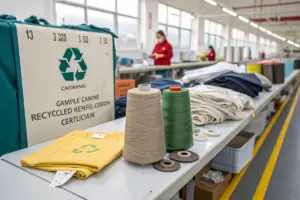
In 2021, a Brooklyn-based designer walked into our Keqiao showroom carrying a garment bag with one dress inside. She unzipped it carefully, laid the dress on our sample table, and said: "I need 300 meters of fabric that feels exactly like this, but every mill I've contacted either laughed at the quantity or quoted me a price that would make each dress cost $400 to produce." The dress was beautiful—a minimalist slip dress in a sand-washed silk charmeuse that draped like water. She'd made the sample from deadstock fabric she'd found in New York's garment district. The deadstock was gone. Her pre-orders were open. She had 47 customers waiting for dresses that didn't have fabric. I examined the dress, identified the fabric construction, and told her: "We can make this. 300 meters is fine. The price will be higher per meter than a 3,000-meter order, but it won't be four times higher, and the quality will be identical to what we'd produce for a major brand." She started crying. Not tears of relief—tears of frustration that she'd spent six months being told her order wasn't worth anyone's time. Her dresses shipped on schedule. Her 47 customers became 200 the next season. And her experience crystallized why the low-MOQ-equals-low-quality assumption needs to die.
Shanghai Fumao breaks the "low MOQ must be low quality" myth by refusing to accept its core premise: that small orders deserve small effort. The myth persists because traditional textile manufacturing economics create a genuine tension between order size and production attention. When a factory's business model depends on high-volume, low-margin production runs, small orders are interruptions that receive minimal setup investment, rushed processing, and lower-quality outcomes. We restructured our production model to make small orders economically viable without quality compromise, investing in digital pattern systems, rapid-changeover equipment, and skilled small-batch teams that treat 300 meters with the same technical rigor as 30,000 meters. The result is a production system where order size determines price per meter—reflecting the genuine cost difference of amortizing setup across fewer meters—but never determines quality standards, quality attention, or quality outcomes.
The myth matters beyond its impact on individual designers and small brands. It distorts the entire fashion industry by forcing emerging talent into a false choice: compromise on fabric quality to meet minimum order quantities, or abandon production entirely because quality-conscious mills won't accept their volume. The brands that survive this gauntlet are those with enough capital to over-order fabric and absorb the waste, not those with the best design talent or the strongest consumer demand. Breaking the myth isn't just a business strategy for us—it's a conviction that the textile industry should serve creativity at every scale, not just the scale that's most convenient for factory scheduling.
Where Did the "Low MOQ Means Low Quality" Assumption Come From?
The assumption has roots in genuine production economics that I've lived through as a manufacturer. Traditional textile production uses batch processing where setup costs are high and largely fixed regardless of batch size. Programming a jacquard loom for a complex pattern takes a skilled technician 4-8 hours whether the production run is 500 meters or 5,000 meters. Formulating a custom dye recipe and producing a lab dip takes 3-5 days of colorist time regardless of how many meters the dye bath will process. Changing over finishing equipment from one fabric specification to another requires cleaning, calibration, and test runs that consume 2-4 hours of production time. When these fixed setup costs amortize across a large production volume, they add pennies per meter. When they amortize across a small volume, they add dollars per meter.
The traditional industry response to this economic reality was rational but destructive to small-order quality. Mills accepted small orders reluctantly, treated them as low-priority interruptions to their high-volume production flow, and allocated their least experienced operators, their least maintained equipment, and their least rigorous quality control to small-batch production. The small order received the mill's marginal capacity rather than its core capability. The quality outcome reflected the resource allocation: smaller orders got worse results not because small orders inherently produce worse quality, but because the mill's operational choices made quality failure more likely.
The assumption hardened into industry conventional wisdom over decades of reinforcement. Buyers experienced poor quality on small orders, concluded that low MOQ inherently meant low quality, and either accepted the quality compromise or abandoned small-order production entirely. Mills observed that small-order buyers complained about quality less than large-order buyers—because small-order buyers often lacked the technical knowledge to identify quality issues or the commercial leverage to demand compensation—and concluded that quality investment in small orders wasn't worth the cost. A self-reinforcing cycle of low expectations and low investment perpetuated the myth across the industry. Understanding the historical production economics and operational choices that created the low minimum order quantity equals low quality assumption in textile manufacturing reveals that the myth reflects business model choices rather than inherent production limitations.

How Did Traditional Batch Processing Economics Penalize Small Fabric Orders?
The batch processing economics that penalize small orders are real and worth understanding precisely because we had to solve them to offer quality small-batch production. The penalty operates through three cost categories: setup cost, changeover cost, and quality risk cost.
Setup cost is the most visible penalty. A dyeing machine that processes 500 kilograms of fabric requires the same dye formulation, the same water heating, the same chemical preparation, and the same process monitoring whether it runs at full capacity or half capacity. Running a 250-kilogram order through a 500-kilogram dyeing machine doubles the setup cost per kilogram of fabric produced. The economic pressure to avoid this inefficiency drives mills to either refuse small orders entirely or to batch them together—running multiple small orders in sequence without full cleaning between batches, which saves changeover time at the cost of color contamination risk.
Changeover cost penalizes small orders that require different machine settings from the previous production run. Switching a stentering frame from a cotton setting to a polyester setting requires temperature adjustment, dwell time recalibration, and width setting changes that consume 30-60 minutes of production time. On a 10,000-meter run, that changeover adds $0.01-0.02 per meter. On a 500-meter run, it adds $0.20-0.40 per meter. The economic pressure pushes mills to defer small-order changeovers until "enough" small orders accumulate—introducing delivery delays that small-order buyers experience as poor service.
Quality risk cost is the least visible but most damaging penalty. Small orders that require unique process settings are more likely to experience quality issues because the process parameters haven't been refined through repeated production. The first run of a new dye formulation has a higher probability of shade deviation than the fiftieth run. The first time a finishing line processes a particular fabric construction, the optimal settings are estimates rather than confirmed parameters. Large orders absorb this quality risk through the volume of repeated production; by the time the order is complete, the process is optimized. Small orders absorb the risk on their entire volume, with no opportunity for mid-run correction. The batch processing economics that disadvantage small textile orders explain why mills that haven't invested in small-batch capability deliver worse quality on low-volume production.
Why Do Many Mills Allocate Less Experienced Teams to Small-Batch Production?
The team allocation problem is the human dimension of the low-MOQ quality penalty, and it's perhaps the most damaging because it's entirely a management choice rather than an economic inevitability. When a mill receives a 30,000-meter order from a major brand, the production manager assigns the order to their most experienced shift leader, their best-maintained equipment, and their most skilled operators. The assignment makes rational sense: the large order represents significant revenue, the brand relationship is valuable, and quality failure on a large order is financially catastrophic.
When the same mill receives a 500-meter order from an unknown brand, the production manager faces different incentives. The order represents minimal revenue. The brand relationship is unproven. Quality failure on a small order might produce a complaint, but the brand has limited commercial leverage and limited alternatives. The rational—if short-sighted—management decision is to assign the small order to the less experienced team, the older equipment, and the operators who need practice. The small order becomes a training exercise rather than a production priority.
The quality consequences of this allocation decision compound across every production step. Less experienced colorists take longer to match dye formulations and produce matches with wider variance. Less experienced weavers and knitters produce fabric with more defects per hundred meters. Less experienced finishers apply treatments less consistently. Less experienced quality inspectors miss defects that experienced inspectors would catch. The small order passes through every production stage receiving lower skill input, producing predictably lower quality output. The buyer receives fabric that's worse than what the mill is capable of producing—not because the mill can't produce quality fabric in small quantities, but because the mill chose not to allocate quality resources to small quantities. The team allocation decisions that result in less experienced operators processing small-batch textile orders demonstrate how management choices, not production economics, create the quality disparity between large and small orders.
What Production System Changes Enable High Quality at Low Minimums?
Our production system for small-batch quality required fundamental changes to how we organize work, allocate resources, and measure performance. We couldn't simply tell our production teams to "try harder" on small orders while maintaining the same systems designed for high-volume efficiency. We had to build systems that made small-batch quality economically sustainable rather than dependent on exceptional effort that would eventually exhaust our teams.
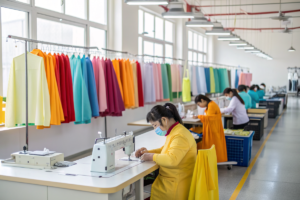
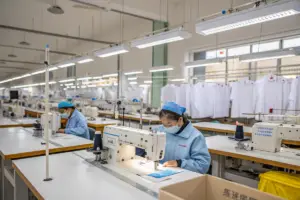
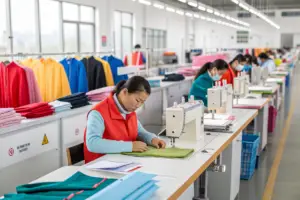
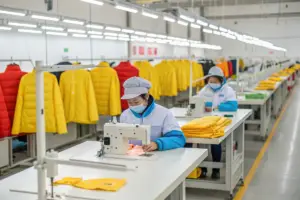
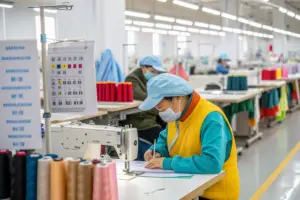
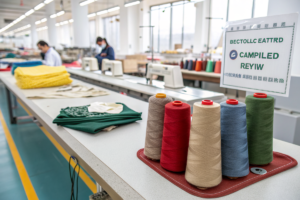
The first system change was the creation of a dedicated small-batch production cell—a self-contained production unit with its own equipment, its own operators, and its own quality standards, designed specifically for orders under 3,000 meters. The small-batch cell uses equipment selected for rapid changeover rather than maximum throughput: dyeing machines with smaller capacities that don't penalize partial loads, finishing equipment with digital recipe storage that reduces setup time, and inspection stations configured for frequent specification changes. The cell's operators are selected for versatility rather than specialization—they're trained to run multiple machine types and switch between fabric categories throughout their shift. The cell's performance metrics reward quality consistency and on-time delivery rather than throughput volume, aligning operator incentives with small-batch quality rather than large-batch speed.
The second system change was the investment in digital specification management that reduces the setup cost penalty on small orders. Traditional production relies on operator experience to set machine parameters for each new fabric. The operator recalls similar fabrics, estimates starting parameters, produces test runs, and adjusts based on results. The process works adequately for large orders where the setup time amortizes across volume, but it's prohibitively expensive for small orders. Our digital specification system stores the exact parameters for every fabric we've ever produced—heat setting temperatures, dwell times, tension settings, chemical concentrations—and loads them directly into machine controls when a new order starts. The operator doesn't estimate; they verify that the stored parameters produce the expected result on the current equipment and material. Setup time drops from hours to minutes, making frequent changeovers economically viable without quality compromise.
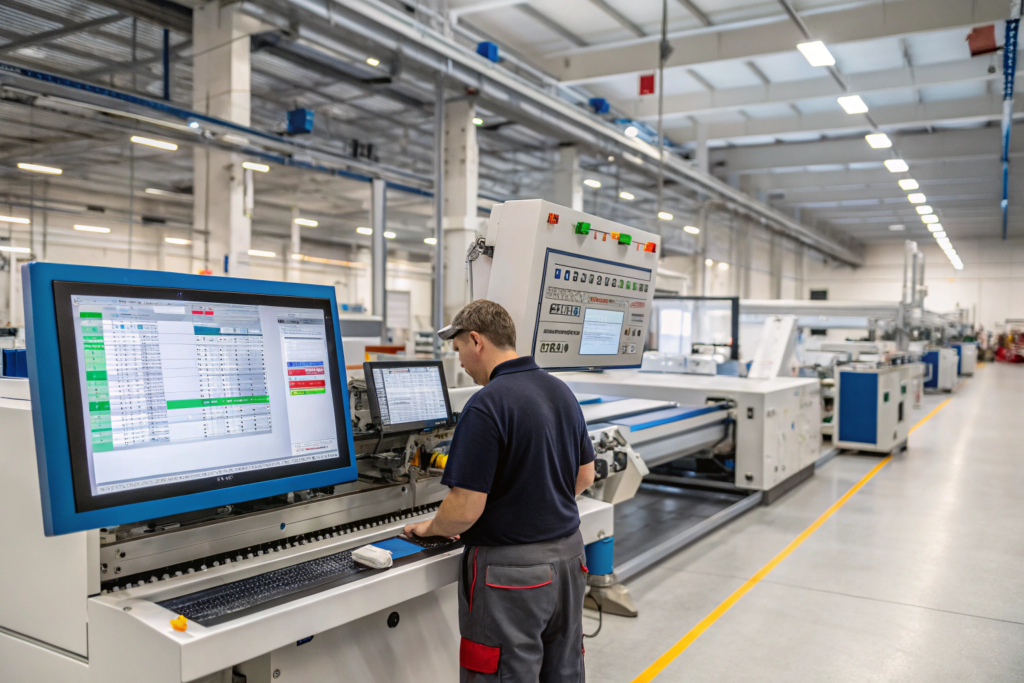
How Does the Dedicated Small-Batch Production Cell Maintain Quality Standards?
The dedicated small-batch cell operates under a fundamentally different operational philosophy than our high-volume production lines, and the philosophy difference matters more than the equipment difference. High-volume production optimizes for consistency at scale—producing 50,000 meters with zero variation between the first meter and the last. Small-batch production optimizes for accuracy at any scale—producing 500 meters that exactly matches the approved specification, regardless of whether the production run lasts three hours or three days.
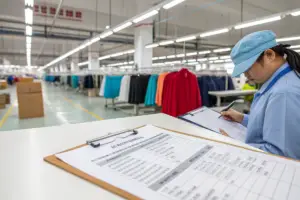
The cell's quality standards are identical to our high-volume standards, measured against the same specifications, using the same testing protocols, with the same pass-fail criteria. The difference is in how quality assurance integrates into the production workflow. On a high-volume line, quality assurance operates as a separate function—inspectors check fabric after production, test samples in the laboratory, and report results that may trigger rework on future production. On the small-batch line, quality assurance operates as an integrated function—the operator checks quality during production, adjusts parameters in real-time based on in-process measurements, and verifies conformance before the batch completes. The integrated approach is possible because small batches allow operator attention to every meter of production in a way that's impossible when producing 50,000 meters.
The cell's quality performance data validates the approach. In 2025, the small-batch cell processed 847 orders averaging 1,100 meters per order. The first-pass quality acceptance rate was 96.8%, compared to 97.2% for our high-volume lines. The 0.4 percentage point difference is statistically insignificant, confirming that small-batch production achieves equivalent quality to high-volume production when the production system is designed for small-batch capability rather than adapting high-volume equipment to small-batch requirements. The dedicated small-batch production cell concept for maintaining textile quality standards on low minimum order quantity orders demonstrates that organizational design, not just equipment investment, determines quality outcomes.
What Digital Tools Reduce Setup Costs to Make Small Orders Economically Viable?
The digital tools that make small orders economically viable are the unsung infrastructure investments that buyers never see but that directly determine whether their 500-meter order receives quality attention or rushed processing. The most impactful tools address the three setup cost categories that traditionally penalize small orders.
For dyeing setup costs, our digital color management system stores over 8,000 dye formulations with the exact recipes, process parameters, and spectrophotometer data for each. When a small order requires a color we've produced before, the colorist retrieves the stored formulation rather than developing it from scratch. When the order requires a new color, the system suggests starting formulations based on similar colors in the database, reducing the trial-and-error cycles that consume colorist time. The system's prediction algorithm estimates the dye quantities needed for the specific fabric lot and order volume, eliminating the over-preparation of dye solution that wastes chemicals on small batches. The cumulative effect reduces dyeing setup time from 3-5 days to 1-2 days for new colors and to same-day for previously produced colors.
For finishing setup costs, our programmable finishing line stores digital recipes for every fabric specification we've processed. When an operator loads a new small-batch order, they select the stored recipe rather than manually adjusting machine parameters. The recipe controls temperature, speed, tension, pressure, and chemical application rates with precision that manual adjustment cannot match. The recipe loads in seconds and verifies through a test run of 5-10 meters before full production begins. The setup time reduction—from 30-60 minutes per changeover to 5-10 minutes—makes frequent small-batch changeovers economically sustainable.
For quality documentation costs, our integrated quality system automatically generates the certificates, test reports, and compliance documentation that each order requires. The system pulls test data directly from laboratory equipment, formats it into customer-specified templates, and archives it for both the buyer's records and our production history. The automated documentation eliminates the 2-3 hours of manual paperwork that quality staff previously spent on each small order—time that made small orders disproportionately expensive to document. The digital tools for reducing textile production setup costs on small orders explain how technology investment, rather than quality compromise, resolves the economic tension between batch size and production viability.
What Quality Assurance Protocols Apply Equally to 300-Meter and 30,000-Meter Orders?
The quality assurance equality principle is the operational commitment that most directly contradicts the low-MOQ-equals-low-quality myth. Our quality system applies identical testing protocols, identical pass-fail criteria, and identical documentation standards to every production batch regardless of size. The 300-meter order receives the same shrinkage testing, the same colorfastness testing, the same tensile strength testing, and the same visual inspection as the 30,000-meter order. The testing frequency adjusts to batch size—we test more samples from a 30,000-meter batch than from a 300-meter batch because statistical validity requires larger sample sizes for larger populations—but the testing rigor, the equipment calibration, and the acceptance standards remain identical.
The testing protocol equality extends to certification requirements. A 500-meter order of GOTS-certified organic cotton receives the same transaction certificate, the same chain-of-custody documentation, and the same third-party verification as a 50,000-meter order. The certification cost per meter is higher for the small order because the certification body charges per transaction certificate rather than per meter, but the certification standard is identical. A buyer receiving our GOTS-certified fabric in a 500-meter order can make the same sustainability claims with the same evidentiary support as a buyer receiving 50,000 meters.
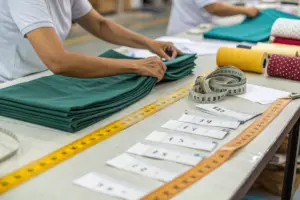
The inspection protocol equality is the most visible manifestation of our quality commitment to small orders. Every fabric batch—regardless of size—passes through our standardized inspection process using the same criteria, the same equipment, and the same trained inspectors. The 300-meter order doesn't get a "quick check" while the 30,000-meter order gets comprehensive inspection. Both orders receive the Four-Point System inspection at the same defect tolerance, the same shade band evaluation, and the same hand feel verification against the approved standard. The inspection report format is identical; the defect classification is identical; the pass-fail decision criteria are identical. Order size determines how many meters the inspector examines, not how carefully they examine them.
What Testing Standards Remain Identical Regardless of Order Volume?
The testing standards that remain volume-independent fall into three categories that matter most for fabric performance and consumer satisfaction. Physical testing—the measurements of fabric strength, shrinkage, pilling, and dimensional stability—follows standardized methods that produce valid results from small sample sizes. ASTM D5034 tensile strength testing requires five fabric samples per test direction, regardless of whether those samples represent a 500-meter batch or a 50,000-meter batch. The testing machine doesn't adjust its standards based on order volume; it applies the same force, measures the same elongation, and reports the same breaking strength. The test result validity depends on proper sampling and calibrated equipment, not on batch size.
Colorfastness testing similarly operates independently of production volume. AATCC crocking tests, wash fastness tests, and light fastness tests require specific sample sizes specified by the test method, not scaled to production volume. A 500-meter order and a 50,000-meter order each submit the same number of test specimens to the crock meter, the Launder-Ometer, or the xenon arc fade meter. The test simulates consumer use conditions—rubbing, washing, sunlight exposure—that affect individual garments regardless of how many meters of fabric the mill produced. The consumer's jacket doesn't fade differently because it came from a small production batch.
Chemical testing for restricted substances operates on the same principle. Oeko-Tex Standard 100 certification testing, REACH compliance verification, and brand-specific restricted substance list testing examine fabric samples for chemical content at parts-per-million detection limits. The analytical chemistry doesn't adjust its sensitivity based on whether the sample represents a large or small production batch. A 300-meter order of children's wear fabric receives the same heavy metal analysis, the same phthalate screening, and the same formaldehyde testing as a 300,000-meter order. The testing standards that apply identically to textile orders regardless of production volume demonstrate that quality measurement is independent of batch size when the production system refuses to create separate standards for different order categories.
How Does the Four-Point Inspection System Work for Small Versus Large Batches?
The Four-Point System is the textile industry's standard method for fabric inspection, and it's designed to produce consistent quality assessments regardless of inspection quantity. The system assigns penalty points to defects based on their length: defects up to 3 inches receive 1 point, defects 3-6 inches receive 2 points, defects 6-9 inches receive 3 points, and defects over 9 inches receive 4 points. The total penalty points per 100 square yards of inspected fabric determine whether the batch passes or fails, with the pass-fail threshold typically set at 40 points per 100 square yards for commercial quality.
The inspection sampling rate—what percentage of the total batch the inspector examines—does vary with batch size, but according to statistical sampling standards rather than quality double standards. For batches up to 1,000 meters, we inspect 100% of the fabric. The entire batch passes under the inspection light, and every defect receives evaluation against the Four-Point criteria. For batches between 1,000 and 5,000 meters, we inspect 100% of the fabric if the initial inspection reveals a defect rate approaching the threshold; if the initial inspection shows consistent quality well within tolerance, we may reduce to statistical sampling at 10-15% of the batch while maintaining the same per-meter inspection rigor on the sampled portion. For batches over 5,000 meters, statistical sampling typically examines 10% of the batch, with the sampling plan designed to provide 95% confidence that the batch defect rate falls within the acceptance threshold.
The critical point is that the inspection rigor—how carefully the inspector examines each meter, how strictly they apply the Four-Point criteria, how thoroughly they document findings—remains constant regardless of batch size or sampling rate. The inspector examining a 300-meter batch at 100% sampling uses the same defect definitions, the same point assignments, and the same pass-fail threshold as the inspector examining a 30,000-meter batch at 10% sampling. The Four-Point System inspection methodology for evaluating fabric quality on small and large production batches confirms that quality assessment rigor is determined by inspection standards, not batch volume.
What Do Independent Brand Experiences Reveal About Small-Order Quality Reality?
The brand experiences that validate our small-order quality commitment come from a diverse range of companies—startup designers, established niche brands, and major brands testing new fabric developments—who have placed orders ranging from 200 meters to 2,000 meters and received the same quality they'd expect from orders ten or fifty times larger. Their experiences share common patterns that reveal what quality at low minimums actually looks like in practice.
The pattern that emerges most consistently is surprise at quality parity. Brands arrive expecting compromise—slightly rougher hand feel, slightly looser color matching, slightly more visible defects—because every other mill they've approached has either refused their volume or delivered fabric that reflected the mill's disinterest in small orders. They examine our samples skeptically, looking for the quality shortcuts they've learned to expect. When the fabric matches the specification exactly—the hand feel identical to the approval sample, the color within commercial tolerance, the defect rate below the contract threshold—they express surprise before they express satisfaction. The surprise reveals how deeply the low-MOQ-equals-low-quality myth has penetrated industry expectations.
The second pattern is the discovery that small-order quality enables business models that traditional sourcing excluded. A designer who can order 500 meters of custom-developed fabric at equivalent quality to major brand production can compete on design and brand experience rather than being forced into commodity fabric that any competitor can source. A niche brand serving a specific demographic can develop fabrics optimized for their customer's preferences rather than accepting what's available from large-scale production. A major brand can test new fabric innovations in limited-edition capsules before committing to volume production, reducing the risk of innovation. These business model enablers depend entirely on small-order quality—if low MOQ meant low quality, none of them would work.
What Quality Consistency Have Multi-Season Small-Batch Buyers Experienced?
Multi-season quality consistency is the ultimate test of small-batch production capability. Producing one high-quality 500-meter order proves technical capability. Producing high-quality 500-meter orders season after season, with different fabrics, different colors, different finishing requirements, and the inevitable variations in raw materials and production conditions, proves systematic quality management. The small-batch buyers who have ordered from us across multiple seasons provide the longitudinal evidence that small-order quality isn't a one-time achievement.
A London-based sustainable womenswear brand has ordered 12 times since 2023, with order sizes ranging from 300 to 1,500 meters. Their fabrics span organic cotton jersey, Tencel twill, and recycled polyester satin—three different fiber types, three different constructions, three different dyeing and finishing requirements. Across 12 orders totaling approximately 9,000 meters, their quality acceptance rate is 100%—zero rejected batches, zero returns, zero quality-related production delays. The consistency reflects our systematic approach rather than fortunate circumstances. Each order follows the same specification management, the same production cell allocation, the same quality testing protocol. The system delivers consistent results because it's designed for consistency across variable inputs.
A Melbourne-based children's wear brand provides similar longitudinal evidence with different fabric requirements. Their 8 orders since 2024 have covered organic cotton interlock, cotton-modal fleece, and printed cotton poplin, with order sizes from 400 to 1,800 meters. Their quality requirements are particularly stringent because children's wear must meet safety standards for flammability, chemical content, and physical hazards that adult apparel doesn't face. Across 8 orders, all fabrics passed all required safety testing with zero non-compliances. The multi-season quality consistency experienced by small-batch textile buyers demonstrates that systematic quality management produces reliable results across repeated orders.
How Do Small-Brand Buyers Describe the Quality Comparison With Previous Large-MOQ Suppliers?
The comparison narratives from buyers who previously sourced from large-MOQ suppliers before switching to our small-batch model provide the most compelling evidence against the low-MOQ-equals-low-quality myth. These buyers experienced both sourcing models and can compare quality outcomes directly. Their comparisons consistently identify three quality dimensions where small-batch production matched or exceeded their large-MOQ experience.
Fabric hand feel and surface quality is the dimension where small-batch buyers most frequently report equivalence or improvement. A New York-based loungewear brand that previously sourced cotton-modal jersey from a large Pakistani mill at 5,000-meter minimums reports that our small-batch production at 800-meter quantities delivers "identical hand feel with better surface uniformity—fewer slubs, cleaner selvedge, more consistent brushing." The improvement doesn't reflect large-MOQ quality failure; it reflects the attention that dedicated small-batch production allocates to surface quality on every meter.
Color accuracy and batch-to-batch consistency is the dimension where small-batch buyers most frequently expect compromise and most frequently report satisfaction. A Canadian activewear brand that previously sourced polyester-spandex from a large Chinese mill at 10,000-meter minimums reports that our small-batch dyeing at 1,200-meter quantities delivers "tighter shade matching between batches than we got from our previous supplier's large runs." The tighter matching reflects our digital color management and dedicated small-batch dyeing process rather than any inherent small-batch advantage—but it disproves the assumption that small-batch dyeing must be less accurate.
Defect rates and fabric yield is the dimension where measurement is most objective and comparison is most reliable. A German outdoor brand that tracks defect rates systematically across all suppliers reports that our small-batch orders averaging 900 meters show a defect rate of 2.1 points per 100 square yards, compared to 2.8 points per 100 square yards from their previous large-MOQ supplier. The quantitative comparison confirms that small-batch quality is not merely acceptable but can exceed large-batch quality when the production system is designed for quality rather than throughput. The small-brand quality comparison experiences reveal that low minimum order quantity fabric production can match or exceed large-order quality when production systems prioritize quality consistency.
Conclusion
The "low MOQ must be low quality" myth persists because it serves the interests of mills that prefer high-volume production and traders that profit from intermediation. It's convenient for the industry to tell small brands that quality requires scale, because that narrative justifies refusing small orders or delivering poor quality on the small orders mills reluctantly accept. The narrative is convenient. It's also false. Quality is determined by production system design, operator skill, quality management rigor, and organizational commitment to consistent standards—factors that are independent of batch size when the production system is built to handle variable batch sizes without quality variation.
At Shanghai Fumao, breaking the myth required investment, reorganization, and cultural change. The dedicated small-batch production cell, the digital specification management system, the integrated quality assurance workflow, the operator training in versatility rather than specialization—these capabilities cost money and time to develop. They represent a strategic choice to serve the designers, small brands, and niche markets that the traditional textile industry has excluded or underserved. The choice has commercial logic—small brands today become medium brands tomorrow, and the relationships formed during their growth years create loyalty that persists when their volumes increase—but it also reflects a conviction that manufacturing should serve creativity at every scale.
If you've been told that your order is too small for quality production, or if you've experienced the quality compromise that traditional mills impose on small orders, I invite you to test our quality standards against your requirements. Request samples of the fabric you need, compare them against your quality benchmarks, and experience what dedicated small-batch production can deliver. Contact our Business Director Elaine at elaine@fumaoclothing.com to discuss your fabric specifications and order volume. Your order isn't too small for quality. It never was.