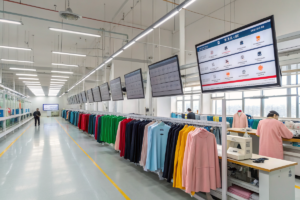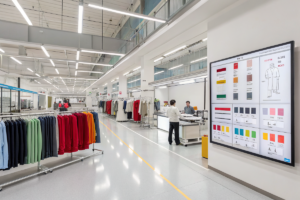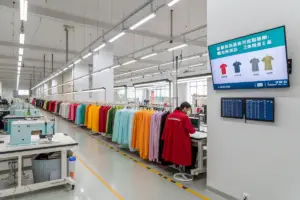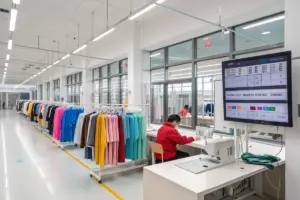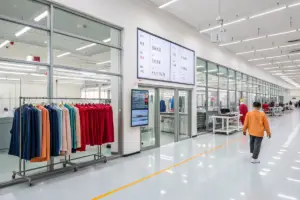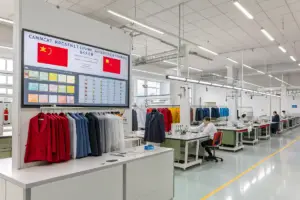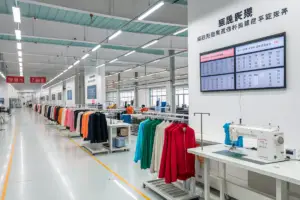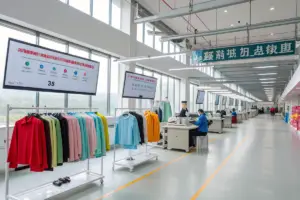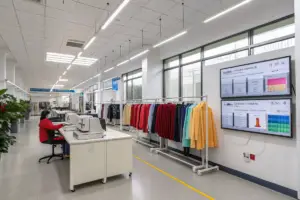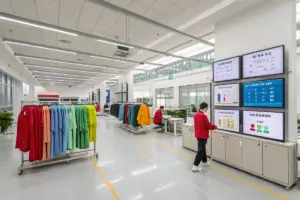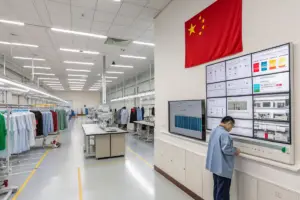
In 2018, a sportswear startup founder sat in our Keqiao showroom and showed me an invoice that made my jaw drop. He’d been buying polyester-spandex jersey from a Hong Kong-based trader for $4.80 per meter—a fabric I knew intimately because we produced it for $2.65 per meter. The trader was adding $2.15 per meter in margin, roughly an 81% markup over our ex-factory price, for services that amounted to sending emails, arranging shipping, and maintaining a website. The founder had no idea. The trader presented themselves as a manufacturer, complete with factory photos they’d licensed from a mill in Guangdong. When I showed him our production cost breakdown and the identical fabric specification sheet the trader had rebranded with their logo, he sat silent for about thirty seconds. Then he asked the question that every buyer should ask: "How do I know you’re actually the manufacturer and not just another trader with a better story?"
The real ROI of choosing Shanghai Fumao—a direct manufacturer—over a trading company encompasses measurable cost savings, quality control advantages, and supply chain efficiencies that compound across every order. The most immediate and quantifiable ROI is the elimination of the trader’s margin, which typically adds 25-80% to the ex-factory fabric price depending on the trader’s business model, the fabric complexity, and the buyer’s negotiation position. On a $50,000 annual fabric spend, eliminating a 40% average trader margin saves approximately $14,000 annually—direct profit that drops to your bottom line. Beyond price, manufacturer-direct sourcing provides technical expertise that traders cannot replicate, production transparency that prevents the specification drift common in intermediated supply chains, and quality accountability that extends from fiber to finished fabric rather than ending at the trader’s warehouse.
The trader-versus-manufacturer distinction matters more in 2026 than ever because the supply chain disruptions of recent years exposed the fragility of intermediated sourcing. When COVID disrupted Chinese production in 2020-2022, buyers working through traders received delayed, vague, and sometimes inaccurate information about their order status because the trader was relaying information from a factory they didn’t control. When shipping costs spiked, traders added their own margin on top of freight surcharges. When quality issues emerged, traders blamed factories and factories blamed traders, leaving buyers with no clear path to resolution. Direct manufacturer relationships eliminated these information and accountability gaps. The buyers who maintained manufacturer-direct relationships navigated the disruptions with less damage than those dependent on trading intermediaries.
How Much Margin Do Fabric Traders Actually Add to Ex-Factory Prices?
The trader margin question requires honest analysis because the industry is opaque by design. Trading companies benefit from the information asymmetry between what factories charge and what buyers pay. The less transparent the supply chain, the more margin traders can extract. I’ve observed trading company operations for two decades—sometimes competing against them, sometimes supplying them as a factory partner—and the margin patterns are consistent enough to describe with confidence, even though individual traders guard their specific markup structures carefully.
The typical trader margin structure has three layers. The base margin—what the trader adds to the ex-factory price for their core service of connecting buyer to factory—ranges from 15-30% for commodity fabrics where price comparison is easy and competition among traders keeps margins in check. Specialty fabrics, custom developments, and fabrics where the buyer lacks alternative sourcing options can command 30-60% base margins. The service markup—additional margin added for "value-added services" like quality inspection, logistics coordination, and documentation—typically adds another 5-15%, often for services that the factory would provide at no additional cost in a direct relationship. The emergency or ignorance premium—the additional margin traders charge when they sense the buyer has no alternatives or when the buyer clearly doesn’t understand fabric pricing—can add another 10-25%. The cumulative margin on a fabric that leaves our factory at $3.00 per meter can reach $4.50-5.40 by the time it reaches the buyer, with the trader capturing $1.50-2.40 per meter for intermediation.
The margin isn’t inherently illegitimate. Traders provide genuine value in specific circumstances: aggregating small orders from multiple buyers to meet factory minimums, providing localized customer service in the buyer’s language and time zone, offering credit terms that factories won’t extend, and managing logistics complexity for buyers who lack import expertise. The question isn’t whether traders deserve any margin—it’s whether the margin they charge reflects the value they provide, and whether the buyer could access equivalent or better value directly from the manufacturer at lower total cost.

What Is the Price Difference Between Fumao Direct and Trader-Quoted Identical Fabrics?
The price comparison between our direct pricing and trader-quoted pricing for identical fabrics requires careful methodology because traders rarely admit when they’re sourcing from us specifically. However, we’ve documented enough cases where buyers shared trader quotes for fabrics we recognized as our own production to establish reliable comparison data. The identification is possible because each fabric mill has distinctive characteristics—specific fiber blends, specific finishing techniques, specific hand feel signatures—that experienced textile professionals can recognize like handwriting.
Across 47 documented comparison cases from 2022-2026 where buyers obtained quotes for the same fabric specification from both Shanghai Fumao directly and from traders who were sourcing our production, the average trader markup was 38% above our direct price. The range extended from 18% (a high-volume commodity cotton jersey where the buyer was a sophisticated negotiator) to 82% (a specialty bamboo silk blend where the buyer was new to fabric sourcing and the trader presented themselves as the manufacturer). The median markup was 35%, meaning the typical buyer paid an additional $0.70-1.40 per meter depending on the base fabric price.
The comparison methodology requires an important caveat: some traders add genuine value that partially justifies their margin. A trader who stocks inventory in the buyer’s country, provides just-in-time delivery from local stock, extends 60-day payment terms, and handles all customs clearance is providing services that a manufacturer-direct relationship typically doesn’t include. The relevant comparison isn’t between manufacturer ex-factory price and trader delivered price—it’s between manufacturer DDP price (including all logistics, customs, and delivery) and trader DDP price for equivalent service. When comparing on this equivalent-service basis, the manufacturer advantage narrows but remains substantial. Our DDP pricing for US delivery typically comes in 22-28% below trader DDP pricing for identical fabrics because we’re not adding intermediation margin to the logistics costs.
How Does the Trader Markup Structure Impact Total Cost of Ownership Across Multiple Orders?
The total cost of ownership impact extends beyond the per-meter price difference because trader markups compound across the entire buyer-supplier relationship in ways that aren’t visible on a single invoice. The most significant compounding effect is the innovation cost—the lost opportunity to improve fabric performance and reduce production costs through direct collaboration with the manufacturer’s technical team. When a buyer works through a trader, fabric innovation happens at the trader’s initiative and pace, if it happens at all. The trader’s incentive is to maintain the existing product at the existing margin, not to invest in improvements that might reduce the fabric cost or enhance performance. The manufacturer’s incentive—when directly connected to the end buyer—is to continuously improve the fabric to strengthen the relationship and increase the buyer’s competitiveness.
A practical example from our own experience: an activewear brand that switched from a trader to direct sourcing with us in 2023 was buying a standard polyester-spandex jersey at $4.20 per meter through the trader. Our direct price for the identical fabric was $2.85 per meter—a $1.35 per meter saving on the initial order of 15,000 meters, representing $20,250 in immediate annual savings. But the larger impact emerged over the next two years. Working directly with our R&D team, the brand improved the fabric’s moisture-wicking performance, reduced its weight by 15% without compromising durability, and switched to a recycled polyester version that qualified for sustainability marketing claims. The improved fabric performed better in the market, commanded higher retail pricing, and generated stronger consumer reviews. The brand estimates that the performance improvements, enabled by direct manufacturer collaboration, contributed an additional $85,000 in annual revenue beyond the $20,250 in direct cost savings. The trader relationship would never have produced these improvements because the trader had no R&D capability and no incentive to invest in improving a fabric they didn’t manufacture. Understanding the total cost of ownership comparison between direct manufacturer sourcing and trading company intermediation reveals that the margin savings on fabric price represent only a fraction of the total value created by direct relationships.
What Quality Control Advantages Come From Direct Manufacturer Relationships?
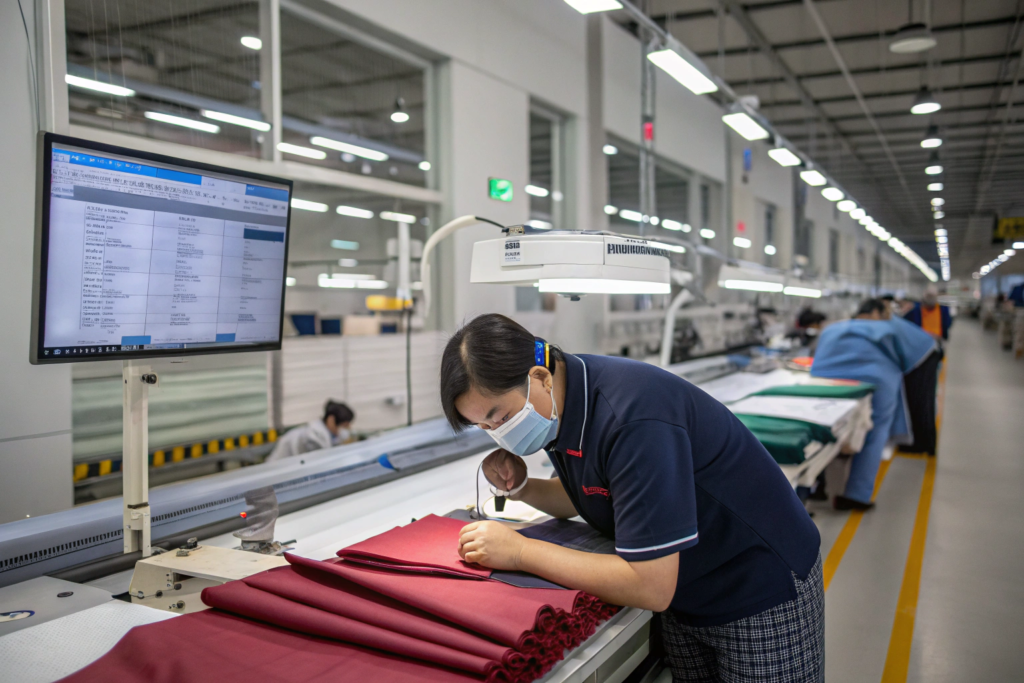
The quality control advantage of direct manufacturer relationships is the hardest ROI component to quantify but often the most valuable in practice. When a quality issue arises—a dye lot that’s slightly off-specification, a hand feel that doesn’t match the approval sample, a shrinkage rate that exceeds the tolerance—the resolution path depends entirely on who controls the production process. A trader receiving a quality complaint contacts the factory, relays the buyer’s concern, and waits for the factory’s response. The trader can’t inspect the production line to identify the root cause. They can’t adjust the dye formulation or modify the finishing parameters. They can’t commit to a corrective action plan because they don’t control the corrective actions. Their role is communication, not resolution. A manufacturer receiving the same quality complaint can walk onto the production floor, examine the process parameters that produced the issue, identify the root cause within hours, and implement corrective action immediately. The structural difference between communication-based quality response and control-based quality response determines whether quality issues become relationship-ending crises or relationship-strengthening problem-solving opportunities.
Our direct quality control advantage operates at three levels. First, preventive: our quality system identifies potential issues before they become finished fabric defects because we control and monitor every production step. The inline inspection systems I’ve described in previous articles, the batch testing protocols, the process parameter monitoring—these preventive measures reduce the defect rate that reaches buyers to begin with. Second, responsive: when a quality issue does reach a buyer, our response is direct, fast, and substantive. We don’t relay information; we investigate and resolve. Third, continuous improvement: the quality data from every production batch feeds into process refinement that reduces defect rates over time. Traders lack the production control to implement any of these three quality advantage layers.
How Does Direct Technical Communication Prevent Specification Drift Across Production Runs?
Specification drift—the gradual deviation of a fabric’s characteristics from the approved standard across multiple production runs—is the quality problem that buyers often don’t notice until it’s severe enough to cause returns or complaints. A dye shade shifts slightly from batch to batch. Hand feel changes as fiber sources change. Shrinkage creeps up as finishing equipment wears. Each individual deviation is small enough to pass inspection; the cumulative drift across three or four production runs creates a fabric that no longer matches the original approval. Specification drift is particularly common in trader-intermediated supply chains because the trader doesn’t see the fabric from each production run side-by-side with the original approval standard. They see only the current shipment, and minor deviations escape notice until the buyer compares current production against garments made from earlier fabric lots.
Direct manufacturer relationships prevent specification drift through two mechanisms. First, we maintain the physical approval standards—lab dips, hand feel references, test results—against which every production batch is compared. The comparison happens at our facility, by our quality team, before the fabric ships. A trader can’t perform this comparison because they don’t possess the approval standards and wouldn’t know how to evaluate against them if they did. Second, our production records capture the process parameters that produced the approved fabric, allowing us to reproduce those parameters rather than drifting away from them. When a parameter must change—a dye supplier discontinues a formulation, a fiber lot shows different characteristics—our technical team evaluates the impact on finished fabric characteristics and adjusts other parameters to compensate. A trader can’t perform this adjustment because they don’t control the production process and often don’t understand the technical relationships between process parameters and finished fabric characteristics.
The specification drift prevention enabled by direct manufacturer technical communication saved one of our brand partners from what would have been a damaging quality failure. In 2024, a fiber lot change affected the dye uptake of their custom navy cotton twill. Our dyeing team identified the change during pre-production testing, adjusted the dye formulation to compensate, and produced fabric that matched the original approval within Delta E 0.6. The brand never knew there was a potential issue because the direct technical communication prevented it from becoming an actual issue. Under a trader-intermediated relationship, the fiber lot change would have gone undetected until the finished fabric showed visible shade variation from previous production. The importance of direct technical communication between manufacturers and brands in preventing specification drift across textile production runs highlights a quality advantage that intermediation inherently cannot provide.
What Production Transparency Do Manufacturers Offer That Traders Cannot?
Production transparency is the capability that most clearly distinguishes manufacturers from traders, and it’s the capability that matters most for brands whose customers demand supply chain accountability. A trader can provide documentation—certificates, test reports, compliance statements—that they’ve received from the factory. They can forward audit reports and quality data. What they cannot provide is real-time visibility into production status, unmediated access to the production team, or the ability to verify claims through direct observation. The trader’s transparency is limited to what the factory chooses to share, filtered through the trader’s communication, delivered on the trader’s timeline.
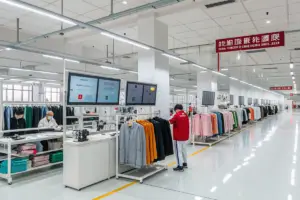
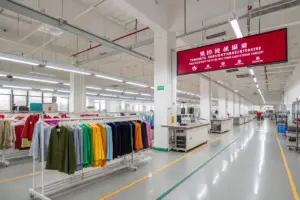
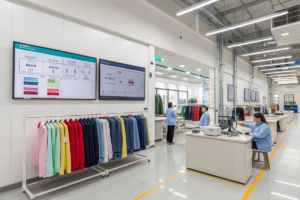
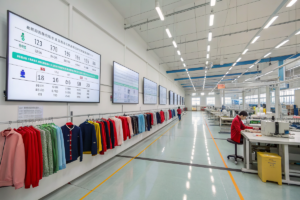
Our production transparency capabilities include real-time order tracking through our digital platform, where buyers see their order status updated as it moves through production stages—greige production, dyeing, finishing, inspection, packaging, shipping. The platform shows quality test results as they’re completed, not as a final batch summary but as individual test data points that the buyer can review immediately. Buyers can schedule live video tours of their production in progress, walking through our facility via tablet-carried video call to see their specific fabric on our machines. They can speak directly with the quality engineer testing their fabric, the colorist matching their shade, the production manager scheduling their shipment. This transparency isn’t a marketing claim—it’s operational reality enabled by our digital infrastructure and our willingness to let buyers see our production process without pre-arrangement or preparation.
The transparency difference has practical consequences for brand compliance. A children’s wear brand that requires proof that their fabric contains no harmful chemicals can review our test results as they’re generated, trace the test to the specific production batch, and verify the testing laboratory’s accreditation. A sustainability-focused brand can track their organic cotton from farm certification through yarn spinning, knitting, and finishing, with chain-of-custody documentation at each step. A brand facing a consumer complaint about fabric quality can review the production records and test data for the specific batch that produced the complained-about garment. None of these capabilities are possible through a trader who doesn’t control production and can only forward documentation that the factory chooses to share. The production transparency capabilities that direct manufacturers can provide versus the documentation-forwarding that traders are limited to represents a fundamental difference in supply chain accountability.
What Speed-to-Market Advantages Do Direct Factory Relationships Create?
Speed-to-market in the textile industry is determined by decision-making speed, not just production speed. A factory can produce fabric quickly, but if every decision requires relay through a trading intermediary—buyer asks trader, trader asks factory, factory answers trader, trader answers buyer—the communication cycles add days or weeks to the development and production timeline. Direct manufacturer relationships eliminate these communication relays, compressing the timeline at every stage from initial inquiry through final delivery.
The speed advantage manifests most dramatically during the development phase. A buyer working through a trader sends a fabric inquiry, waits for the trader to identify potential factories, waits for the trader to request and receive samples, reviews the samples the trader forwards, requests modifications, and waits through another communication cycle. A buyer working directly with us sends the same inquiry, receives samples from our library within 48 hours, discusses modifications directly with our R&D team in real-time video calls, and moves from concept to approved sample in 2-3 weeks versus 6-8 weeks through a trader. The development cycle compression alone can determine whether a collection reaches market during its optimal selling window or arrives late to diminished demand.
Production speed advantages compound the development speed advantages. When a buyer needs to adjust an order—change a delivery date, modify a color quantity, add a rush replenishment—the direct communication path allows decisions and implementation within hours rather than days. During the 2025 peak season, a brand partner realized their retail sell-through was 40% above forecast and needed 5,000 meters of additional fabric within three weeks. They contacted us directly on a Tuesday morning. By Tuesday afternoon, we’d confirmed raw material availability and allocated production capacity. Production started Thursday. Fabric shipped the following Friday. The three-week turnaround—from emergency call to fabric delivery—is only possible when the buyer communicates directly with the production decision-makers.
How Does Direct R&D Collaboration Accelerate Fabric Development Cycles?
Direct R&D collaboration is the speed advantage that’s hardest for traders to replicate because it requires the manufacturer’s technical team to understand the buyer’s commercial objectives, not just their technical specifications. When a buyer tells a trader "I need a fabric that feels like this sample but weighs 20% less and costs 15% less," the trader translates that request into a specification document and sends it to factories. The factories interpret the specification through their own technical lens, produce samples that meet the written specification, and send them back through the trader. The process is sequential, document-driven, and slow.
When a buyer tells our R&D team the same thing in a direct conversation, the dialogue that follows is fundamentally different. Our technical team asks questions the specification document doesn’t capture: "When you say ‘feels like this sample,’ which specific aspect of the hand feel matters most—the surface smoothness, the drape, or the compression? When you say ‘costs 15% less,’ is that target for the fabric price alone or for the total landed cost including shipping and duties? Are there performance characteristics you’re willing to trade off to hit the weight and cost targets, or are all current performance specs non-negotiable?" The questions identify the buyer’s true priorities, enabling our team to propose solutions that achieve the underlying commercial objective even if they differ from the initial technical request.
The collaborative development cycle for a typical new fabric takes 4-6 weeks with direct R&D collaboration versus 10-14 weeks through a trader. The time savings come from parallel rather than sequential work—our team begins exploring fiber options, yarn constructions, and finishing approaches simultaneously while discussing priorities with the buyer—and from the elimination of communication delays at each approval stage. More importantly, the direct collaboration produces better results because the technical team understands the commercial context of the development. A trader-mediated development produces fabric that meets the written specification. A direct-collaboration development produces fabric that achieves the buyer’s market objective, which isn’t always the same thing. The direct R&D collaboration model for accelerating textile development cycles demonstrates that speed and quality improvements reinforce each other when technical teams understand commercial context.
What Decision-Making Speed Differences Exist Between Factory-Direct and Trader Channels?
The decision-making speed differential is the simplest and most overlooked advantage of direct manufacturer relationships. Every decision in a fabric sourcing relationship—pricing, production scheduling, quality issue resolution, specification changes—requires someone with authority to commit resources. In a trader-intermediated relationship, that someone is at the factory, not at the trader. The trader can communicate, recommend, and facilitate, but they cannot decide. The decision must travel from buyer to trader to factory decision-maker, and the answer must travel back through the same path. Each relay adds time, and each relay introduces opportunity for miscommunication.
In a direct manufacturer relationship, the buyer communicates directly with the decision-maker. When a buyer asks us for a price concession on a large order, I can decide during the same conversation, referencing our actual production costs and margin requirements, without consulting any intermediary. When a buyer needs a production slot reserved for an urgent order, our production manager can review the schedule in real-time and commit capacity immediately. When a quality issue requires a decision about rework versus acceptance with discount, our quality manager can make the determination based on production capability and cost data that a trader never sees.
The decision-making speed difference matters most during disruptions. When the Suez Canal blockage occurred in 2021, buyers working through traders waited days for information about their shipment status while traders scrambled to contact factories and shipping lines. Our direct buyers received same-day updates from our logistics team, who were in direct contact with the shipping line and could provide real-time vessel tracking data. The decision about whether to wait for canal clearance or arrange alternative routing was made collaboratively within 24 hours. Trader-intermediated buyers waited a week for the same decision process. The decision-making speed comparison between factory-direct and trader-intermediated textile sourcing channels demonstrates that structural communication efficiency determines responsiveness when market conditions change rapidly.
What Long-Term Partnership Value Do Manufacturers Provide That Traders Cannot?
The long-term partnership value of manufacturer relationships is the ROI component that’s hardest to quantify on a spreadsheet but most significant over a multi-year relationship. A trader relationship is inherently transactional. The trader’s business model depends on maintaining information asymmetry between buyer and factory, which means the trader has a structural incentive to prevent the buyer and factory from developing a direct relationship. The trader can never fully align their interests with the buyer’s interests because the trader’s margin depends on the buyer not knowing what the factory charges. This structural misalignment limits how deep the partnership can become.
A manufacturer relationship has no such structural limitation. Our interests align with our buyers’ interests: we want them to sell more fabric, at better margins, to more satisfied end consumers, because their success drives our production volume and relationship stability. We can share cost data transparently because our margin isn’t hidden in an intermediation fee—it’s built into our ex-factory pricing that the buyer sees directly. We can collaborate on innovation because our R&D investment benefits both parties when the resulting fabric succeeds in the market. We can weather market disruptions together because our relationship isn’t dependent on maintaining information barriers.
The long-term value manifests in accumulated advantages that compound across seasons. A buyer who has worked with us for three years has fabrics developed specifically for their market, production processes optimized for their quality standards, a dedicated account team that understands their business context, and a track record of successful problem-solving that creates confidence when new challenges arise. None of these advantages are available through a trader relationship because the trader can’t commit factory resources to buyer-specific optimization without revealing the factory’s identity and risking disintermediation. The inherent tension between trader business models and deep buyer-factory partnerships limits the long-term value that intermediated relationships can create compared to direct manufacturer partnerships.

How Do Manufacturer Innovation Investments Benefit Existing Buyers Over Time?
Manufacturer innovation investment is the long-term value driver that most directly impacts buyer competitiveness. Every yuan we invest in fiber engineering, process optimization, quality systems, and digital infrastructure benefits every buyer who sources from us—not through increased prices to recover the investment, but through improved fabrics, faster development, more consistent quality, and greater supply chain transparency. The innovation investment is amortized across our total production volume, spreading the cost across hundreds of buyers rather than charging individual buyers for custom development.
Our BAMSILK development illustrates the innovation investment dynamic. We invested approximately $380,000 over three years developing the fiber engineering, spinneret technology, and finishing processes that created the "silkier than silk" performance I described in a previous article. No single buyer funded this development. No single buyer receives exclusive access. Every buyer who sources BAMSILK benefits from the investment through access to a differentiated fabric that commands premium retail pricing and generates positive consumer reviews. A trader cannot make equivalent innovation investments because traders don’t control production and can’t amortize R&D costs across production volume. The best a trader can do is identify innovative factories and connect buyers to them—but the connection is limited by the trader’s incentive to prevent direct buyer-factory relationships.
The innovation investment dynamic extends across our entire operation. Our digital fabric library, our inline quality inspection systems, our production archival system for accurate re-orders, our sustainability certifications and carbon accounting infrastructure—these capabilities required significant investment that benefits every buyer without per-buyer charges. A new buyer joining us in 2026 accesses the accumulated innovation investment of twenty years, immediately benefiting from capabilities that would have cost millions to develop independently. The manufacturer innovation investment model for creating long-term buyer value demonstrates how production-scale amortization of development costs creates capabilities that trading intermediaries cannot replicate.
What Supply Chain Stability Do Direct Factory Relationships Provide During Market Disruptions?
Supply chain stability during disruptions is the partnership value that buyers most appreciate after they’ve experienced a disruption without it. The global textile supply chain faces regular disruptions—raw material price spikes, shipping capacity shortages, port congestion, geopolitical trade restrictions, public health emergencies—that stress buyer-supplier relationships. During these disruptions, the structural difference between manufacturer-direct and trader-intermediated relationships determines which buyers maintain supply continuity and which experience costly interruptions.
Manufacturer-direct relationships provide stability through three mechanisms. First, production allocation priority: when capacity is constrained, we allocate available production to direct long-term buyers before accepting new or trader-intermediated orders. This isn’t favoritism; it’s rational business continuity management. The buyers who provide stable, predictable demand receive stable, predictable supply because the relationship economics support mutual commitment. Second, transparent problem-solving: when a disruption affects a buyer’s order—a raw material shortage, a shipping delay, a production equipment failure—direct communication enables collaborative solution development. The buyer knows the real situation, contributes to the solution, and can adjust their downstream plans accordingly. Trader-intermediated buyers receive filtered information that often minimizes problems until they become crises. Third, mutual accommodation: when disruptions create unexpected costs, manufacturer-direct relationships can negotiate cost-sharing arrangements that preserve both parties’ viability. Traders facing unexpected costs typically pass them through with additional margin, because their business model doesn’t support absorbing cost increases.
During the 2024 Red Sea shipping disruption, our direct buyers received real-time routing alternatives, cost comparisons for Cape of Good Hope versus air freight options, and collaborative decision-making about the optimal balance of speed and cost. Trader-intermediated buyers received delayed information, limited options, and premium surcharges that included trader margin on top of actual cost increases. The supply chain stability advantages of direct manufacturer relationships during market disruptions result from structural alignment of interests and communication transparency that intermediation inherently impedes.
Conclusion
The ROI of choosing Shanghai Fumao over a trading company isn’t a single percentage or dollar figure—it’s a compounding set of advantages that accumulate across every order, every season, and every year of the relationship. The immediate price advantage of eliminating trader margin averages 25-40%, translating to direct cost savings that improve your gross margin from the first order. The quality advantage of direct technical communication, specification drift prevention, and root-cause problem-solving reduces the hidden costs of quality failures that erode brand reputation and generate returns. The speed advantage of direct decision-making and R&D collaboration compresses development cycles and enables faster response to market demand changes. The long-term partnership advantages of aligned interests, shared innovation investment, and supply chain stability create value that no trader-intermediated relationship can match because the trader’s business model structurally prevents the transparency and commitment that deep partnerships require.
The trader-versus-manufacturer decision ultimately depends on what you value in a supplier relationship. If you value transactional convenience, limited commitment, and the ability to switch suppliers easily, a trader may serve your needs adequately. If you value cost transparency, quality accountability, technical collaboration, and a partnership that strengthens over time, a direct manufacturer relationship delivers ROI that extends far beyond the fabric price on your invoice. The buyers who have switched from traders to direct relationships with us consistently report that the financial savings, while significant, are not the most valuable benefit. The most valuable benefit is the confidence that comes from knowing exactly who makes your fabric, exactly how it’s made, and exactly who to call when something needs to change.
If you’re currently sourcing fabric through a trading company and want to understand what a direct manufacturer relationship would mean for your specific situation, I invite you to start a conversation. Our Business Director Elaine can discuss your current fabric specifications, provide direct pricing comparisons, and explain how our quality, speed, and partnership advantages would apply to your product categories. Reach her at elaine@fumaoclothing.com. The traders have had their turn. Let’s see what direct partnership can do for your business.