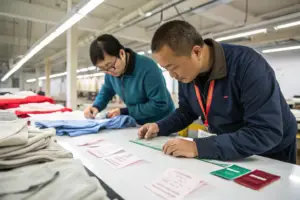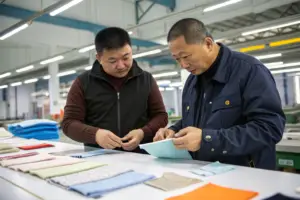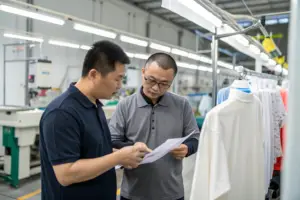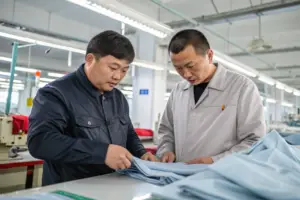
You have the designs finalized. You have your brand launch date circled on the calendar. You are ready to go. You email the factory with one burning question: "When will my clothes be ready?" The answer you get will determine everything—your marketing campaign, your wholesale appointments, your cash flow. A CEO of a new women's wear line recently told me, "I thought making the samples was the hard part. I had no idea the bulk production timeline was so long. It almost ruined my launch."
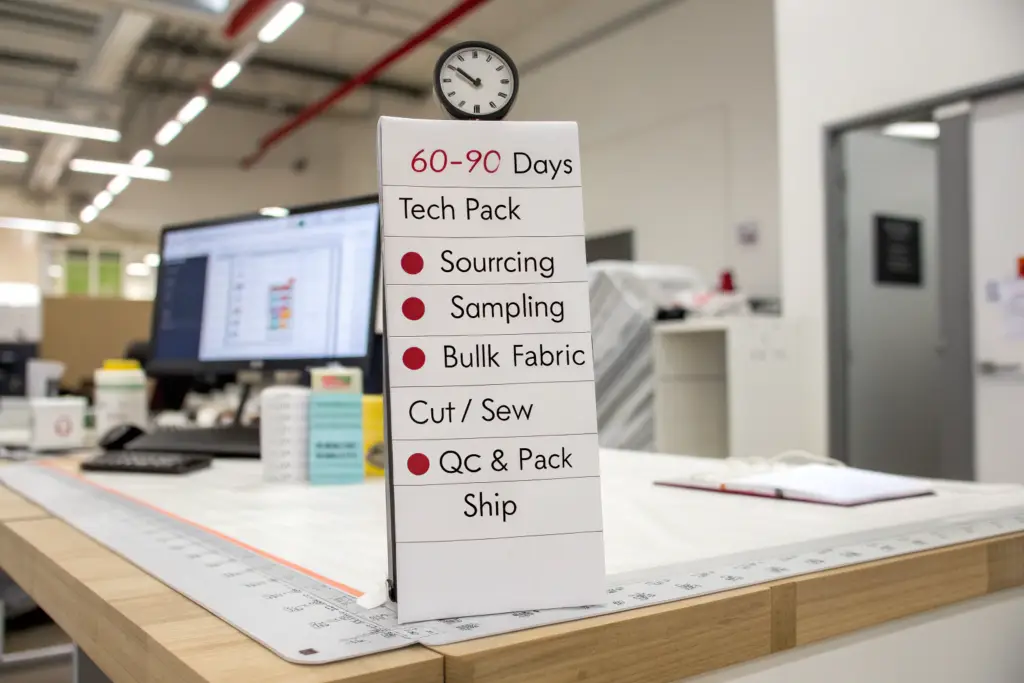
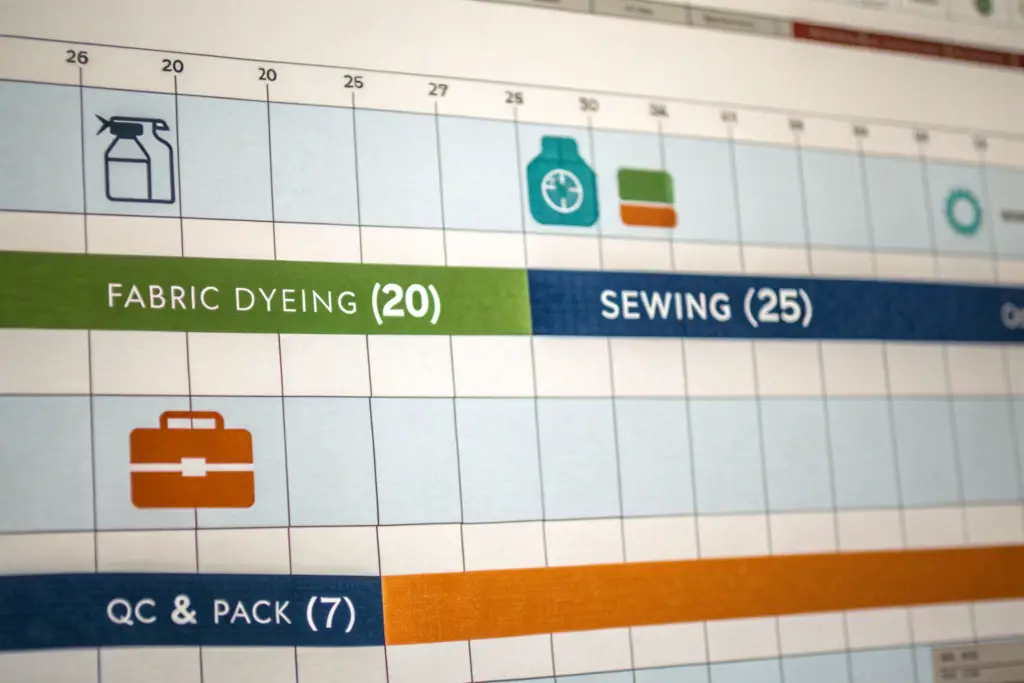
A full production run for a fully custom private label collection typically takes 60 to 90 days from the moment the Pre-Production Sample is approved. This timeline includes Bulk Fabric Dyeing & Finishing (15-25 days), Trim & Component Procurement (10-20 days, running in parallel), Bulk Cutting & Sewing (20-30 days), and Finishing, Quality Control & Packing (5-7 days). Transit time via ocean freight adds another 21-35 days.
At Shanghai Fumao, we live and breathe these timelines. We know that in the world of fashion, a week's delay can mean a season's lost profit. Let me break down the realistic, step-by-step timeline for a private label production run, so you can plan your collection launch with precision and confidence. There are no shortcuts to top quality, but there is a clear, predictable path.
What Is the Realistic Timeline from Sample Approval to Bulk Delivery?
The clock starts ticking the moment you send that email: "PP Sample Approved! Please proceed with bulk." It is tempting to think the goods will be ready in a few weeks. After all, you saw how fast they made the sample. But bulk production is an entirely different beast. It involves ordering thousands of yards of fabric, coordinating dozens of operators, and managing a complex supply chain.
The realistic, best-case timeline from PP Sample Approval to Ex-Factory (goods ready to ship) is 8 to 10 weeks (40-50 business days). This timeline assumes there are no major delays in fabric delivery, no quality holds, and the client provides timely approvals for any in-process checks like the TOP sample.
I recall a men's wear brand that planned their entire launch around a 30-day production timeline they had seen advertised by a "fast fashion" factory. When they came to us, we explained that a quality, fully custom woven shirt program takes time. We walked them through the Gantt chart. They adjusted their launch date by three weeks. The production ran smoothly, and the goods arrived exactly when we said they would. Their launch was successful. The alternative—rushing a low-quality factory—would have been a disaster. Understanding the real timeline is the first step to a stress-free launch. This is the discipline of supply chain planning.
Why Does Fabric Dyeing and Finishing Take 2-4 Weeks?
This is often the single longest pole in the tent. Once you approve the bulk order, we place the order with the mill. The mill does not have your specific color of fabric sitting on a shelf. They have greige fabric (raw, undyed cloth). They must schedule your order into their dyeing queue. The process involves:
- Dye Bath Preparation: Mixing the exact chemical formula for your Pantone color.
- Dyeing: Running the greige fabric through large industrial dyeing machines.
- Finishing: Applying any required softeners, wrinkle-resistant treatments, or mechanical finishes (like brushing or compacting).
- Quality Control: The mill checks the final fabric for shade consistency and defects.
This entire process takes a minimum of 15 working days, and often 20-25 days during peak seasons. There is no way to rush this without compromising color matching and quality. This is why we push for fast lab dip approvals. Every day you delay approving the lab dip is a day added to this timeline.
How Do Trim Lead Times Run in Parallel with Fabric?
While the fabric is being dyed, our sourcing team is not idle. They are procuring the trims: the buttons, zippers, labels, and hangtags. This process runs in parallel. This is a critical project management technique that compresses the overall timeline.
A custom engraved button might take 15 days to produce. A branded zipper pull might take 20 days. By ordering these items the day the bulk order is confirmed, they arrive in our warehouse around the same time the bulk fabric is ready. This prevents a scenario where the cut fabric sits idle for a week, waiting for a missing zipper. This is the kind of proactive supply chain management that ensures on-time delivery.
What Factors Can Expedite or Delay the Production Schedule?
The 60-90 day timeline is a realistic baseline. But it is not set in stone. Several factors can either shave weeks off the schedule or add weeks of unexpected delay. Understanding these variables allows you to make strategic decisions about your collection.
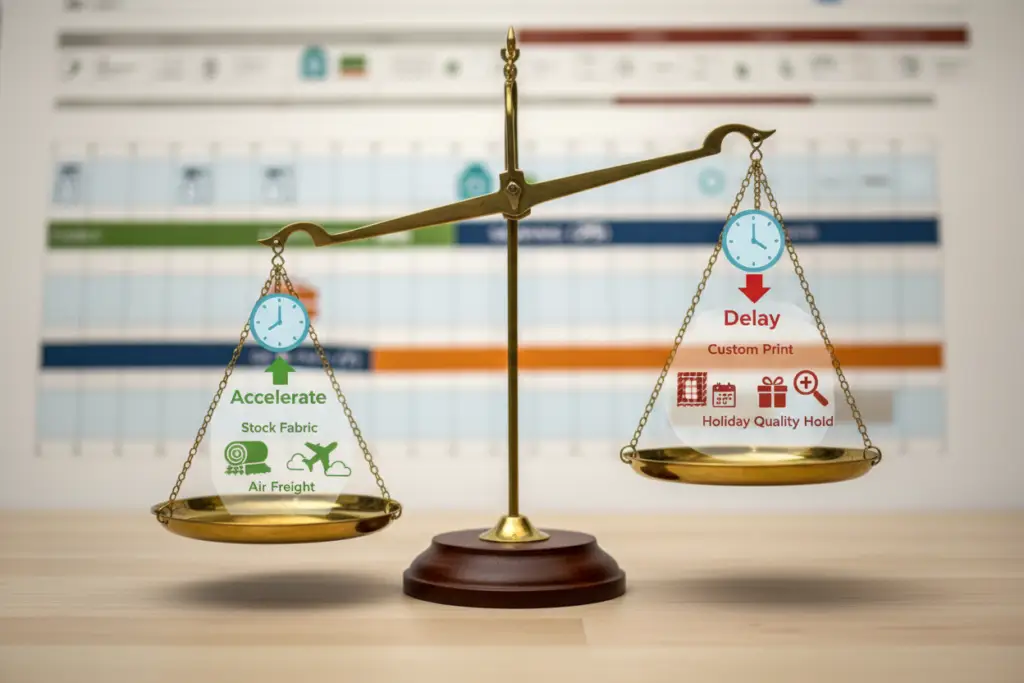
Factors that can expedite the timeline include: using Stock Fabrics instead of custom dye lots (saves 15-20 days), choosing simpler garment construction, and opting for Air Freight instead of ocean shipping (saves 3-4 weeks, but at a high cost). Factors that cause delays include: complex custom prints or washes, the Chinese New Year holiday shutdown, and failing a Quality Control inspection, which requires rework.
A distributor we work with always launches new styles using stock fabric color options first. This allows him to get products to market in 45-50 days. Once a style proves to be a best-seller, he then places a larger reorder with a custom-dyed color. He accepts the longer lead time for the reorder because he knows the demand is there. This is a brilliant, risk-mitigated approach to managing production timelines.
How Does "Stock Fabric" vs. "Custom Dye" Impact the Timeline?
This is the single biggest lever you can pull. As discussed in MOQs, Stock Fabric is ready-made and sitting on a shelf. We can order it and have it in our factory in 2-5 days. Custom Dye fabric requires the full 15-25 day mill process. Choosing a beautiful stock color can cut 3-4 weeks off your total production time. For a brand trying to hit a tight market window, this is a strategic advantage.
What Is the Impact of Chinese New Year on Production?
This is a critical, non-negotiable calendar event for anyone manufacturing in China. Chinese New Year (CNY) is a 2-3 week national holiday, usually in late January or February. Factories shut down completely. Workers travel home. The entire supply chain goes silent.
In the weeks before CNY, factories are in a frenzy to finish orders and ship them before the holiday. Quality can sometimes suffer during this "rush." In the weeks after CNY, factories slowly ramp back up as workers trickle back. We always advise our clients to avoid shipping dates that fall in the 3 weeks immediately following CNY. We build the holiday shutdown into our production calendars a year in advance. Planning around CNY is essential for reliable delivery.
How Does the "TOP" Sample Fit into the Bulk Timeline?
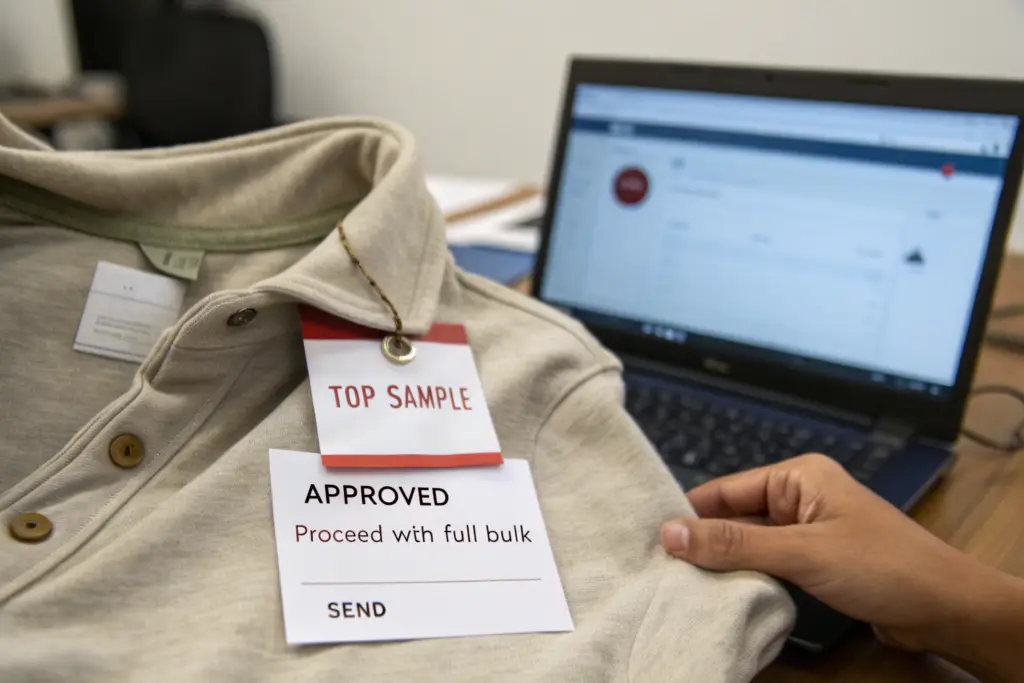
We have mentioned the TOP (Top of Production) Sample before, but its placement in the timeline is critical. It is the final quality gate before the factory goes into full-scale bulk sewing. It is a moment that can either confirm the schedule or cause a delay.
The TOP Sample is pulled from the very first batch of bulk production (usually the first 10-20 units). It is express shipped to the client for final approval. This process adds 3-5 days to the timeline for shipping and review. However, this is a critical investment of time that prevents the much larger delay of discovering a systemic issue after 5,000 units are already sewn.
I recall a women's wear order where the TOP sample revealed that the bulk fabric had a slightly different drape than the PP sample, causing the hem to hang unevenly. We caught it at 20 units, not 2,000. We were able to adjust the hemming process for the rest of the run. The delay was 2 days for the adjustment. If we had skipped the TOP sample, the delay would have been 2 weeks to re-hem 2,000 units. The TOP sample is an insurance policy for your timeline.
What Happens If the TOP Sample Is Rejected?
If the TOP sample has a significant issue, the bulk sewing line is stopped immediately. This is a serious event. We conduct an urgent root cause analysis with the client. Is it a fabric issue? A cutting issue? A sewing issue? We present a corrective action plan and a revised timeline.
This is a difficult conversation, but it is better to have it at the TOP stage than after the container has sailed. A rejection at the TOP stage might delay the shipment by 1-2 weeks. A quality failure discovered upon arrival in the US can destroy an entire season. This is why we are so rigorous about this checkpoint.
How Long Does the Final Quality Control and Packing Phase Take?
Once the bulk sewing is complete, the garments move to the finishing department. This is a multi-step process that takes 5-7 business days:
- Trimming: All loose threads are clipped.
- Pressing/Steaming: The garments are pressed to remove wrinkles from sewing and handling.
- Final AQL Inspection: Our QC team conducts the statistical audit (as discussed in quality control). This takes 1-2 days.
- Folding, Polybagging, and Carton Packing: The goods are prepared for shipment according to your specifications.
This phase cannot be rushed without sacrificing presentation and quality. A wrinkled, poorly packed garment cheapens the entire brand experience.
How Does Fumao Communicate and Manage the Production Timeline?
You should not be left guessing where your order is in the pipeline. The anxiety of the unknown is a major pain point in manufacturing. A professional clothing manufacturer provides a clear, consistent communication cadence that keeps you informed at every stage.
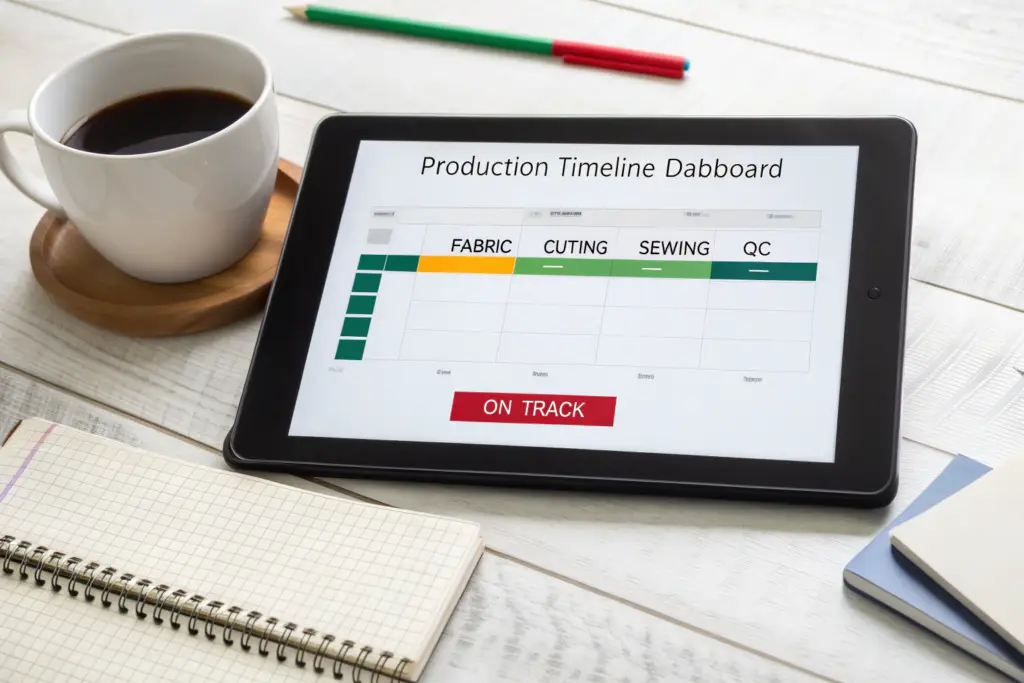
Fumao manages the timeline through a shared Production Calendar and a weekly "Milestone Update" email from your dedicated Project Manager. After the PP sample is approved, you receive a detailed Gantt chart with key dates. Each week, you receive a status update against that plan, along with "Live from the Floor" photos showing your actual goods in production.
This is the transparency we have discussed in other articles. It transforms the 60-90 day wait from a black hole of anxiety into a predictable, observable process. You see the fabric arrive. You see the cutting start. You see the sewing progress. This visibility allows you to coordinate your own marketing, warehouse staffing, and sales activities with confidence. This is the foundation of a trusted B2B partnership.
What Is Included in the Weekly Milestone Update?
Our weekly update email is a concise, structured report. It is designed to be read in 60 seconds. It includes:
- Overall Status: A single line: "On Track," "At Risk," or "Delayed."
- Progress by Phase: "Fabric Dyeing: 100% Complete. Cutting: 50% Complete."
- Photos: 3-5 candid photos from the cutting table and sewing line.
- Next Milestone: "Expect TOP Sample shipment by Friday, Oct 12."
- Action Items: Any pending approvals needed from you.
This disciplined communication eliminates the need for you to send "check-in" emails. The information is proactively provided. This is how we deliver efficient communication and peace of mind.
How Do We Handle Timeline Changes or Unexpected Delays?
No factory is immune to unexpected delays. A typhoon might delay a fabric shipment. A critical machine might break down. The measure of a great partner is not the absence of problems, but how they are handled.
If a delay occurs, our policy is Immediate, Proactive Notification. We do not wait for you to ask. We email you the moment we know there is an issue. We explain the root cause, the impact on the timeline (e.g., "Ship date will move from Nov 10 to Nov 14"), and the steps we are taking to mitigate the delay. This honesty allows you to manage your own stakeholders. It builds trust and demonstrates accountability.
Conclusion
A full production run for a private label collection is a journey measured in weeks, not days. It is a complex orchestration of materials, labor, and logistics that requires patience and expert management. The 60 to 90-day timeline from sample approval to delivery is not a sign of inefficiency. It is the necessary time required to produce garments of lasting quality and value.
At Shanghai Fumao, we do not promise unrealistic timelines. We promise predictable, well-managed ones. We provide the visibility, the communication, and the proactive problem-solving that allows you to plan your brand's growth with confidence. Understanding the "why" behind the timeline empowers you to make smarter decisions about fabric choices, launch dates, and inventory management.
If you are planning your next collection and need a clear, reliable production timeline, let's talk. Our Business Director, Elaine, can walk you through a sample Gantt chart for your specific project and explain how we manage every phase to ensure on-time delivery. Please email Elaine at: elaine@fumaoclothing.com.