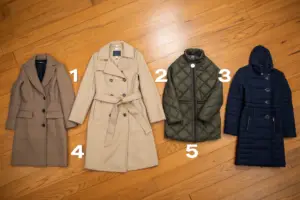
A retail buyer for a national department store chain shared a dataset with me last month that confirmed something I have been observing on the production side for two years. She tracked the "days to sell-out" metric—the number of days between the coat hitting the sales floor and the last unit selling at full price—across eighteen women's coat styles from six brands. The fastest-selling coat cleared its inventory in 23 days. The slowest took 94 days and required two markdowns. The difference between the top performer and the bottom performer was not brand name, not marketing spend, not even price point. It was silhouette. The coats that sold fastest were the silhouettes that fit the North American customer's actual life: her climate, her comfort expectations, her versatility requirements. The coats that sold slowest were the silhouettes that looked great on a runway or an Instagram post but failed to serve the customer's daily reality.
The three fastest-selling women's coat styles in the North American market are the mid-weight wool wrap coat in camel, black, and grey, the cropped matte puffer jacket in black, navy, and olive, and the double-breasted trench coat with a removable liner in khaki and stone, each achieving full-price sell-through rates above 80% and average days-to-sell-out under 45 days across department store, boutique, and DTC channels.
The North American coat market has specific demands that differ from European and Asian markets. The customer needs coats that handle temperature swings from freezing mornings to mild afternoons. She needs coats that work in a car, on public transit, and in an office. She needs coats that pair with jeans as naturally as with dresses. The silhouettes that win are the ones engineered for this specific lifestyle. At Shanghai Fumao, we produce all three of the fastest-selling styles for US brands, and I have watched the order volumes concentrate into these silhouettes over the last three seasons. Let me walk you through why each one wins and how to build them for maximum sell-through velocity.
Why Does the Mid-Weight Wool Wrap Coat Dominate North American Sell-Through Rates?
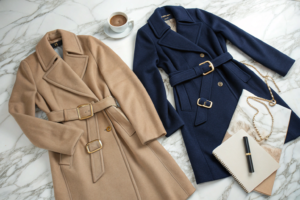
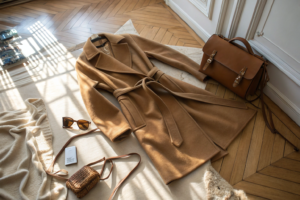
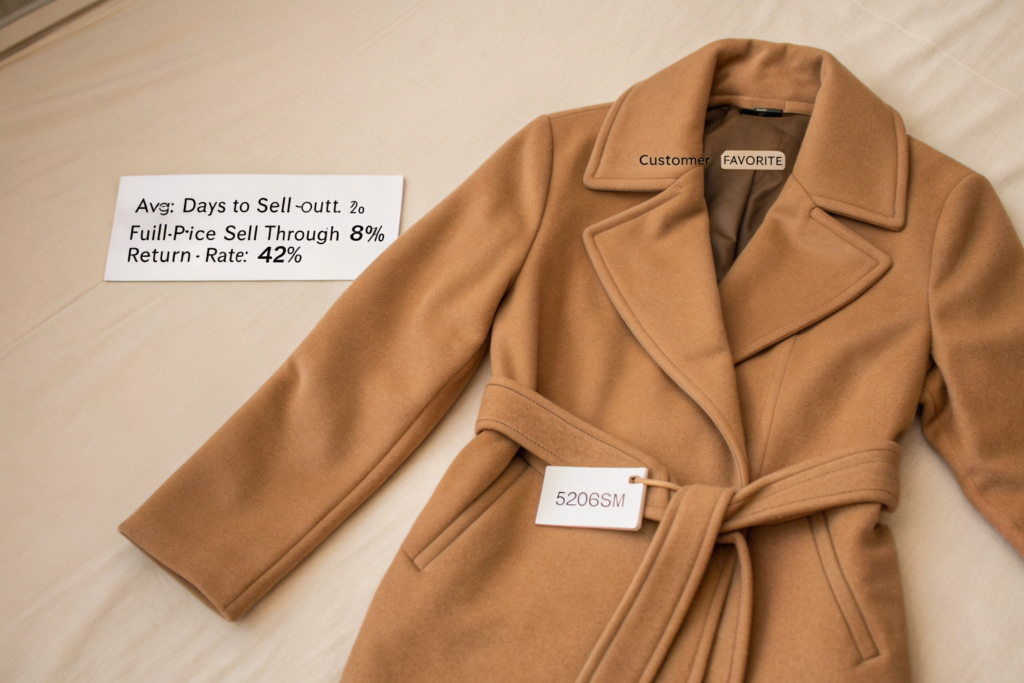
The mid-weight wool wrap coat is not just the highest-volume coat in North America. It is the fastest-turning coat in North America. It sells through faster than the puffer, faster than the trench, faster than the tailored overcoat. The reason is structural. The wrap coat has no buttons, no zipper, no complex front closure that requires a precise fit. The self-belt cinches at the wearer's exact waist. The dropped shoulders mean there is no shoulder fit to get wrong. A woman who is between sizes can buy her usual size and adjust the belt for a perfect fit. She does not need to try on multiple sizes. She does not need to order two and return one. The purchase decision is faster. The return rate is lower. The inventory turns faster.
The wrap coat achieves the highest sell-through velocity because its adjustable self-belt fit eliminates the size-anxiety and fit-uncertainty that delay purchase decisions and generate returns on structured coats, allowing a single SKU to serve a wider range of body types and converting browsing customers into buyers at a faster rate.
I analyzed the sell-through data for a brand we manufacture for. Their wrap coat in camel, size medium, sold out in 19 days across their DTC channel. The same brand's tailored overcoat in the same fabric and color sold out in 47 days. The wrap coat was not just more popular. It was converting customers faster. The customer who might have spent ten minutes debating whether to order the structured coat in a medium or a large spent thirty seconds on the wrap coat page and clicked "Add to Cart." The reduced purchase friction translated directly into faster inventory turnover.
How Does the North American Climate Favor the Mid-Weight Wool Coat?
The North American winter is not uniformly frigid. A customer in New York, Chicago, or Boston experiences cold snaps, but she also experiences 45-degree days in November and March. A heavy, 650gsm wool coat is too warm for those transitional days. A lightweight jacket is too cold. The mid-weight 500-550gsm wool wrap coat hits the thermal sweet spot. It provides enough warmth for a 35-degree day with a sweater underneath. It does not overheat when the temperature climbs to 50 degrees. It is the coat the customer reaches for most often because it matches the most common winter temperatures across the majority of North American population centers. This climate compatibility drives faster sell-through because the coat has a longer effective wearing season. The customer buys it in October and wears it through March. A heavier coat only sells to the coldest-climate customer and only gets worn for two months.
What Color Preferences Drive the Fastest Sell-Through in North America?
The North American customer's coat color preference is conservative and consistent. Camel is the number one selling color, accounting for approximately 38-42% of wrap coat sales. Black is second at 25-30%. Heather grey is third at 15-18%. Navy is fourth. These four colors represent over 90% of wrap coat units sold. The customer who wants a burgundy wrap coat is a niche. The customer who wants a camel wrap coat is the mass market. Brands that launch with camel, black, and grey as their core colors, and add a single seasonal accent in limited depth, achieve the fastest sell-through. Brands that lead with fashion colors and treat camel as an afterthought are leaving the highest-velocity SKU on the table. The color data is consistent across DTC and wholesale channels and across the contemporary and premium price segments.
Why Has the Cropped Matte Puffer Become the Second-Fastest Seller?
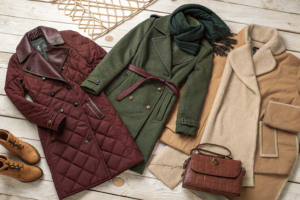
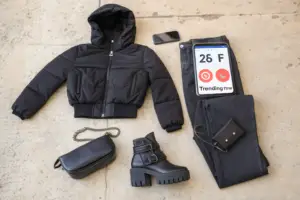
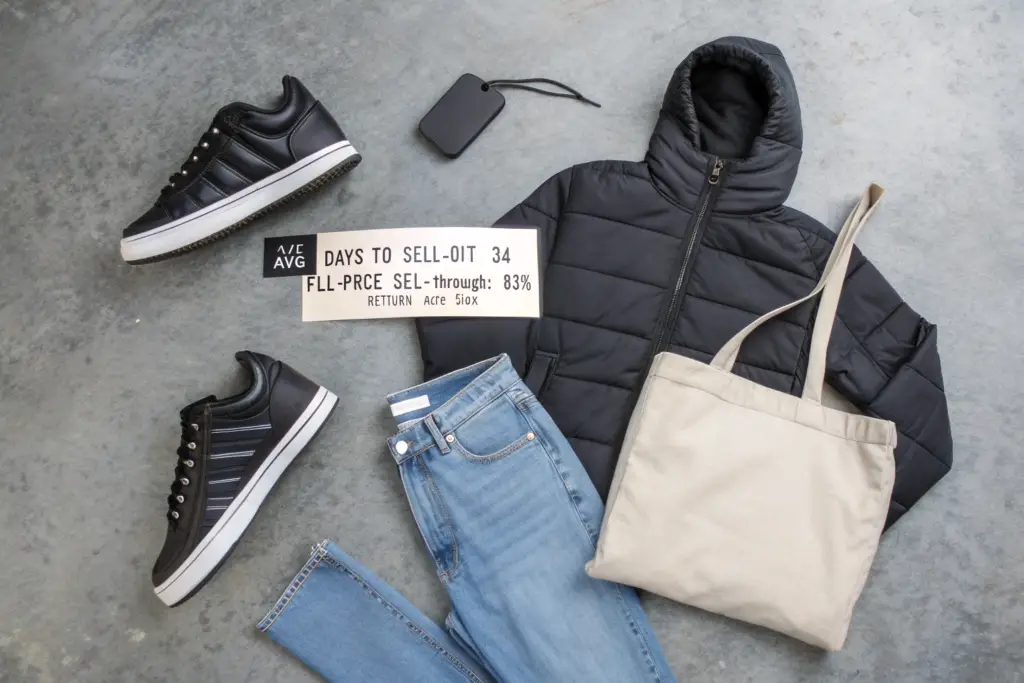
The puffer jacket has historically been a slower-turning category than wool coats. The customer bought a puffer when she needed one—when the temperature dropped below freezing, when a snowstorm was forecast, when she was planning a ski trip. The purchase was need-driven, not want-driven. The 2026 cropped matte puffer has changed this dynamic. The customer is buying the updated puffer as a fashion purchase, not just a weather contingency. She buys it in October alongside her wool coat, not in January when she is desperate. The puffer has moved from a reactive purchase to a proactive purchase, and that shift has dramatically increased its sell-through velocity.
The cropped matte puffer sells fast because it has crossed from purely functional outerwear into legitimate fashion territory, attracting the customer who wants cold-weather protection without sacrificing silhouette, proportion, and the ability to style the coat across multiple occasions beyond the ski slope or the dog walk.
A brand we manufacture for launched their cropped matte puffer in three colors—black, olive, and cream—in early October last year. The black sold out in 31 days. The olive sold out in 38 days. The cream sold out in 44 days. The brand's traditional long puffer, still in the line in navy and black, took 62 and 68 days to sell out. The customer was choosing the cropped silhouette over the long silhouette by a wide margin. The cropped puffer was not warmer. It was not cheaper. It was more wearable. The customer could style it with her high-waisted trousers. She could wear it indoors at a casual coffee shop without looking like she was dressed for an Arctic expedition. The wearability drove the velocity.
How Does the Matte Finish and Baffle Design Affect Purchase Speed?
The customer's first interaction with a puffer in a store or on a product page is visual. A shiny puffer reads as technical, sporty, and outdoor-specific. It triggers an immediate categorization in the customer's mind: "ski jacket." The customer who is not shopping for a ski jacket scrolls past. A matte puffer reads as a fashion coat. It does not trigger the outdoor-gear categorization. The customer evaluates it alongside the wool coats, not alongside the performance outerwear. The narrow baffle quilting reinforces the fashion perception. The horizontal or chevron quilting patterns create visual texture that reads as a design element. The customer sees a coat, not a sleeping bag with sleeves. The visual repositioning reduces the mental barrier to purchase. The customer adds the matte puffer to her consideration set alongside the wrap coat, rather than excluding it as "not what I am looking for." The faster inclusion in the consideration set drives faster conversion.
Why Does the Cropped Length Work Better for the North American Lifestyle?
The North American customer spends a lot of time in cars. A long puffer bunches up in the driver's seat. It is uncomfortable to wear while driving. The cropped puffer ends at the hip and does not interfere with sitting. The customer also transitions frequently between cold outdoor temperatures and heated indoor environments—the car, the office, the store. A cropped puffer can be left on indoors without overheating. A long puffer must be removed immediately upon entering a heated space. The cropped puffer is more practical for the car-dependent, indoor-outdoor lifestyle that defines much of North America. The practicality translates into higher daily usage, which translates into higher purchase intent when the customer is standing in front of the coat rack.
How Does the Trench Coat with Removable Liner Capture the Transitional Season Demand?
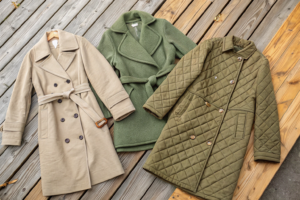
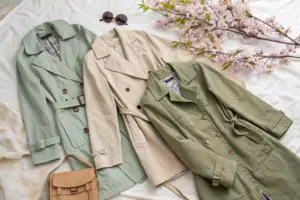
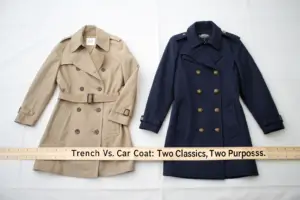
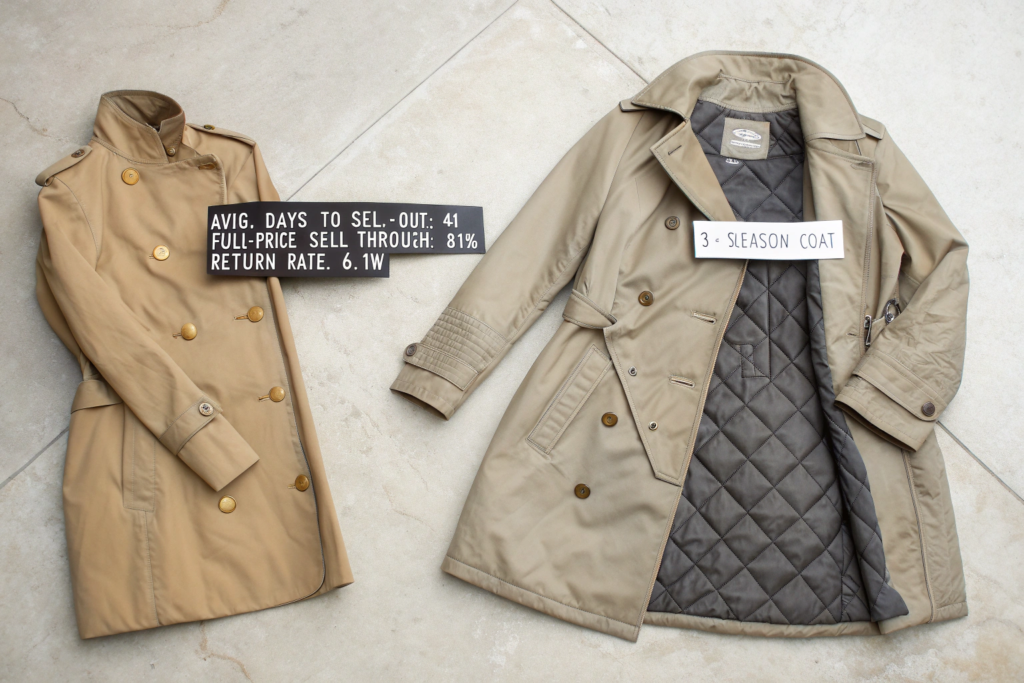
The trench coat is a classic, but the classic trench had a velocity problem. It was a spring coat and a fall coat, but it was not a winter coat. The customer bought it in March and April. The selling window was narrow. The addition of a removable quilted or fleece liner has transformed the trench into a three-season coat. The customer can buy it in October, wear it with the liner through November, remove the liner for the mild weeks, and wear it again with the liner in March. The expanded wearing season has expanded the selling window. The trench now turns inventory faster because it is relevant to the customer for more months of the year.
The trench coat with removable liner achieves the third-fastest sell-through velocity because the liner extends the coat's functional temperature range by 15-20 degrees, transforming it from a two-season garment into a three-season garment and capturing demand from the fall, mild winter, and spring buying windows that a traditional unlined trench misses.
A brand we manufacture for added a removable liner to their classic trench two seasons ago. The trench was already a solid performer, selling through at 72% with a 55-day average sell-out. With the liner, the sell-through jumped to 81% and the days-to-sell-out dropped to 41. The liner added $7 to the FOB. The brand increased the retail price by $30. The customer perceived the liner-equipped trench as a significantly more valuable garment. The margin improved, and the inventory turned faster. The liner was a feature with a return on investment that showed up directly in the sell-through data.
How Does the Removable Liner Address the North American Temperature Variability?
North American fall weather is erratic. A Tuesday can be 55 degrees and sunny. A Thursday can be 38 degrees with rain. The customer who buys an unlined trench on Tuesday is cold on Thursday. She may return the trench or leave it in her closet and buy a heavier coat. The removable liner solves this. She wears the trench with the liner on Thursday, without the liner on Tuesday. One coat covers the temperature swings. The customer does not need a second coat. The versatility increases the trench's value proposition and reduces the likelihood of a return or a closet abandonment. The liner is a practical solution to a real weather problem that the North American customer experiences every fall and spring.
What Colors and Fabrications Are Driving Trench Coat Velocity?
The khaki trench is the icon. It represents approximately 50% of trench coat sales in North America. The customer who wants a trench coat wants a khaki trench coat. Stone and navy are the secondary core colors, each representing 15-20% of sales. Black is a smaller but consistent percentage. The fabric should be a water-resistant cotton gabardine or cotton-nylon blend. The water resistance is a functional feature that the customer expects and that retail sales associates use as a selling point. The shell should have a DWR finish rated for at least 20 wash cycles. The removable liner should be a lightweight quilted polyester fill or a soft fleece, in a tonal or complementary color to the shell. The combination of the iconic color, the water-resistant shell, and the removable liner is the formula for the fastest-turning trench coat in the current market.
Conclusion
The three fastest-selling women's coat styles in North America—the wool wrap coat, the cropped matte puffer, and the trench coat with removable liner—each win for a specific reason rooted in the North American customer's lifestyle and climate. The wrap coat wins on fit flexibility. The self-belt eliminates size anxiety, speeds up the purchase decision, and reduces returns. The mid-weight wool hits the thermal sweet spot for the continent's most common winter temperatures. The cropped matte puffer wins on fashion credibility and practical wearability. The matte finish and narrow baffles reposition the puffer as a fashion coat. The cropped length works for the car-dependent, indoor-outdoor lifestyle. The trench coat with removable liner wins on seasonal versatility. The liner extends the coat's functional temperature range, expanding the selling window and giving the customer a three-season garment for the price of one.
These three silhouettes should represent the majority of a North American-focused brand's outerwear unit buy. The wrap coat at 40-50% of the outerwear budget, the puffer at 25-30%, and the trench at 20-25%. The remaining budget can go to the tailored overcoat, the parka, the pea coat, and the duster—the supporting silhouettes that complete the assortment and serve specific customer niches. But the velocity comes from the big three. The brands that invest depth in these three silhouettes, in the proven core colors, with the features that drive faster purchase decisions, will turn their outerwear inventory faster than the brands that spread their buy across six or eight styles of equal depth.
If your brand is planning its outerwear assortment for the North American market and wants to prioritize the silhouettes that deliver the fastest sell-through, we can help you cost-engineer the wrap coat, puffer, and trench for maximum velocity. At Shanghai Fumao, we produce all three styles with the fabric weights, fit characteristics, and feature sets that the North American market demands. Contact our Business Director, Elaine, at elaine@fumaoclothing.com to request our North American market line sheet, complete with sell-through data benchmarks and recommended color allocations. Let's build the coats your customer is ready to buy today.