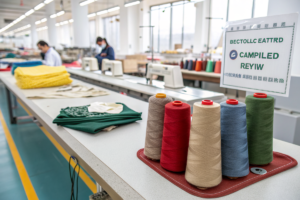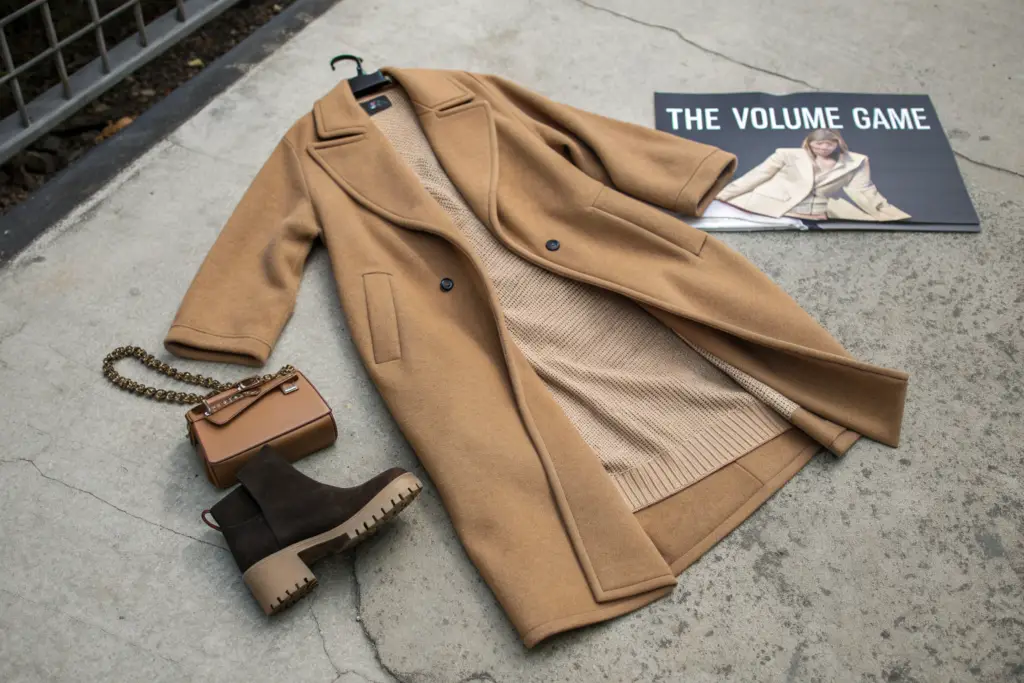
I was walking through a trade show in Shanghai last March when I noticed something that stopped me. Every mannequin, in every booth, across twenty different brands, was wearing the same silhouette: an oversized coat. The shoulders dropped. The sleeves swallowed the wrists. The hem hung somewhere between mid-calf and ankle. The coats were not sized up versions of regular coats. They were designed, cut, and proportioned to be intentionally, dramatically oversized. I turned to the buyer walking beside me—a woman who has been buying outerwear for a major department store for twenty-five years—and asked her what she thought. She said, "This is not a trend. This is a decade-long pendulum swing finally reaching its peak. We have been squeezing women into body-con everything for fifteen years. The customer is done. She wants to feel held, not squeezed."
Oversized women's coats are dominating 2026 because they represent the culmination of three converging macro-forces: the post-pandemic permanent shift toward comfort-driven fashion that prioritizes physical ease, the fashion cycle's pendulum swing from the constrictive body-con silhouettes of the 2010s toward generous, enveloping proportions, and the "quiet luxury" movement's emphasis on volume, drape, and material quality as status signifiers over visible branding.
The oversized coat is not a seasonal novelty. It is the physical manifestation of a cultural mood. The woman who spent years pulling on tight blazers and body-con dresses has re-evaluated what comfort means to her. The oversized coat wraps her in fabric. It allows her to layer without restriction. It makes her feel protected, not exposed. At Shanghai Fumao, our production of oversized women's coats has increased 210% over the last three seasons. The brands that placed their orders early are selling through at full price. The brands that dismissed oversized as a fad are scrambling to catch up. Let me walk you through why this silhouette is winning and how to build it correctly.
How Did the Post-Pandemic Comfort Shift Permanently Reshape Coat Proportions?
The pandemic lockdowns ended years ago. The psychological imprint of living in soft clothes for two years has not. The woman who discovered that she could be comfortable all day, every day, did not happily return to restrictive garments. She found new versions of comfort. She found trousers with elastic backs that looked like tailored slacks. She found knit blazers that moved like sweaters. And she found oversized coats that wrapped her in warmth without demanding she hold her stomach in. The oversized coat is the outerwear extension of a comfort revolution that has permanently recalibrated what women expect from their clothing.
The oversized coat satisfies the consumer's demand for a garment that provides physical ease without sacrificing visual intentionality; its generous cut allows unrestricted arm movement for driving and device use, accommodates heavy under-layers without pulling at the seams, and creates a sensory experience of being cocooned that consumers now associate with premium quality.
A brand we manufacture for conducted a customer survey last season. They asked women why they chose the oversized coat over a standard-fit coat from the same brand, in the same fabric. The top three answers were: "I can layer a thick sweater underneath without feeling stuffed," "It does not pull across my back when I drive," and "It feels like a hug." These are not fashion answers. They are physical comfort answers. The customer is not buying the oversized coat because a magazine told her it is trendy. She is buying it because it solves physical discomforts that standard-fit coats create. The fashion cycle validated the silhouette, but the comfort function is what drives the repeat purchase.

Why Did the Consumer's Relationship with Physical Restriction Change So Fundamentally?
The body-con silhouette of the 2010s—tight sheath dresses, skinny trousers, fitted blazers, structured coats with defined waists—required the wearer to accommodate her body to the garment. The garment dictated the posture. The oversized silhouette reverses this relationship. The garment accommodates the body. The body dictates how the garment falls. This reversal is psychologically powerful. The woman who has spent two years wearing clothes that served her comfort is unwilling to return to clothes that demand her discomfort. The oversized coat is the emblematic garment of this new power dynamic. It serves the wearer. The wearer does not serve it. The consumer psychology of comfort is a significant area of study, and insights on the post-pandemic apparel market are regularly published by analysts at The Business of Fashion.
How Does the Oversized Coat's Functionality Support Modern Daily Life?
The modern woman's day involves a car, a phone, a laptop, a tote bag, possibly a child. A fitted coat restricts the arm movement needed to steer, type, reach, and carry. It pulls at the shoulder seam. It strains at the upper back. The oversized coat, with its dropped shoulder and generous sleeve circumference, eliminates these restriction points. The coat moves with the wearer's body through the full range of daily motion. The functionality is not a marketing claim. It is a pattern-making reality. The dropped shoulder seam sits below the natural shoulder point, allowing the arm to move without tension at the attachment point. The deeper armhole allows the coat to be worn over a chunky knit without binding. The generous sweep at the hem allows the coat to fall open gracefully when walking, rather than pulling at the hip. These are not aesthetic decisions. They are ergonomic solutions to the physical demands of modern life.
How Does the "Quiet Luxury" Movement Amplify the Oversized Silhouette?
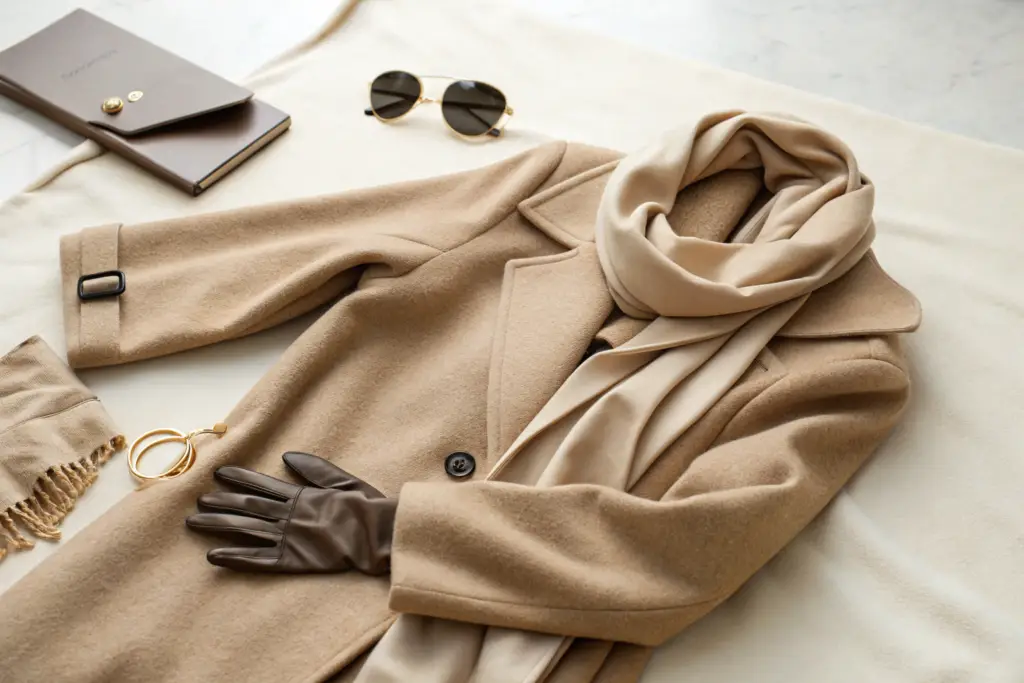
Quiet luxury is the dominant aesthetic code of the mid-2020s. It rejects logos, flashy hardware, and obvious branding. It communicates status through fabric quality, cut precision, and generous material usage. The oversized coat is the ultimate quiet luxury garment. It uses significantly more fabric than a standard coat—often 3.5 to 4 meters compared to 2.5 to 3 meters. That extra meter of wool or cashmere is a silent announcement of value. The consumer who understands the language of luxury reads the oversized coat not as a casual slouchy piece, but as an expression of material abundance. The coat does not need a logo because the volume of the fabric is the logo.
The oversized coat is the perfect vehicle for quiet luxury messaging because its silhouette requires premium fabric in larger quantities than a fitted coat, and its lack of visible branding forces the consumer to evaluate the garment on drape, hand feel, and material quality—the exact attributes that luxury brands use to justify premium pricing.
A premium brand we manufacture for launched an oversized cashmere-blend coat last season at a $695 retail price. The coat had no visible branding. The label was hidden inside the interior pocket. The coat sold out in four weeks, mostly to customers who had previously purchased the brand's logo-heavy accessories. The brand's creative director told me the oversized coat attracted a different customer—an older, wealthier, more fashion-literate customer who had been ignoring the brand's logo pieces. The oversized coat opened a new customer segment.
Why Does Excess Fabric Volume Signal Luxury Status More Effectively Than Logos?
Logo-driven luxury signals that the wearer spent money on a recognizable brand. Fabric-driven luxury signals that the brand spent money on the garment's construction. The two signals appeal to different audiences. The logo appeals to the consumer who wants others to know what she bought. The fabric volume appeals to the consumer who wants to feel the quality herself and trusts that those who matter will understand without being told. The oversized coat is the purest expression of fabric-driven luxury. The extra fabric in the body, the deep sleeves, the generous lapels—all of these are expensive to produce. The consumer who invests in an oversized coat from a premium brand is paying for the material, not the marketing. The cultural analysis of this shift in luxury signaling is well-documented by fashion journalists at publications like The Business of Fashion.
How Should Brands Position Oversized Coats to Capture the Quiet Luxury Consumer?
The positioning must be material-first. The product page should not lead with "Trendy Oversized Fit." It should lead with the fabric: "Oversized Coat in 100% Italian Cashmere," "Generous Wrap Coat in Double-Faced Wool." The photography should emphasize drape—show the coat in motion, falling in deep folds. The copy should use words that describe sensory experience: enveloping, weighty, soft, substantial. The branding should be invisible or nearly invisible. A small tonal logo on the interior pocket or a subtle emboss on a single button. The customer who is spending $500-plus on an oversized coat wants the garment to speak for itself. The brand that lets the fabric do the talking wins this customer.
What Pattern-Making and Sizing Challenges Do Oversized Coats Present?
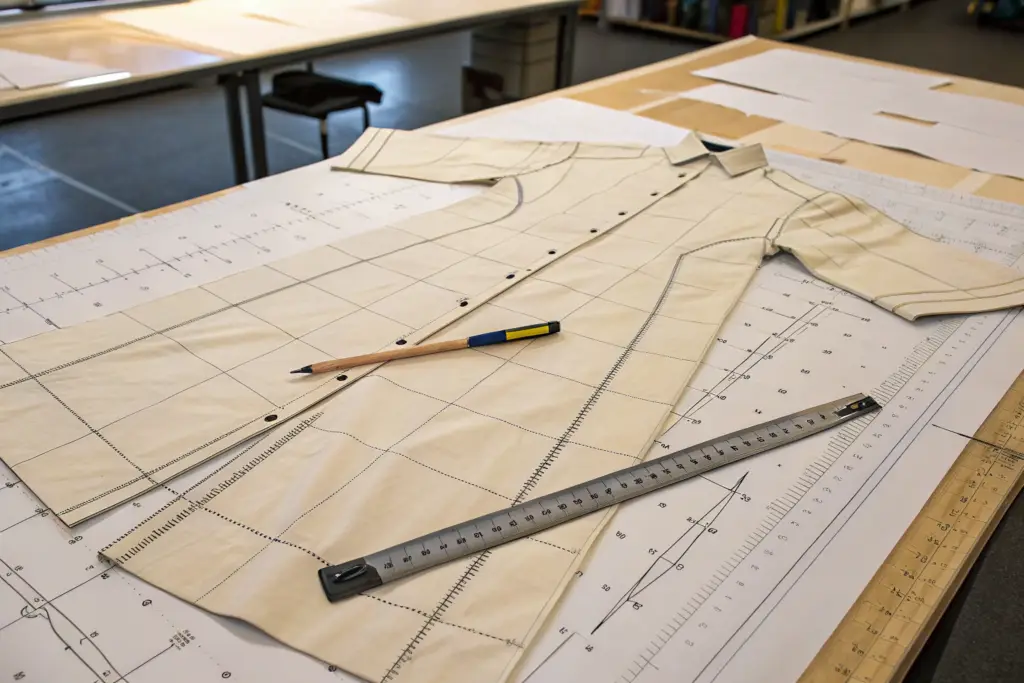
An oversized coat is not a size XL standard coat. This is the most common mistake brands make when developing their first oversized style. They take a standard size medium pattern and grade it up two sizes. The result is a coat that is big in the wrong places. The shoulders are too wide. The armholes are too deep. The sleeve length is too long. The coat looks like a child wearing her mother's clothes. A true oversized coat is designed from the base size pattern with intentionally adjusted proportions. The shoulder point is dropped. The sleeve cap is adjusted for the deeper armhole. The body is lengthened to maintain the intended proportion on a shorter frame. The design is oversized by intention, not by grading error.
Proper oversized coat pattern-making requires dropping the shoulder point by 3 to 5 centimeters, deepening the armhole by 2 to 3 centimeters, extending the sleeve cap height to match, adding volume to the body circumference while maintaining the original neck and shoulder fit so the coat stays on the body, and adjusting the hem length to ensure the oversized proportion reads as intentional rather than ill-fitting.
I audited a brand's oversized coat sample last year, and I caught this exact problem. The brand had graded up a standard pattern. The coat was enormous through the neck and shoulders. It slid off the fit model's shoulders when she moved. The sleeve cuffs hung past her fingertips. The coat looked cheap. We re-cut the sample from our oversized base pattern. The neck and shoulder fit stayed true to the brand's standard size medium. The volume was added below the shoulder, through the body and sleeve. The sleeve length was adjusted so the cuff hit at the wrist bone, with the intentional excess volume draping above it rather than extending past the hand. The second sample looked like a $600 coat. The first sample looked like a factory error.
Why Is the Shoulder and Armhole Design the Critical Technical Decision?
The shoulder is where an oversized coat succeeds or fails. If the shoulder seam sits at the natural shoulder point and the body is simply widened, the coat will pull and strain when the arm moves. The volume will be in the wrong place. The correct approach is to drop the shoulder seam below the natural shoulder point, extending the shoulder line by 3 to 5 centimeters depending on the desired oversize effect. The armhole must be deepened proportionally to allow the arm to move without pulling the body of the coat. The sleeve cap must be re-engineered to fit the deeper, wider armhole. These three adjustments—shoulder drop, armhole depth, and sleeve cap shape—must be made together. An error in one will cause fit problems across all three. This is advanced pattern-making that requires an experienced outerwear specialist. The technical resources for garment pattern engineering are extensive, and organizations like The Association of Sewing and Design Professionals provide education on advanced pattern techniques.
How Should Sizing Be Communicated to Prevent Customer Confusion?
An oversized coat is designed to fit oversized. A customer who normally wears a size medium should purchase a size medium in the oversized coat. The medium will fit her with the intended oversized proportions. If she sizes down to a small to get a more fitted look, the coat will be too small in the neck and shoulders, where the pattern is still cut to standard sizing. The brand must communicate this clearly on the product page and in retail training materials. "This coat is designed with an oversized fit. Order your usual size for the intended look." A size chart that shows the actual garment measurements, not body measurements, can help the customer understand the intentional volume. The customer who receives the coat in her usual size, tries it on, and sees that it matches the model imagery will keep it. The customer who sizes down and receives a coat that is too tight in the shoulders will return it.
How Should Brands Style and Merchandise Oversized Coats for Maximum Sell-Through?
The oversized coat requires a different merchandising approach than a fitted coat. A fitted coat can be styled on a mannequin or a model and the customer immediately understands the silhouette. The oversized coat can look shapeless or intimidating if styled incorrectly. The customer needs to see how the volume works with the rest of her wardrobe. She needs to see it belted, open, and draped. She needs to see it with slim bottoms and with wide bottoms. She needs to see that the coat is a versatile canvas, not a one-look statement.
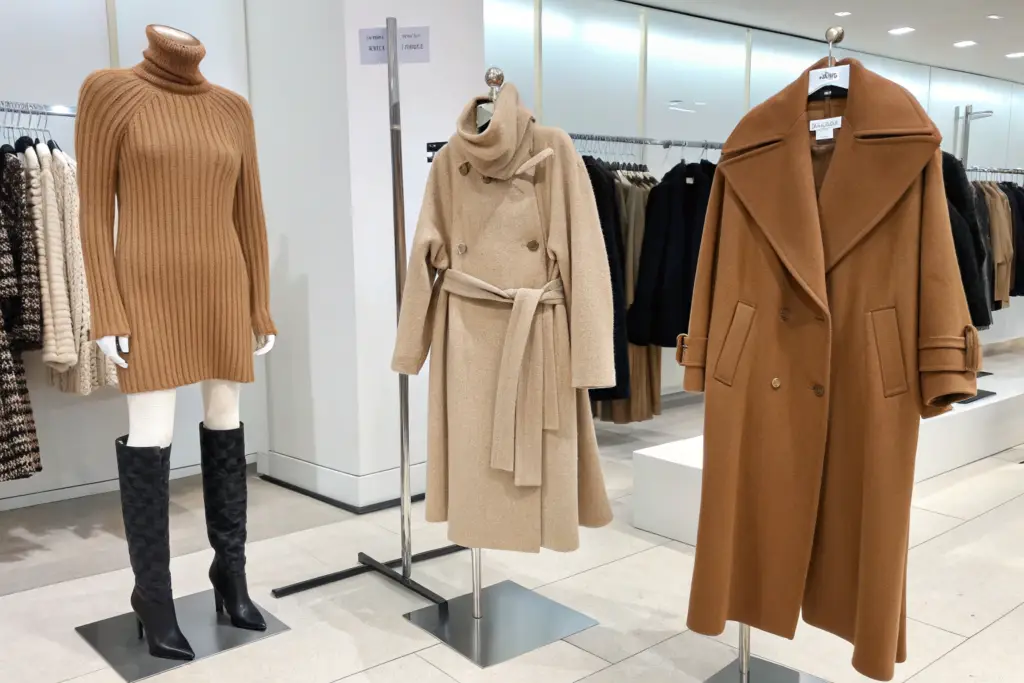
Effective oversized coat merchandising uses three distinct styling demonstrations: worn open over slim-fit layers to emphasize the volume contrast, belted at the waist to show that the silhouette can be cinched for a more defined shape, and draped over the shoulders as a cape for a fashion-forward editorial look, giving the customer permission to wear the coat in multiple ways and increasing her perceived value.
A brand we manufacture for created a simple visual merchandising guide for their wholesale accounts. The guide was a single laminated card showing three ways to style the oversized coat. Stores that used the guide sold through their oversized coat inventory 22% faster than stores that did not. The guide gave retail associates a simple script: "This coat works open for an effortless look, belted if you want more shape, or draped over your shoulders for evening." The customer who might have been intimidated by the volume was given permission to control it. The belt was the psychological safety net. The customer knew she could cinch the coat if the full volume felt like too much.
Why Is the "Volume Contrast" Styling Principle Essential for Oversized Coats?
An oversized coat worn over oversized clothing creates a shapeless, overwhelming silhouette. The eye has no reference point. The customer looks like she is drowning in fabric. The oversized coat works because of contrast. The volume of the coat against the slimness of what is worn underneath. A fitted knit dress, a slim trouser, a narrow skirt—these provide the visual anchor that makes the coat's volume look intentional rather than accidental. The styling principle is: the outer layer is oversized, the inner layer is fitted. The contrast creates the silhouette. The brand that shows the oversized coat styled over a voluminous sweater and wide-leg trousers in its e-commerce photography will generate returns. The brand that shows it over a slim base layer will generate sales.
How Should E-Commerce Photography Capture the Oversized Silhouette?
The oversized coat must be photographed in motion. A static front-and-back shot on a white background does not communicate how the coat moves, drapes, and flows. The customer needs to see the coat walking, turning, and being worn. Video content is essential. A 15-second loop of the model walking toward the camera, the coat opening and closing with her stride, communicates the dynamic drape that makes the oversized coat desirable. Detailed shots of the fabric weight, the dropped shoulder seam, and the interior lining build the quality perception. The photography should communicate the sensory experience of wearing the coat—the weight, the movement, the enveloping feel. The brand that invests in motion-based e-commerce content for oversized coats will convert at a higher rate than the brand that relies on static flat lays.
Conclusion
The oversized women's coat is not a fleeting trend that will be out of fashion by next fall. It is the outerwear expression of a deep, structural shift in how women want to feel in their clothes. The shift toward comfort, ease, and physical generosity has been building for years. The oversized coat is simply the garment that delivers those feelings most completely. The quiet luxury movement gave the silhouette cultural permission. The pattern-making discipline gives the silhouette its intentional shape. The styling principles give the customer the confidence to wear it.
Brands that invest in properly engineered oversized coats—with the correct shoulder drop, the correct armhole depth, and the correct styling guidance—will own a category that is still expanding. The brand that simply sizes up a standard pattern and hopes for the best will generate returns and erode customer trust. The difference between an intentional oversized coat and an ill-fitting large coat is technical, not aesthetic.
If your brand is developing oversized coats for the 2026 season and beyond, we have the pattern blocks, the fabric sourcing, and the production expertise to execute the silhouette correctly. At Shanghai Fumao, our oversized coat production volume has given us deep experience with the specific fit and construction requirements of this category. Contact our Business Director, Elaine, at elaine@fumaoclothing.com to request our oversized coat spec sheet and discuss your development timeline. Let's build a coat that feels like a hug and sells like a champion.