About eighteen months ago, a women’s contemporary brand owner sat in my showroom, looking at our standard line sheet of separates. She was frustrated. Her wholesale buyers were telling her the same thing over and over: "We need a story. We need an outfit. We need something that sells together, not just pieces." She picked up one of our classic shorts, then picked up a matching camp shirt we had developed from the same fabric. She held them together. "This," she said. "This is what they want. One price, one hanger, one sale that doubles the transaction value." She placed an order for the set as a single SKU. It became the best-selling item in her wholesale line that season, outperforming every individual short and every individual top she offered. She had stumbled onto a structural truth about the wholesale market.
Classic two-piece sets with matching shorts are the ultimate women’s wholesale offer for 2026 because they solve the fundamental economic equation of retail: they offer the retailer a pre-styled, coordinated outfit that sells as a single, higher-value transaction with a significantly higher dollar margin per sale than a separate top or bottom, while simultaneously providing the consumer with a solution to the pervasive "wardrobe puzzle" of what to wear together, delivering a sense of effortless polish and outfit confidence that a separate purchase cannot replicate.
At Shanghai Fumao, I have watched the demand for matching shorts sets grow from a niche request to a dominant category in our women’s production line. The set is not a new concept, but its emergence as the anchor of a profitable wholesale strategy is a phenomenon of the 2020s. Let me walk you through why this offer works so powerfully for the wholesale buyer.
Why Does a Two-Piece Set Solve the Retailer’s “Transaction Value” Problem?
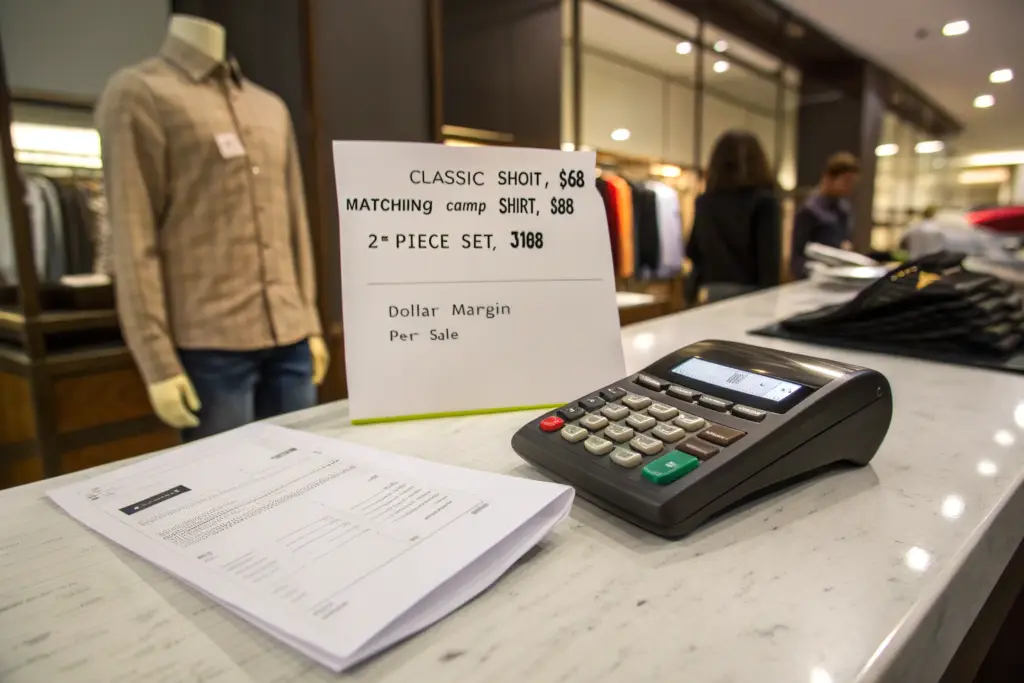
The retail buyer’s primary financial problem is not the margin percentage per item. It is the total margin dollars generated per customer visit, per square foot of retail space, and per transaction. A customer who walks into a store and buys a single pair of shorts at a 65% margin generates a certain amount of profit for the retailer. A customer who buys a matching set generates significantly more profit, because the total transaction value is higher, and the cost of acquiring that customer, whether through advertising, rent, or staffing, is the same.
The two-piece set directly addresses the retailer’s need to maximize the average transaction value by transforming a single-item purchase into a coordinated, multi-item purchase that is presented as a single, intentional product, with the set typically commanding a retail price that is 10% to 15% lower than the sum of the two individual pieces, providing the consumer with a perceived discount, while still generating a significantly higher absolute dollar margin for the retailer than the sale of either piece alone.
How Does the Set Increase the “Dollars Per Square Foot” Metric?
Brick-and-mortar retailers live and die by the sales per square foot metric. Every inch of retail space costs money, and that space must generate revenue. A rack that holds individual shorts generates a certain revenue per square foot. A display that holds matching sets, which sell together at a higher transaction value, generates a higher revenue per square foot. The set improves the productivity of the retailer’s most expensive asset: their physical space.
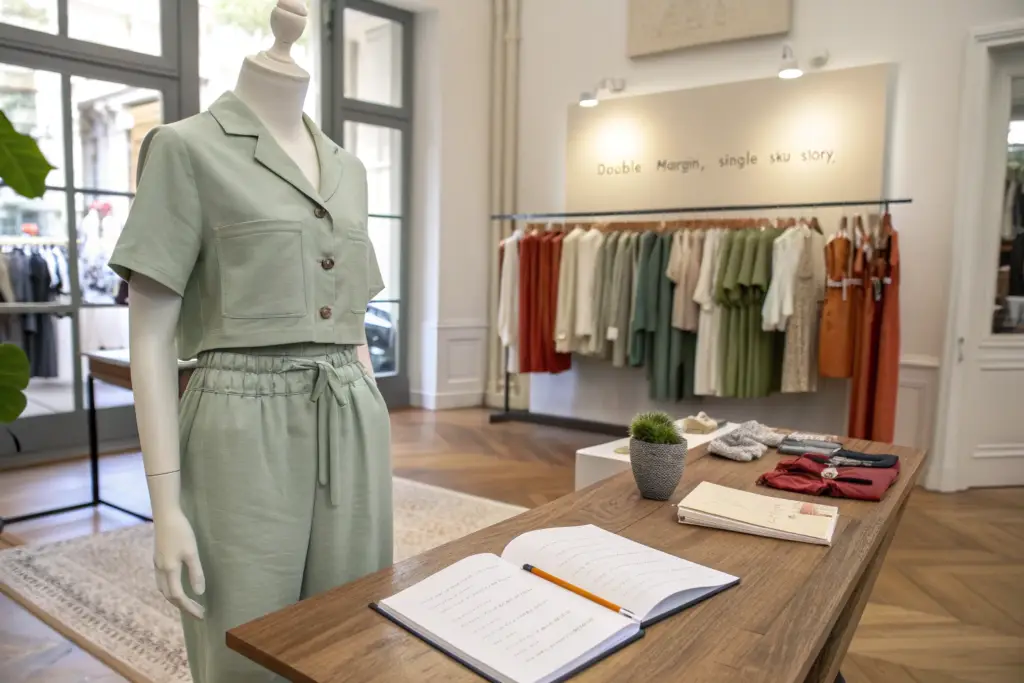
The set also improves the visual merchandising. A coordinated outfit on a mannequin or a display table tells a story. It attracts the customer’s attention. It suggests a complete look. The customer who might have walked past a rack of individual shorts stops at the display of the set. The set sells itself. This visual merchandising and sales per square foot in retail explains the importance of outfit-based displays.
Why Does a Set Offer a Higher Perceived Value to the Consumer?
The consumer is savvy. They understand that buying a set should be a better value than buying the pieces separately. The brand that prices the set at a small discount to the sum of the individual pieces is meeting this consumer expectation and providing a compelling reason to purchase the set rather than just one piece. The consumer feels that they are getting a deal.
The perceived value is not just about the price. It is about the solved problem. The consumer who buys the set knows that the top and the bottom are designed to go together. The color matches perfectly. The proportion is intentional. She does not have to worry about whether the shorts will work with a top from a different brand. The outfit is complete. This peace of mind is a valuable part of the product’s appeal. This perceived value and pricing psychology in fashion retail explains the consumer psychology behind bundled pricing.
How Does a Matching Set Solve the “Wardrobe Puzzle” for the Consumer?
The modern consumer, particularly the female consumer, faces a daily challenge that the fashion industry often ignores: the wardrobe puzzle. She has a closet full of individual pieces, bought from different brands, in different colors, in different fabrics. Putting together an outfit that looks intentional, coordinated, and polished requires time, effort, and a certain level of aesthetic confidence that not everyone possesses. The matching set solves this puzzle instantly.
The matching shorts set solves the consumer’s wardrobe puzzle by collapsing the decision-making process of putting together an outfit into a single, pre-solved choice, providing a guaranteed aesthetic outcome that is coordinated, intentional, and polished, eliminating the risk of a mismatched or poorly proportioned look, and doing so in a way that saves the consumer significant time and mental energy, a benefit that is particularly valued by the busy, modern woman who is the target demographic for this category.
Why Is “Outfit Confidence” a Sellable Benefit?
Many consumers lack confidence in their ability to style themselves. They are uncertain about color combinations, about proportions, about what looks current versus what looks dated. This uncertainty leads to anxiety, to abandoned purchases, and to a closet full of clothes that are never worn. The matching set removes this uncertainty. The designer, the brand, has already made the styling decisions. The consumer does not need to be a stylist. She simply buys the set and wears it. She knows it will look good.
The confidence that comes from wearing a coordinated, intentional outfit is a real, tangible benefit. The consumer feels more put-together, more professional, and more attractive. She is willing to pay a premium for this confidence. The matching set is not just selling clothing. It is selling self-assurance. This consumer psychology of outfit confidence and decision fatigue explores the psychological benefits of simplified dressing.
How Does a Set Serve the “Vacation Packing” Use Case?
The vacation packing use case is one of the strongest drivers of matching set sales. The consumer who is preparing for a trip needs versatile, coordinated outfits that pack easily and that can be worn in multiple combinations. The matching set is the perfect solution. It packs as a single, compact unit. It provides a complete, polished outfit for a dinner, a day of sightseeing, or a resort event. The pieces can also be worn separately, mixed with other items in the suitcase, multiplying the outfit options.
This versatility is a powerful selling point. The brand that markets its matching sets with vacation and resort imagery, and that explicitly calls out the packing benefits in its product descriptions, is tapping into a specific, high-intent consumer need. This vacation and resort wear marketing strategies explains how to market to the travel-oriented consumer.
How Do You Price and Package a Set to Maximize Wholesale Margin?
The matching set is not just a product. It is a margin strategy. The brand that understands how to price, package, and present the set to the wholesale buyer can capture a premium over the sum of the individual pieces, while still offering the retailer and the consumer a compelling value proposition. The key is in the bundling, the pricing, and the presentation.
Maximizing wholesale margin on a two-piece shorts set requires a specific pricing and packaging strategy: bundling the top and the bottom into a single SKU with a single wholesale price that is approximately 10% to 15% lower than the combined wholesale price of the individual pieces, but that still generates a higher absolute dollar margin for the retailer because the cost of the combined unit is lower due to shared fabric, consolidated production, and simplified logistics, and presenting the set as a single, premium, gift-ready unit in coordinated packaging that reinforces the product’s value and eliminates any incentive for the retailer to break the set apart and sell the pieces individually.
Why Should the Wholesale Price Be a Single SKU, Not Two Separates?
The brand that sells the top and the bottom as separate SKUs, even if they are designed to match, is inviting the retailer to buy only the short, or only the top, breaking the set and destroying the coordinated outfit story. The brand that sells the set as a single SKU, with a single wholesale price, forces the retailer to buy the complete outfit. The retailer cannot break the set.
This single-SKU strategy protects the brand’s vision, ensures that the product is presented to the consumer as intended, and maximizes the transaction value for both the brand and the retailer. The retailer buys one item, not two, simplifying their purchasing and inventory management. The consumer buys one item, not two, simplifying their decision. The entire chain is streamlined around the set. This wholesale line sheet and SKU management best practices explains the benefits of bundled SKU strategies.
How Does Coordinated Packaging Seal the Premium Perception?
The presentation of the set is critical to its perceived value. The set should not arrive to the retailer as two separate garments in two separate polybags. It should arrive as a single, coordinated unit, with the top and the bottom folded together and wrapped in a single piece of branded tissue, sealed with a sticker, or secured with a belly band. The packaging communicates that this is a single product, a complete outfit, not two random pieces.
This premium packaging elevates the unboxing experience for the retailer and, ultimately, for the consumer. It reinforces the product’s value and justifies the premium price point. It also discourages the retailer from breaking the set, as the packaging makes it physically and visually a single unit. This apparel packaging strategies to increase perceived value explains the return on investment of premium packaging.
Conclusion
The classic two-piece set with matching shorts is positioned to be the ultimate women’s wholesale offer for 2026 because it solves fundamental problems for every player in the value chain. For the retailer, it increases the average transaction value and the dollars per square foot, directly addressing the financial pressures of physical retail. For the consumer, it solves the wardrobe puzzle, providing a pre-styled, coordinated outfit that eliminates decision fatigue and delivers outfit confidence, a benefit that is particularly valued by the busy, modern woman. For the brand and the wholesaler, it offers a streamlined, single-SKU product that simplifies production, inventory, and logistics while commanding a premium margin.
The set is not a trend. It is a structural evolution of the wholesale model, a recognition that the market rewards solutions, not just products. The brand that builds its 2026 wholesale strategy around the matching shorts set is building on a foundation of proven consumer demand and sound retail economics.
At Shanghai Fumao, I have developed the production capabilities to manufacture matching shorts sets efficiently, with coordinated fabric sourcing, synchronized production timelines, and premium packaging. If you are a brand preparing your 2026 wholesale line and want to explore the potential of the matching set, contact our Business Director, Elaine, at elaine@fumaoclothing.com. Let’s build an offer that your buyers cannot refuse.