You have signed the contract. You have sent the Tech Pack. Now you wait. This is the "black box" phase of private label manufacturing for many new brand owners. Weeks pass. You wonder, "What is happening with my design? Will the first sample look anything like my sketch?" A CEO of a startup told me, "The sampling phase was the most stressful part. I felt like I had thrown my design over a wall and was just hoping for the best."
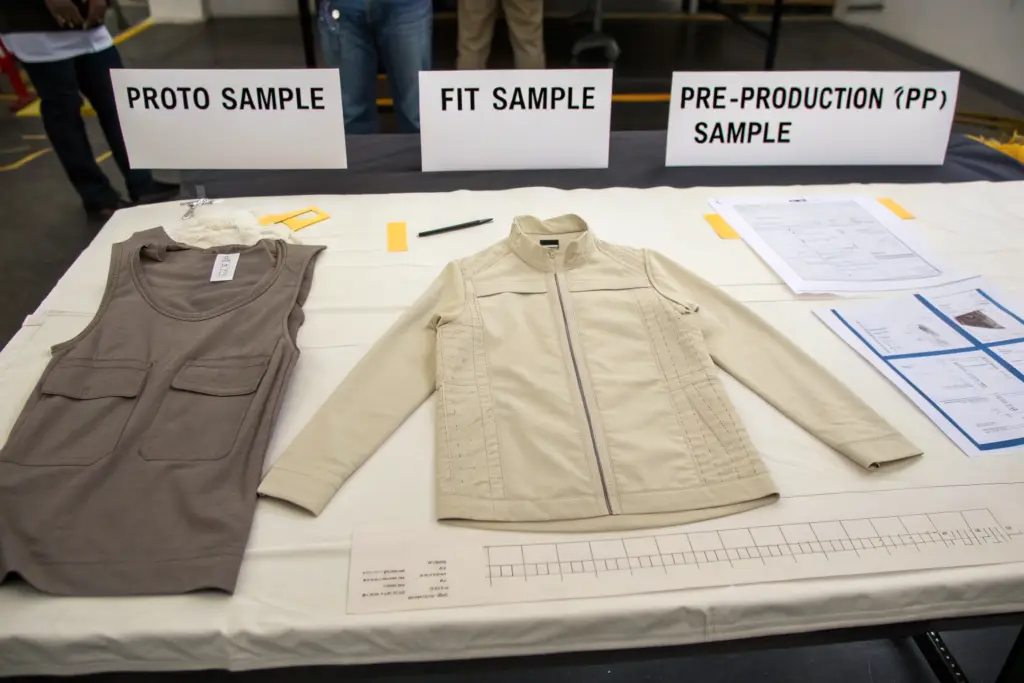
The sampling process in professional private label manufacturing is a structured, three-stage journey: The Proto Sample (a first draft to check basic silhouette and construction), The Fit Sample (a refined version where fit and details are perfected on a model), and The Pre-Production (PP) Sample (the final, flawless gold standard that is "sealed" and used for bulk inspection). Each stage has a clear purpose and requires specific client feedback.
At Shanghai Fumao, we demystify this process. We believe that a transparent, well-managed sampling phase is the single most important predictor of a successful bulk production run. Let me walk you through exactly what happens at each stage, what you should look for, and how you can be an effective partner in bringing your garment to life.
What Is the Purpose and Focus of the First Prototype Sample?
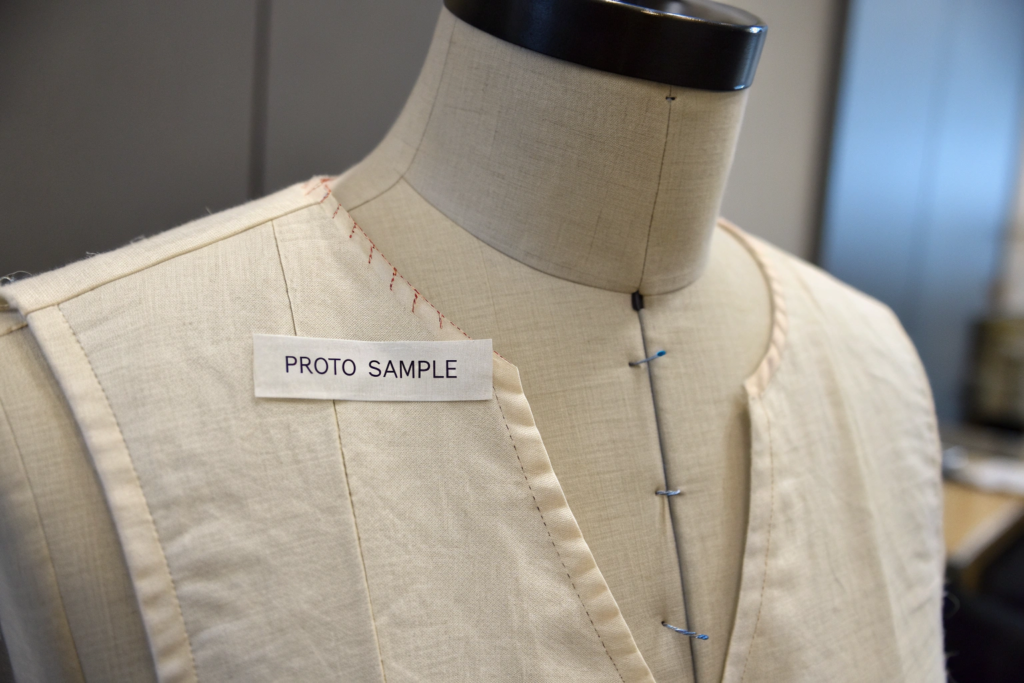
The moment of truth arrives. You open the package from the factory. Inside is the Proto Sample. It is not perfect. The fabric might be a substitute. The stitching is not final. Some details might be missing. Do not panic. This is exactly what a Proto Sample is for. Its purpose is not to be beautiful. Its purpose is to be informative.
The primary purpose of the Proto Sample is to evaluate the overall silhouette, proportions, and basic construction. It answers fundamental questions: Is the general shape correct? Are the seam lines in the right place? Is the length in the right ballpark? It is a 3D sketch that allows the designer to see their vision translated into a physical form for the first time.
I recall a women's wear designer who received her first Proto Sample of a deconstructed blazer. She was initially disappointed because the lapel roll wasn't perfect and the lining was missing. I reminded her: "This is just the block of clay. We are checking the shape." She put it on the fit model. She realized the shoulder width was 1.5 inches too wide. That was a critical catch. We adjusted the pattern. The next sample was much closer. Without the Proto Sample, we would have wasted time and money perfecting the details on a garment with a fundamentally flawed shape. This is the value of the "rough draft."
What Materials Are Typically Used for the Proto Sample?
To save time and cost, Proto Samples are often made from "Mock Fabric" —a cheaper material with similar weight and drape to the intended final fabric. For a cotton dress, we might use a basic muslin. For a polyester activewear piece, we might use a generic nylon/spandex. The goal is to simulate the behavior of the final material without committing expensive, custom-dyed yardage. Trims like final buttons or custom zippers are usually not used at this stage; they are simulated with generic components. This is a standard and efficient practice in product development.
How Should a Brand Provide Feedback on the Proto Sample?
Feedback at this stage should be big-picture and structural. Focus on the silhouette and major seam lines. Do not worry about a loose thread or a slightly crooked stitch. Use clear, measurable language: "Increase shoulder width by 1 inch total." "Lower the waist seam by 1.5 inches." Use photos with annotations. Draw arrows. This is not the time to critique the exact color matching or the softness of the final trim. That comes later. This is about getting the bones of the garment right.
How Does the Fit Sample Perfect the Silhouette and Measurements?
You provided feedback on the Proto Sample. The pattern has been adjusted. The second package arrives. This is the Fit Sample. It should be made in the correct fabric (or a very close substitute) and with the correct trims. This is the stage where the garment is refined and dialed in. This is where the fit is perfected.
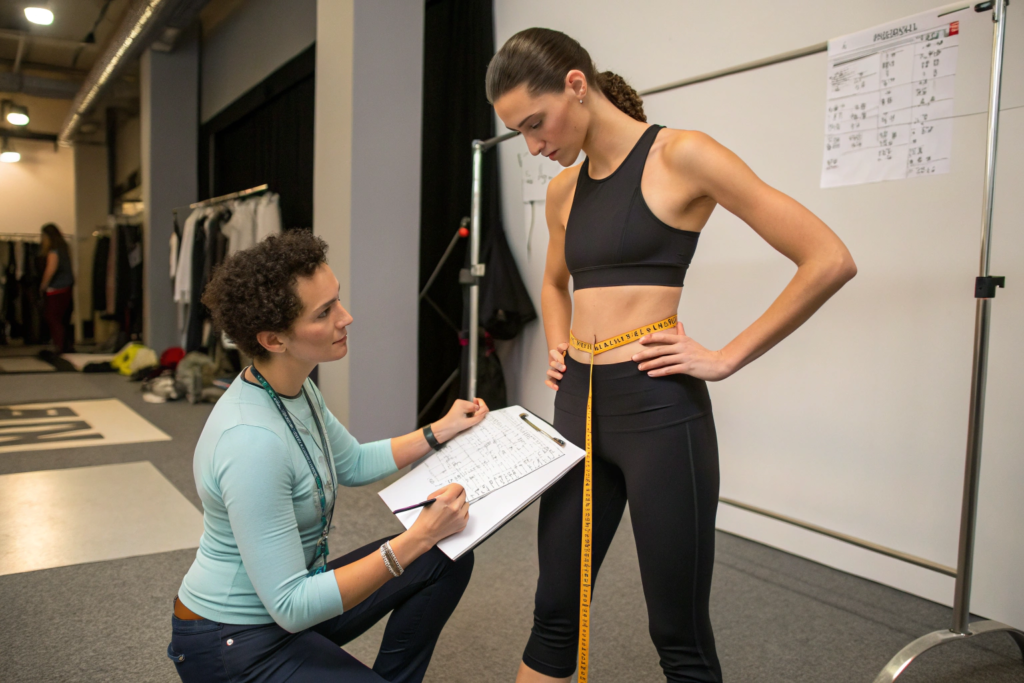
The Fit Sample is the critical stage for perfecting the fit and construction details. It should be evaluated on a live fit model that represents your target customer's body. This is where you check the drape of the correct fabric, the function of the zippers and buttons, and the precise measurements against the graded spec sheet. Multiple rounds of Fit Samples are common for complex garments.
A men's wear brand we work with is obsessive about the fit of their chinos. The Proto Sample established the general shape. The first Fit Sample revealed the crotch curve was slightly off, causing pulling. The second Fit Sample had an improved crotch but the leg opening was too wide. The third Fit Sample was perfect. This iterative process took time, but the result was a pair of pants that fit their customer perfectly and became a best-seller. This commitment to fit is what builds brand loyalty and reduces returns. This is the core of private label value.
How Many Rounds of Fit Samples Are Typical?
For a simple garment like a basic t-shirt, 1-2 rounds of Fit Samples are often sufficient. For a complex garment like a tailored jacket, a fitted dress, or a piece of technical outerwear, 2-4 rounds are common. Each round adds time and cost, but it is an investment in quality and reducing the risk of a bulk production failure. A clear, detailed Tech Pack and precise, measurable feedback from the brand are the best ways to minimize the number of Fit Sample rounds.
What Is the Role of the "Measurement Report" with the Fit Sample?
As discussed in the context of sample vs bulk quality, every Fit Sample we ship includes a detailed Measurement Report. This document is your objective anchor. Before you even look at the garment on a body, review this report. It shows you the Target Spec, the Tolerance, and the Actual Measurement taken by our QC team. This tells you immediately if the factory executed the pattern correctly. If the chest measures 19 inches but the spec is 20, you know it is off before you evaluate the fit. This data-driven approach removes subjectivity and speeds up the feedback loop.
What Is the "Golden Sample" and Why Is It Sealed?
After the final round of fit adjustments, the factory produces the Pre-Production (PP) Sample. This is it. This is the Golden Sample. It must be perfect in every way. The fabric, the color, the trims, the stitching, the fit—everything must be exactly as it will be in bulk production. There is no "we'll fix that in bulk." This is the contract.
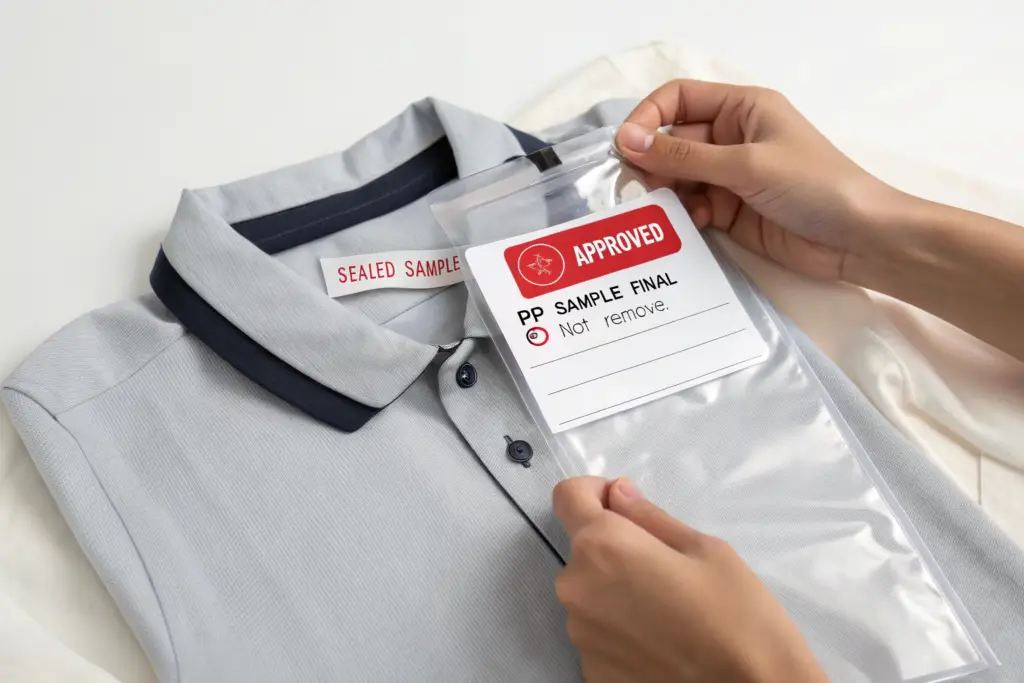
The PP (Pre-Production) Sample, often called the Golden Sample, is the final, fully approved prototype. It is made from the actual bulk fabric with all correct trims and construction details. Once approved by the brand, it is "sealed" in a tamper-proof bag and becomes the legal and visual standard against which all bulk production will be inspected. It is the single source of truth for quality control.
We take the PP Sample approval very seriously. Our internal QC team measures and inspects it against the final spec sheet. We photograph it from every angle. We send it to you for final sign-off. When you email us saying, "PP Sample Approved for Bulk Production," we then seal it. That sealed sample goes to the production floor. The cutting and sewing supervisors use it as their daily reference. The final AQL inspectors use it as their standard. It is the physical embodiment of your brand's quality promise. This is the discipline of professional clothing manufacturing.
What Happens If a Brand Requests a Change After PP Approval?
This is a serious event. A change after PP approval is a Production Change Order. It will almost certainly impact the timeline and potentially the cost. We will assess the change. If it is minor (e.g., changing the hangtag string), we can often accommodate it with minimal disruption. If it is major (e.g., changing a seam construction), it may require re-cutting fabric and will push back the delivery date. This is why we are so rigorous about the PP Sample being the final approval. We encourage clients to be 100% certain before they stamp it "Approved."
How Is the Sealed Sample Used During Bulk Production?
The Sealed Sample is the most important tool on the factory floor. The cutting room supervisor checks the first cut panels against the Sealed Sample's fabric and shade. The sewing line supervisor checks the first finished units against the Sealed Sample's construction and stitching. The in-line QC inspector carries a photo of the Sealed Sample on their tablet or physically walks the line with the sample. It is the constant, physical reminder of the standard. It eliminates the "I thought it was supposed to look like this" errors that plague less disciplined factories.
What Are the Common Delays in Sampling and How Are They Avoided?
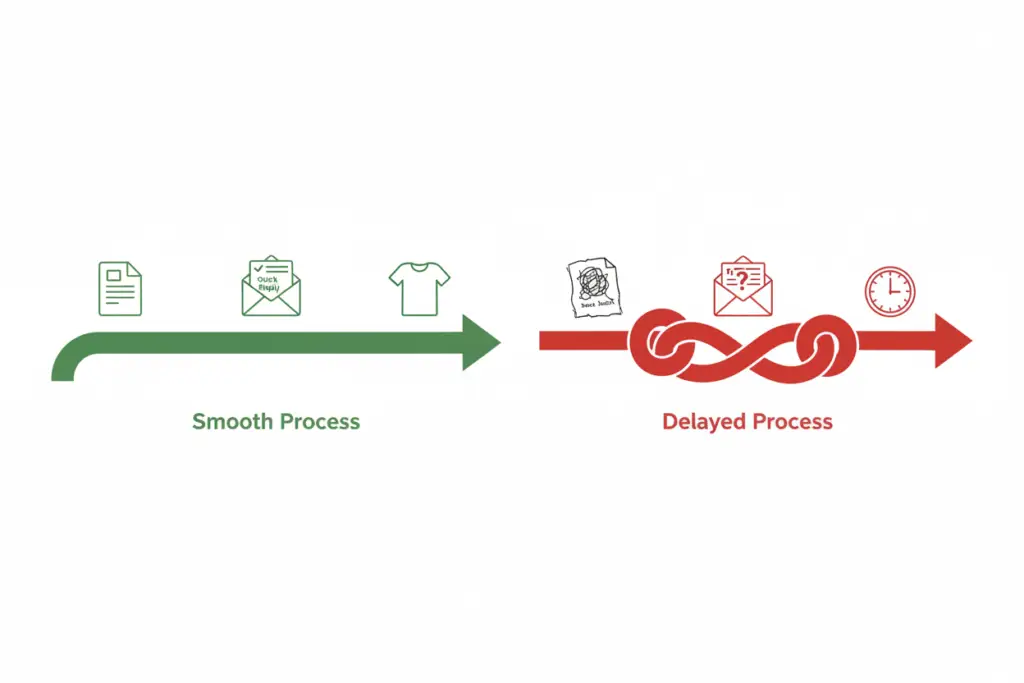
Sampling delays are the enemy of a successful launch. They compress the bulk production window and create immense stress. The most frustrating part is that most delays are preventable. They are not caused by complex machinery or acts of God. They are caused by communication failures and incomplete information.
The most common causes of sampling delays are: Incomplete or Vague Tech Packs, Slow Client Feedback (taking more than 3-5 days to review a sample), and Material Sourcing Delays (waiting for a specialty trim or custom fabric to arrive). These are avoided by front-loading detailed information, adhering to a prompt feedback schedule, and using stock materials for initial samples.
I recall a project that stalled for three weeks because the Tech Pack did not specify the zipper length. We had to email the client. The client took four days to reply. Then we had to source the zipper. Three weeks lost over a missing number on a spec sheet. This is why we emphasize the Tech Pack so heavily. It is the single most powerful tool for preventing sampling delays. A complete Tech Pack allows our team to work autonomously and efficiently. Prompt, clear feedback from the client keeps the project moving. This is a true B2B partnership in action.
How Can a Brand Speed Up the Sampling Phase?
You have more control over the sampling timeline than you might think. Here is how to be a "fast" partner:
- Provide a Complete Tech Pack: This is the single biggest accelerator.
- Reply Within 48 Hours: Make sample review a priority. The clock stops when the sample is in your hands.
- Use Visual Feedback: Annotated photos are faster to process and less prone to misinterpretation than long emails.
- Be Decisive: Trust your initial instinct. Multiple, small, incremental changes ("let's try moving it 1/8 inch, then another 1/8 inch") cause delays.
What Happens If a Key Trim for the Sample Is Out of Stock?
This is a common hiccup. If a specific custom button or zipper is not available for the Proto or Fit Sample, we will use a "Mock Trim" —a similar-looking, generic substitute. We clearly label this on the sample tag: "Mock Button. Final Button will be Style #XYZ." This allows the sampling process to continue moving forward without waiting 3 weeks for the custom trim to arrive. The final, correct trim is then used on the PP Sample. This is a practical, time-saving strategy that we employ regularly.
Conclusion
The sampling process in private label manufacturing is the critical bridge between a creative idea and a tangible, sellable product. It is a disciplined, multi-stage journey that transforms a sketch into a perfected, production-ready garment. While it requires patience and collaboration, a well-managed sampling phase is the single best insurance policy against costly bulk production errors and disappointing quality.
At Shanghai Fumao, we guide our B2B partners through every step of this journey. We provide the structure, the transparent reporting, and the expert guidance needed to navigate the Proto, Fit, and PP Sample stages with confidence. We believe that the sampling phase is not a black box to be feared, but a collaborative workshop where your vision is honed and perfected.
If you are ready to start the sampling journey for your next private label collection, let's talk. Our Business Director, Elaine, can walk you through our process and provide a clear timeline for your specific project. Please email Elaine at: elaine@fumaoclothing.com.