You have the sketch. You have the fit in mind. You have the perfect brand story. But when the sample arrives, it feels… wrong. The fabric is too stiff. Or too flimsy. The color is dull. The drape is lifeless. The entire vision falls flat. This is the moment many new private label founders realize a fundamental truth: Fabric is not a detail. Fabric is the product. A CEO of a successful women's wear line told me, "My designs are good. But my fabric is my secret weapon. It is why customers pick up my dress and not the one next to it."
Fabric sourcing is crucial for private label fashion brands because it directly determines the Quality & Handfeel (the tactile experience that justifies your price), the Fit & Drape (how the garment moves on the body), the Cost & Margin (fabric is the single largest line item in your BOM), and the Brand's Sustainability & Compliance Story (organic, recycled, or safe-certified materials).**
At Shanghai Fumao, we do not just sew clothes. We are expert fabric sourcers. We act as the bridge between our B2B partners and the vast, complex world of textile mills. Let me pull back the curtain on why expert sourcing is the single most valuable service a clothing manufacturer can offer a growing brand.
How Does Fabric Choice Dictate the Quality and Handfeel of a Garment?
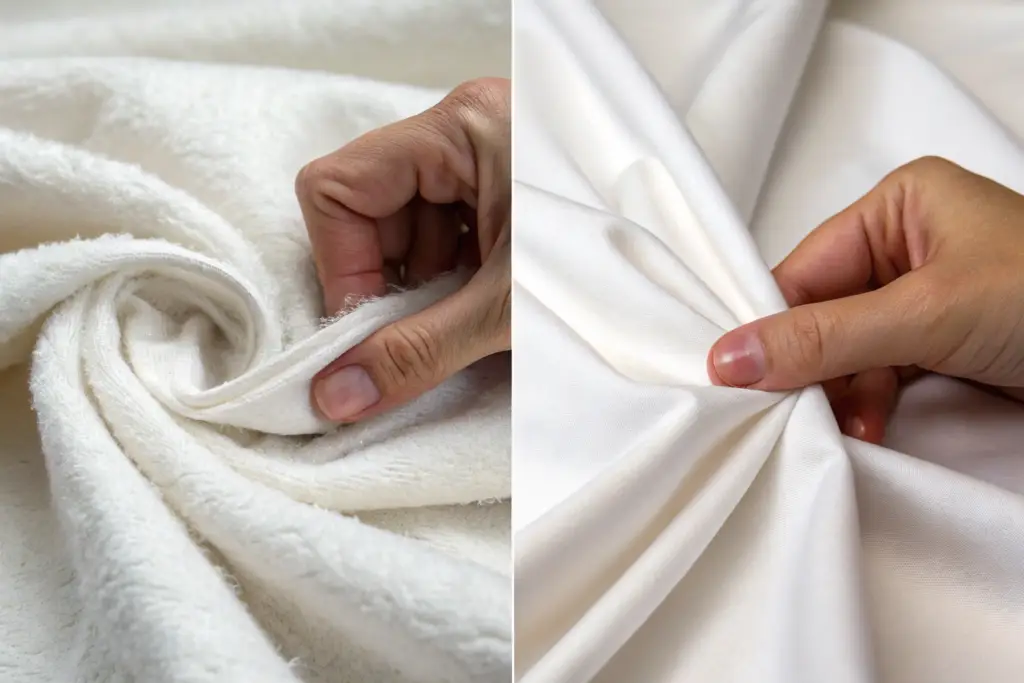
You can have the most brilliant design in the world, but if the fabric feels like sandpaper or looks like a cheap dishrag, the customer will put it back on the rack. They might not be able to articulate why it feels cheap, but their fingers know. Handfeel and Drape are the subconscious signals of quality. They are what justify a premium price point.
The choice of fiber (long-staple cotton vs. short-staple), yarn construction (ring-spun vs. open-end), and finishing (enzyme wash vs. silicone wash) directly determines the final handfeel and drape of the garment. Expert sourcing means knowing which mill specializes in the soft, silky Tencel for a fluid dress and which mill produces the sturdy, structured twill for a tailored overshirt.
I recall a men's wear brand that was trying to create a "luxury for less" basic tee. They initially sourced a cheap, open-end cotton jersey. The shirts felt like cardboard. They returned to us, frustrated. Our sourcing team presented them with a 30/1 combed ring-spun cotton from a specific mill known for its soft handfeel. The cost per yard was only slightly higher, but the fabric transformed the garment. It felt substantial and soft. The client was able to position the shirt as a premium essential and sell it for a higher price. The fabric made the brand promise real. This is the difference between buying "cotton" and sourcing the right cotton.

What Is the Difference Between Long-Staple and Short-Staple Cotton?
This is a fundamental distinction every brand owner should understand. Cotton fibers (staples) vary in length.
- Long-Staple Cotton (e.g., Pima, Supima, Egyptian): Fibers are 1 3/8" or longer. They can be spun into finer, stronger, and incredibly soft yarns. The fabric is smoother, resists pilling, and takes dye beautifully. It is the premium choice.
- Short-Staple Cotton (Upland): Fibers are shorter (around 1"). The yarn is fuzzier and weaker. The fabric is rougher and more prone to pilling. This is the commodity cotton used in cheap basics.
Sourcing long-staple cotton signals an immediate commitment to top quality. It is an investment that the customer can literally feel.
Why Does "Finishing" Matter as Much as the Fiber?
Finishing is the "secret sauce" of a textile mill. It is the final set of processes—washing, brushing, sanding, softening—that give the fabric its ultimate character. Two mills can start with the exact same greige fabric, but their different finishing recipes will produce completely different results.
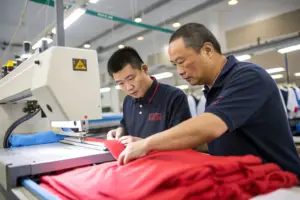
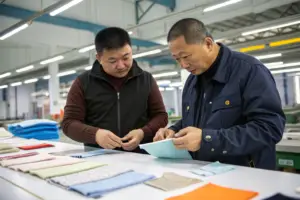
One mill's "Peach Skin" finish might be subtle and smooth. Another's might be heavy and fuzzy. This is why we do not just rely on a spec sheet. We physically touch and evaluate fabric swatches from our network of trusted mills. We know which mill excels at a crisp, clean finish for woven shirts and which one creates the softest, coziest fleece for outerwear. This accumulated knowledge is invaluable to our private label partners.
How Does Fabric Sourcing Impact Production Costs and Profit Margins?
Fabric is typically 50-70% of the total cost of a garment. This is a massive number. A 10% error in fabric sourcing or consumption calculation can wipe out your entire profit margin. This is not an area for guesswork. This is where expert sourcing directly protects your bottom line.
Strategic fabric sourcing optimizes cost without sacrificing perceived quality. This involves: Matching the fabric weight (GSM) and construction to the garment's purpose (avoiding over-engineering), Leveraging mill relationships to negotiate competitive pricing and flexible MOQs, and achieving High Marker Efficiency in cutting to minimize waste.
We recently worked with a distributor on a new activewear legging. They initially wanted a specific high-gauge nylon/spandex blend that was very expensive and had a high MOQ. Our sourcing team proposed an alternative: a slightly different blend with the same weight, stretch, and a nearly identical handfeel, but from a different mill that offered better pricing and a lower minimum. The client approved the alternative. The cost savings per unit were significant, and the garment performed beautifully. The customer never knew the difference. This is the art and science of cost-effective fabrics sourcing.
How Does Fabric Weight (GSM) Affect Both Cost and Perception?
GSM (Grams per Square Meter) is the objective measure of a fabric's weight and substance. A 140 GSM t-shirt feels flimsy and cheap. A 220 GSM t-shirt feels heavy and premium.
Higher GSM generally means higher cost because it uses more raw material. However, the perceived value increases even more. A brand can often justify a significant retail price increase by moving from a 160 GSM to a 200 GSM fabric, even though the cost increase is modest. Expert sourcing involves finding the "sweet spot" GSM that delivers the desired premium handfeel without breaking the budget. We guide our clients on these nuanced trade-offs.
How Can Sourcing Choices Minimize Fabric Waste and Improve Yield?
Fabric waste is pure lost profit. A skilled sourcing and production team minimizes waste in two ways:
- Optimal Roll Widths: We source fabric in widths that best match the pattern pieces. If a mill offers a wider width that allows for a more efficient marker layout, we will use it, even if the per-yard price is nominally higher. The savings in yield more than offset the cost.
- Quality Consistency: Sourcing from mills with consistent quality means fewer fabric defects (holes, stains, barre marks). Fewer defects mean less fabric is wasted during the cutting process. This is a hidden cost of working with low-quality mills that is often overlooked.
How Does Expert Sourcing Support Sustainability and Compliance Goals?
In today's market, a brand's sustainability claims are only as strong as the fabric sourcing behind them. You cannot just say your dress is eco-friendly. You must be able to prove it. This requires a deep understanding of certifications and a network of compliant mills. This is a massive burden for a small brand to manage alone.
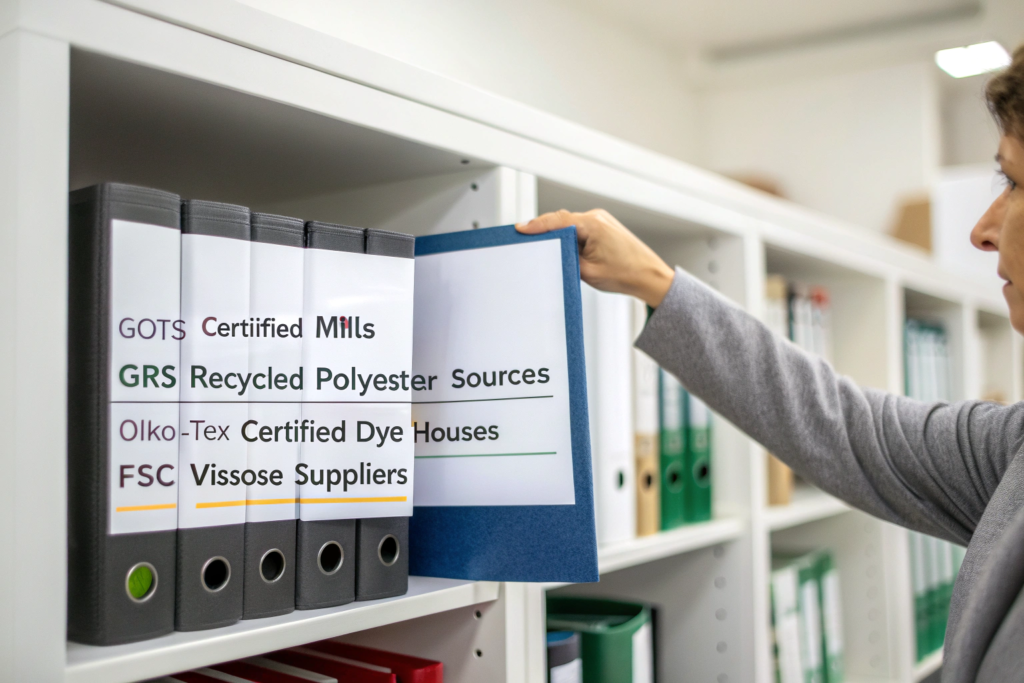
Expert fabric sourcing provides a vetted pathway to sustainable materials. A knowledgeable manufacturer has pre-qualified mills that hold valid GOTS, GRS, OEKO-TEX, and FSC certifications. They can provide the necessary transaction certificates and documentation to back up a brand's marketing claims, mitigating the risk of greenwashing accusations.
A women's wear client wanted to launch a "sustainable capsule" using recycled polyester. We connected her with a GRS-certified mill in our network that produced a beautiful, soft recycled jersey. We provided her with the Transaction Certificate (TC) that traced the material from the recycling facility to her finished garment. She used this documentation to confidently market the collection. This is the value of a clothing manufacturer who takes compliance seriously. It protects the brand and builds consumer trust.
What Is the Importance of a Mill's Compliance History?
A certification is a snapshot in time. A mill's history is just as important. Has it passed its recent audits? Has it been cited for any labor or environmental violations?
We continuously monitor the compliance status of our key mill partners. We do not just look at their certificates. We look at their reputation in the industry. This ongoing due diligence protects our B2B clients from supply chain disruptions and reputational risks. It is a layer of protection they would not have if they were sourcing on their own.
How Does Sourcing Localized Trims Support Sustainability?
Sustainability is not just about the main fabric. It is also about the buttons, zippers, and labels. Sourcing trims from suppliers within the same geographic region (e.g., within China) drastically reduces the carbon footprint associated with transportation.
Our sourcing team prioritizes local trim vendors whenever possible. A button made in Guangdong and trucked to Shanghai has a much smaller footprint than a button air-freighted from Italy. This holistic approach to sustainable clothing manufacturing is a key part of our value proposition.
How Does Fumao's Sourcing Expertise De-Risk the Supply Chain for Brands?
For a brand owner, the global textile supply chain can feel like a black box full of potential disasters: a mill goes out of business, a dye lot is off-color, a shipment is delayed, a certification is expired. Each of these events can derail a season. Expert sourcing is the ultimate form of risk management.
Fumao de-risks the supply chain by diversifying our mill network (having backup options for key fabrics), maintaining a buffer stock of popular greige fabrics, and managing all mill communication and quality inspections. We absorb the complexity so our brand partners can focus on design and sales.
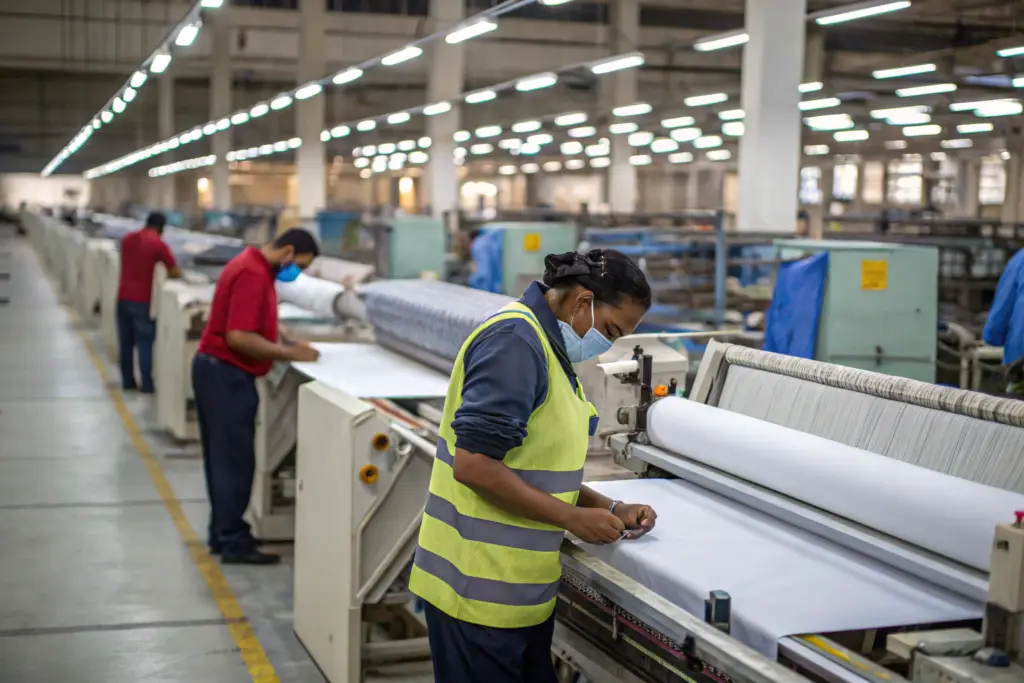
A few years ago, a major dye house in the region had an unexpected shutdown due to an environmental inspection. Many brands had orders delayed by weeks. Our clients were minimally impacted. Why? Because our sourcing team had pre-qualified alternative dye houses for our core colors. We were able to pivot production to a secondary, vetted supplier within days. Our clients never even knew there was a crisis. That is the invisible value of a strong sourcing partner. It provides reliable delivery even when the unexpected happens.
How Do We Manage the Complexity of Custom Fabric Development?
Developing a custom fabric—a unique yarn-dye stripe, a specific brushed fleece, a custom print—is where many projects get stuck. The communication between a brand and a mill can be fraught with technical misunderstandings.
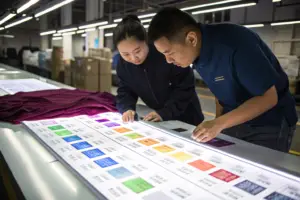
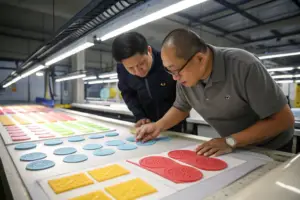
We act as the translator and project manager. You describe the desired handfeel and look. We translate that into technical specs for the mill. We manage the lab dip and strike-off approval process. We ensure the final bulk production matches the approved standard. This service allows even small brands to create unique, proprietary fabrics that differentiate them in the market.
What Happens If a Fabric Roll Is Damaged or Off-Quality Upon Arrival?
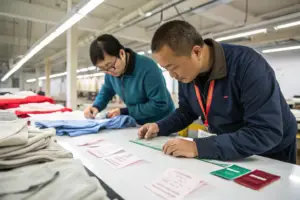
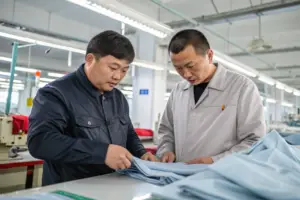
This is where our incoming inspection process provides a critical safety net. Every roll of fabric is inspected on our backlit tables before it is released for cutting.
If a roll is damaged, stained, or off-shade, it is immediately quarantined. We file a claim with the mill. We either secure a replacement roll or a credit. This happens before the fabric is cut. The client's order is protected. They do not receive garments with hidden flaws. This is a level of accountability that a brand sourcing fabric on their own would struggle to enforce from 7,000 miles away.
Conclusion
Fabric sourcing is the quiet, powerful engine that drives a successful private label fashion brand. It is the difference between a garment that feels like a precious treasure and one that feels like a disposable commodity. It is the single biggest factor in your cost structure and one of the most potent tools for telling your brand's sustainability story.
At Shanghai Fumao, we do not view sourcing as a simple transaction. We view it as a core competency and a strategic partnership. We bring our decades of experience, our vetted network of mills, and our rigorous inspection processes to bear on behalf of our B2B clients. We navigate the complexity of the global textile market so that you can focus on what you do best: creating a brand that customers love.
If you are ready to elevate your next collection with expert fabric sourcing that balances quality, cost, and responsibility, let's talk. Our Business Director, Elaine, can discuss your material needs and show you how our sourcing capabilities can de-risk and enhance your supply chain. Please email Elaine at: elaine@fumaoclothing.com.