
As a brand owner, your customer service team, website FAQs, and product pages are on the front line. When a shopper asks, “What does this OEKO-TEX label mean for my ski jacket?” a vague or technical answer can lose a sale. But a clear, confident response can build trust, justify a premium price, and turn a curious buyer into a loyal advocate. For U.S. apparel brands sourcing certified gear, empowering your team with the right knowledge is a direct investment in conversion rates and brand reputation.
Effectively addressing customer queries about OEKO-TEX requires a three-part strategy: simplify the complex certification into relatable benefits (safety, comfort, durability), provide transparent proof (certificate numbers, accessible test summaries), and train all customer-facing teams to speak consistently about its value in the context of skiing. It’s about translating a technical standard into a compelling product story.
I’ve seen brands lose high-intent customers at the last minute because a sales rep couldn’t explain the certification beyond “it’s safe.” Let’s build a practical playbook that ensures every query becomes an opportunity to educate, assure, and close the sale.
What Are the 3 Most Common Customer Questions and How to Answer Them?
Customers don’t ask for the technical manual; they ask about what matters to them. Based on years of feedback from our brand partners at Shanghai Fumao, these three questions cover 80% of inquiries. Here are script-ready, benefit-focused answers.
1. “Is this actually safer for my skin? I have sensitive skin.”
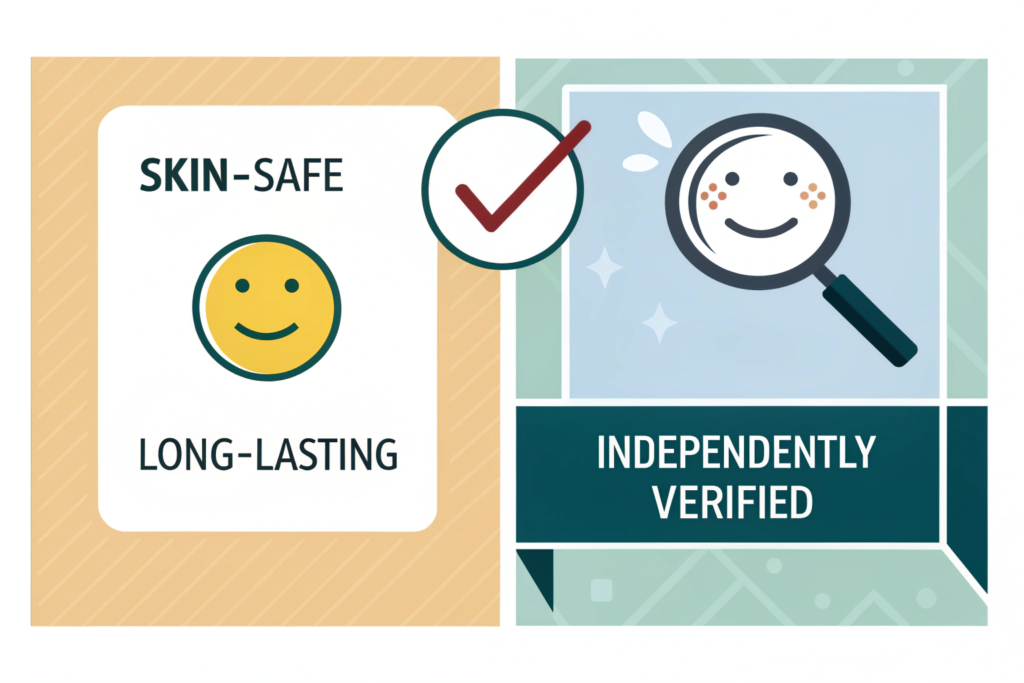
- Simple Answer: “Yes, absolutely. Think of OEKO-TEX as a rigorous safety check. It independently certifies that every component of this garment—from the outer fabric to the thread and lining—has been tested and is free from harmful levels of over 100 substances known to cause allergies or irritation. For ski wear, which sits against your skin all day in dry, cold conditions, this means significantly reduced risk of itching, redness, or reactions. It’s especially popular for base layers and neck gaiters.”
- Supporting Detail (for deeper inquiry): You can mention it sets strict limits on things like formaldehyde (a common irritant), allergenic dyes, and heavy metals. The standard is updated annually, making it one of the most stringent in the world, stricter than many national laws.
2. “Will it make the fabric feel different or less durable?”
- Simple Answer: “Quite the opposite. To pass the certification, the fabric also undergoes tests for durability, like colorfastness to sweat and abrasion resistance. This means the colors are less likely to fade from perspiration, and the fabric is more resistant to pilling and wear from friction, like backpack straps. Many people find OEKO-TEX certified fabrics have a cleaner, softer feel because harsh chemical residues from manufacturing are eliminated.”
- Supporting Detail: Share a tangible example. “For instance, last season, a brand using our certified fabrics reported a 30% drop in returns related to pilling or color fading compared to their non-certified line.”
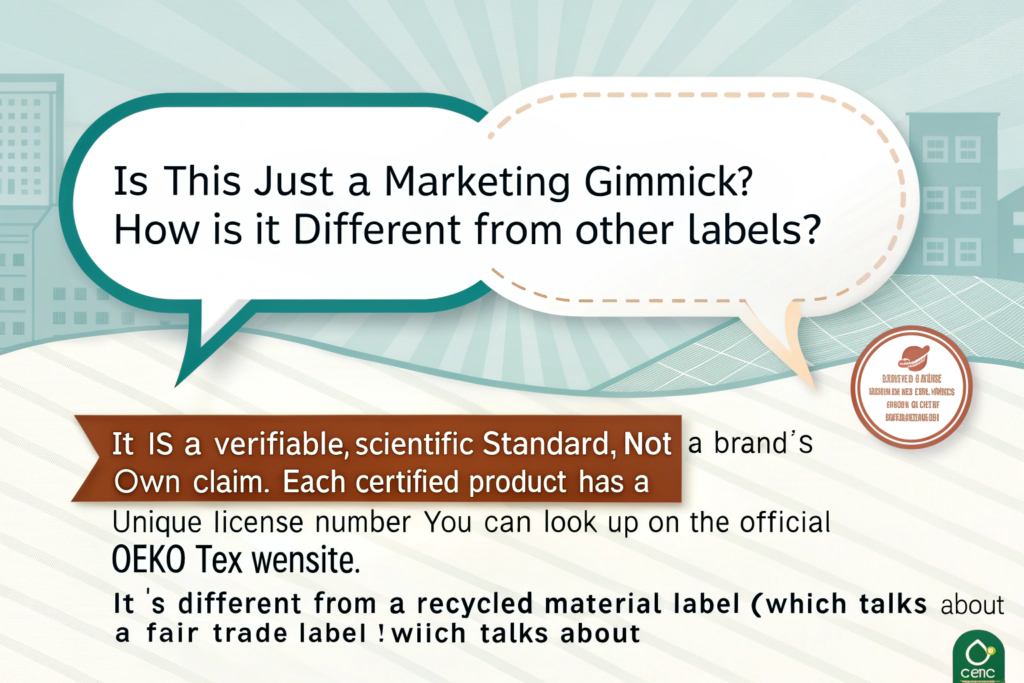
3. “Is this just a marketing gimmick? How is it different from other labels?”
- Simple Answer: “It’s a verifiable, scientific standard, not a brand’s own claim. Each certified product has a unique license number you can look up on the official OEKO-TEX website. It’s different from a ‘recycled material’ label (which talks about content) or a ‘fair trade’ label (which talks about labor). OEKO-TEX specifically certifies the human-ecological safety of the final product. It’s a globally recognized benchmark for trust in textiles.”
- Supporting Detail: Direct them to the OEKO-TEX website to explore the “Label Check” tool. Offer to provide the specific certificate number for the product they’re viewing.
How to Train Your Sales and Support Teams?
Create a one-page internal FAQ sheet with these Q&As. Role-play scenarios where team members practice moving from the “simple answer” to the “supporting detail” only if the customer asks for more. Emphasize key phrases: “independently tested,” “free from harmful substances,” “better durability,” and “look up the number yourself.” Make it part of new hire onboarding. At our factory, we provide similar training modules to our account managers so they can support our brand partners effectively.
What Visual Aids Can You Provide?
A picture is worth a thousand words. On your product page, don’t just list the logo.
- Create a simple graphic: “What OEKO-TEX Means for You: Skin Safety + Durability + Trust.”
- Embed a short explainer video (30-60 seconds) on what the certification involves.
- Show the label close-up in your product imagery.
How to Proactively Showcase OEKO-TEX on Your Product Pages?
Your website is your 24/7 salesperson. A customer shouldn’t have to query you to understand the value; the page should preemptively answer their questions. This reduces friction and builds credibility before they even reach for the chat button.
First, logo placement is strategic. The OEKO-TEX Standard 100 label should be visible:
- Next to the product title or price.
- In the main image gallery (as a badge on a product shot).
- In the product specifications/features list.
- On the zoomed-in image of the actual garment’s care label.
Second, dedicate a section to explaining the benefit. Don’t just say “OEKO-TEX Certified.” Write a 2-3 sentence blurb. For example:
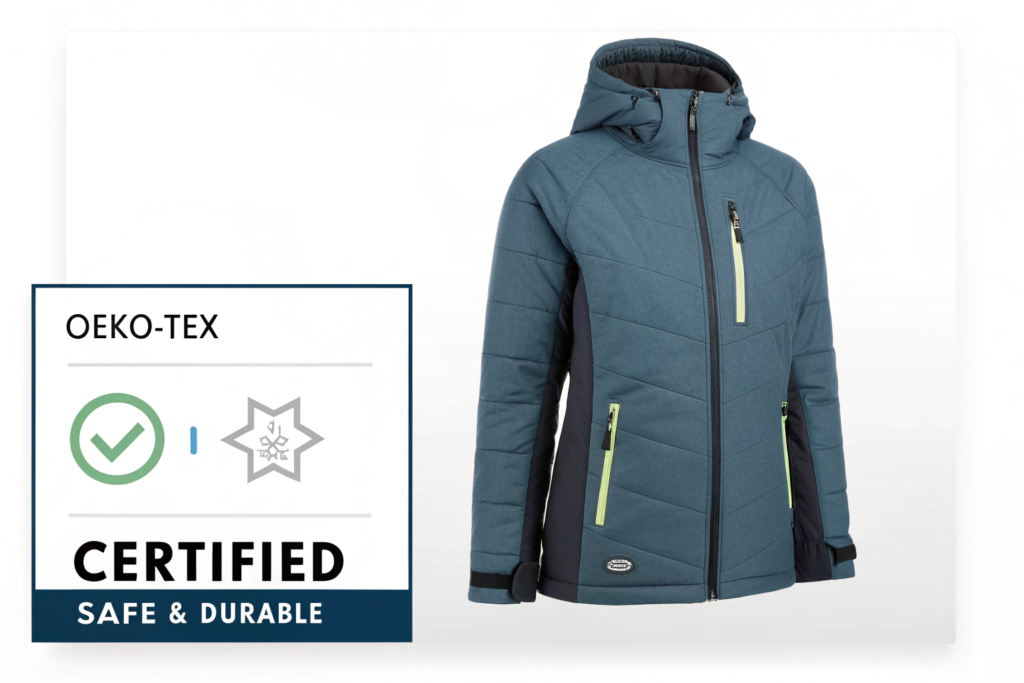
“This jacket is OEKO-TEX Standard 100 certified. This means every material has been independently tested and verified to be free from harmful levels of substances, making it safe for your skin and more durable against the elements. It’s our commitment to your comfort and peace of mind on the mountain.”
Third, link to more detailed information. Have a dedicated page on your site (e.g., “/our-standards” or “/sustainability”) that dives deeper into what OEKO-TEX is, why you chose it, and how it applies to your products. This page can also host your official certificates or license numbers for transparency.
While you simplify for the main page, be ready to provide details if asked. Your manufacturing partner should supply you with:
- The Official Certificate: A PDF for each certified product/style.
- The License/Test Number: The unique ID for that product.
- Product Class: Ski apparel is typically “Class II” (for articles with direct skin contact) or “Class I” (for kids’ wear). Knowing this shows specificity.
- Scope of Certification: Be clear on what is certified—is it just the main fabric, or does it include the insulation, lining, and trim?
We make this a standard part of our handover process at Shanghai Fumao. For every OEKO-TEX certified order, we provide a digital package with all certificates, ready for the brand to upload to their internal drive or publish on their site. This eliminates back-and-forth and empowers the brand to be instantly transparent.
A brand we work with in Vermont revamped their best-selling ski base layer page. They changed the description from “Made with OEKO-TEX fabric” to:
“Skin-First Comfort, Certified. Spend your day focused on the slopes, not on an itchy base layer. Our entire CoreLine is OEKO-TEX Standard 100 Certified (License No. XYZ123). This independent lab test verifies our fabric is free from over 100 harmful substances, making it ideal for sensitive skin. Plus, the rigorous testing ensures superior colorfastness and pilling resistance—so your comfort and the garment’s look last.”
[Button: View Our Certification]
This change, which framed the certification around customer benefits (“focus on slopes, not itch,” “ideal for sensitive skin,” “lasts longer”), contributed to a reported 15% increase in add-to-cart rate for that product.
How to Handle Advanced or Skeptical Questions About Testing and Validity?
Some customers, especially those who are well-informed or particularly cautious, will dig deeper. They might ask about specific substances, testing methods, or the validity of the certification body itself. Treat these not as challenges, but as opportunities to demonstrate unparalleled expertise and transparency.
Question: “What specific chemicals does it test for? Does it include PFAS?”
- Response: “You’ve asked a great technical question. OEKO-TEX Standard 100 tests for a wide range of regulated and unregulated substances, including heavy metals, pesticides, allergenic dyes, chlorinated phenols, and phthalates. Regarding PFAS (per- and polyfluoroalkyl substances, often used for durable water repellency/DWR), the current OEKO-TEX standard regulates several specific PFAS compounds. However, the science and regulations are evolving rapidly. Many leading brands, including some of our partners, are now pairing OEKO-TEX with a specific PFAS-free DWR treatment to address this concern directly. I can confirm the DWR treatment on this particular model is PFAS-free.”
Question: “Who does the testing? How do I know it’s not corrupt?”
- Response: “The testing is conducted by independent, accredited member institutes of the OEKO-TEX association. These are certified labs around the world, like Hohenstein in Germany or TESTEX in Switzerland/US. Brands do not choose their own lab; OEKO-TEX assigns one. The system includes regular audits and market surveillance testing of certified products. You can verify our certificate number directly on their official site, which is independent of us or the brand.”
What Role Does Your Manufacturer Play in Providing This Data?
Your ability to answer these questions confidently depends 100% on your supply chain partner. A professional manufacturer should be your technical backend. When a client of ours faced a detailed question about formaldehyde and pH testing limits, our quality control team provided a one-page summary of the exact test methods (e.g., ISO 3071) and pass/fail limits used for their specific garment. The brand’s customer service lead was able to reply with authority, turning a skeptical customer into a brand evangelist.
Should You Create an Advanced FAQ or Whitepaper?
For brands targeting a highly technical or eco-conscious audience, consider creating a downloadable “Technical Brief” or an in-depth FAQ page. This document can cover:
- The difference between OEKO-TEX Standard 100 and STeP.
- How the certification process works from fiber to finished garment.
- A comparison with other standards (like bluesign®).
- Your brand’s specific commitments beyond certification.
This positions your brand as a leader in transparency, not just a follower of standards.
How to Leverage OEKO-TEX in Post-Purchase Communication and Loyalty?
The conversation shouldn’t end at the sale. Post-purchase communication is a prime opportunity to reinforce the value of the customer’s choice, reducing buyer’s remorse and encouraging repeat business.
1. Include it in Packaging & Unboxing:
Place a small card inside the garment box that thanks the customer for choosing a product made with OEKO-TEX certified materials. Briefly reiterate the benefits: “You’ve chosen gear that’s safer for your skin and built to last. Scan the QR code to learn more about our standards.” The QR code can link to your dedicated standards page.
2. Weave it into Care Instructions:
Your care label is read repeatedly. Add a line: “Gently wash to preserve the OEKO-TEX certified qualities of this garment.” This reminds the customer of the added value every time they do laundry. We advise our partners to recommend mild detergents, as harsh ones can degrade fabrics over time, indirectly affecting the long-term performance that certification implies.
3. Use it in Loyalty and Re-engagement:
- Email Campaigns: In a “Why We’re Different” email series, dedicate one email to “The Science of Comfort and Safety,” highlighting your OEKO-TEX certification.
- Retargeting Ads: For customers who viewed certified products but didn’t buy, use ad copy like: “Still thinking about it? Remember, our [Product Name] is independently certified for skin safety and durability.”
- Collect Reviews: Encourage reviews that mention the certification. A review stating “Love that this is OEKO-TEX certified – no skin irritation at all!” is powerful social proof. You can even offer a small loyalty discount for reviews that include a photo of the product in use.

How Can This Build Brand Authority?
Consistently communicating about OEKO-TEX across the customer journey positions your brand as knowledgeable, responsible, and trustworthy. It shows you care about the details that affect your customer’s experience. This builds authority in the skiwear space. For example, a brand could write a blog post titled “Debunking 5 Myths About Ski Apparel Chemicals” or host an Instagram Live Q&A with their product developer about how they select certified materials. Shanghai Fumao often supports our partners by providing factual content or even joining these sessions to add manufacturing-side credibility.
What is the Tangible Return on This Communication Effort?
Clear, confident communication reduces pre-purchase anxiety, leading to higher conversion rates and lower cart abandonment. It decreases post-purchase inquiries and complaints related to skin feel or durability. Most importantly, it builds a story that justifies premium positioning and fosters brand loyalty that is based on substantive values, not just logos. In a crowded market, that story is your edge.
Conclusion
Addressing customer queries about OEKO-TEX is not a defensive task for your support team; it’s a proactive marketing and sales strategy. By simplifying the message into key benefits (safety, durability, trust), showcasing it transparently on your digital platforms, preparing for technical inquiries with facts from your manufacturer, and weaving the story into the entire customer journey, you transform a certification into a powerful tool for customer acquisition and retention.
Ultimately, your ability to communicate this value hinges on a manufacturing partner who provides not just the certified product, but also the robust documentation and technical support that empowers your storytelling. When your team has unwavering confidence in the product’s provenance, that confidence is infectious to your customers.
If you are looking for a manufacturing partner that equips you with the certified products, clear data, and market insights needed to answer every customer question with authority, let’s connect. At Shanghai Fumao, we are committed to being the reliable backbone for ambitious brands, ensuring that from the factory floor to the final customer query, quality and transparency are never in doubt. Contact our Business Director Elaine to start building your certified skiwear line with confidence: elaine@fumaoclothing.com.