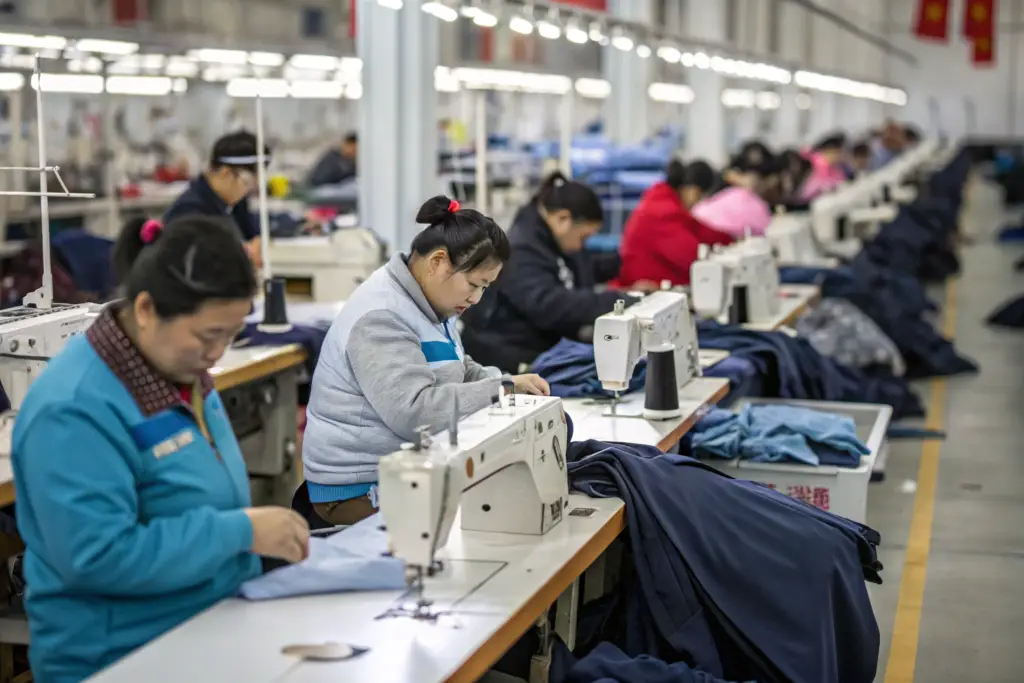
Five production lines is a sweet spot. One line is a sampling room. Three lines is a small factory struggling to meet minimums. Ten lines is a large factory where the owner no longer knows every worker's name. Five lines is enough capacity to handle serious wholesale orders, 25,000 to 30,000 units per month. It is small enough that quality does not get lost in the scale. I chose five lines deliberately. I could have added a sixth or a seventh. I chose not to. Because every time a factory adds a line, the owner steps further away from the factory floor. The systems that worked for three lines start to strain at five. The personal accountability that drove quality starts to diffuse. The factory becomes a machine, and machines break.
Five lines is where I can still walk the floor every morning and see every order in progress. I can see if the stitch tension on Line 3 looks off. I can see if the shade banding on the wash lot from yesterday is inconsistent. I can talk to the line supervisor about the new operator who needs more training on the waistband attachment. Quality at scale is not about having more inspectors. It is about designing a system where quality is built into the process, not inspected in at the end, and where the person in charge is close enough to the work to see problems before they become disasters.
Shanghai Fumao maintains top manufacturing quality across five production lines through four integrated systems. First, a dedicated line structure where each line is a self-contained production cell with its own supervisor, quality auditor, and daily output targets, creating clear accountability. Second, an hourly in-line audit system where a roving auditor checks critical measurements and stitch quality on random samples every 60 minutes, catching drift before it affects more than a handful of pieces. Third, a centralized quality laboratory that tests fabric, color, and hardware for every incoming lot, independent of the production lines, so no line can use substandard materials. Fourth, a digital production tracking dashboard that makes every line's output, defect rate, and milestone status visible to management and to clients in real-time.
I run Shanghai Fumao. I built these systems over fifteen years, learning from every quality failure I experienced. In this article, I will take you inside our five-line operation. I will explain how each line is structured, how quality is managed at the line level, how our lab supports all five lines, and why the five-line scale is a structural advantage for quality rather than a compromise.
How Are Our 5 Production Lines Structured for Maximum Quality Control?
A production line is not just a row of sewing machines. It is a team of people with a shared responsibility for a specific output. Each of our five lines has a defined structure. A line supervisor. A dedicated quality auditor. A team of 28 operators, each at a specific workstation. A daily production target based on the style being run. A weekly quality score based on the in-line audit results and the final inspection pass rate.
The structure creates accountability. The line supervisor knows that her line's quality score is tracked and reviewed every Monday morning. The operators know that their work is checked every hour by the roving auditor. The quality auditor knows that if a defect escapes her hourly check and is caught at final inspection, it is her line that failed. This is not a blame system. It is a visibility system. Everyone knows the standard. Everyone knows their performance against the standard. Everyone knows that quality is measured, not just discussed.
Let me explain the specific roles within each line and how dedicated lines for specific clients create quality consistency.
What Are the Key Roles on a Fumao Production Line?
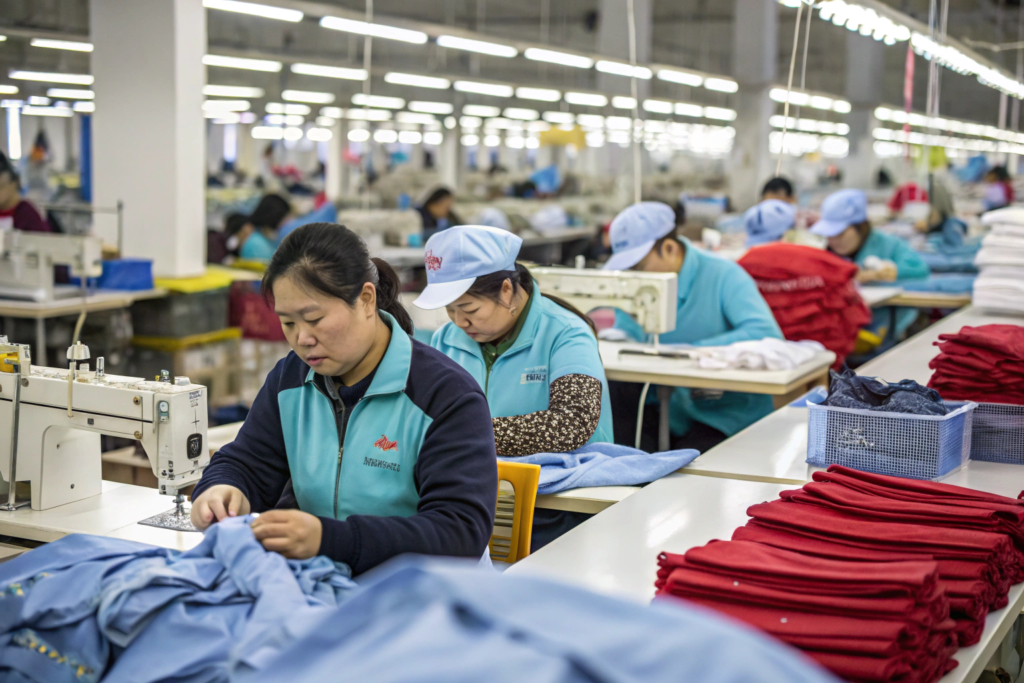
Each production line has a defined team with clear responsibilities. The line supervisor is the leader of the line. She is responsible for the daily output target, the line efficiency, and the quality of the work produced on her line. She assigns operators to workstations based on the style requirements. She balances the line to prevent bottlenecks. She is the first responder when a quality issue is flagged.
The dedicated line auditor is a quality specialist embedded in the line. She does not report to the line supervisor. She reports to the Quality Manager, who reports directly to me. This separation of authority is intentional. The line supervisor is measured on output. The auditor is measured on quality. If the auditor reported to the supervisor, she would face pressure to let minor defects slide to keep the line moving. By reporting to the Quality Manager, she is empowered to stop the line if she finds a systemic defect. The line supervisor and the auditor are a checks-and-balances pair. They work together, but they are accountable to different metrics.
The 28 operators are the skilled sewers who perform the actual assembly. Each operator is trained on a specific operation or a set of operations. They are cross-trained so that if one operator is absent, another can fill the station without a major drop in quality. Each operator has a spec sheet taped to their machine. The spec sheet shows the seam allowance, the stitch type, the stitch per inch count, and the critical measurements for their operation. The operator does not need to remember the specifications. They are right in front of them, updated for each new style. The garment production line roles structure is standard in the industry. What differentiates our lines is the independence of the quality auditor and the level of specification detail provided to each operator.
Why Do We Operate Dedicated Lines for Long-Term Clients?
A shared line produces multiple clients' orders on the same machines, with the same operators, switching styles between orders. Each switch requires a line setup. The machines must be rethreaded. The spec sheets must be updated. The operators must adjust to the new measurements. Each setup introduces the risk of errors.
A dedicated line is assigned exclusively to one client's production for the duration of their order, or for an entire season if the volume justifies it. The line runs the client's styles repeatedly. The operators become familiar with the specific measurements, the specific construction details, the specific quality expectations. The learning curve flattens. The defect rate drops. The efficiency increases.
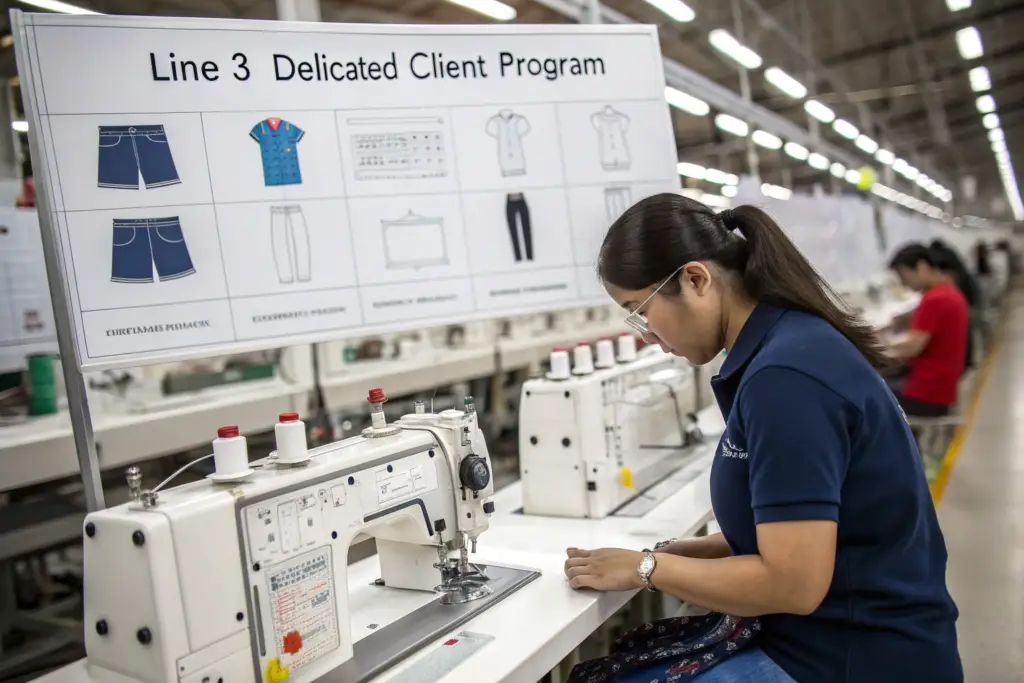
We operate dedicated lines for several of our long-term, high-volume clients. A Texas-based distributor has Line 3 dedicated to their denim shorts program for three months during the peak pre-summer production period. The operators on Line 3 know the distributor's fit block by heart. They know that the waistband on this style uses a specific stitch density. They know that the pocket placement is 1 cm higher than our standard block. They do not need to be reminded. The work becomes muscle memory. Muscle memory produces consistency. Consistency produces quality.
Dedicated lines are not feasible for every client. They require a minimum monthly volume to justify the allocation. But for clients who reach that threshold, the dedicated line model is a significant quality advantage. The dedicated production lines in apparel manufacturing concept is a lean manufacturing principle. Dedicated cells outperform shared lines on both quality and efficiency.
What In-Line and End-of-Line Quality Checks Prevent Defects?
Quality is not a final inspection step. It is a series of checks embedded throughout the production process. The earlier a defect is caught, the cheaper it is to fix. A defect caught at the fabric inspection stage costs nothing but the fabric rejection. A defect caught at the cutting stage costs the cutting labor for that panel. A defect caught at the sewing stage costs the sewing labor for that piece. A defect caught at final inspection costs the full garment cost plus the rework labor. A defect caught by the customer costs the return processing, the refund, the negative review, and the lost repeat business. The cost escalates exponentially the further the defect travels down the chain.
Our quality system is designed to catch defects as early as possible. The first check is the incoming fabric and trim inspection. The second check is the hourly in-line audit. The third check is the end-of-line inspection. The fourth check is the final AQL inspection by the independent QA team. Each check is a net. Defects that slip through one net are caught by the next.
Let me explain the two most important nets, the hourly in-line audit and the final AQL inspection.
How Does the Hourly In-Line Audit System Work?
Every hour, on a random minute, the line auditor walks to three pre-designated checkpoints on her line. Checkpoint one is after the front panel assembly. Checkpoint two is after the waistband attachment. Checkpoint three is after the hemming. At each checkpoint, the auditor pulls the last three pieces that have passed through that station. She does not let the operator select the pieces. She takes them herself.
She checks three things on each piece. Critical measurements. On the waistband attachment checkpoint, she measures the waistband width at the center front, center back, and side seams. She checks that the measurement is within the specified tolerance, plus or minus 0.25 inches. Visual defects. She looks for skipped stitches, uneven topstitching, pleated seams, incorrect thread color, or fabric flaws. Machine settings. She checks that the stitch per inch counter on the machine matches the specification. She checks that the differential feed is set correctly.
She records the results on a time-stamped audit sheet. If she finds a defect, she marks the piece with a red tag and places it in the rework bin. She then checks the next five pieces from that station. If two or more of those five pieces have the same defect, she stops the line and calls the supervisor and the mechanic. The line is not restarted until the root cause is identified and fixed. This could be a needle that needs replacing, a thread tension that needs adjusting, or an operator who needs retraining.
The hourly audit limits the damage radius of a defect. If a machine drifts out of adjustment at 10:30 AM, the auditor catches it at 11:00 AM. The defective pieces produced in that 30-minute window, typically 15 to 20 pieces, are quarantined and reworked. The remaining pieces are unaffected. Without the hourly audit, the machine would continue producing defects until the end of the shift, and the defect would not be caught until final inspection. The damage radius would be 200 pieces instead of 15. The in-line quality audit in garment manufacturing is the single most effective quality tool for reducing defect rates. It catches problems when they are small and cheap to fix.
What Is the Difference Between End-of-Line Inspection and Final AQL Inspection?
End-of-line inspection is performed by the line auditor on 100% of the pieces produced on her line. As each piece comes off the end of the sewing line, before it goes to the wash house or the finishing department, the auditor does a quick visual check. She checks for obvious defects. Broken stitches, missing buttons, major stains. This 100% check catches gross defects. It does not catch subtle measurement drift because she does not measure every piece. That is the role of the hourly audit.
Final AQL inspection is performed by the independent QA team, not the line auditor, on the finished, packed product. The QA team reports to the Quality Manager, who reports to me. They do not report to the production manager. Their incentive is to find defects, not to ship product. They use the ANSI/ASQ Z1.4 sampling standard. For a lot size of 5,000 pieces, they inspect a random sample of 200 pieces. They check measurements, visual defects, functional tests like zipper operation, and packaging. If the number of major defects found is at or below the acceptance number for AQL 1.5, the lot passes. If it exceeds the acceptance number, the entire lot is quarantined for 100% re-inspection.
The end-of-line inspection catches gross defects on every piece. The hourly audit catches process drift in real-time. The final AQL inspection provides a statistically valid assessment of the lot quality before shipment. These three nets, together, produce a defect rate below 1.5%. The AQL garment inspection standards are the industry standard methodology. We use a tighter AQL, 1.5, than the industry norm of 2.5, because our clients expect top manufacturing quality.
How Does Our Centralized Quality Lab Support All Five Lines?
The in-line audits catch sewing and assembly defects. The lab catches material defects. A fabric that is too weak. A dye that crocks excessively. A zipper that fails after 500 cycles. A button that breaks under 15 pounds of force. These are not defects the line auditor can catch with a tape measure and a visual check. They require specialized testing equipment and trained technicians.
Our centralized quality laboratory serves all five production lines. It is independent of any single line. The lab manager reports to the Quality Manager, not to any production supervisor. The lab tests every incoming fabric lot, every incoming hardware batch, and every new wash recipe before it is released to the production floor. If a material fails a lab test, it is rejected. The line cannot use it. The lab has the authority to quarantine non-compliant materials. This centralized, independent structure ensures that no production line can pressure the lab to approve substandard materials to keep their line running.
Let me explain the specific equipment in our lab and how it supports quality across all five lines.
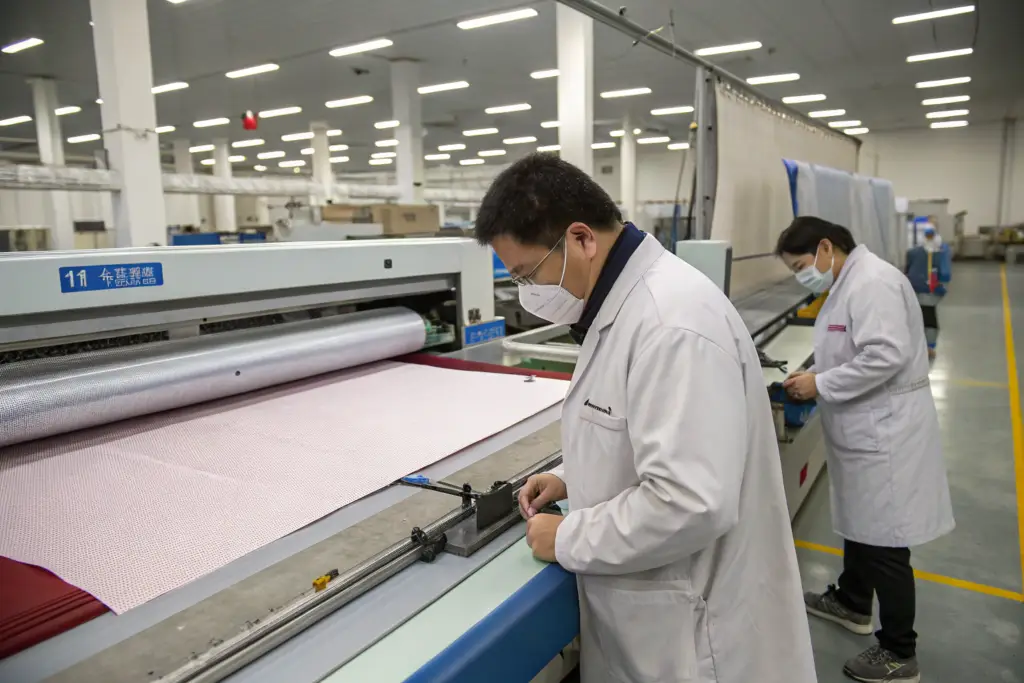
What Testing Equipment Do We House in Our Centralized Laboratory?
Our lab is a 500-square-foot, climate-controlled room equipped for textile physical testing, color assessment, and hardware durability testing. I will list the key equipment and what it tests.
The universal tensile testing machine measures fabric tensile strength and seam strength. It pulls a strip of fabric apart and records the breaking force in Newtons. It ensures the denim meets our minimum strength standards before cutting. The Elmendorf tear tester measures fabric tear strength. It uses a falling pendulum to tear a fabric sample and measures the energy absorbed. It ensures the fabric will resist ripping at stress points like pocket corners. The Crockmeter measures color fastness to rubbing. It rubs a white cloth against the denim under controlled pressure and the color transfer is assessed against a gray scale. It ensures the indigo will not bleed onto furniture or clothing. The Launderometer performs accelerated washing tests. It simulates multiple home laundry cycles in a short time and measures shrinkage, color change, and staining. The zipper reciprocator tests zipper durability. It opens and closes a zipper 5,000 times and records any failures. The button pull test stand measures button attachment strength. It pulls a button with increasing force until it detaches and records the force. The spectrophotometer measures color. It reads the CIELAB coordinates of a fabric sample and calculates the Delta E color difference from the standard. The XRF analyzer screens for heavy metals. It shoots X-rays at a metal component and measures the fluorescent energy to quantify lead, cadmium, and other restricted elements.
This equipment represents an investment of approximately $40,000. It requires annual calibration by certified technicians. It enables us to generate test data within hours of receiving a material lot, rather than waiting a week for results from an external lab. The textile testing laboratory equipment list covers the standard instruments for a factory quality lab. Our lab is equipped at a level that is unusual for a factory of our size.
How Does the Lab Ensure Consistency Across Fabrics, Washes, and Hardware Lots?
The lab's role is not just to test. It is to enforce standards. For every incoming fabric lot, the lab tests tensile strength, tear strength, shrinkage, and color fastness. The results are compared to our internal specification sheet. If any parameter is outside the tolerance, the lot is rejected and quarantined. The production lines are not permitted to use it. This prevents a weak fabric lot from entering production.
For every new wash recipe, the lab develops the recipe in a laboratory-scale washing machine, using small fabric swatches. The lab dip is measured on the spectrophotometer against the target standard. The wash is only released to the production wash house when the Delta E is below 1.5. The wash recipe is documented with exact chemical concentrations, temperatures, and cycle times. The production wash house must follow this recipe exactly. They cannot modify it without lab approval.
For every incoming hardware batch, the lab tests zipper endurance, button pull strength, and lead content via XRF. A hardware batch that fails any test is rejected. The production lines are not permitted to use it. This prevents a weak zipper batch from entering production.
The centralized lab model ensures that the quality of materials is controlled at a single point, by a single standard, for all five lines. Line 1 cannot use a different, possibly lower-quality fabric than Line 3. All lines draw from the same pool of approved materials. All lines are subject to the same lab-enforced standards. The centralized quality control in multi-line factories is a best practice for maintaining consistency across a manufacturing operation.
How Does Digital Production Tracking Create Accountability and Transparency?
A quality system generates data. In-line audit results. Lab test reports. Defect rates by line, by style, by operator. Final AQL inspection outcomes. If this data sits in paper files, it is useless. It cannot be analyzed. It cannot be shared. It cannot drive improvement.
We digitize our quality data. Every in-line audit is recorded on a tablet, not a paper form. The data is uploaded to a central database in real-time. Every lab test result is logged in the database. Every final AQL inspection report is digital. This digital infrastructure enables three things. Real-time visibility. The Quality Manager can see the defect rate on Line 2 at 11:00 AM on Tuesday from her desktop. If the rate is trending up, she can investigate immediately. Trend analysis. We can look at the defect data over a quarter and identify patterns. Is the waistband attachment operation generating more defects than other operations? If so, we investigate the root cause, a training issue, a machine issue, a pattern issue. Client transparency. Clients who opt in to our production tracking dashboard can see the milestone status and the quality data for their order in real-time.
Let me explain how the production tracking dashboard works and how it benefits both our team and our clients.
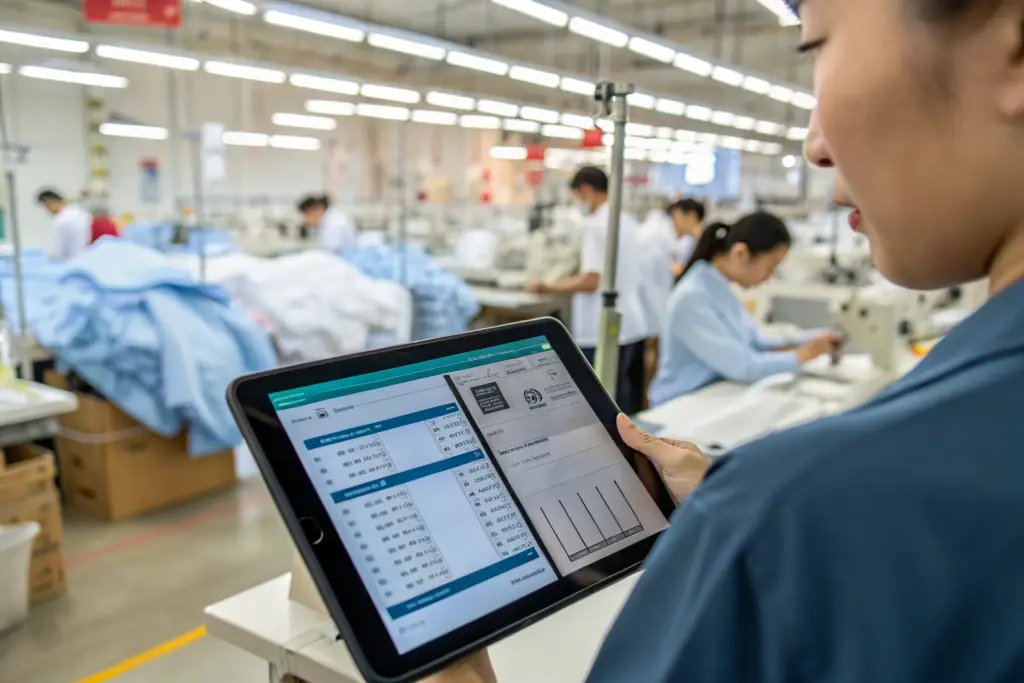
How Does Our Production Tracking Dashboard Provide Real-Time Visibility?
Each production order is assigned a digital card in our tracking system. The card moves through columns representing the production milestones. Fabric In-House. Cutting. Sewing. Wash. Final Inspection. Packing. Shipped. The card is moved by the floor supervisor, who scans a barcode on the bundle ticket at the completion of each stage. The movement is automatic and time-stamped.
The dashboard displays more than just milestone status. It displays the daily output quantity for each line, actual versus target. It displays the in-line defect rate for each line, updated hourly. It displays the lab test status for the fabric and hardware lots associated with the order. Green for passed, yellow for in progress, red for failed.
Clients who have a login can view the dashboard for their specific orders. They can see that their order is in the Sewing stage, that the line is running at 95% of the daily output target, and that the in-line defect rate for the past 24 hours is 1.1%. This transparency eliminates the "where is my order" email. The client has more information at their fingertips than a weekly email update could provide. The digital production tracking in garment manufacturing technology is becoming more accessible. We implemented our system three years ago, and it has transformed our client communication and our internal management.
How Do We Use Quality Data to Drive Continuous Improvement?
Data without action is noise. We review our quality data in a structured weekly meeting. The Quality Manager, the Production Manager, the five line supervisors, and I sit down every Monday morning. We review the previous week's quality metrics. The defect rate by line. The top three defect types. The final AQL inspection results. The lab test results. The client complaint log, if any.
If a line's defect rate exceeded 2% for the week, the line supervisor presents a root cause analysis and a corrective action plan. The plan is documented and tracked. The following Monday, we check if the plan worked. If the defect rate dropped, the plan was effective. If not, we dig deeper.
If a particular defect type is recurring across multiple lines, we investigate a systemic cause. Perhaps a new fabric lot has a different hand feel that is causing operators to adjust their handling. Perhaps a new operator training program is needed for a specific operation. The data points us to the problem. The meeting drives the solution.
This continuous improvement cycle has driven our average defect rate down from 2.8% in 2020 to 1.2% in 2025. The continuous improvement in quality management methodology, often called Kaizen, is a core principle of lean manufacturing. The digital quality data system provides the fuel for the continuous improvement engine.
Conclusion
Five production lines is not just our capacity. It is our quality architecture. Each line is a self-contained production cell with a dedicated supervisor and a dedicated quality auditor who reports independently to the Quality Manager. The hourly in-line audit catches process drift within 30 minutes of its origin, limiting the damage radius to 15 pieces instead of 200. The end-of-line 100% visual check catches gross defects. The final AQL 1.5 inspection by an independent QA team provides a statistically valid quality assessment before shipment. The centralized quality laboratory tests every incoming fabric lot, hardware batch, and wash recipe, enforcing consistent material standards across all five lines. The digital production tracking dashboard gives our management team and our clients real-time visibility into quality metrics and production status.
This system is not complicated. It is disciplined. The hourly audit happens every hour, not just when someone remembers. The lab tests happen on every lot, not just when there is time. The Monday quality meeting happens every Monday, not just when there is a crisis. The discipline is what makes the system work. And the discipline comes from the top. I walk the floor every morning. I review the quality dashboard every evening. I attend the Monday meeting every week. Quality is not a department. It is a culture. A culture is built by the actions of the leader, repeated consistently, over years.
If you want to see our quality systems in action, we can show you. Contact our Business Director, Elaine. She can arrange a live video tour of our production lines and our quality lab during operating hours. She can also provide a sample of our weekly quality dashboard and a detailed explanation of our inspection protocols. Her email is elaine@fumaoclothing.com. At Shanghai Fumao, we do not just claim top manufacturing quality. We measure it, we track it, and we prove it. Five lines. One standard. Zero compromises.