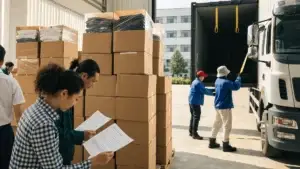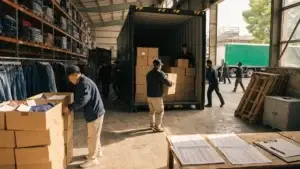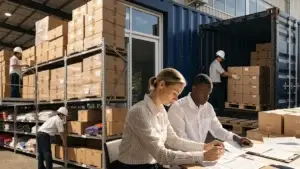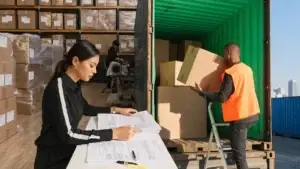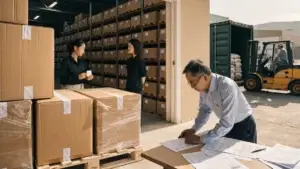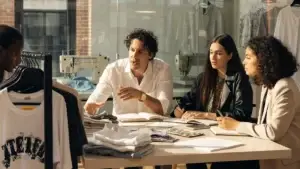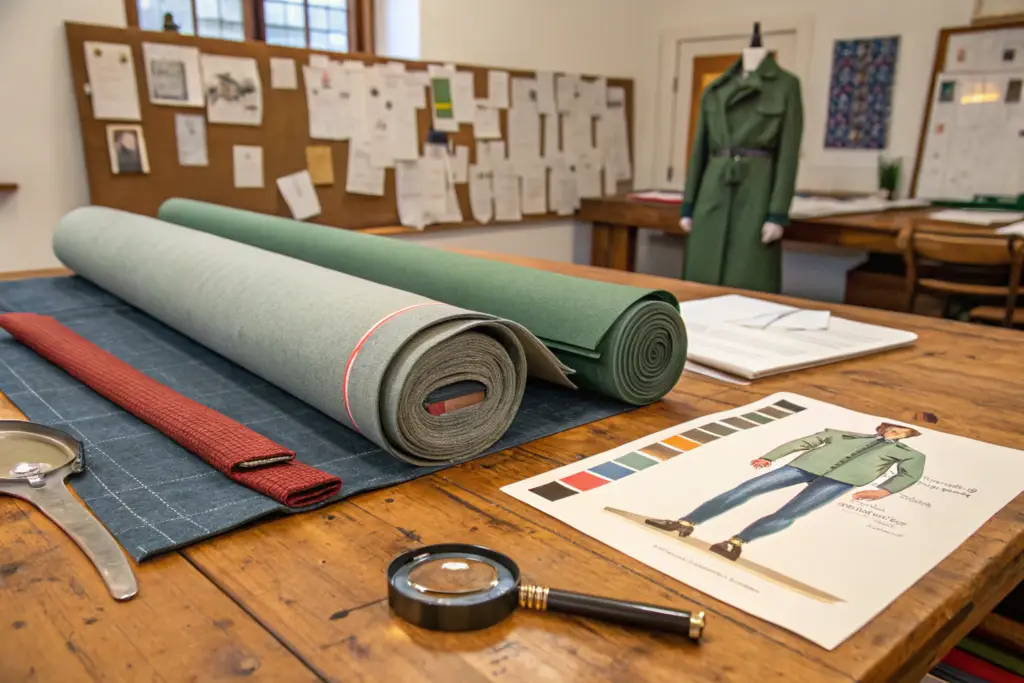
You are a buyer for a large brand. Your design team has just shown you the concept for next season. It is not a basic denim short. It is a Japanese selvedge denim short with a red-line ID, a chainstitch hem, and a specific vintage wash that took three weeks to develop. It is a linen-Tencel blend trouser with a custom garment dye in a Pantone color that does not exist in any mill's stock range. It is a hemp-organic cotton jacket with a mineral wash finish. The designs are ambitious. The fabrics are rare. The finishes are complex. Your regular supplier, the one who handles your basic denim program, has already said no. Their mill cannot source the selvedge. Their wash house cannot handle the mineral wash. Their pattern maker is not comfortable with the jacket construction. You need a different kind of factory. One that specializes in the difficult, the unusual, and the technically demanding.
Large brand buyers find a top clothing manufacturer for rare fabric styles by looking beyond the mass-market supplier directories and searching for factories with three specific capabilities. First, a dedicated fabric sourcing team with direct relationships to specialty mills, selvedge mills in Japan, linen mills in Belgium, organic cotton mills in India, not just the large commodity mills that supply basic denim. Second, an in-house wash and finishing R&D lab capable of developing custom wash recipes, garment dyes, and specialty finishes on unfamiliar fabric blends. Third, a pattern making and sampling team with experience across a wide range of woven fabric weights and behaviors, from heavy selvedge to lightweight Tencel, who can adjust their construction techniques to the specific demands of the material.
I run Shanghai Fumao. We built our reputation on denim shorts, but our true specialty is not a single product category. It is the difficult project. The fabric that is hard to source. The wash that has never been done before. The construction that requires rethinking the standard methods. Large brands come to us when their regular suppliers say no. In this article, I will explain how we source rare fabrics, how we develop finishes for unfamiliar materials, and how we approach the pattern making and sampling challenges that rare fabrics present. If your design team is pushing boundaries, this is how we help them execute.
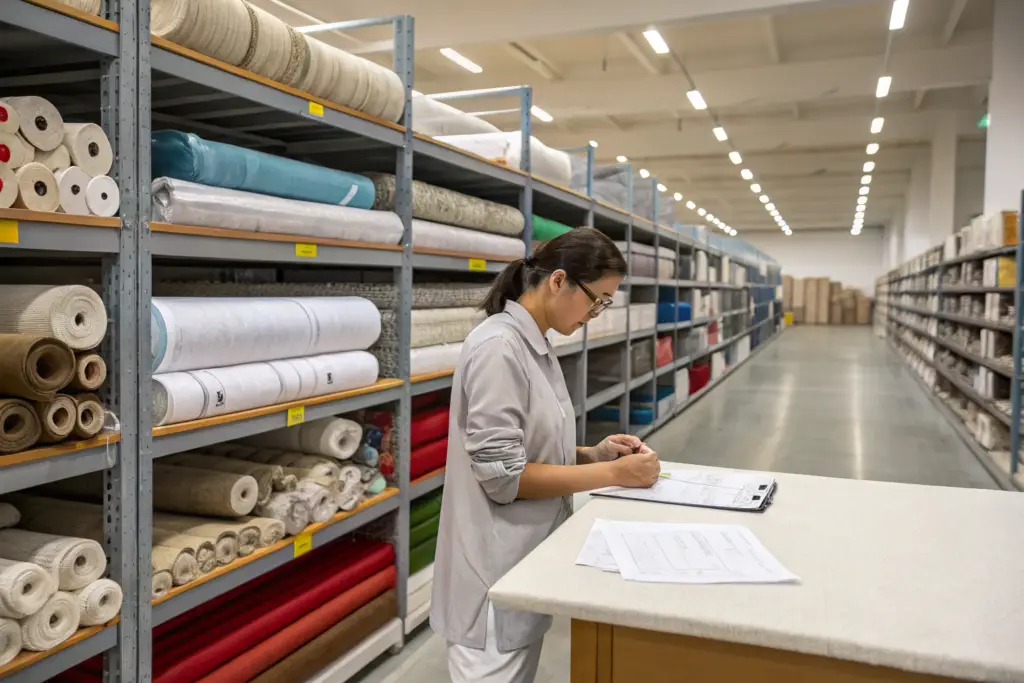
How Do We Source Rare and Specialty Fabrics for Large Brand Orders?
Sourcing a rare fabric is not about browsing a catalogue. It is about relationships. The mills that produce selvedge denim on vintage shuttle looms, the mills that weave fine Belgian linen, the mills that knit Tencel jersey, the mills that blend hemp and organic cotton, are not the large commodity mills that supply the mass market. They are smaller, specialized operations. They do not have large sales teams. They do not exhibit at the major trade shows. They are known within the industry, but they are not easy for a brand to access directly.
Our fabric sourcing team, led by our Sourcing Manager, has spent years building relationships with these mills. We know the selvedge mill in Okayama that can do a custom red-line ID in a brand's signature color. We know the linen mill in Belgium that has a specific slub character perfect for a relaxed trouser. We know the organic cotton mill in India that has GOTS certification and a unique ring-spun texture. When a brand comes to us with a rare fabric requirement, we do not start from zero. We start from a database of relationships.
Let me explain how we source two specific categories of rare fabrics and what minimums and lead times to expect.
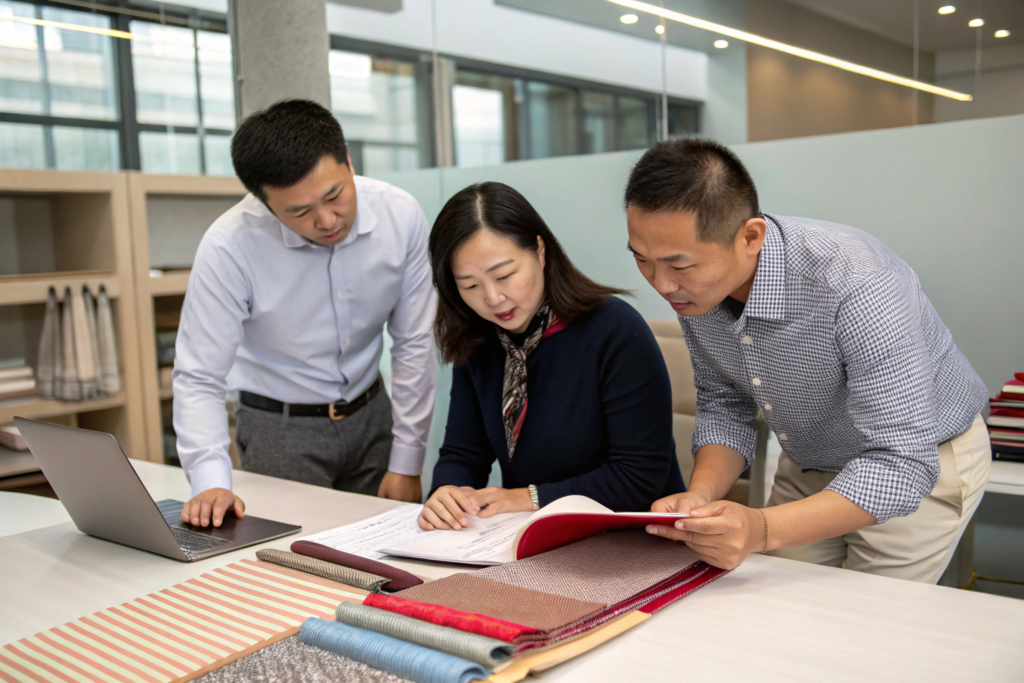
What Relationships Do We Have with Selvedge, Linen, and Organic Cotton Mills?
Our mill relationships are built on years of consistent ordering and reliable payment. The mills know us. They trust us. They will allocate capacity to our orders because we have a track record. This is not a capability that a brand can easily replicate on its own. A brand placing a one-off order with a Japanese selvedge mill will be a low priority. The same mill, receiving an order from us, a known and reliable customer, will prioritize it.
For selvedge denim, we work with a mill in Okayama, Japan, that operates vintage Toyoda shuttle looms. Their minimum order quantity for a custom specification, a specific weight, a specific ID stripe color, is 500 yards. The lead time is six to eight weeks. We also work with a mill in Guangdong, China, that operates Japanese-imported shuttle looms. Their quality is high, their minimums are slightly lower, and their lead times are shorter, four to six weeks. We offer both options to clients, with transparent pricing and lead time information for each. For linen, we work with a mill in Belgium for premium long-staple linen and a mill in China for more cost-effective linen blends. Belgian linen has a distinctive slub character and softens beautifully with wear. Chinese linen is more uniform and more affordable. We source from the appropriate mill based on the brand's price point and aesthetic. For organic cotton, we work with GOTS-certified mills in India and China. The Indian mill specializes in ring-spun organic cotton with a soft, textured hand. The Chinese mill offers a wider range of weaves and finishes. The specialty fabric mill sourcing requires deep industry knowledge. Our sourcing manager has that knowledge.
How Do We Manage Higher Minimums and Longer Lead Times for Rare Fabrics?
Rare fabrics come with constraints. The minimum order quantity from a Japanese selvedge mill is 500 yards, which translates to approximately 300 to 400 pairs of shorts depending on the pattern efficiency. The lead time is six to eight weeks. These constraints are non-negotiable. The mill sets them.
We manage these constraints through transparent communication and advance planning. We tell the brand the exact minimums and lead times before we begin the development process. We do not promise a four-week delivery on a fabric that takes eight weeks to produce. We build the fabric lead time into the project timeline from day one. If the brand needs the shorts for a specific launch date, we back-schedule from that date to determine when the fabric order must be placed.
We also help brands manage the cost implications. Rare fabrics are more expensive per yard than commodity fabrics. Japanese selvedge can cost $7 to $10 per yard. Belgian linen can cost $8 to $12 per yard. Organic cotton from a specialty mill can cost 30% to 50% more than conventional cotton. We provide a detailed cost breakdown that separates the fabric cost from the labor, wash, and logistics costs. This allows the brand to understand where their money is going and to make informed trade-off decisions. Perhaps they choose Chinese selvedge instead of Japanese to save 30% on fabric cost. Perhaps they reduce the number of washes in the collection to allocate more budget to the fabric. The fabric sourcing cost and minimum management is a collaborative process between the brand and the factory. We guide the brand through it.
How Does Our R&D Lab Develop Finishes for Unfamiliar Fabrics?
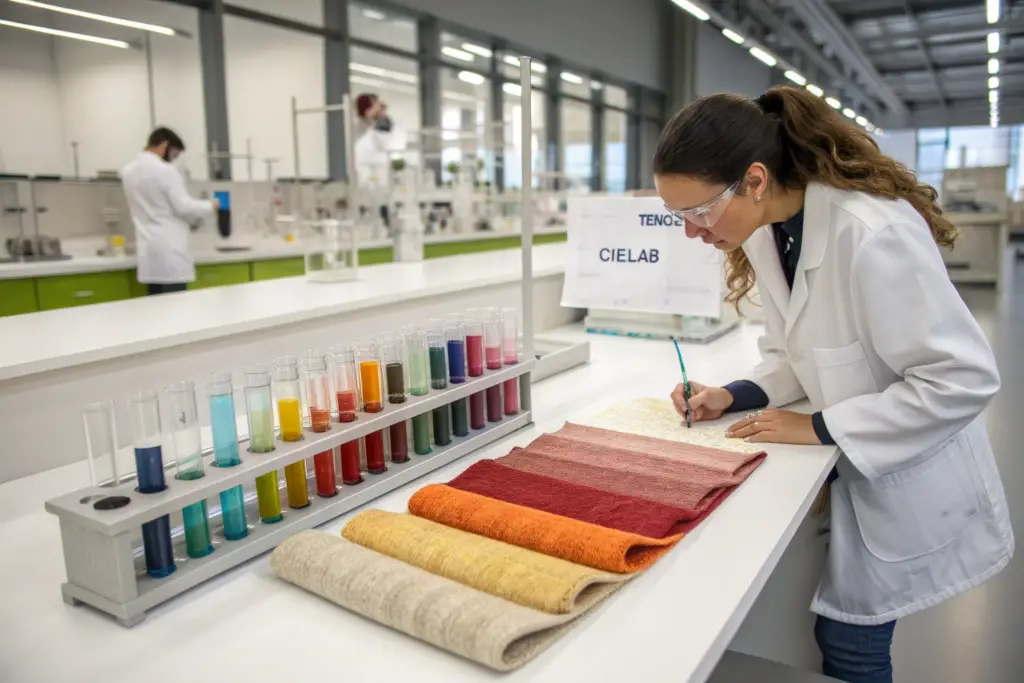
A rare fabric is only half the product. The finish, the wash, the dye, the hand feel, is the other half. A brand that sources a beautiful hemp-organic cotton blend wants a specific finish. A mineral wash that gives a sun-faded, vintage appearance. A soft enzyme wash that brings out the natural slub texture. A garment dye in a custom Pantone color. The problem is that the standard wash recipes developed for denim will not work on hemp blends. The dye recipes developed for cotton will not work on Tencel. The finish must be developed specifically for the fabric.
Our in-house wash and finishing R&D lab exists for this purpose. When a brand presents a rare fabric and a desired finish, our wash technician takes a swatch of the fabric and runs a series of test recipes. She adjusts the chemical concentrations, the temperatures, the cycle times, and the mechanical action to achieve the desired result on that specific fabric. The lab is equipped to simulate our production wash processes on a small scale. The recipe that works in the lab is then validated in a small production batch before being rolled out to the full order.
Let me explain how we approach custom wash development and color matching for rare fabrics.
How Do We Develop Custom Wash Recipes for Hemp Blends, Tencel, and Other Rare Fibers?
Each fiber behaves differently during washing. Cotton is robust. It can handle enzyme treatments, stone tumbling, and ozone bleaching. Linen is strong but wrinkles easily and can develop a hairy surface if over-abraded. Tencel is soft and drapes well but can fibrillate, developing a peach-fuzz surface, if washed too aggressively. Hemp is strong and textured but can be stiff and requires softening treatments.
Our wash technician understands these differences. She starts with a small swatch of the fabric. She runs a matrix of test washes. For a hemp-organic cotton blend that the brand wants to have a soft, worn-in hand feel, she might test a light enzyme concentration at 40 degrees Celsius for 20 minutes. If the hand feel is still too stiff, she increases the enzyme concentration or the cycle time. If the fabric begins to fibrillate, she reduces the mechanical action or adds a softening agent. She documents each test recipe and the result. When she arrives at a recipe that achieves the desired finish without damaging the fabric, she locks the recipe. The recipe includes the exact chemical products, concentrations, temperatures, cycle times, and machine settings. This recipe is then used for the pre-production sample and for the bulk production. The custom wash development for specialty fabrics process is a scientific method applied to textile finishing. Our lab has the equipment and the expertise to execute it.
Can We Match Pantone Colors on Non-Denim Fabrics Like Linen and Tencel?
Yes. The color matching process is the same methodology whether the fabric is denim, linen, Tencel, or a blend. The fabric is the variable. The spectrophotometer and the dye recipe formulation process are the constants.
The challenge with non-denim fabrics is that they absorb dye differently than cotton denim. Linen has a different cellulose structure. It absorbs dye more quickly and can appear darker or more saturated than cotton at the same dye concentration. Tencel is a regenerated cellulose fiber. It absorbs dye very efficiently and can achieve brighter, more intense colors than cotton. These differences must be accounted for in the dye recipe formulation.
Our lab handles this by building a spectral profile for each fabric type. When a brand provides a Pantone reference for a linen trouser, our color technician measures the Pantone reference on the spectrophotometer. She then formulates a dye recipe using the spectral profile for linen, not for cotton. The recipe predicts how the linen will absorb the dyes and calculates the required concentrations to match the target color. The lab dip is produced on the actual linen fabric. It is measured. The Delta E is calculated. If it is above 1.5, the recipe is adjusted. The process repeats until the Delta E is below 1.5. The approved lab dip becomes the sealed color standard. The Pantone color matching on different textiles is a standard color management practice. Our lab applies it to whatever fabric the brand specifies.
How Does Our Pattern Making Adapt to Rare and Difficult Fabrics?
A fabric's weight, drape, stretch, and texture dictate how it must be cut and sewn. A pattern that works perfectly for a 10.5 oz denim short will not work for a 7 oz linen trouser. The linen is lighter, drapes differently, frays more easily, and shrinks at a different rate. The pattern must be adjusted for the specific fabric. The seam allowances, the stitch types, the hem finishes, the interfacings, and the construction sequence may all need to be modified.
Our pattern making team has experience across the full range of woven fabric weights and behaviors. Our head pattern maker has worked with selvedge denim, which is narrow and requires pattern pieces to be aligned to the selvedge edge. She has worked with Tencel, which is slippery and requires careful handling to prevent shifting during cutting. She has worked with linen, which frays and requires enclosed seams. She has worked with hemp blends, which are stiff and require ease allowances to allow for the fabric's lack of natural drape. This experience means we do not learn on the brand's order. We apply known solutions to the specific fabric challenge.
Let me explain how we adjust our pattern making and construction for specific fabric challenges.
How Do We Adjust Seam Allowances, Stitch Types, and Interfacings for Different Fabric Behaviors?
A pattern is not a one-size-fits-all document. It is a fabric-specific blueprint. When we develop a pattern for a new fabric, our pattern maker considers several fabric-specific factors.
Seam allowance width. A fabric that frays heavily, like a loose-weave linen, requires wider seam allowances so the raw edge can be enclosed or finished before it unravels. We may use a 1/2 inch seam allowance instead of our standard 3/8 inch, and we will specify a French seam or a bound seam for a clean, secure finish. A fabric that does not fray, like a tightly woven Tencel, can use a narrower seam allowance and a simpler overlock finish. Stitch type and density. A fabric that is prone to seam slippage, like a smooth, tightly woven Tencel, requires a higher stitch density and a security stitch to prevent the yarns from pulling apart at the seam. A fabric with a loose, open weave may require a lower stitch density to avoid perforating the fabric. Interfacing selection. A lightweight fabric that needs structure at the waistband or the placket requires a lightweight, fusible interfacing that provides support without overwhelming the fabric's drape. A heavy, stiff fabric may not need interfacing at all, or may need a sew-in interfacing to avoid stiffness. Ease allowances. A fabric with no natural stretch, like a rigid hemp blend, requires more wearing ease built into the pattern so the garment is comfortable to wear. A fabric with mechanical stretch from the weave, like a twill, requires less ease.
These adjustments are based on the fabric's tested properties and our pattern maker's experience. The pattern making for different fabric types is a specialized skill. Our team has that skill.
What Sampling Protocols Do We Use to Validate Fit and Construction on Rare Fabrics?
A rare fabric cannot be wasted on failed samples. The sampling process must be disciplined to minimize fabric consumption and maximize learning. We use a three-stage sampling protocol for rare fabric projects.
Stage one is the fit sample in a substitute fabric. We use an inexpensive fabric with similar weight and drape characteristics to the rare fabric. The purpose is to test the pattern and the fit without consuming the expensive material. The brand evaluates the fit on a model. Feedback is incorporated. The pattern is adjusted. Stage two is the proto sample in the actual rare fabric. One sample is made using the approved pattern and the actual production fabric. This sample tests how the rare fabric behaves during cutting, sewing, and pressing. Does the fabric shift during cutting? Does it pucker at the seams? Does it press flat? The construction techniques are validated on this sample. Stage three is the pre-production sample, also in the actual fabric, with the approved wash and finish. This is the sealed standard for bulk production.
This protocol ensures that the rare fabric is used only for samples that validate the final decisions. The sampling process for specialty fabrics minimizes waste and maximizes the information gained from each sample. We recommend it for all rare fabric projects.
Conclusion
Large brand buyers find a top manufacturer for rare fabric styles by looking for three capabilities. A fabric sourcing team with direct relationships to specialty mills around the world. An R&D lab capable of developing custom washes, dyes, and finishes for unfamiliar fiber blends. A pattern making team with experience across the full spectrum of woven fabric weights and behaviors, from heavy selvedge to lightweight Tencel. A factory that has these three capabilities can execute the ambitious designs that a brand's design team creates. A factory that lacks any one of them will say no, or will say yes and then fail during development.
Shanghai Fumao has invested in all three. Our sourcing manager's mill relationships span Japan, Belgium, India, and China. Our wash lab has developed custom finishes for hemp, Tencel, linen, and organic cotton blends. Our pattern making team adjusts seam allowances, stitch types, and construction sequences to the specific demands of each fabric. These capabilities are why large brands come to us when their regular suppliers cannot handle a project. We are the factory for the difficult project.
If your design team has created a collection that requires rare fabrics and complex finishes, I invite you to start the conversation early. The fabric lead times are long. The development process takes time. Contact our Business Director, Elaine. She can arrange a call with our sourcing manager and our wash technician to discuss your specific fabric and finish requirements. She can also provide a development timeline and a cost estimate. Her email is elaine@fumaoclothing.com. At Shanghai Fumao, we do not just make denim shorts. We make the projects that other factories turn down.