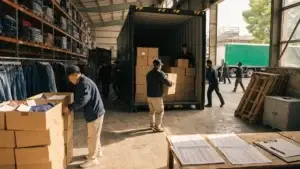
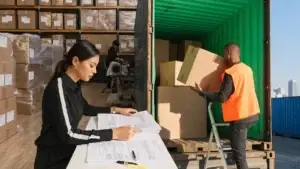
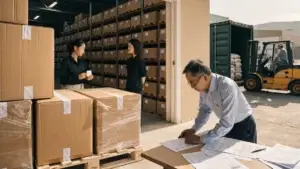
European distributors are a different breed from American ones. An American distributor might accept a certain level of chaos if the price is right. A European distributor cannot. They operate under a regulatory framework that is stricter, more complex, and more aggressively enforced than anything in the United States. REACH chemical compliance. The General Product Safety Regulation. The upcoming Digital Product Passport. The Corporate Sustainability Due Diligence Directive. VAT accounting across 27 member states with different rates and different rules. A shipment that arrives late or with non-compliant documentation does not just disappoint a retail account. It can be seized at the border. It can generate fines. It can trigger a customs audit that ties up the distributor's entire import operation for months. European distributors do not switch suppliers lightly. They switch when their current supplier fails on compliance, on delivery, or on communication, and they find a supplier who has built the infrastructure to guarantee all three.
European apparel distributors switch to Shanghai Fumao because we solve the three problems that make European sourcing uniquely difficult. First, we provide a guaranteed EU-compliant documentation package, including REACH test reports, OEKO-TEX Class I certification, GOTS transaction certificates, and BSCI and SMETA social audit reports, so their shipments clear customs without delay. Second, we offer DDP shipping to all 27 EU member states, acting as the Importer of Record, handling VAT accounting under the IOSS or reverse charge mechanism, and delivering to their warehouse with a single, predictable landed cost. Third, we operate with the communication transparency that European business culture demands, providing real-time production tracking, full audit report access, and a dedicated merchandiser who responds in hours, not days.
I run Shanghai Fumao. Our European client base has grown significantly in the past two years. These distributors did not switch to us because we were cheaper. Many switched from suppliers in Turkey, Bangladesh, or Vietnam that offered lower FOB prices. They switched because the hidden costs of those suppliers, the compliance failures, the logistics surprises, the communication breakdowns, were eroding their margins and consuming their time. In this article, I will explain the specific pain points that drive European distributors to switch suppliers, and why they choose us as their new manufacturing partner.
What EU Compliance Failures Drive Distributors to Switch Suppliers?
European distributors live in fear of the customs notification. The email or letter from the customs authority of an EU member state stating that a shipment has been detained pending a compliance review. The shipment contains denim shorts. The customs officer has tested a metal button and found nickel release above the REACH limit. Or the officer has reviewed the fiber composition label and found a discrepancy with the accompanying documentation. Or the officer has requested the cotton origin documentation under the upcoming Forced Labor Regulation, and the distributor cannot provide it. The shipment is held. Storage charges accrue. The retail accounts waiting for the inventory grow impatient. The distributor is facing a financial loss and a compliance investigation.
These failures are almost always caused by the factory. The factory used a cheaper button that was not REACH-compliant. The factory substituted a fabric with a different fiber composition without updating the label. The factory could not provide cotton traceability documentation because it did not know where its cotton came from. The distributor trusted the factory to handle compliance. The factory failed. The distributor pays the price. After one or two such experiences, a distributor starts looking for a factory that treats EU compliance as a core operational requirement, not an afterthought.
Let me explain the specific compliance failures that drive distributors to switch, and how we prevent them.

Why Are REACH and GPSR Compliance Non-Negotiable for European Distributors?
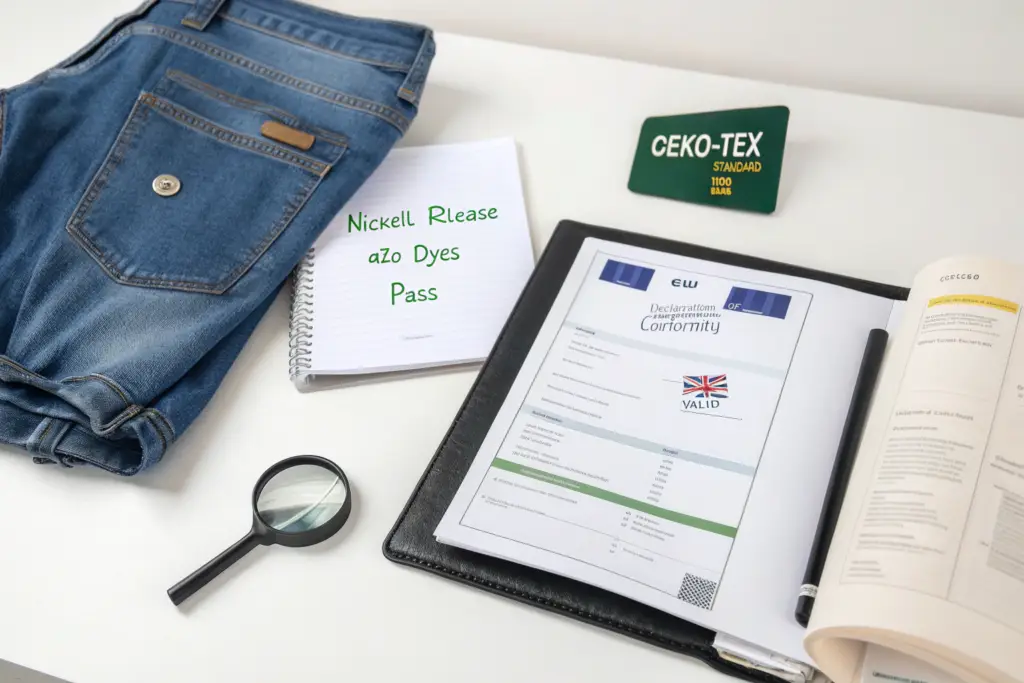
REACH is the EU's chemical safety regulation. It restricts hundreds of substances in consumer products. For denim shorts, the most relevant restrictions are azo dyes that release carcinogenic amines, nickel release from metal components, phthalates in plastic components, formaldehyde in fabric finishes, and organotin compounds in printed designs. The limits are low. The enforcement is strict. A shipment can be tested at the border. If it fails, it is rejected.
The General Product Safety Regulation, which replaced the General Product Safety Directive in December 2024, requires that all consumer products placed on the EU market are safe. For denim shorts, safety includes chemical safety, physical safety, no sharp edges, no drawstring hazards on children's wear, and labeling compliance. The GPSR requires a documented risk assessment and a Declaration of Conformity for the product.
A distributor who imports non-compliant products is legally responsible. The factory in China is not liable in an EU court. The distributor is. A compliance failure can result in fines, a forced recall, and reputational damage with retail accounts. European distributors cannot afford to work with factories that treat compliance casually. We treat compliance as a production specification, not a paperwork exercise. We test every hardware batch for nickel release. We use only OEKO-TEX Class I certified fabrics. We provide the full REACH test report from an ISO 17025 accredited laboratory. We prepare the Declaration of Conformity. The REACH and GPSR compliance for textiles requirements are published by EU authorities. We meet them. Our distributors know that when a shipment from us arrives at Rotterdam or Hamburg, the documentation is in order and the goods will clear.
How Does Our Documentation Package Prevent Customs Delays and Rejections?
Customs delays are caused by missing, incomplete, or inconsistent documentation. A distributor who imports from a factory that provides a one-page commercial invoice and nothing else is gambling. When customs asks for the REACH test report, the distributor does not have it. The shipment is held. The distributor scrambles to request it from the factory. The factory takes a week to respond. The storage fees accumulate.
We provide a comprehensive documentation package for every EU-bound shipment. The package includes the REACH compliance test report from an accredited laboratory. The OEKO-TEX Standard 100 Class I certificate, verifiable online. The GOTS transaction certificate if the order is for organic cotton. The fiber composition test report verifying the care label content. The Declaration of Conformity under the GPSR. The commercial invoice and packing list with correct HS codes and country of origin. The BSCI and SMETA social audit reports for due diligence requirements. This package is provided before the goods ship. The distributor has it ready when customs requests it. The goods clear without delay.
The documentation package is not a special service for demanding clients. It is our standard operating procedure for EU orders. We have built the testing, the certification, and the documentation generation into our production process. The cost is built into our pricing. The EU customs documentation requirements for textiles are well-established. We meet them systematically, not ad-hoc.
How Does Our DDP Model Solve the VAT and Logistics Complexity of Europe?
Importing goods into the European Union is logistically more complex than importing into the United States. The U.S. is one country with one customs authority and no VAT. The EU is 27 countries with a common customs union but 27 different VAT rates, 27 different languages, and 27 different national customs authorities interpreting the common rules. A distributor in Germany needs a different VAT treatment than a distributor in France. A shipment to Poland requires different documentation than a shipment to Portugal.
Most Chinese factories avoid this complexity entirely. They sell FOB. They put the goods on a boat in Shanghai and hand the documents to the buyer. The buyer, or the buyer's freight forwarder, handles everything from that point forward. The factory's job is done. For a European distributor, this means managing customs clearance, duty payment, VAT accounting, and inland logistics across multiple member states. It is a significant administrative burden.
Our DDP model eliminates this burden. We handle everything from our factory floor to the distributor's warehouse, anywhere in the EU. We clear customs at the port of entry, typically Rotterdam or Hamburg. We pay the duties. We handle the VAT under the appropriate mechanism. We arrange the inland transportation to the final destination. The distributor receives one invoice with one price per unit, delivered. The administrative burden is ours. The DDP Incoterms for European imports are complex, but we have built the infrastructure to manage them.
Let me explain the specific logistics and VAT challenges that DDP solves for European distributors.
How Do We Handle VAT Across 27 EU Member States for DDP Shipments?
VAT, Value Added Tax, is the most complex part of DDP to the EU. When goods are imported into the EU, import VAT is due at the rate of the member state where the goods enter free circulation. The rate varies. 21% in the Netherlands, 19% in Germany, 20% in France, 22% in Italy. Under DDP, we are responsible for this import VAT.
However, we do not simply pay the VAT and pass the cost to the distributor. For B2B shipments to a VAT-registered distributor, we use the reverse charge mechanism. We declare the distributor's VAT number on the import declaration. The import VAT is not charged at the border. Instead, the distributor accounts for the VAT on their own VAT return, declaring it as both output VAT and input VAT. The net cash impact is zero. This is the standard treatment for B2B imports and avoids a cash flow burden for the distributor.
For non-VAT-registered buyers or B2C shipments, we use the Import One-Stop Shop, or IOSS, system. We declare and pay the import VAT through a simplified electronic return. The cost is factored into our DDP price. The buyer receives the goods with no additional VAT to pay.
Managing this across 27 member states requires competent customs brokers in the key entry ports. We work with licensed brokers in the Netherlands and Germany who handle the customs clearance, the duty payment, and the VAT processing for all our EU shipments. They know the specific requirements of each member state. They file the declarations correctly. The EU import VAT rules for DDP shipments are complex but manageable with the right partners. We have those partners.
Why Does Acting as the Importer of Record Make Us a Safer Choice?
Under DDP, we are the Importer of Record into the European Union. This means we are legally responsible for the compliance of the imported goods. If the goods are found to be non-compliant with EU regulations, we are liable. The distributor is not.
This risk transfer is valuable to European distributors because it aligns our incentives with theirs. We are not just motivated to produce good shorts. We are motivated to produce shorts that will pass EU customs scrutiny because we bear the financial consequences if they do not. This changes our behavior. We test our materials before production. We prepare our documentation meticulously. We stay current with regulatory changes. We do this because our money is at stake, not just our reputation.
Most Chinese factories are not willing to act as the Importer of Record into the EU. They do not have the compliance infrastructure. They do not want the legal liability. They sell FOB and let the buyer take the risk. Our willingness to act as the Importer of Record, backed by our compliance systems, is a major differentiator. It tells the European distributor that we are confident in our compliance. It tells them that we are a partner, not just a vendor. The EU Importer of Record responsibilities are serious legal obligations. We accept them because we have the systems to manage them.
What Communication and Transparency Expectations Do European Distributors Have?
European business culture, particularly in Germany, the Netherlands, and Scandinavia, values directness, precision, and transparency. A European distributor does not want a friendly salesperson who says "everything is going very well" when there is a problem. They want a merchandiser who says "we have a two-day delay on the wash because the enzyme concentration needed adjustment. Here is the data. The revised ship date is Wednesday. I will confirm tomorrow morning." The communication is direct. It includes data. It proposes a solution. It sets a clear expectation for the next update.
European distributors are also accustomed to a high level of documentation and auditability. They expect to be able to verify claims, not just accept them. When we say we are BSCI certified, they expect to see the full audit report, not just the cover page. When we say our fabric is OEKO-TEX certified, they expect to verify the certificate number online. When we say the order is on schedule, they expect to see the production dashboard with the milestone completion data. This expectation of transparency aligns perfectly with how we operate. We built our transparency systems for exactly this purpose.
Let me explain the specific communication practices that European distributors expect and how we meet them.

Why Do European Buyers Demand Direct Access to Quality and Compliance Data?
European distributors are required by law to conduct due diligence on their supply chains. The Corporate Sustainability Due Diligence Directive, or CSDDD, requires large companies to identify, prevent, and mitigate human rights and environmental risks in their supply chains. Even smaller distributors, not yet in scope, are feeling pressure from their retail customers to provide supply chain transparency.
A distributor who sources from a factory that provides only a price list and a ship date cannot meet these due diligence requirements. They need access to the factory's audit reports, chemical test results, and supply chain documentation. They need to be able to prove to their customers and to regulators that their products are made in safe, fair, and environmentally responsible conditions.
We provide this access. Our BSCI and SMETA audit reports are available to clients under NDA. Our REACH test reports and OEKO-TEX certificates are provided with every shipment. Our cotton traceability documentation is maintained in our digital system. Our production dashboard provides real-time quality data. A European distributor who works with us can demonstrate supply chain transparency to their retail customers and to regulators. This is a competitive advantage for them in a market that increasingly values verified sustainability. The EU supply chain due diligence requirements are driving demand for transparent suppliers. We are a transparent supplier.
How Does Our Direct Communication Model Align with European Business Culture?
European business culture values direct, professional communication. The relationship between a distributor and a supplier is a professional partnership, not a friendship. Communication should be clear, concise, and data-driven. Problems should be raised early, with proposed solutions. Promises should be specific and documented, not vague and verbal.
Our communication model is designed for this culture. Our merchandisers are trained to communicate with directness and precision. "The fabric lot has arrived. The lab test results are attached. Tensile strength is 385 N, above the 350 N minimum. Shrinkage is 1.8%, within the 2% tolerance. We will begin cutting tomorrow." No fluff. No vague reassurances. Just the data and the next step. Our digital dashboard allows the distributor to verify our updates independently. If we say cutting is complete, the dashboard shows the cutting milestone as green with a timestamp. The distributor does not need to trust our words. They can trust the data.
Our European distributors have told us that this communication style was a major factor in their decision to switch. They were tired of friendly salespeople who never answered their specific questions. They were tired of chasing suppliers for updates. They value the direct, data-driven communication they receive from our merchandisers. The cross-cultural B2B communication in Europe emphasizes professionalism, precision, and reliability. Our communication model delivers all three.
Conclusion
European apparel distributors switch to Shanghai Fumao because we have built the specific infrastructure that the European market demands. The EU compliance infrastructure, REACH testing, OEKO-TEX certification, GOTS traceability, and social audit transparency, that ensures their shipments clear customs and meet regulatory requirements. The DDP logistics infrastructure, Importer of Record responsibility, VAT management across 27 member states, and single-price landed cost, that eliminates the administrative burden and the logistics risk from their operations. The communication and transparency infrastructure, direct, data-driven updates, real-time production tracking, and full documentation access, that aligns with European business culture and supports their due diligence obligations.
These are not marketing claims. They are operational capabilities built over years of investment. We made these investments because we saw the European market moving toward stricter compliance, deeper transparency, and greater logistics complexity. We positioned our factory to be the safe choice for European distributors. The growing number of European distributors on our client list confirms that the strategy is working.
If you are a European apparel distributor evaluating your sourcing options, I invite you to test our infrastructure. Contact our Business Director, Elaine. She can provide a sample EU compliance documentation package, a DDP quotation to your specific delivery address, and access to a demonstration of our production tracking dashboard. Her email is elaine@fumaoclothing.com. At Shanghai Fumao, we do not just ship to Europe. We deliver to your door, with the paperwork to prove it is legal, at a price you can count on. That is the difference that makes distributors switch.