I remember the call that changed everything. It was 2018. A buyer from a major U.S. distributor was on the phone. His voice was calm, but I could hear the anger underneath. His summer denim shorts order was three weeks late. His retail accounts were cancelling purchase orders. He was looking at a six-figure loss. He told me he would never work with our factory again. I did not blame him. I had failed him. The fabric mill had been late. I had accepted the mill's promise without verifying it. I had not communicated the delay until the ship date had already passed. I had made every mistake a factory can make. That call was the moment I decided to rebuild our entire production system around a single, uncompromising principle: the ship date is a promise, not a wish.
Shanghai Fumao became a top clothing manufacturer by systematically eliminating the four root causes of late shipments. First, we eliminated fabric delays by investing in a pre-stocked greige fabric inventory for our core denim specifications, so production starts when the order is confirmed, not when the mill delivers. Second, we eliminated overbooking by implementing a capacity reservation system that allocates a specific production line and a specific time slot to each order, and we refuse new orders when capacity is full. Third, we eliminated information delays by building a milestone-tracked production system with a real-time digital dashboard, so delays are visible within hours, not discovered weeks later. Fourth, we eliminated logistics variability by shifting to a DDP-first shipping model, where we control the container from our factory floor to the buyer's warehouse door, rather than handing off responsibility at the port under FOB terms.
I run Shanghai Fumao. This article is not just our story. It is a blueprint for any brand owner who wants to understand why shipments are late, how a well-structured factory prevents lateness, and what questions to ask a potential supplier to determine if they will deliver on time. I learned these lessons through failure. You can learn them through this article.
What Are the Four Root Causes of Late Apparel Shipments?
Every late shipment has a root cause. It is not bad luck. It is not a random event. It is a failure in one of four specific areas. Fabric availability, production scheduling, progress visibility, or logistics handoff. A factory that does not understand these root causes will blame external factors. "The mill was late." "The port was congested." "The forwarder made a mistake." These are not root causes. They are symptoms. The root cause is that the factory did not have a system to prevent or mitigate these predictable problems.
I learned this the hard way. After losing that distributor in 2018, I conducted a root cause analysis of every late shipment we had experienced over the previous two years. I categorized the causes. The pattern was clear. Fabric delays caused 45% of late shipments. Production overbooking caused 30%. Delayed communication of problems caused 15%. Logistics failures caused 10%. These four causes accounted for nearly every late shipment. I realized I could not fix these problems with better intentions or harder work. I had to fix them with structural changes to how the factory operated.
Let me explain each root cause and the structural solution we implemented.
Why Is Fabric Delay the Most Common Cause of Missed Ship Dates?
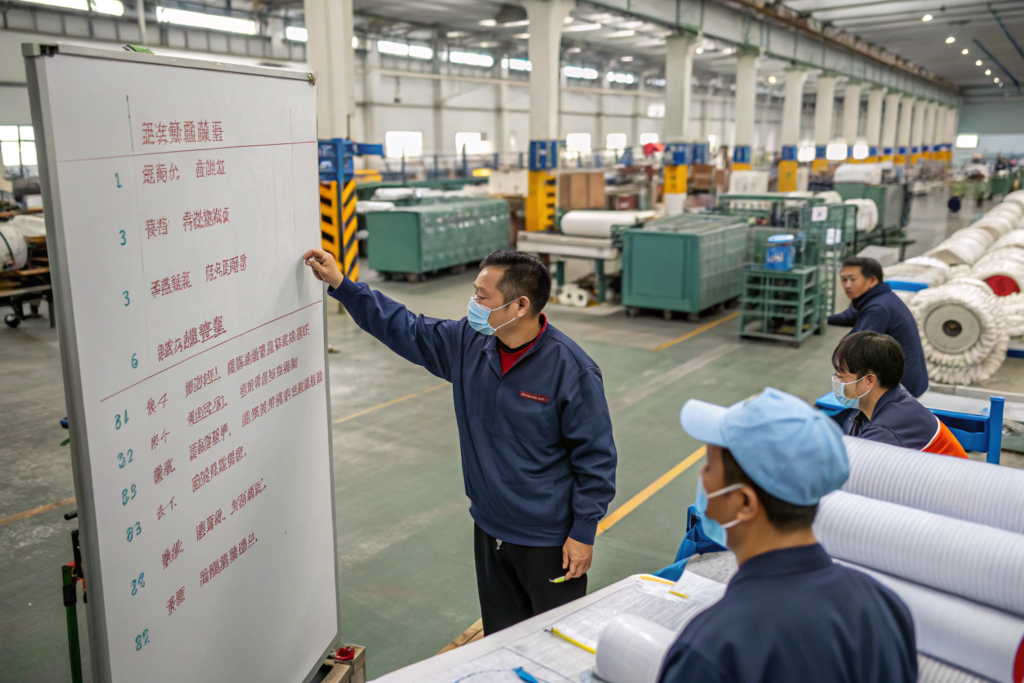
Fabric delay is the most common cause because most garment factories do not stock fabric. They operate on a just-in-time purchasing model. The buyer places an order. The factory places a fabric order with the mill. The mill has a production queue. If the mill is busy, the fabric is delayed. The factory cannot start production until the fabric arrives. The entire production timeline shifts to the right. The ship date is missed.
The factory's promise of a 45-day lead time assumes the fabric will arrive in 7 to 10 days. If the fabric takes 21 days, the 45-day promise is broken before production even begins. The factory often does not tell the buyer about the fabric delay. They hope the mill will catch up. They hope they can make up the time in production. They do not want to deliver bad news. So they say nothing. The buyer discovers the delay when the ship date passes and the goods are not ready. The silence is as damaging as the delay itself.
Our structural solution was to invert the fabric purchasing model. For our core denim specifications, we stock greige fabric, undyed, unfinished denim straight off the loom, in our own warehouse. When an order is confirmed, we pull the greige, finish it to the required specification, and start cutting within a week. The fabric lead time is zero days for these specifications. For non-core fabrics, we order finished fabric from the mill, but we verify the mill's delivery date before we promise a ship date to the buyer. We share the mill's delivery date with the buyer transparently. If the mill is late, we communicate the delay immediately. The fabric inventory management for garment manufacturers is a working capital investment that many small factories cannot afford. We made that investment because fabric delay was the number one reason we were failing our clients.
How Does Production Overbooking Create a Cascade of Delays?
Production overbooking is the factory equivalent of an airline selling more tickets than seats. The factory has a finite number of production lines and hours per day. It can produce a certain number of garments per month. When the factory accepts more orders than its capacity, some orders will be delayed. The factory knows which orders will be delayed. It prioritizes the largest clients or the clients who shout the loudest. The smaller clients wait.
Overbooking is a deliberate choice. The factory owner thinks "I can squeeze in one more order." Or "That client might cancel, so I will take this backup order." The gamble sometimes pays off. When it does not, the buyer suffers. The factory rarely admits to overbooking. They blame the fabric, the machines, the workers. The excuse is always external. The cause is internal.
Our structural solution was a capacity booking system. We operate five production lines. Each line has a finite weekly output. We maintain a capacity calendar that shows the available slots for each line, each week, for the next six months. When an order is confirmed, we allocate a specific line and a specific time window. Once the slots are filled, we stop accepting orders for that period. We tell the buyer honestly that the next available slot is in a later week. This honesty sometimes costs us orders in the short term. A buyer wants an April delivery. Our next available slot is May. They go to another factory that promises April. Sometimes that factory delivers in April. Often, that factory delivers in June because they overbooked. The buyer learns a painful lesson about the difference between a promise and a plan. The production capacity planning for apparel methodology is a standard industrial engineering practice. A factory that does not use it is gambling with delivery dates.
How Did We Rebuild Our Production System Around Deadline Reliability?
Rebuilding the production system was a two-year project. It required capital investment, process redesign, and a cultural shift. The capital investment was the greige fabric inventory and the digital tracking infrastructure. The process redesign was the capacity booking system and the milestone-based production scheduling. The cultural shift was the hardest part. We had to change from a culture of hope to a culture of data. "I hope the fabric arrives on time" became "The fabric is confirmed for delivery on March 3rd. If it does not arrive, we have a contingency plan." "I hope we can finish this order by Friday" became "We are at 80% completion as of Wednesday 5 PM. We need 20 more hours of production. We are on track."
The cultural shift started with me. I stopped asking "When will it be done?" and started asking "What is the data telling us?" I required every production meeting to begin with a review of the milestone dashboard. I celebrated early problem detection, not just on-time delivery. When a supervisor flagged a potential delay a week in advance, I praised them publicly. When a supervisor hid a problem until the ship date, I held them accountable. The message was clear. Problems are not punished. Hiding problems is punished.
Let me explain the specific systems we built and how they work together.

What Is a Milestone-Based Production Schedule and How Does It Prevent Surprises?
A traditional production schedule has one date. The ship date. The buyer knows nothing about the order's progress between the order confirmation and the ship date. If a problem occurs, the buyer learns about it when the ship date is missed. The problem has been growing for weeks. The buyer is blindsided.
A milestone-based production schedule breaks the production process into discrete stages, each with a planned completion date. Our denim short orders have six milestones. Fabric In-House and Inspected. Cutting Complete. Sewing 50% Complete. Sewing 100% Complete. Wash and Finish Complete. Final Inspection Passed and Packed. Each milestone has a date. Each milestone is tracked. If the Cutting milestone is due on March 5th and the fabric is still not in-house on March 3rd, we know the cutting date is at risk. We notify the buyer immediately. We present a recovery plan. The buyer is not blindsided on the ship date. They are informed two weeks in advance.
The milestone system also drives internal accountability. The cutting room supervisor knows her milestone date. The sewing line supervisor knows his. The wash house supervisor knows hers. If a milestone is missed, the responsible supervisor must explain why and present a recovery plan at the daily production meeting. The milestone system makes delays visible and assigns ownership. The milestone-based production tracking methodology is a project management discipline applied to garment manufacturing. It transforms production from a black box into a transparent process.
How Does Our Digital Dashboard Give Clients Confidence in Our Delivery Dates?
The digital dashboard is the client-facing side of our milestone system. Each client has a secure login to a web-based dashboard that displays the real-time status of their orders. The dashboard shows the milestone completion status, the daily output quantity versus the planned quantity, the in-line defect rate, and any flagged issues or delay alerts.
Before the dashboard, clients emailed us for status updates. "How is my order progressing?" "Is everything on track?" "When will it ship?" Each email interrupted our merchandisers. Each reply took time. The client was anxious. The merchandiser was interrupted. The dashboard eliminated these emails. The client can see the status anytime, from any device. The data is objective and real-time. The client's anxiety is reduced because they have visibility. The merchandiser's time is freed for higher-value work.
The dashboard also builds trust over time. A new client may be skeptical. They watch the dashboard closely. They see the milestones being completed on schedule, order after order. The data matches the promises. The skepticism fades. Trust grows. After a year of consistent on-time delivery, the client stops checking the dashboard daily. They check it weekly, or only when they receive an alert. The dashboard has done its job. It has made the delivery date boring. Boring is the goal. The real-time production tracking for client visibility technology is a trust-building tool. It replaces hopeful promises with verifiable data.
Why Did We Switch to a DDP-First Model to Control the Final Mile?
Under FOB terms, the factory's responsibility ends when the container crosses the ship's rail at the port of departure. The factory can meet its production deadline, load the container on time, and still have the buyer receive the goods three weeks late because of port congestion, customs delays, or trucking shortages. The factory celebrates an on-time shipment. The buyer experiences a late delivery. The factory's metrics look good. The buyer's business suffers.
I realized that from the buyer's perspective, the delivery date is the date the goods arrive at their warehouse, not the date they leave my factory. If I wanted to solve late shipments for my clients, I had to take responsibility for the entire journey. I had to control the container until it reached the buyer's door. That meant switching from FOB to DDP.
Under DDP, we book the ocean freight. We arrange the customs clearance. We pay the duties. We arrange the trucking. We are responsible for the container from our factory floor to the buyer's warehouse. Every delay in the logistics chain is our delay. Every cost is our cost. This alignment of incentives changed our behavior. We started choosing carriers with higher schedule reliability. We started filing customs entries before the vessel arrived to speed clearance. We started tracking containers proactively and intervening when delays occurred. The DDP Incoterms and delivery reliability shift the logistics risk to the party best equipped to manage it. That party is us.
Let me explain the specific logistics problems DDP solves and how we manage the DDP process.

What Logistics Variables Does DDP Remove from the Buyer's Risk Equation?
Under FOB, the buyer manages, or pays a freight forwarder to manage, a series of logistics variables. The ocean freight rate, which can fluctuate significantly between the order date and the ship date. The carrier schedule reliability, which varies by shipping line and season. The port congestion at the destination, which can add days or weeks of waiting time and demurrage charges. The customs clearance, which can be delayed by documentation errors or random inspections, generating exam fees and storage charges. The inland trucking, which can be disrupted by chassis shortages, driver shortages, or weather.
Under DDP, all of these variables are our problem. The buyer pays one price per unit, delivered. That price does not change if the freight rate increases. It does not change if the container is held for a customs exam. It does not change if the port is congested and demurrage charges accrue. The buyer's landed cost is fixed and predictable. The buyer's delivery date is our commitment, not a hope. The DDP vs FOB risk comparison shows that DDP transfers logistics risk from the buyer to the seller. For a brand that values predictability, DDP is the superior choice.
How Does Pre-Clearance Speed Up U.S. Customs for DDP Shipments?
Customs clearance is the biggest variable in the final mile. A container can clear customs in one day or in two weeks. The difference is the documentation. If the entry is filed with accurate, complete documentation before the vessel arrives, customs can review and release the shipment by the time the container is discharged. This is pre-clearance.
We pre-clear every DDP shipment. Our U.S. customs broker files the Entry Summary, CBP Form 7501, three to five days before the vessel's estimated arrival. The entry includes the commercial invoice, the packing list, the bill of lading, and all required compliance documentation. Customs reviews the entry electronically. If there are no issues, the shipment is conditionally released. When the container is discharged, it can move directly to the truck for inland delivery. If the shipment is selected for an exam, the pre-clearance still helps because the document review is already complete. The container goes straight to the exam lane, reducing the total wait time. The U.S. customs pre-clearance process is a standard practice for high-volume importers. We apply it to every DDP shipment.
Conclusion
Shanghai Fumao became a top clothing manufacturer by solving late shipment pain points. The solution was not a single fix. It was a systemic rebuild of how we manage production and logistics. We stock greige fabric so that production starts when the order is confirmed, not when the mill delivers. We use a capacity booking system so that every order has a reserved production slot, and we refuse orders when we are full. We track every order against six production milestones on a digital dashboard, so delays are visible within hours and communicated immediately. We ship DDP so that we control the container until it reaches the buyer's warehouse, eliminating the logistics variables that cause final-mile delays.
These four systems work together. The greige inventory eliminates the most common delay. The capacity booking prevents the second most common. The milestone tracking catches the delays that do occur early enough to fix them. The DDP model prevents logistics from undoing a production success. The result is an on-time delivery rate of 97% and a client retention rate of over 80%.
The call in 2018 from the distributor I lost was the most painful moment of my career. It was also the most valuable. It forced me to stop hoping and start building. If you are a brand owner who has been burned by late shipments, I understand your frustration. I built this factory for buyers like you. Contact our Business Director, Elaine. Ask her about our on-time delivery rate. Ask her for a demonstration of our production tracking dashboard. Ask her for a DDP delivery timeline with guaranteed milestone dates. Her email is elaine@fumaoclothing.com. At Shanghai Fumao, the ship date is not a wish. It is a system. That system was built from the wreckage of a failed promise. It has been tested on thousands of shipments. It works.