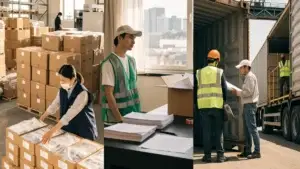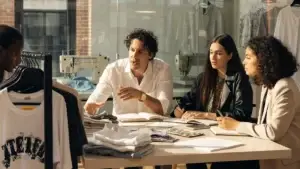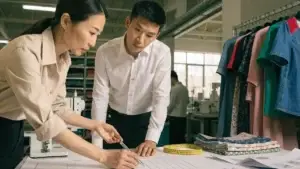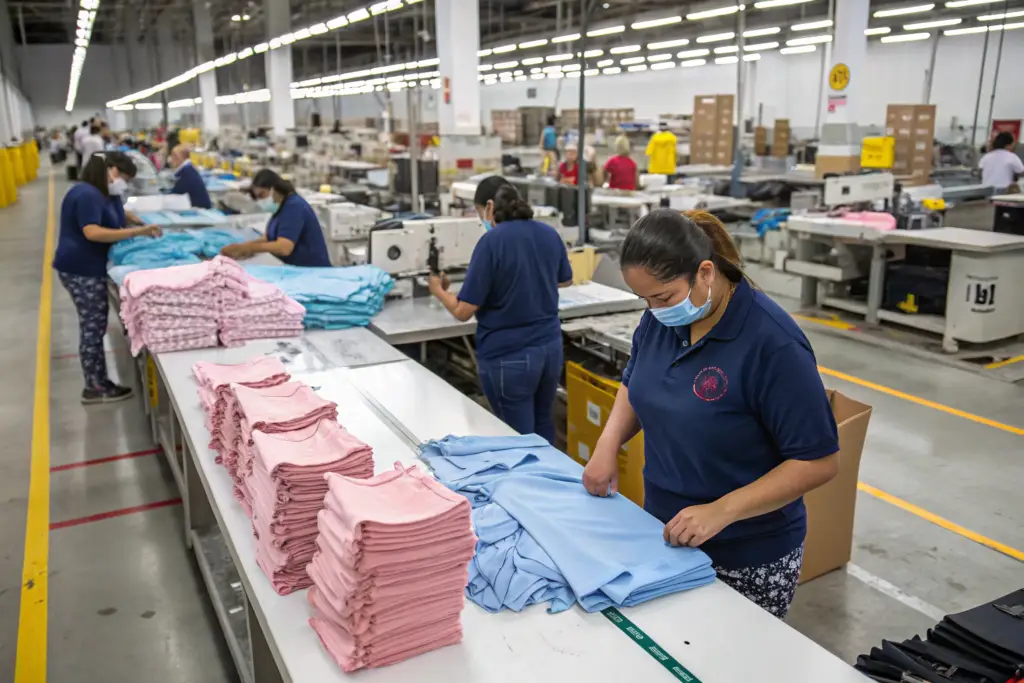
The phone rings. It is late March. A brand owner is on the line. Their kids' summer collection was supposed to be produced by another factory. That factory just backed out. The fabric was delayed. The production line was overbooked. The excuses do not matter. What matters is that the brand has purchase orders from boutique retailers for July delivery. If they do not have inventory, they lose those accounts. They need 2,000 pairs of custom kids' denim shorts, with a specific fit, a specific wash, and branded labels, produced and delivered in ten weeks. They need a factory that can say yes when every other factory says no.
A top clothing manufacturer handles urgent custom kids' wear orders by activating four parallel systems that compress the standard production timeline without compromising safety or quality. First, we allocate capacity from our flexible production lines, shifting resources from non-urgent orders to accommodate the rush, made possible because we own our lines and do not rely on subcontractors. Second, we pull from our pre-stocked greige fabric inventory for the core denim specifications, eliminating the two to four-week mill lead time that would make the deadline impossible. Third, we run an accelerated sampling process, producing the proto sample, fit sample, and pre-production sample on overlapping timelines, with the client providing feedback within 24 hours to keep the process moving. Fourth, we apply our standard CPSIA-compliant safety protocols without compromise, because an urgent order does not justify cutting corners on children's product safety.
I run Shanghai Fumao. I have handled urgent orders. They are stressful. They require the entire factory to operate with heightened focus and coordination. But they are also an opportunity to prove what a well-structured factory can do. In this article, I will walk you through exactly how we handle an urgent kids' wear order, from the initial call to the container departure. I will explain how we accelerate the timeline, what we will not compromise, and what the brand must do to hold up their end of the accelerated process.
How Do We Accelerate the Production Timeline Without Sacrificing Safety?
A standard kids' denim short order takes 10 to 14 weeks from order confirmation to delivery, depending on fabric availability and sampling complexity. An urgent order needs to be delivered in 8 to 10 weeks. That means we must compress the timeline by two to six weeks. The compression cannot come from reducing safety testing. Kids' wear is subject to strict CPSIA regulations in the U.S. and equally strict GPSR regulations in the EU. The lead content testing, the small parts testing, the drawstring compliance, the flammability testing, these are non-negotiable. They take a fixed amount of time. The compression must come from the production stages that are within our control.
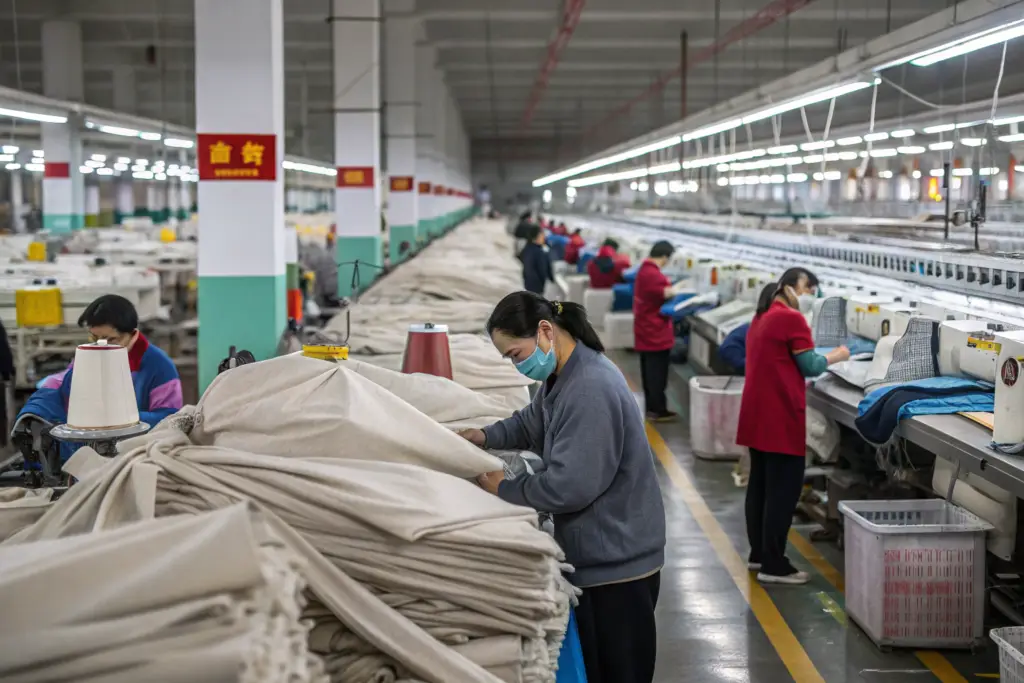
We compress the timeline through three mechanisms. Pre-stocked greige fabric eliminates the fabric mill lead time. Parallel processing runs sampling, fabric finishing, and trim preparation simultaneously instead of sequentially. Capacity prioritization dedicates a production line to the urgent order, running at full output with overtime if necessary, without disrupting other clients' committed delivery dates. These mechanisms require a factory that owns its production assets and has the management discipline to execute under pressure. A factory that relies on subcontractors cannot do this because it does not control the subcontractors' schedules.
Let me explain the specific timeline compression techniques we use and where the time savings come from.
What Is Parallel Processing and How Does It Compress the Sampling Phase?
In a standard production timeline, the stages are sequential. The tech pack is finalized. The proto sample is made and shipped. The client approves it. The fit sample is made and shipped. The client approves it. The pre-production sample is made and shipped. The client approves it. Then bulk production begins. Each stage waits for the previous stage to complete. The sampling phase alone can take six to eight weeks.
In an urgent order, we use parallel processing. The tech pack is finalized quickly, often in a single intensive video call with the client and our pattern maker. The proto sample is made immediately. While the proto sample is in transit to the client, we begin sourcing and finishing the production fabric, anticipating that the proto will be approved or will need only minor adjustments. We also begin preparing the custom trims, the labels, the buttons, the packaging, based on the tech pack specifications. When the client's proto feedback arrives, the fit sample is made immediately. While the fit sample is in transit, we begin cutting the production fabric for the pre-production sample, again anticipating approval. If the fit sample requires adjustments, the pre-production sample incorporates them. If not, the pre-production sample is already underway. By the time the client approves the PP sample, the bulk fabric is already finished, the trims are already in-house, and the production line is ready to start. The parallel processing in garment manufacturing compresses the timeline by running independent stages simultaneously. It requires confidence in the development process and a willingness to invest resources before receiving client approval. We have that confidence because our pattern maker and wash technician have a high first-sample approval rate.
Why Is Kids' Wear Safety Testing the One Stage We Will Never Rush?
Kids' wear safety testing is a legal requirement, not a quality preference. The Consumer Product Safety Improvement Act in the U.S. and the General Product Safety Regulation in the EU set mandatory standards for children's products. For kids' denim shorts, the key requirements are lead content in surface coatings and substrates below 90 ppm and 100 ppm respectively, phthalate content in plastic components below 0.1%, small parts attachment strength for snaps, buttons, and decorative elements, and drawstring compliance for waist and hood areas.
These tests are performed by CPSC-accepted or EU-notified third-party laboratories. The testing process involves shipping samples to the lab, the lab performing the tests, typically three to five working days, and the lab issuing the test report. This timeline cannot be compressed. The lab takes the time it takes. We can expedite the shipping by using courier services, and we can request priority processing from the lab, which sometimes incurs an additional fee. But the testing itself is fixed.
We will never ship kids' wear without a passing third-party safety test report. The legal liability is too great. The risk to children is too great. A brand that pressures a factory to skip safety testing is a brand we will not work with. In an urgent order, we schedule the safety testing as early as possible in the process. As soon as the pre-production sample is made with the final production fabric and trims, we ship a sample to the lab. The test runs in parallel with the early stages of bulk production. By the time the bulk order is complete and packed, the test report is in hand. If the report shows a failure, unlikely given our internal pre-screening, we have time to investigate and correct before shipment. The CPSIA children's product testing requirements are non-negotiable. A top manufacturer builds the testing timeline into the project plan from day one. We do not treat it as an afterthought. We treat it as a fixed, immovable milestone.
How Do We Source CPSIA-Compliant Materials on a Tight Deadline?
The materials for kids' wear must be CPSIA-compliant. The fabric must be tested for lead and phthalates. The metal hardware, buttons, snaps, zippers, must be tested for lead in substrates and nickel release. The plastic components, if any, must be tested for phthalates. The screen printing inks, if any, must be tested for lead in surface coatings. Sourcing compliant materials on a tight deadline means working with suppliers who already have compliant stock available. We cannot order custom hardware and wait four weeks for production. We must use what is available and compliant now.
Our hardware and trim supply chain is built on long-term relationships with CPSIA-compliant suppliers. Our primary hardware supplier maintains a stock of compliant snaps, buttons, and zippers that have been pre-tested for lead and phthalates. We can pull from this stock for urgent orders. For custom branding, such as a branded button or a woven label, the lead time is longer. In an urgent order, we work with the brand to simplify the branding requirements. Perhaps a woven label instead of a custom-engraved button. Perhaps a standard YKK zipper instead of a custom zipper puller. The branding can be elevated on the next order when time allows. The priority is delivering a safe, compliant product on time.
Let me explain how we ensure material compliance and how we handle labeling for U.S. and EU markets.
How Do We Ensure All Trims and Fabrics Meet CPSIA and EU Safety Standards?
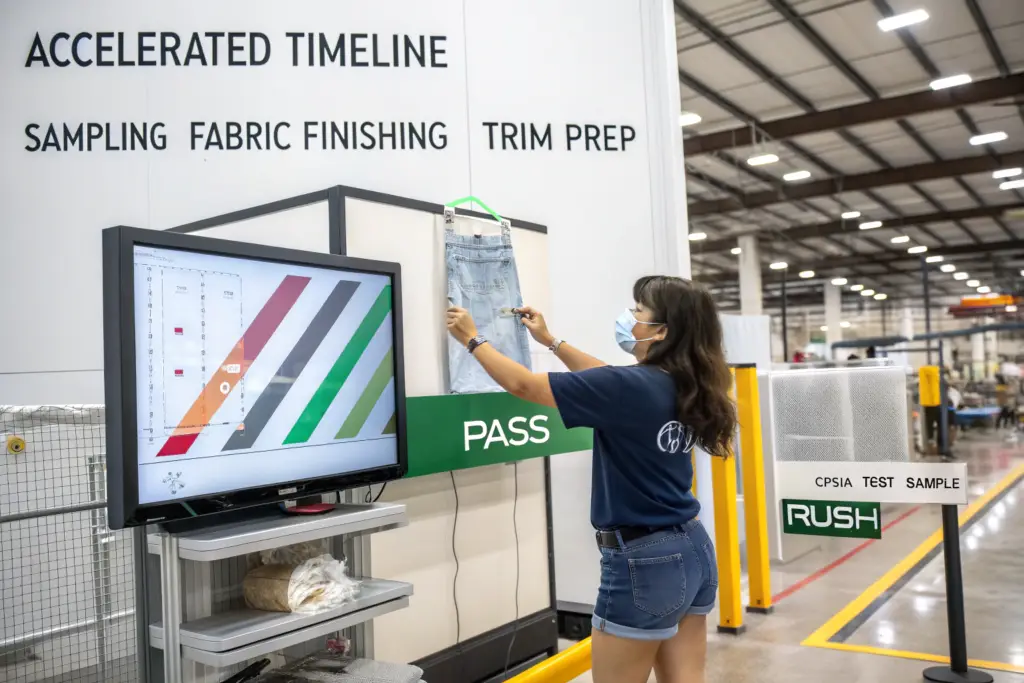
Our incoming material quality control process applies to urgent orders with the same rigor as standard orders. Every fabric lot is tested in our in-house lab. Our XRF analyzer screens for lead and other heavy metals in minutes. If a fabric lot shows lead above the CPSIA limit, it is rejected. We do not use it, regardless of the deadline. Every hardware batch is tested. Our button pull test verifies attachment strength. Our XRF screens for lead. If a hardware batch fails, we pull from our compliant stock. We do not use non-compliant hardware.
For the final product, we ship a pre-production sample to a CPSC-accepted third-party laboratory for full CPSIA testing. The test report is the legal document that supports the Children's Product Certificate that the brand must issue. We provide all the material data and the internal test results to support that certification. For EU orders, we ship a sample for REACH testing, focusing on the restricted substances applicable to children's products, azo dyes, nickel release, phthalates, formaldehyde, and organotins. The CPSIA and REACH compliance for children's apparel requirements are complex and strictly enforced. We maintain a library of compliant materials and a network of compliant suppliers. This infrastructure allows us to move quickly on urgent orders without compromising safety.
What Documentation Proves Compliance for U.S. and European Retailers?
The compliance documentation package for a kids' wear order is more extensive than for adult apparel. It includes the third-party CPSIA test report, the Children's Product Certificate issued by the brand based on the passing test report, the OEKO-TEX Standard 100 Class I certificate, which certifies the product is safe for babies and children, the care label with fiber composition and care instructions, and the tracking label with the manufacturer's RN number and production batch code. For EU orders, it includes the REACH test report and the Declaration of Conformity under the GPSR.
We prepare this documentation package during the production process and provide it to the brand before the goods ship. The brand needs it to clear customs and to satisfy retail account requirements. A shipment of kids' wear without complete compliance documentation can be detained at the border. We do not let that happen. The documentation is as important as the product. The children's product certificate requirements are specific about what must be included. We ensure every certificate is complete and accurate.
What Design Restrictions Apply to Urgent Kids' Wear Orders?
An urgent order requires simplification. The brand that needs 2,000 units in ten weeks cannot also request a complex, multi-stage vintage wash that takes three weeks to develop. They cannot request custom-engraved hardware that takes four weeks to produce. The deadline dictates the design. A top manufacturer guides the brand toward design choices that are achievable within the compressed timeline without sacrificing the brand's aesthetic.
The simplification is not about cutting quality. It is about choosing standard options that are immediately available over custom options that require lead time. A standard enzyme wash instead of a complex vintage fade. A stock YKK zipper instead of a custom-engraved zipper puller. A printed label instead of an embroidered logo. These choices save days or weeks without making the product look cheap. They are smart compromises for an urgent launch. The brand can introduce the more complex design elements on the next, non-urgent order.
Let me explain the specific design elements that can and cannot be accelerated, and how we prioritize the work.

Which Customization Options Can Be Accelerated and Which Require Long Lead Times?
Some customization options have fixed lead times that cannot be compressed. Custom metal hardware, engraved buttons, custom zipper pullers, requires a mold to be made. Mold making takes two to three weeks. Hardware production takes another one to two weeks. Total lead time is three to five weeks. This cannot fit into an urgent timeline. The alternative is to use standard YKK or SBS hardware in a finish that matches the brand's aesthetic, and plan to introduce custom hardware on the next order.
Custom fabric, a specific dye lot, a custom print, a custom blend, requires the mill to produce a special run. Mill lead time is four to eight weeks. This cannot fit into an urgent timeline. The alternative is to select from our pre-stocked greige fabric specifications or from the mill's in-stock finished fabric range. Our greige inventory covers the most common kids' denim weights and compositions. Complex washes, vintage fades with hand sanding, multi-step ozone treatments, resin applications, require development time. Each development round takes several days. Two to three rounds are typical. Total development time is two to three weeks. This may fit into an urgent timeline if it is started immediately and the client provides rapid feedback. However, for the fastest turnaround, a standard enzyme wash or a simple rinse wash is recommended. The wash can be upgraded on the next order.
Options that can be accelerated include woven labels, which can be produced in one week if the design is simple. Screen-printed labels inside the garment, which can be done in our factory in a few days. Embroidery, which can be digitized and sampled within a week. Fit adjustments to an existing block, which can be done in one to two sampling rounds if the changes are minor. The garment customization lead times vary by option. A top manufacturer provides a clear breakdown at the start of the project so the brand can make informed trade-offs.
How Do We Prioritize Work to Meet a Summer 2026 Delivery Window?
When an urgent order is confirmed, it receives a priority designation in our production scheduling system. A dedicated line is assigned. The line supervisor is briefed on the deadline. The daily output target is set. The merchandiser monitors the output hourly and reports to the client daily.
All supporting departments are alerted. The fabric warehouse prioritizes the finishing and inspection of the greige fabric for this order. The cutting room schedules the cutting as soon as the fabric is ready. The wash house reserves capacity for the order's wash batch. The quality lab schedules the internal testing and the third-party testing sample shipment. The logistics team pre-books the container and the vessel space.
The priority designation does not mean we disrupt other clients' orders. Our capacity booking system reserves a portion of our capacity for urgent orders. We do not overbook our lines. When an urgent order arrives, it fills the reserved capacity. If the reserved capacity is already filled, we are honest with the client that we cannot meet their deadline and we help them find an alternative. We do not accept an urgent order and then fail to deliver. The production priority management system ensures that urgent orders are accommodated without breaking commitments to existing clients.
Conclusion
A top clothing manufacturer handles urgent custom kids' wear orders by combining speed with discipline. The speed comes from our structural advantages. Owned production lines that we can allocate quickly. Pre-stocked greige fabric that eliminates mill lead time. A cross-trained workforce that can shift to a priority order. An accelerated sampling process that runs stages in parallel. A network of CPSIA-compliant material suppliers with stock available for immediate use.
The discipline comes from our refusal to compromise on what cannot be rushed. Kids' wear safety testing is fixed. It takes the time it takes. We build it into the timeline from day one. Compliant materials are fixed. We use only what is tested and approved. Custom hardware and custom fabric have fixed lead times. We guide the brand toward standard alternatives that achieve a similar aesthetic. We do not promise what we cannot deliver. We do not accept an order we cannot fulfill.
The partnership with the brand is critical in an urgent order. The brand must provide rapid feedback on samples, ideally within 24 hours. They must make quick decisions on design trade-offs. They must trust our guidance on what is achievable. A brand that collaborates at speed gets their summer collection delivered. A brand that delays feedback or insists on long-lead custom elements misses their window.
If you have an urgent kids' wear order for Summer 2026, or if you are planning ahead and want to secure capacity, contact our Business Director, Elaine. She will give you an honest assessment of what is achievable in your timeframe and a detailed timeline with milestone dates. Her email is elaine@fumaoclothing.com. At Shanghai Fumao, we do not just make kids' wear. We make deadlines.