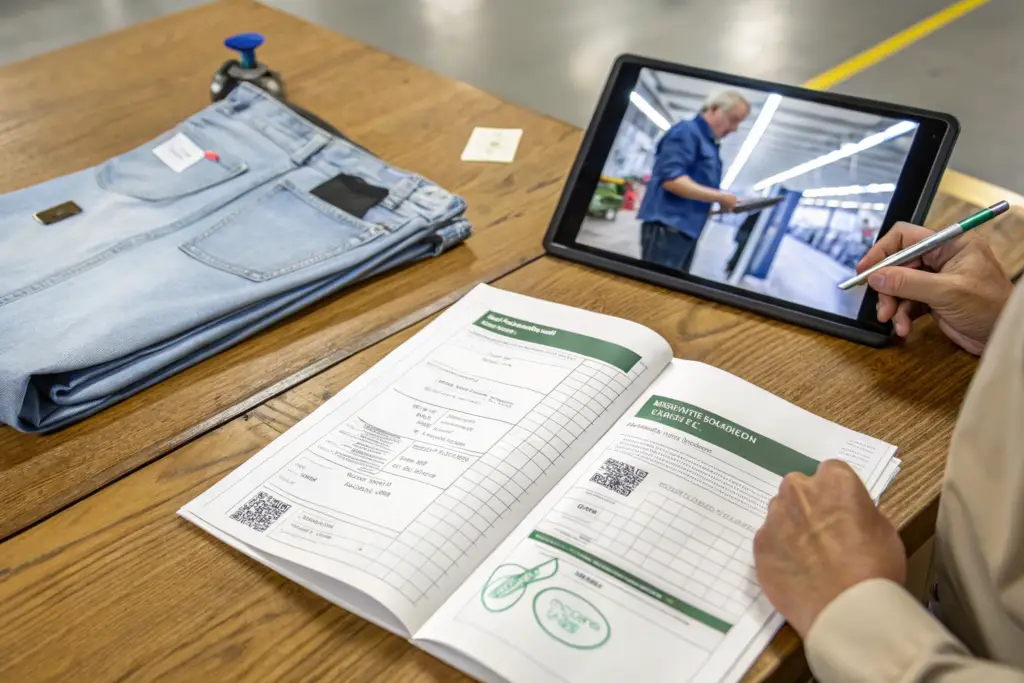
You are a US company owner. You have been burned before. A supplier sent you beautiful samples. You placed a bulk order. The shipment arrived. The fabric was thinner. The stitching was crooked. The wash was blotchy. The zippers stuck. The sizing was inconsistent. You were left with inventory you could not sell and a supplier who stopped responding to your emails. You swore you would never let it happen again. Now you are evaluating a new manufacturer. They have a nice website. Their salesperson is responsive. Their price is competitive. But you need to know if their quality control system is real, or if it exists only in their marketing materials. You cannot afford to make the same mistake twice.
You can verify a top clothing manufacturer's quality control system through five concrete actions, all of which you can take before placing a bulk order. First, request and review their quality control manual and recent inspection reports, looking for specific procedures, acceptance standards like AQL levels, and actual data, not generic promises. Second, conduct a live video tour of their production floor and quality lab where you direct the camera, asking to see specific testing equipment, in-line audit stations, and current production with today's date visible on work orders. Third, commission an independent third-party audit or inspection through a firm like QIMA, SGS, or Bureau Veritas, who will visit the factory unannounced and report directly to you. Fourth, request a pre-production sample and a sealed production sample, then have the sealed sample independently tested for the specific failure modes that matter to your product, fabric strength, color fastness, zipper durability, shrinkage. Fifth, place a small trial order of 300 to 500 units before committing to a large bulk order, and inspect the trial order yourself, measuring key dimensions, testing wear and wash durability, and evaluating consistency across the entire lot.
I run Shanghai Fumao. I have been on the receiving end of all five of these verification methods. I welcome them. A factory that has nothing to hide invites scrutiny. A factory that resists scrutiny is hiding something. In this article, I will walk you through each verification method in detail. I will tell you what to ask for, what to look for, and what a satisfactory response looks like. This is your due diligence playbook for apparel quality control. Use it.
What Quality Control Documentation Should You Request Before Ordering?
Documentation is the first line of evidence. A factory that has a robust quality control system will have written procedures, inspection reports, test data, and certifications. A factory that lacks these documents either lacks the system or lacks the discipline to document it. Either way, it is a risk.
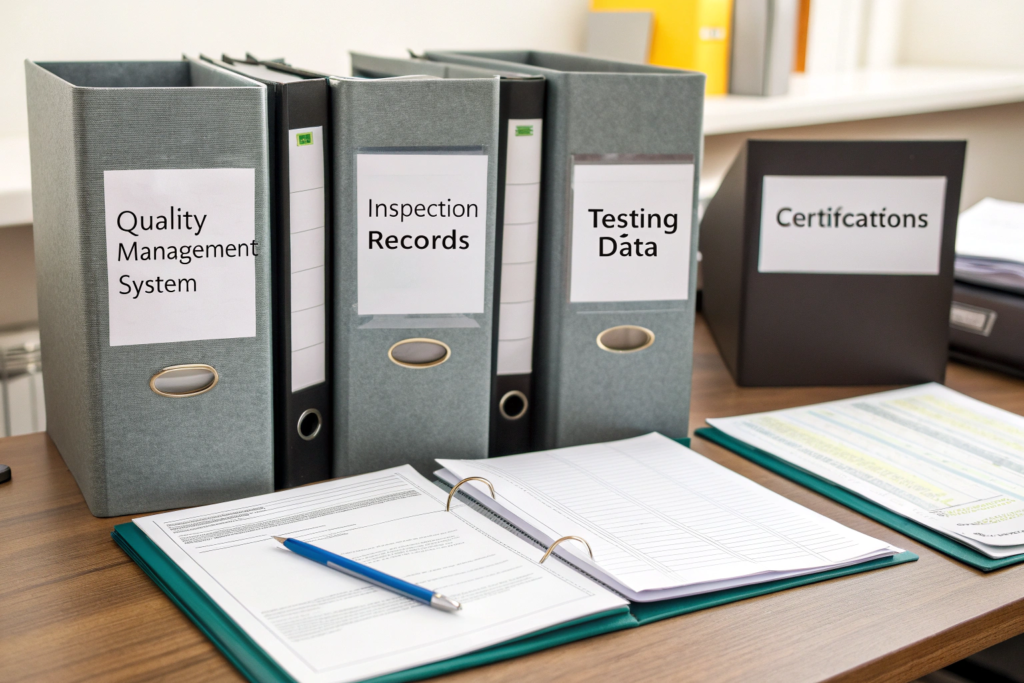
The documents you request should cover four areas. The quality management system, meaning the written procedures that define how quality is controlled at each stage of production. The inspection records, meaning the actual data from recent production runs that shows the system is being followed. The testing data, meaning the lab reports that verify the materials meet your specifications. The certifications, meaning the independent audits that verify the factory meets industry standards. Do not accept a verbal summary. Ask for the documents. If the factory cannot or will not provide them, that is a red flag.
Let me explain the specific documents you should request and what to look for in each one.
What Should a Professional QC Manual and Inspection Reports Include?
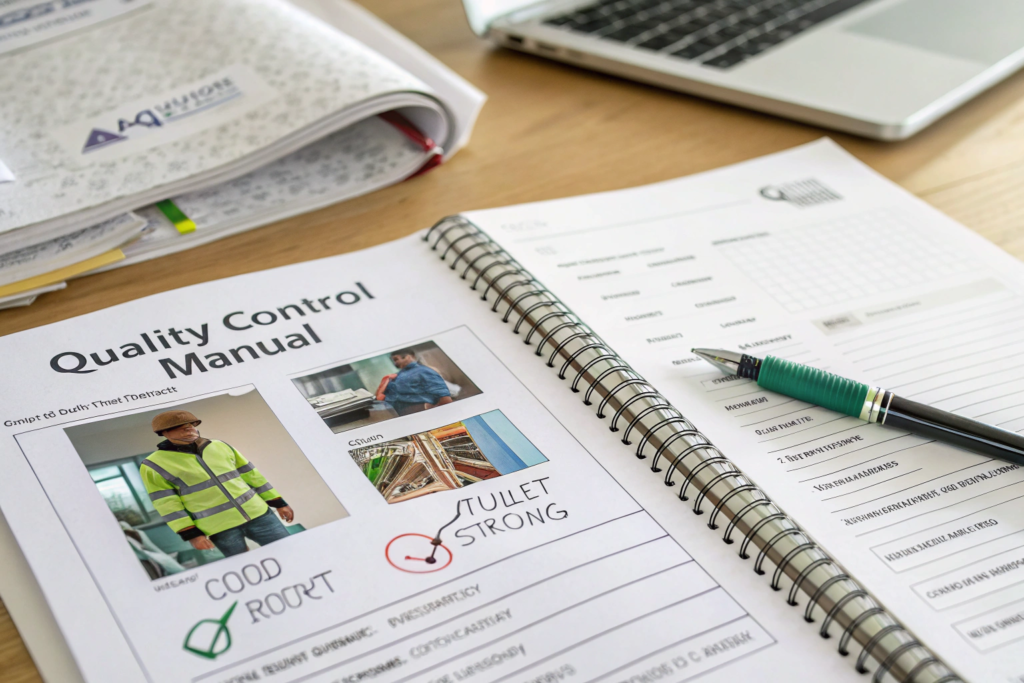
A professional quality control manual is a document that describes the factory's quality system. It should include the quality policy, a statement of the factory's commitment to quality. The organizational structure, showing that the quality team reports independently from the production team. The incoming inspection procedure, describing how fabric and trims are inspected and what the acceptance criteria are. The in-line inspection procedure, describing the frequency of audits, the sample size, the checkpoints, and the defect classification system. The final inspection procedure, describing the AQL sampling standard used, the inspection criteria, and the disposition of failed lots. The measurement tolerance chart, showing the acceptable variance for each key measurement point on the garment. The defect classification guide, defining critical, major, and minor defects with photographic examples. The non-conforming material procedure, describing how defective materials or products are segregated, documented, and dispositioned. The corrective action procedure, describing how root causes of quality issues are investigated and corrected.
This manual should be a living document, not a dusty binder. It should have revision dates. It should reference specific industry standards like ASTM, AATCC, or ISO. When you ask for inspection reports, ask for recent ones from actual production runs. A real inspection report is not a summary email. It is a structured document that shows the order number, the style number, the lot size, the sample size, the AQL level used, the number of defects found by type and severity, the accept/reject decision, and the inspector's name and signature. Ask for three reports from different stages. One incoming fabric inspection report. One in-line audit report. One final AQL inspection report. The reports should be for different orders on different dates. A factory that can produce these documents on request has a functioning, documented quality system. The garment quality control documentation standards are well-established. A professional factory's documentation will reflect them.
How Can You Verify That Certifications Like BSCI and OEKO-TEX Are Current and Valid?
Certifications are only as good as their validity. An expired BSCI certificate is worthless. A fake OEKO-TEX certificate number is worse than worthless because it indicates dishonesty. You must verify that the certifications are current and issued to the factory you are evaluating.
Ask for the certificate itself, not just the certificate number. Check the issue date and the expiry date. A BSCI audit is valid for two years. An OEKO-TEX certificate is valid for one year. If the certificate is expired, the factory is not certified. Check the certificate holder's name. It must match the factory's legal name and the name on the business license. A trading company may show you a certificate issued to a different factory. That certificate does not apply to the company you are dealing with. Verify the certificate independently. For OEKO-TEX, go to the OEKO-TEX Label Check website. Enter the certificate number. The database will return the certificate holder's name, the certified product categories, and the validity dates. If the number returns no result, or the holder's name does not match, the certificate is fake or invalid. For BSCI, ask for the full audit report, not just the cover page. The full report includes the auditor's name, the audit date, the specific findings, and the corrective action plan. A factory that provides only the cover page is hiding the findings. For GOTS, verify the certificate on the GOTS public database. Enter the company name. The database will show the certification status and scope. The certificate verification guide provides step-by-step instructions for verifying common apparel industry certifications. Do not skip this step. A fake certificate is a gateway to a fake factory.
How Should You Conduct a Live Video Tour of the Production Floor?
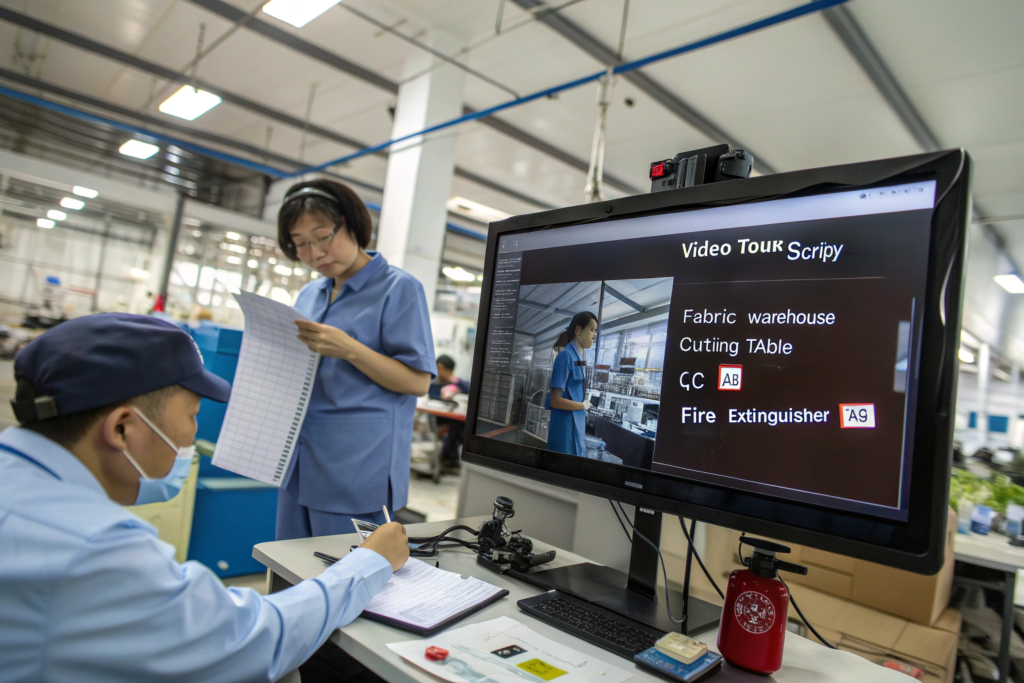
A live video tour is the most powerful remote verification tool available. It allows you to see the factory in real-time, not through curated photos and pre-recorded videos. A live tour is difficult to fake convincingly. The key is that you must lead the tour. Do not let the factory guide you through a prepared route. Ask to see specific things, and watch how the factory responds.
A factory that is proud of its operation will walk you anywhere you want to go. A factory that is hiding something will make excuses. The cutting room is closed for cleaning. The lab technician is out sick. The Wi-Fi does not reach that part of the building. These excuses are lies. A real factory operates every day. The cutting room is not closed. The lab is staffed. The Wi-Fi covers the production floor. When a factory makes excuses, it is because they cannot show you what you asked to see.
Let me give you a specific script to follow during a live video tour and explain what to look for at each stop.
What Specific Areas and Equipment Should You Demand to See?
When you are on a live video call with the factory, take control of the tour. Ask to see these eight specific things, in this order. One, the fabric warehouse. Walk to the area where fabric rolls are stored. Look at the shelves. Are they full? Are the rolls labeled with specifications, lot numbers, and dates? Zoom in on a label. Read it. A real factory has an active fabric inventory. Two, the cutting table. Walk to the cutting room. Is there fabric spread on the table? Are there workers actively cutting? Zoom in on the work order taped to the side of the table. Read the date, the style number, the quantity. A real factory cuts fabric every day. Three, the sewing line. Walk to a production line. Are the machines running? Are there bundles of cut panels next to each machine? Pick up a bundle ticket. Zoom in. Read the style number, the bundle number, the date. A real factory has active work with dated documentation. Four, the in-line audit station. Ask to see where the in-line quality checks are performed. Is there a designated inspection station with a measuring tape, a seam gauge, and a defect tag system? Ask the auditor to show you her most recent audit sheet. Five, the quality lab. Walk to the testing lab. Ask to see the tensile tester, the Crockmeter, the lightbox, the washing machine. Ask the lab technician to demonstrate a test. If the lab equipment is dusty or looks unused, it is a showpiece, not a working lab. Six, the finished goods area. Walk to the packing area. Are there cartons being packed? Zoom in on the shipping marks on a carton. Read the destination. A real factory ships product. Seven, the fire extinguisher. Point to a fire extinguisher on the wall. Ask them to zoom in on the inspection tag. The tag has a date and a location. This is hard to fake. Eight, the electricity meter. Walk to the main electrical panel. Ask to see the meter. A real factory consumes significant electricity. If the meter is static or very low, the factory is not in active production. The remote factory audit checklist from professional inspection firms covers similar ground. A factory that can show you all eight of these things, live, without hesitation, is a real, operating manufacturing facility.
What Questions Should You Ask the Quality Manager Directly?
During the video tour, ask to speak to the quality manager. Not the salesperson. The quality manager. Ask these five questions. One, "What AQL level do you use for final inspection, and can you show me the sampling table you use?" The correct answer is a specific AQL level, typically 2.5 for standard products or 1.5 for premium products, and a reference to the ANSI/ASQ Z1.4 standard. The quality manager should be able to pull out the sampling table and explain it. Two, "What are the top three defect types you find in denim shorts, and what corrective actions have you taken to reduce them?" A real quality manager will answer with specific defect types, skipped stitches at the waistband, zipper slider jams, shade variation, and specific corrective actions, operator retraining, machine maintenance, shade banding process improvements. A fake quality manager will give a vague answer about "we have very good quality." Three, "How often do you perform in-line audits, and can you show me the audit records from yesterday?" The answer should be a specific frequency, every hour, every two hours, and the manager should be able to produce yesterday's audit sheets immediately. Four, "What testing equipment do you have in your lab, and when was it last calibrated?" The manager should list specific equipment and produce calibration certificates with recent dates. Five, "Can you show me a corrective action report from a recent quality issue?" The manager should be able to pull a CAP report that describes a specific issue, the root cause analysis, the corrective action, and the verification of effectiveness. The factory quality manager interview questions are designed to test whether the quality system is real. A manager who can answer these questions with specific, documented evidence is managing a real system. A manager who deflects or gives vague answers is not.
How Can a Third-Party Audit or Inspection Provide Independent Verification?
Documentation and a video tour provide evidence controlled by the factory. A third-party audit or inspection provides evidence controlled by you, the buyer. You hire the inspection company. They report to you. They have no relationship with the factory beyond the inspection assignment. Their incentive is to find problems, not to please the factory. This independent perspective is invaluable.
A third-party inspection can be conducted at several stages. A factory audit, which assesses the factory's overall quality management system, production capacity, and social compliance. An in-process inspection, which checks the product quality when 20% to 30% of the order is produced, allowing time for corrective action. A pre-shipment inspection, which checks the finished product before it ships, using AQL sampling to determine if the lot is acceptable. For a new supplier, I recommend at minimum a factory audit and a pre-shipment inspection on the first order. The cost is typically $300 to $500 per inspection day. This is a small investment relative to the cost of a failed bulk order.
Let me explain the different types of inspections and how to commission one through a reputable firm.
What Is the Difference Between a Factory Audit, an In-Process Inspection, and a Pre-Shipment Inspection?
A factory audit is a comprehensive assessment of the factory's capabilities and systems. The auditor spends one to two days at the facility. They review the quality management system, the production equipment, the maintenance records, the calibration certificates, the worker training records, the social compliance documentation, and the environmental management. They tour the entire facility. They interview management and workers. The output is an audit report with a score and detailed findings. A factory audit tells you whether the factory has the systems and the capacity to produce your product consistently. It is recommended for all new suppliers before placing an order.
An in-process inspection, also called a DUPRO inspection during production, occurs when 20% to 30% of the order is produced. The inspector checks the semi-finished and finished products. They verify measurements, workmanship, and conformance to your specifications. They also check the production progress against the agreed timeline. The output is an inspection report with a pass or fail result and detailed defect data. An in-process inspection allows you to catch quality issues early, when they can be corrected without delaying the entire shipment. It is recommended for first orders or for orders with new designs or new materials.
A pre-shipment inspection, also called a final random inspection, occurs when 100% of the order is produced and at least 80% is packed. The inspector draws a random sample based on the AQL table. They check the product quality, the packaging, the labeling, and the shipping marks. The output is a pass or fail report. A passed pre-shipment inspection gives you confidence that the shipment meets your specifications before you authorize the balance payment. A failed inspection triggers a re-inspection after corrective action. The third-party inspection types for apparel guide from QIMA explains each service in detail. Reputable inspection companies offer all three.
How Do You Commission an Inspection and What Should the Report Tell You?
Commissioning an inspection is straightforward. You contact a reputable inspection company. The major global firms are SGS, Bureau Veritas, Intertek, and QIMA. You provide them with the factory's contact information and address. You provide your product specifications, the tech pack, the approved sample reference, and your inspection criteria. You specify the type of inspection you want, the date, and any special requirements. The inspection company handles the rest. They contact the factory, schedule the inspection, conduct it, and send you the report, typically within 24 to 48 hours.
The inspection report should include the following sections. The summary, with the overall pass/fail result and the total number of defects found. The defect classification, with defects categorized as critical, major, or minor, and a breakdown of defect types with photos. The measurement report, with the actual measurements of the sampled pieces compared to your specification tolerances. The on-site testing results, if you requested any, such as zipper function, seam strength, or color fastness. The packaging and labeling check, confirming that carton markings, labels, and hangtags match your specifications. The production status, confirming the quantity produced and packed at the time of inspection. A professional inspection report is detailed, objective, and supported by photographic evidence. Read it carefully. If the report shows a high number of major defects, do not ship the order. Require the factory to rework and request a re-inspection. The garment inspection report interpretation guide helps buyers understand what the findings mean and what actions to take.
How Should You Evaluate a Trial Order for Quality Consistency?
A factory audit, a video tour, and a third-party inspection all provide valuable evidence. But the ultimate test is the product itself. A trial order of 300 to 500 units allows you to evaluate the factory's quality in a real production run, not a handcrafted sample. The trial order tests the factory's ability to produce consistent quality across a commercial quantity. It also tests the logistics, the communication, and the documentation.
The trial order should be for a product that is representative of your planned bulk orders. Use the same fabric, the same wash, the same branding, the same packaging. The trial order is a microcosm of the full production relationship. Evaluate it thoroughly. If the trial order succeeds, you have confidence to scale. If the trial order reveals problems, you can address them or walk away before committing to a large inventory investment.
Let me explain how to evaluate a trial order and what specific tests to perform.
What Specific Measurements and Tests Should You Perform on a Trial Order?
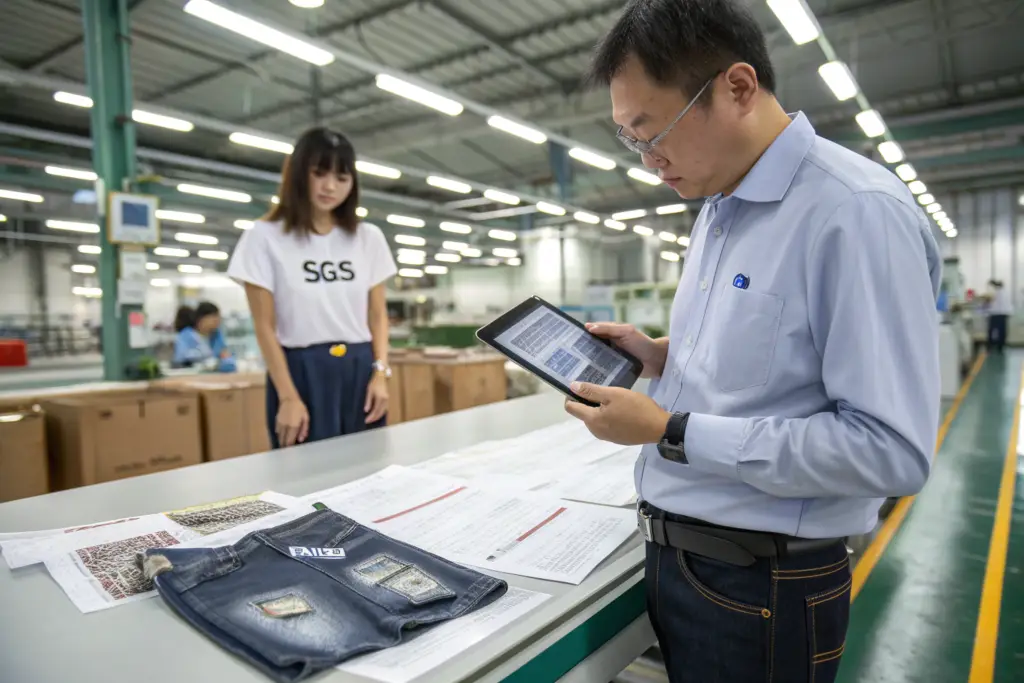
When the trial order arrives, do not just open one carton and look at one pair of shorts. Perform a structured incoming inspection. Draw a random sample from multiple cartons. The sample size depends on the lot size, but for a 300 to 500-unit trial order, inspect at least 50 to 80 pieces from different cartons.
Check the following. Measurements. Measure the waistband width, the front rise, the back rise, the inseam, the outseam, the leg opening, and any other critical dimensions on every sample piece. Compare to your specification sheet. Record the variance. The measurements should be within your agreed tolerances, typically plus or minus half an inch for most dimensions. Visual defects. Inspect every sample piece for stitching defects, skipped stitches, uneven hems, fabric flaws, stains, and wash inconsistencies. Record every defect and classify it as minor or major. Functional tests. Operate the zipper on every sample piece ten times. Check that the button secures firmly. Check that any snaps engage and release properly. Pull on the belt loops and pocket corners to test attachment strength. Wash test. Take three to five sample pieces and wash them three to five times according to the care label instructions. Measure them after washing to check shrinkage. Compare the color after washing to an unwashed sample to check color fastness. Check for seam puckering, thread breaks, or hardware corrosion after washing. Wear test. Wear one of the washed samples for a day. Walk, sit, bend, squat. Does the short feel comfortable? Does the waistband stay in place? Does the zipper stay up? Does the fabric breathe? The trial order quality evaluation process should be systematic and documented. Create a simple inspection form and fill it out. The data will tell you whether the factory's quality is consistent.
What Does a Successful Trial Order Tell You About the Factory's Long-Term Reliability?
A successful trial order is more than a box of good shorts. It is a predictor of the long-term relationship. If the trial order arrives on time, matches the approved sample, has a defect rate below your threshold, and is supported by complete and accurate documentation, the factory has demonstrated reliability on a small scale. The systems that produced 300 good pairs of shorts are the same systems that will produce 3,000 good pairs.
Conversely, if the trial order reveals problems, late delivery, quality issues, communication breakdowns, documentation errors, do not assume they will improve with a larger order. Problems on a 300-unit trial order will be multiplied on a 3,000-unit bulk order. The trial order is the factory's best behavior. If the best behavior is not good enough, the long-term relationship will not be good enough either. A successful trial order is the foundation of trust. It is the evidence that the factory's quality control system is real, effective, and capable of delivering for your brand. The supplier trial order evaluation methodology is standard practice in professional procurement. Use it.
Conclusion
Verifying a top clothing manufacturer's quality control system is not a single action. It is a layered process. Documentation review confirms that the factory has written procedures and a track record of inspections. A live video tour confirms that the factory is a real, operating facility and that the quality systems described in the documents are visible on the floor. A third-party audit or inspection provides independent, professional verification of the factory's systems and product quality. A trial order provides the ultimate test: real products, made under real production conditions, delivered to your door, that you can measure, test, wash, and wear.
A factory that welcomes all four layers of verification is a factory that has nothing to hide. A factory that resists any layer is a factory that is hiding something. At Shanghai Fumao, we welcome all four. We provide our QC manual, our inspection reports, our test data, and our certifications. We conduct live video tours where the buyer controls the camera. We accommodate third-party audits and inspections from any reputable firm. We encourage trial orders before bulk commitments. This is our standard operating procedure, not a special accommodation for skeptical buyers. We do it because we are confident in our quality systems. We do it because we want our clients to be confident too.
If you are evaluating us as a potential manufacturing partner, I invite you to put us through every layer of verification described in this article. Contact our Business Director, Elaine. She can provide our QC documentation package, schedule a live video tour, and provide a quotation for a trial order with DDP delivery to your door. Her email is elaine@fumaoclothing.com. At Shanghai Fumao, we do not ask you to trust our words. We ask you to verify our systems. That is the difference between a supplier who hopes you will not check and a partner who wants you to check.