A distributor from Texas called me four years ago. He was running a $2 million business supplying floral dresses to 60 boutiques across the Southwest. He was sourcing from three different factories. One in China, one in Vietnam, one in India. He was constantly juggling. The China factory had great quality but was slow to communicate. The Vietnam factory was fast but had inconsistent stitching. The India factory had beautiful fabrics but missed every deadline. He was spending 30 hours a week just managing supplier problems. He was a logistics manager, not a business owner. He told me he wanted one factory that could do all three things well: quality, speed, and consistency. He moved his entire production to Shanghai Fumao. Two years later, he sold his business to a larger distributor for a multiple of his revenue. The operational stability of a single, reliable factory partnership made his business acquirable.
Distributors choose Shanghai Fumao for bulk dress orders because we solve the three existential problems of apparel distribution: consistent quality at scale, reliable on-time delivery across seasons, and the production flexibility to handle both deep replenishment orders and quick-turn trend tests. A distributor needs a factory that thinks like a partner, not a vendor. We offer DDP logistics, flexible MOQs for stock programs, dedicated production line allocation, and transparent communication that makes our distributors look like heroes to their retail buyers.
A distributor's reputation is built on delivering what was promised, when it was promised. Every late shipment damages a relationship with a boutique buyer. Every quality defect damages the distributor's brand. I understand the pressure. I built my factory to relieve it.
How Does Consistent Quality at Scale Build a Distributor's Reputation?
A boutique owner orders 50 dresses from a distributor. She trusts that the dresses she receives will match the sample she saw at the trade show. If the stitching is loose, if the print is faded, if the sizing is off, she returns the entire batch. She finds a new distributor. One quality failure costs a distributor a customer for life. Consistent quality across thousands of units is not a nice-to-have. It is the foundation of a distributor's business.
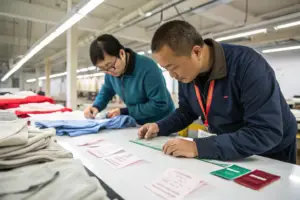
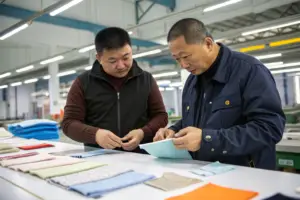
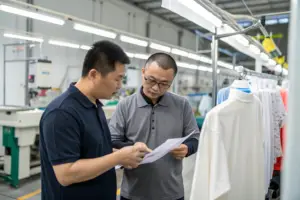
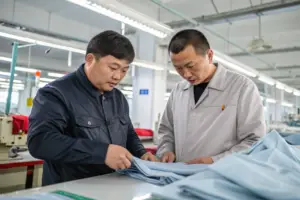
Shanghai Fumao delivers consistent quality at scale through a four-point quality control system that catches defects before they ship. Every fabric lot is tested for shrinkage, colorfastness, and weight before cutting. Inline QC inspectors check construction at three points on the sewing line. A final AQL 2.5 statistical audit is performed on every bulk order. And a pre-shipment metal detector scan ensures safety compliance. A distributor who ships our dresses ships with confidence.
A distributor cannot inspect every dress. He needs to trust the factory's inspection system. I provide that system.
What Is the AQL 2.5 Audit and Why Does It Matter to Distributors?
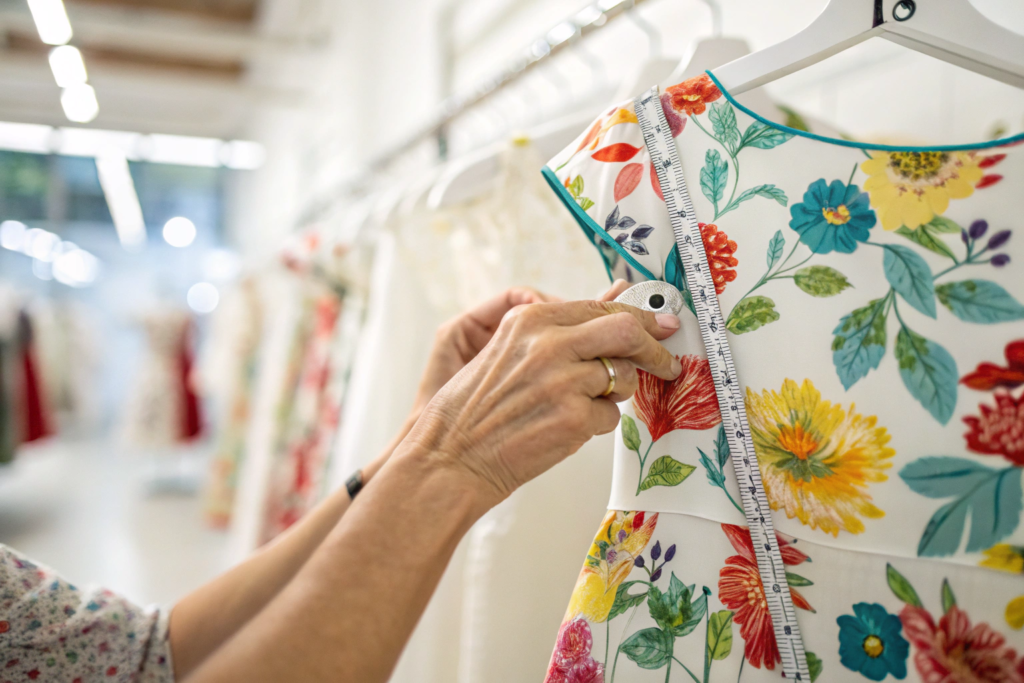
AQL stands for Acceptable Quality Level. It is a statistical sampling method used in international trade. AQL 2.5 is the standard for apparel. On a bulk order of 3,000 floral dresses, my QC team randomly pulls 125 dresses from the packed cartons. Each dress is inspected for visual defects, measurement tolerance, and functional issues like zipper operation.
The batch passes only if the number of major defects found is at or below the acceptable limit. A major defect is a broken seam, a stain, a missing button, a zipper failure. A minor defect is a loose thread or a slight misalignment of a print. The standard is strict. If the batch fails, we do a 100% reinspection of every single dress. The shipment is delayed until every defect is corrected. This costs us time and money. It protects the distributor's reputation.
A distributor in Atlanta told me he had never received a shipment from any factory with zero quality issues until he worked with us. He was used to budgeting 2% to 3% of every order for local repairs and customer credits. He eliminated that budget. Our QC system saved him $15,000 a year in rework costs and preserved his relationships with his best boutique accounts.
How Does Fabric Consistency Prevent the "Different Batch" Problem?
A common distributor nightmare: the Spring 2025 floral dresses were a bestseller. The boutique reorders for Summer 2025. The new batch arrives, and the floral print is slightly darker. The boutique owner notices. Her customers notice. She feels the distributor sent her a lower-quality product. The trust is broken.
Fabric consistency across multiple production batches is a science. It requires strict shade-band control. Every new dye lot is compared to the master approved sample under a D65 light booth. If the shade falls outside the approved tolerance band, the fabric is rejected. We also keep a physical record of every fabric lot we have produced for a distributor. When a reorder comes in, we match the new batch to the historical standard. The dresses from Batch A and Batch B are indistinguishable.
A distributor in California runs a subscription box service. Her customers receive a new floral dress every month. Many of them reorder their favorite styles later. She needs the reordered dress to be identical to the original. Our shade-band system makes that possible. Her customers are happy. Her subscription model works.
Why Is On-Time Delivery a Distributor's Most Critical Requirement?
A floral dress is a seasonal product. The spring selling window opens in March. The summer window opens in May. If a distributor's shipment arrives two weeks late, the boutiques that ordered the dresses have empty racks during peak foot traffic. They mark down the dresses when they finally arrive. They lose margin. They blame the distributor. A late shipment is not a logistics problem. It is a relationship crisis.
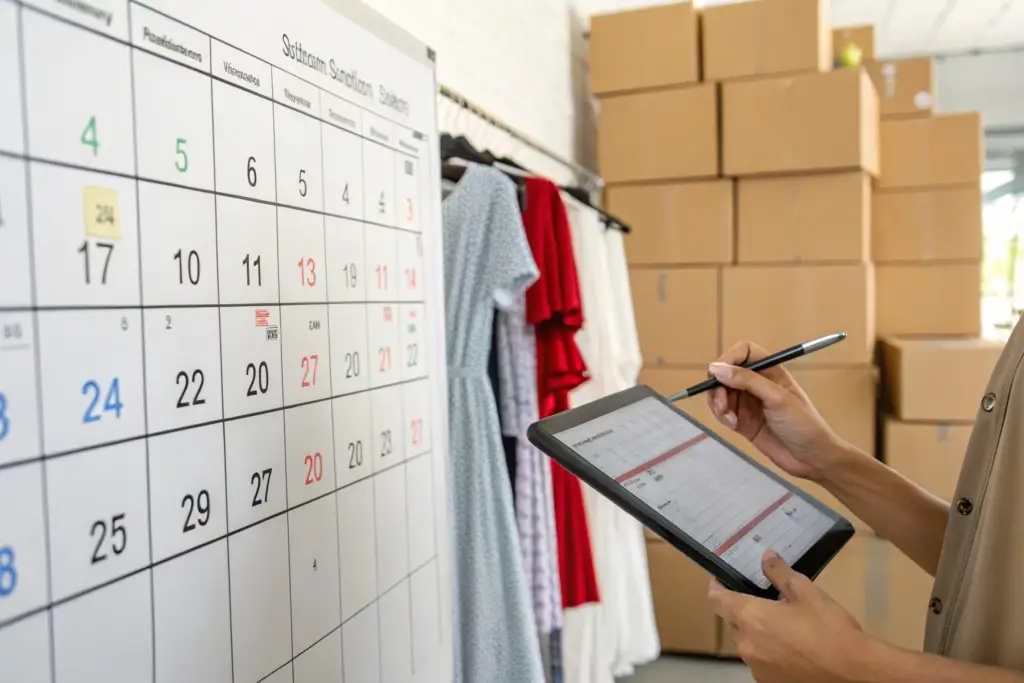
Shanghai Fumao guarantees on-time delivery through a combination of a strategic greige fabric reserve, a five-line production system that isolates delays, and a DDP logistics chain with a 97% on-time performance rate. We build buffer weeks into the production calendar. We stock raw fabric so we are never waiting on a mill. We use the most reliable shipping lines, not the cheapest. A distributor who orders from us can confidently promise a delivery date to his boutique buyers.
I treat a delivery deadline like a contract. It is not a target. It is a commitment.
What Is a Greige Fabric Reserve and How Does It Prevent Delays?
The most common cause of production delays in the dress industry is fabric availability. A distributor places a reorder for 2,000 floral dresses. The factory sends the purchase order to the fabric mill. The mill says it will take 20 days to weave and dye the fabric. The factory sits idle. The delivery date slips by three weeks.
Shanghai Fumao maintains a strategic greige fabric reserve. Greige fabric is raw, unfinished fabric that has not yet been dyed or printed. We stock greige cotton voile, rayon challis, and polyester crepe in the most popular weights. When a distributor's reorder comes in, we pull the greige fabric from our warehouse and send it directly to the dye house or the digital printer. The mill weaving time is eliminated. The fabric procurement timeline drops from 20 days to 7 days.
This reserve costs us working capital. It ties up cash in raw inventory. But it guarantees our distributors' delivery dates. A distributor in New York called me in a panic last March. His summer dress supplier had delayed him by four weeks. He needed 3,000 floral A-line dresses in six weeks. I pulled the greige fabric. We printed it. We cut and sewed the dresses. They shipped on time. He saved his relationships with 40 boutiques. The greige reserve is his secret weapon. He does not know it exists. He only knows his delivery dates hold.
How Does DDP Logistics Protect the Distributor's Timeline?
When a distributor sources FOB, he is responsible for the freight forwarder, the customs broker, the duties, and the final trucking. Each of these is a potential delay point. The forwarder books a slow vessel to save money. The broker misfiles a document. The port is congested. The trucker has a scheduling conflict. The distributor spends his week chasing problems.
DDP shipping puts the entire logistics chain under our control. I choose the vessel for reliability, not just cost. My customs broker files the entry before the ship docks. My trucker has a pre-booked delivery appointment. The distributor receives a single notification: "Your dresses arrive Thursday." There is no chasing. No finger-pointing. No hidden fees.
A distributor in Chicago moved all his orders to DDP after a particularly bad FOB experience. A shipment of floral dresses was held at the port for a customs exam. The exam took ten days. The storage and exam fees were $2,100. The delay caused him to miss a key delivery window for a chain of boutiques. He switched to DDP. The $0.50 per unit premium for DDP is his insurance policy against the random chaos of global logistics. He told me, "I sleep through the night now."
What Production Flexibility Do Distributors Need for Bulk Orders?
A distributor's order book is not uniform. It has two very different types of orders. The first is the deep replenishment order. A bestselling floral dress. 5,000 units. The boutique buyers keep reordering it. The distributor needs fast, reliable restocking. The second is the trend test order. A new floral print direction. 300 units across three sizes. The distributor needs to test the market without committing to a massive inventory risk.
Most factories are good at one or the other. A large, automated factory wants 10,000-unit runs and hates small, complex orders. A small, nimble factory can do 300 units but chokes on a 5,000-unit replenishment. A distributor needs a factory that can do both on the same production floor.
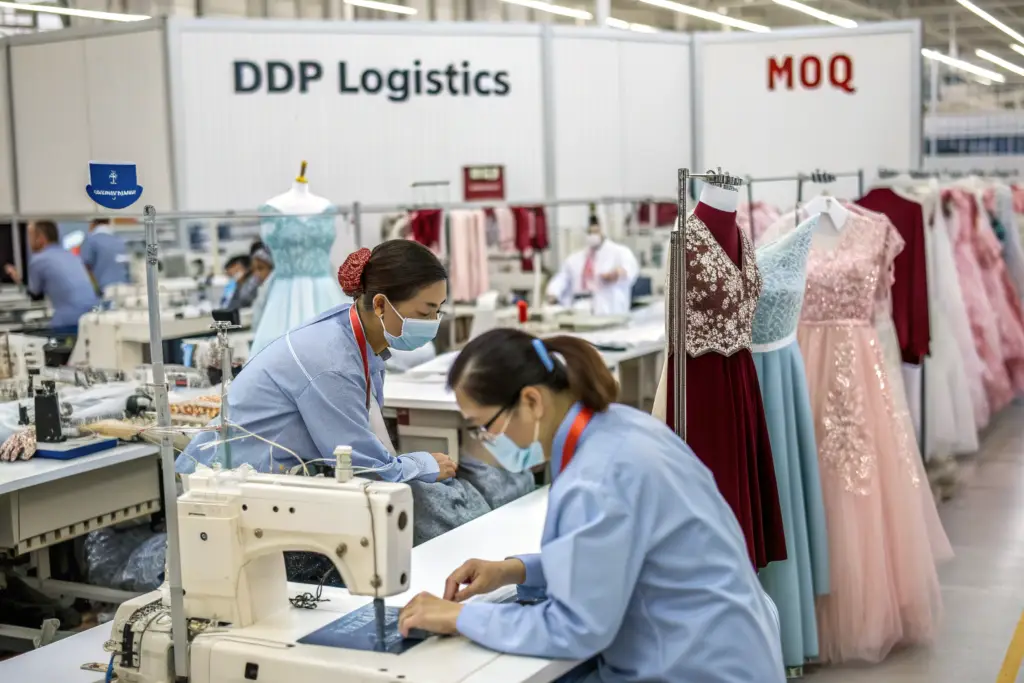
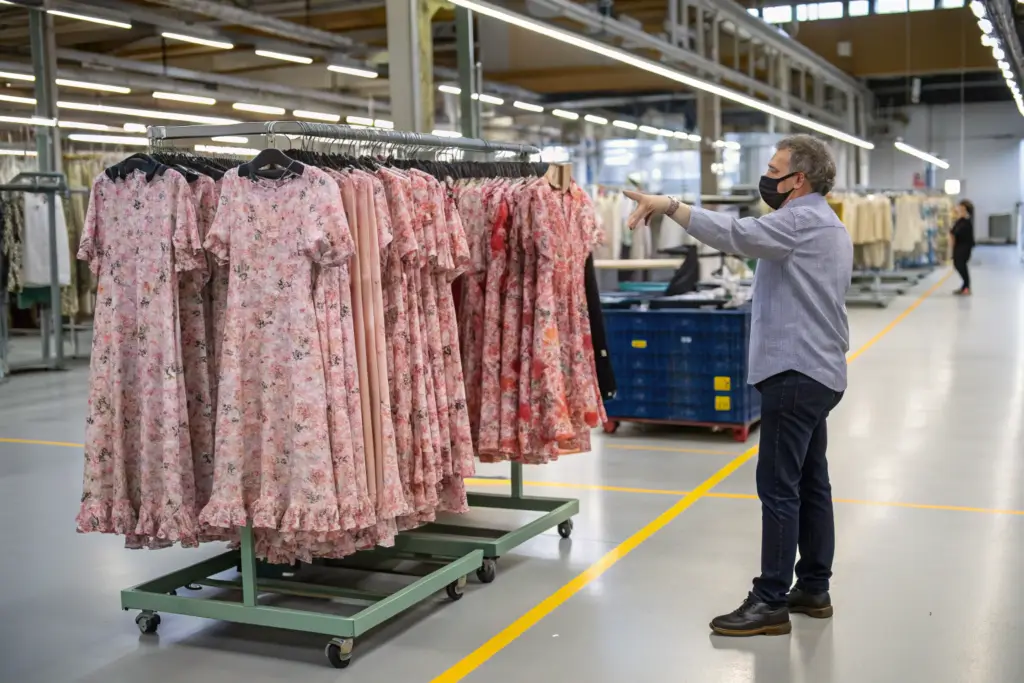
Shanghai Fumao offers production flexibility through five dedicated production lines with different capabilities. Lines 1 and 2 are configured for high-volume, fast-turn replenishment orders of core styles. Line 3 is our flexible line, handling mid-volume orders and quick color changes. Lines 4 and 5 are our Atelier and small-batch lines, handling complex constructions, new print tests, and trend trial runs of 100 to 300 units. A distributor can run a 5,000-unit core order and a 300-unit trend test simultaneously. Both ship on time.
This flexibility is the operational backbone of a modern distribution business.
How Do You Handle Deep Replenishment Orders for Bestselling Dresses?
A bestselling floral dress is a cash machine for a distributor. The pattern is proven. The fit is locked. The print is approved. The boutiques reorder it every month. The only thing the distributor needs is speed and consistency.
For these orders, I use Lines 1 and 2. The pattern is digitized and stored. The fabric is held in our greige reserve. The production line is pre-configured for the style. When a replenishment order hits my inbox, we can start cutting within three days. The line runs continuously. The dresses flow from cut to sew to pack in a steady stream. There is no setup time. No retraining. No sample approval. It is a pure manufacturing engine.
A distributor in Florida has a bestselling floral midi dress that has been in her line for three seasons. She reorders 2,000 units every six weeks. Her replenishment orders are processed on Line 1. The order-to-ship time is 21 days. Her boutiques never run out of stock. The dress is her annuity.
How Do You Support Trend Tests and New Print Launches?
Fashion is risk. A distributor needs to test new floral prints every season to keep her line fresh. But she cannot afford to bet $50,000 on a print that might not sell. She needs a low-risk way to test the market.
Our small-batch Atelier line is built for this. A distributor sends me a new floral print artwork. I print a small batch of fabric. I cut and sew 300 units. The cost per unit is higher than a 5,000-unit run, but the total cash outlay is small. She tests the print with her top 20 boutique accounts. If it sells, she scales it to a bulk replenishment order on Line 2. If it flops, she loses a small investment, not a season's profit.
A distributor in Toronto uses this model. She tests five new floral prints every season in small batches of 200 units each. She tracks the sell-through data. The one or two prints that hit a 60% sell-through rate in the first two weeks get scaled to bulk production. The other three are liquidated at a small discount, with minimal loss. This data-driven approach to trend testing has made her one of the most profitable distributors in her region.
Conclusion
A distributor's business is a trust business. The boutique owner trusts the distributor to deliver beautiful, consistent, on-trend floral dresses. The distributor trusts the factory to execute on quality, delivery, and flexibility. When that chain of trust holds, the entire system works. When it breaks, the distributor loses her boutique accounts one by one.
Shanghai Fumao earns the trust of distributors through a relentless focus on the operational fundamentals. Consistent quality at scale, backed by a rigorous AQL 2.5 inspection system and fabric shade-band control. Reliable on-time delivery, backed by a strategic greige fabric reserve and DDP logistics. And production flexibility, with five dedicated lines that handle both deep replenishment and agile trend testing.
A distributor who partners with us spends less time firefighting and more time growing her business. She opens new boutique accounts. She expands into new regions. She builds her brand. The factory becomes the quiet, reliable engine that powers her success.
If you are a distributor looking for a manufacturing partner that understands the pressures of bulk dress orders, I want to talk. Our Business Director, Elaine, can provide our distributor partnership package. It includes our bulk pricing tiers, our replenishment lead times, our AQL inspection protocols, and our DDP logistics options. Email her at elaine@fumaoclothing.com. Tell her your top-selling dress styles and your typical order volumes. She will build a partnership proposal tailored to your business. Let's build a supply chain that makes your distribution business unshakable.