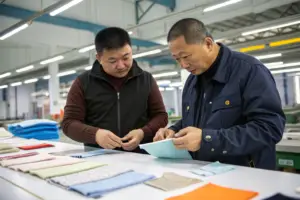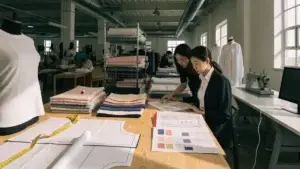
A brand owner from Vancouver received her first bulk shipment of floral dresses three years ago. The dresses were beautiful. The print was vibrant. She sold 800 units in the first month. Then the complaints started. "I wore the dress and broke out in a rash." "The fabric has a strange chemical smell." "I washed the dress and the colors bled onto everything in the machine." She had no lab tests. She had trusted the factory's word that the fabric was "safe and high quality." She had to recall the remaining inventory. She had to refund $28,000 in sales. Her brand's reputation on Instagram was damaged for months. She told me later, "I would have paid $500 for a lab test that could have prevented a $28,000 disaster."
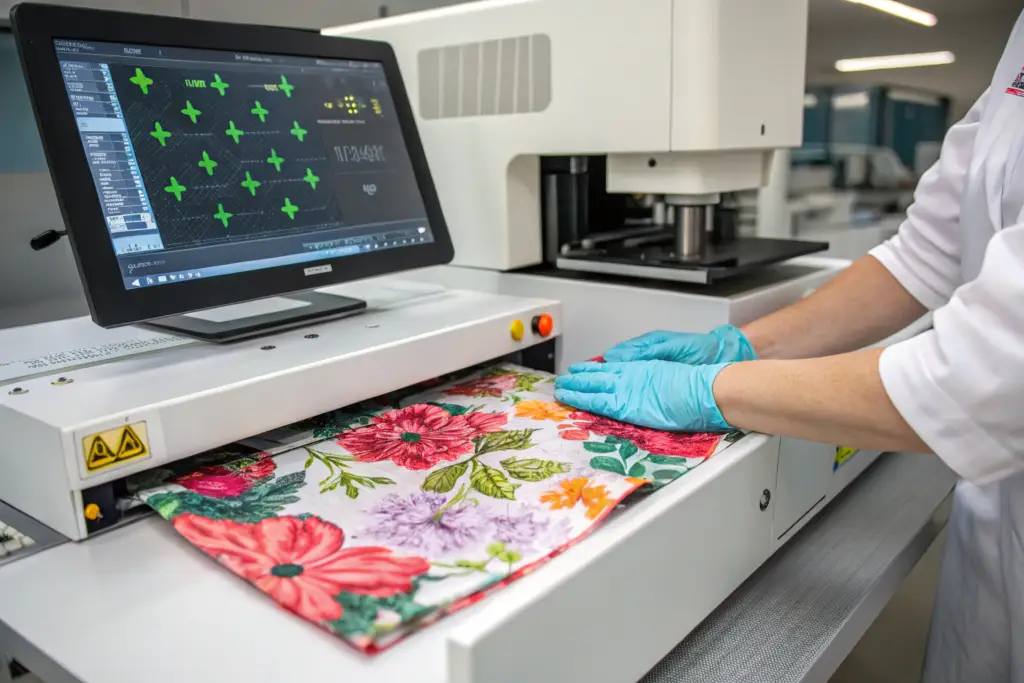
Yes, Shanghai Fumao offers comprehensive third-party lab testing for all floral fabrics. We test for colorfastness, fabric weight, fiber composition, shrinkage, pilling resistance, tear strength, seam slippage, and chemical safety including azo dyes, formaldehyde, and heavy metals. These tests are conducted by independent, ISO-accredited laboratories such as SGS, Intertek, and Bureau Veritas. The lab reports are provided to you before bulk production begins. The cost of a standard test suite is typically $300 to $500 per fabric lot. This is a small price for the legal safety and brand protection it provides.
A lab test is not a luxury. It is an insurance policy. It proves your floral dresses are safe, compliant, and as specified. It protects you from liability. It gives you marketing content. It gives you peace of mind. Let me explain exactly what tests we offer, what they mean, and how you can use them.
What Chemical Safety Tests Do We Run on Floral Fabrics?
The most dangerous risk in a floral dress is not a loose thread. It is a chemical. Some dyes and finishing agents used in textile production contain substances that are harmful to human skin. They can cause allergic reactions, rashes, or worse. In many countries, including the United States and the European Union, these substances are regulated or banned. A dress containing them is illegal to sell. A brand that sells such a dress without knowing it faces legal liability, fines, and reputational destruction.
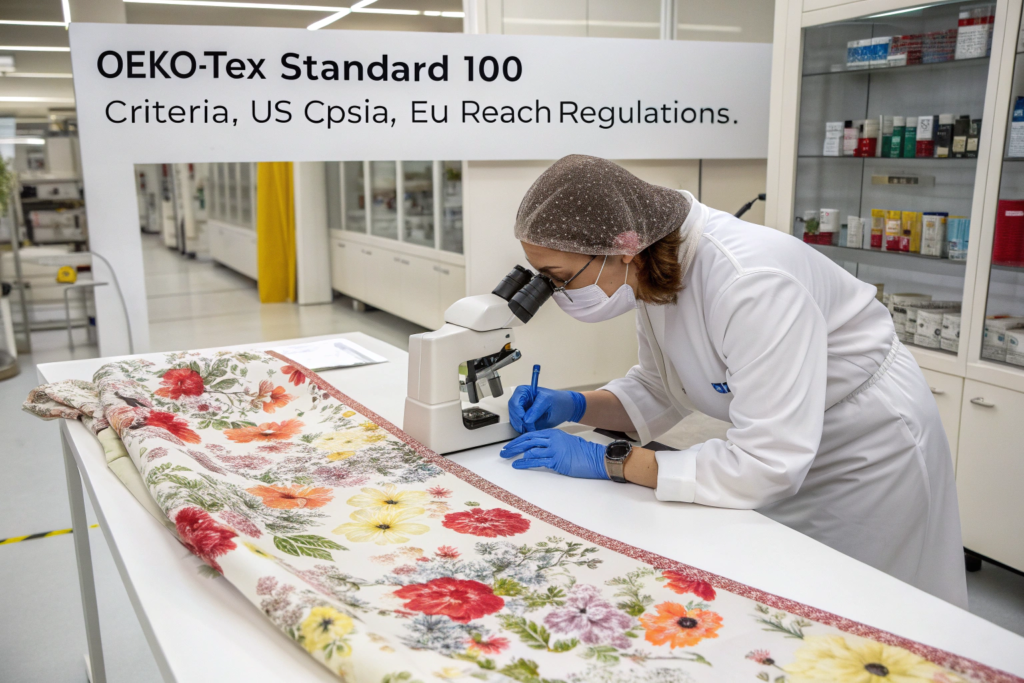
We test all custom-printed floral fabrics for the most common harmful substances: azo dyes that can release carcinogenic amines, formaldehyde used in anti-wrinkle finishes, heavy metals like lead and cadmium used in pigments, and phthalates used in plastisol prints. The tests are conducted according to the OEKO-TEX Standard 100 criteria, the global benchmark for textile chemical safety. A passing report means your fabric is safe for direct skin contact and compliant with US CPSIA and EU REACH regulations.
This is not optional due diligence. It is mandatory for any brand that takes its legal responsibilities seriously.
What Are Azo Dyes and Why Are They Dangerous?
Azo dyes are a family of synthetic dyes widely used in textile printing because they produce vibrant, long-lasting colors at a low cost. Some azo dyes, under certain conditions, can break down and release aromatic amines, which are known or suspected carcinogens. These amines can be absorbed through the skin. The European Union has banned the use of certain azo dyes in textiles that come into direct contact with skin. The US has similar restrictions under the CPSIA.
A floral dress is a skin-contact garment. It is worn directly against the body, especially in summer when perspiration can accelerate chemical transfer. A dress printed with banned azo dyes is a health risk and a legal liability.
The lab test for azo dyes involves extracting the dye from the fabric sample and analyzing it using a gas chromatograph or similar equipment. The lab report lists the specific amines tested and the result for each. A "not detected" result at the regulated limit means the fabric is safe.
I test every new printed fabric lot for banned azo dyes. I use SGS as my primary lab because they are globally recognized and have a fast turnaround. The azo dye test costs about $120. A client in New York includes the SGS azo dye report on her brand's sustainability page. She markets her dresses as "Independently Tested for Chemical Safety." Her customers trust her more because she proves her claims.
What About Formaldehyde and Heavy Metals?
Formaldehyde is used in some fabric finishing processes to create wrinkle-resistant, anti-shrink, or stiff finishes. Residual formaldehyde on fabric can off-gas and be inhaled, or it can leach onto the skin and cause contact dermatitis. The OEKO-TEX standard sets strict limits for formaldehyde on skin-contact garments.
Heavy metals like lead and cadmium are sometimes found in pigments used for bright colors, especially in screen printing inks. Lead is a neurotoxin. It is strictly regulated in children's products but is also a concern in adult garments.
The lab test measures the extractable formaldehyde content and the heavy metal content of the fabric. A passing result means the levels are below the regulatory thresholds.
A brand client in California sells floral dresses to several high-end boutiques. One boutique buyer demanded proof of chemical safety testing before placing a wholesale order. My client sent her the SGS report I had provided. The report showed no detectable formaldehyde, no heavy metals, and no banned azo dyes. The buyer placed a $15,000 order. The lab report paid for itself a hundred times over.
What Physical Performance Tests Do We Perform?
Chemical safety is about protecting the customer's health. Physical performance is about protecting the customer's satisfaction. A dress that fades after one wash, shrinks in the dryer, or pills into a fuzzy mess after two wears will generate returns and bad reviews. The beauty of the floral print is meaningless if the fabric cannot withstand normal use. Physical performance tests simulate months of wear and washing in a laboratory environment.
We test the physical performance of floral fabrics for colorfastness to washing, light, and rubbing; dimensional stability or shrinkage; pilling resistance; tear strength; and seam slippage. These tests are conducted according to AATCC and ASTM standards, which are recognized by US retailers. The results give you a clear, data-driven picture of how your dress will perform in your customer's real life. A fabric that passes these tests is a fabric that will keep your customer happy and your return rate low.
These tests are the difference between a dress that looks good in a photo and a dress that stays good for years.
How Is Colorfastness Tested?
Colorfastness is the fabric's ability to retain its color when washed, when exposed to light, and when rubbed against other surfaces. A floral dress that bleeds dye in the washing machine ruins the customer's laundry load. A dress that fades in a sunny window looks old after one summer. A dress that transfers color onto a white handbag or a light-colored sofa is a disaster.
The lab tests for colorfastness simulate these conditions. The wash colorfastness test washes the fabric sample in a standardized machine with a multi-fiber test strip. The strip is a piece of fabric with bands of different fibers. After washing, the technician examines the test strip. If the floral dye has stained any of the fiber bands, the colorfastness is poor. The degree of staining is rated on a grey scale from 1 to 5. A rating of 4 or 5 is acceptable for commercial apparel.
The light colorfastness test exposes the fabric to intense artificial light that simulates weeks of sunlight exposure. The fading is rated against a blue wool scale from 1 to 8. A rating of 4 or higher is acceptable for apparel.
The crocking test rubs a dry white cloth and a wet white cloth against the printed fabric under controlled pressure. The amount of color transferred to the cloth is rated on the grey scale. This simulates the dress rubbing against a chair or a handbag.
I have rejected floral prints that had a beautiful, vibrant appearance but failed the crocking test. The dye was sitting on the surface of the fabric, not bonded to the fibers. After a few wears, the print would have looked faded and worn. The colorfastness test caught the issue before the dresses were made.
What Is Seam Slippage and Why Does It Matter for a Floral Dress?
Seam slippage is a specific failure mode in woven fabrics. It happens when the yarns of the fabric slide apart under stress, opening up a gap along the seam line even though the stitching thread itself has not broken. It looks like a zipper opening along the seam. It is a common problem in loosely woven fabrics and is particularly relevant for lightweight cotton and linen floral dress fabrics.
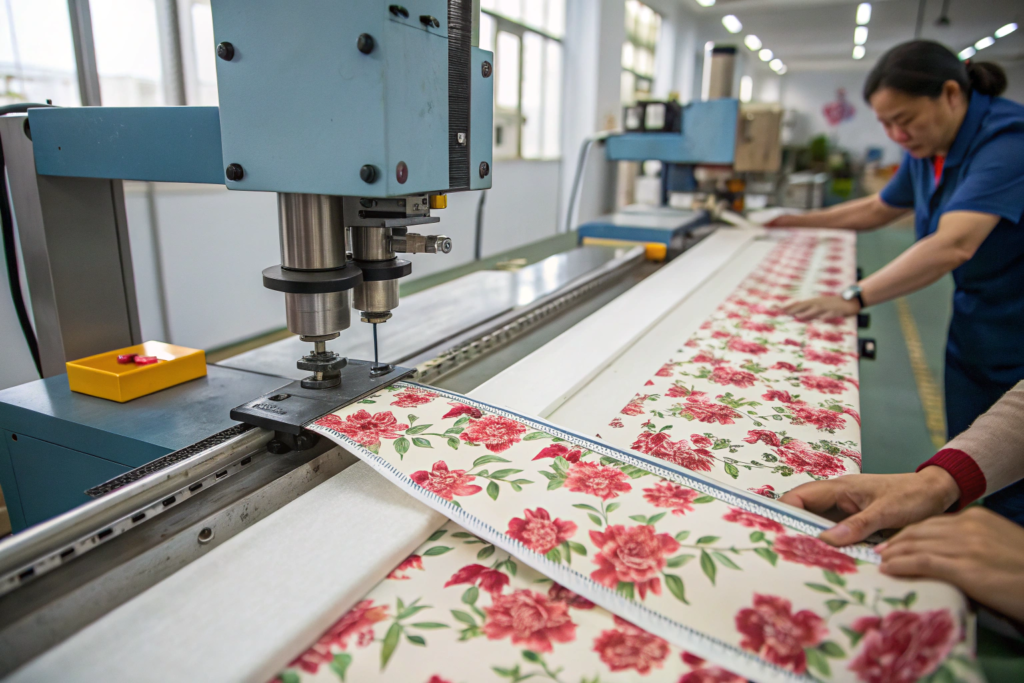
The seam slippage test sews a standard seam into the fabric sample. The sample is then pulled in a tensile testing machine. The machine measures the force required to open the seam by a specific distance. The result is reported in pounds or Newtons. A fabric with low seam slippage resistance will fail at the seat seam or the shoulder seam after the customer sits down or reaches for something.
I specify a minimum seam slippage resistance for every fabric I use. The test ensures the fabric weave is tight enough to hold a seam securely. A client in Atlanta had a previous supplier's dresses fail at the side seams because the fabric was too loosely woven. She switched to us. I provided the seam slippage test report for her new fabric. The report showed a passing result. Her dresses have had zero seam failures since.
How Does the Lab Testing Process Work with Our Orders?
The lab testing process is integrated into the pre-production timeline. It does not delay the order if it is planned correctly. The testing happens in parallel with the pattern making and the pre-production sample development. The test results are ready before the bulk fabric cutting is scheduled to begin.
The standard lab testing process follows five steps. First, we order the lab tests as soon as the bulk fabric strike-off is approved. Second, the lab requires about five to seven working days to complete the tests and issue the reports. Third, we receive the draft reports and review them internally for any failures. Fourth, we send the final reports to you for your review and approval. Fifth, we proceed to bulk cutting only after you have approved the lab reports in writing. If a test fails, we do not cut the fabric. We investigate and resolve the issue first.
This process is transparent and collaborative. You are the final approver.

Who Pays for the Lab Tests?
The cost of the lab tests is a separate line item on the development invoice. It is not included in the FOB dress price because it is a service provided by an independent third party. The client pays the lab cost directly, or we pay the lab on behalf of the client and invoice the cost.
The standard test suite, including colorfastness to wash and light, crocking, dimensional stability, pilling, seam slippage, and azo dye screening, costs between $300 and $500 per fabric lot. A more comprehensive suite including heavy metals and phthalates costs between $500 and $700.
This cost is per fabric lot, not per dress. If you order 3,000 dresses from the same fabric lot, the testing cost is spread across all 3,000 units. It adds $0.10 to $0.20 to the landed cost per dress. This is a trivial amount compared to the risk it mitigates.
Some clients ask if they can skip the testing to save the $500. I advise against it. The testing cost is a fraction of the cost of a product recall, a lawsuit, or a batch of unsellable inventory. I have seen too many brands learn this lesson the expensive way.
How Long Does Lab Testing Take?
The standard turnaround time for an SGS or Intertek textile test suite is five to seven working days from the date the fabric sample is received at the lab. Expedited service is available for an additional fee and can deliver results in three working days.
The testing timeline runs in parallel with other pre-production activities. While the lab is testing the fabric, my team is making the pre-production sample, finalizing the pattern, and preparing the cutting markers. The lab testing does not add days to the total lead time. It fills time that is already allocated to pre-production.
I schedule the lab testing as soon as the bulk strike-off is approved. By the time the pre-production sample is approved and the bulk fabric has arrived at the factory, the lab reports are ready for review. The go/no-go decision for bulk cutting is made with all the data in hand.
A client in Portland was on a tight timeline for a summer launch. She was worried the lab testing would delay her delivery. I walked her through the schedule. The testing happened while her pattern was being finalized. The results arrived before the fabric was even at the factory. There was zero schedule impact. The peace of mind was gained with no time penalty.
What Should You Do with the Lab Test Results?
The lab test results are not just for your files. They are a multi-purpose business asset. They protect you legally. They strengthen your marketing. They build trust with wholesale buyers. They justify your retail price. A lab report is a certificate of quality that speaks louder than any marketing copy.
Use the lab test results in three ways. First, file them as a legal record of due diligence. If a customer ever claims your dress caused a skin reaction, you have proof the fabric passed chemical safety testing. Second, share them with wholesale buyers. A boutique buyer who sees an independent lab report is far more likely to place an order. Third, market the test results on your website. "Every fabric independently tested for safety and durability by SGS." This is a powerful trust signal for online customers who cannot touch the fabric before buying.
A lab report is not a cost center. It is a marketing asset and a legal shield.
How Do You Use Lab Reports in Your Marketing?
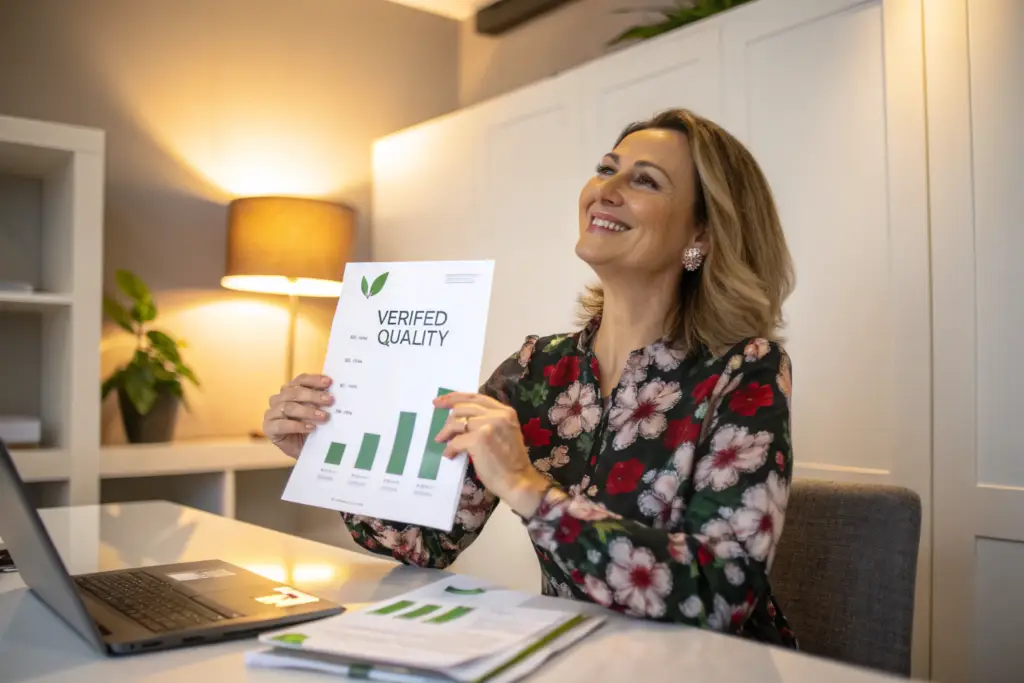
Create a "Quality Promise" page on your website. Explain that every floral dress fabric is independently tested by an ISO-accredited laboratory. Show a sample report with the fabric name and the test results. Link to the lab's verification portal if available. This level of transparency is rare in the fashion industry. It positions your brand as a trustworthy, quality-focused business.
Include a small hangtag on each dress that says "Independently Tested for Safety & Quality." The customer sees this tag in the fitting room. It influences her purchase decision.
A client in Vancouver includes the SGS report in her wholesale line sheet. When she presents her collection to boutique buyers, she has the lab report ready. The buyers are impressed. They tell her that no other small brand has ever shown them a lab report. She wins orders over competitors who cannot prove their quality.
What If a Test Fails?
A failed test is not a catastrophe. It is the system working. The whole purpose of pre-production testing is to catch failures before the dresses are made. A failed test is a problem found, not a problem created.
If a test fails, I notify the client immediately. I explain which test failed and what the result was. I recommend a course of action. Usually, the fabric lot is rejected. The dye house or the mill is required to reformulate and resubmit. A new fabric lot is produced and retested. The production schedule is adjusted.
The cost of a rejected fabric lot is borne by the fabric supplier, not by the brand. The purchase contract with the mill includes a clause that requires the fabric to meet the specified standards. If it fails, the mill must replace it. The brand does not pay for substandard fabric.
This is why the testing is done before cutting. A fabric failure after cutting is a disaster. A fabric failure before cutting is an inconvenience. The pre-production testing process ensures the failure is an inconvenience, not a disaster.
Conclusion
Lab testing for floral fabrics is not an optional extra. It is a fundamental part of responsible apparel manufacturing. The chemical safety tests protect your customer's health and your brand's legal liability. The physical performance tests ensure your dresses look beautiful and last beyond the first wash. The testing process is integrated into the pre-production timeline, costs a few hundred dollars per fabric lot, and delivers results in about a week.
The lab reports you receive are more than just data. They are your legal evidence of due diligence. They are your marketing tool to build customer trust. They are your competitive advantage when selling to wholesale buyers.
At Shanghai Fumao, we believe in transparency. We do not ask you to trust our word that the fabric is safe and high quality. We send you the independent lab reports that prove it. We have been doing this for years because we have seen the alternative, and it is not acceptable.
If you want to learn more about our fabric testing program, our Business Director, Elaine, can send you a sample lab report from a recent floral dress fabric lot. You can see exactly what you will receive when you place your order. Email her at elaine@fumaoclothing.com. Ask for the Lab Testing Sample Report. See the level of detail. See the independent verification. Then let's make your floral dresses the safest, highest-quality garments in your customer's closet.