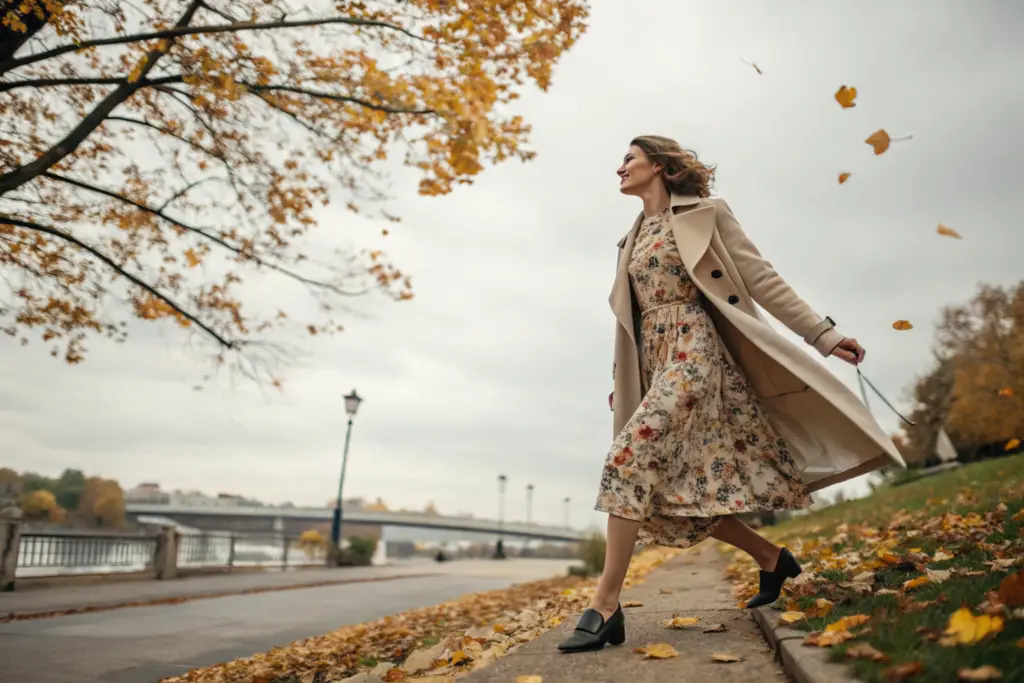
It’s that frustrating time of year again. You wake up shivering, but by noon, you’re sweating under your layers. You stare at a beautiful A-line floral dress hanging in your closet, but you hesitate. Wearing it feels like a gamble—you might freeze during the morning commute or feel out of place when the afternoon sun hits. Many of my clients in the U.S. fashion industry tell me their customers face this exact problem. They crave the femininity of a floral print but often leave the dress on the rack because they don’t know how to make it work for unpredictable weather. This uncertainty leads to lost sales and a closet full of unworn clothes.
The secret to styling an A-line floral dress for transitional weather lies in strategic layering, fabric selection, and smart accessorizing. This approach transforms a single, warm-weather-seeming dress into a versatile, multi-season wardrobe staple, allowing you to navigate temperature swings with confidence and style.
When I talk to boutique owners and brand managers who source from us at Shanghai Fumao, they consistently ask for designs that sell across multiple seasons. They don’t just want a dress for June; they want a dress that flies off the shelves from March through October. This demand for versatility drives our entire product development process. I’ll walk you through the very strategies that our most successful retail partners use to style and market these dresses, strategies rooted in garment construction, fabric technology, and creative design. These aren't just fashion tips; they are solutions to a real-world wearability problem that, when solved, can dramatically increase your sell-through rate.
Why the A-Line Silhouette is the Ultimate Foundation for Layering
Every fall, I review sales data with our design team in Shanghai, and one shape consistently outperforms the rest during seasonal shifts: the A-line. A few years ago, a client from Chicago confirmed why. She was struggling with returns because her shift dresses were too restrictive for layering. The moment she switched to an A-line cut from our production line, her customer feedback changed overnight. The inherent shape makes it a perfect canvas for building a weather-proof outfit without ever looking bulky.
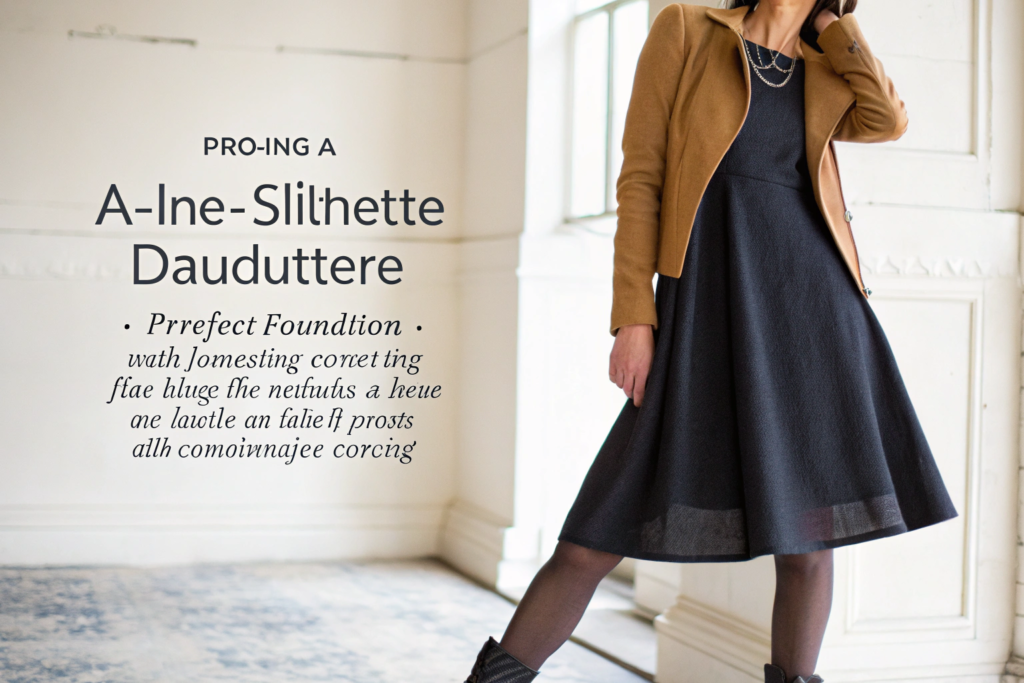
An A-line silhouette is the ultimate foundation for layering because its fitted top and gently flaring skirt create a balanced proportion that accommodates chunky knits and structured outerwear without sacrificing a clean, feminine outline.
This isn’t just a matter of opinion; it’s geometry. The beauty of a fit-and-flare shape is that it defines the waist—the narrowest part of your body—while the skirt smoothly glides over the hips and thighs. When you add a thick, oversized cardigan or a boxy denim jacket on top, the dress maintains a visual anchor at the waist, preventing the outfit from looking shapeless. This is a critical selling point that I always emphasize to brand buyers sourcing from our factory. They need garments that look good on a size 2 model but also feel comfortable and look flattering on a size 14 customer who adds a layer underneath. The A-line dress does exactly that. It doesn’t fight against the extra fabric of a base layer; it works with it. This versatility translates directly into a longer selling season and fewer post-purchase complaints about fit.
Why Does the A-Line Cut Work So Well Under Heavy Outerwear?
I want you to understand the physics of what happens when you throw a heavy coat over a dress. With a straight pencil skirt or a bodycon dress, the fabric is already under tension. Add a coat, and that pressure increases, causing the inner dress to ride up, bunch at the hips, and wrinkle badly. You end up looking messy, and more importantly, you feel uncomfortable.
An A-line dress is built with a different stress profile. The skirt portion flows away from the body. When you pull on a pair of tights and then slide into a wool coat, the dress’s skirt has the freedom to move independently. It doesn’t cling or catch on the lining of your outerwear. This simple structural difference, which we achieve through precise pattern grading at the Shanghai Fumao factory, resolves one of the biggest pain points of transitional dressing. For a brand, this means fewer returns due to “poor fit,” a metric we track obsessively. Investing in an A-line silhouette is not just a fashion choice; it’s a strategic decision for customer satisfaction during the tricky fall and spring seasons.
How Can Fit-and-Flare Dresses Minimize Bulky Layers?
Let’s tackle the most common fear: looking bulky. The psychological barrier to layering is the mirror check. No one wants to look ten pounds heavier just because they added a sweater. The strategic advantage of the A-line fit-and-flare dress is its ability to trick the eye. It follows a classic “sandwich” proportion rule that stylists use.
Here is a breakdown of this rule as it applies directly to the dress shape:
| Layer Position | Garment Type | Visual Effect on the Body |
|---|---|---|
| Top Layer | Cropped denim jacket or a fitted moto leather jacket | Broadens the shoulders slightly, creating a V-shape taper. |
| Middle Layer | The A-line floral dress itself | Defines the narrowest point at the ribcage and natural waist. |
| Bottom Layer | The flared hem of the dress paired with ankle boots | Adds volume at the hem, which makes the waist appear even smaller by contrast. |
This table is a cheat sheet for a reason. The flare at the bottom is essential. It provides physical room for a thermal base layer and even a thin merino wool turtleneck underneath the dress without straining the seams. The eye is drawn to the outward shape of the skirt, and the waist remains the focal point. When our partners in North America present this exact styling formula to their online shoppers—complete with a picture of the layered look—they report a measurable increase in basket size, as customers buy not just the dress but the layered pieces shown with it.
Mastering Fabric Selection for Weather-Shifting Days
As someone who walks through our textile sourcing department every day, I can tell you that the success of a transitional dress starts long before it’s cut and sewn. The yarn, the weave, and the weight of the fabric dictate how your body regulates temperature. I remember a specific project with a Seattle-based brand owner two years ago. He was convinced that floral prints were only for hot weather. He came to visit our Shanghai Fumao factory, and I showed him a line of floral dresses we were making with a heavier, high-twist cotton poplin. He touched the fabric, looked at the print, and said, “This isn’t a summer dress. This is a year-round dress.” That’s the lightbulb moment I strive for with every client.
Mastering fabric selection for weather-shifting days means choosing medium-weight textiles with specific weaves and fiber contents that offer breathability and insulation in equal measure, allowing you to stay comfortable as temperatures fluctuate.
The difference between shivering in your floral dress and feeling perfectly comfortable often comes down to one word: porosity. A loose, open weave like cheap voile lets all your body heat escape the second a cool breeze passes by. That dress is a summer-only garment, and your customers know it. On the other end, a thick, brushed polyester feels like wearing a plastic bag when the sun comes out. The sweet spot lies in the middle. The best fabrics for this purpose have a tight enough weave to block the wind but are made of natural or nature-based fibers that wick moisture away from the skin. This is where our fabric sourcing expertise directly helps brands avoid the production of "seasonally challenged" inventory that ends up on clearance racks.
Is Cotton Poplin the Best Base Layer for a Floral Dress?
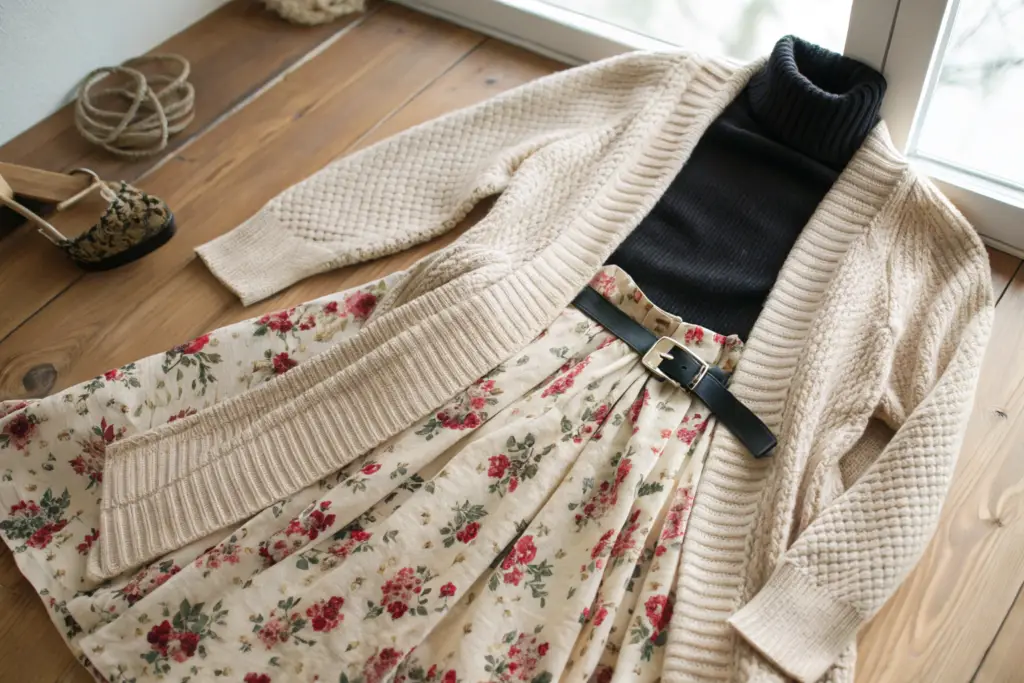
In my experience, sourcing hundreds of different fabric batches for U.S. brands, I always guide them toward high-quality cotton poplin first. The technical specifics of this material align perfectly with the demands of a volatile climate. The poplin weave—a simple over-one, under-one construction—creates a crisp, durable surface that feels cool and dry against the skin, yet its dense structure provides a surprisingly effective barrier against a chilly morning draft.
Consider these key properties that make it superior for a fall floral dress:
- Breathability: The natural cotton fibers and the tight, flat weave allow for consistent air circulation, preventing the "greenhouse effect" you get from synthetic satins.
- Shape Retention: Poplin doesn't cling. This quality is vital because static cling magnifies a hundred times when you start layering wool cardigans or fleece-lined tights.
- Print Definition: A smooth poplin surface acts as the perfect canvas for digital textile printing. The floral details remain sharp, and the color fastness is exceptional, which ensures the dress looks premium even after multiple washes.
When a retail buyer feels a thin, limp rayon floral dress versus a substantial cotton poplin one from our line, they can immediately sense the value difference. Our job is to supply products that give their customers an immediate perception of quality, and fabric weight is the first tactile clue.
What Role Does a Viscose-Twill Weave Play in Staying Warm?
While poplin is fantastic for crisp, structured silhouettes, some floral designs call for a softer drape. For those dress styles, a viscose-twill weave is my secret weapon against the cold. Twill is easily identifiable by its diagonal lines—think of the fabric used in classic jeans. This weave creates a thicker, heavier fabric than poplin without adding bulk.
The science of why a viscose twill keeps you warmer ties directly into its construction. The thicker yarns and the diagonal interlace create tiny air pockets within the fabric itself. These pockets trap your body heat, forming a micro-layer of insulation. Furthermore, viscose, being a semi-synthetic fiber derived from wood pulp, has a much lower thermal conductivity than cotton. This means it transfers heat away from your body at a slower rate, keeping you warmer for longer. A floral midi dress crafted from a brushed viscose twill doesn’t just look autumnal; it physically behaves like a light sweater. For brand owners, offering a "heavier" floral dress in this fabric directly addresses the customer’s anxiety about buying a floral piece for an October wedding or an outdoor spring brunch.
Strategic Layering Techniques to Extend Your Dress’s Season
I’ve seen too many beautiful dresses sit unsold because they were presented as a "one-and-done" outfit. The mental shift that creates real value for my B2B clients—and for the end consumer—is viewing the dress not as a complete look, but as the hero piece of a system. Last spring, an Atlanta-based boutique chain we supply was battling an unseasonably cold snap well into April. They had a massive shipment of short-sleeved floral dresses just sitting in the back room. Our team jumped on a call and gave them a digital lookbook of layering strategies we had developed. They sent it out in a newsletter that same night, and the dresses started moving again. The problem wasn’t the product; it was the lack of a vision for how to wear it.
Strategic layering techniques to extend your dress’s season involve building a visual "sandwich" that uses base layers for warmth, the dress for shape, and a topper for structure and protection, effectively transforming one garment into dozens of unique looks.
This "dress as a system" approach is what separates a stagnant SKU from a bestseller. It’s about solving a real pain point for the wearer. When a customer in New York sees a floral dress on your website in March, her first thought isn't "cute for a garden party." Her first thought is, "I’ll freeze." If you don't immediately show her a long-sleeved tissue turtleneck underneath that dress and a tailored coat over it, you’ve lost her. She clicks away. By pre-solving her warmth problem, you remove the barrier to purchase. This is not just styling; it’s a direct conversion tactic that speaks directly to a buyer like Ron, who prioritizes quality and practicality but lacks the aesthetic instinct to visualize these combinations himself.
How Can I Wear a Floral Dress with a Chunky Knit Sweater?
This is the number one styling question I get from our distribution partners. How do you mash up the delicate femininity of a floral print with the chunky, casual vibe of a big knit? The answer is proportion, not just throwing a sweater over the top. A chunky cable-knit sweater, if worn incorrectly, will swallow the dress whole, making you look like a walking bag of laundry.
The trick is to treat the sweater as a cropped, boxy topper. You need to "cinch and crop" to define the high waist of the A-line dress. The most effective method involves a simple, hands-on styling technique. Lay the sweater flat and fold the ribbed bottom hem up and inward by about three to four inches. Secure this invisible fold at the side seams with a tiny safety pin or a piece of fashion tape. This creates a makeshift cropped sweater. Now, when you pull it over the dress, the hem of the sweater hits right at the narrowest part of your ribcage, sitting perfectly above the flare of the skirt. This creates a leg-lengthening effect and prevents the outfit from looking sloppy. Contrast is also key here. A rough, thick knit paired with a slippery, fluid floral viscose twill creates a textural tension that feels incredibly intentional and modern.
How Do You Transition Summer Florals to Fall with Tall Boots?
Tall boots are the powerhouse accessory that instantly recalibrates a summer dress for autumn. However, the specific height of the boot shaft in relation to the hem of the dress is a detail that makes or breaks the look. A miscalculation here can make your legs look short and blocky, which is a hidden concern for many customers.
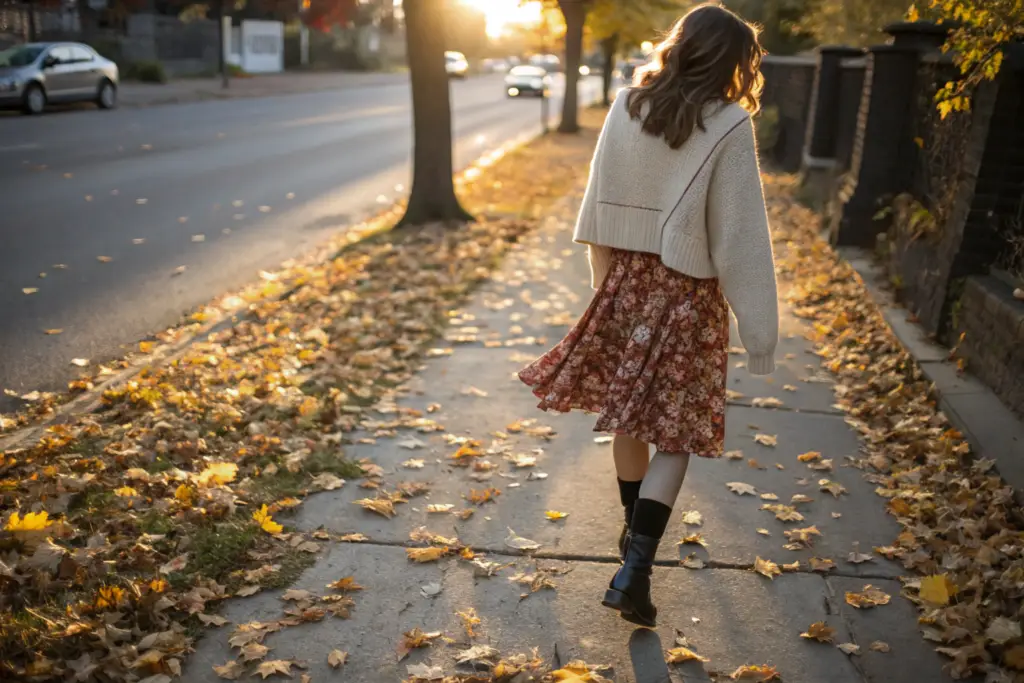
For an A-line floral dress, I always advise our brand partners to photograph the dress with knee-high boots that completely disappear under the hem. The dress should be a midi length, ending between the thickest part of your calf and just above your ankle bone. Here is the exact math I use:
- The Hem-to-Boot Gap: You want a mere one to two inches of skin, or a block of opaque tights, showing between the bottom of the dress hem and the top of the boot shaft. This small gap is crucial for creating a visual breathing space.
- The Boot Silhouette: A snug-fit or sock-fit boot is non-negotiable. A wide-calf or slouchy boot adds bulk exactly where the A-line skirt is flaring out, creating a barrel-like silhouette.
- The Tights Integration: Opaque black or richly colored burgundy tights erase the line between the boot and the hem, creating an unbroken, towering line from hip to toe, which makes the wearer look taller and the outfit more cohesive.
This formula is visually foolproof. It retains the floaty lightness of the floral print up top while firmly anchoring the look with sturdy, cold-weather-appropriate footwear on the bottom. It gives the customer a clear, easy-to-replicate system.
The Critical Role of Color and Floral Print Size in Autumn
One of the most subtle yet profound mistakes I see is the misapplication of summer prints for fall contexts. The floral pattern itself—its scale, its color palette, and its background—communicates a specific seasonal temperature. A few years back, I personally advised a client from Portland who was stuck with a batch of large, neon-pink floral mini dresses. They weren't selling. We analyzed the problem not as a flaw in the design, but as a psychological mismatch. The print screamed "pool party," and the customers were in a "pumpkin spice" frame of mind. By helping him see the language of prints, we pivoted his next production run to moodier, smaller-scale florals, and his sell-through rate improved by over sixty percent.
The critical role of color and floral print size in autumn fashion is to visually anchor the garment in the season, using muted tones, dark bases, and smaller motif scales to create a psychological sense of warmth and appropriateness that aligns with the consumer's cool-weather mindset.
This is a conversation I have frequently with buyers who prioritize quality and competitive pricing, like our typical client Ron. They are experts in cost and logistics but often need guidance on the "why" behind a design’s market fit. A floral print isn't just decoration; it’s a key driver of customer acquisition. A summer floral on a heavy twill body is a confusing message. A fall floral on a light voile body is equally dissonant. The harmony between the visual weight of the fabric and the visual weight of the print is what creates a premium, sellable garment. This alignment is what we focus on at the Shanghai Fumao design studio. We don't just apply prints randomly; we engineer the print to match the fabric's hand-feel and the intended season, ensuring that your brand's final product feels coherent and intentional.
How Can a Dark Background on a Floral Print Transition the Look?
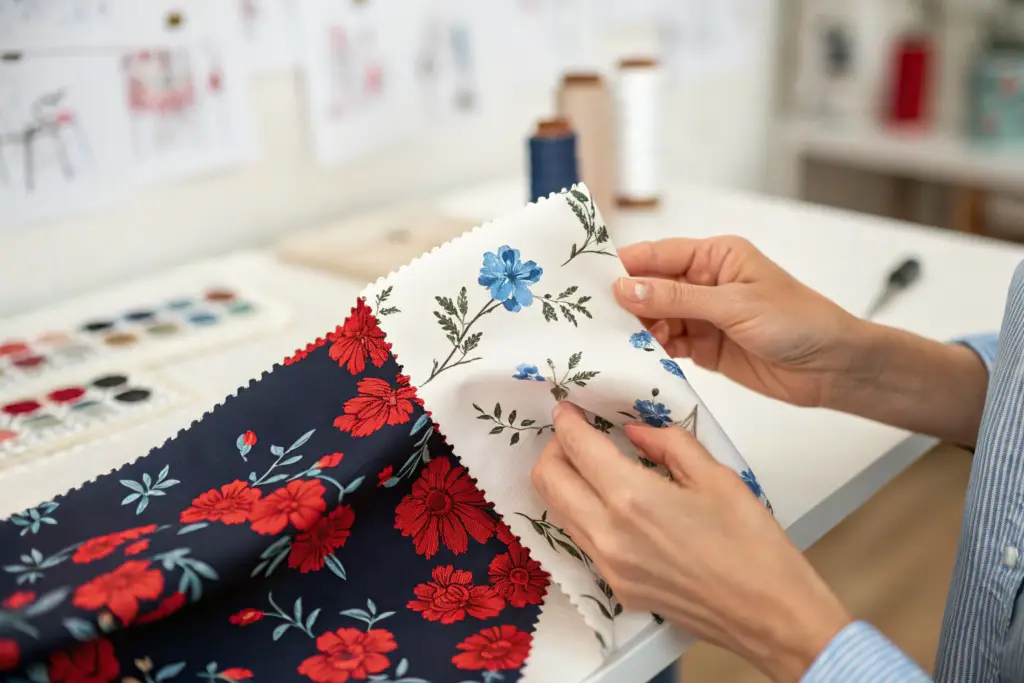
The easiest and most effective technical trick in textile design is flipping the background color from light to dark. A summer dress typically has a white or cream base with bright flowers printed on top. An autumn dress inverts this: it uses a black, navy, deep chocolate, or charcoal base with the floral pattern emerging from it. This simple inversion completely changes the dress’s energy.
The reason this works is rooted in color psychology and physics. Darker colors absorb more light, making the fabric physically warmer when worn in sun, but also visually heavier and more grounded. It fits the season’s natural environment. When the leaves are turning brown and the sky is grey, a bright white dress clashes with the environment, making the wearer feel exposed and off-season. A darker dress blends in, feeling cozy and appropriate. The floral elements then pop like jewels against the dark field. This contrast ratio is highly desirable, and from a manufacturing perspective, a deep-color reactive dye print on a quality base cloth minimizes the appearance of any slight inconsistencies, ensuring a consistent, low-defect production run.
Is a Smaller Floral Pattern More Appropriate for Cooler Weather?
Absolutely, and the reason connects directly to the principles of layering we discussed earlier. A large, splashy hibiscus print or an oversized sunflower print acts as a complete "look" on its own. It’s loud, singular, and difficult to layer with. When you try to put a patterned scarf or a textured vest over a large-scale print, the visual noise creates chaos.
Smaller, denser floral patterns—think Liberty-style ditsy florals or small vintage bouquets spaced densely together—function in a completely different way. From a distance, a micro-floral or busy paisley-floral blend starts to look like a textured solid. This is a styling superpower. The dress acts as a neutral, which allows for much more creative freedom with the top and bottom layers. You can easily layer a plaid blanket scarf over it without the patterns fighting, or pair it with a heavily textured cable-knit cardigan without the outfit looking confused. In the production phase, these smaller repeats are more efficient to print with less fabric waste, and in the styling phase, they are infinitely more versatile for the consumer trying to make one dress work for multiple weather conditions.
Conclusion
Styling an A-line floral dress for transitional weather is not about buying a new wardrobe every time the seasons change. It’s about mastering a system. We’ve walked through the logic behind why the A-line silhouette is your best foundation—its geometric ability to accept layers without losing its shape is unmatched. We’ve examined why fabric selection is the silent dealbreaker, and how a choice like a dense cotton poplin or an insulating viscose twill determines your comfort. The strategic layering techniques, from crafting a cropped sweater to doing the math on your boot gap, transform a single dress into a multi-season uniform. And finally, the deep dive into color psychology and print scale shows how a dark background or a smaller motif can visually turn down the thermostat on a summer piece, making it perfectly at home in autumn.
All of this knowledge comes from years of solving real-world problems on the factory floor and in design meetings with U.S. brand owners. I’ve seen firsthand how the right garment construction turns a hesitant shopper into a loyal customer, and how a poorly thought-out fabric choice leads to a pile of returns. A dress is never just a dress; it's a solution to a wearability problem. The real cost in this industry isn’t the price per unit—it’s the cost of missed opportunity from a dress that sits unworn because the customer couldn’t figure out how to make it work.
If you are a brand owner or distributor looking to source high-quality, versatile A-line floral dresses that are engineered from the ground up for these exact transitional season challenges, I invite you to start a conversation with us. At Shanghai Fumao, we don't just stitch clothes; we partner with you to build product lines that solve your customer’s problems, ensuring higher sell-through and stronger brand loyalty. From picking the right non-clingy poplin for that new fall collection to developing exclusive dark-ground floral prints that will resonate with your market, our 5 production lines are ready to build your vision. Reach out directly to our Business Director, Elaine, for a personalized consultation on your next collection. She can be reached at elaine@fumaoclothing.com. Let’s create something that moves from the rack to the street, no matter what the weather does.