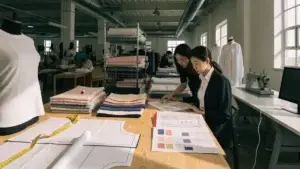
A brand owner from Los Angeles called me in a panic last August. She had moved her entire floral dress production from China to Vietnam two years earlier. The initial FOB prices were 15% lower. She thought she had cracked the code. Two years later, she crunched the numbers. The total landed cost per dress was actually $1.80 higher than her old China pricing. The savings had been consumed by hidden costs she never saw coming. Minimum order quantities that forced her to over-order. Communication delays that pushed her delivery dates back by three weeks. Fabric quality issues that required her to hire a local agent. A logistics chain that added 10 days of transit time and thousands of dollars in air freight when she needed to restock a bestseller. She called me to move her production back to Shanghai Fumao. She told me, "The sticker price in Vietnam was cheaper. The true cost was more expensive."
The hidden costs of sourcing dresses from Vietnam compared to China include higher minimum order quantities, longer and less reliable lead times, a less developed fabric and trim supply chain that often requires importing materials from China anyway, higher logistics costs due to longer transit times and less frequent sailings, and significant communication and quality control challenges that often require hiring a local agent. These hidden costs can add $1.50 to $3.00 per dress, erasing the apparent FOB price advantage.
I am not a neutral observer. I manufacture in China. But I also have access to real data from clients who have sourced in both countries. I see the invoices. I hear the stories. I want to give you an honest, data-driven comparison so you can make the best decision for your brand.
Why Does the Fabric Supply Chain Add Hidden Costs in Vietnam?
The most significant hidden cost in Vietnamese garment manufacturing is the fabric supply chain. China is the world's largest textile producer. It has a fully integrated supply chain from fiber to finished fabric. Vietnam's textile industry is heavily focused on cut-and-sew operations. It does not have the same depth of fabric mills, dye houses, and printing facilities. This structural difference has a direct impact on your floral dress costs.
A significant hidden cost in Vietnam is fabric import dependency. Many high-quality floral fabrics, including custom-printed cotton voile and polyester crepe, are still imported from China into Vietnam. This adds a 5% to 12% import duty on the fabric, plus additional logistics costs and a 7 to 10 day delay. The Vietnamese factory's FOB price often embeds this fabric import cost, making the apparent saving over China illusory. In China, the fabric is produced domestically with no import duty, no cross-border logistics, and near-instant delivery to the factory.
When you compare a Vietnamese FOB quote to a Chinese FOB quote, you must ask the Vietnamese factory one question: "Where is the fabric coming from?" If the answer is China, the cost advantage is built on sand.
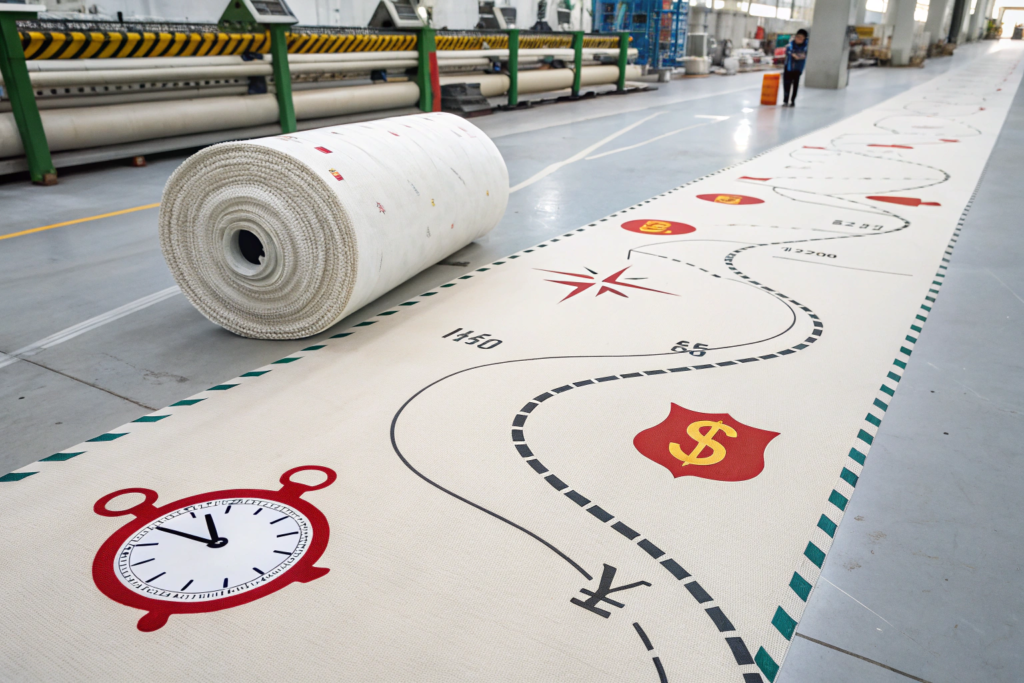
How Much Does Cross-Border Fabric Sourcing Actually Cost?
Let's trace a specific example. A Vietnamese factory quotes $13.50 FOB for a floral A-line dress in custom-printed cotton voile. A Chinese factory quotes $15.00. The Vietnamese quote appears $1.50 cheaper.
Now investigate the fabric. The Vietnamese factory is importing the custom-printed cotton voile from a mill in China. The fabric cost from the mill is $4.80 per meter. The Vietnamese factory pays 5% import duty on that fabric, adding $0.24 per meter. They pay $0.15 per meter for cross-border trucking and customs brokerage. They pay an additional $0.10 per meter for the 7-day transit holding cost. The true fabric cost to the Vietnamese factory is $5.29 per meter.
The Chinese factory uses the same mill. The fabric cost is $4.80 per meter. There is no import duty. The trucking from the mill to the factory takes one day and costs $0.03 per meter. The true fabric cost is $4.83 per meter.
The Vietnamese factory's fabric cost is $0.46 per meter higher. On a dress that uses two meters of fabric, that is $0.92 per dress in hidden fabric costs. The apparent $1.50 FOB advantage is now down to $0.58.
But the hidden costs are not done. The Vietnamese factory had to order the fabric 10 days earlier due to the transit time. This ties up working capital. The factory builds this financing cost into their overhead, which eventually flows into the FOB price. The integrated supply chain in China eliminates these frictional costs.
What About Trim and Accessory Sourcing?
The same dynamic applies to trims. Zippers, buttons, threads, labels, and hangtags. China is the world's largest producer of garment accessories. The YKK zipper for your dress is manufactured in China. The custom-printed label is made in China. The shell button you love is imported from Italy into China.
When a Vietnamese factory sources these trims, they often import them from China. The same import duty, cross-border logistics, and time delays apply. When a Chinese factory sources them, they are usually produced within the same province or a neighboring one. The logistics cost and time are negligible.
A client in Austin needed a specific branded zipper pull for her dresses. Her Vietnamese factory quoted a $0.35 upcharge per zipper for the import and logistics from China. Her Chinese factory, Shanghai Fumao, sourced the same zipper from a manufacturer 200 kilometers away. The logistics cost was $0.02 per zipper. The hidden trim sourcing cost added up across thousands of units.
How Do Minimum Order Quantities and Lead Times Compare?
A hidden cost is not always a line item on an invoice. Sometimes, it is the cost of ordering more inventory than you need. A factory with a high minimum order quantity forces you to tie up cash in excess stock. That stock may eventually sell at a discount or not sell at all. The MOQ is a hidden cost of working capital and markdown risk.
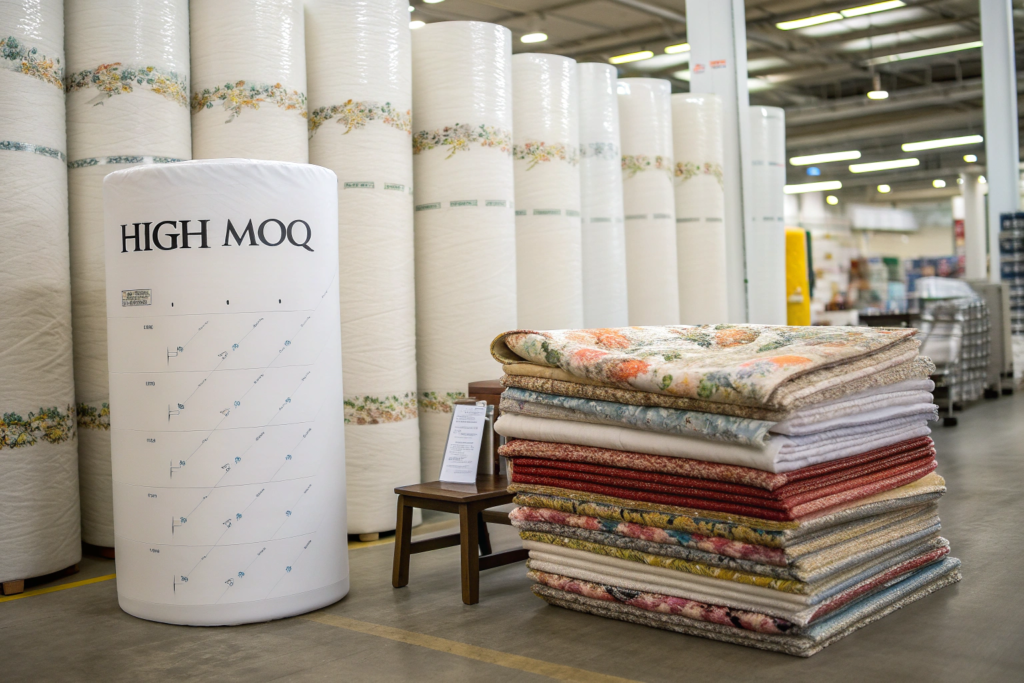
Vietnamese factories often have higher MOQs than Chinese factories, particularly for custom-printed fabrics and complex styles. A Vietnamese factory may require 500 to 1,000 units per style per color. A Chinese factory like Shanghai Fumao can often accommodate 100 to 300 units per style per color. For a boutique brand testing new floral prints, a 500-unit MOQ forces an over-investment in unproven designs. The cost of the unsold inventory at the end of the season is a massive hidden cost.
The MOQ difference is a function of the supply chain integration. A Vietnamese factory imports fabric. They must order a full container or a large batch to justify the cross-border logistics. A Chinese factory orders fabric domestically. They can order smaller batches more frequently. The MOQ flexibility flows from the supply chain structure.
How Does Lead Time Uncertainty Affect Your Bottom Line?
A Vietnamese factory typically quotes a production lead time of 60 to 75 days. A Chinese factory quotes 45 to 60 days. The 15-day difference is significant for a seasonal product like a floral dress. But the average lead time is less important than the lead time reliability.
Vietnam's logistics chain is less predictable. The fabric import from China adds a variable 7 to 15 days, depending on customs clearance at the border. The port infrastructure in Vietnam, while improving, is less developed than China's major ports. Vessel sailings from Vietnam to the US are less frequent. If a shipment misses a vessel, the next sailing might be a week later. In China, daily sailings from Shanghai, Ningbo, and Shenzhen are standard.
A 10-day delay on a summer floral dress shipment means the dresses arrive in late May instead of early May. The peak selling window is shortened. The dresses sell at a higher markdown percentage. A 10-day delay can cost $10,000 to $20,000 in lost full-price sales on a 3,000-unit order. The delay cost is a hidden cost of the less reliable logistics chain.
A brand owner in Miami shared her data with me. Over two years of sourcing from Vietnam, her average delivery was 8 days late. Over two years of sourcing from China, her average delivery was 1 day early. The reliability of the Chinese logistics chain saved her an estimated $35,000 in markdown avoidance.
What Are the Quality Control and Communication Hidden Costs?
The cost of a dress is not just the fabric and the labor. It is also the cost of your time. The time you spend managing the supplier relationship, clarifying specifications, resolving misunderstandings, and inspecting quality. A supplier who communicates clearly and delivers consistent quality saves you time. A supplier who communicates poorly and delivers inconsistent quality costs you time. Your time has a dollar value.
Communication and quality control can be significant hidden costs when sourcing from Vietnam. English proficiency in Vietnamese garment factories is generally lower than in Chinese export factories. This can lead to longer email chains, more frequent misunderstandings, and a higher rate of pre-production sample rejections. Quality consistency is also a challenge. Vietnamese garment quality can be excellent, but batch-to-batch variation is more common than in established Chinese factories with mature quality management systems. Many brands sourcing from Vietnam hire a local QC agent for $1,500 to $3,000 per month to bridge the communication and quality gap.
The agent cost alone can add $0.50 to $1.00 per dress on a 3,000-unit order. This is a direct, recurring hidden cost.
Why Do Miscommunications Cost You Money?
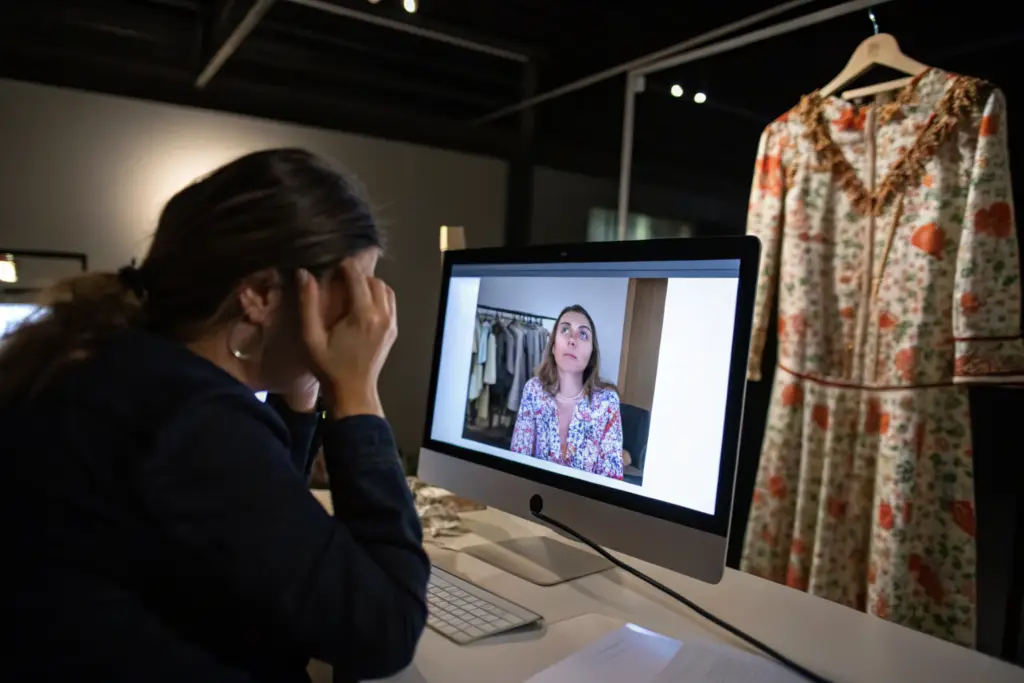
A misunderstood specification on a pre-production sample means a sample that is made wrong. A wrong sample must be remade. The remake adds 7 to 10 days to the pre-production timeline. The delay pushes the bulk production start date back. The delivery date slips. The markdown cost increases.
A misunderstood instruction on a bulk production detail, caught after the dresses are sewn, is far worse. It means a batch of dresses with a defect. The defect might be reworkable, at a cost. It might mean the entire batch is unsellable. The cost of a miscommunication can be catastrophic.
In my experience, the clarity of communication with Chinese export factories is a significant competitive advantage. My team at Shanghai Fumao communicates in English with business-level proficiency. We use WhatsApp, email, and video calls seamlessly. We confirm every detail in writing. We send photos of production progress. We anticipate questions before the client asks them. This communication infrastructure is the result of 15-plus years of experience serving Western apparel brands. It is a skill set that is less common in Vietnam's still-maturing export garment sector.
How Do You Quantify the Cost of Inconsistent Quality?
Inconsistent quality means a higher return rate. A batch of dresses where 5% have a subtle defect that was not caught by a less rigorous QC process. Those 5% become customer returns. Each return costs the brand $12 in processing and shipping. The batch's profitability is eroded.
Inconsistent quality also damages the brand's reputation. A customer who receives a flawed dress leaves a bad review. The bad review influences other potential customers. The lifetime value of those lost customers is a hidden cost of inconsistent quality.
Chinese factories that have been serving demanding Western markets for decades have developed robust quality management systems. The AQL inspection is standard. The inline QC checks are standard. The fabric testing is standard. This infrastructure reduces the defect rate and the associated hidden costs.
I am not saying Vietnamese factories cannot deliver quality. The best Vietnamese factories can and do. But the quality infrastructure is less uniformly distributed. The brand that sources from Vietnam must do more due diligence and often must pay for third-party inspections that are built into the service of a premium Chinese factory.
What About the "China Plus One" Tariff and Geopolitical Premium?
The "China Plus One" strategy is popular in boardrooms. The idea is to diversify supply chains away from China to reduce exposure to tariffs, geopolitical tensions, and supply chain disruptions. Vietnam is the most popular "Plus One" destination. There is a cost to this strategy. Sometimes, that cost is worth paying. Sometimes, it is an expensive insurance policy against a risk that may not materialize.
The "China Plus One" strategy carries its own hidden costs. The cost of qualifying a new factory. The cost of splitting production across two countries, which reduces volume discounts. The cost of managing a more complex supply chain. And the risk that Vietnam eventually faces the same tariffs or trade restrictions that drove the move away from China. The tariff savings that justified the move can disappear overnight. The operational costs of the diversified supply chain remain.
The geopolitical premium is the most difficult hidden cost to quantify, and it is often overlooked in the initial sourcing analysis.
Are the Tariff Savings on Vietnamese Dresses Real and Durable?
Currently, Vietnamese dresses imported into the US face the same Most Favored Nation tariff rates as Chinese dresses for most categories. The tariff advantage for Vietnam is primarily in the European Union, where the EU-Vietnam Free Trade Agreement has phased out duties on many garment categories. If your primary market is the US, the tariff differential between China and Vietnam is minimal for woven dresses.
The tariff situation is also fluid. The US has previously considered tariffs on Vietnamese goods related to currency manipulation and illegal transshipment of Chinese goods through Vietnam. Future tariff changes are unpredictable. A brand that moves production to Vietnam to save 10% on tariffs may find those tariffs reimposed. The savings vanish. The supply chain disruption remains.
The most reliable cost advantage is operational efficiency, not tariff arbitrage. China's operational efficiency in apparel manufacturing is a durable advantage built on decades of infrastructure investment. It does not depend on the political winds.
What Is the Cost of Splitting Your Production Across Two Countries?
Many brands adopt a "China Plus One" strategy, keeping some production in China and moving some to Vietnam. This splitting has operational costs. The design and development work is duplicated. The pattern maker in China and the pattern maker in Vietnam both need the same tech pack. The samples from each factory must be compared and approved separately. The communication overhead doubles.
The volume discounts shrink. If you previously ordered 6,000 dresses per year from one Chinese factory, you got a volume discount. Now you order 3,000 from China and 3,000 from Vietnam. Both factories quote a higher unit price because the volume is smaller. The loss of the volume discount is a hidden cost of diversification.
A brand owner in San Diego diversified her production to Vietnam and China. She found that the combined management cost, the loss of volume discounts, and the increased sample development cost added approximately $1.20 per dress across her entire production. She consolidated back to China after two seasons.
Conclusion
The FOB price on a quote sheet is the visible tip of the iceberg. Beneath the surface are the hidden costs of a less developed fabric supply chain, higher minimum order quantities, longer and less reliable lead times, higher communication and quality control costs, and the operational complexity of managing a diversified supply chain. When these hidden costs are tallied, the apparent cost advantage of sourcing from Vietnam often shrinks or disappears entirely.
China's apparel manufacturing industry has structural advantages that are difficult to replicate. A fully integrated textile supply chain. World-class logistics infrastructure with daily sailings to major global ports. A deep pool of experienced, English-speaking export professionals. Mature quality management systems. Flexible MOQs that accommodate both startup brands and mass-market retailers. These advantages translate into lower hidden costs and greater predictability.
I have built Shanghai Fumao within this ecosystem. I benefit from its strengths every day. I pass those benefits to my clients in the form of reliable pricing, on-time delivery, and consistent quality. The FOB price I quote is the real price. The hidden costs that plague other sourcing destinations have been engineered out of my operation.
If you are comparing sourcing options and want a transparent, fully-loaded cost estimate for your floral dress production, I can help. Our Business Director, Elaine, can provide a detailed cost breakdown that includes fabric, trims, labor, testing, logistics, and all the costs that other factories leave hidden. Email her at elaine@fumaoclothing.com. Tell her your design, your quantity, and your target market. She will send you a comprehensive quote with no surprises. The true cost of your dress should be known before you place the order, not discovered after.