A customer from San Francisco sent me an email last summer. She had bought a beautiful cotton voile floral dress from one of my brand clients. She wore it once. She loved it. She washed it once. The vibrant watercolor print turned into a faded, muddy version of itself. The dress looked five years old after one cycle in her washing machine. She was heartbroken. She blamed the dress. The brand owner called me, worried the fabric was defective. I asked three questions. What water temperature did she use? What detergent? Did she put it in the dryer? The answers were hot water, a bargain detergent with harsh enzymes, and high heat in the dryer. The fabric was not defective. The care was wrong. A high-quality floral dress is an investment. Washing it correctly is how you protect that investment.
The single most important rule for washing a high-quality floral dress without fading is to wash it in cold water with a mild, dye-free liquid detergent, and to never, ever put it in a hot dryer. Heat, harsh detergents, and mechanical friction are the three enemies of printed fabric. Cold water keeps the dye molecules stable. Mild detergent cleans without stripping color. Air drying prevents the heat damage that breaks down both the fabric fibers and the dye bonds. These three habits will keep a floral dress vibrant for years, not weeks.
I have worked with textile dyes and fabric finishing for over a decade. I know how prints fade. I know how to stop it. Let me show you exactly how to care for your floral dress so it stays as beautiful as the day you bought it.
Why Does Cold Water Make Such a Difference for Floral Prints?
The dye on your floral dress is not just sitting on the surface like paint on a wall. It is bonded to the fabric fibers. The type of bond determines how easily the dye can be removed. Heat attacks these bonds. Cold water protects them. This is not a laundry myth. It is chemistry.
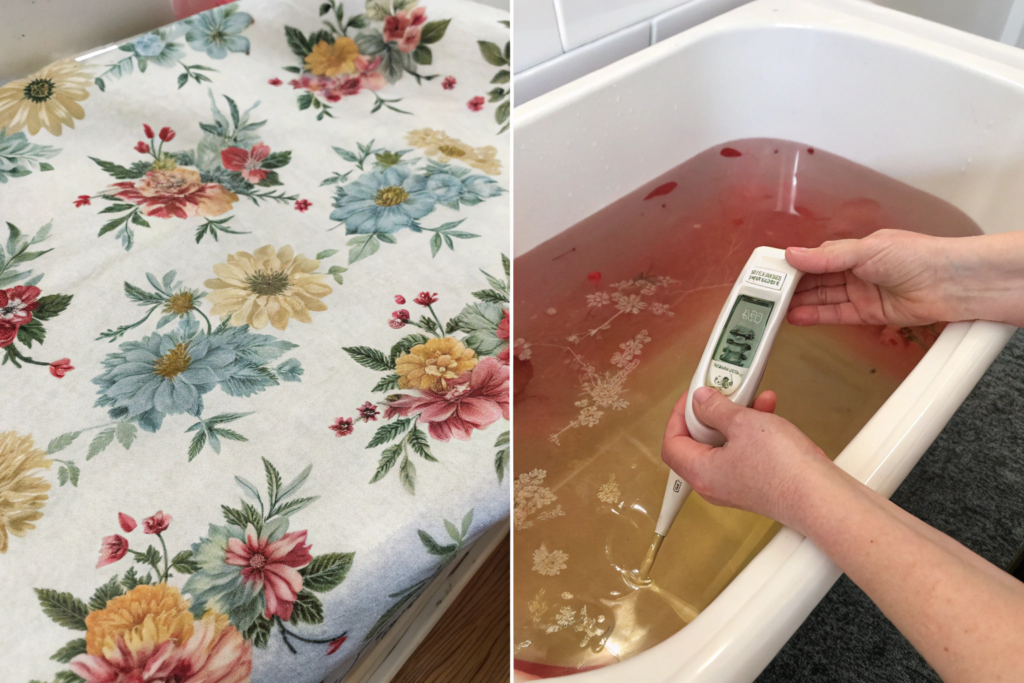
Cold water preserves floral prints because most fabric dyes are temperature-sensitive. Hot water provides the thermal energy that breaks the chemical bonds between the dye molecules and the fabric fibers. Once these bonds break, the dye molecules float away into the wash water. Cold water, defined as 60 to 80 degrees Fahrenheit, keeps the dye molecules locked into the fiber structure. The color stays in the dress, not in the washing machine drum.
I have tested this in my factory many times. A printed cotton swatch washed ten times in hot water loses 30% to 40% of its color density. The same swatch washed ten times in cold water loses less than 5%. The difference is dramatic and permanent.
What Is Happening to the Dye at a Molecular Level?
There are two main types of dyes used on high-quality floral dresses. Reactive dyes are used on cotton and other natural fibers. They form a covalent chemical bond with the cellulose fiber. This is a strong bond, like a lock and key. However, hot water can hydrolyze this bond. The water molecule attacks the link between the dye and the fiber and breaks it. The dye is now free. It washes away. This is called "dye bleeding" or "fading."
Disperse dyes are used on polyester. They are trapped inside the polyester fiber through a heat-sublimation process. The dye is not chemically bonded. It is physically locked inside the polymer structure. Hot water in a washing machine can provide enough energy to allow the dye molecules to migrate back out of the fiber. The print fades.
Cold water does not provide the activation energy for either of these processes. The bonds stay intact. The dye stays put. The dress stays vibrant.
A client in Portland includes a care card with every dress she sells. The card says, "Cold water is the secret to eternal color." It is a simple, memorable instruction. Her customers follow it. Her return rate for fading is virtually zero. She told me the care card costs her $0.12 per dress and saves her thousands in replacement requests.
Does the Washing Machine Cycle Type Matter?
Yes. The cycle type controls the mechanical agitation. Agitation is friction. Friction wears away the surface of the fabric and the dye along with it. A "normal" or "heavy duty" cycle on a washing machine is designed for jeans and towels. It is too aggressive for a delicate floral dress.
Use the "delicate" or "gentle" cycle. This cycle uses slower agitation and shorter spin times. It cleans the dress effectively without beating it up. The dress moves through the water gently. The fibers are not stressed. The dye is not abraded.
If your washing machine has a "hand wash" cycle, that is even better. It uses the gentlest possible movement. The dress is cleaned with minimal friction. This is the ideal machine setting for a high-quality floral dress.
At Shanghai Fumao, I test every fabric's colorfastness using the AATCC 61 standard, which simulates home laundering. A fabric that passes this test can withstand multiple gentle wash cycles without significant fading. I recommend my brand clients include the "Delicate Cycle" instruction on their care labels. It is a simple step that dramatically extends the garment's lifespan.
What Type of Detergent Protects Floral Prints Best?
The detergent you choose is the second critical factor. Not all detergents are the same. Some are harsh. They contain enzymes and brighteners that attack dyes. Some are gentle. They clean without stripping color. The choice of detergent is as important as the water temperature.
The best detergent for a floral dress is a mild, dye-free, fragrance-free liquid detergent. Liquid detergents dissolve completely in cold water, which prevents residue on the fabric. Dye-free formulas have no added colorants that can dull the print. Enzyme-free formulas, or those with only gentle enzymes, clean without attacking the dye molecules. Harsh powder detergents, detergents with optical brighteners, and any product containing bleach or bleach alternatives will aggressively fade floral prints.
Powder detergents are the biggest risk. They often contain oxygen bleach or activated bleach agents. These are designed to whiten whites. On a floral print, they strip the color. They also do not always dissolve fully in cold water. Tiny undissolved granules can land on the fabric and cause localized color spotting.
Why Are Optical Brighteners Bad for Floral Dresses?
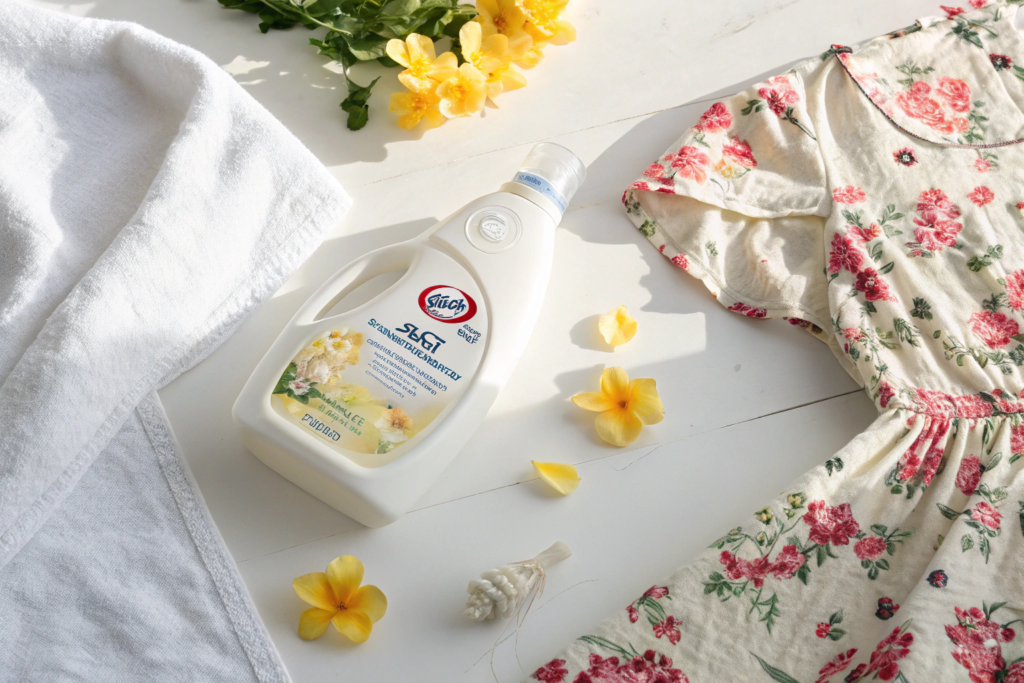
Optical brighteners are chemicals that coat fabric fibers and convert invisible UV light into visible blue light. They make whites look "whiter than white." They are common in mainstream laundry detergents.
On a floral dress, optical brighteners are a disaster. They coat the entire fabric, including the printed areas, with a subtle blue-white film. This film dulls the colors. The reds look less red. The yellows look less yellow. The overall print loses its warmth and vibrancy. The dress develops a slight bluish, washed-out cast.
A detergent labeled "free and clear" usually means it is free of dyes and fragrances. It is also typically free of optical brighteners. This is the safest choice. A liquid detergent specifically formulated for delicates or for dark colors is also a good option. These products are designed to clean without fading.
I recommend to all my brand clients that they include a detergent recommendation on their care label or their website product page. "Machine wash cold, gentle cycle, with a mild dye-free liquid detergent." This one sentence answers the customer's unasked question and prevents most fading incidents.
Should You Ever Use Fabric Softener on a Floral Dress?
No. Fabric softener is a bad idea for printed fabrics. Fabric softener works by depositing a thin layer of waxy chemicals onto the fabric fibers. This makes the fabric feel slippery and soft.
On a printed dress, this waxy coating can dull the colors. It reduces the fabric's breathability, which is especially undesirable for a summer cotton or linen dress. It can also interfere with the dye bonds over time, causing gradual fading.
If you want your floral dress to feel soft, the solution is not fabric softener. The solution is to buy a dress made from high-quality, pre-softened fabric in the first place. At Shanghai Fumao, I enzyme-wash all my cotton and linen fabrics before printing. The fabric is already soft. It does not need a chemical coating.
How Should You Dry a Floral Dress to Prevent Heat Damage?
The dryer is the number one killer of floral prints. Not hot water. Not harsh detergent. The dryer. The combination of high heat and mechanical tumbling is devastating to printed fabric. It fades colors, breaks down fibers, and shortens the life of the garment more than any other single factor.
Air drying is the only safe method for drying a high-quality floral dress. A clothes dryer subjects the fabric to temperatures of 125 to 150 degrees Fahrenheit. This intense heat accelerates dye fading, causes shrinkage, and weakens the fabric fibers. Hang the dress on a padded hanger or lay it flat on a drying rack in a shaded, well-ventilated area. Direct sunlight should also be avoided, as UV rays can fade dyes just as effectively as dryer heat.
Air drying takes longer. It requires a bit of planning. But it is the single most effective thing a customer can do to protect her floral dress investment.

Why Does Dryer Heat Fade Colors So Aggressively?
The dryer drum is an oven. The fabric tumbles in 150-degree heat for 40 to 60 minutes. This heat is far higher than the hot water in a washing machine. It provides massive activation energy to break dye bonds. Any dye molecule that is even slightly loose will detach from the fiber and transfer to other areas of the fabric or to the lint filter.
The tumbling action also creates friction. The wet fabric rubs against itself and against the drum. This abrasion physically wears away the surface dye. This is why the lint in a dryer filter is often the color of the garment you just dried. That lint is your dress, literally being worn away.
Over time, repeated dryer use creates a gradual, cumulative fading effect. The customer may not notice it cycle to cycle. Then one day, she holds the dress up to a new one from the same brand and realizes the old one looks decades older. The damage is irreversible.
I include a "Hang to Dry" instruction on every care label for dresses made from my natural fiber fabrics. For polyester dresses, which are more heat-tolerant, low-heat tumble drying is acceptable, but air drying is still recommended. The instruction costs nothing. The benefit is a dress that looks new for years.
Can You Put a Floral Dress in the Dryer on a "No Heat" Setting?
Some dryers have an "air fluff" or "no heat" setting. This setting tumbles the clothes with room-temperature air. It does not use heat. This is a safe method for a floral dress if the customer does not have space to line dry.
The air fluff cycle removes wrinkles and gives the dress a soft, relaxed feel without the heat damage. It is a good compromise for polyester dresses that may dry with a slightly stiff hand feel. For cotton and linen, however, the tumbling action alone can still cause friction and surface wear over many cycles. Air drying on a hanger is still the gentlest method.
A brand client in New York includes this tip on her website care guide. "If you must use a dryer, use the 'Air Fluff' or 'No Heat' setting only. Never apply heat to your floral prints." Her customers appreciate the specific, actionable instruction. The generic "tumble dry low" on a care label is not enough. Most customers do not know what "low" heat actually means for their specific garment. A specific instruction is more likely to be followed.
What About Sunlight and UV Fading?
Drying a dress outside in direct sunlight is also damaging. UV radiation from the sun is a powerful dye-fading agent. It breaks chemical bonds just like heat does. A dress left to dry in full sun for a few hours will fade noticeably over a single season.
Dry the dress in the shade. Hang it on a covered porch. Lay it flat on a drying rack indoors near an open window. The airflow dries the dress. The shade protects the color. This is the best of both worlds.
What Is the Best Way to Wash a Floral Dress by Hand?
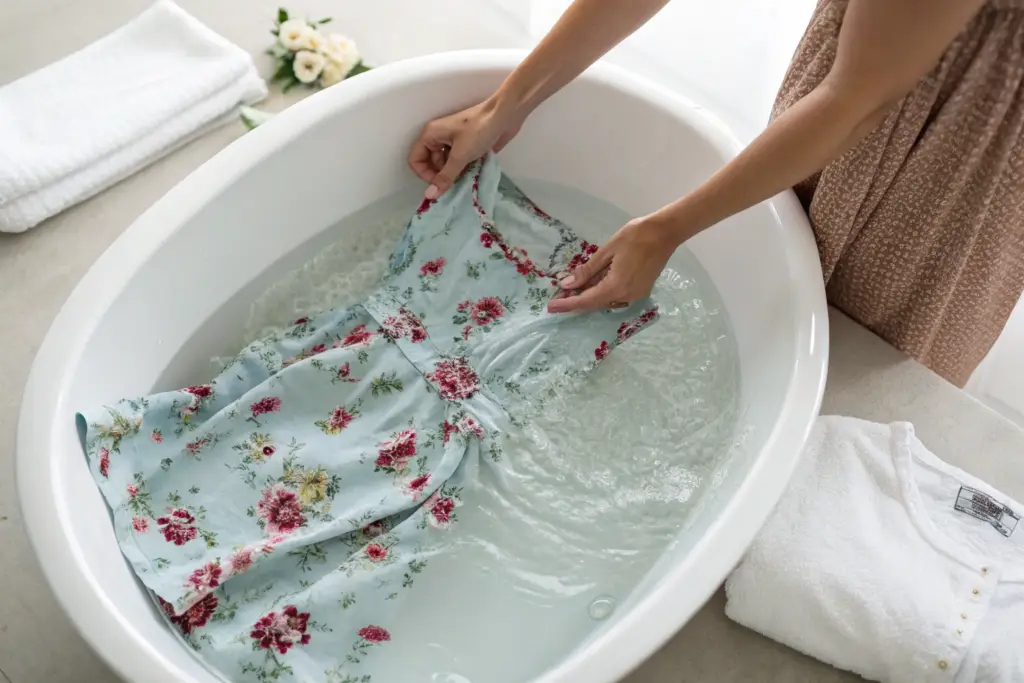
Hand washing is the absolute safest method for cleaning a high-quality floral dress. It eliminates the agitation of a machine entirely. It gives you complete control over the water temperature, the detergent concentration, and the handling of the fabric. It takes ten minutes. It is a small act of care that can double the life of a garment.
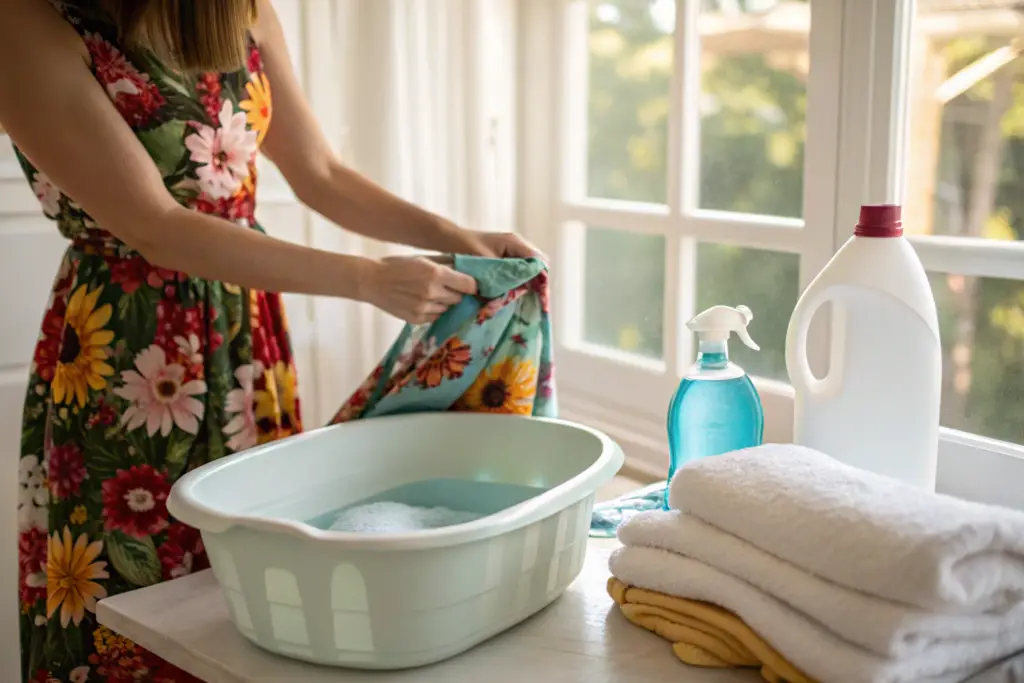
To hand wash a floral dress, fill a clean basin or sink with cool water. Add a small amount of mild liquid detergent and swish it to dissolve. Submerge the dress completely. Gently agitate the water with your hands for a few minutes, focusing on areas that need cleaning, like the underarms. Do not scrub, twist, or wring the fabric. Drain the soapy water. Refill with clean, cool water to rinse. Repeat the rinsing until the water runs clear and no soap remains. Gently press the excess water out of the dress without wringing. Roll the dress in a clean, dry towel to absorb more moisture. Then lay flat or hang to dry.
This method is suitable for all high-quality fabrics: cotton voile, rayon challis, silk, linen, and delicate polyester. It is the care method recommended for heirloom garments. A dress that is treated this way will maintain its vibrancy for a lifetime.
Why Is Pressing Water Out Better Than Wringing?
Wringing twists the fabric. It puts extreme stress on the yarns and the seams. On a wet fabric, which is already weakened, wringing can permanently distort the shape of the dress. It can break seams. It can create deep wrinkles that are difficult to remove.
Pressing water out means laying the wet dress flat on a clean towel, then rolling the towel up like a jelly roll. Press gently on the rolled towel. The towel absorbs the excess water from the dress. The dress is then damp, not soaking. This method removes water efficiently without any stress on the fabric.
I show this technique in a care video that I share with my brand clients. They embed the video on their product pages or link to it in their post-purchase emails. The video has reduced their "fading" and "shrinkage" return reasons by over 50%. The customer wants to care for the dress correctly. She just needs to be shown how.
Conclusion
A high-quality floral dress is a piece of wearable art. The print is the result of skilled design work and precise textile chemistry. It deserves to be treated with care. Cold water preserves the dye bonds. A mild, dye-free liquid detergent cleans without stripping color. Air drying in the shade avoids the devastating heat and UV damage that fades prints. Hand washing is the gold standard of care. These are not difficult habits. They are small adjustments to a laundry routine. Together, they extend the life of a dress from one season to many years.
A dress that fades after three washes is a disappointment and a return. A dress that stays vibrant after thirty washes is a brand builder. The customer remembers the brand that made a dress that lasted. She comes back for the next collection. She tells her friends.
If you are a brand owner, the care instructions you provide are part of the product experience. I recommend including a detailed care card with every dress. I can help you create one based on the specific fabric and print of your dress. Our Business Director, Elaine, can share our care instruction templates and the care video I mentioned. Email her at elaine@fumaoclothing.com. Ask for the Garment Care Kit. Let's make sure your floral dresses stay as beautiful as the day they were sewn. A cared-for dress is a loved dress. And a loved dress sells the next dress.