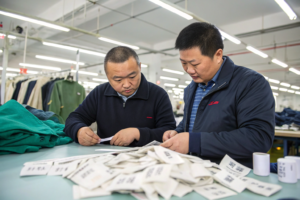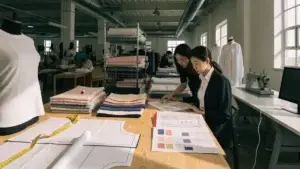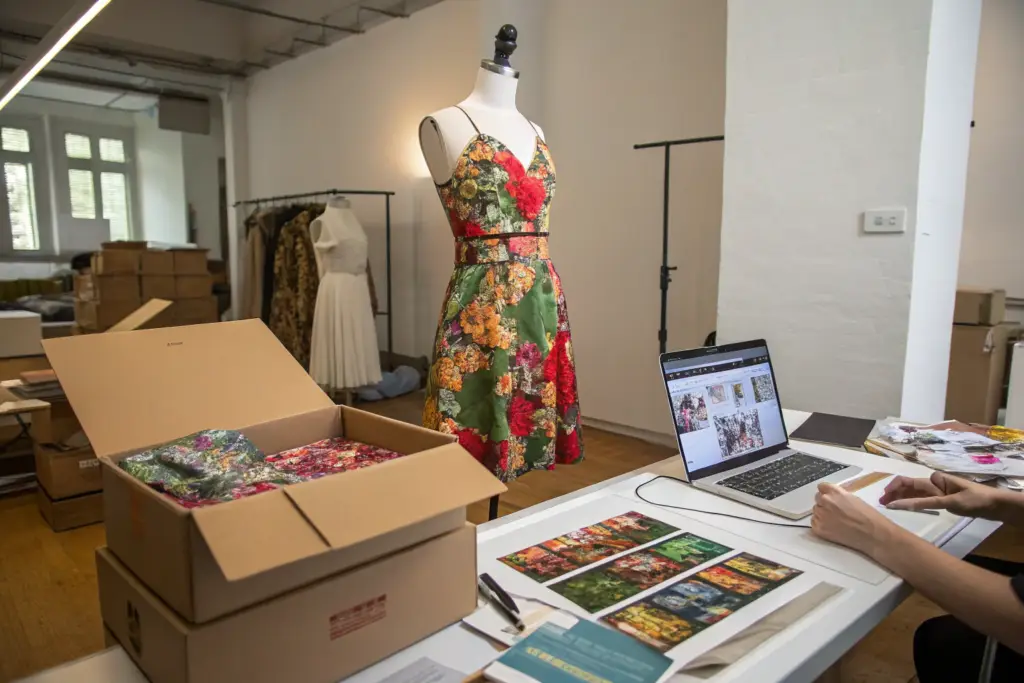
Three years ago, a boutique owner in Austin came to me with a problem. She had built her entire brand on finding rare, vintage-inspired floral dresses that her customers couldn't find anywhere else. She sourced from thrift stores, estate sales, and small local designers. Her business grew. Demand outpaced supply. She couldn't find enough truly unique floral dresses to fill her racks. She was stuck. She thought her only options were mass-market wholesale platforms where every other boutique was buying the same floral prints. She didn't realize she could design her own rare prints and have them manufactured exclusively for her brand. I changed her business model.
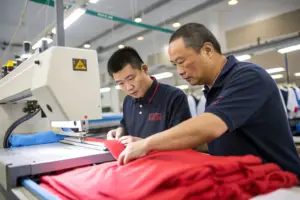
The best place to buy rare floral print dresses not sold in stores is directly from a custom apparel manufacturer. A factory like Shanghai Fumao allows you to design your own exclusive floral prints, choose your own fabrics, and create an A-line dress silhouette that is unique to your brand. You are not buying off a rack. You are creating the rack. Other options include private-label trade shows, exclusive designer sample sales, and direct partnerships with independent textile designers. But the only way to guarantee true rarity and exclusivity is to commission your own production.
The fashion industry is built on a secret. Most boutiques don't design anything. They buy what wholesalers offer. The few that do design their own prints control their own destiny. I want to show you how to become one of those few.
Why Is Custom Manufacturing the Ultimate Source for Rare Floral Dresses?
When you buy wholesale from a catalog, you are buying what everyone else buys. The same floral print appears on five different boutique websites. The customer reverse-image searches the dress and finds it for $10 cheaper somewhere else. You lose the sale, or you lose your margin matching the price. This is the trap of commodity retail. You are selling a product. You are not selling a brand.
Custom manufacturing makes your floral dress genuinely rare because you own the design. You are not picking from a supplier's pre-printed fabric library. You are creating a floral print from scratch, inspired by a vintage scarf, a painting, a garden you visited. The print exists only on your dresses. No other brand can buy it. This exclusivity commands a higher retail price, builds a stronger brand identity, and eliminates price competition. A rare dress is not found. It is made.
I have helped dozens of brands transition from wholesale buyers to custom designers. The initial investment is higher. The long-term profitability is much higher.
How Does the Custom Design Process Work for Floral Prints?
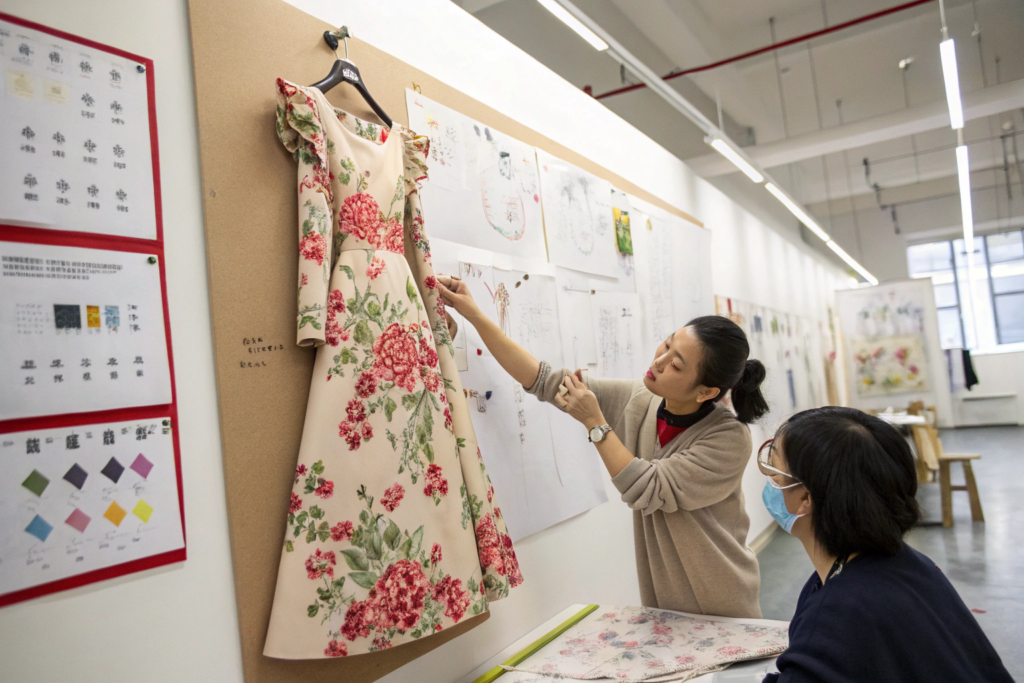
The process is simpler than most brand owners think. You start with inspiration. A photo of a vintage fabric you love. A watercolor painting you found at a flea market. A photograph of your grandmother's garden. You send this inspiration to the factory's design team.
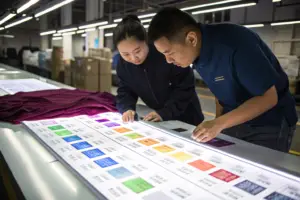
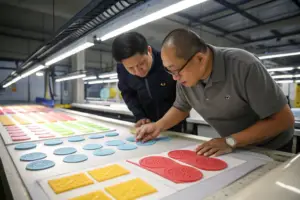
The factory's textile designer creates a digital artwork file based on your inspiration. They adjust the scale, the colors, the repeat pattern. They send you a digital proof. You give feedback. The colors are too bright. The flowers are too large. The background needs to be more cream than white. They revise. You approve the final artwork.
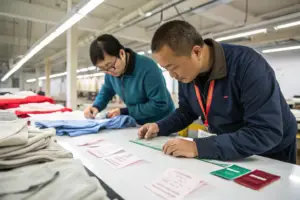
The factory then prints a strike-off on your chosen fabric. A strike-off is a small sample of the printed fabric. You see it, feel it, wash it. If it is perfect, the factory begins bulk production of the fabric and cuts your exclusive floral dresses. The entire process from inspiration to finished sample can take as little as four weeks.
A client in Portland found a vintage 1950s barkcloth curtain at an estate sale. The floral print was unlike anything she had seen in modern stores. She sent it to Shanghai Fumao. We scanned it. We cleaned up the artwork while preserving the vintage feel. We printed it on a soft cotton voile. She built a whole capsule collection around that one print. The dresses sold for $118 each. They sold out in pre-order. No one else in the world had that floral.
What Is the Minimum Order Quantity for Exclusive Prints?
This is the question that scares people. They assume custom printing requires 10,000 meters. It does not. Digital fabric printing has changed the economics. You can order as little as 100 to 300 meters of a custom floral print. That yields roughly 50 to 150 A-line dresses, depending on the style and fabric width.
The MOQ at my factory for a custom-printed floral dress on a basic A-line silhouette is 100 units per style. This is achievable for a small boutique or a growing e-commerce brand. You do not need to be a major fashion house to have your own exclusive print.
The cost per meter is higher than buying a stock print. But the exclusivity pays for itself. A dress with a stock print competes on price. A dress with an exclusive print competes on uniqueness. The margin structure is completely different. A stock print dress might retail for $58 with a 50% margin. An exclusive print dress can retail for $98 or $128 with a 65% margin. The higher retail price more than covers the higher fabric cost.
Where Else Can You Find Rare Pre-Designed Floral Fabrics?
Not every brand is ready to commission a custom print from scratch. Some brands want rare, pre-existing floral prints that are not widely distributed. They want to find hidden gem fabrics and build a small collection around them. There are sources for this, but they require digging beyond the first page of a Google search.
Rare pre-designed floral fabrics can be found at specialized textile trade shows like Première Vision in Paris, through deadstock fabric suppliers who sell end-of-roll designer surplus, and on curated digital fabric marketplaces that feature independent textile designers. Deadstock fabric is a particularly good source for rarity because it is the leftover fabric from major fashion houses. It is high-quality, unique, and available in limited quantities. Once it is gone, it is gone forever. The dresses made from deadstock are inherently limited edition.
These sources are for the brand owner who loves the treasure hunt. You find a beautiful fabric. You buy the available yardage. You make as many dresses as the fabric allows. Then that dress is gone forever. This is a powerful marketing story.
What Is Deadstock Fabric and Where Do You Find It?
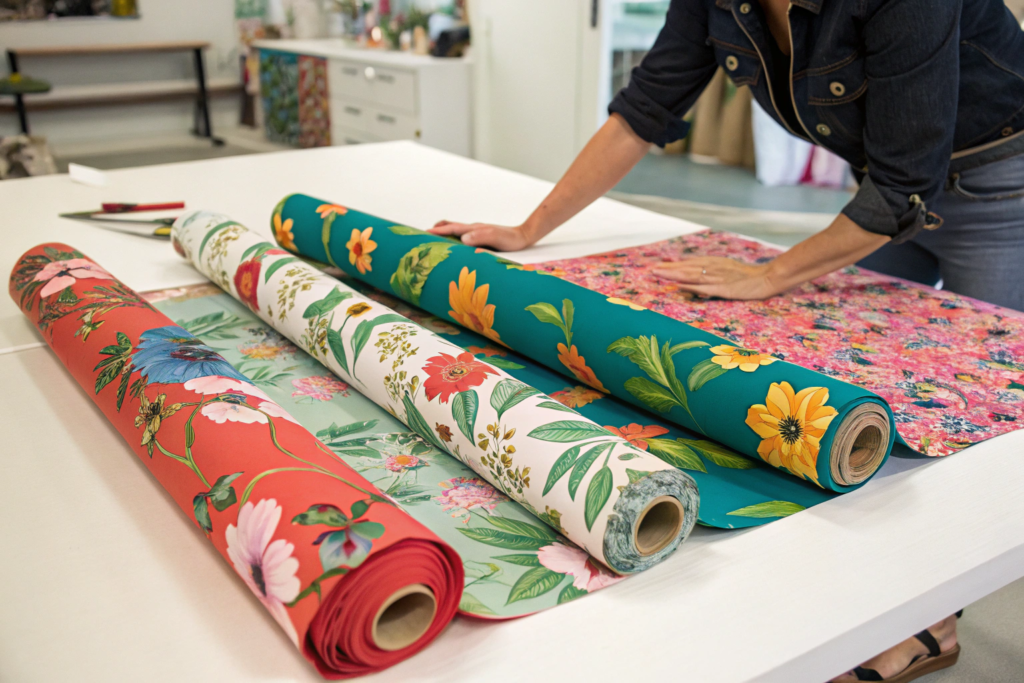
Deadstock fabric is the leftover, unused fabric from fashion brands and textile mills. A major designer orders 5,000 meters of a custom floral print for their runway collection. They use 4,500 meters. The remaining 500 meters are deadstock. It is brand new, high-quality, and often from premium mills in Italy, France, or Japan. It cannot be reordered. It is one of a kind.
Deadstock suppliers buy these leftovers and resell them to smaller brands. The fabric is typically sold by the roll, and the available yardage is listed. When it sells out, it is gone.
There are several reputable deadstock fabric suppliers online. Queen of Raw is a digital marketplace for deadstock fabrics. FabScrap is a non-profit that rescues fabric waste in New York. Offset Warehouse sells ethical and deadstock fabrics. These platforms allow you to browse unique floral prints and buy the available yardage.
The limitation is quantity. You might fall in love with a fabric that has only 50 meters available. That is 25 dresses. It might be enough for a small capsule. It might not be enough for your main collection. Deadstock is for limited drops and special editions.
A client in Brooklyn built her entire brand on deadstock fabrics. Every dress on her website has a "Limited Edition" badge and a note about the fabric's origin. "Made from rescued Italian deadstock rayon. Only 30 pieces exist." Her customers love the exclusivity. They buy quickly because they know the dress will not be restocked. This is a valid, profitable business model.
What About Independent Textile Designers and Print Studios?
A growing number of independent textile designers sell their original print designs on digital marketplaces. They create the artwork. They sell the digital file. You buy a license to print the design on your garments. The print is not exclusive to you unless you negotiate an exclusive license, which costs more. But the print is still rare because it is not a mass-market design.
Spoonflower is the best-known platform for independent surface pattern designs. Designers upload their patterns. You can browse thousands of unique floral prints. You can order the fabric printed on demand. The cost per meter is high, around $18 to $25 for cotton. The quality is good for samples and very small runs. For bulk production, the economics do not work. You would take the print design you love, contact the designer for a commercial license, and then have a factory like Shanghai Fumao print it in bulk at a much lower cost per meter.
This is a good way to discover rare print talent. You find a designer whose aesthetic matches your brand. You build a relationship. You commission them to create exclusive prints for your future collections. The independent designer gets paid. You get a unique floral. The factory prints it. It is a collaborative ecosystem.
How Do Trade Shows and Private Showrooms Offer Exclusive Access?
There is a tier of the fashion industry that operates almost entirely offline. It is the world of trade shows and private showrooms. These are not open to the public. They are for registered buyers and industry professionals. The floral dresses found here are often from emerging designers, international brands with no US distribution, or small ateliers that produce in very limited quantities.
Trade shows like Coterie in New York and MAGIC in Las Vegas feature sections dedicated to emerging designers and limited-distribution brands. Private showrooms in fashion capitals like Los Angeles, New York, and Paris represent small labels that do not sell online or in department stores. These sources require you to be a registered business with a resale certificate. The dresses you find are curated, high-quality, and often unavailable anywhere else.
This is a more traditional, relationship-based way to source rare dresses. It requires travel, networking, and a willingness to buy at wholesale prices that are higher than direct factory pricing.
What Are the Best Trade Shows for Finding Rare Floral Dress Brands?
Coterie in New York is a premier contemporary fashion trade show. It features established contemporary brands as well as an emerging designer section. The floral dresses here are trend-forward and high-quality. The brands are selective about their wholesale accounts. They may only sell to one boutique per city. This creates built-in rarity.
MAGIC in Las Vegas is a massive trade show with a broad range of price points. The "Sourcing at MAGIC" section is for connecting with manufacturers. The "Project" and "POOL" sections feature independent and emerging brands. You can find smaller, artisanal floral dress designers here.
Première Vision in Paris is not a dress show. It is a fabric and textile show. It is where the world's best mills present their new collections. If you want to see the absolute cutting edge of floral print design before it hits any garment, this is the show. You can buy the fabric directly from the mill. You can then have your own manufacturer produce the dresses. This is the highest-level sourcing play.
A client in Chicago attends Coterie twice a year. She sources 20% of her boutique's inventory there. The other 80% she designs herself and manufactures with Shanghai Fumao. The trade show finds are the special, unexpected pieces that add variety to her brand. The custom pieces are her core, exclusive collection. The mix works.
What Is the Difference Between a Showroom and a Trade Show?
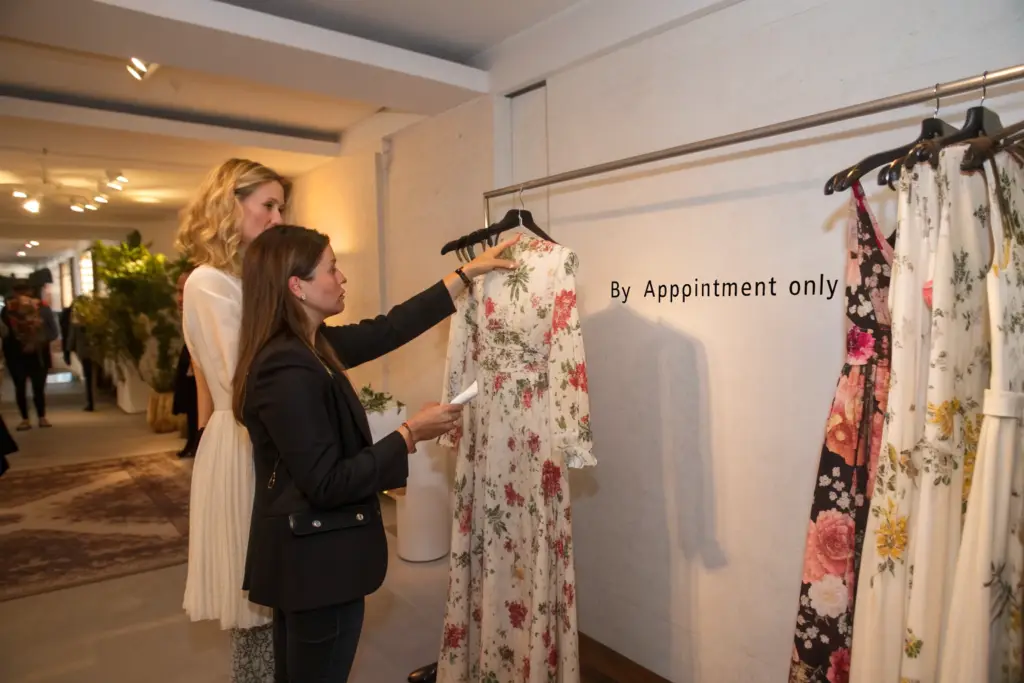
A trade show is a temporary event. Hundreds of brands gather in a convention center for a few days. A showroom is a permanent space. A group of brands or a single brand maintains a showroom year-round in a fashion district. Buyers make appointments to visit.
Showrooms are more exclusive and relationship-driven. The brands they represent are often not listed online. You have to be invited or referred. The minimum order quantities may be higher. The wholesale prices may be higher. But the products are truly rare. You are buying from a small, often family-owned business that produces in limited quantities.
If you are near a major fashion city, research the showrooms that align with your aesthetic. Reach out. Introduce your boutique. Make an appointment. This is the slow, old-fashioned way of sourcing. It yields hidden gems.
Why Should You Consider Pre-Order and Made-to-Order Models?
One of the most powerful ways to sell rare floral dresses is to not hold any inventory at all. The pre-order model allows a customer to purchase a dress before it is manufactured. The made-to-order model means a dress is only cut and sewn after the customer places the order. These models eliminate the risk of overproduction. They also create genuine rarity because each dress is made for a specific person.
Pre-order and made-to-order models allow a brand to offer a large range of exclusive floral prints without the financial risk of bulk inventory. You present the design online with a 4 to 6 week delivery window. The customer orders. You consolidate the orders and manufacture the exact quantity needed. No dead stock. No markdowns. No wasted fabric. Each dress is rare because it was made specifically for the woman who bought it.
This is the business model of the future. It is sustainable, profitable, and brand-building.

How Does Made-to-Order Reduce the Risk of Carrying Inventory?
A traditional retail model requires you to guess. You design a floral dress. You order 500 units in three sizes. You hope you guessed the right print, the right silhouette, and the right quantities. If you are wrong, the dresses sit on a rack. You mark them down. You lose money.
A made-to-order model eliminates the guess. You post the design. The customer votes with her wallet. You only produce what she orders. The risk is transferred from the inventory to the wait time. The customer waits 4 weeks instead of getting instant shipping. In exchange, she gets an exclusive, made-just-for-her garment.
This model works especially well for rare floral dresses because the customer who buys a rare dress is not in a hurry. She is buying a piece of art. She is willing to wait for it. The anticipation builds the perceived value.
A brand in Austin uses this model. She releases three new exclusive floral prints every month. Customers pre-order. She batches the orders every two weeks and sends them to Shanghai Fumao for production. We cut and sew the exact quantities. We ship them directly to her customers with her branded packaging. She holds zero inventory. Her business is profitable and scalable.
How Do You Manage Customer Expectations with Made-to-Order?
Transparency is everything. The product page must clearly state the delivery window. "This dress is made exclusively for you. Please allow 4 to 6 weeks for delivery." The customer knows what she is signing up for. She is not expecting Amazon Prime shipping. She is expecting a unique, crafted garment.
Communication is critical. Send an order confirmation email. Send a "Your fabric is being printed" email. Send a "Your dress is being sewn" email. Send a "Your dress has shipped" email with tracking. Each email builds excitement. It transforms the wait from a negative into a positive. The customer feels involved in the creation process.
I help my brand clients with this by providing production milestone updates and photos they can share with their customers. A photo of the floral fabric fresh off the printer. A photo of a dress being finished on the sewing line. These are marketing assets that make the customer feel like an insider. The wait becomes part of the value.
Conclusion
Rare floral print dresses are not found in a mall. They are not found on a mass-market wholesale website. They are found where creativity meets manufacturing. The ultimate source is your own imagination, brought to life by a custom apparel manufacturer who can print your exclusive floral design on the fabric of your choice. This is the path to true rarity and brand distinction.
Other sources exist. Deadstock fabric suppliers offer limited-edition treasures from fashion's cutting room floor. Independent textile designers sell prints that can become your signature. Trade shows and private showrooms offer curated, hard-to-find pieces for the boutique owner who loves the hunt. And the made-to-order business model allows you to sell exclusivity without inventory risk.
The common thread is this: rarity is created, not found. The brands that win are the brands that stop buying what everyone else is buying and start making what only they can make.
If you are ready to create your own rare floral print dress collection, I am ready to help you. Our Business Director, Elaine, can walk you through the custom print process, from inspiration to finished sample. She can also connect you with deadstock fabric options if you want to start with a pre-existing rare fabric. Email her at elaine@fumaoclothing.com. Tell her your vision. She will put together a plan. The world has enough mass-produced floral dresses. It is time for yours to be the one that no one else has.