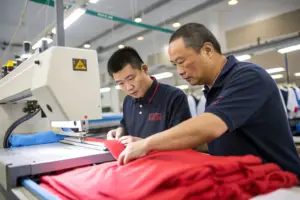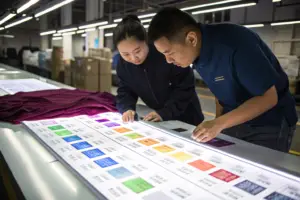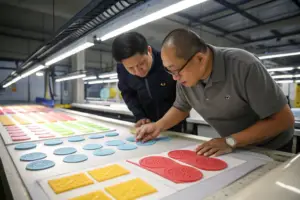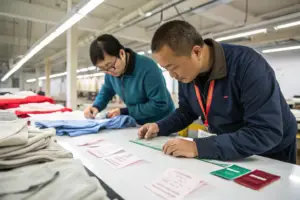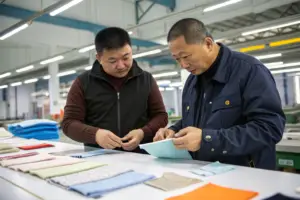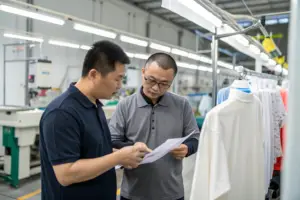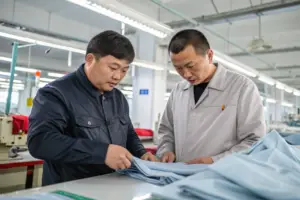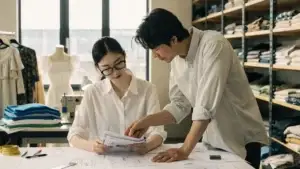
The sample dress you received in your New York office was flawless. The stitching was tight, the floral print was vibrant, and the fit was exactly what you wanted. Based on that sample, you placed a $50,000 bulk order. Six weeks later, the container arrives, and the dresses feel different. The fabric is thinner, the print's colors are slightly muted, and the sizing is inconsistent. You feel a mix of rage and panic. Your retail launch date is in two weeks, and the product in your hands doesn't match the product you approved. This scenario isn't a rare nightmare; it's a common manufacturing failure that I've seen destroy trust between brands and factories countless times.
Wholesale floral dress samples differ from bulk production primarily because the controlled, artisanal conditions of the sampling room are fundamentally disconnected from the high-speed, high-volume reality of the bulk production line, creating gaps in fabric sourcing, color mixing, and sewing consistency that can only be bridged by a factory's deliberate, documented engineering of the transition from prototype to mass manufacture.
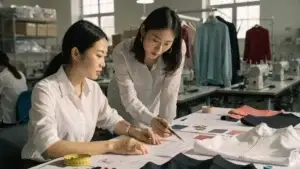
This disconnect is the single greatest source of friction in the apparel supply chain. As the owner of a factory with five production lines, I see this tension from both sides. The brand owner, like you, views the sample as a sacred promise—a physical contract of quality. The factory's sampling room, however, is a craft workshop. It uses a master tailor, a single bolt of premium fabric, and an unlimited time budget. The bulk floor is an industrial system designed for efficiency and speed. Bridging these two worlds is not an act of goodwill; it is a formalized, technical discipline. At Shanghai Fumao, we treat the "sample-to-bulk translation" not as an afterthought but as a distinct phase of engineering. This phase involves pre-production samples, in-line quality gates, and a data-driven understanding of process variance. If a factory doesn't explicitly walk you through this handover process, the sample you fell in love with will almost certainly become a bulk product you don't recognize.
The Unbridgeable Gap Between a Sample Room and a Production Line
I lost a major client early in my career because I underestimated this gap. We made a perfect sample for a classic fit-and-flare floral dress. The client's buyer loved it. We then ran the bulk order on our standard piece-rate system, pushing for maximum daily output. The bulk dresses had uneven, wavy hems where the sample had a clean, flat finish. The reason was simple but devastating: we had matched the fabric and the thread, but we hadn't matched the sewing machine's presser foot pressure and feed dog setting between the sample room and the production line. The sample room tailor had intuitively set his machine for a gentle feed on the delicate rayon fabric, while the bulk operator used a generic setting that stretched the fabric as it sewed. This taught me that a sample isn't a template unless the entire manufacturing environment is templated with it.
The unbridgeable gap between a sample room and a production line is a clash of two different operational paradigms: a single-piece, craft-based workflow optimized for perfection against a batch-based, industrial workflow optimized for speed, a clash that can only be neutralized by proactively standardizing every variable before the bulk cut begins.
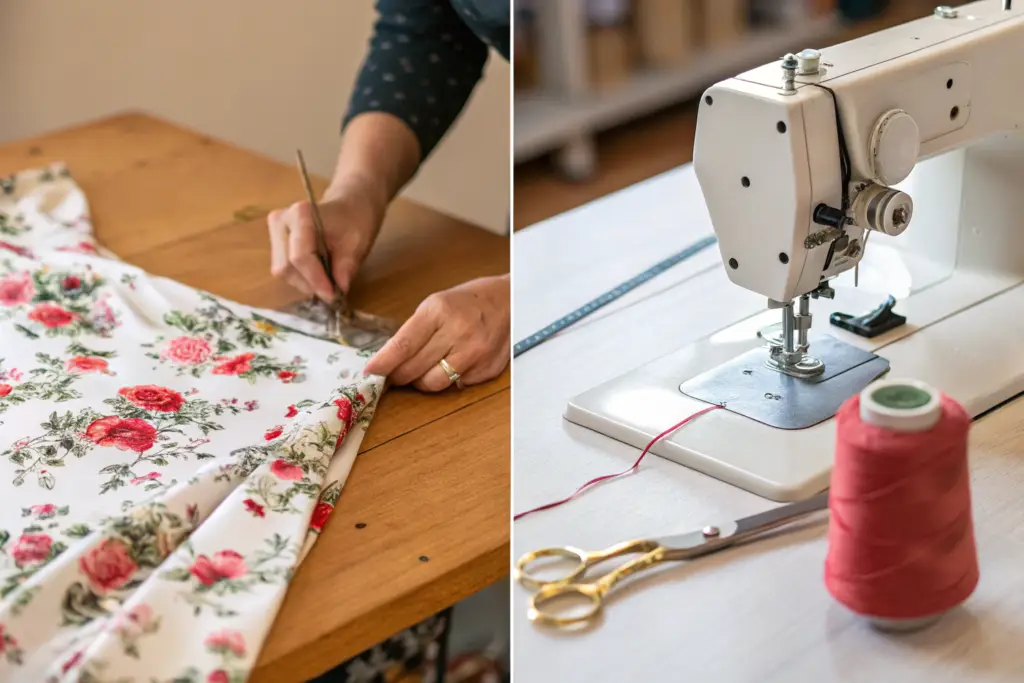
You need to visualize these two worlds to understand the risk. In the sampling room, the fabric for your single dress is cut by hand, one layer at a time, using a sharp pair of scissors. The tailor matches the floral pattern at the side seams with the patience of a painter. On the bulk cutting table, 50 layers of fabric are stacked, and an electric straight-knife cutter slices through them in seconds. The pressure and speed of that blade can microscopically shift the top layers, making the cut pieces slightly larger or smaller than the original pattern card. In the sample room, the heat transfer for your garment's care label is applied with a slow, deliberate hand press. In bulk, it goes through a high-speed tunnel oven. These are not just differences in speed; they are differences in physics. A factory that doesn't control these physical forces during the bulk pilot phase will produce dresses that look like distant cousins of the sample, not identical twins.
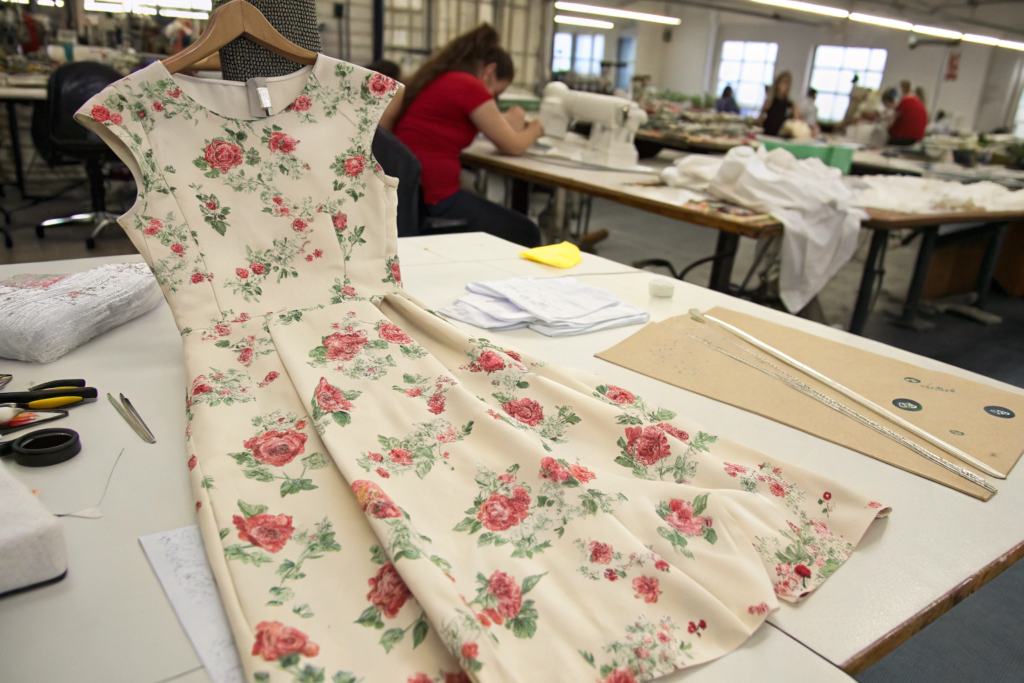
Why Does a Single Hand-Cut Sample Fit Perfectly While Bulk Orders Don’t?
The fit failure in bulk production is rarely about the pattern itself. The pattern was proven perfect by the sample you loved. The failure is almost always in the cutting room. The culprit is a phenomenon called "fabric spreader displacement." When a spreader machine lays out 50 or 100 plies of slippery viscose twill for a floral dress, the stacked fabric behaves like a deck of cards. As the automated spreader carriage travels back and forth, it generates a subtle vibration. By the time it reaches the end of the 20-foot-long lay, the top layers have crept forward by a few millimeters relative to the bottom layers. Now, when the pattern marker is placed on top and the electric knife cuts through the stack, the top pieces are cut with a slight bias distortion that wasn't present in the single-ply hand-cut sample. This distortion is most visible at the neckline and armhole curves, which suddenly feel tight and restrictive in the bulk garment. A factory that cares about fit consistency uses a vacuum-hold compression system on the cutting table to physically lock the plies in place during spreading and cutting. Without that, you are guaranteed to have a fit variation between the sample size set and the bulk production run that arrives at your warehouse.
Can a Tailor’s Craftsmanship Deceive the Bulk Production Feasibility?
Absolutely, and this is a conversation I have to have with our sampling department at Shanghai Fumao almost every season. A master tailor's skill is a superpower, but it can accidentally create an unreproducible garment. A tailor doesn't just sew a seam; they constantly manipulate the fabric with their fingers in ways that are invisible to the final product. When setting a sleeve into an armhole on a floral print blouse, a tailor will intuitively stretch or ease the fabric by minute fractions of a millimeter with their fingertips to ensure the stripes or floral motifs match perfectly around the curve. They do this without thinking, compensating for slight inaccuracies in the original pattern grading. On a bulk line, an operator handling 40 of these sleeves per hour cannot and will not make these micro-adjustments. They will feed the two pieces of fabric into the machine exactly as they are, and the resulting pucker or print misalignment will be starkly visible. The sample tailor's invisible handwork, which made the sample look so beautiful, inadvertently papered over a crack in the pattern. A responsible factory catches this during a production feasibility review. We use a "production engineer's eye" on the sample, asking, "Did this require a human skill that can't be scaled across 1,000 units?" If the answer is yes, the pattern, not the tailor's technique, must be the thing that's fixed.
How Raw Material Substitutions Sabotage Your Floral Dress Order
This is the most common bait-and-switch tactic in the industry, and it often happens without the buyer's knowledge until it's too late. The sample was made with a beautiful, high-twist, 40s yarn cotton poplin that drapes like a dream. The bulk order arrives, and the dress feels papery and stiff. It's still "cotton poplin," but the yarn count is a cheaper 30s, and the weave is looser. I've sat with fabric mill owners who candidly admit that they bid for a factory's bulk business with a slightly inferior greige fabric to win on cost, knowing the factory's procurement manager is under pressure to save a few cents per yard. The fabric is technically within spec, but the hand-feel and drape are dramatically different. This subtle material shift wrecks the perceived value of a garment.
Raw material substitutions sabotage a floral dress order when a factory or its fabric supplier silently swaps the originally approved yarn count, fiber blend, or print chemistry for a cheaper alternative between the sampling phase and the bulk run, a cost-cutting move that alters the dress's weight, colorfastness, and tactile quality without an obvious visual change.
A dress is fundamentally just fabric and thread. If the fabric changes, the dress changes, even if the design file looks the same. This is a lesson I drill into our procurement team at Shanghai Fumao constantly. The pressure is real. A brand demands a target FOB price, and the temptation to quietly shave costs from the single biggest expense—fabric, which accounts for up to 70% of a garment's cost—is immense. I've seen factories switch from a reactive dye print, which soaks into the fiber and leaves the base fabric soft and breathable, to a cheaper pigment print, which sits on top of the fabric like a plastic coating. The floral design might look identical in a product photo, but when the customer pulls the dress over her head, she feels the difference. The fabric is stiffer, doesn't breathe, and the print cracks after a few washes. This is the silent death of a brand's repeat business, and a factory that values long-term partnerships must have a zero-tolerance policy against unapproved raw material substitution, backed by a pre-production "seal swatch" lock-in.
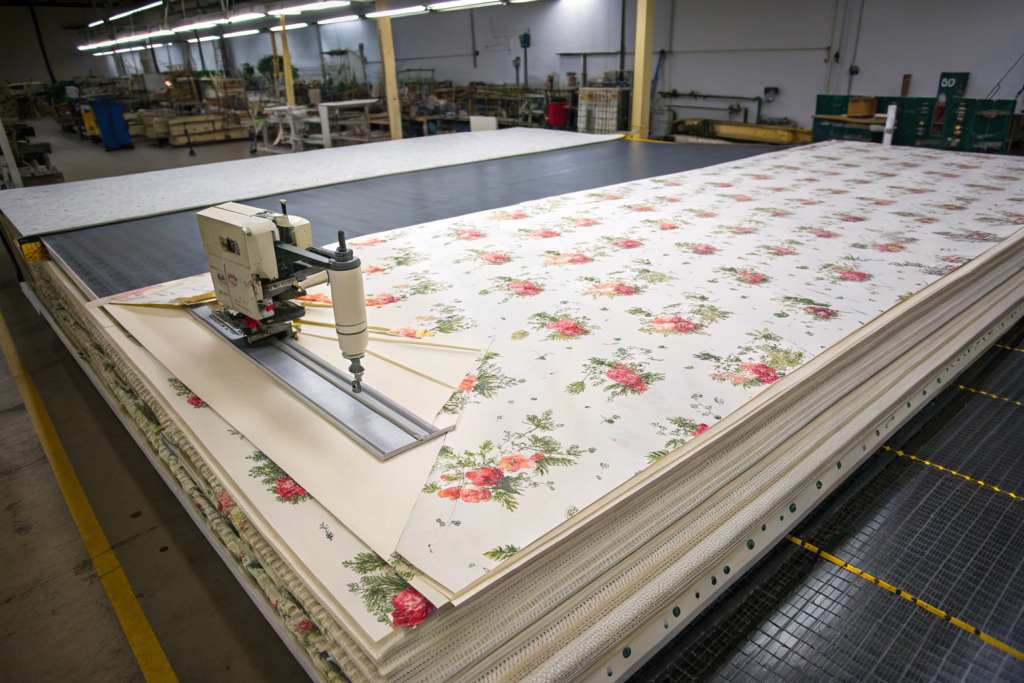
Is Your Bulk Fabric Really the Same as the Sample’s Fabric?
You cannot just trust the word "cotton poplin" on a spec sheet. The definition is too broad. A 40s singles yarn woven at 130 grams per square meter (GSM) makes a crisp, luxurious mid-weight dress. A 30s yarn woven at 110 GSM makes a thin, semi-transparent dress that feels cheap. Both are called cotton poplin.
To protect yourself, you must create a physical material standard at the sample approval stage. This is a non-negotiable step in our sourcing process for every new brand partner. Here is the protocol we enforce:
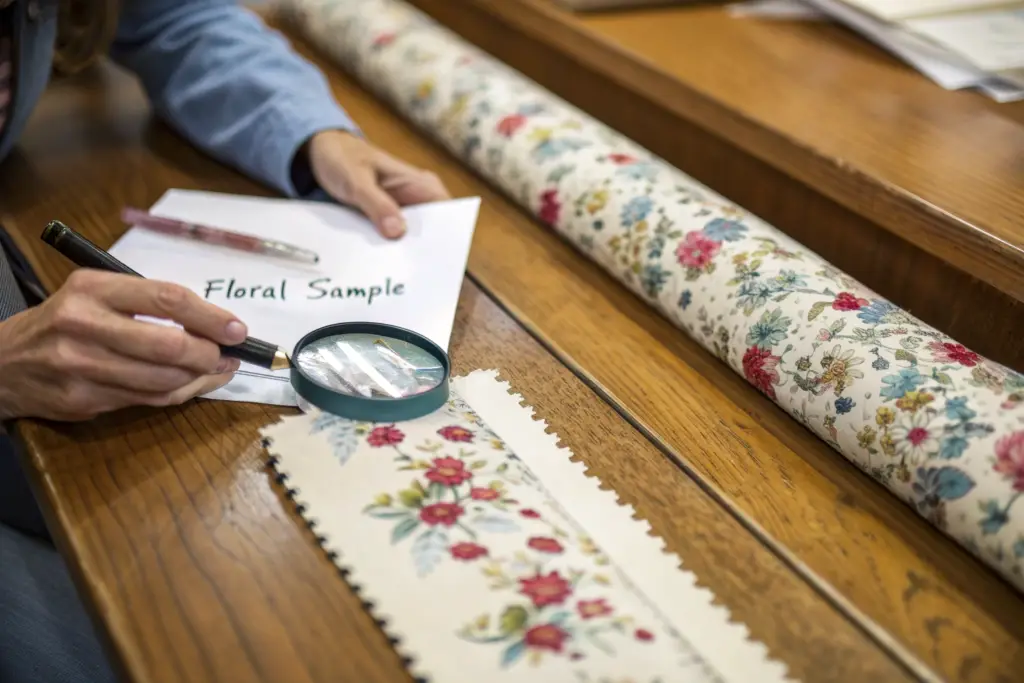
- The Seal Swatch: When you approve the proto sample, we also cut a 12-inch by 12-inch square of the exact, approved fabric lot. This swatch is signed and dated by both the brand owner and our production manager.
- The Bulk Lab Dip on the Bulk Fabric: Never approve a color lab dip on a random piece of fabric. The color lab dip for the bulk run must be executed on a swatch cut from the actual bulk production greige fabric roll that will be printed on. This reveals the impact of the base shade on the final floral colors.
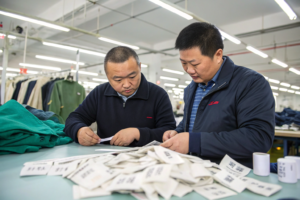
- The GSM and Weave Check: During the first 10% of bulk fabric cutting, a sample of the fabric must be sent to an internal or third-party lab for a simple verification. We check the weight in GSM, the yarn count, and the weave density against the sealed swatch. If the bulk fabric is lighter by more than 5%, the cut is halted.
This protocol turns a subjective hand-feel into an objective, verifiable legal standard. It shifts the conversation from "this feels different" to "this is a documented material breach of the approved substrate."
Why Does a Floral Print Look Fuzzy and Blurred in Bulk?
You fall in love with a rose print on a sample where the edges are sharp and every petal is crisp. The bulk arrives, and the rose looks slightly fuzzy, as if it's been through ten wash cycles. This is a classic failure of screen exposure or digital print head maintenance. The sample was likely printed using a freshly engraved screen or a perfectly calibrated, slow-speed digital printer. Screens used in rotary printing are finely engraved mesh cylinders. During a long bulk run, the squeegee that forces the print paste through the screen wears down the fine edges of the engraving. A print that started sharp at yard one becomes progressively "bloomed" and fuzzy by yard three thousand, as the thickened paste bleeds under the worn edges.
Similarly, for digital prints, the sample was likely run on a machine with brand-new print heads, ejecting perfect, uniform droplets at a slow, high-resolution speed. For bulk, to meet the delivery deadline, the same file might be run in a faster, lower-resolution mode, with 4 passes of the print head instead of 8. The ink droplets are larger, and the probability of a print head nozzle being slightly clogged or misdirecting a spray of ink increases. This creates a subtle "halo" or blur effect around the edges of your floral motifs. The only defense is demanding a signed-off production standard print, not just a sample print. This is a 3-yard continuous run taken from the middle of the actual bulk print run, under normal production speed, not a carefully curated swatch. This standard print is what the final goods must be compared against.
The Hidden Consequences of Scaling Up Skilled Labor
A sample dress is made by one person, from start to finish. They understand the soul of the garment. A bulk dress is made by a production line of 30 operators, each doing one small operation for 10 hours straight. The operator who sews the collar on a bulk floral dress might never even see the finished garment. This fragmentation of labor is the most human side of the sample-to-bulk problem. I witnessed a near-disaster with a complex ruffled floral blouse we produced for a Chicago-based brand. The sample was stunning, with perfectly gathered, evenly spaced ruffles. In bulk, each operator's "finger-feel" for how much to pull the gathering thread was slightly different. The ruffles were inconsistent, and the blouse looked homemade. We had to stop the entire line and build a jig—a simple physical guide—to standardize the fabric feed for the gathering stitch. The operator no longer had to guess; the tool dictated the outcome.
The hidden consequences of scaling up skilled labor from a single expert tailor to a fragmented assembly line of 30 individual operators include an exponential increase in process variability, where each operator's personal technique introduces microscopic differences that compound into a final garment that lacks the sample's cohesive quality.
This is the core challenge of manufacturing. You are not just replicating a dress; you are replicating a set of human actions a thousand times over. The performance variability from operator to operator is a measurable statistical reality, not a failure of will. One operator might hold a hot iron on a seam for 2 seconds, another for 4 seconds, creating inconsistent seam impressions. One operator stretches the elastic as she sews it into a waistband, another doesn't, leading to a variation in waist measurement of up to half an inch. This is known as "operator drift." A factory's true technical capability isn't just in its machines; it's in its system for minimizing operator drift through mechanical aids and in-line auditing. At Shanghai Fumao, we use a "first piece, in-line piece, last piece" audit system on every critical seam, checking the first garment against the approved sample, one from the middle of the day, and the last before the shift ends. This tracks the human performance curve and catches the afternoon fatigue drift before it creates a cart full of defective dresses.
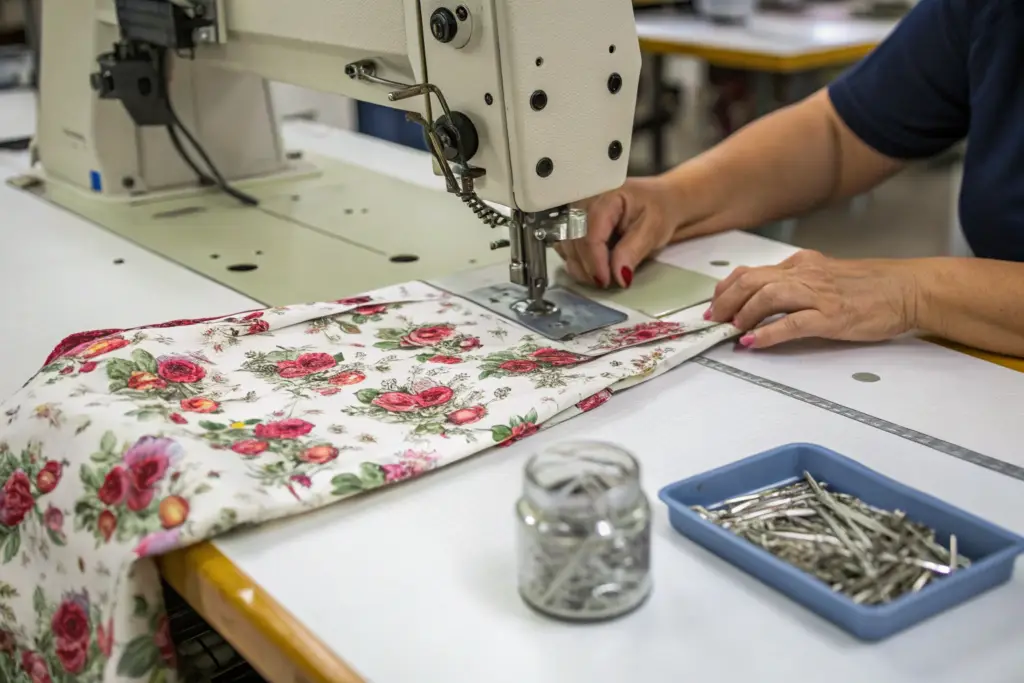
Why Does the Stitch Quality Collapse When an Order Jumps to 1,000 Units?
Stitch quality isn't just about the machine's settings; it's about the marriage of needle, thread, fabric, and operator consistency over hours of monotonous work. A sample tailor sews at a variable speed, slowing down at curves and delicate corners to ensure a perfect 12-stitches-per-inch (SPI) seam with zero puckering. A bulk operator is incentivized to maintain a high, constant speed to hit their daily production target.
This speed difference introduces a hidden thermal problem. A sewing needle moving at high speed through dense fabric generates significant frictional heat. The temperature of a needle can reach over 300°F in continuous operation. This heat can melt synthetic threads, causing them to break and leave gaps in the seam. It can also burn or glaze delicate fibers, creating tiny shiny "needle burn" marks along the stitch line, especially visible on dark-colored rayon florals. The sample tailor never generates this heat because they are sewing too slowly. The bulk line operator generates it constantly. The solution is precise maintenance: using a needle with a special non-stick coating, ensuring the correct ball-point needle shape for the knit fabric to avoid cutting fibers, and having a strict schedule for replacing the needle. In our factory, a needle is swapped out for a fresh one every single shift, no exceptions. This simple rule prevents a cascade of broken stitches and fabric damage that a rushed operator might not even notice.
How Do You Standardize a Human Touch Across a Factory Floor?
You cannot eliminate the human element from sewing, but you can build a cage of precision around it. The goal is to make the operator's job foolproof by removing the decisions that create variability. For a floral dress with an invisible side zipper, an unguided operator might set the zipper 1/8" away from the seam on one dress and 3/16" on the next. A skilled quality inspector will spot this inconsistency.
The manufacturing solution is a folder attachment or a guide jig on the sewing machine's throat plate. This is a physical metal or plastic barrier that the fabric edge butts up against as it’s fed into the needle. The operator no longer uses their eye to guess the correct distance; they slide the fabric against the guide and sew. The zipper is placed at an identical position on every single dress. This is called "engineered manufacturing."
Here is a practical breakdown of how we engineer out the human touch at Shanghai Fumao for critical quality points on a floral dress:
| Quality Point | Human Variability Risk | Engineered Control Method |
|---|---|---|
| Neckline Binding | Operator stretches the binding too much, causing a puckered, wavy neck. | A dedicated binding folder attachment feeds the binding under controlled tension, mechanically preventing stretch. |
| Hem Depth | Operator's manual fold is inconsistent, leading to a hem that varies from 3/4" to 1". | A needle-positionable hemming foot with a fixed guide plate ensures a perfectly uniform 1" hem on every dress. |
| Floral Print Matching at Side Seams | Operator doesn't align the pattern repeat before sewing, breaking the visual flow. | The cutting room pre-cuts notch marks at the exact pattern repeat point; the operator matches the notches, not the visual print. |
| Buttonhole Length | Operator's manual hand-feed creates a buttonhole that is too tight or too loose. | A programmable electronic buttonholer sews the exact length and bartack density for the specific button diameter, every time. |
This approach transforms a craft into an industrial process without losing the quality. The operator's skill is channeled into managing the machine, not into making a thousand small, fallible judgments a day.
A Proactive Sourcing Audit That Guarantees Sample-to-Bulk Fidelity
Trust is built with verification, not hope. You cannot rely on a factory's good intentions to ensure your bulk order mirrors your sample. You need a systematic audit that happens before you even issue a purchase order. I've helped brands who had been burned multiple times implement a "factory capability gate" process. One New York-based client with a high-end floral dress line was losing $30,000 a season to quality failures. We spent a day walking them through our production engineering room, not just the sample room. We showed them how we build the production jigs, how we log our needle changes, and how we test the bulk fabric. Their COO told me later that this transparency was the only reason they moved their business to us. They weren't buying our sample-making skill; they were buying our engineered handover system.
A proactive sourcing audit that guarantees sample-to-bulk fidelity is a structured, on-the-ground verification of a factory's pre-production engineering capability, its in-process control tools, and its raw material traceability systems, all of which must be physically inspected to confirm that the factory’s processes, not just its promises, can deliver a scalable, exact copy of your approved sample.
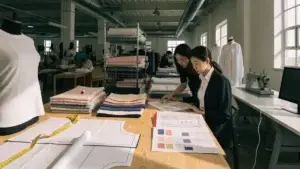
This audit is your insurance policy. It shifts the dynamic from a reactive, post-shipment "what went wrong?" finger-pointing contest to a pre-production, collaborative "how do we prevent the error?" engineering discussion. The most effective audits focus on three pillars: the pre-production handover meeting, the in-line measurement system, and the fabric substrate lock. For a floral dress, this is where the rubber meets the road. A factory that welcomes this level of scrutiny, that pulls out its jig library and its spectrophotometer calibration logs with pride, is the factory you want to partner with. Any defensiveness or vague assurances that "the sample room will handle it" is a massive red flag. At Shanghai Fumao, we treat the audit not as a test, but as a demonstration of the intellectual property embedded in our manufacturing process—the proprietary methods that turn a one-off sample into a 5,000-unit, zero-reject reality.
Why Must You Approve a Production Line Reference Sample?
A pre-production sample made in the sample room is not enough. You need a sample taken directly from the bulk line. We call this the TOP (Top of Production) sample. This is the very first finished garment that comes off the actual bulk assembly line, sewn by the actual operators who will make all 2,000 units, using the actual bulk fabric, not a pre-cut swatch.
Approving a TOP sample is a moment of truth. It reveals the cumulative impact of all the small process shifts we've discussed. The fit will tell you immediately if the cutting room's block shrinkage allowance was accurate. The print alignment will show you if the bulk fabric's repeat distance matches the sample's. The seam quality will expose any operator training issues. You must demand that this TOP sample is air-freighted to you for final physical sign-off before the factory cuts the remaining 90% of the order. This is a hard stop. I insert this as a mandatory step in our own production timeline. Yes, it adds a few days to the front end, but it saves weeks of rework and the total financial loss of a rejected shipment at the back end. A factory that pushes back on providing a genuine TOP sample, or tries to pass off another sample-room piece as a TOP sample, is admitting that their bulk floor cannot replicate their sample room’s output.
Should Your Contract Require a Sealed, Third-Party Reference Standard?
For any order exceeding a value that represents a significant risk to your brand's cash flow, the answer is unequivocally yes. A verbal agreement or a PO with a simple product description offers you zero leverage if a dispute arises. The dispute always comes down to one thing: the standard. "Standard" is a legally defensible term only when it is a physical object, jointly agreed upon and independently secured.
The most ironclad method is a tripartite sealed reference standard. Here is how it works: You, the brand owner, retain the original approved prototype sample. The factory produces a pre-production counter-sample that you both agree matches the prototype perfectly. This matched counter-sample is then placed in a tamper-proof, sealed bag. Both you and the factory director sign across the seal. This sealed bag is then deposited with an independent third party—a respected inspection agency like SGS or Bureau Veritas, or even held by a designated lawyer. The terms of the contract state that if a quality dispute arises between the buyer and the seller regarding the bulk shipment's conformance, this sealed bag is the single source of truth. It is opened, and the bulk garments are formally compared against it. The side that deviates from this physical standard bears the financial responsibility. This standard eliminates the "he-said-she-said" toxicity. It’s a clean, hard, commercial line. I’ve had this exact clause in contracts with our largest U.S. partners, and while we’ve never had to open a sealed bag, its existence fundamentally changes the factory’s entire approach to quality control. It makes the promise physically accountable.
Conclusion
A flawless sample can be the best sales tool your brand has, or it can be the most deceptive lie a factory tells you. The difference between a sample that sells a dream and a sample that accurately predicts 5,000 perfect dresses is not in the stitching you can see, but in the factory's invisible system that translates that stitch into a repeatable, scaled reality. We've dissected the chasm between the craft of a sample room and the physics of a cutting table. We've exposed how a silent swap of yarn count or a print head's subtle drift can sabotage a garment's soul without changing its photo. We've looked at the human hands, 30 pairs now instead of one, and the engineering required to bring their infinite micro-variations into a single, harmonious standard. And finally, we've built a framework for a sourcing audit that doesn't ask for promises but demands physical, sealed proof.
The chaos of sample-to-bulk variance is not a necessary evil of the apparel trade. It is a solvable engineering problem. Solving it requires a factory to invest in the unsexy, invisible work: the vacuum cutting tables, the needle-change logs, the folder jigs, the spectrophotometer calibration, and the tamper-proof sealed standards. Most factories don't make this investment because their buyers don't know to ask for it. They compete on the surface-level beauty of a sample. The result is an industry soaked in late shipments, chargebacks, and broken trust.
If you are a brand owner or a distributor whose cash flow can't survive another "sample surprise," then the way you qualify your factory partner must change. At Shanghai Fumao, our commitment to sample-to-bulk fidelity is the core manufacturing discipline we are most proud of. We invite you to test this system. Walk our floor, audit our cutting room jigs, and demand we seal a reference standard against which your entire bulk order will be judged. Let's replace the gamble with an engineered guarantee. To discuss how we can build this level of certainty into your next floral dress program, please contact our Business Director, Elaine. She can schedule a video audit of our production engineering process. Her email is elaine@fumaoclothing.com. Let's make sure the dress that lands in your customer's hands is the one you fell in love with.