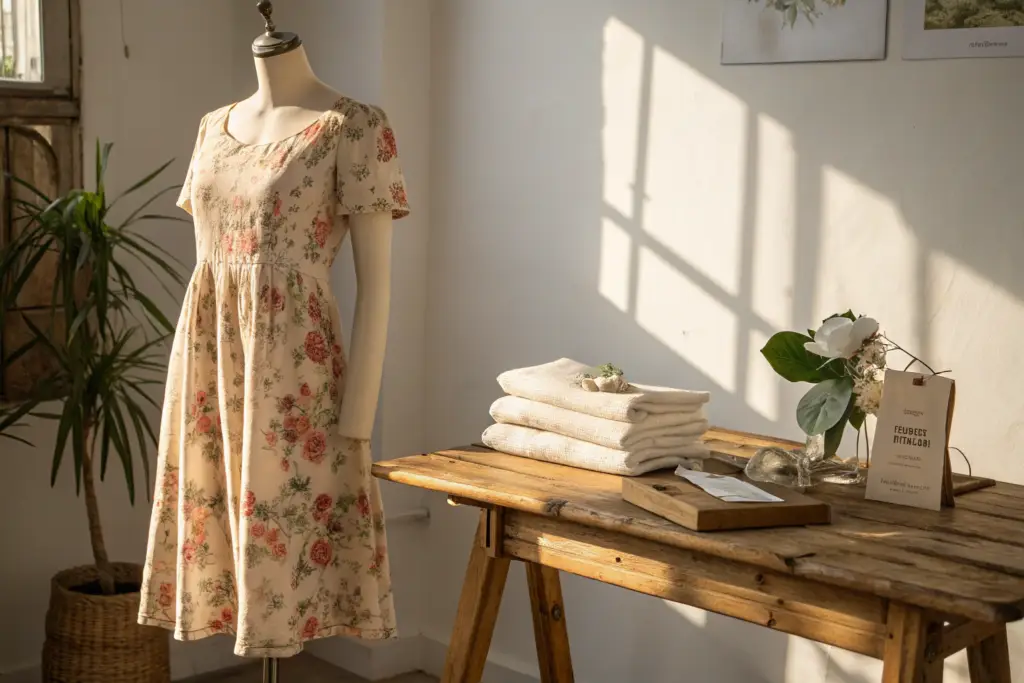
A brand owner from Vancouver called me in 2023. She had built her entire brand on sustainability. Organic fabrics. Ethical production. Carbon-neutral shipping. Her customers were deeply loyal to her mission. She wanted to launch a floral dress collection that matched her values. She had contacted six factories. Five said they could not source organic printed fabric at her MOQ. One said they could but sent her a sample that was clearly conventional cotton with a fake certification. She was discouraged. She thought sustainable floral dresses from China were a myth. She thought she had to choose between her ethics and her business.
Yes, you can order floral dresses made with genuinely sustainable fabrics from China. Shanghai Fumao offers certified organic cotton, GOTS-certified linen, Tencel lyocell, recycled polyester, and other eco-friendly fabrics. We can print your floral designs on these fabrics using OEKO-TEX certified dyes. Every sustainable fabric comes with a verifiable certificate from an independent third party. You do not have to choose between beautiful floral prints and environmental responsibility. The supply chain exists. The certifications are real. The MOQs are accessible.
I have built a sustainable fabric supply chain over the last decade because my clients demanded it. The demand started as a whisper. It is now a roar. I want to show you exactly what sustainable fabrics are available, how they are certified, and how you can launch a genuinely eco-friendly floral dress collection without compromising on quality or price.
What Sustainable Fabrics Are Available for Floral Dresses?
Not all "sustainable" fabrics are created equal. Some are natural fibers grown without pesticides. Some are man-made fibers from renewable wood pulp. Some are recycled from post-consumer waste. Each has a different feel, a different drape, a different price point, and a different sustainability story. The right choice depends on the style of your floral dress and the values of your customer.
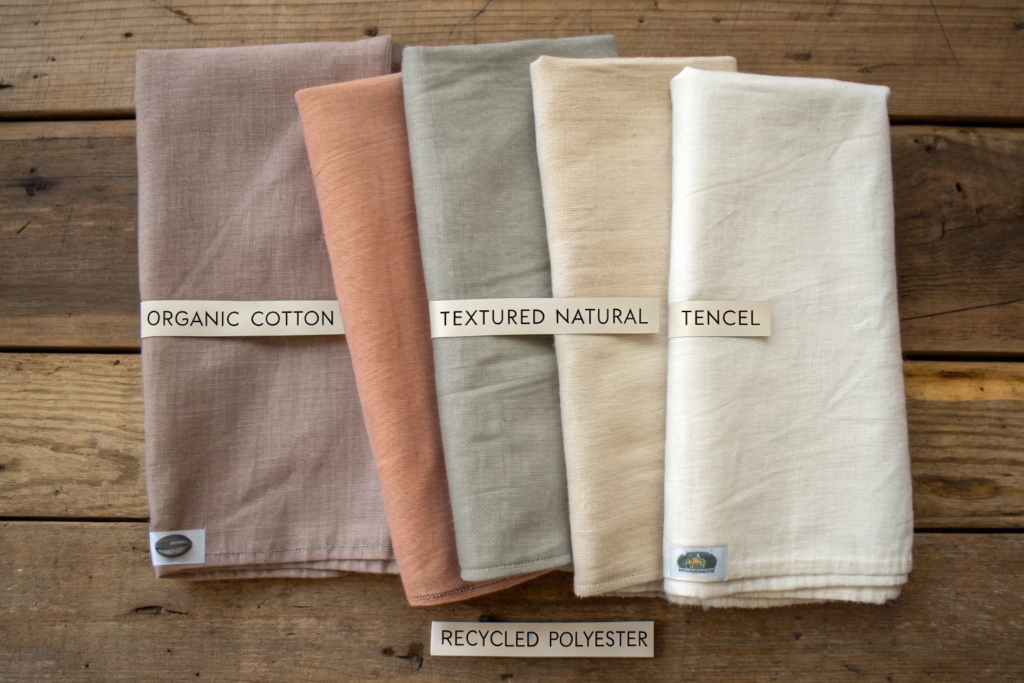
The four main sustainable fabric options for floral dresses are GOTS-certified organic cotton, European flax linen, Tencel lyocell, and recycled polyester made from post-consumer plastic bottles. Organic cotton is soft, breathable, and the most familiar to consumers. Linen is durable, naturally elegant, and requires minimal water to grow. Tencel is silky, drapes beautifully, and is produced in a closed-loop process. Recycled polyester is wrinkle-resistant and diverts plastic from landfills, but it still sheds microplastics when washed.
I source all four fabrics. I know the mills. I know the certifications. Let me walk you through each one so you can make an informed decision.
What Makes Organic Cotton a Sustainable Choice for Floral Dresses?
Organic cotton is grown without synthetic pesticides, herbicides, or genetically modified seeds. It relies on crop rotation, compost, and natural pest control. The result is a fiber that is safer for the farmers, safer for the soil, and safer for the customer’s skin. Organic cotton uses up to 91% less water than conventional cotton, according to the Textile Exchange’s life cycle assessment.
For a floral dress, organic cotton voile or organic cotton poplin is a beautiful choice. The fabric has the same soft hand feel and breathability as conventional cotton. The difference is invisible but meaningful. A GOTS-certified organic cotton dress carries a certification that guarantees the entire supply chain, from farm to finished garment, meets strict environmental and social standards.
The print quality on organic cotton is excellent. I use OEKO-TEX certified reactive dyes. The colors are vibrant. The print is soft and wash-durable. The dress is fully biodegradable at the end of its life, unlike a polyester dress which will sit in a landfill for centuries.
A client in Portland launched a capsule collection of organic cotton floral dresses last spring. She marketed them as "From Seed to Seam." She showed photos of the organic cotton farm in India, the printing process in Shanghai, and the finished dress on her website. Her customers loved the transparency. The collection sold out in three weeks. The sustainable story was a significant part of the purchase decision.
Why Is Tencel Lyocell Considered an Eco-Friendly Fabric?
Tencel is the brand name for lyocell, a fiber made from wood pulp. The wood comes from sustainably managed forests, usually eucalyptus trees. The trees grow on marginal land not suitable for food crops. They require no irrigation and no pesticides. The wood pulp is processed in a closed-loop system. The solvent used to dissolve the pulp is captured and recycled at a 99.7% recovery rate. Almost no chemical waste is released into the environment.
The resulting fiber is incredibly soft and smooth. It has a subtle sheen. It drapes beautifully. It is more absorbent than cotton, which makes it very comfortable in hot weather. It is also naturally antibacterial. For a floral dress, Tencel twill or Tencel challis offers a luxurious, fluid drape that photographs beautifully and feels expensive against the skin.
Tencel prints beautifully with digital reactive printing. The colors are rich and saturated. The fabric holds the print well and resists fading. I recommend Tencel for brands that want a premium, silky sustainable option that retails in the $78 to $128 range.
A client in Melbourne built her entire brand around Tencel. Her tagline is "Luxury That Loves the Earth." She prints her exclusive watercolor florals on Tencel twill. The dresses feel like silk but cost half as much and are fully machine washable. Her customers are loyal. Her return rate is low.
Can Recycled Polyester Be Considered Sustainable?
This is a nuanced question. Recycled polyester, often labeled as rPET, is made from post-consumer plastic bottles. The bottles are collected, cleaned, shredded into flakes, melted, and extruded into new polyester fibers. This process diverts plastic from landfills and oceans. It uses significantly less energy and water than producing virgin polyester from petroleum.
On the positive side, recycled polyester offers the same benefits as virgin polyester. It is wrinkle-resistant. It holds vibrant sublimation prints. It is durable and quick-drying. It is a practical choice for a travel dress or an event dress.
On the negative side, recycled polyester still sheds microplastics when washed. These tiny plastic fibers enter the water system and eventually the ocean. A recycled polyester dress is not biodegradable. At the end of its life, it may still end up in a landfill. The recycling process can only be repeated a few times before the fiber quality degrades.
I am transparent with my clients about these trade-offs. Recycled polyester is a better choice than virgin polyester. It addresses the waste problem. It does not address the microplastic problem. I recommend recycled polyester for brands that need the performance characteristics of polyester but want a better environmental story. I recommend organic cotton or Tencel for brands that want the deepest sustainability credentials.
How Are Sustainable Fabrics Certified and Verified?
The word "sustainable" is a marketing claim. Anyone can type it on a website. The only way to know if a fabric is genuinely sustainable is through independent, third-party certification. A certificate is not a piece of paper. It is a chain of custody document that traces the fiber from the farm or the recycling plant all the way to the finished fabric. Without a verifiable certificate, "sustainable" is just a word.
Every sustainable fabric I source comes with a verifiable certificate from a recognized international body. GOTS certifies organic fibers and ethical production. OEKO-TEX Standard 100 certifies that the fabric is free from harmful chemicals. The Forest Stewardship Council certifies the wood source for Tencel. The Global Recycled Standard certifies recycled polyester content. I provide the certificate number to every client. They can verify it independently on the certifier’s public database. This is not a claim. It is a fact.
I want you to be able to prove to your customers that your floral dresses are truly sustainable. The certificates are your evidence.
What Is the Difference Between GOTS and OEKO-TEX?
GOTS, the Global Organic Textile Standard, is the most comprehensive certification for organic textiles. It covers every stage of production. The organic farming of the fiber. The processing, spinning, weaving, and dyeing. The social conditions of the workers in the factory. A GOTS-certified dress is organic from seed to seam. The certification is strict. The audits are annual. The standard is globally recognized.
OEKO-TEX Standard 100 is different. It is a product safety certification, not an organic certification. It tests the finished fabric for harmful substances like azo dyes, formaldehyde, heavy metals, and phthalates. A fabric with an OEKO-TEX certificate is proven safe for human skin contact. It does not guarantee the fiber was organically grown. It does not cover worker welfare.
I use both certifications for different purposes. My organic cotton is GOTS certified. My dyes are OEKO-TEX certified. For a brand that markets "organic floral dresses," GOTS is essential. For a brand that markets "safe, non-toxic floral dresses," OEKO-TEX is the standard. The certifications complement each other.
A client in San Francisco markets her dresses as "GOTS Organic Cotton, OEKO-TEX Printed." This dual certification covers both the fiber origin and the chemical safety. It is a powerful, verifiable claim.
How Can You Verify a Sustainability Certificate Independently?
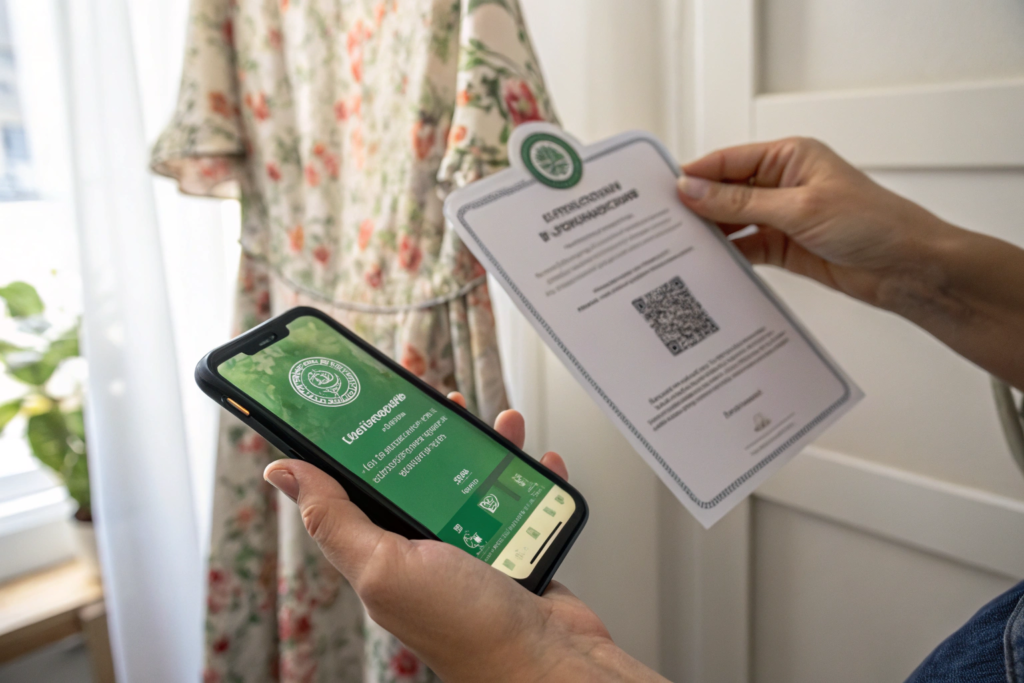
Every legitimate certificate has a unique number. You can enter this number on the certifier’s website and see the certificate’s validity, the company name it was issued to, and the product scope it covers. I provide my clients with the certificate numbers and the direct links to the verification portals.
The GOTS public database is at global-standard.org. You enter the license number. The database shows the certified company name, the address, the product categories, and the certification validity dates.
The OEKO-TEX Label Check is at oeko-tex.com. You enter the certificate number. The system returns the company name and the certificate status.
The verification takes two minutes. I encourage every client to do it. I have had clients verify my certificates during live video calls. They share their screen. I watch them enter the number. The result comes back valid. That moment builds more trust than a hundred sales emails.
A brand owner in London verified my GOTS certificate while we were on a Zoom call. She told me later, "I’ve worked with five suppliers who claimed to be sustainable. You are the first one whose certificate actually checked out." That is a sad commentary on the industry, but it is the reality. Verify everything.
What Is the MOQ and Cost for a Sustainable Floral Dress?
The perception in the market is that sustainable fashion is expensive and requires huge minimum orders. This perception is outdated. The sustainable fabric supply chain in China has matured significantly in the last five years. Mills are stocking organic cotton greige fabric. Digital printing allows for low minimums on custom prints. The economics of sustainable fashion are now accessible to small and mid-size brands.
The MOQ for a sustainable floral dress at Shanghai Fumao is 100 to 300 units per style, depending on the fabric choice and the print complexity. The cost premium for sustainable fabrics over conventional fabrics is approximately 15% to 30%. An organic cotton voile dress costs about $2 to $3 more per unit in fabric than a conventional cotton dress. A Tencel dress costs about $3 to $4 more per unit. The higher retail price that sustainable branding commands more than covers this cost premium.
Sustainability is not a cost. It is an investment in a higher-margin product.
How Does the Cost Compare Between Conventional and Sustainable Fabrics?
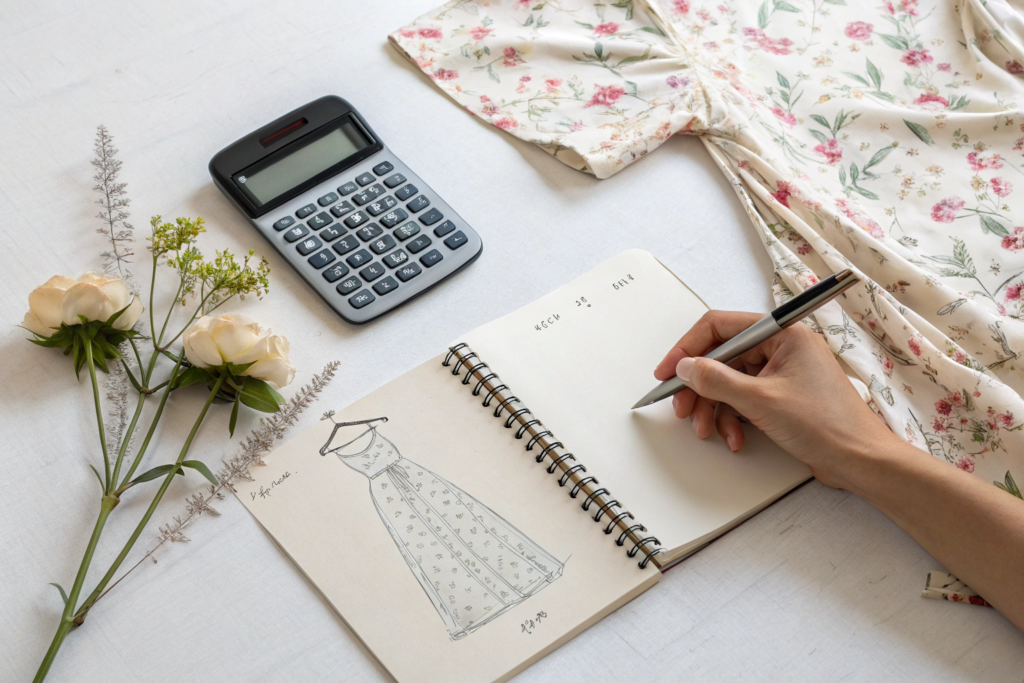
Let me give you a real cost comparison for a simple A-line floral dress, 2,000 units, with a custom digital floral print.
| Cost Component | Conventional Cotton Voile | GOTS Organic Cotton Voile | Tencel Twill |
|---|---|---|---|
| Fabric Cost per Meter | $3.80 | $5.50 | $5.20 |
| Fabric Cost per Dress (2m) | $7.60 | $11.00 | $10.40 |
| Trim & Labor per Dress | $5.40 | $5.40 | $5.60 |
| FOB Cost per Dress | $13.00 | $16.40 | $16.00 |
| US Import Duty | 4.4% | 4.4% | 6.9% |
| Total Landed Cost | $13.57 | $17.12 | $17.10 |
The organic cotton dress lands at $17.12. The conventional cotton dress lands at $13.57. The organic dress costs $3.55 more per unit. On a 2,000-unit order, that is a $7,100 difference in total landed cost.
Now let’s look at the retail math. The conventional cotton dress might retail for $58. At a 50% margin, the brand gross profit is $29 per unit. The organic cotton dress can retail for $78 or $88 because of the sustainable branding. At an $78 retail price and a 50% margin, the gross profit is $39 per unit. The organic dress makes $10 more profit per unit. The $7,100 higher cost is recovered after selling 710 units. The remaining 1,290 units generate an extra $12,900 in profit.
The sustainable fabric is not more expensive. It is more profitable.
Can I Mix Sustainable and Conventional Fabrics in My Collection?
Yes. Most of my brand clients follow a transition strategy. They start with one or two sustainable styles in their collection. They test the market response. They gather data. The following season, they increase the sustainable percentage.
A client in Atlanta launched with an 80% conventional, 20% sustainable split. The sustainable styles were organic cotton floral dresses with a higher retail price and a prominent sustainability story on the product page. The sustainable styles outsold the conventional styles by a 3-to-1 margin in the first season. The following season, she flipped the split to 80% sustainable, 20% conventional. She is now moving toward 100% sustainable.
The transition model reduces risk. You do not need to bet your entire brand on sustainability in one season. You test. You learn. You scale.
How Do You Market a Sustainable Floral Dress Collection?
The fabric is sustainable. The certifications are verified. Now you must tell the story. A sustainable floral dress is not just a product. It is a set of values. The customer who buys a sustainable dress is buying into a mission. She wants to feel good about her purchase. She wants to know where the fabric came from, who made the dress, and what impact her purchase has on the planet. Your marketing must answer these questions authentically.
The most effective marketing for a sustainable floral dress collection is radical transparency. Show the organic cotton field. Show the closed-loop Tencel production facility. Show the OEKO-TEX and GOTS certificates on your product page. Show the workers in your factory with dignity and respect. Include a care label that explains how to compost the dress at the end of its life. The customer who buys sustainable fashion is information-hungry. Feed her the truth. She will reward you with loyalty.
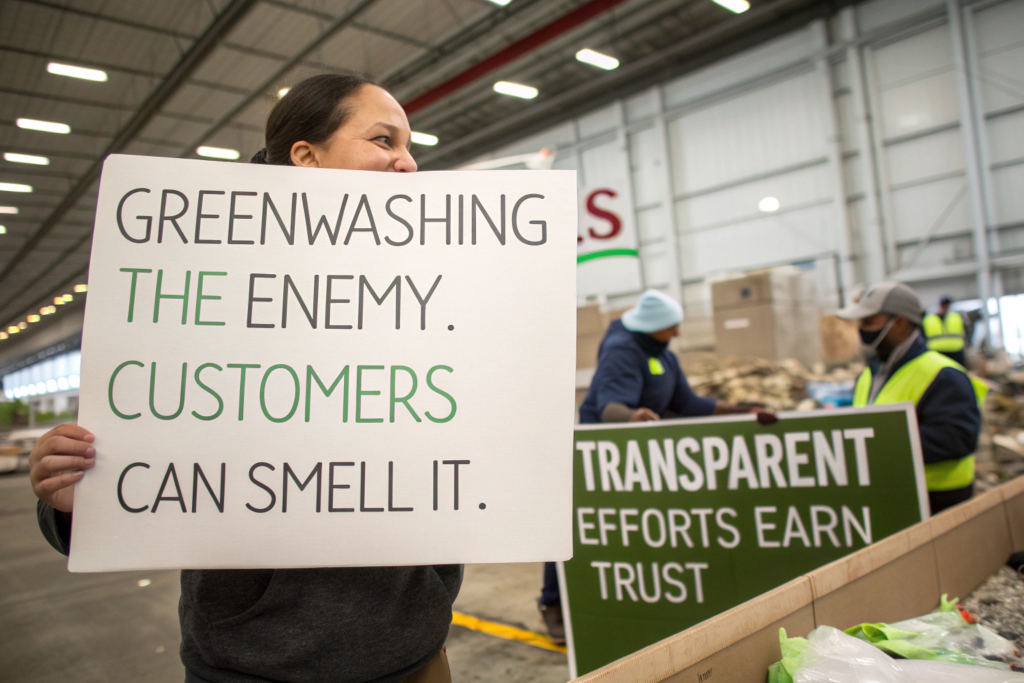
Greenwashing is the enemy. Customers can smell it. If you claim to be sustainable without proof, they will expose you. If you are transparent about your efforts, including the imperfections, they will trust you.
What Content Should You Create to Tell the Sustainability Story?
Create a "Sustainability" page on your website. This is not a generic statement about caring for the Earth. This is a specific, documented account of your supply chain. Include photos of the organic cotton farm where your fiber is grown. Include a photo of the GOTS certificate. Link to the verification portal. Include photos of the printing facility and the sewing floor. Name your factory. Shanghai Fumao. Show our BSCI audit report. Be specific.
Create hangtag content that tells the story on the garment itself. A double-sided hangtag. One side is the brand logo. The other side is a short sustainability statement: "This dress is made from GOTS-certified organic cotton, grown without pesticides, printed with OEKO-TEX certified dyes, and sewn in a BSCI-audited factory. When you are finished with this dress, it is 100% biodegradable. Thank you for choosing fashion that loves the Earth back."
Create social media content that shows the process. A short video of the fabric being printed. A photo carousel of the journey from fiber to finished dress. The customer who sees this content feels connected to the product. She understands why it costs more. She becomes a brand advocate.
A client in Vancouver does this brilliantly. Her Instagram is a mix of beautiful product shots and behind-the-scenes sustainability content. A photo of a finished floral dress. Then a photo of the organic cotton field. Then a video of the fabric being printed. Her engagement rate is five times the industry average.
How Do You Avoid Greenwashing in Your Marketing?
Greenwashing is making vague, unsubstantiated, or misleading environmental claims. Saying "eco-friendly fabric" without specifying what fabric and what certification. Saying "sustainably made" without providing any evidence. Using earthy colors and leaf logos to imply sustainability without any substance.
To avoid greenwashing, be specific. "Made with GOTS-certified organic cotton, license number CU123456." Be honest about trade-offs. If your dress has polyester thread or a nylon zipper, disclose it. "97% organic cotton, 3% nylon zipper." Sustainability is a journey. You do not need to be perfect. You need to be honest.
Be verifiable. Every claim you make should be backed by a certificate the customer can check herself. Put the certificate numbers on your website. Link to the verification portals. Radical transparency is the only defense against greenwashing accusations.
I provide all my sustainable fabric clients with a "Sustainability Story Package." It includes photos of the organic farm, the certificate images, the BSCI audit summary, and a short video of the production floor. The client can use these assets in her marketing. The story is authentic because it is true.
Conclusion
Ordering sustainable floral dresses from China is not a distant dream. It is a present-day reality. The fabrics are available. GOTS-certified organic cotton, European flax linen, Tencel lyocell, and recycled polyester. The certifications are verifiable. You can check every certificate number on the issuing body’s public database. The MOQs are accessible, starting at 100 units for custom prints. The economics work. The retail price premium for a sustainable dress more than covers the higher fabric cost, resulting in higher gross profit per unit. The marketing is powerful. A transparent, documented sustainability story builds a deep, loyal customer base.
The fashion industry is moving. The customers are moving. The regulations are coming. The brands that build sustainable supply chains now will be the market leaders in five years. The brands that ignore this shift will be left behind.
If you want to launch a sustainable floral dress collection, I am ready to be your manufacturing partner. Our Business Director, Elaine, can send you our Sustainable Fabric Swatch Kit. It includes samples of our GOTS organic cotton, our Tencel twill, our OEKO-TEX printed fabrics, and our certification documents for your review. Email her at elaine@fumaoclothing.com. Ask for the Sustainable Fabric Kit. Feel the fabrics. Check the certificates. Plan your collection. Let’s make fashion that is beautiful for the customer and gentle on the planet.