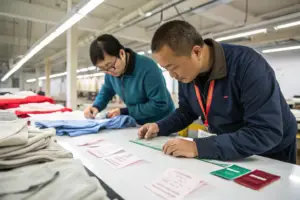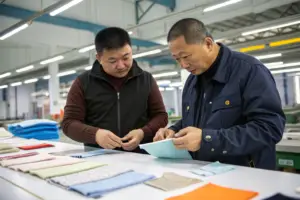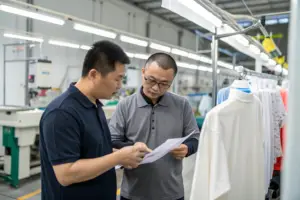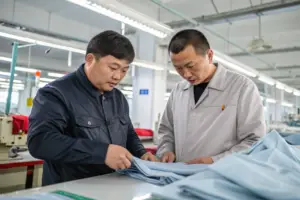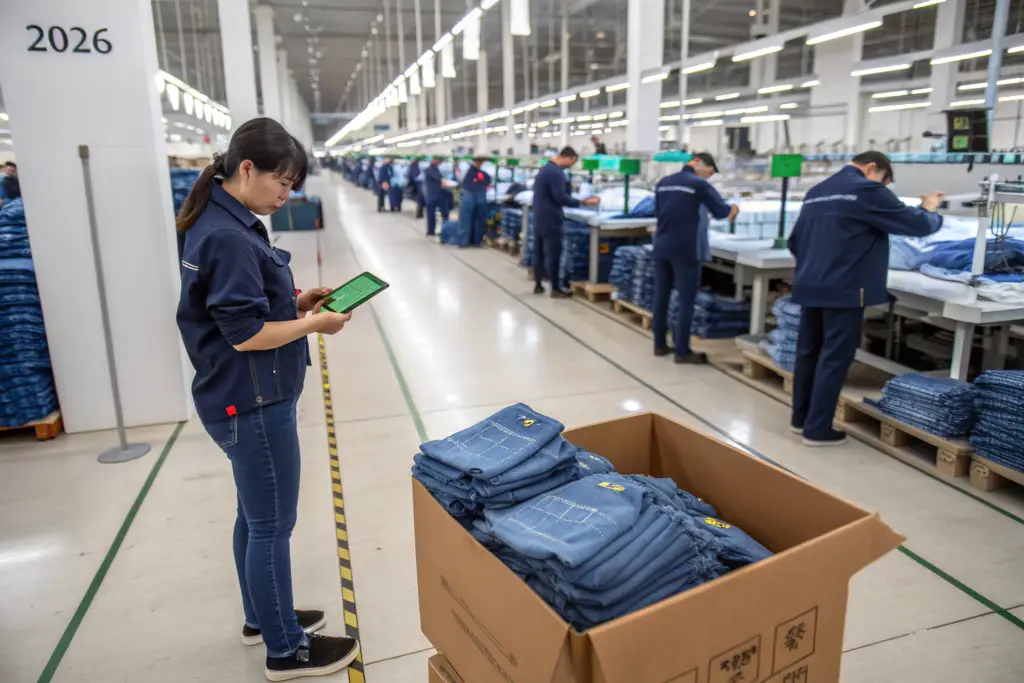
The wholesale denim market feels like a minefield right now. Cotton prices are swinging. Shipping routes are unpredictable. And too many factories are still treating 2026 like it's 2019, sending the same washed-out designs with the same delayed timelines. I see American buyers scrolling through supplier lists with genuine fear in their eyes. Fear of a shipment arriving in August that should have been on shelves in May. Fear of opening a carton and finding the waistband measurement off by half an inch. That fear is expensive. It eats into your margin before you even sell a single pair.
Wholesale buyers are choosing us in 2026 because we solved the three biggest problems in the supply chain. First, we offer guaranteed DDP pricing so you know your exact landed cost per unit. Second, we maintain a 35-day repeat order turnaround with pre-booked ocean freight space. Third, our 7-point inspection system keeps the defect rate below 1.5%.
But the real story is not just about the numbers. It is about how the market shifted this year and why the old sourcing playbook does not work anymore. I run Shanghai Fumao, and I want to explain why so many wholesale distributors are switching their denim shorts production to our five lines. It comes down to fabric innovation, compliance transparency, design speed, and a logistics model that treats your cash flow as seriously as I treat my own.
What Makes Denim Shorts "Wholesale-Ready" In A Competitive Market?
You buy wholesale to resell at a profit. That sounds simple. But a short that does not fit right or fades ugly after one wash will destroy your relationship with your retail buyers. I have watched distributors lose their biggest accounts because the factory swapped the fabric mid-production and nobody told them. The wholesale market is unforgiving. The shorts have to arrive ready to hang, not ready to fix.
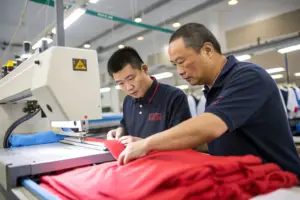
Wholesale-ready means the product is consistent from size Small to 3XL. It means the labeling is already compliant with U.S. tracking laws. It means the polybag has a barcode that scans at the warehouse. We treat bulk production not as a big art project, but as a precise assembly of components that must match the approval sample exactly.
Let's break down the structure of a short that sells through quickly versus one that sits on a clearance rack.
Why Does Size Consistency Matter More Than Style Trends?
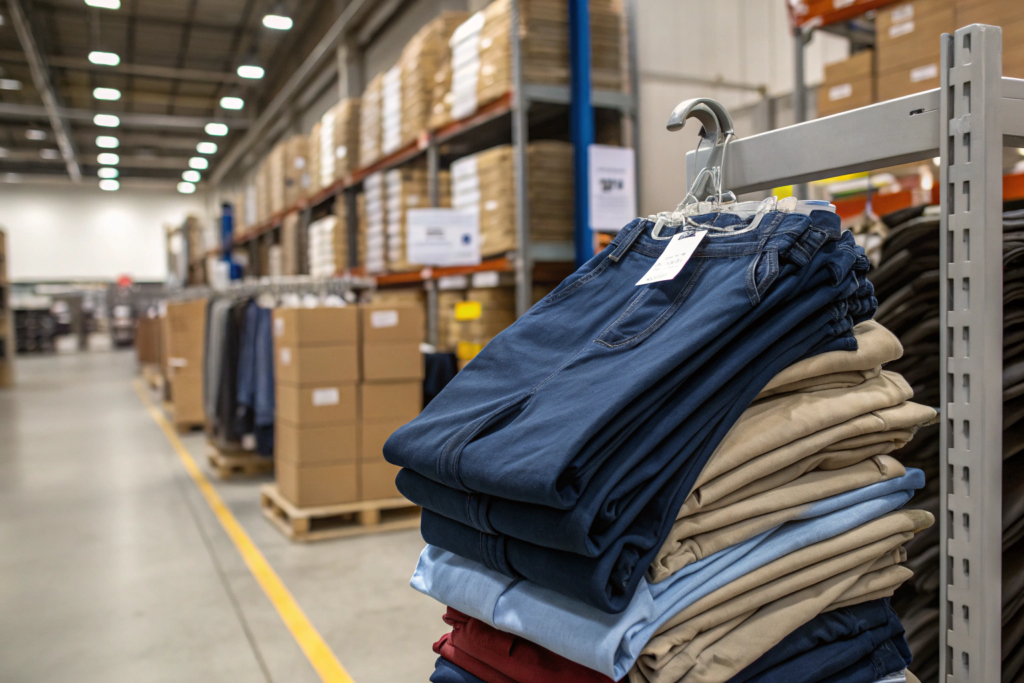
A trendy wash means nothing if the fit is a gamble. I learned this from a Northeast distributor in 2024. He bought 5,000 pairs of high-waisted shorts from a competing factory. The size Medium measured 30 inches in the waist on the spec sheet. But in the actual shipment, they measured 31.5 inches. Customers sized down. The returns piled up. He lost $18,000 in reverse logistics costs.
We use a rigid size specification tolerance. We allow a variance of plus or minus 0.25 inches at the waistband. Not half an inch. A quarter. To hold this, we cut the denim with automated Gerber spreading machines. No manual scissors on bulk orders. The pattern grading software ensures that a Small and a Large have the same pocket placement ratio. We also do a "full spec on body" check. We dress a standard mannequin with the production sample and measure the fit points digitally. If the crotch curve rises by more than 0.2 inches, we regrade the pattern. Consistency builds trust. Trust builds reorders.
How Do We Handle U.S. Compliance Labels Before Shipping?
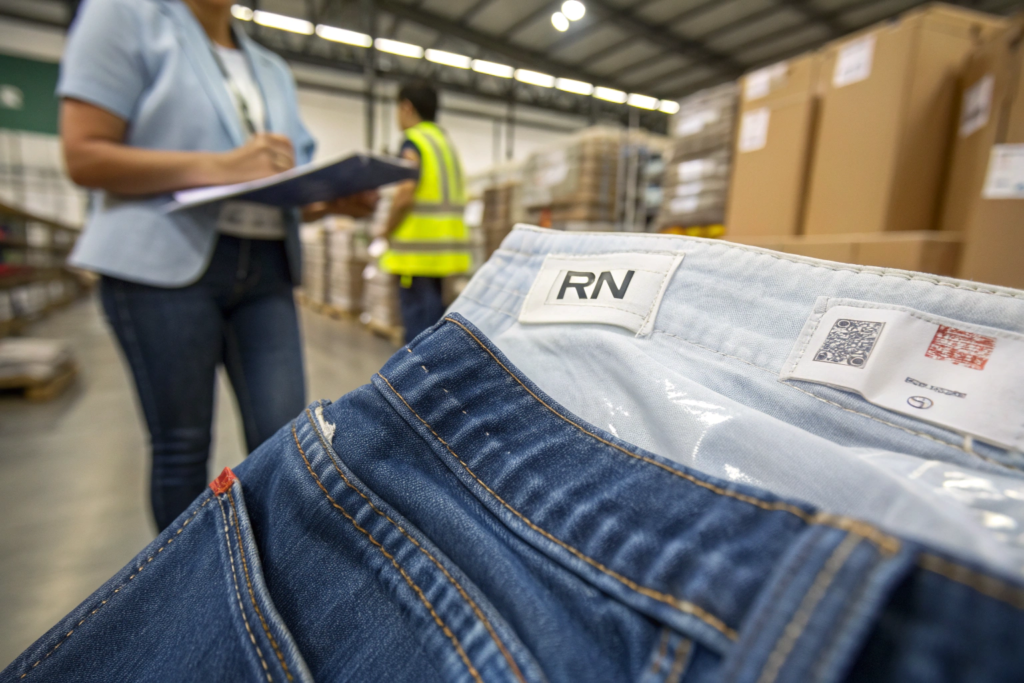
The label inside the back waistband is a legal document. Many new buyers do not realize this. If the care label misses the RN number or the fiber content is listed wrongly, Customs can seize the goods. We take ownership of this headache.
Our packing team inserts a woven care label that meets FTC Textile Rules. It states the exact fabric blend. For our standard denim, it reads "99% Cotton, 1% Elastane." It also shows the country of origin in a permanent, legible format. We double-check the tracking label requirements too. The law requires a unique manufacturer ID. Our RN number is registered and updated annually. You can verify the legal text yourself on the FTC Clothing and Textiles page. We also place a barcode sticker on the polybag that matches your warehouse management system. No hand-writing. No guesswork. This makes the shorts shelf-ready the moment they arrive at your distribution center.
How Is Our Factory Adapting To The Raw Material Crisis Of 2026?
You feel the squeeze. You open your inbox and see a notice from your supplier: "Price increase effective next month." The global cotton market is volatile. Geopolitical tension and climate shifts have made sourcing consistent denim fabric harder than it was three years ago. I speak with mill owners in China every week. The price of high-grade ring-spun cotton fluctuated by 8% in the first quarter of 2026 alone.
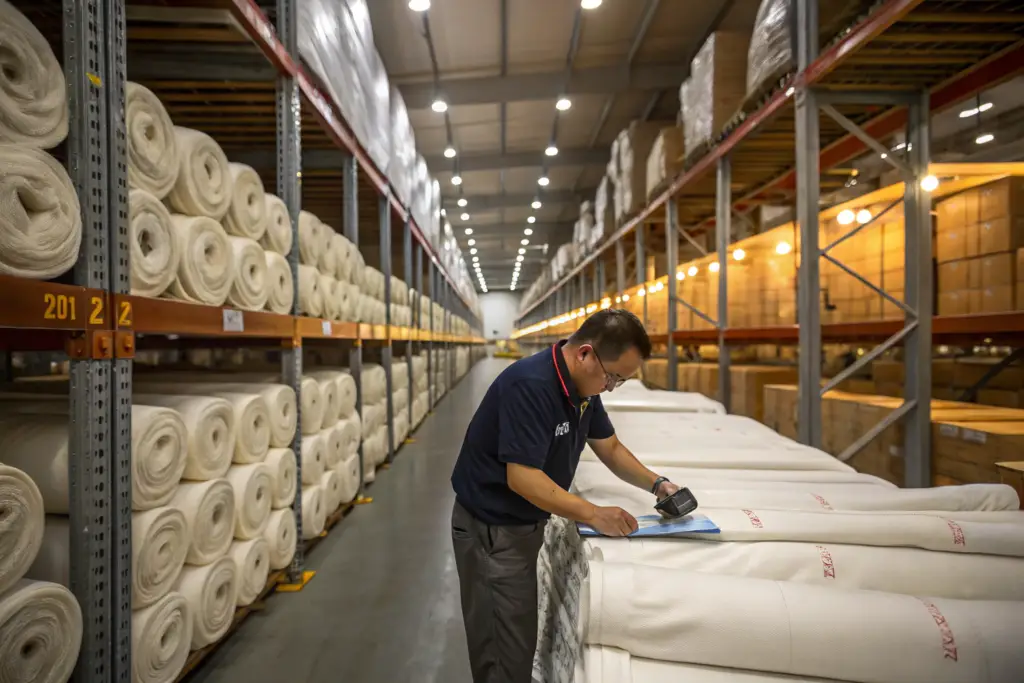
We cannot control the futures market. But we can control our inventory strategy and our relationships. We adapted by shifting from a "just-in-time" fabric purchasing model to a "just-in-case" greige inventory model. This means we stock raw, unfinished denim fabric rolls for our top-selling blues and blacks. When you place a wholesale order, we do not wait 15 days for the mill to weave the cloth. We pull it from our climate-controlled warehouse and start cutting within 48 hours.
Stable pricing is the promise. Here is how we keep our commitments even when the supply chain shakes.
Why Does Pre-Stocking Greige Fabric Stabilize Pricing?
Greige fabric is denim before it has been dyed the final shade or washed. It looks like a creamy, raw cotton sheet. By keeping 50,000 yards of greige in our stockroom, we lock the base cost for three to six months.
When a mill tries to impose a sudden surcharge, we have the leverage to negotiate or simply use our existing stock. This year, a major denim mill in Zhejiang province raised their price by 5% due to a cotton price spike linked to Indian export restrictions. We were insulated. We had already secured the raw greige at the Q4 2025 contract price. This buffer lets us honor the quotation we give you for the entire season. We also mix fiber scientifically to reduce our reliance on a single origin. If Xinjiang long-staple is priced high, we switch to a high-twist Australian cotton alternative that meets the same tensile strength. Our technical team tests the new blend for shrinkage before we even offer it to you. This flexibility protects your wholesale margin.
Can We Guarantee The Price For The Entire Wholesale Season?
Yes. We write it into the contract. A seasonal price lock means the FOB or DDP price we quote in February stays the same in June. This is only possible because of our raw material hedging.
I learned the hard way in 2022. I quoted a price on a handshake. Two months later, the fabric cost rose by 12%. I lost money on that container because I did not want to break a promise. Now, I manage risk with formal mill contracts. We secure the textile supply chain cost for a 180-day window. For you, this means you can plan your retail price and your sale events without a sudden cost increase wiping out your profit. We also keep a buffer stock of hardware. Zippers and buttons come from SBS, and we hold a monthly stock of 200,000 units. If the brass alloy market jumps, we do not pass that on mid-season. We absorb it. A stable price builds a long-term partnership.
What Design Innovations Are We Bringing To Classic Denim Shorts?
Classic five-pocket shorts are not boring. They are a canvas. But many factories offer the same old blue and black with a basic enzyme wash. If you list that online, you blend in. You compete only on price, and that is a race to the bottom. I do not want that for you. I want your wholesale buyer to see the short and immediately know it is a premium piece, even before they touch it.
Innovation in a factory like ours means using new sustainable finishing techniques and rare dye processes that add $5 to $10 of perceived value. It is not about adding random straps or zippers. It is about making the fabric feel alive. Our development room in 2026 looks more like a science lab. We test ozone washing machines, laser fading patterns, and bio-based softeners.
Let's dig into the specific techniques that are catching the eyes of American retailers right now.
How Does Ozone Washing Create A Unique Eco-Finish?
Water is expensive. And in some regions of China, the government restricts industrial water usage during dry months. Ozone washing solved this for us. Instead of using gallons of water to strip the indigo, we use ozone gas inside a sealed tumbler.
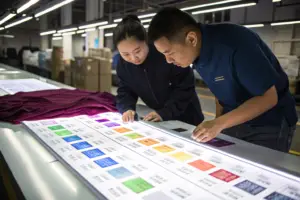
The gas oxidizes the indigo dye, creating a natural lightening effect. It uses 60% less water. For the aesthetic, it produces an organic, uneven fade that looks like the sky. You cannot get this exact look with stones. A large sportswear buyer from California came to us in early 2026. He needed an eco-angle for his marketing. We showed him the ozone wash on a mid-blue twill. The fabric retained its softness because the fibers were not beaten by pumice rocks. He sold the entire batch at a 30% premium as a "cloud fade" capsule. You can read more about this technology on the Jeanologia ozone wash page. It is the future of sustainable denim. We also avoid potassium permanganate sprays now unless absolutely necessary, because they can weaken the cotton if not neutralized perfectly. Ozone is cleaner for the worker and the fabric.
Can Laser Technology Replace Hand Sanding?
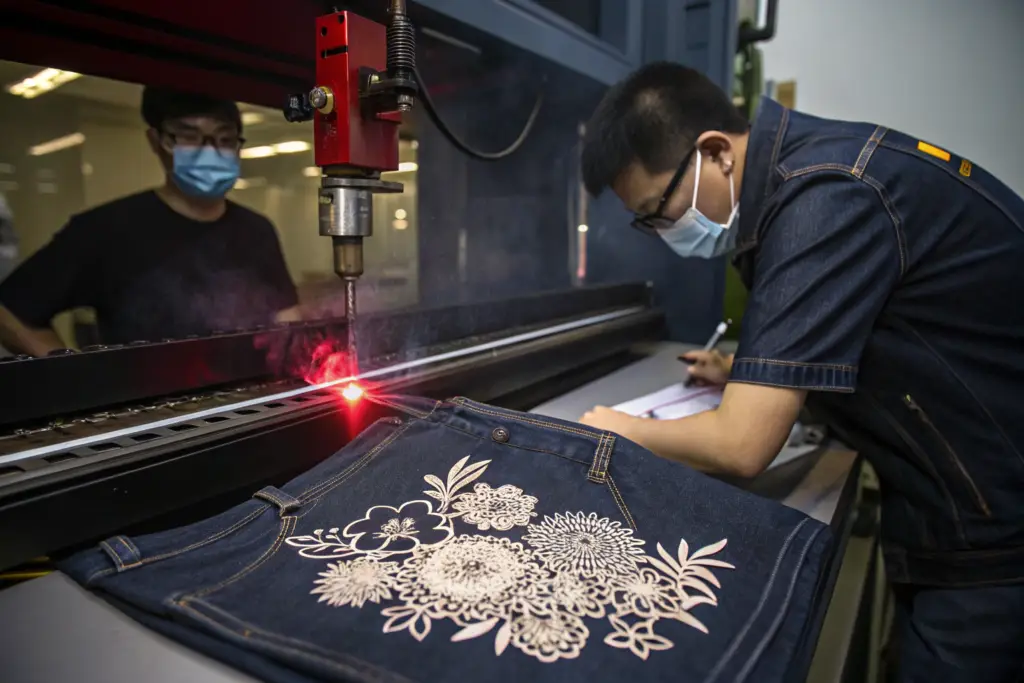
Yes, and it does it better. Hand sanding creates inconsistency and repetitive stress injuries for workers. A laser machine burns the pattern you design into the indigo surface layer with pinpoint accuracy.
Last season, we helped a Miami-based brand create a "venom strike" print. It looked like a snake scale pattern was etched across the left thigh. Doing this by hand would take 20 minutes per pair and look different every time. The laser does it in 50 seconds. It burns away the blue dye to reveal the white core of the yarn. The precision is breathtaking. We use a closed-galvo laser system. The exhaust is filtered, so minimal dust enters the air. This is a huge step up in garment finishing safety. For you, the wholesale buyer, it means you can offer a complex, high-fashion finish at a mid-tier price. You can send us a PNG of a floral pattern in the morning, and by the afternoon, we have a physical sample with the design lasered onto the pocket. That speed of prototyping is hard to find.
How Are We Solving The Payment And Shipping Risks For American Buyers?
The biggest fear is not the price of the denim. It is the wire transfer. Sending a 30% deposit overseas feels like throwing money into a black hole. You do not know if the factory will even start production. Or you hear about a bankruptcy where the buyer loses the entire investment. I understand that fear. Trust has to be earned, but it also has to be backed by a financial structure that protects you.
In 2026, we restructured how we take orders from new clients. We moved away from forcing risky T/T terms. We offer a secure payment gateway and take full ownership of the goods until they reach your doorstep. Our DDP model is not just about convenience. It is a risk transfer. If the ship sinks, it is my insurance claim, not yours. This is why we are winning over buyers who were previously nervous about importing from China.
Your money and your goods need an ironclad safety net. Here is the safety net we built.
Does Fumao Clothing Offer A Trade Assurance Or Secure Payment System?
We do. We know that trust is built transaction by transaction. For small and medium wholesale buyers testing our quality, we use an Alibaba Trade Assurance platform. This means your payment rests in an escrow account. If the shipment is late or the quality does not match the approved sample, you do not release the funds. It is a simple, binding mechanism.
I recall a new client from Texas in 2025. His first order with us was $15,000. He was nervous. We processed it through Trade Assurance. We uploaded the production tracking photos daily. He saw the cutting, the sewing, and the packing. When the shipment arrived, he released the funds within an hour. Now, his third order is on the water, and we are on open account terms with a balance insurance policy through Sinosure. You can verify the Trade Assurance terms online. It is transparent. I also encourage buyers to use a third-party inspection company, like QIMA, to check the goods in our factory before the balance payment. I want your inspection. It proves our honesty.
How Does Our DDP Model Protect Your Cash Flow Until Delivery?
The worst part of importing is the invoice from the freight forwarder that arrives after the goods have landed. Demurrage. Exam fees. Pier pass. These can add $800 to $1,500 to a single container unexpectedly. Our DDP (Delivered Duty Paid) model eliminates this.
We contract with a freight forwarder under our name. The ocean freight, the U.S. duty, the customs bond, and the truck to your warehouse are all wrapped into one unit price. You pay us the unit price, and we take the risk of the sea market. If the Port of LA gets congested and storage fees stack up, I pay them. If the duty rate for denim shorts changes, I have already calculated a buffer. This gives you a guaranteed landed cost. You can budget your profit margin down to the cent. I believe the manufacturer should carry the supply chain risk because the manufacturer controls the production and the ship date. You should be focusing on selling. Not fighting for a $200 refund from a trucking company you never met.
Conclusion
The wholesale denim shorts game in 2026 belongs to buyers who prioritize supply chain intelligence over the lowest sticker price. You asked why buyers are choosing us. They choose Shanghai Fumao because we aligned our factory's interests with theirs. We solved the raw material chaos by pre-stocking greige fabric and locking seasonal prices. We removed the creative ceiling by investing in ozone and laser finishing so your product looks like a $45 boutique piece even at a mass-market cost. And we erased the financial risk by embracing trade assurance and delivering your goods under DDP terms, so you are never blindsided by a hidden freight bill.
I measure the health of my factory not just by the orders I ship but by the calls I don't get. The fewer "where is my container" calls, the better we are performing. One of our East Coast distributors told me last month that his reorder rate for our washed black denim shorts is at 82%. That number makes me proud because it means the fit was right, the zipper held, and the color did not fade into an ugly gray. We want to earn that statistic with every new client who takes the leap from their current supplier.
If you want to lock in a stable price for your private label or wholesale denim shorts program, now is the time. The greige warehouse is full, and the production slots are open. I invite you to reach out to our Business Director, Elaine. She can send you the spec sheets, the wash swatches, and a video tour of our innovation lab. Email her at elaine@fumaoclothing.com. Let Shanghai Fumao be the partner that turns your denim orders into a predictable, profitable inventory stream.