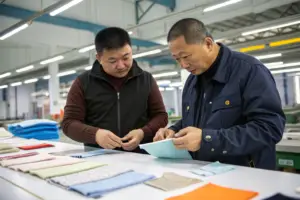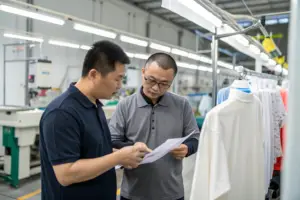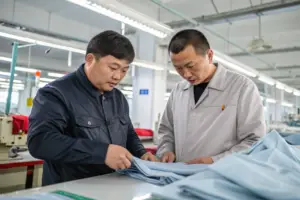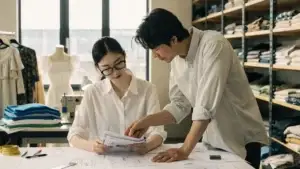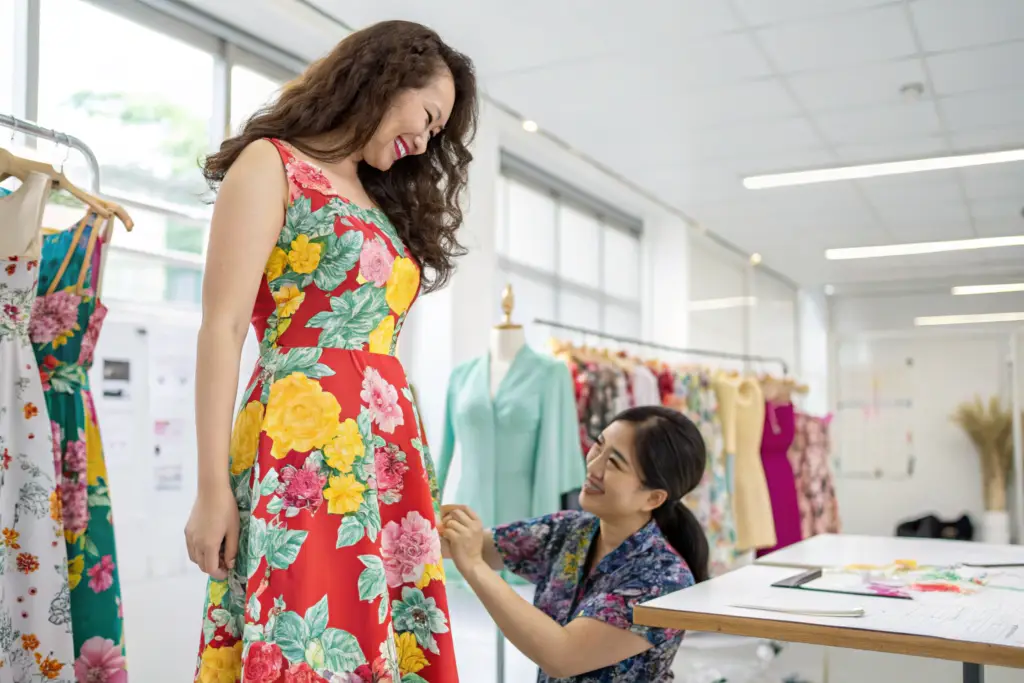
I've seen the frustration on a brand owner's face during a tradeshow. You find a beautiful floral print fabric. You picture a flowing A-line silhouette that would look amazing on a curvy woman. But then you ask the factory a simple question: "Can you grade this up to a 3XL without distorting the flowers?" And the salesperson stares at you blankly. They nod, but you know they don't truly understand the fit engineering required. They think making a plus-size dress just means adding a few inches to the side seams. It absolutely does not. At Shanghai Fumao, we've invested years into mastering the technical craft of plus-size garment construction. It's not just about cutting bigger pieces of fabric. It's about engineering a dress that flatters a fuller figure while keeping the floral print perfectly aligned.
Yes, Shanghai Fumao can expertly manufacture plus-size A-line floral dresses. We don't just enlarge a size small pattern. We engineer the A-line silhouette from the ground up for a curvy body. This includes adjusting the bust darts for proper apex positioning, reinforcing the shoulder seams for better support, and meticulously matching the floral pattern across the side seams so the print flows beautifully around the body, not just across a flat table.
A beautiful floral print looks easy, but making it work on a plus-size A-line cut is a technical challenge most factories try to avoid. Let me walk you through exactly how we handle it, from fit to fabric to large-scale production.
How Do You Engineer the Perfect Fit for a Plus-Size A-line Dress?
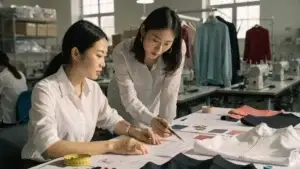
A lot of manufacturers think "A-line" means "one size fits all." But a true A-line for a plus-size woman is completely different from a straight size. The slope of the shoulder changes. The depth of the armhole needs adjustment so it doesn't gap or cut into the underarm. If you just scale up a size 6 pattern, you get a dress that looks like a tent. Our technical team at Shanghai Fumao doesn't do that. We create a base size pattern, usually an 18W or 20W, and fit it on a curvy dress form. Then, we grade outward from that, not upward from a tiny sample size.
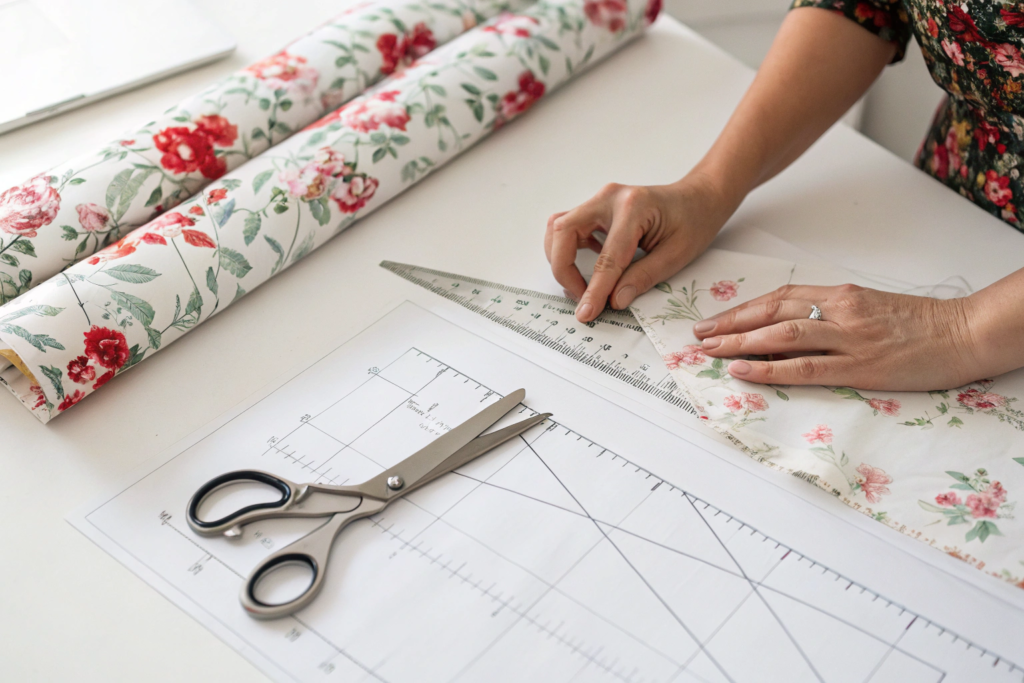
How Does Armhole Depth Affect the Look of a Floral A-line?
This is the secret detail that separates a cheap-looking plus-size dress from a premium one. If the armhole is cut too low to accommodate a larger bust, the entire side of the dress collapses. The floral print gets visually lost in a pool of excess fabric under the arm. If the armhole is too shallow, it pulls tight across the chest, distorting the flowers into ugly, stretched shapes.
We solve this by using a specific plus-size block pattern. We adjust the front armhole curve to sit snugly against the bust without digging in. I recall a specific project for a boutique brand in Texas. They wanted a sleeveless A-line floral dress for a summer wedding guest line. Their previous factory simply dropped the armhole lower in the larger sizes. The result was a look that showed the side bra and looked sloppy. We re-engineered the pattern for them. We raised the armhole slightly and adjusted the shoulder slope. The clients who tried on the new sample said the dress finally looked "intentional" and expensive. The alignment of the small floral print around the bust remained consistent from size Small to 3XL, which kept the visual balance intact.
| Technical Pattern Point | Standard Straight-Size Grading | Fumao Plus-Size Grading Adjustment |
|---|---|---|
| Shoulder Slope | Steep angle for narrow frame | Flattened angle for broader, often rounder shoulders |
| Bust Dart Apex | High dart point for perky fit | Lowered dart point by 1-1.5 inches to match fuller bust apex position |
| Front Waist Length | Standard short body measurement | Increased by 1-2 inches to account for bust projection pulling up the hem |
| Side Seam Shape | Straight vertical drop | Subtle curved shape to accommodate hip curve without riding up |
Why Do Floral Prints Break at the Side Seams on Curvy Figures?
This happens because of poor pattern matching during the grading process. When you scale a dress up, the circumference of the hem increases. If the factory doesn't adjust the placement of the floral motif on the pattern piece, the big flowers get cut off awkwardly at the side seams. You end up with a half-flower right on the hip. That immediately signals a low-quality garment.
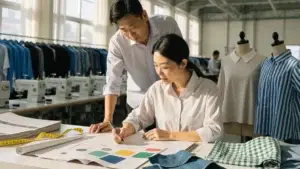
We use a "cut-and-match" method for plus-size florals. Our cutting team doesn't just stack the fabric and cut blindly. For large motifs, we use single-ply cutting on specific panels. This allows the cutter to align the specific floral print on the front and back panels so it flows continuously. For a project last spring, a California-based brand needed a large peony print. On a 2XL, the print repeat was 24 inches, which is huge. We had to manually adjust the spread of the fabric to ensure the big blooms sat in the center of the dress and didn't land right on the belly area. That's not a machine adjustment. That's skilled manual labor and careful planning.
What Makes an A-line Silhouette Truly Flatter a Plus-Size Body?
The A-line dress is famous because it's theoretically the most forgiving cut. It's narrow at the top and flares out at the bottom. But the physics of fabric drape change when the body underneath has pronounced curves. A very stiff fabric will make a large A-line look like a pyramid. A too-soft fabric will cling to the tummy and lose the shape entirely. Finding that balance is critical. We guide our clients on the best fabric weights to achieve that gentle, skimming effect that the A-line promises.
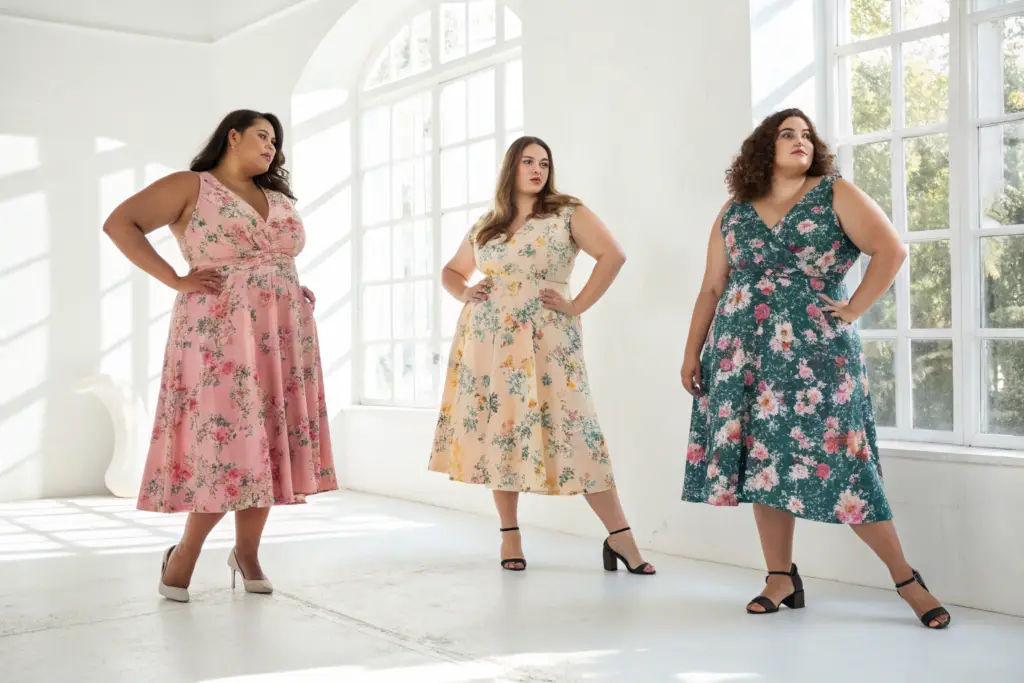
Why Does Fabric Weight Make or Break a Plus-Size Floral Dress?
The fabric hand-feel directly controls the visual volume. For an A-line dress meant for sizes 14 to 24, I generally recommend a fabric with a weight of 180 to 220 GSM for woven cotton or a medium-weight crepe. If a client insists on a very lightweight chiffon for a floral dress, we warn them that it will lack body.
Without structure, the dress doesn't "flare" away from the body. It just drops straight down from the largest point, which is often the bust or the tummy. You lose the diagonal line that is essential for the A-line aesthetic. However, if you use a heavy, rigid denim, you get a stiff triangle that makes the wearer look larger. We once worked with a brand in Chicago that wanted a crisp cotton poplin for a plus-size floral midi dress. The prototype looked massive. We switched them to a high-twist cotton voile with a soft drape but enough body. The fabric pressed beautifully, held the floral print sharply, and the A-line flare rippled softly instead of poking out. That dress became a top seller in their direct-to-consumer line.
Should You Add Lining to a Plus-Size A-line Summer Dress?
This is a question I get often from brands worried about sweating and comfort. The answer isn't always a simple "yes." Lining adds structure, but it also adds warmth and cost. For a tight floral print on a light background, lining is absolutely necessary. It prevents the white base from becoming see-through when the dress stretches across the backside or the bust.
However, the lining cannot be a separate, independent skirt hanging inside. If the lining is cut exactly like the outer shell, two heavy fabrics rubbing together create static cling. The dress bunches up. We often suggest a soft, anti-static polyester lining or a modal blend that is attached at the waist seam. We cut the lining with a slightly smaller sweep—meaning the circumference of the hem is narrower than the outer shell. This hidden detail gives the outer floral fabric maximum freedom to move. It prevents the lining from peeking out at the hem and allows air to flow up between the two layers. It's a small trick, but it dramatically improves the wearing experience on a hot day.
Is Your Factory Ethical Enough for the Modern Plus-Size Consumer?
We're living in a time where the woman buying your dress cares almost as much about who made it as she does about how it looks. The plus-size community is incredibly vocal about body positivity and ethical sourcing. If a brand is selling a floral dress that celebrates a woman's curves but does so by exploiting labor in unsafe conditions, that hypocrisy will be discovered. I'm proud to say that Shanghai Fumao operates with a transparent, compliant supply chain. We don't just talk about ethics. We open our doors to audits.
What Certifications Matter Most for a Dress Factory?
Brands often ask me for a BSCI certificate or a SEDEX audit. These aren't just pieces of paper. They ensure the factory pays fair wages, has safe fire exits, and doesn't use child labor. But for a dress factory, there is another layer: raw material sourcing. That beautiful floral cotton poplin needs to have traceability.
I always tell my clients to ask for a specific document. Ask for the yarn spinner's certificate or the dye house's waste treatment license. Unethical dye houses often dump toxic water straight into rivers to offer you a cheaper price. You'd be shocked how many cheap floral dresses have colors that come from illegal discharge. We source our inks and dyes from licensed, compliant textile chemical suppliers. For a recent line of eco-friendly floral dresses we produced for an Australian brand, we provided the full chain of custody from the organic cotton field in India to our cutting table. The final hang tag on the dress communicated this clean journey to their customer. It became a strong selling point that justified a higher retail price point of $89.99.
How Do Working Conditions Impact the Quality of a Floral Print?
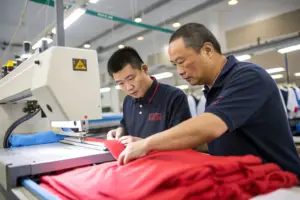
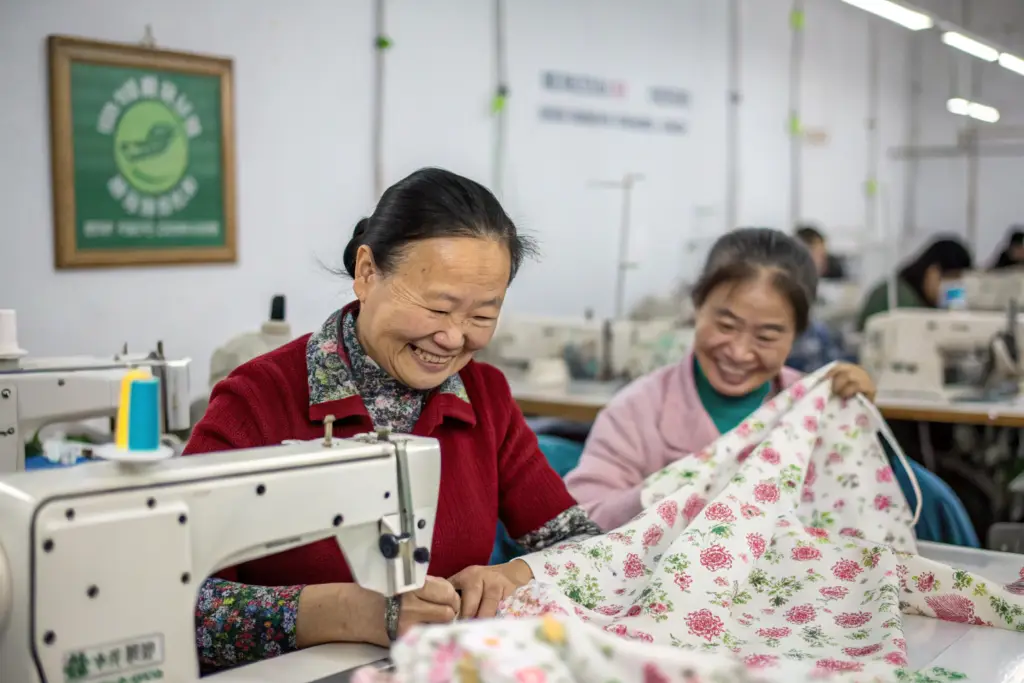
It sounds like a stretch, but a stressed worker cannot sew a straight seam. Floral pattern matching requires extreme attention to detail. The operator needs good lighting, an ergonomic chair, and manageable working hours to align those prints perfectly at the side seams. If the factory is a sweatshop with dim lights and 80-hour weeks, the seam allowances will be uneven. The flowers will drift.
Our production lines are equipped with full-spectrum daylight lamps at every sewing station. This is crucial for color accuracy when matching dark floral prints against a white background. We maintain a strict 60-hour maximum working week, which I enforce personally. That ensures the craftspeople working on your plus-size A-line dresses are alert and precise. I recall an incident during an audit where an inspector watched our sewers align a complex paisley print on a 3XL dress. She noted that the operators didn't look fatigued even at the end of their shift. The quality of the stitching at 4 PM was identical to the stitching at 9 AM. That consistency is a direct product of a humane working environment, and it pays off in a dress that looks luxurious, not sloppy.
How Does Fumao Manage Large Orders for Complex Floral Dresses?
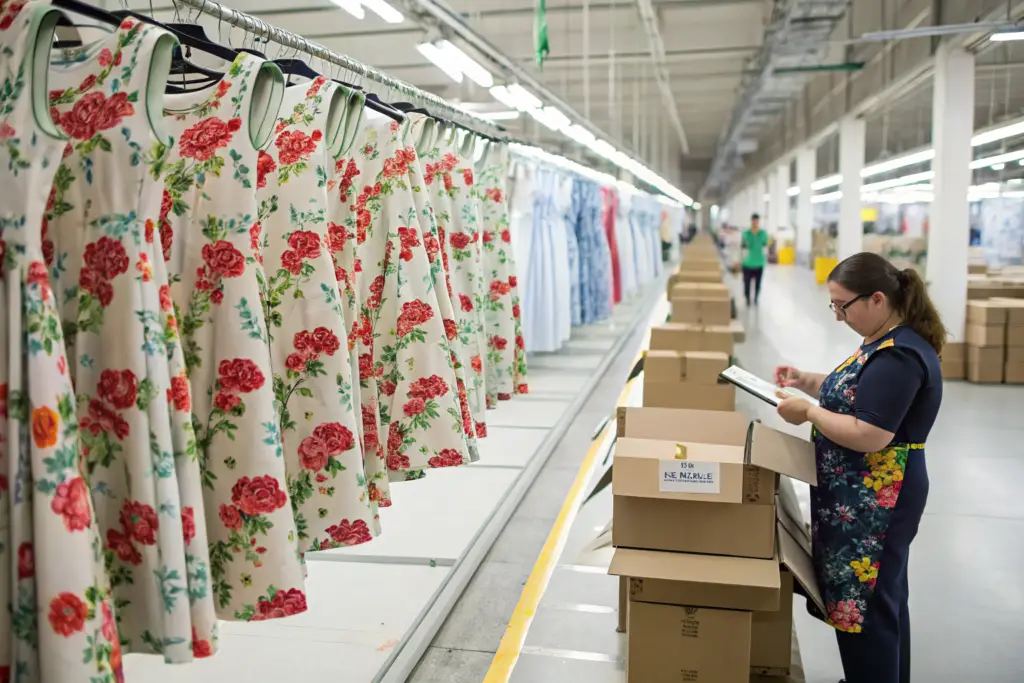
Making one sample is easy. Making 5,000 identical plus-size A-line floral dresses and shipping them on time is the real test. The larger the order, the higher the risk of variation between pieces. The first dress off the line might have a sharp, bright pink flower, while the last one might look dull and washed out if the dye lot changed. At Shanghai Fumao, our infrastructure on our five active production lines is built to handle these high-volume demands while keeping the product exactly as approved.
How Do You Ensure the Floral Print Colors Stay Consistent Across 5,000 Units?
Color drift is the enemy of a big brand launch. If a customer orders online and gets a dress with a dark, moody floral vibe, and her friend buys the same SKU in-store but gets one with bright, sunshine tones, they'll think it's a cheap counterfeit. This happens when the fabric is sourced from different dye lots.
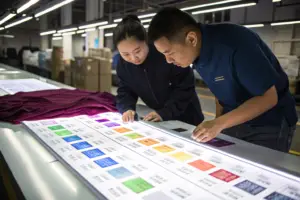
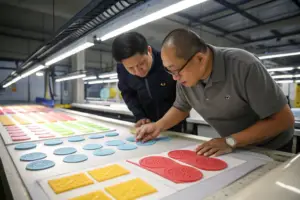
We use a strict spectrophotometer system. When we receive the bulk fabric, we split the rolls into color groups. If a client has a 5,000-unit order, we need about 10,000 meters of printed fabric. That fabric likely comes from three separate dye lots. We don't just mix them. We allocate a specific dye lot to a specific production line. The dresses are packed in sequence. So, if a consumer buys two dresses from the same retail batch, they are an exact match. For a Miami-based brand last summer, we took this one step further. We knew they were selling through a department store that required shade-banding. Our QC team created a shade-band board with three acceptable variances. We put a tiny, discreet "A," "B," or "C" sticker on the internal care label so the store could merchandise the racks by subtle shade. It looked perfect on the floor.
What Quality Checks Prevent Floral Dresses From Bursting at the Seams?
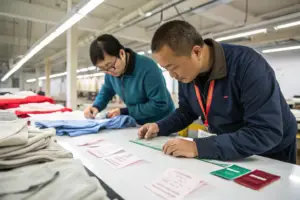
The stretch points on a plus-size dress are under constant tension. The back seam, the armhole, and the zip area take a lot of stress. A-line dresses don't hug the body, but they still need strength in the right places. We perform a 10-point seam strength test using a dynamometer on the first production sample.
We pull the fabric at the back center seam to see how many kilograms of force it takes to break the stitches. For a woven cotton floral dress, we want a minimum of 8 kg of force. If it's lower, we switch to a stronger thread, usually a corespun poly-wrapped thread, or we change the stitch density. I remember a specific failure early in my career that taught me this lesson. We used a standard spun polyester thread on a run of plus-size linen dresses. It had great stitch appearance, but poor tensile strength under the arm. We had five returns because the seam ripped when the wearer reached forward. Now, our default for plus-size woven A-line dresses is a high-tenacity nylon thread on the stress seams. We also enforce a strict skip-stitch detection protocol. A skip stitch on a large floral print is hard to see visually because the print camouflages it. Our Juki machines have an automatic detector that stops the machine if a stitch is missed. It catches the invisible weakness that the human eye misses.
Conclusion
The question "Can Fumao Clothing produce plus-size A-line floral dresses?" has an answer that goes far deeper than a simple yes. It's a commitment to technical fit engineering, precise floral print placement, ethical production, and rock-solid quality control for large volumes. The plus-size market is not just a larger size run. It's a distinct discipline within garment manufacturing. It demands respect for the end consumer's body and a refusal to cut corners.
A beautiful A-line floral dress that fits a size 20W properly doesn't happen by accident. It happens because the armhole was reshaped, the fabric weight was meticulously chosen, the darts were repositioned, and the pattern was checked stitch by stitch under bright, ethical working conditions. A dress that makes a curvy woman feel confident and elegant is the result of hundreds of small, deliberate engineering decisions made on the factory floor.
If you're a brand looking to expand into this space without the fear of fit issues or print distortion, we should talk. You don't have to manage these complex technical details alone. You can reach our Business Director, Elaine, directly at elaine@fumaoclothing.com. She can walk you through our previous work, our pattern blocks, and how we can bring your specific floral dress vision to life in a way that truly fits and flatters.