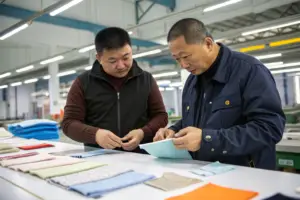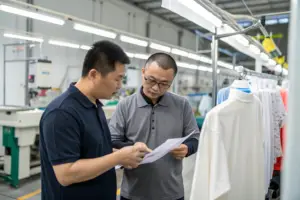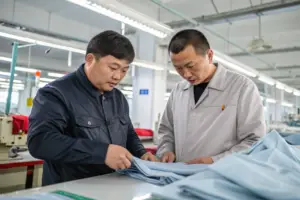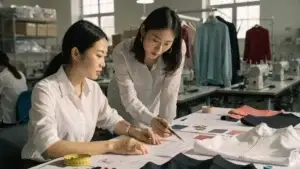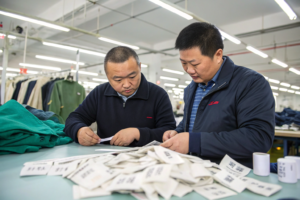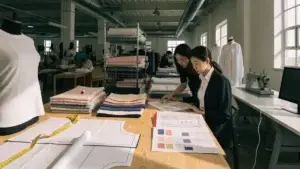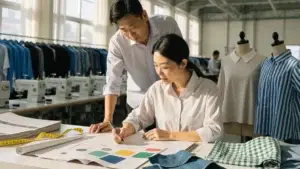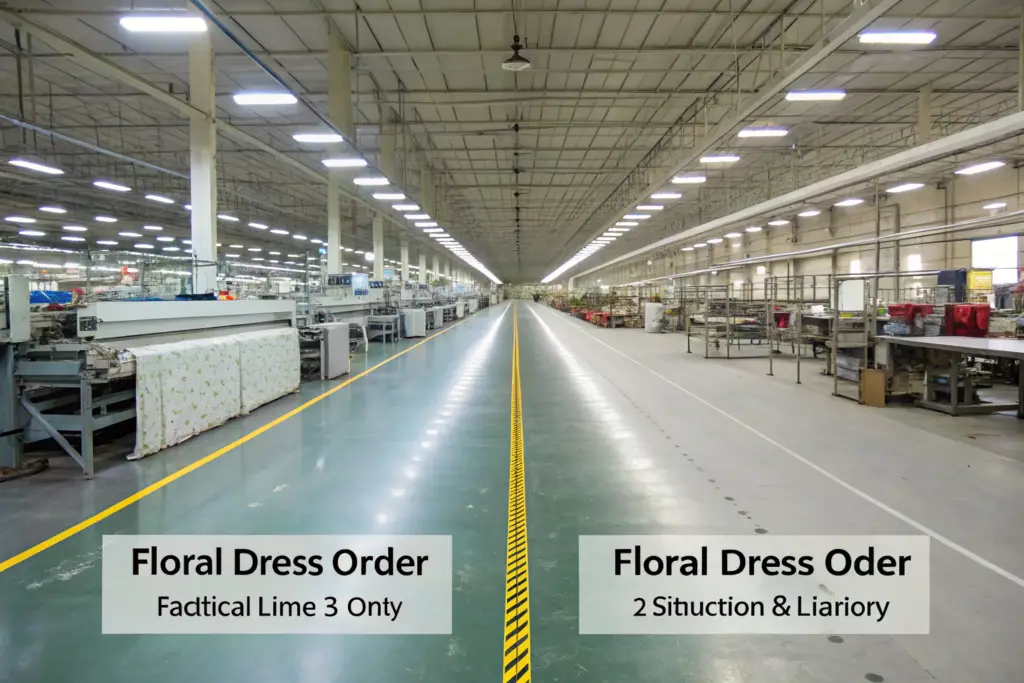
You're comparing two factories for your floral dress order. Factory A boasts 12 production lines and a massive factory floor. Factory B is smaller, with only 3 lines. Your instinct tells you that bigger is better—more lines must mean more capability, more quality control, more reliability. But then you remember a painful experience. Two years ago, you placed a 3,000-unit floral dress order with a giant factory. The samples were perfect. The bulk delivery was a disaster of inconsistent stitching, misaligned prints, and sizing chaos. Your order got lost in their cavernous production system, treated as just another small fish in a very big pond. That experience taught you that the number of production lines isn't a scorecard; it's a strategic indicator of how your order will be treated and engineered.
The number of production lines a factory operates directly affects your floral dress quality not because more is better, but because the specific line count reveals the factory's true business model, its level of production specialization, and the amount of dedicated engineering attention your specific order will receive, with a focused 3-to-5-line factory often delivering more consistent floral print matching, precise stitching, and personalized quality control than a massive multi-line operation.
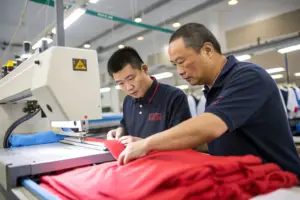
I have seen this misconception cost brands serious money. A factory's production line count is not a horsepower rating. It's a map of their operational philosophy. A 12-line factory is optimized for volume, not for the intricate, detail-sensitive work of a multi-color floral dress with pattern-matching side seams. Your order of 2,000 units is a tiny fraction of their monthly capacity, and it will be slotted into whichever line has a gap in the schedule, often with operators who have never sewn your specific design before. In contrast, a focused factory like Shanghai Fumao, with our 5 dedicated production lines, runs a fundamentally different model. Each line is not a generic sewing chain but a semi-specialized unit with a stable, long-term team. When your floral dress order enters our system, it doesn't disappear into an anonymous crowd of garments. It is assigned to a specific line with a dedicated supervisor who treats your brand's production as a significant, named project. This structural difference ripples through every aspect of quality, from the cutting table to the final inspection.
The Distinct Business Models Behind Different Line Counts
A factory's production line number is the single most honest piece of marketing they have. It tells you who their real customer is before a single word is spoken. I learned to read this signal the hard way. In my early years sourcing for a brand, I walked into a factory with 15 lines. The lobby was marble, the sales team was huge, and the samples were exquisite. I placed a 5,000-unit order for a complex floral wrap dress. What I didn't know was that their core business was 50,000-unit plain t-shirt orders for a global fast-fashion giant. My tiny, complex order was a nuisance. It was run on a line with high turnover operators, with a supervisor who was incentivized purely on pieces-per-hour, not on print matching. The result was a quality level that matched a commodity t-shirt, not a premium dress. A factory's business model is baked into its line structure, and your floral dress order will either be their priority product or their filler work.
The distinct business models behind different line counts separate factories into three clear categories: high-volume commodity producers with 8-plus generic lines, mid-size specialized partners with 3-to-5 focused lines, and sample-room-centric micro-shops with 1-to-2 lines, each with a fundamentally different approach to managing the precision work of floral print matching and delicate fabric handling.
This is not about good factories versus bad factories. It's about fit. The 15-line factory is not a bad factory; it's a phenomenal factory for a 100,000-unit basic t-shirt program. It is a terrible factory for a 2,000-unit floral viscose dress with a matched print at the side seams. The misalignment of business models is the root cause of most quality failures I've been called in to fix. The giant factory's systems are built for speed and repeatability of simple cuts. Their cutting tables are designed for 100-ply lays of cotton jersey, not for delicate, single-ply or low-ply cutting of slippery viscose twill with a precise floral repeat. Their sewing lines are balanced for 60-second cycle times on a basic sleeve hem, not for the 3-minute cycle time required to carefully pin and sew a matched floral pattern. When your complex dress enters their system, it's like trying to run a luxury sedan through a factory built for go-karts. The system fights the product. In contrast, a 5-line factory has designed its entire operation around the complexity you demand. The cutting tables are set up for low-ply, precision work. The lines are balanced for moderate cycle times that allow for craftsmanship. This is the structural reason why the right-sized factory produces a measurably better floral dress.
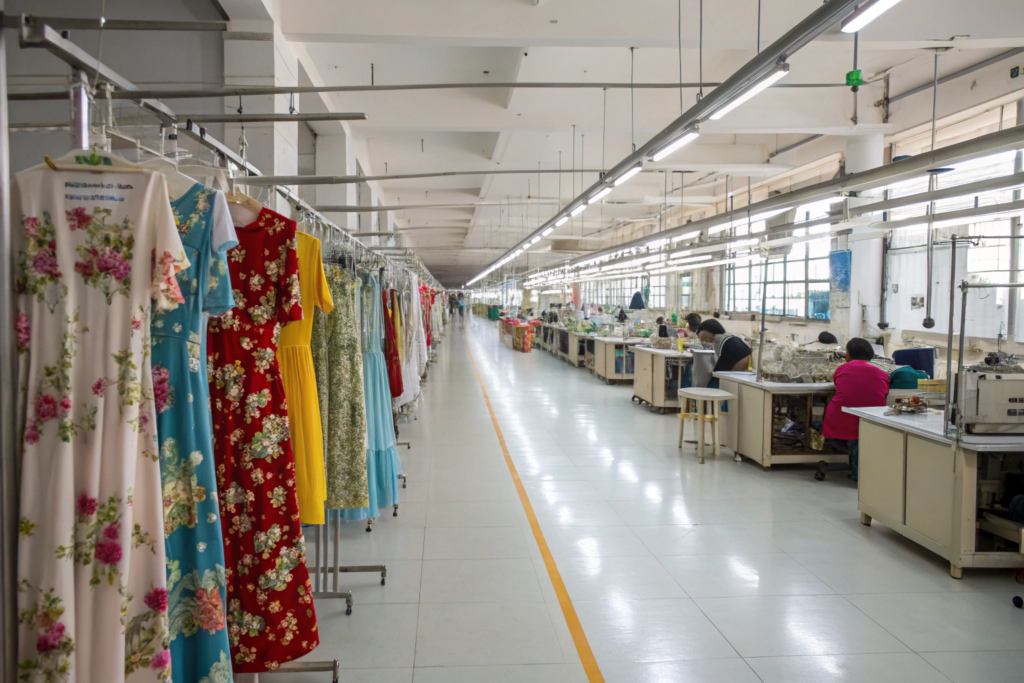
Is a 12-Line Factory an Automatic Indicator of Trustworthiness?
In a word, no. A large factory with many lines has simply made a large capital investment in floor space and machinery. This is a sign of financial backing or long operational history, but it is not a sign of quality control capability for your specific product category. In fact, a massive line count can be a warning sign of what I call "production dilution." A factory running 12 lines simultaneously is managing a massive, chaotic inflow of different fabrics, trims, and designs from dozens of different clients. Their quality control department is stretched across all these concurrent orders. The one QC inspector assigned to your floral dress line is also responsible for checking t-shirts on two other lines and activewear on another.
The real trustworthiness indicator is not line count but line dedication. Ask the factory manager: "Will my order run on a dedicated line for its entire production cycle, or will it be split across multiple lines to fill gaps?" A factory that splits your 3,000-unit floral dress order across three different lines to optimize machine utilization is introducing a massive variability risk. Three different supervisors, three different groups of operators, three slightly different machine calibrations—all producing pieces that will be mixed together at the final assembly. This is how you get a shipment where one sleeve fits perfectly and another sleeve on the same dress size is half an inch shorter. A trustworthy factory, regardless of its total line count, will guarantee that your entire order stays on a single, continuous line from first cut piece to final press. At Shanghai Fumao, our 5-line structure is designed precisely for this. Each line is a self-contained manufacturing cell that takes full ownership of a client's entire order. The line supervisor's name is on the production traveler, and her reputation is tied to that specific shipment's quality.
Why Do Massive Factories Often Struggle With Small, Complex Orders?
The struggle is not about skill; it's about systemic friction. A massive factory's entire incentive structure, from the general manager down to the piece-rate operator, is calibrated for long, uninterrupted runs of simple garments. Profitability in that model comes from minimizing the downtime between identical operations. A small, complex floral dress order is a series of costly interruptions to their smooth flow. The cutting room must stop a 100-ply basic tee lay to set up a delicate 20-ply lay for your viscose floral. The sewing line must be re-balanced, with operators shifting from their familiar, high-speed task to a slower, unfamiliar task. The pressing station must adjust temperature and dwell time for your delicate fabric.
This friction creates a silent, hostile environment for your product. The production planner, under pressure to hit overall factory efficiency targets, will rush your order through these transitions. The setup that should take 30 minutes is squeezed into 10. The operator, who earned a good piece-rate wage on the easy t-shirt, now earns less on your complex dress because she's slower at the unfamiliar task. Her frustration can unconsciously transfer to the garment—a slightly misaligned seam, a less-than-perfect press. The factory's management, at an institutional level, sees your order as a low-margin disruption. This is why the salesperson was charming and the samples were perfect, but the bulk quality is a letdown. The sample room, where your prototype was made, is a craft studio isolated from the production floor's brutal efficiency metrics. The 12-line factory can make you a perfect sample. The question is whether their bulk production system wants to make your dress at all. A focused 5-line factory like Shanghai Fumao has the opposite incentive. Your complex floral dress order is our bread-and-butter product. Our entire system is calibrated for it. The operators are skilled at this exact type of work, and their piece-rate is structured around the realistic cycle times these garments demand.
Line Specialization and Its Direct Impact on Print Matching
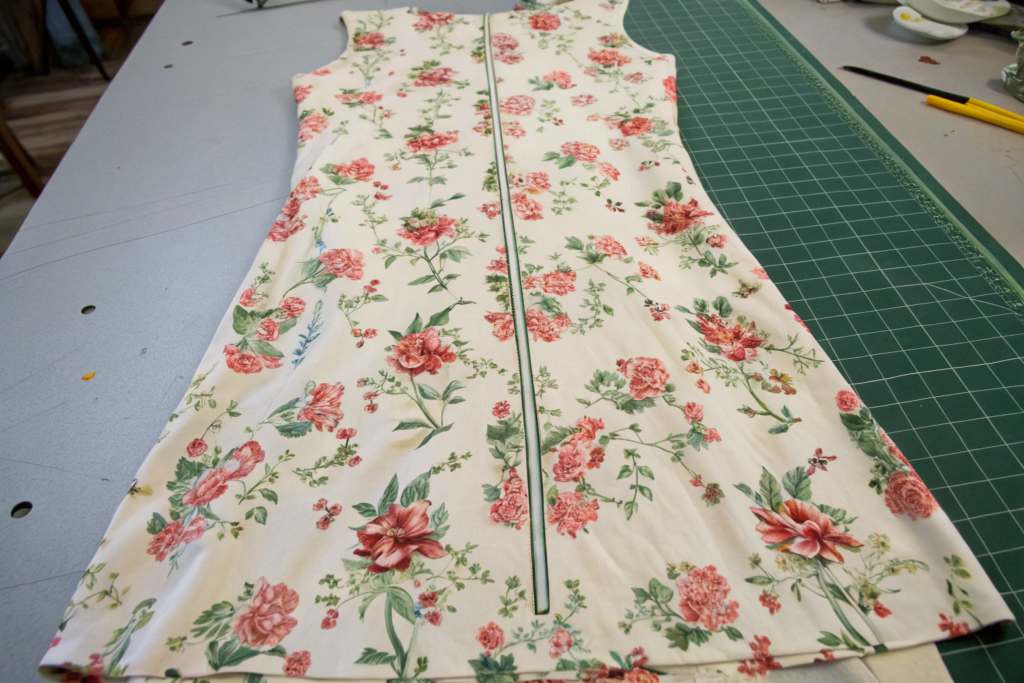
Floral print matching at the side seams is the ultimate test of a factory's line organization. This is not a task that a generic sewing operator can perform consistently. It requires a trained eye, a specific machine setup, and a cutting-room system that delivers pre-aligned pieces. In a massive, unspecialized factory, the operator sewing the side seam receives a bundle of cut front and back panels. The floral print on those panels was cut by a high-speed electric knife slicing through a 50-ply lay. The top layer shifted slightly from the bottom layer during the cut, so the print placement is already mismatched by a quarter-inch before the operator even touches the fabric. The operator, incentivized purely by speed, does not have the time or the training to ease and adjust the mismatched print. She sews the seam straight, and the visual break in the floral pattern is jarringly visible on the finished dress.
Line specialization directly impacts floral print matching by transforming the production line into a dedicated, print-focused cell where the cutting team uses low-ply, notch-indexed lays, and the sewing operators are permanently trained on the specific hand-feeding techniques required to achieve a near-invisible pattern join at every side seam, a system that is impossible to maintain on a generic, multi-product line.
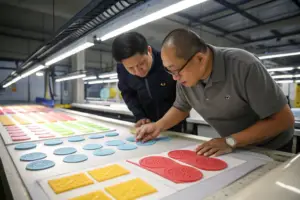
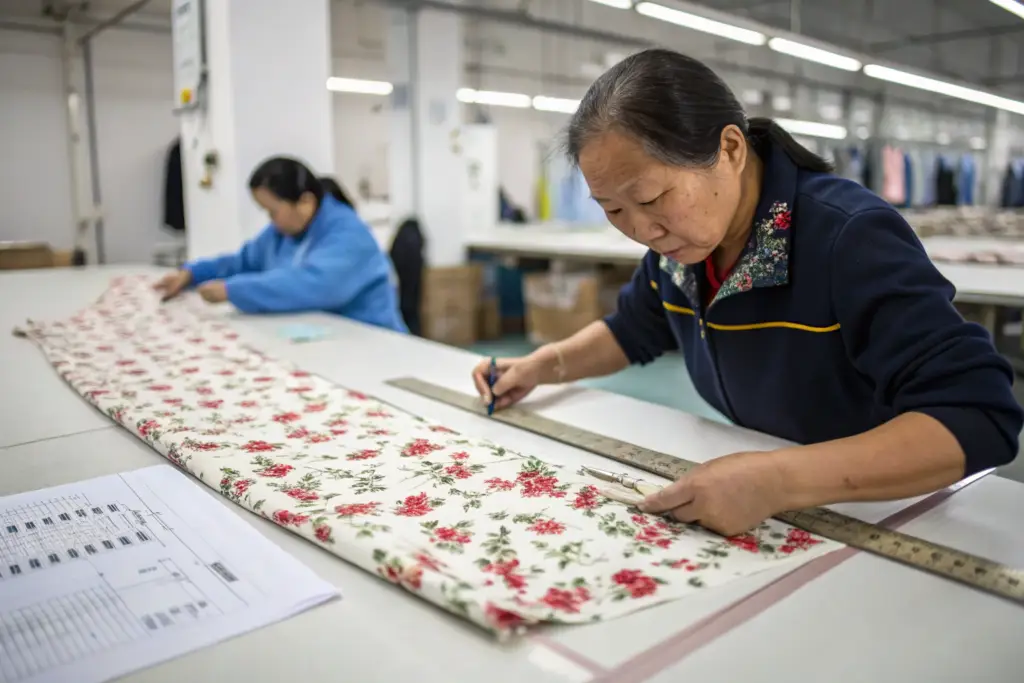
At Shanghai Fumao, when a floral dress program enters one of our 5 lines, that line is temporarily but completely reconfigured around the print. The cutting team for that line switches to a "print-first" cutting protocol. Instead of a high-speed, high-ply lay, they use a low-ply, often single-ply, spread with a transparent marker overlay. This overlay allows the cutter to physically see the floral repeat through the pattern piece and adjust the placement of the cutting die to ensure the critical motif—the center of a rose, the edge of a leaf—is at the exact same position on every single cut piece. The pieces are then bundled with a notch system. Not just a standard seam notch, but a tiny, specific "print match notch" cut precisely at the point where the floral repeat crosses the seam line. The sewing operator on the dedicated line then uses this notch as a blind, foolproof guide. She doesn't have to judge the visual print; she simply matches the notches, and the print aligns perfectly. This system requires a line that is not being rushed with five different product types in a single shift. It requires a stable, dedicated team and a supervisor who audits the print match on every tenth garment, not just at the end of the day. This level of specialization is the direct, tangible quality dividend of a focused production line structure.
How Do Dedicated Lines Improve Floral Repeat Alignment?
The improvement is not marginal; it's the difference between a visible, chaotic break in the pattern and a clean, continuous visual flow. The enemy of floral repeat alignment is cumulative error. A slight misalignment at the cutting stage of 2 millimeters becomes a 5-millimeter misalignment at the sewing stage due to fabric handling, which becomes a visually unmissable 1-centimeter pattern break on the finished garment. A dedicated line breaks this error chain at every link.
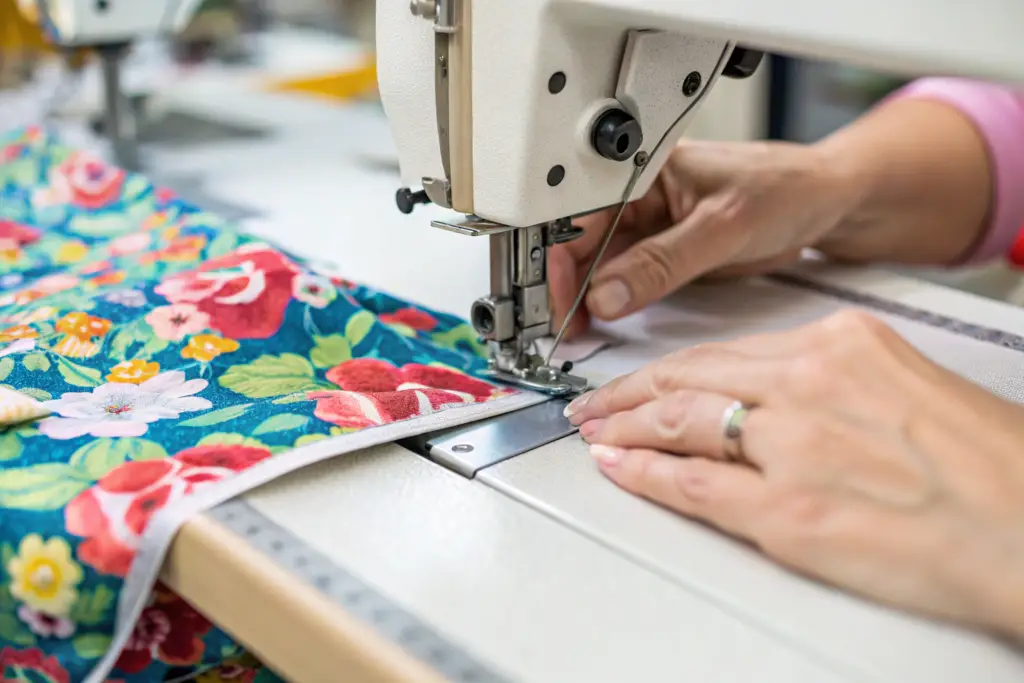
The first link is the fabric spreading table. On a dedicated line, the spreading machine's speed and tension are specifically calibrated for the exact weight and slipperiness of your floral viscose or cotton poplin. A generic line uses a standard tension setting, which can over-stretch a delicate fabric, distorting the floral repeat before the knife even touches it. The second link is the sewing machine's feed system. A dedicated line's machines are equipped with a "walking foot" or a "needle-feed" mechanism. This advanced feeding system moves both the top and bottom layers of fabric under the needle at the exact same rate, preventing the differential feeding that causes one layer of a matched print to creep ahead of the other. A generic line uses standard drop-feed machines, which are fine for solid fabrics but create a constant, subtle drift on slippery printed fabrics. The third link is the operator's muscle memory. An operator who sews floral print side seams for an entire week develops a tactile sense for the fabric's behavior. Her fingers learn the exact pressure needed to guide the two layers without pulling. This human skill, built through repetition on a dedicated line, cannot be replicated by an operator who switches between denim, jersey, and viscose floral in the same day.
Can a Single Line Handle Multiple Floral Print Scales Simultaneously?
This is a dangerous trap that many factories fall into, and your order's quality depends on the answer being "no, not without a complete line reset." A delicate, small-scale Liberty-style floral print with a 2-inch repeat and a bold, large-scale tropical floral print with a 12-inch repeat are two fundamentally different manufacturing problems. They require different cutting strategies, different seam allowances, and different operator visual rhythms. If a single production line tries to run both these dresses simultaneously, the quality of both will suffer. The cutting team will be confused by the different marker overlays. The sewing operators will struggle to mentally switch between the fine detail of the small print and the large blocks of color on the big print.
A professionally managed production line treats each print scale as a distinct production batch with a formal changeover process. Between the small-print and large-print batches, the line supervisor conducts a "line clearance." All cut pieces, markers, and trim from the previous batch are physically removed. The machines are re-calibrated, the cutting table is reset with the new transparent marker, and the operators receive a 5-minute briefing on the specific matching points for the new print. This disciplined batch processing is only possible in a factory where the production planner respects the complexity of the work and doesn't pressure the line to mix orders. In a massive, overbooked factory, the pressure to "just run it, they're both floral dresses" is intense. The result is a shipment where both the small and large print dresses have subtle, disappointing misalignments. At Shanghai Fumao, our 5-line model allows us to physically separate these different print scales onto different lines or to run them in clean, sequential batches on the same line, protecting the integrity of each.
How Line Count Determines Quality Control Attention Span
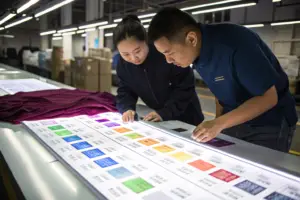
Quality control is not a department; it's a span of attention. A QC inspector is a human being with a finite capacity for visual focus and concentration. In a 12-line factory, a single QC inspector is often responsible for monitoring the output of 3 or 4 concurrently running lines. With 40 operators per line, that's 120 to 160 operators' worth of garments flowing past a single pair of eyes. The math is brutal and unignorable. If the inspector spends just one minute checking each garment, and the lines produce 150 garments per hour, they are already behind schedule by the second hour of the shift. The only way to cope is to sample-check—to pull one garment every thirty or fifty and give the rest a cursory glance. This is not a failing of the individual inspector; it's a systemic failure of the factory's quality architecture. The critical, subtle flaws in a floral dress—a slight print misalignment, a color shading difference between panels, a loose thread inside a French seam—require 90 to 120 seconds of focused inspection per garment. A QC system built on sampling cannot catch these consistent, small failures.
Line count determines quality control attention span by setting a mathematical limit on the inspector-to-operator ratio, where a focused 3-to-5-line factory can sustain a 1:30 or 1:40 ratio allowing for 100% garment inspection, while a 12-line factory forces a diluted ratio that makes thorough, individual inspection a physical impossibility, reducing quality assurance to a statistical gamble.
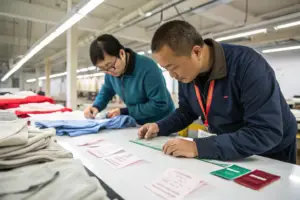
At Shanghai Fumao, I have deliberately designed our quality system around a simple, non-negotiable principle: 100% inspection of every floral dress. This means every single garment that leaves our five lines is physically picked up, turned inside out, measured, and visually scanned under calibrated lighting before it is cleared for packing. This is only possible because our 5-line structure allows for a dedicated end-of-line QC inspector for each line, plus a roving in-line auditor who checks work-in-progress at critical stations like the side seam and the neck binding. The math works because we have not overextended our production capacity beyond our quality capacity. When a factory adds an 8th, 10th, or 12th line without proportionally expanding its QC team and its physical inspection space, it is making a deliberate, strategic choice to prioritize output volume over verified quality. Your floral dress order is the direct casualty of that choice.
What Is an Acceptable Inspector-to-Line Ratio for Floral Garments?
For a garment with the visual and structural complexity of a floral dress—with its print matching, delicate fabric, and often intricate modest design details—the acceptable ratio is rigid and unforgiving. My operational rule, developed through years of trial and costly error, is this: one dedicated end-of-line QC inspector per production line, plus one roving in-line QC auditor for every two lines. This translates to a 1.5:1 ratio for a single line, and a 3:2 or 4:3 ratio for a small cluster of lines. This staffing level allows each end-of-line inspector to handle the output of about 25 to 30 operators, a manageable flow that permits a 90-second inspection per garment.
Any ratio higher than one inspector for every two lines, or roughly one inspector for 60-plus operators, is a red flag for a floral dress program. At that ratio, the inspector is a firefighter, not a quality builder. They are scanning for catastrophic, shipment-stopping defects—a ripped seam, a massive stain—and are forced to ignore the subtle, customer-return-causing defects like a slightly puckered collar or a 0.5 cm hem variation. These are the defects that erode your brand's reputation silently. Furthermore, the roving in-line auditor is non-negotiable for floral garments. This person doesn't wait for a finished dress. They patrol the line, pulling garments from the operator's bundle right after the print-matching seam is sewn, immediately verifying the alignment. They catch the operator whose machine tension has drifted before she sews 50 more defective pieces. This proactive quality-building function is the first thing to be eliminated in a massive factory chasing volume.
How Does a Smaller Factory Create an Unrushed Inspection Environment?
The physical layout of a 5-line factory naturally creates a calmer, more deliberate inspection zone. The inspection stations are not squeezed into a noisy, chaotic corner of a 500-machine floor. They are integrated, quiet, and well-lit spaces located directly at the end of each dedicated line. The inspector's entire world is the output of her one line. She knows the specific operators. She knows that Operator 15 tends to rush the sleeve hem, and she checks that specific point with extra care on garments from that station. This personalized, relationship-based quality control is a powerful, invisible asset. It's a human system, not just a procedural one.
The unrushed environment also allows for proper measurement. A floral dress, especially a modest A-line style with a high neck and specific sleeve length, has multiple critical measurement points. Checking these properly—laying the garment flat on a calibrated measurement table, using a certified metal ruler, not a stretched fabric tape—takes time. In a rushed, high-volume factory, the inspector is tempted to skip the table and just hold the garment up for a visual guess. This is how sizing inconsistencies escape into the shipment. In our 5-line setup, every inspection station is a permanent, dedicated measurement station with a smooth, non-slip tabletop and an overhead D65 daylight-simulating lamp. The inspector has the time and the physical space to perform the measurement ritual correctly, every time. This physical, unhurried space is a direct consequence of the factory's line count. A smaller, focused factory can afford to dedicate square footage to quality. A massive factory is under constant pressure to convert every spare square foot into another sewing machine.
The Real Financial Risk of Choosing a Line Count on Prestige Alone
Choosing a factory based on the prestige of a massive, multi-line operation is a financial gamble with hidden, compounding costs. The initial FOB price from the giant factory might look 8% to 12% cheaper on the quote sheet. They leverage massive economies of scale in raw material purchasing, and they can squeeze their piece-rate labor costs. That cheap quote is the bait. The trap is the downstream cost of their systemic quality inattention. I tracked a specific case with a brand partner who moved a floral midi dress program to a 10-line factory to save $0.85 per unit on a 4,000-unit order. The upfront saving was $3,400. The final cost, after a 22% customer return rate due to inconsistent sizing and print misalignment, the air-freighting of 500 replacement units, and the lost wholesale accounts from two boutiques that dropped the brand, was a staggering, brand-threatening $28,000. The cheap line count cost him nearly ten times what he thought he was saving.
The real financial risk of choosing a line count on prestige alone is a false economy where a superficially lower FOB price from a high-volume factory is systematically offset by the hidden costs of higher defect rates, brand-damaging customer returns, chargebacks from retailers, and the lost opportunity of unsellable inventory, costs that a focused factory with a lower defect rate inherently avoids.
This is the conversation I have with every new client who is tempted by a cheaper quote from a factory that is clearly too big for their order profile. The per-unit cost of a garment is not the FOB price. It is the FOB price plus the total cost of quality failure divided by the number of sellable units. A factory that delivers 4,000 dresses with a 5% defect-and-return rate gives you 3,800 sellable units. A factory that delivers the same order with a 0.8% defect rate gives you 3,968 sellable units. The effective cost per sellable unit flips the equation. The focused factory, even at a slightly higher FOB, is cheaper because it doesn't carry the hidden tax of failure. Additionally, the brand reputation cost is real and brutal but hard to quantify. A customer who receives a poorly made floral dress with a mismatched print doesn't just return the dress; she tells her friends, she leaves a one-star review, and she unsubscribes from your email list. The customer acquisition cost to replace her is far higher than any per-unit saving on the garment. The massive factory's business model externalizes these costs onto you, the brand owner. The focused factory's model internalizes them through its quality system.
What Is the True Cost of a Production Line’s Defect Rate?
A defect rate is not just a percentage; it's a multiplier that silently inflates your entire cost structure. A 1% defect rate on a single style sounds manageable. But when you map that 1% across your entire operational workflow, the financial damage is insidious. The 1% represents the garments that failed a spot check and were caught by your 3PL or your own team. It does not account for the garments that passed a rushed factory QC, made it into your customer's hands, and triggered a return. The actual customer-perceived defect rate is often 1.5 to 2 times the factory's internal reported rate.
Let's break down the true cost components of a 5% customer return rate driven by production defects on a 5,000-unit order at a $38 wholesale price:
- Direct Refund Cost: 250 units x $38 = $9,500 in lost, unrecoverable revenue.
- Outbound Shipping Loss: The cost of shipping the original 250 defective units to the customer is lost, averaging $6 per order, or $1,500.
- Return Shipping Cost: If you provide a free return label, that's another $6 per return, or $1,500.
- Processing and Inspection Labor: Your warehouse team spends 10 minutes inspecting and re-bagging each returned unit at a $18/hour labor cost. 250 units x $3 = $750.
- Liquidation Loss: A returned floral dress with a visible defect cannot be resold as new. It is liquidated to an off-price channel at a 70% markdown, recovering only $11.40 per unit instead of $38. The loss on 250 units is an additional $6,650.
The total real, hard-dollar loss from that 5% defect rate is nearly $20,000. This is not a theoretical risk; it's a predictable, calculable cost of choosing a factory whose production line structure cannot deliver a consistent 0.8% or lower customer-return rate. A focused factory like Shanghai Fumao designs its entire 5-line operation to minimize this specific multiplier, knowing that our clients' profitability depends on it.
Why Does a 5-Line Factory Offer Lower Total Inventory Risk?
Inventory risk is the silent killer of apparel brand cash flow. The risk is not just in buying the inventory; it's in the potential for that inventory to become unsellable. A massive factory with a long, rigid production schedule forces you into a high-risk inventory position. Your 3,000-unit order must be produced in one monolithic block, often with a lead time that requires you to commit to the buy months in advance. If the market shifts slightly, or if a competitor drops a similar dress, you are stuck with 3,000 units of a now-risky style.
A 5-line factory offers a structural advantage in inventory risk management: production flexibility. Because each line is a self-contained unit, we can run smaller, more frequent production batches for our brand partners. Instead of one shipment of 3,000 units, we can structure the program as three shipments of 1,000 units, spaced 4 weeks apart. This is a game-changer for a brand's financial health. It allows the brand to test the initial 1,000-unit sell-through, gather real customer feedback on fit and color preference, and then adjust the second 1,000-unit batch accordingly—perhaps shifting the size curve or slightly tweaking the print colorway. This "open-to-buy" flexibility drastically reduces the risk of a massive, end-of-season markdown on a failed style. A 12-line factory, with its massive minimum order quantities and rigid production scheduling, simply cannot offer this agile, inventory-protecting production model. The right-sized factory becomes not just a manufacturer, but a strategic partner in managing your brand's cash flow and inventory health.
Conclusion
The number of production lines in a factory is not a quality rating. It is a strategic indicator of who the factory is built to serve and how your floral dress order will be treated. We have seen that a massive, multi-line factory is optimized for high-volume commodity production, where small, complex orders suffer from systemic neglect and diluted quality attention. We have dissected the precise engineering of print matching, a craft that demands a dedicated, specialized line with low-ply cutting and trained operator muscle memory, an impossible demand in a generic, high-churn production environment. We have exposed the mathematical reality of quality control, where an acceptable inspector-to-line ratio is only sustainable in a focused factory. And we have laid bare the brutal, compounding financial risk, where a superficially cheaper FOB price from a giant factory is devoured by the hidden costs of defects, returns, and brand damage.
Choosing a manufacturing partner is ultimately a choice about alignment. Your floral dress, with its delicate fabric, its complex print, and its demanding modest fit requirements, deserves a production environment that is built for it. It deserves a dedicated line where the cutting team uses print-first markers, where the sewing operators build tactile expertise over a focused production week, and where the QC inspector knows the specific pressure points of your design. This is not a luxury; it is the minimum viable system for consistent quality.
At Shanghai Fumao, our 5 production lines are not a compromise on scale; they are a deliberate design for precision. We have built our factory to be the ideal production partner for brands that care deeply about the visible, tactile quality of their garments. If your brand has been burned by the false promise of a massive factory, or if you are looking for a production partner where your order is a named priority, not a faceless PO number, I invite you to start a direct conversation with us. To explore how our focused line structure can manufacture your next floral dress program with the print matching, stitch quality, and delivery reliability your brand demands, please contact our Business Director, Elaine, at elaine@fumaoclothing.com. Let's put your order on a dedicated line that treats it as the premium product it is.