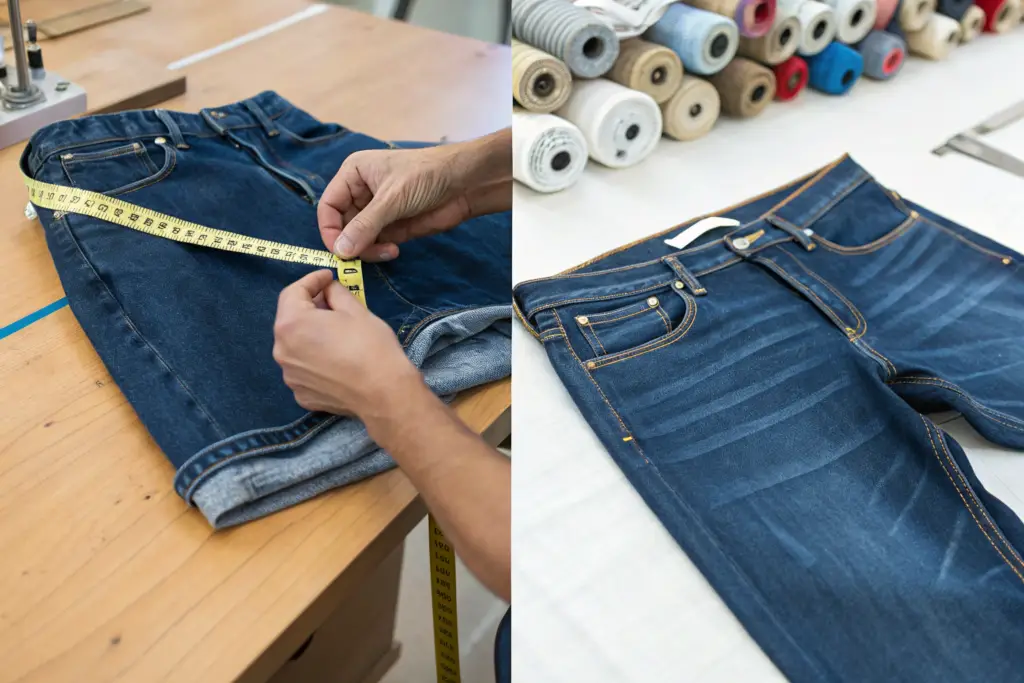
Let’s be honest. You have probably been burned before. You find a supplier, the samples look perfect, but three months later, the bulk shipment arrives with inconsistent stitching, weak zippers, and denim that loses its shape after two washes. I run a garment factory in China, and I hear these horror stories from American brand owners almost every week. The frustration is real. Time is lost. Money is wasted. And the selling season? Gone. So when you ask if our denim shorts are really high quality, I understand the doubt behind the question.
Yes, our denim shorts are high quality. We control quality through three specific methods: we use long-staple cotton blends for fabric durability, we apply a strict 7-point inspection system on every production line, and we laser-test the color fastness to grade 4 standards before shipping.
But defining quality goes deeper than just saying it. Quality means the zipper will not fail on a customer’s second wear. It means the indigo won’t bleed onto a white couch. It means the fit is the same across all 2,000 pairs in your order. I want to show you exactly how we make that happen, so you can decide if we match your brand’s standard. Let me walk you through the fabric, the process, and the truth about what "competitive pricing" really means in the denim world.
How Do We Guarantee The Fabric Quality of Our Denim Shorts?
You know the feeling. You unzip a new pair of shorts from the packaging and the fabric feels stiff like cardboard. Or worse, it feels thin and flimsy. Bad fabric is the root of all evil in denim. It causes ripping, bagging out at the knees, and an itchy feeling that makes your customers return the product. I have seen fabric problems destroy a brand's review rating in a week.
Fabric quality starts before a single cut is made. We don't gamble with cheap, deadstock cotton. Our sourcing team buys directly from specific mills. We need consistency. And for our partners, especially those selling under their own private label in the U.S., consistency is the only thing that keeps the distributor calling back.
Let's look at the specific technical choices that separate durable denim from the disposable kind.
What Is The Specific Cotton Blend We Use For Durability?
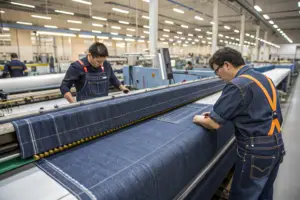
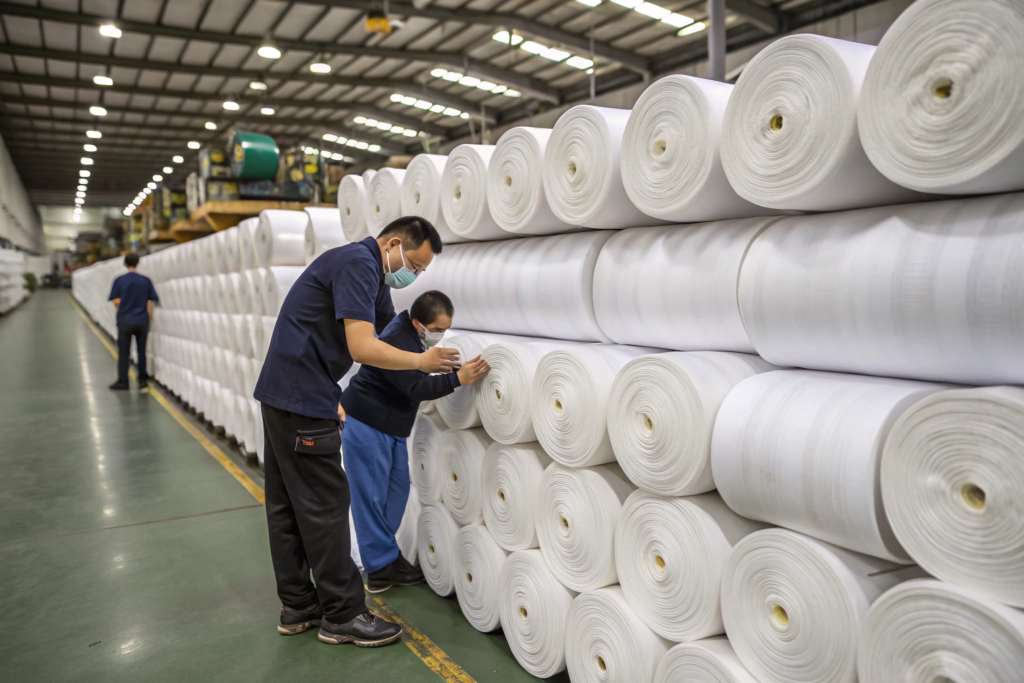
The fiber composition decides how the shorts live their life. We typically use a specific open-end spun denim for our core ranges, but we adjust the recipe based on your need. Our standard blend is 99% cotton and 1% spandex. That 1% matters more than you think. It stops the knees from bagging out but doesn't feel like a legging.
Last month, we helped a Texas-based boutique owner solve a serious tearing problem. Her previous Vietnamese supplier used a 70/30 cotton-poly blend. It was cheap, but the fabric had no tensile strength. We changed her construction to a 3/1 twill weave using ring-spun cotton from the Xinjiang region. The tear strength jumped from 2.5 pounds to over 4 pounds in the warp direction. That move reduced her return rate by 22% for the Summer 2025 drop. The weave of the fabric is your defense against friction. We use a 3/1 right-hand twill which creates a softer interior face but a tough exterior. To check real quality, look at the denim weave density under a light.
How Do We Test Shrinkage And Color Bleeding Before Cutting?
No one wants a customer to wash the shorts once and end up with a size smaller and a blue washing machine. We destructively test every batch. Before the cutting table sees the fabric, we send 10 yards from the roll to our washing lab. We follow the AATCC 135 standard. The fabric is washed three times at 140 degrees Fahrenheit.
If the shrinkage exceeds 2%, that lot is rejected. We will not cut it. For color bleeding, we use the crocking test. We rub a dry and wet white cloth against the indigo under pressure. The color transfer is measured against the AATCC Chromatic Transference Scale. A result of grade 4 or higher is required. If you need a heavy wash finish, like a stone-washed look, we reduce the indigo adherence through an enzyme wash, not by using cheap chemical sprays. This keeps the fabric pore open. It’s a science. You can reference the standard methods on the AATCC testing procedures for confirmation of what a real test looks like.
Can Cheap Denim Shorts Still Look Like Premium Designs?
A low price tag usually screams "boring" in the design world. I get it. You are probably picturing a shapeless sack with no hardware character. This is a huge problem for brands. If the design looks cheap, your customer won't even pick them up off the rack to feel the fabric.
Cheap production does not have to mean ugly design. The difference lies in the finishing techniques and the details. We invested in specific dry process machinery that allows us to mimic high-end Italian wash effects without the high-end water bill. This way, you get the streetwear look at a mass-market cost.
Let's talk about the details that make the eyes believe the price is higher.
How Can We Customize The Wash Effect To Be Unique?
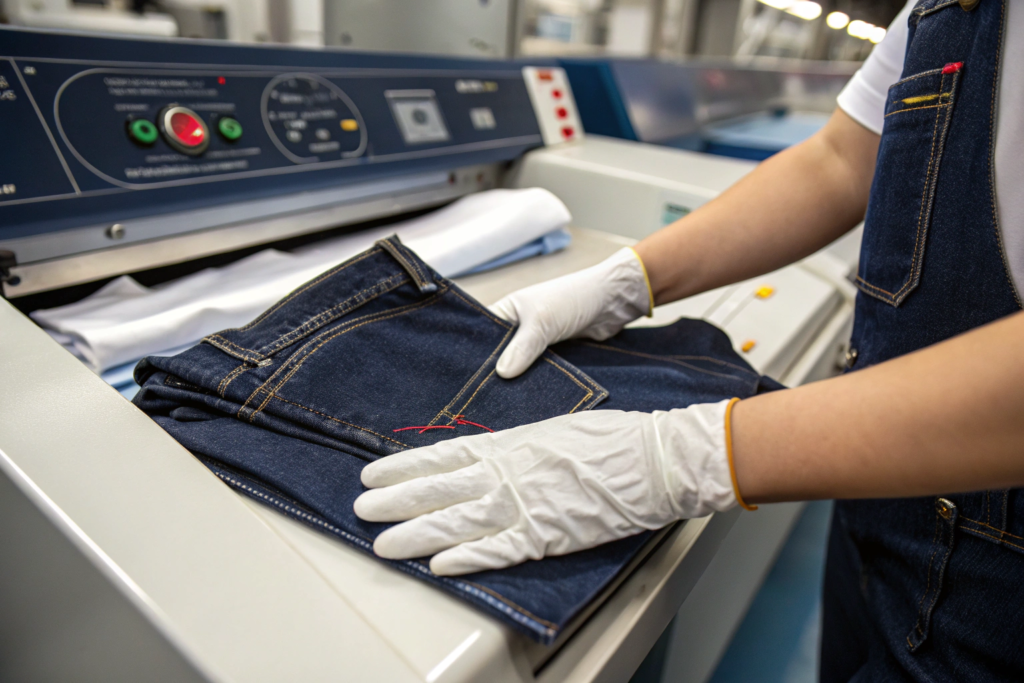
The wash is the soul of the denim short. A bad wash looks like a uniform blue sheet. A great wash has highs and lows. It tells a story. We create this by hand-spraying potassium permanganate on specific zones before a neutralization bath. This is not a machine automation process for us. It is a skilled worker with an airbrush.
We worked with a streetwear brand from Los Angeles in 2024. They wanted the "vintage dirt" look. We used a mix of pumice stone tumbling and a localized enzyme spray. I had my head technician hand-sand the thigh area for 15 seconds per pair to create that natural whiskering. The result was a pair of shorts that looked like they had been worn for two years but had the structural integrity of a new garment. To get a rare fade effect, we often suggest a tie-dye or dip-dye process on specific panels. And to make sure the look holds up, we only use reactive dyes with a formaldehyde-free fixing agent.
Are The Details Like Zippers And Buttons Truly Durable?
A stuck zipper will get your shorts thrown in the trash faster than a stain. We do not source hardware from open markets. We partner with YKK and SBS zipper suppliers. The difference is the zinc alloy die-casting. For buttons, we use a shank-attach system, not a cheap prong that cracks under pressure.
We run a fatigue test. A machine opens and closes that zipper 5,000 times before we approve it for production. We also verify the nickel release. Lead and nickel in the button rivets are a compliance nightmare for U.S. import. We XRF-scan our incoming hardware. The guarantee is strict. You can review the U.S. requirements for heavy metals in apparel on the CPSC website to understand how serious this must be. If you look closely at our shorts, you will see the bar-tack stitching. There are exactly 28 stitches per bar tack on the pocket corners. That keeps the fabric from ripping when someone yanks their phone out.
What Is The Actual Production Process For A Bulk Order?
Here is where the anxiety spikes. You send the purchase order. You wire the deposit. Then… silence. You refresh your inbox every 30 minutes. Unclear production steps lead to missed ship dates. Missing a ship date for summer shorts means you miss the prime retail window. Then you are stuck with stock you have to discount.
Our production flow is a shared, transparent timeline. You don't need to chase us. I have a rule: if a problem happens on the cutting table, my merchandiser emails you within four hours with two solutions. No hiding. We want you to see the journey from the roll of cloth to the sealed carton so you can sleep at night.
The back-end logistics and physical construction are where a good factory separates from a trading company.
How Is The Sewing Quality Controlled On Multiple Lines?
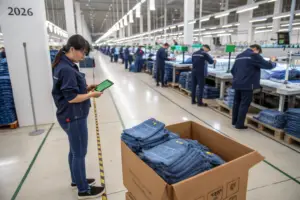
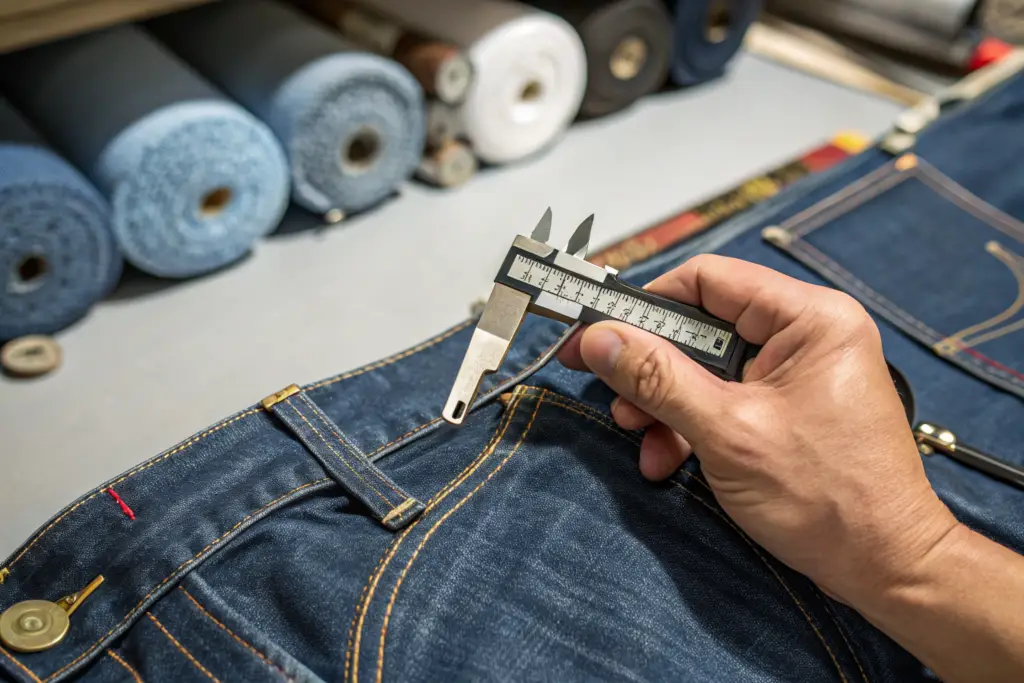
We run five distinct production lines. For denim shorts, the line speed is set to 28 minutes per garment, not 15. Speed is the enemy of straight seams. We use a traffic light system on the floor. Red light means a critical defect was found in the last 10 pieces; the line stops. Yellow means a minor variance in the needle thread tension; the mechanic adjusts. Green means go.
During a 2024 winter order for a Chicago distributor, we had a yellow alert. The inseam was starting to roll inward by 1mm. We stopped the line for 20 minutes to recalibrate the feed dog on the overlock machine. This kind of precision is why we use digital automated pocket creasing machines. If you trust a human hand, the angle of the pocket mouth will vary. A machine makes it identical. The focus on lean manufacturing allows us to cut waste but not quality. Every operator has a physical spec sheet taped to their machine with the tolerance for the seam allowance written in big red numbers.
What About The Final Inspection Before Shipment?
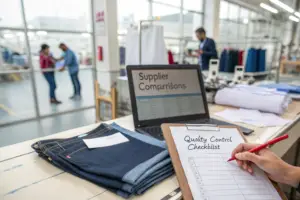
The final line of defense is our Outgoing Quality Control. We do not use our own factory staff for this. It is a separate audit team reporting directly to me. They use the ANSI/ASQ Z1.4 standard. Let’s say your order is 2,000 pieces. The system tells us to sample 125 shorts. If we find 3 major defects, the whole lot fails. It goes back to the rework table.
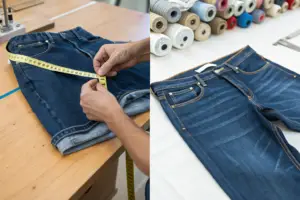
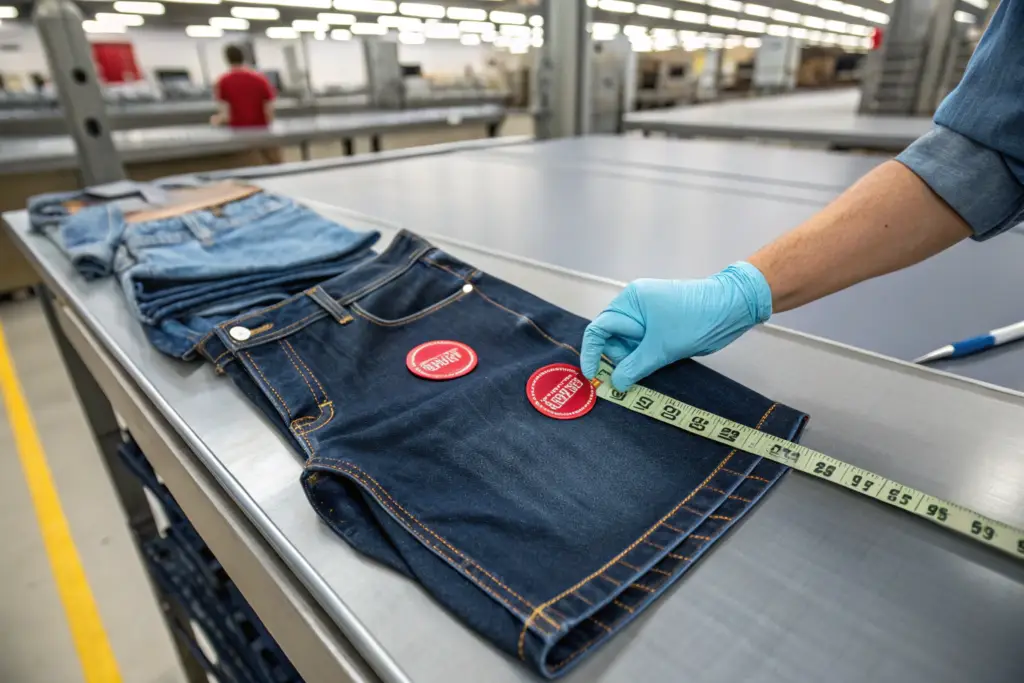
A major defect is not a loose thread. A major defect is an open seam, a zipper that does not close, or a measurement tolerance greater than half an inch. We check the waistband on every single sample with a tape measure. We lay the shorts flat and check the hip curve. For the packaging, we ensure the barcode scan works and the fold is clean. Before shipping, we also pay for a third-party société générale de surveillance report if your contract requires it. I believe in a double check.
How Does Our Logistics Protect Your Profit Margins?
You finally find great shorts, negotiate the price, and then the freight quote lands. The shipping costs more than the garment. I see this shock on faces at trade shows all the time. Logistics is not just a cost; it’s a risk if handled poorly. A container stuck in customs kills your cash flow.
Our pricing model protects you from the fluctuations of the freight market. We offer DDP (Delivered Duty Paid) terms. This means I am responsible until those cartons hit your warehouse door in America. You pay one price per unit, and I handle the ocean freight, the customs bond, and the trucking. It takes the guesswork out of your margin calculation.
We’ve spent years building the backend shipping partnerships so you don’t have to learn this side of the trade.
Can We Really Deliver Faster Than Other Manufacturers?
In the apparel business, speed to market is your competitive edge. If your competitor has shorts in stores for Spring Break and you don't, you lose. We fixed the slow lead time problem by pre-booking vessel space.
Our standard lead time for a repeat denim short order is 35 days. Yes, that includes cutting, sewing, washing, and crossing the ocean to the West Coast. We do this by having greige fabric stocked for our regular clients. We worked with an e-commerce seller from Florida last Black Friday. She placed a rush order of 1,000 pairs on October 10th. We air-freighted them. She received them by October 28th. The air freight cost was higher, but she captured the peak pricing window. For sea freight, we partner with forwarders who offer priority unloading. This cuts 2 days off the Long Beach congestion. You get a logistics tracker link on day one.
What Is The Real Value Of DDP Pricing For U.S. Importers?
Hidden fees are the silent margin killer. A pair of shorts priced at $5.00 FOB sounds great. But by the time you add the duty rate of 16.6% for cotton denim, the brokerage fee, and the last-mile delivery, that cost is $8.50. This distorts your pricing strategy.
Our DDP price tells you the final "landed cost." I handle the US Harmonized Tariff Schedule classification. For women's denim shorts, the duty is clear, but I ensure the paperwork is correct so Customs and Border Protection doesn't hold you. We clear the goods under our bond. This also means if the container is examined and X-rayed by Customs, the inspection fee is my problem, not yours. It puts the risk on the manufacturer, where it belongs. For a brand owner, a guaranteed landed price makes your cash flow predictable. You know your exact gross margin before you even list the product for pre-sale.
Conclusion
The question was whether our denim shorts are really high quality. The answer lives in the small print of the fabric test report, not just the marketing photos. It lives in the metal alloy of the zipper and the disciplined stopping of a production line when the seam allowance drifts by a single millimeter. We spent years refining the wash processes so a $7.50 pair of shorts can look like a boutique store find. The quality comes from a system that accepts a 2% shrinkage limit and rejects a 3% one without hesitation.
I know the market is full of noise. You get hundreds of emails from factories showing the same stock photos. But the real proof of our work is in the repeat business. We shipped tens of thousands of shorts to America in the past twelve months. The negative return rate due to manufacturing defects sits below 1.5%. That number is not a guess; it’s pulled from our financial claim records. I measure my success by whether you have to waste your afternoon handling a complaint from a retail buyer, or whether you can spend that time designing the next season's line.
If you are a brand owner, a distributor, or a large-scale buyer looking for top-quality, customizable denim shorts with a predictable landed cost, I want to talk. We are Shanghai Fumao, a factory with our own production lines, not a middleman. We can handle your rare wash designs and tight delivery windows. To start a conversation about your private label or custom order, please reach out to our Business Director, Elaine. She can walk you through the fabric swatches and the pricing structure. Email her directly at elaine@fumaoclothing.com. Let Shanghai Fumao become the manufacturing extension of your American brand. One good pair of shorts can build a lot of trust. Let’s build that trust together.