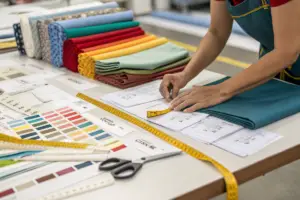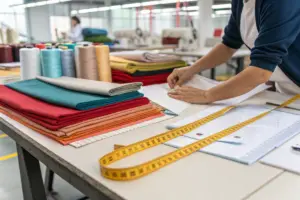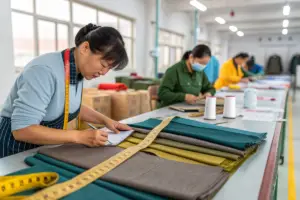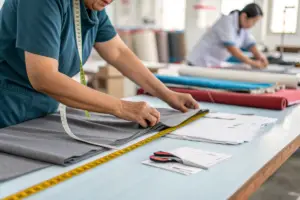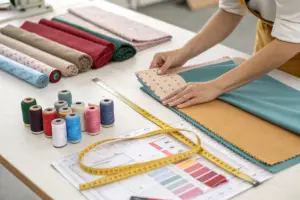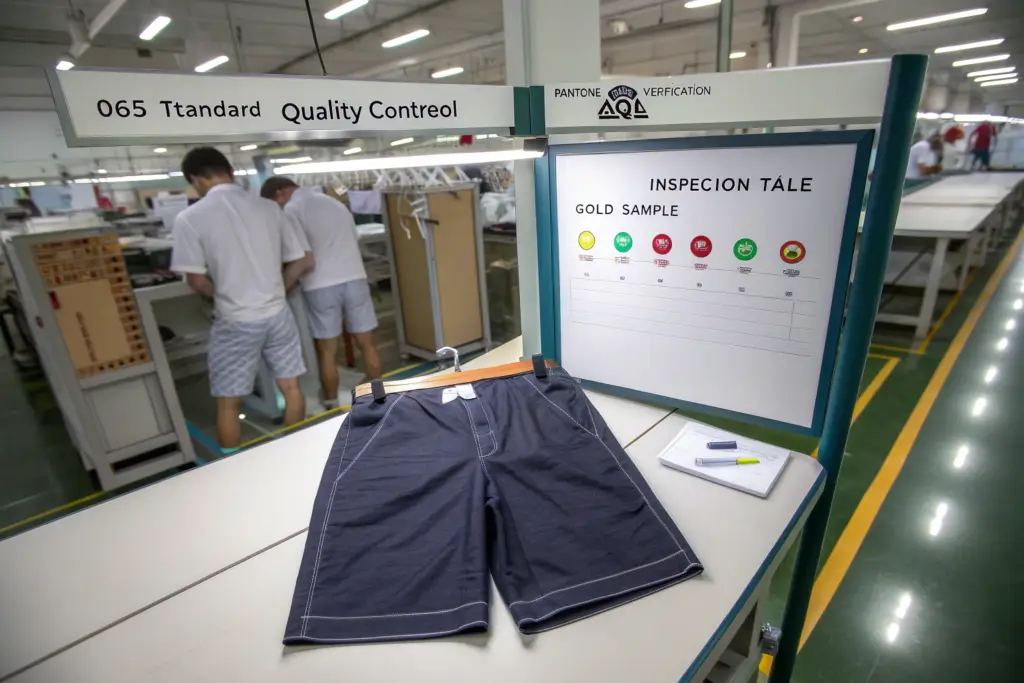
About a decade ago, I sat across a table from a potential client who had been burned by his previous factory. He had ordered 5,000 pairs of classic chino shorts for his brand's summer launch. The pre-production sample was beautiful, the price was competitive, and the delivery was on time. He thought he had found the perfect partner. Three months later, his returns were running at 22%. The side seams on the shorts were splitting during normal wear. The waistbands were twisting after the first wash. The fabric was pilling into small, rough balls across the entire surface. He looked at me and asked, genuinely confused, "The sample was perfect. How could the bulk order be this bad?" I told him that his previous factory had not delivered top quality. They had delivered a sample quality that they could not replicate in bulk production. The two things are not the same.
"Top quality" in the context of a classic shorts factory is not a marketing phrase, a visual impression, or a single excellent pre-production sample, but rather the measurable, documentable ability to consistently reproduce a specified standard across thousands of units through a system of calibrated machinery, trained labor, documented processes, and multi-stage inspection that ensures the five hundredth pair of shorts is materially and dimensionally identical to the first, and that this consistency extends beyond the factory floor to the durability of the garment through the consumer's use and care cycle.
At Shanghai Fumao, I have spent twenty years building the systems that turn "top quality" from a sales brochure slogan into a repeatable, verifiable manufacturing reality. The phrase is thrown around so casually in our industry that it has lost much of its meaning. Every factory claims to produce top quality. Very few can point to the specific, measurable practices that justify the claim. Let me break down exactly what top quality means when the fabric is being cut, the needles are moving, and the shorts are being packed for shipment.
How Do You Measure Fabric and Trim Quality Objectively?
Fabric quality is not a hand feel. It is a set of physical properties that can be measured, specified, and verified. A buyer who selects fabric based on subjective touch alone is gambling. The hand feel of a fabric can be manipulated with softeners and finishes that wash out after three laundry cycles, revealing the cheap, rough base fabric underneath. Top quality fabric specification is an engineering discipline, not a sensory judgment.
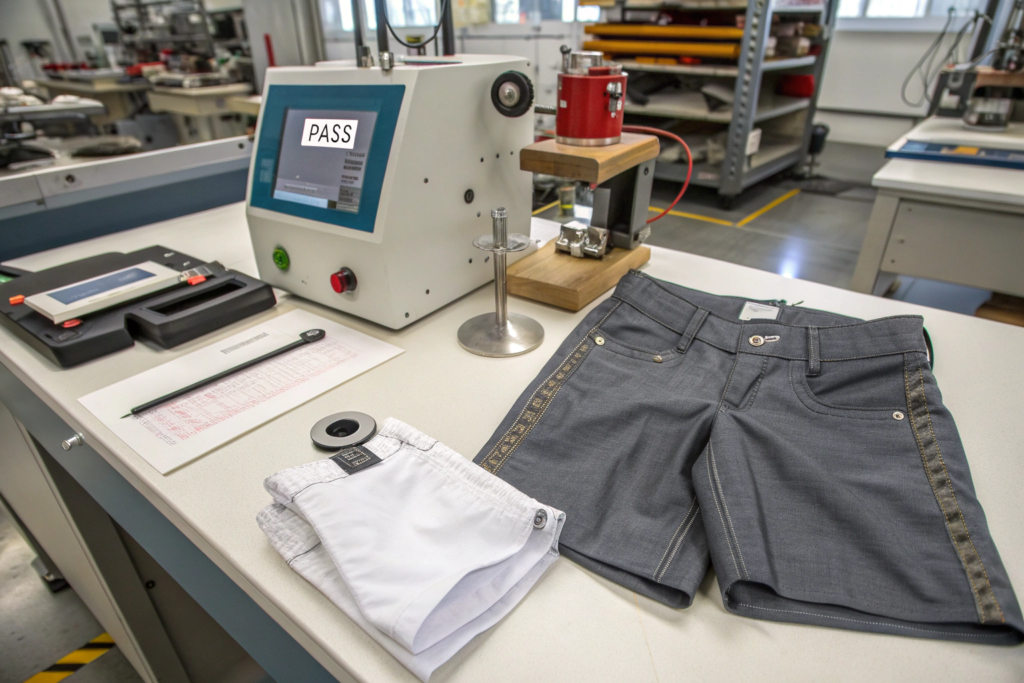
Measuring fabric and trim quality for classic shorts requires testing against objective physical standards: fabric tensile strength and tear strength to predict seam durability under stress, Martindale abrasion resistance to predict pilling and surface wear, dimensional stability testing to predict shrinkage, colorfastness testing to predict dye transfer and fading, and for trims, zipper durability testing across thousands of cycles and button pull-strength testing to ensure the waistband closure survives the lifetime of the garment.
What Fabric Tests Predict Long-Term Garment Durability?
A pair of classic shorts is subject to repeated mechanical stress. The wearer sits, stands, bends, and walks. The fabric stretches across the knee and the seat. The seams are pulled in opposite directions. If the fabric does not have sufficient tensile strength, those seams will tear through the fabric, not at the thread, leaving a hole that cannot be repaired.
Tensile strength testing measures the force required to break a fabric strip. For a cotton twill used in classic shorts, a minimum tensile strength of 400 Newtons in the warp direction and 300 Newtons in the weft direction is a reasonable specification for premium quality. Tear strength testing measures the force required to propagate a tear, which predicts the fabric's resistance to catching on a sharp object and ripping. Beyond strength, pilling resistance is a critical and often overlooked test. The Martindale abrasion test rubs the fabric against a standard abrasive surface for a specified number of cycles. The fabric surface is then evaluated against a standard pilling scale from grade 1, severe pilling, to grade 5, no pilling. A top quality short should achieve a minimum pilling grade of 4 after 2,000 cycles. This fabric performance testing ensures that the shorts will not develop a rough, bobbled surface after a few wears and washes. At Shanghai Fumao, we test every incoming fabric lot against these physical standards before releasing it to the cutting table.
Why Is Dimensional Stability Critical for Customer Satisfaction?
A customer buys a pair of shorts in a size 32 waist. After three washes following the care label instructions, the waistband measures 30.5 inches. The shorts no longer fit. They are returned. The customer is angry and blames the brand. The cause is inadequate dimensional stability, commonly called shrinkage, and it is entirely preventable through proper fabric testing and finishing.
The dimensional stability test measures the percentage of shrinkage in both the warp and weft directions after a specified number of wash and dry cycles, typically according to AATCC 135 or ISO 6330. A top quality short should have a maximum shrinkage of 2% in either direction after three home laundering cycles. This standard allows the pattern maker to add a shrinkage allowance to the cutting pattern so that the finished garment, after the first few washes, measures exactly at the specification. Without this testing and allowance, the shorts that fit perfectly off the rack will not fit after they are laundered. This textile shrinkage testing is a fundamental quality control step. At Shanghai Fumao, we test every new fabric for shrinkage before the marker is made, and we adjust the pattern shrinkage allowance accordingly. This is not optional. It is the difference between a short that fits for years and a short that fits for two weeks.
What Does "Top Quality" Stitching and Construction Look Like?
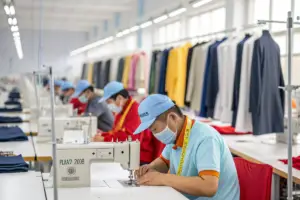
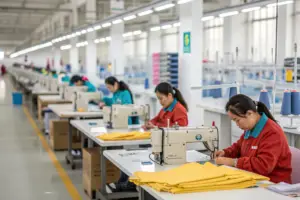
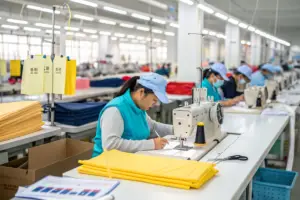
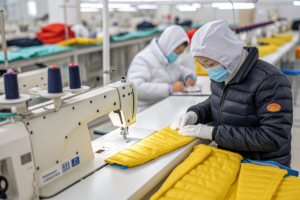
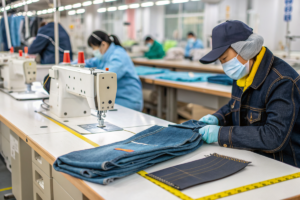
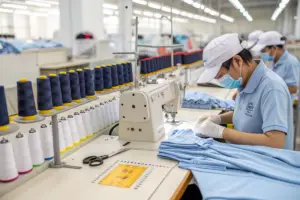
I can walk onto a sewing line and assess the quality level of a factory within thirty seconds. I do not look at the finished garments on the inspection table. They have been prepared for my visit. I look at the seam allowances on the pieces being fed into the machines. I look at the stitch length dials on the sewing machines. I look at whether the operators are back-tacking at the start and end of seams. These details, not the polished final product, reveal the true quality culture of the factory.
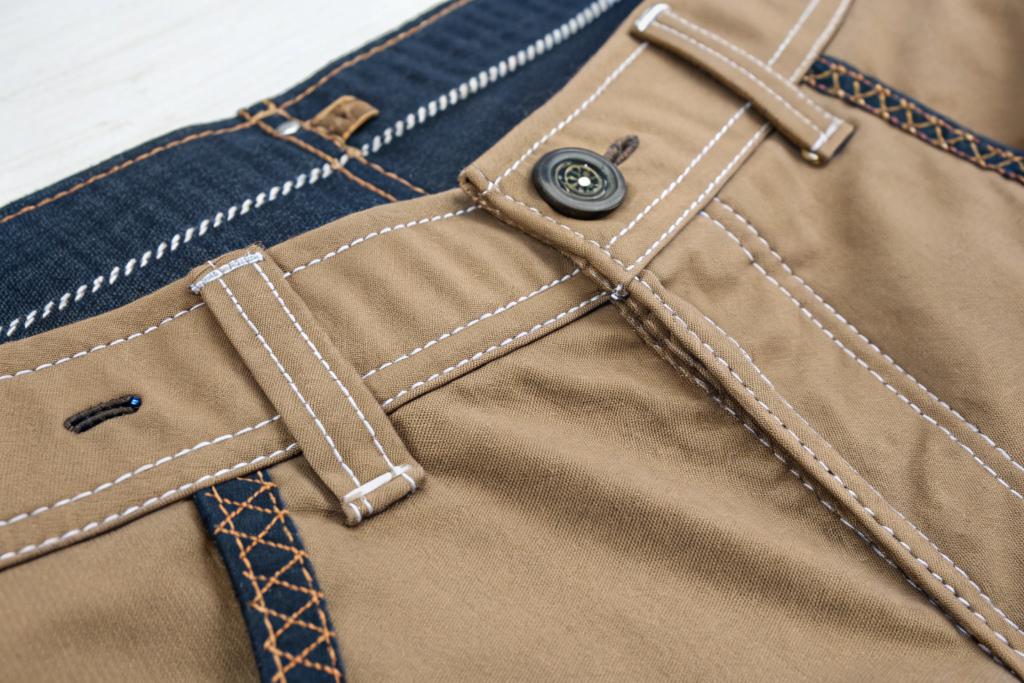
Top quality stitching and construction in classic shorts is defined by a set of specific, measurable technical standards: a consistent stitch density of 10 to 12 stitches per inch for main seams using a lockstitch machine, a minimum seam allowance of 3/8 inch for main construction seams with all raw edges properly finished by overlocking or binding, reinforcement bartacks at all stress points including pocket openings and belt loop attachments, and seam strength that, when tested, results in fabric failure before thread failure, ensuring the seam does not open under normal wear stress.
How Do You Evaluate Seam Construction Quality?
A seam is not just two pieces of fabric joined together. It is a structural element that must withstand constant tension and movement. The quality of a seam is determined by the stitch type, the stitch density, the thread quality, and the seam finishing method. Each of these variables has a correct specification for classic shorts, and deviations are visible to the trained eye.
The correct stitch type for main construction seams on woven shorts is the lockstitch, ISO 301. The lockstitch uses two threads, a needle thread and a bobbin thread, that interlock in the middle of the fabric layers. It is strong, secure, and does not unravel if a stitch breaks, unlike a chainstitch. The stitch density should be 10 to 12 stitches per inch. Fewer stitches produce a weaker seam. More stitches can perforate the fabric and weaken it along the stitch line. The thread should be a high-quality corespun polyester, which provides strength and some elasticity. The seam allowance should be at least 3/8 inch for main seams, and the raw edge should be finished with an overlock stitch to prevent fraying. A seam quality evaluation guide would add that seams should lie flat without puckering, a wavy, gathered appearance along the stitch line that indicates incorrect thread tension or fabric feed. At Shanghai Fumao, our QC team checks stitch density with a stitch counter on every inspection, and seam strength is tested on a tensile testing machine to ensure failure occurs in the fabric, not the thread.
What Are the Critical Stress Points That Require Reinforcement?
Every pair of shorts has specific high-stress points where the garment is most likely to fail. A quality factory identifies these points in the pattern and construction phase and applies specific reinforcements. A factory cutting corners skips these steps because they add time and material cost.
The critical stress points on classic shorts include the pocket openings, where hands are repeatedly inserted and withdrawn, creating tension at the seam ends. A quality construction includes a bartack, a dense zigzag stitch, at both ends of the pocket opening to prevent the seam from tearing open. The belt loops are another critical point. Each belt loop should be attached with a secure bartack at both the top and bottom, and the bottom of the front belt loops, which bear the most tension when a belt is worn and tightened, should be reinforced with an additional bartack. The fly base, where the zipper tape ends at the crotch seam, is under extreme tension when the wearer sits down. The stitching at this junction must be dense and secure. The crotch point itself, where the front and back panels join the inseam and the side seam, is the single highest stress point on a pair of shorts. A quality factory will reinforce this seam junction with a double row of stitching or a specialized crotch reinforcement bartack. These stress point reinforcement details are invisible to the casual observer but determine whether the shorts survive a season of wear or fail prematurely. At Shanghai Fumao, our pattern room identifies every stress point on the tech pack, and our QC team specifically inspects these points on every production run.
How Do Quality Systems Ensure Consistency Across Bulk Production?
A factory that can make one perfect pair of shorts is unremarkable. A skilled sample maker working alone can produce a flawless garment. A factory that can make ten thousand pairs, with the ten thousandth pair measuring and performing identically to the first, is a top quality operation. The difference is not in the skill of the individual workers. It is in the systems that control the production process, reduce variation, and catch defects before they compound.
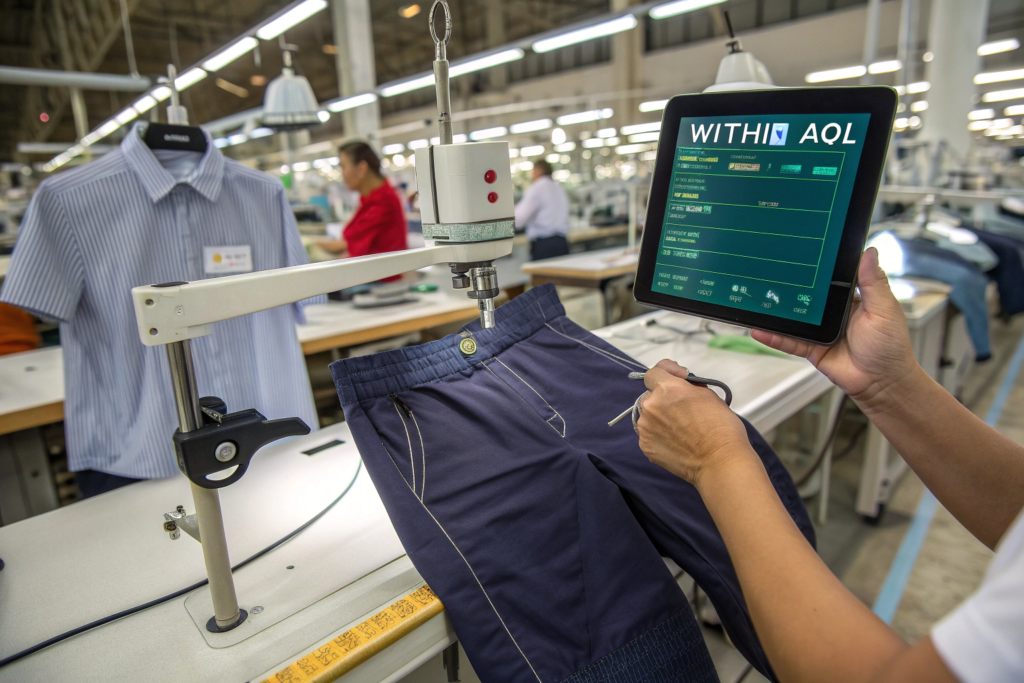
Top quality consistency in bulk production is achieved through a structured quality management system built on three pillars: a documented standard operating procedure for every sewing operation that specifies the machine type, stitch type, stitch density, and seam allowance, ensuring every operator performs the operation identically; an inline inspection process that checks quality at multiple points during production rather than only at the end; and a final statistical inspection using the AQL methodology that provides an objective, numerical pass-or-fail verdict before the goods are packed.
What Is the Role of Inline Inspection in Catching Defects Early?
Final inspection catches defects after the product is finished. Inline inspection catches defects while they are being created, allowing correction before the defect is sewn into the garment and compounded by subsequent operations. The earlier a defect is caught, the cheaper it is to fix.
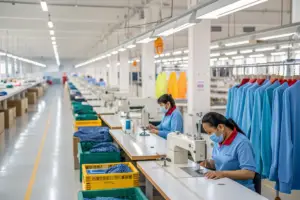
A classic shorts production line has multiple inline inspection stations. The first station checks the cut panels before they reach the sewing machines, verifying correct pattern piece shape, correct grain line, and absence of fabric defects. The second station checks the initial assembly, the pocket construction and attachment, before the side seams are closed. A defective pocket caught here can be reworked in minutes. A defective pocket caught at final inspection requires the entire garment to be opened, reworked, and re-pressed, costing significantly more time and potentially damaging the fabric. The third station checks the main construction, the side seams, the rise, and the fly installation. The fourth station checks the waistband attachment and the hem finishing. Each inline inspector has a checklist specific to their station, the tech pack, and the sealed sample. This inline quality control system is the backbone of bulk production quality. At Shanghai Fumao, our inline inspection data is recorded digitally and reviewed daily by the production manager and the QC manager. A spike in defects at a particular station triggers an immediate investigation and corrective action.
How Does the AQL Final Inspection Provide an Objective Quality Verdict?
The final random inspection is the last quality gate before the shorts are packed and shipped. It is performed according to the Acceptable Quality Limit methodology, which is a statistically based sampling system that determines how many units to inspect based on the lot size and the inspection level, and what number of defects results in a pass or fail decision.
For a shipment of 5,000 pairs of classic shorts, a Level II inspection would sample 200 units randomly from the packed cartons. Each unit is inspected against a detailed checklist covering visual appearance, measurement, construction, and function. Each defect found is categorized as critical, major, or minor. The AQL limits, typically 2.5 for major defects and 4.0 for minor defects, determine the maximum number of defects allowed in the sample. If the number of defects found exceeds the AQL limit, the lot fails inspection, and the factory must perform a 100% inspection and rework before a re-inspection is conducted. This AQL inspection process provides an objective, numerical, and defensible quality decision. It removes subjectivity and negotiation from the acceptance process. At Shanghai Fumao, we perform an internal AQL final inspection on every order before the buyer's third-party inspector arrives. We want the first inspection the buyer sees to be a pass.
What Quality Certifications and Audits Validate Factory Claims?
Every factory website has a page titled "Quality Assurance" featuring stock photos of people in lab coats and a list of certifications. The claims are easy to make. The verification is what separates genuine quality operations from marketing exercises. A buyer who does not independently verify a factory's certifications is accepting a promise that may have expired, may belong to a different legal entity, or may never have existed. The verification process is straightforward, and the absence of willingness to facilitate it is a red flag.
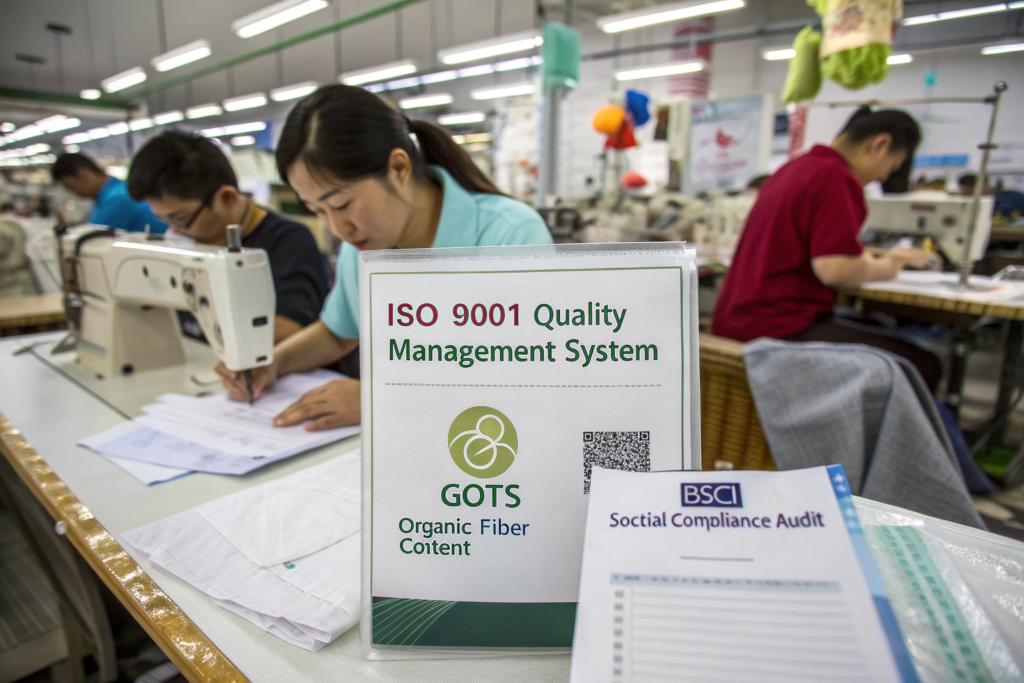
Validating a factory's quality claims requires independent verification of three specific types of external assessment: a quality management system certification, typically ISO 9001, which confirms the factory has documented and audited processes for quality control; a product-specific certification such as GOTS for organic fiber content or OEKO-TEX for chemical safety, which confirms the product meets specific material standards; and a social compliance audit such as BSCI or SEDEX SMETA, which confirms the factory meets ethical labor and safety standards, with all certifications checked for currency on the issuing body's public database.
What Does an ISO 9001 Certification Actually Guarantee?
ISO 9001 is the most widely recognized quality management system standard in the world, and it is also the most commonly misunderstood by apparel buyers. ISO 9001 does not certify that the factory's shorts are high quality. It certifies that the factory has a documented quality management system and that there is evidence the system is being followed.
A factory with ISO 9001 certification has been audited by an accredited third-party certification body and found to have documented procedures for every quality-related process. This includes how customer requirements are translated into production specifications, how incoming materials are inspected, how production processes are controlled, how non-conforming products are identified and segregated, and how corrective actions are implemented and verified. The certification also requires internal audits and management reviews, which are mechanisms for continuous improvement. The ISO 9001 quality management framework provides a structure within which consistent quality can be achieved. It does not guarantee that the factory's aesthetic standards match the buyer's expectations. That matching requires the sealed sample, the tech pack, and the specified AQL. At Shanghai Fumao, our ISO 9001 certification is current, and we make our audit reports available to buyers who request them. The system is the infrastructure that supports our daily quality practices.
Why Should Buyers Check Certification Validity Independently?
A printed certificate is a historical document. It proves that the factory was certified on the day the certificate was issued. It does not prove that the certification is still valid today. Certifications expire. They are suspended. They are revoked. A factory that shows a certificate with an expiration date that has passed is either disorganized, which is itself a quality concern, or deliberately presenting outdated documentation, which is dishonest.
Every legitimate certification body maintains a public database where the validity of any certificate can be verified by entering the certificate number. The amfori BSCI platform allows members to check audit status. The GOTS public database lists all certified entities and their scope. The OEKO-TEX certificate check verifies the certificate number and the product categories covered. A buyer should perform this certification verification for every certificate a factory presents. The check takes less than five minutes per certificate. At Shanghai Fumao, we provide the direct verification links and the certificate numbers to every buyer during the onboarding process. We want them to verify. A buyer who has independently confirmed our certifications is a buyer who can proceed with confidence.
Conclusion
Top quality in a classic shorts factory is not a subjective impression or a well-produced sample. It is a measurable, verifiable, and systematic capability that expresses itself in every aspect of the manufacturing process. The fabric is not chosen by touch but by tensile strength, tear resistance, pilling grade, and dimensional stability data. The stitching is not judged by appearance alone but by stitch type, stitch density, seam strength, and reinforcement at every identified stress point. The consistency is not hoped for but statistically controlled through inline inspection stations, documented standard operating procedures, and an AQL final inspection that provides an objective quality verdict on every shipment.
The certifications and audits that hang on the factory wall are only as meaningful as the buyer's willingness to verify them independently against the issuing body's public database. A factory that invites this verification, that provides the links and the certificate numbers and welcomes the scrutiny, is a factory whose quality claims are backed by external validation. A factory that deflects or delays is a factory whose quality claims are a marketing veneer.
At Shanghai Fumao, we define top quality not by what we say in our brochures but by what we can prove on our cutting tables, in our inspection reports, and through our third-party certifications. If you are evaluating manufacturing partners for your classic shorts program and want to experience what documented, verifiable quality feels like in practice, contact our Business Director, Elaine, at elaine@fumaoclothing.com. Let's walk you through our quality system, not just tell you about it.