About five years ago, a brand owner called me in a panic. He had just received a container of 8,000 pairs of classic chino shorts for his summer launch. The fabric was perfect, the fit was spot-on, and the colors were rich. But within the first two weeks of retail sales, his customer service inbox exploded. The zipper sliders were popping off the tape. The buttons were cracking in half during normal wear. His return rate hit 18%. The entire production run, which represented his biggest seasonal investment, was effectively unsellable. He had spent months agonizing over fabric weight and pocket shape, but he had not asked a single question about the zipper or the button. The cheapest trim his factory could source had destroyed his brand's reputation in two weeks.
Choosing the best zippers and buttons for custom classic shorts requires moving beyond visual appearance to evaluate the technical specifications that determine functional longevity—zipper tape material and slider locking mechanisms, button material composition and shank construction—because these small components bear the highest physical stress of any part of the garment and a failure at the fly or waistband renders the entire product unusable and generates immediate, brand-damaging returns.
At Shanghai Fumao, I have seen trim failures destroy more brand launches than fabric defects ever have. The zipper and the button are the two components that the customer physically touches every single time he wears the shorts. He pulls the zipper up in the morning. He pops the button closed. If either action feels cheap, gritty, or fragile, the customer forms a negative quality judgment before he has even looked at himself in the mirror. Let me walk you through the hardware decisions that separate a short that lasts five seasons from one that fails in five wears.
Why Does Zipper Quality Make or Break Classic Shorts?
The fly zipper on a pair of classic shorts is subject to more directional tension than almost any other fastener in menswear. When a man sits down, the zipper is pulled laterally across the hip curve. When he moves, walks, or bends, the zipper absorbs constant micro-stress. A cheap zipper is not designed to survive this environment. The teeth separate. The slider jams. The tape frays. The entire garment becomes unwearable, not because the fabric failed, but because a two-dollar component was chosen poorly. The customer does not blame the zipper manufacturer. He blames your brand.
A quality zipper for classic shorts is defined by the material and gauge of its teeth, the durability of its tape substrate, and the presence of a locking mechanism on the slider that prevents accidental opening under tension, with YKK's metal and high-grade coil zippers representing the industry standard that virtually eliminates the risk of field failure.
What Is the Difference Between Coil, Metal, and Molded Plastic Zippers?
The zipper industry has three main tooth types, and each has a specific application where it performs best. Confusing them is a common and costly mistake. A zipper that is perfect for a waterproof jacket can be completely wrong for a pair of cotton twill shorts.
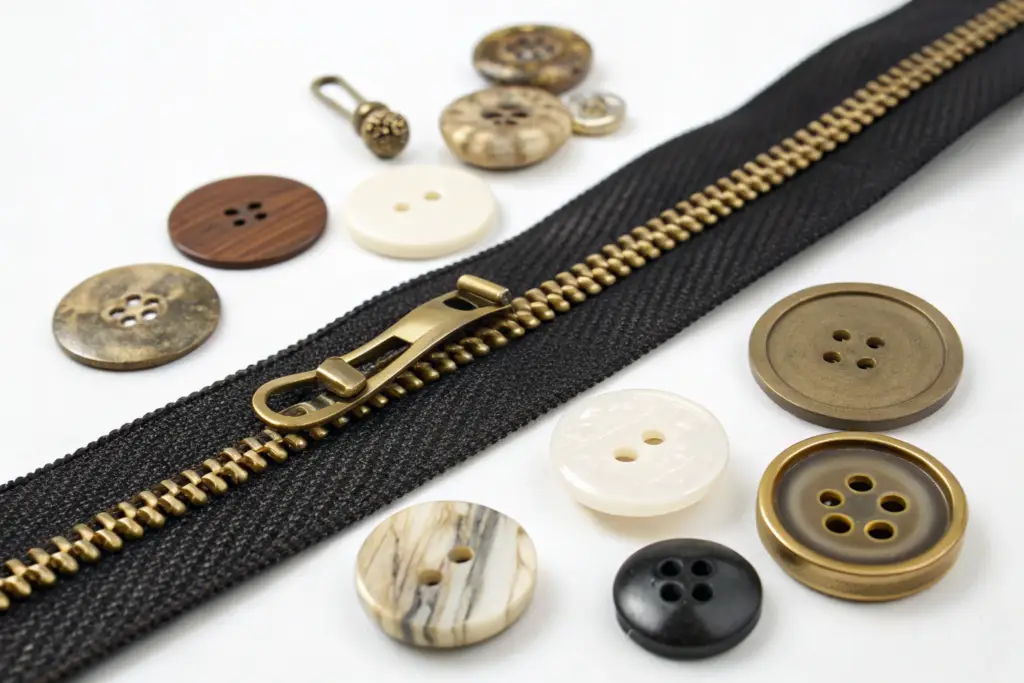
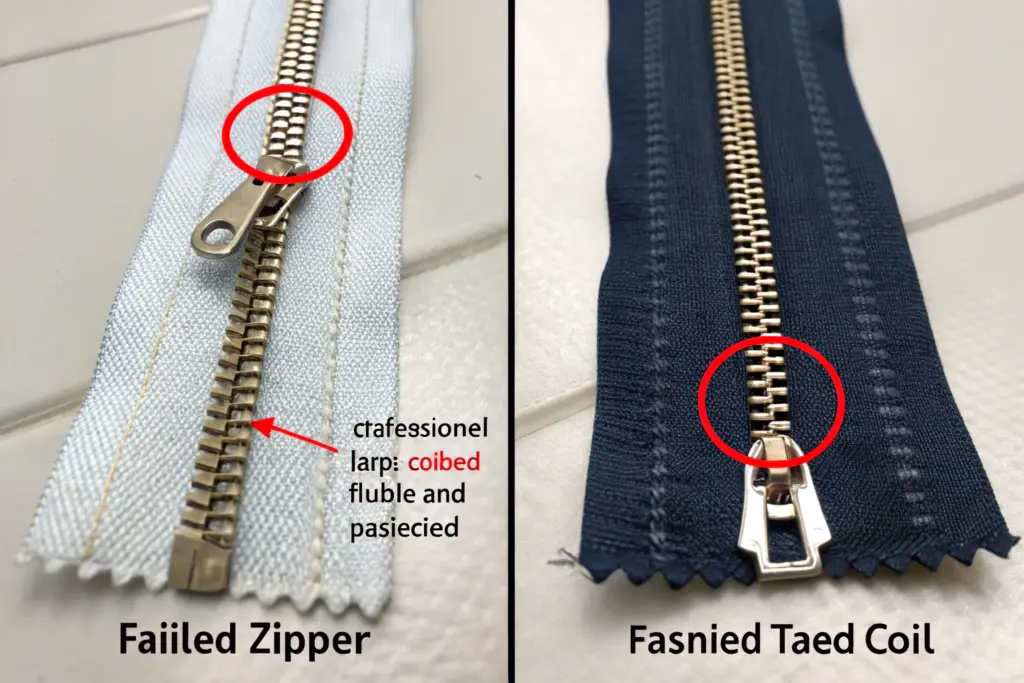
Coil zippers are constructed from a continuous spiral of polyester filament wound into teeth and sewn onto a polyester tape. This is the workhorse of the apparel industry, and for good reason. Coil zippers are lightweight, flexible, and rust-proof. They curve smoothly over the hip contour, making them comfortable and invisible under a flat waistband. For classic shorts, a high-quality YKK coil zipper is the standard choice. The teeth are strong enough for daily use, and the flexibility prevents the stiffness that can cause a metal zipper to bulge awkwardly at the fly. Metal zippers, typically made from brass, aluminum, or nickel, offer a premium, substantial hand feel and a distinctive visual look. They are extremely strong in direct pull strength but are heavier, can corrode if the plating fails, and do not flex as smoothly over body curves. They are best suited for denim shorts with a button-fly alternative or for brands specifically marketing a rugged, workwear aesthetic. Molded plastic zippers, with individual teeth injection-molded onto the tape, offer a middle ground in strength and are highly resistant to corrosion. However, they are bulkier than coil zippers and are more commonly found on outerwear and bags than on tailored shorts. Understanding this zipper type comparison ensures you do not specify a metal zipper for a lightweight linen short where its weight would distort the drape.
How Do Slider Locking Mechanisms Prevent Fly Failures?
A zipper that spontaneously unzips is the ultimate garment failure. It is embarrassing for the wearer and completely undermines any claim of quality. The cause is almost always a non-locking slider. Standard sliders operate on a simple wedge principle: the slider body forces the teeth together. Under lateral tension—precisely the tension generated when a man sits down—a non-locking slider can be pulled downward by the separating force, allowing the teeth to open.
A locking slider solves this problem with a small internal mechanism. When the pull tab is in the down position, a tiny pin or cam inside the slider body engages between the teeth, physically preventing the slider from moving until the pull tab is lifted. This is not a luxury feature. It is a functional necessity for any short that will be worn by an active human. At Shanghai Fumao, we specify YKK auto-lock sliders as standard on all our classic shorts. The cost difference between a locking and non-locking slider is measured in cents per unit, but the difference in field failure rate is measured in orders of magnitude. We also specify the pull tab design carefully. A pull tab that is too small is difficult to grip. A pull tab that is too large creates a visible bulge under the waistband. The ideal pull tab for a classic short is a medium-length, teardrop-shaped tab with a subtle texture or logo engraving. This zipper slider mechanism detail communicates precision and quality to the customer every time he interacts with it.
Which Button Materials Offer the Best Durability and Look?
The button on a classic short is small, but it is never overlooked by the customer. He sees it when he fastens the waistband. He touches it with his fingertips. If the button feels light, hollow, or plasticky, it contaminates the entire perception of the garment. Conversely, a button with genuine weight, a cool-to-the-touch feel, and a visible natural grain pattern silently communicates luxury and craftsmanship before the customer has even checked the price tag.
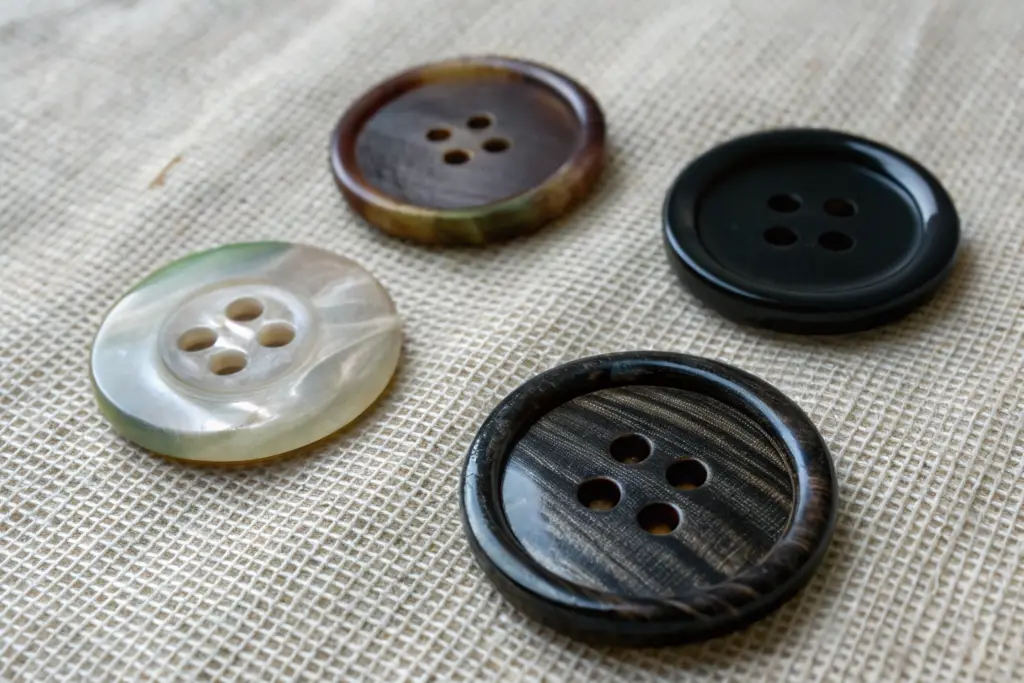
The best button materials for premium classic shorts are natural substances—genuine mother-of-pearl, real horn, and corozo nut—because they offer a tactile coolness, a visual depth of color and grain that synthetic resins cannot replicate, and a durability that resists cracking in the laundry cycle, while polyester resin buttons serve as the cost-effective, high-volume alternative for value-priced programs.
Why Do Natural Buttons Signal Premium Quality?
There is a physical property of natural materials that synthetics have never successfully replicated. Mother-of-pearl, harvested from the inner layer of oyster shells, has a thermal conductivity that makes it feel cool against the skin. When a customer picks up a pair of shorts and his thumb brushes the button, that instant coolness triggers a subconscious quality judgment. The visual depth of mother-of-pearl, with its iridescent layers that shift subtly in different light, cannot be printed onto plastic.
Genuine horn, typically from water buffalo, offers a different but equally powerful signal. Each horn button has a unique pattern of dark and light streaks, meaning no two buttons are identical. This individuality is a marker of authentic craftsmanship. Horn also has a natural resilience. It flexes slightly under pressure rather than snapping, which makes it remarkably durable in the laundry. Corozo, often called vegetable ivory, is harvested from the nut of the tagua palm. It has an extremely fine, even grain and takes dye beautifully, producing rich, saturated colors. Its hardness is comparable to ivory, meaning it resists scratching and chipping over years of use. These natural button materials are not just decorative. They are functional upgrades that genuinely extend the life of the garment. A polyester resin button can become brittle over time, especially after repeated high-heat dryer cycles, and crack under the tension of a fitted waistband. A horn or corozo button will outlast the fabric.
What Is the Difference Between Sew-Through and Shank Buttons?
The attachment method of the button is as important as the material itself. A sew-through button has two or four holes drilled through its face, and the thread passes through these holes directly into the fabric. This is the standard button attachment for most casual shorts. It is simple, secure, and lies relatively flat against the waistband.
A shank button, by contrast, has a small loop or stem protruding from its underside. The thread passes through this shank, not through the button face. This creates a small gap between the button and the fabric. This gap is functional. It allows the button to accommodate the thickness of the fabric layer it is fastening without crushing the waistband. On a classic short with a substantial waistband interlining and multiple fabric layers at the closure, a shank button provides a cleaner, more secure closure. The button sits properly, and the fabric does not pucker around the attachment point. However, shank buttons are more expensive to produce and slightly more complex to attach, requiring a different sewing machine setup. The choice between sew-through vs shank buttons should be driven by the waistband construction. A lightweight, unstructured short waistband works perfectly with a sew-through button. A structured, interlined waistband on a premium chino short benefits from the clearance that a shank provides. At Shanghai Fumao, we guide our brand partners through this button attachment methods decision based on the specific fabric weight and interlining specification of their design.
How Do Trim Choices Impact Your Brand's Perceived Value?
I have watched two identical shorts, cut from the same fabric on the same pattern, sell at completely different price points. The only difference was the trim. One version used a generic zipper and a plain resin button. The other used a YKK zipper with a custom-engraved pull and a genuine horn button. The fabric was the same, the stitching was the same, the fit was the same. The trim-upgraded version sold at a 25% higher retail price, and customers consistently rated it as "better quality" in reviews. The trim is not just a functional component. It is the primary vehicle for communicating your brand's commitment to quality.
Trim choices are the most cost-effective leverage point for elevating a brand's perceived value because the absolute cost increase of upgrading from generic to premium hardware is typically between $0.50 and $1.50 per unit, while the perceived quality improvement allows brands to command a $10 to $25 retail price premium, making trim investment one of the highest-return margin decisions in the entire product development process.
How Does Custom Branding on Hardware Affect Customer Loyalty?
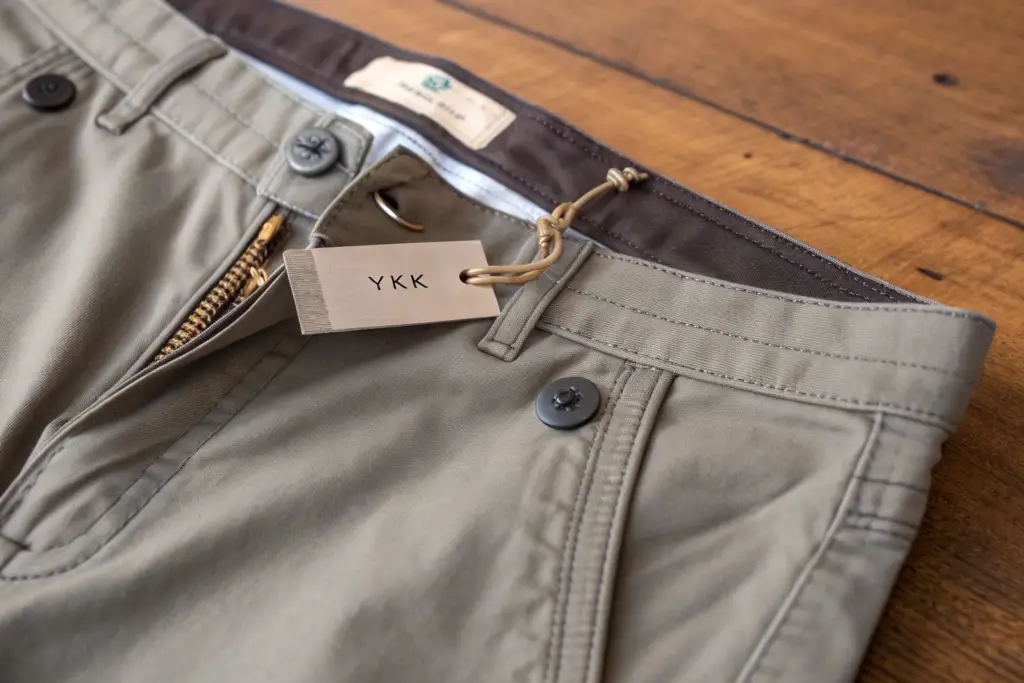
An unbranded zipper pull is a missed opportunity. Every time a customer zips up his shorts, he looks down. His fingers touch the pull tab. That moment, repeated hundreds of times over the life of the garment, is a direct, tactile brand interaction. Leaving that interaction point blank, or with someone else's logo, is like publishing a book with a blank cover.
Custom-engraving a YKK zipper pull with your brand name or logo transforms a commodity component into a brand asset. The cost is modest. Most zipper suppliers can produce custom-engraved pulls with a minimum order quantity that is achievable for small and mid-size brands. The same principle applies to buttons. A genuine horn or corozo button can be laser-etched with a subtle brand mark on the back, visible only when the short is unfastened, or more prominently on the face. This custom trim branding creates a level of detail that customers associate with luxury brands. It tells them that the brand cared enough to invest in its own hardware rather than buying off-the-shelf generics. This impression translates directly into repeat purchases and word-of-mouth recommendations. A customer who notices a branded button is a customer who has formed a memory about your product. That memory is the foundation of loyalty.
What Cost-Benefit Analysis Should Brands Apply to Trim Upgrades?
I frequently sit with brand owners who are agonizing over the line item for hardware on their costing sheet. They see the $0.80 per unit for premium trims versus the $0.20 for generics, and the multiplier across a 5,000-unit order looks painful. But this is a false economy, and I always walk them through the real math.
Consider a short with a target retail price of $68. With generic trims, the brand might need to price at $62 to be competitive against similar-looking products. The generic trims saved $0.60 per unit at FOB. But the brand lost $6.00 in retail revenue per unit. Across 5,000 units, the trim savings generated $3,000 at the factory level while sacrificing $30,000 in potential retail revenue. The math is brutal. Here is a simplified comparison based on real cost data from our supply chain at Shanghai Fumao:
| Trim Component | Generic Option (FOB Cost) | Premium Option (FOB Cost) | Cost Difference |
|---|---|---|---|
| Fly Zipper | Generic non-locking coil ($0.15) | YKK locking coil with custom pull ($0.55) | +$0.40 |
| Waistband Button | Polyester resin ($0.08) | Genuine horn with brand etching ($0.35) | +$0.27 |
| Total Per Unit | $0.23 | $0.90 | +$0.67 |
The total investment in premium trims on this example short is sixty-seven cents per unit. The revenue upside from a higher perceived value is between eight and fifteen dollars per unit at retail. This is not a speculative marketing argument. It is a direct return on investment calculation that I have seen validated across dozens of brand launches. The product cost analysis always points in the same direction. Trim is the cheapest marketing you can buy. Invest in it.
Where Can You Source Reliable Hardware for Bulk Production?
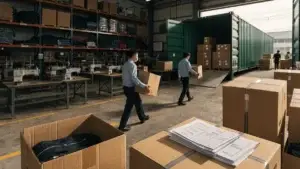
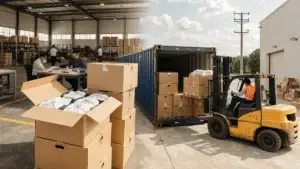
Sourcing reliable hardware for bulk production is fundamentally different from buying a handful of buttons for a sample. A sample button can come from a craft store. A production order of 20,000 buttons must be identical in color, size, and performance, and it must arrive on time. I learned this lesson painfully when a local button supplier delivered a batch where the dye lot was slightly off, and 10,000 pairs of olive shorts shipped with two subtly different shades of button. The customer noticed. The returns followed.
Reliable bulk hardware sourcing depends on building direct relationships with the major global manufacturers like YKK for zippers and specialized natural button suppliers in Italy and Japan for premium materials, and then having your factory manage the inventory with a buffer stock system that prevents production line stoppages from missing trim deliveries.
Why Is YKK the Industry Standard for Shorts Zippers?
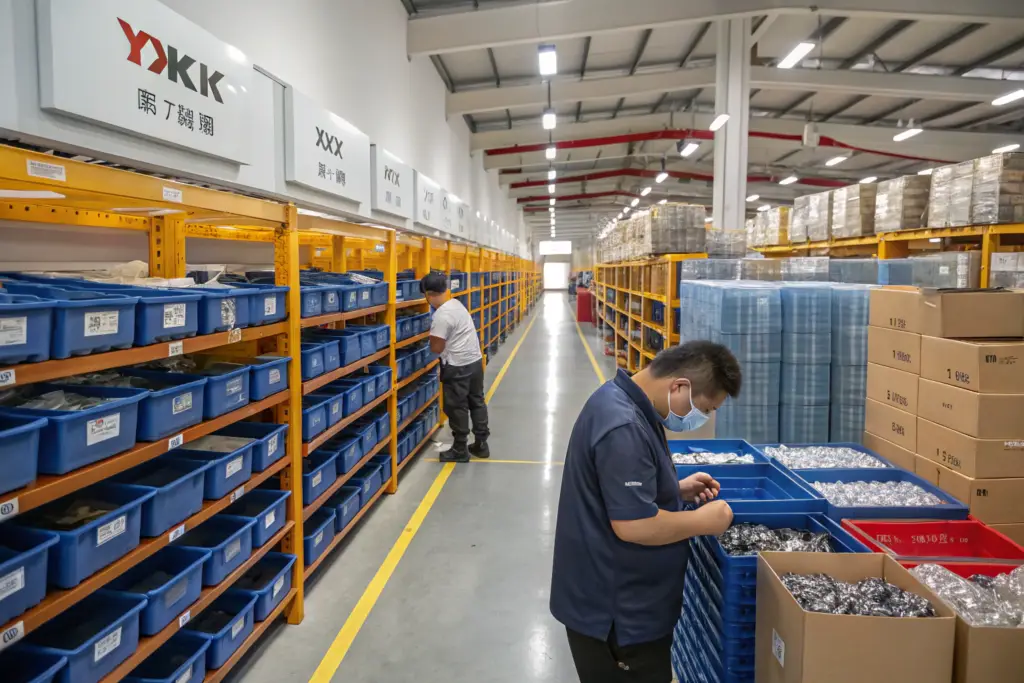
YKK is not the cheapest zipper on the market. It is not even close. But it is the zipper that every major global brand specifies, not because of marketing, but because of a statistical reality that the industry has learned over decades. YKK's defect rate is famously low, measured in parts per million rather than percentages. Their manufacturing tolerances are so tight that a YKK zipper from a factory in Japan and one from their plant in Vietnam are functionally identical.
This consistency is the reason I refuse to use any other zipper on our classic shorts at Shanghai Fumao. The cost difference between a genuine YKK zipper and a generic alternative is measured in cents, but the risk differential is enormous. A failed generic zipper on a shipped product creates a return that costs the brand the entire retail price, plus shipping, plus customer service time, plus a damaged reputation. The YKK global zipper supplier network ensures that no matter where production is located, authentic YKK components are available. Counterfeits exist, which is why we source our YKK zippers exclusively through authorized distributors with verifiable supply chain documentation. A brand should always ask their factory: "Is this a genuine YKK zipper, and can you provide the distributor invoice?" Any hesitation in answering is a red flag.
How Do You Ensure Consistent Button Quality Across Large Orders?
Buttons made from natural materials present a unique sourcing challenge. Unlike injection-molded plastic buttons, which are identical by definition, a mother-of-pearl or horn button will have natural variations in color and grain. Managing these variations across a production run of thousands of units requires a supplier who understands how to grade and batch natural buttons.
The solution is a multi-step quality control process at the button supplier level. Reputable natural button manufacturers grade their output by color tone, separating, for example, light horn buttons from dark horn buttons, and ensuring that each production batch contains a consistent mix. Before we accept a button shipment, our quality control team pulls a random sample and checks for color consistency, thickness uniformity, and the absence of cracks or delamination. For critical orders, we request that the button supplier provide a sealed reference sample that we can compare against the production delivery. This button quality control process prevents the dye-lot mismatch problem that I encountered years ago. For brands, the key sourcing question is not just "what material is the button?" but "how does your button supplier batch and grade their natural materials, and can they guarantee color consistency within my production order?" A supplier who cannot answer this question clearly is not equipped to handle natural trim at scale. At Shanghai Fumao, we maintain long-term relationships with natural button suppliers whose grading standards we have personally audited, ensuring that the buttons on your shorts look like a matched set, not a random assortment.
Conclusion
The zipper and the button on a pair of classic shorts are never an afterthought. They are the primary physical touchpoints between your customer and your product, and their performance determines whether the customer views your brand as a quality investment or a disposable disappointment. A YKK locking coil zipper eliminates the catastrophic fly failure that generates immediate returns. A genuine horn, mother-of-pearl, or corozo button communicates luxury through its weight, its coolness, and its natural grain, all of which synthetic resins can only approximate poorly. The investment required to upgrade from generic to premium hardware is measured in cents per unit. The revenue upside from the elevated perceived value is measured in dollars per unit. That return on investment is one of the most favorable in the entire product development budget.
At Shanghai Fumao, we do not treat trim selection as a minor specification to be defaulted. We treat it as a strategic brand decision that we guide our partners through with transparent cost data and proven supplier relationships. If you are developing a custom classic shorts program and want to ensure that every component reflects the quality of your brand, contact our Business Director, Elaine, at elaine@fumaoclothing.com. Let's make sure the first thing your customer feels is excellence.