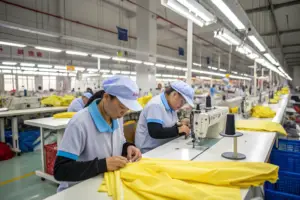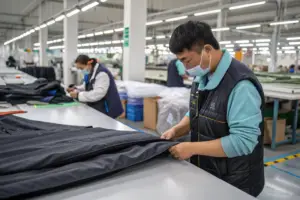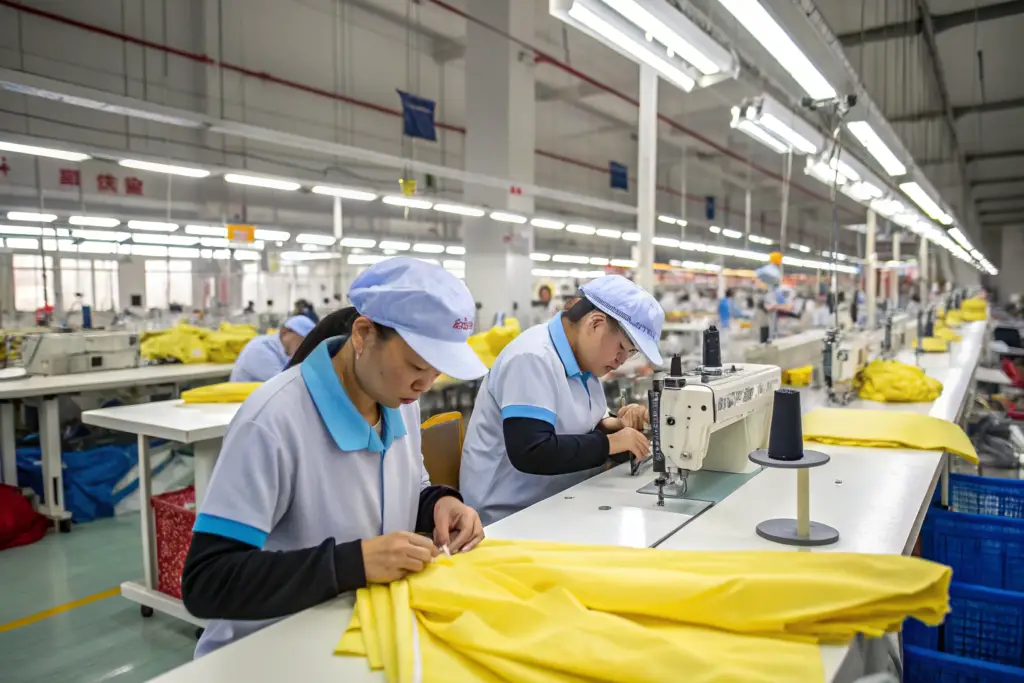
A few years ago, a brand owner from Dallas flew to China to visit his supplier. He had been ordering 3,000 summer coats a month from a massive 20-line factory. The showroom was impressive. The price was low. But his shipment was already three weeks late. When he walked the floor, he saw the problem immediately. His order of lightweight seersucker dusters was buried behind a 50,000-unit order for a big-box retailer. The factory owner apologized but did nothing. The big client ate all the capacity. My friend's order was an afterthought. He lost the entire June selling window. This is the hidden cost of sourcing from a factory that is too big to care about you. A 5-line factory operates in the sweet spot. It is large enough to handle serious volume but small enough where your order is still the most important thing on the floor.
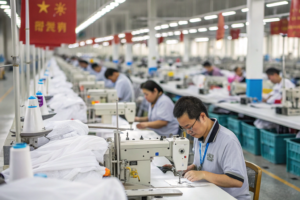
Sourcing summer coats from a 5-line factory gives you the flexibility of a boutique workshop with the capacity of a mid-tier industrial plant. A 5-line setup, like the one we operate at Shanghai Fumao, typically produces between 25,000 and 40,000 units per month depending on the complexity of the style. This is enough output to fulfill a major department store program, yet the management structure remains flat. You communicate directly with the production manager who controls your order, not a layered bureaucracy of account executives who have never touched a sewing machine.
When you are building a summer outerwear brand, you need speed and attention more than you need the absolute lowest unit price. A 5-line factory delivers both. The overhead is lower than a mega-factory, but the specialization is higher than a tiny workshop. You get the manufacturing equivalent of a surgical team, not an assembly line meat grinder. Let me break down exactly why this factory size matters for your summer coat program.
How Does A 5-Line Factory Balance Flexibility And Production Capacity?
Balance is the hardest thing to find in garment manufacturing. A small 1-line factory is flexible but fragile. If one sewer gets sick, the whole production line stops. A 50-line factory is powerful but rigid. It takes two weeks just to schedule a meeting to discuss a design change. A 5-line factory sits right in the middle of this curve. It has enough redundancy to absorb a sick day without missing a shipment, but it is lean enough to pivot production in 48 hours if a viral trend suddenly spikes demand for a specific summer jacket style.
A 5-line factory balances flexibility and capacity by running dedicated lines that can be merged or split based on order complexity. For a simple unlined summer blazer, one line of 25 operators can produce 800 units per day. For a complex utility coat with 15 pockets, we can combine two lines into a single modular unit of 50 operators, slowing the individual output but handling the technical difficulty without disrupting the other three lines. This modular approach means your order never competes for resources with a different brand's order.
This flexibility is critical during the summer season when trends change mid-cycle. A factory that is too big is like an aircraft carrier. It takes miles to turn. A 5-line factory is like a speedboat. It can chase a trend.
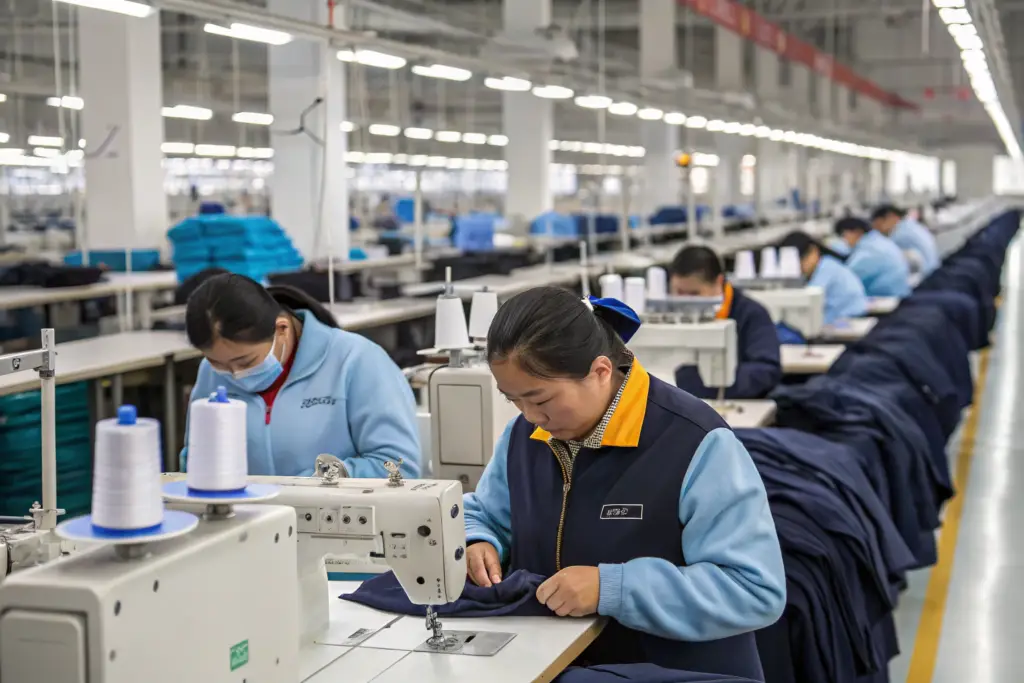
What Happens When A Summer Trend Suddenly Doubles Your Order Size?
Summer outerwear trends are explosive. A celebrity wears a specific pastel cropped jacket at a music festival on a Saturday. By Monday morning, your wholesale accounts are screaming for restock. Your original order was 2,000 units. Now you need 5,000, and you need them in four weeks, not eight. In a mega-factory, this request is a joke. The production planner will laugh at you. Their schedule is locked 12 weeks in advance.
In a 5-line factory, this is a solvable problem. Here is how we handle a surge at Shanghai Fumao. First, we look at the fabric inventory. If we have pre-booked the greige goods based on our early signal analysis, we can dye a fresh batch in 72 hours. Second, we look at the line loading. Maybe Line 3 is finishing a simple woven shirt order for another client. If that client's shipment date has a buffer, we negotiate a one-day pause with them. We then split your jacket order across Line 2 and Line 3 simultaneously. We shift our best mechanics to these lines to set up the specialized binding machines. We add a second shift on the cutting table. Suddenly, your output doubles from 800 units a day to 1,600. This agility is only possible because the factory owner is on the floor, not in a corporate headquarters in another country. The decision chain is short. I can make the call at 9 AM, and the lines are re-balanced by 1 PM. This kind of agile manufacturing in fashion is what separates the winners from the losers in the summer season. You capture the margin at the peak of the trend, not after it has faded.
How Many Styles Can A 5-Line Factory Handle Simultaneously During Peak Season?
A common fear is that a 5-line factory is too small to handle a full collection. If you are launching six different summer coat styles, you worry that the factory will choke and force you to split the order, leading to coordination chaos. The limit is not the number of lines; it is the management bandwidth and the cutting room capacity.
In our experience, a well-managed 5-line factory can comfortably handle 10 to 15 active styles simultaneously during peak summer season, with an average run per style of 500 to 3,000 units. The key is the pre-production planning. We use a Takt time analysis to balance the lines. If Style A is a simple pullover anorak with a Standard Minute Value of 8 minutes, it runs on one line. If Style B is a fully lined, paneled trench coat with a Standard Minute Value of 22 minutes, it might need two lines merged. We schedule these based on the delivery date, not the order date. The cutting room becomes the central command. With five lines, we typically run two cutting tables simultaneously. The fabric spreading and cutting is the bottleneck, not the sewing. To prevent a bottleneck, we stagger the cutting for different styles. We might cut Style C in the morning and Style D in the afternoon on the same table. This requires a very skilled cutting master who can switch markers quickly. The advantage for the brand is huge. You do not have to split your collection across three different small workshops, where the color matching between your linen blazer and your linen trouser becomes a nightmare. One roof, one quality standard, one point of contact. The production planning and control in a mid-sized factory like this is intimate enough to be accurate but scaled enough to be efficient.
What Are The Quality Advantages Of A Smaller, Focused Production Floor?
There is an inverse relationship between factory size and attention to detail. In a massive 20-line factory, the quality control department is a separate building. The inspectors are strangers to the sewers. They communicate through written defect slips, not conversations. The sewer never learns why they made the mistake. They just see a red sticker on their output bin. In a 5-line factory, the QC inspector eats lunch with the sewing operators. They know each other's names. When a defect pattern emerges, the inspector walks directly to the operator and shows them the problem on the fabric. The feedback loop is instant and human.
A smaller, focused production floor produces higher quality because the span of control for the quality manager is manageable. In a 5-line factory, a QC manager oversees approximately 120 to 150 operators. They can physically inspect the output of every single operator at least twice a day. In a mega-factory, the QC-to-operator ratio can be 1 to 500, meaning most units are never inspected until the final audit. The result is a first-pass yield rate that is 10 to 15 percentage points higher in a focused factory.
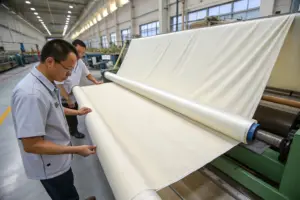
Summer coats amplify this difference. Lightweight fabrics like cupro, Tencel, and fine linen show every needle mark. A factory where the QC manager knows exactly which operator struggles with the binding attachment on a curved hem can fix the problem at the source. This is impossible in a massive, anonymous facility.
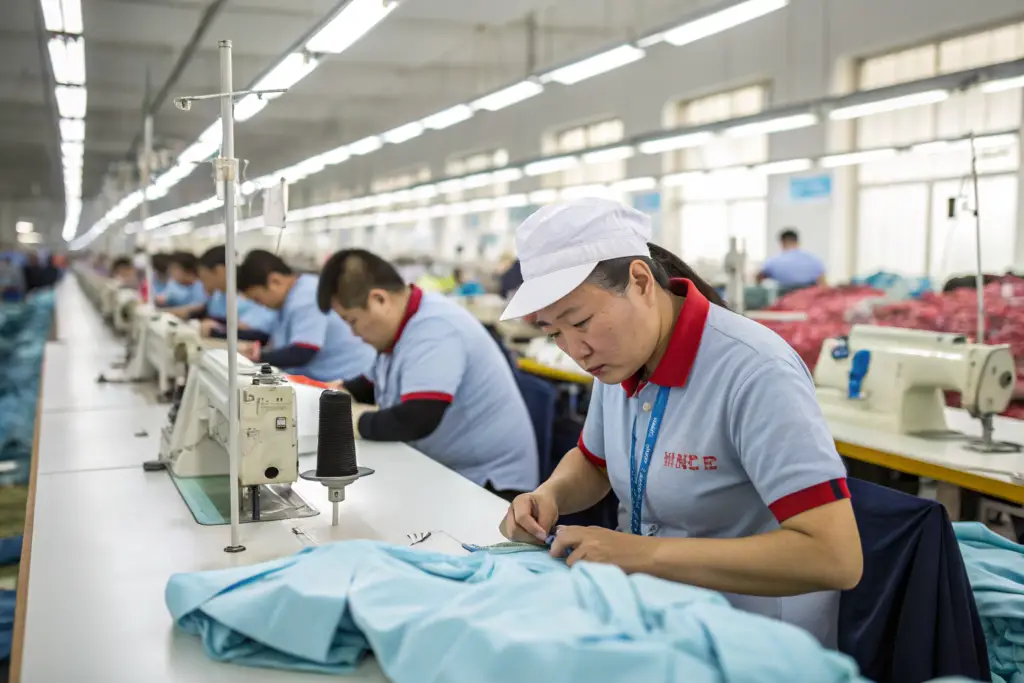
Why Does A Shorter Communication Chain Reduce Sewing Defects On Lightweight Coats?
Every extra person in the communication chain is a potential distortion. You tell your account manager a concern about the collar. The account manager emails the merchandiser. The merchandiser tells the production manager in a weekly meeting. The production manager scribbles a note for the line supervisor. The line supervisor, who was not in the meeting, misinterprets the scribble. The sewer does something completely different. The defect is baked into 2,000 collars before anyone realizes the message got garbled.
In a 5-line factory, the chain has only three links. The buyer speaks to the merchandiser. The merchandiser walks to the production floor and speaks directly to the line supervisor. The line supervisor adjusts the machine immediately. At Shanghai Fumao, we have a policy for summer outerwear. If a critical-to-quality issue, like a collar twist or a sleeve puckering, is detected, the production line is stopped until the owner and the mechanic review the issue together. This is not possible in a factory where the line supervisor needs three signatures from management to halt production. This rapid response is especially critical for lightweight fabric handling where a tension setting that is off by one Newton creates a permanent wave in a viscose seam. A shorter chain also means the buyer gets faster answers. You ask a technical question about the seam slippage test results. You get the actual lab report within an hour, not a paraphrased summary three days later after it has passed through four departments. The integrity of the garment quality management system depends entirely on the speed and clarity of this feedback loop.
How Does A Stable Workforce In A Smaller Factory Impact Your Coat's Consistency?
Turnover is the silent killer of quality. A mega-factory in an industrial zone might see 10% of its sewing operators quit every month after the Chinese New Year. They are replaced by agency temps who have never touched a summer weight wool blend. The first 500 coats these temps produce will have inconsistent seam allowances and crooked topstitching. That batch goes into your shipment, mixed in with the good units from the experienced sewers. Your customer receives one good coat and one bad coat and decides your brand is unreliable.
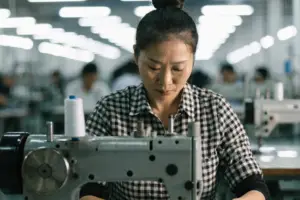
A 5-line factory typically employs a core team of workers who have been with the factory for years, often decades. Our head seamstress at Shanghai Fumao has been on our floor for 16 years. She has sewn everything from 90s-style windbreakers to modern minimalist dusters. She trains every new sewer personally. This stability means the output is predictable. When we run your summer coat order, we assign it to a line where the operators have specific experience with that fabric type. The line that runs polyester anoraks is not the same line that runs silk-blend kimono jackets. This specialization within the factory creates a "muscle memory" for the team. They know the sound of the machine when the needle starts to dull on a tight weave. They feel the tension change in the bobbin thread before it breaks. This tacit knowledge cannot be written in a manual. It is the value of skilled garment workers that a stable, smaller factory retains. Your summer coat is not just a pattern and some fabric. It is the physical manifestation of the skill of the hands that made it. Consistent hands produce consistent coats.
Can A 5-Line Factory Offer Competitive Pricing Against Larger Competitors?
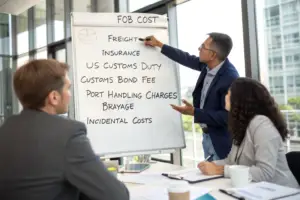
This is the first question every buyer asks. "If you are smaller, aren't you more expensive?" The answer is no, and I will show you the math. A mega-factory has massive economies of scale in raw material purchasing, that is true. They buy 100 tons of polyester at a discount. But they also have massive diseconomies of complexity. Their overhead is enormous. They have layers of middle management, a human resources department, an IT department, a canteen for 2,000 workers, and dormitories to maintain. All of this overhead is loaded onto the FOB price of every garment. A 5-line factory is lean. The owner is often the general manager, the head of merchandising, and sometimes even the driver who picks up the zippers from the supplier.
A 5-line factory can offer competitive pricing, and often beats larger factories on complex, lower-volume styles. Our overhead per unit is lower because we do not maintain a corporate bureaucracy. Our raw material costs are managed by joining purchasing consortiums with other factories of similar size. More importantly, our efficiency on small to medium runs is higher. We do not lose time resetting lines for a 50,000-unit order. For orders between 500 and 5,000 units per style, which is the sweet spot for most boutique summer coat brands, a focused factory like Shanghai Fumao consistently matches or undercuts the FOB price of the big players.
The big factory doesn't want your 2,000-unit order. They will price it punitively high to make you go away, or they will take it and bury it. We price it aggressively because it is exactly the volume we are engineered to handle.
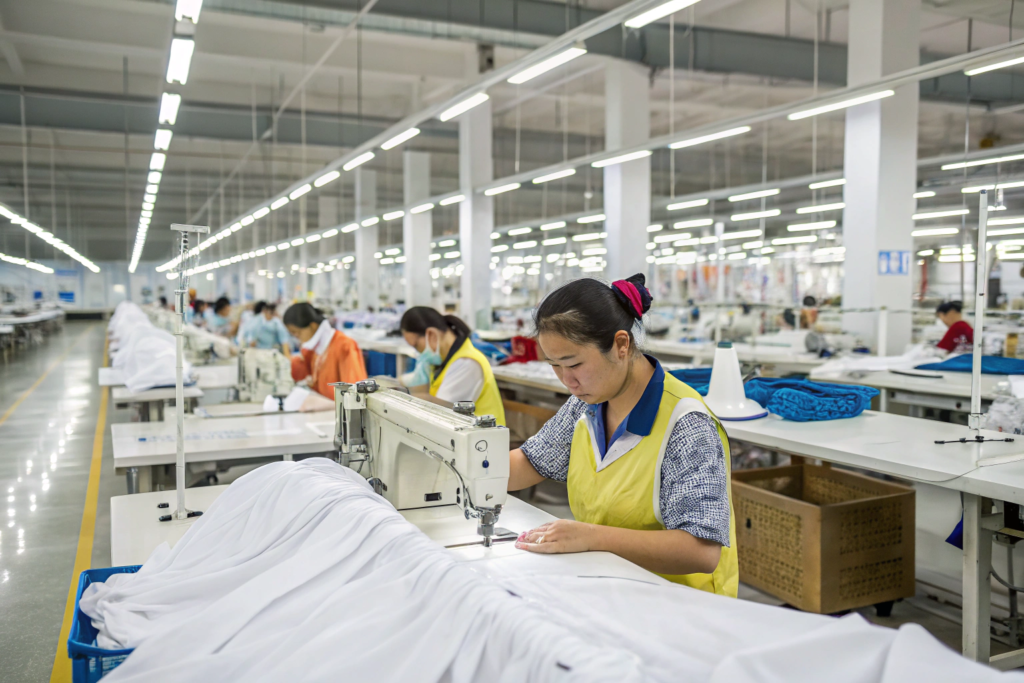
What Is The Real Cost Per Unit When You Factor In Defects And Delays?
Comparing FOB prices on a spreadsheet is a fool's game. The price on the purchase order is not the real cost. The real cost is the landed cost of a sellable unit. You need to calculate the "Cost of Poor Quality" into every quote.
Let me give you a real-world example from two of my clients who both sourced a similar style of linen summer blazer. Brand A went with a mega-factory at an FOB price of $15.50. Brand B came to us at Shanghai Fumao at an FOB price of $16.80. On paper, Brand A was winning. But Brand A's mega-factory had a 6% final inspection failure rate. They shipped 3,000 units, but 180 were defective. Brand A had to pay a local tailor in Los Angeles $8 per unit to fix the defects. That cost $1,440. The shipment was also 12 days late because the mega-factory missed the first booking window. Brand A had to air-ship 500 units to meet a Nordstrom deadline, which cost an extra $2,500. The real landed cost per sellable unit for Brand A was closer to $19. Brand B's shipment arrived on time, with a 1.5% defect rate, all by sea freight. Their real landed cost was $17.20. The "cheaper" factory was actually 10% more expensive. You must bake the cost of quality in manufacturing into your sourcing decision. A 5-line factory with a stable workforce and a short communication chain has a structurally lower defect rate. That lower defect rate translates directly into a lower real cost per unit on your retail rack. The delayed shipment is even more expensive. A summer coat that arrives in August is worth 70% less than a coat that arrives in May. The supply chain total cost analysis must include the markdown cost of late goods.
How Do Lower Operating Costs Translate Into Better Fabric And Trim Investment?
A 5-line factory does not waste money on a fancy showroom that gets remodeled every season. We do not employ a team of non-productive administrative staff. The money we save on marble floors goes into your garment.
I have a philosophy at Shanghai Fumao. We will spend aggressively on the things the customer touches and feels. The fabric, the zipper, the button, the lining. We will be frugal on everything the customer never sees. This means for a $14 FOB summer coat, we might allocate $5.50 to the fabric, where a mega-factory allocates $4.80 because they have to cover their higher administrative overhead. That $0.70 difference is the gap between a fabric that pills after three wears and a fabric that looks new all summer. It is the gap between a generic zipper that jams on week two and a YKK zipper that works for the life of the coat. The trim is another area where a focused factory adds value. Because we have lower fixed costs, we can absorb the minimum order quantity for premium trims that a small brand cannot order directly. A customized button with the brand logo might have a MOQ of 10,000 pieces. The mega-factory might refuse to order it for a 3,000-unit run and force you to use a stock button. We can order the 10,000 custom buttons and keep the remaining 7,000 in our trim library for your next season. This elevates the perceived value of your summer coat without increasing your unit price. The investment in premium garment trims is what makes a $98 coat feel like a $198 coat. A lean operation makes this possible on a modest budget.
Why Is Owner-Level Communication A Game Changer For Summer Sourcing?
Summer is a season of compressed timelines and high anxiety. A decision delayed by 24 hours can mean a shipment misses a critical retail window. When you work with a mega-factory, you are communicating with a sales representative whose job is to protect the factory, not to solve your problems. They relay your urgent email to a merchandiser who may or may not respond for two days. In a 5-line factory, you are often talking directly to the decision-maker. You are talking to the person who signs the checks and hires the mechanics.
Owner-level communication eliminates the principal-agent problem in sourcing. When you email Elaine at Shanghai Fumao, you are emailing the Business Director who sits 50 feet from the cutting table. When you raise a concern about the stitching on a specific pocket, the instruction travels verbally to the mechanic within minutes. There is no lost translation. There is no filtered message. The owner's reputation is directly on the line with every single shipment, so the incentive to perform is absolute.
This direct connection creates a partnership rather than a vendor-client transaction. I am not an account manager who will rotate to a different brand next quarter. I am the person who will be here next year and the year after, building a long-term relationship with your label.

How Does Direct Access To The Factory Owner Speed Up Problem Resolution?
Imagine this scenario. It is Tuesday, and your summer coat shipment is scheduled to sail on Friday. Your forwarder calls and says the vessel has rolled to the next week. But you have a promotional launch with influencers scheduled for Monday, and you absolutely need 200 units air-freighted directly to New York for the event.
In a mega-factory, the sales rep says, "I will check with logistics and get back to you." Two days later, they confirm it is impossible because the goods are already consolidated. In a 5-line factory, you call the owner. The owner walks to the packing floor, physically identifies the 10 cartons of your style, pulls them from the pallet before the truck arrives, and calls a courier for an express air shipment that same evening. The decision and the execution happen within an hour. I have done this exact thing for a client during the peak of the summer rush. The ability to walk onto the floor and physically move goods is a power that a corporate manager in a giant factory simply does not have. The hierarchy prevents it. The system prevents it. This direct access is also critical during the development phase. You have a design idea on a Wednesday evening. You sketch it on a napkin. You email the owner directly. The next morning, the owner discusses the sketch with the pattern maker over a cup of tea. A prototype is on the cutting table by Friday. This speed of product development in fashion is how you beat the fast-fashion giants. You out-communicate them because you have a direct line to the production nerve center.
Why Does A Long-Term Partnership With A Smaller Factory Reduce Your Sourcing Stress?
Sourcing stress is a tax on your health and your business. The constant fear that the factory is lying to you about the delivery date, the suspicion that the quality has been downgraded since the sample, the frustration of unreturned emails when a problem arises. This stress comes from dealing with a black box. You send money into the black box and hope a container of good coats comes out the other side. A long-term partnership with a transparent factory eliminates the black box.
When you work with a focused 5-line factory like Shanghai Fumao season after season, we learn your brand's unspoken rules. We know you hate polyester thread on a natural fiber coat. We know your label placement is always exactly 2 inches below the neck seam. We know your packaging must have the barcode sticker on the left sleeve, not the right. You do not have to repeat these instructions every order. We institutionalize your preferences. This reduces the mental load on your team. The factory also invests in your growth. Because we know you will be back next season, we pre-book your favorite Japanese cupro fabric in anticipation of your reorder. We reserve your production slot in our calendar before you even send the purchase order. This trust-based supplier relationship management transforms the supply chain from a battlefield into a competitive advantage. You spend less time policing the factory and more time designing and selling. The stress reduction is not just a nice feeling; it is a direct productivity gain for your brand. A calm founder makes better creative and strategic decisions than a founder panicking about a shipment stuck in customs because the factory forgot to include a critical fiber content label.
Conclusion
Choosing the right factory size is a strategic decision, not just a price comparison. A 5-line factory offers the agility of a speedboat and the stability of a battleship. It is the ideal partner for a serious summer outerwear brand that needs to balance quality, speed, and cost. You do not get lost in the shuffle of a mega-factory. You do not risk the fragility of a tiny workshop. You get the dedicated attention of a management team that knows your name and cares about your sell-through rate.
At Shanghai Fumao, we have built our entire operation around this sweet spot. Our five production lines are specialized, our workforce is stable, and our management structure is flat. We invest our savings into better fabrics and trims, not marble reception desks. We communicate directly, solve problems immediately, and treat your brand's reputation as if it were our own.
If you are ready to move your summer coat production to a factory that fits your brand, not one that just tolerates it, I invite you to start a conversation with us. Reach out to our Business Director, Elaine, at elaine@fumaoclothing.com. Tell us about your production volume and the styles you are planning. We will show you how a 5-line setup can give you the quality, the flexibility, and the real landed cost advantage that the big factories promise but rarely deliver.