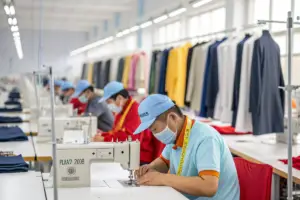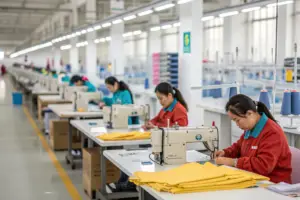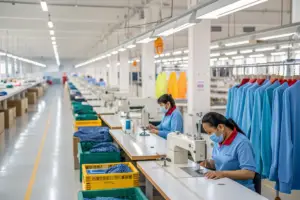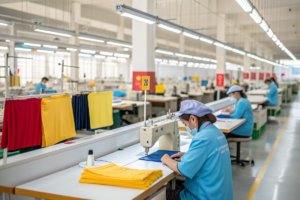
Five years ago, almost every American brand I worked with sourced on FOB terms. They had a freight forwarder they trusted, a customs broker they had used for years, and a belief that controlling the logistics chain saved them money. Today, over 70% of our new clients at Shanghai Fumao request DDP pricing on their first inquiry. They do not ask if we offer DDP. They ask for the DDP quote directly. This shift is not a trend. It is a structural change in how North American apparel brands think about risk, time, and the true cost of their supply chain. The summer season, with its brutal selling window and zero tolerance for delays, is the catalyst that has exposed the weaknesses of the FOB model and made DDP the new standard for professional sourcing.
North American buyers are switching to DDP for summer collections because the FOB model creates three fatal risks for a seasonal business: cost unpredictability from volatile freight rates and surprise destination charges, time unpredictability from customs exams and port congestion, and the administrative burden of managing a multi-party logistics chain while trying to run a brand. DDP eliminates all three risks by transferring the entire logistics and customs responsibility to the factory. The buyer receives a single all-in price and a guaranteed delivery window. In a summer season where a two-week delay can mean a 40% markdown, the DDP premium is not a cost. It is the cheapest insurance policy in the garment industry.
The old logic of FOB assumed that brands could manage logistics more efficiently than factories. That logic has been dismantled by the reality of the post-pandemic supply chain: volatile ocean freight spot rates, concentrated port congestion on the US West Coast, a shrinking pool of experienced customs brokers, and the increasing complexity of US tariff policy. The factory that can bundle logistics into the product cost is offering more than convenience. It is offering survival. I will walk you through the economics, the risk math, and the strategic implications of this permanent shift.
What Are The Real Risks Of FOB For A Seasonal Summer Collection?
Summer outerwear is the most time-sensitive category in the apparel industry. A winter coat that arrives two weeks late in October still sells at full price because the cold weather lasts for months. A summer coat that arrives two weeks late in June misses the peak demand curve. The customer who wanted a lightweight duster for her vacation has already bought a substitute. The wholesale account that needed the goods for a Memorial Day promotion has already filled the floor space with a competitor's product. The delay is not a postponement of revenue. It is a permanent loss of revenue. FOB exposes the brand to delays that are completely outside the brand's control.
The real risks of FOB for a summer collection are threefold. First, freight rate volatility. The spot rate for a 40-foot container from Shanghai to Los Angeles has swung between $1,500 and $12,000 in the last three years. A brand that budgets at $3,500 and ships at $7,000 loses $3,500 on a single container. Second, customs clearance risk. A random customs exam adds 5 to 14 days of delay and $1,500 to $4,000 in demurrage and exam fees. The brand pays these costs even though the delay was not the brand's fault. Third, the multi-party accountability gap. The factory, the forwarder, the shipping line, the port terminal, the customs broker, and the trucker are independent entities. When the shipment is late, each entity produces evidence that it performed its part on time. The brand owner spends two weeks investigating and receives no compensation. The goods arrive late, and the brand alone bears the financial consequence of the lost selling days.
FOB gives the brand control in theory. In practice, it gives the brand responsibility without authority. The brand is responsible for the outcome but has no authority over the shipping line, the port terminal, or the customs exam process. DDP solves this by giving both the responsibility and the authority to the same party: the factory.

How Has Ocean Freight Volatility Changed The FOB Equation Since 2020?
Before 2020, ocean freight was boring. The rate for a container from Shanghai to Los Angeles was $1,500 to $2,500, and it moved in a predictable band. A brand could budget for freight with reasonable accuracy. The FOB model worked because the largest variable cost in the logistics chain, the ocean freight, was stable. The pandemic destroyed that stability. The Ever Given blocked the Suez Canal. The US consumer demand for goods surged while the supply of containers and vessel space remained constrained. Freight rates spiked to $12,000 in late 2021. They crashed back to $1,500 in 2023. They spiked again to $6,000 in mid-2024 due to the Red Sea diversions. The freight market is no longer a background assumption. It is an active risk variable.
This volatility has fundamentally changed the FOB versus DDP calculus. Under FOB, the brand absorbs every freight rate spike. The brand quotes a retail price to wholesale accounts based on an estimated landed cost. If the freight rate doubles between the quote and the shipment, the brand's margin evaporates. The brand cannot go back to the wholesale account and raise the wholesale price. The brand eats the loss. Under DDP, the factory absorbs the freight rate volatility. The factory quotes a DDP price that is valid for a specific period, usually 30 days. The factory's quote includes the factory's estimate of the freight cost plus a risk buffer. If the freight rate spikes, the factory's margin compresses, not the brand's. The factory is better positioned to manage this risk because the factory has multiple clients shipping in the same period and can negotiate volume rates with forwarders. The brand has one shipment and no negotiating leverage. The ocean freight market volatility has turned freight from a line item into a risk exposure. Smart brands are transferring that exposure to the party best equipped to manage it: the factory.
What Happens When A Summer Shipment Is Selected For A Customs Exam Under FOB?
The Customs exam is the nightmare scenario of the FOB model. CBP selects a container for an exam based on risk algorithms that the importer cannot predict or control. The exam types range from a non-intrusive X-ray scan, which adds 1 to 3 days, to an intensive tailgate exam where the container is opened and the goods are physically inspected, which adds 5 to 14 days. The container is moved to a Centralized Examination Station, the CES. The clock starts on demurrage. The charges accumulate daily.
Under FOB, the financial burden of the exam falls entirely on the brand. The brand pays the exam fee, which is the cost of CBP's inspection, typically $200 to $500. The brand pays the CES fee, which is the cost of moving the container to the exam site and providing the labor to unload and reload it, typically $800 to $1,500 depending on the intensity of the exam. The brand pays the demurrage at the port and the detention on the container while the exam is in progress, which can total $2,000 to $4,000 for a two-week delay. The brand has no control over the exam timeline. The brand's broker can request expedition, but the request is not binding on CBP. The brand simply waits and pays. The summer selling window closes a little more each day. The brand's wholesale accounts cancel their orders. The brand is left with inventory that must be liquidated at a loss. The customs exam is an unavoidable risk for any importer. The question is who bears the financial consequence. Under FOB, the brand bears it. Under DDP, the factory bears it. This single risk transfer is, for many brands, sufficient justification for the DDP premium. The US Customs examination process is an opaque, slow, and expensive procedure. DDP wraps this procedure in a fixed price.
How Does DDP Actually Save Money Despite The Higher Upfront Quote?
The first reaction of a brand owner seeing a DDP quote next to an FOB quote is sticker shock. The DDP number is 10% to 15% higher. The instinct is to choose FOB to save money. This instinct is wrong for most small to mid-sized brands because it compares the DDP price to the theoretical minimum FOB cost, not to the actual FOB cost the brand will experience. The actual FOB cost includes the freight, the insurance, the duty, the broker fee, the port charges, the trucking, and the hidden costs of demurrage, exams, and time spent managing the process. When these are accurately accounted for, the DDP quote is often the cheaper option.
DDP saves money for the brand by eliminating the variance in the landed cost. The DDP quote is a guaranteed landed cost. The brand knows exactly what each coat costs delivered to the warehouse. The FOB quote is a base cost plus a series of variable charges that the brand cannot predict with accuracy. The brand budgets for the best-case FOB scenario and pays the worst-case FOB scenario. The difference between the two is the hidden cost of FOB. At Shanghai Fumao, we have analyzed the landed cost data for our clients who switched from FOB to DDP. On average, their actual landed cost under FOB was 3% to 5% higher than their budgeted landed cost due to freight spikes, port charges, and exam costs. Under DDP, their actual landed cost matched their budgeted landed cost exactly. The DDP premium bought them budget certainty, and the budget certainty saved them money by preventing margin erosion they could not plan for.
The saving is not in the line items. The saving is in the absence of the surprise invoice that arrives six weeks after the goods have sold and wipes out the profit on the entire order.
What Is The True Cost Comparison Between A DDP And An FOB Summer Shipment?
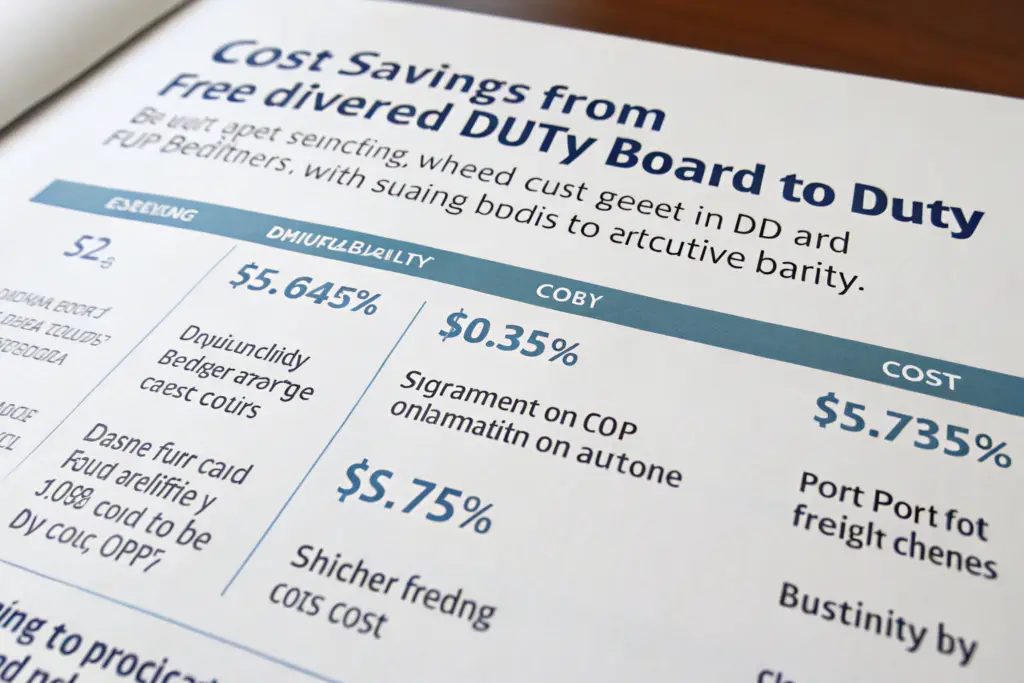
Let me walk through a real cost comparison based on a typical summer coat order of 3,000 units with an FOB value of $45,000, shipping from Shanghai to a warehouse in Dallas, Texas. These are mid-2025 rates, not peak-pandemic rates.
Under FOB, the brand's estimated costs are the FOB price of $45,000, the ocean freight of $3,800 for a 20-foot container, the marine insurance of $180, the US duty at 4.5% of FOB which is $2,025, the Merchandise Processing Fee of $155, the Harbor Maintenance Fee of $56, the ISF filing of $40, the single-entry bond of $225, the broker clearance fee of $250, the port handling and chassis fee of $450, and the drayage from Houston to Dallas of $850. The estimated landed cost is $53,031. The estimated cost per unit is $17.68. The brand budgets this number and prices the coat at $59 retail.
Now the actual FOB shipment. The forwarder added a peak season surcharge of $600 that was not on the initial quote. The container was selected for an X-ray exam, adding a $300 exam fee, a $500 CES fee, and four days of demurrage at $180 per day, totaling $720. The drayage company charged a fuel surcharge of $120 and a wait time fee of $150 because the warehouse took three hours to unload. The actual landed cost is $55,121. The actual cost per unit is $18.37. The brand's margin per unit shrinks by $0.69. On 3,000 units, the unbudgeted cost is $2,090. The brand's profit forecast was wrong by $2,090.
Under DDP, Shanghai Fumao quotes a delivered price of $56,500 for the same order. The DDP price is $3,469 higher than the FOB estimate but only $1,379 higher than the actual FOB cost. The DDP price is $18.83 per unit. The brand budgets this number and prices the coat accordingly. The goods arrive on time. The invoice is exactly $56,500. There are no additional charges. The brand's profit forecast is accurate. The DDP premium of $1,379 purchased the elimination of $2,090 in surprise costs. The DDP shipment was actually $711 cheaper than the real FOB cost. This is the math that converts FOB loyalists to DDP advocates. The total landed cost comparison FOB vs DDP consistently shows that the visible DDP premium is offset by the invisible FOB variance.
How Does Predictable Cash Flow Enable Better Business Planning For A Summer Launch?
A summer collection launch is a financial operation, not just a creative one. The brand owner must allocate capital across multiple activities: the deposit for production, the photography and marketing campaign, the wholesale sales team travel, the e-commerce platform fees, and the warehousing and fulfillment staffing. Each of these activities requires a cash commitment on a specific timeline. If the actual production cost exceeds the budget, the brand must pull cash from another activity, compromising the launch's overall effectiveness.
DDP provides a fixed cost that the brand can lock into the financial plan. The brand knows the total cash outflow for the goods on the day the purchase order is signed. The brand can then allocate the remaining capital to the revenue-generating activities with confidence. The marketing spend is not at risk of being raided to pay a surprise demurrage bill. The wholesale team's travel budget is secure. The e-commerce launch date is tied to a guaranteed delivery date, so the paid media campaign can be scheduled with precision. The cash flow predictability of DDP also improves the brand's relationship with its own financing sources. If the brand uses a line of credit or a purchase order financing facility, the lender values certainty. A lender is more willing to advance funds against a DDP purchase order with a fixed total cost than against an FOB purchase order with an unknown final cost. The predictable margin structure enables the brand to plan for growth. The brand knows that if it sells X units at Y price, it will generate Z profit. This allows the brand to confidently invest in the next season's development, hire new team members, or expand into new product categories. The supply chain cash flow management literature is clear that cost predictability is more valuable than cost reduction for businesses in growth mode. A predictable cost that is 10% higher enables better strategic decisions than a volatile cost that averages 10% lower.
What Role Does The Shrinking US Customs Brokerage Pool Play In The Shift?
There is a quiet crisis in the US customs brokerage industry. The workforce is aging. The average age of a licensed customs broker in the United States is over 55. The licensing exam is notoriously difficult, with a pass rate below 30%. The number of new licensees entering the profession each year is not keeping pace with retirements. The result is a shrinking pool of qualified brokers, increasing fees for brokerage services, and longer response times for the brokers who remain. For a small to mid-sized apparel brand, finding a good broker who specializes in textile and apparel classification is becoming harder and more expensive.
The shrinking US customs broker pool is accelerating the shift to DDP because a factory that ships DDP maintains a dedicated broker relationship that the brand does not need to replicate. At Shanghai Fumao, we work with a US customs broker who handles hundreds of apparel entries per year, knows the HTS classification for every type of summer coat, and responds to our queries within hours. A small brand trying to hire this same broker directly would not get the same level of service because the broker prioritizes high-volume clients. By shipping DDP, the brand effectively leases our broker relationship. The brand gets the benefit of a top-tier broker without having to find, vet, and retain one in a shrinking market.
The broker shortage is a structural problem that will not resolve quickly. The Customs Brokers License Examination is administered twice a year. The number of candidates is not surging. The large logistics companies are acquiring independent brokerages, consolidating the market. The independent broker who knew the local port's inspectors by name is retiring. The replacement is a centralized processing center with a 1-800 number. This depersonalization of the brokerage relationship increases the risk of errors, delays, and unresponsive service. FOB requires the brand to navigate this deteriorating service landscape directly. DDP insulates the brand from it.
Why Is Apparel-Specific Customs Knowledge Becoming Harder To Find?
Apparel classification under the US Harmonized Tariff Schedule is a specialized skill within a specialized profession. A summer coat is not a generic consumer good. It is classified based on the gender of the intended wearer, the fiber content, the fabric construction of knit versus woven, and the garment type of overcoat, carcoat, anorak, windbreaker, or jacket. The duty rates vary across these classifications. A misclassification that places a woven cotton women's summer coat in the wrong subheading can result in an overpayment of duties or, worse, an underpayment that triggers a CBP audit and a back-duty bill with interest and penalties.
The number of customs brokers with deep apparel-specific knowledge is shrinking. The retiring generation of brokers learned apparel classification through decades of hands-on work with garment importers. They could look at a coat, feel the fabric, read the fiber content label, and immediately know the correct HTS code. The new generation of brokers, working in centralized processing centers, relies on the importer to provide the correct classification. The broker's role shifts from advisor to data entry operator. If the importer, the brand owner, does not know the correct classification, the broker may not catch the error. The entry is filed with the wrong code. The liability rests with the importer, not the broker. Under DDP, the factory assumes this classification liability. The factory knows the fiber content and construction because the factory made the coat. The factory's dedicated apparel broker reviews the classification based on the factory's product specifications, not on the brand's description. The classification accuracy is higher because the data is sourced from the party that physically manufactured the product. The textile and apparel HTS classification is a knowledge-intensive process. DDP concentrates this knowledge at the point in the supply chain where the product data is most accurate: the factory floor.
How Does The DDP Model Protect Brands From CBP Penalties And Audits?
CBP penalties for customs violations are severe and personal. The Importer of Record, the entity named on the customs entry, is legally responsible for the accuracy of the declaration. If CBP determines that the goods were misclassified, undervalued, or incorrectly marked with the country of origin, CBP issues a penalty notice to the Importer of Record. The penalty can be a multiple of the lost duties, up to the domestic value of the goods for fraud cases. CBP can also seize the goods if the violation is egregious.
Under FOB, the brand is the Importer of Record. The brand's name is on the entry. The brand's bond is used. The penalty notice is addressed to the brand. The brand owner is personally exposed, even if the misclassification was an honest mistake made by the brand's customs broker. The brand owner can attempt to recover the penalty from the broker's errors and omissions insurance, but this is a legal process that takes time and has no guaranteed outcome. Under DDP, the factory is the Importer of Record. The factory's name is on the entry. The factory's bond is used. The penalty notice is addressed to the factory. The brand's legal exposure to CBP is effectively zero for the import transaction. The brand is the consignee, the receiver of the goods, but not the party that made the declaration. CBP pursues the declarant. This liability shield is the most undervalued benefit of DDP. A single CBP penalty for a misclassified shipment can bankrupt a small brand. The DDP premium is a fraction of the cost of a single penalty. The CBP penalty and enforcement actions are public record. Brands that import under their own name assume this liability. Brands that import under the factory's DDP entry do not.
How Is The North American Market's Demand For Speed Reshaping Logistics Norms?
The speed of fashion has permanently accelerated. A summer coat trend that once took two seasons to move from runway to mass market now moves from a TikTok video to a sold-out product in three weeks. The traditional supply chain, designed for 60-day lead times, is too slow for this reality. Brands that restock by sea miss the trend. Brands that restock by air without a pre-established logistics pipeline pay a premium and still face customs clearance delays if they are managing the process themselves. The market's demand for speed is forcing brands to rethink their logistics architecture from the ground up.
The North American market's demand for speed is accelerating DDP adoption because DDP provides the pre-built logistics pipeline that enables rapid response. A brand that has an established DDP relationship with a factory can trigger a restock on a Monday and receive goods at their warehouse by the following Monday. The factory handles the air freight booking, the customs pre-clearance, and the last-mile delivery through established, repeatable processes. The brand does not negotiate with a forwarder, vet a broker, or file an ISF. The brand sends a purchase order and receives the goods. At Shanghai Fumao, our DDP clients have a documented express restock protocol that executes in under 7 days from order to delivery. This speed is not improvised. It is engineered into our logistics relationships, our customs clearance procedures, and our packing methods.
Speed is not a feature of DDP. It is a structural consequence of the single-party accountability that DDP creates. When one party controls the entire chain, that party can optimize the chain for speed because there are no handoffs between independent entities with misaligned incentives.
Why Is A Pre-Cleared DDP Pipeline Faster Than A Traditional FOB Clearance?
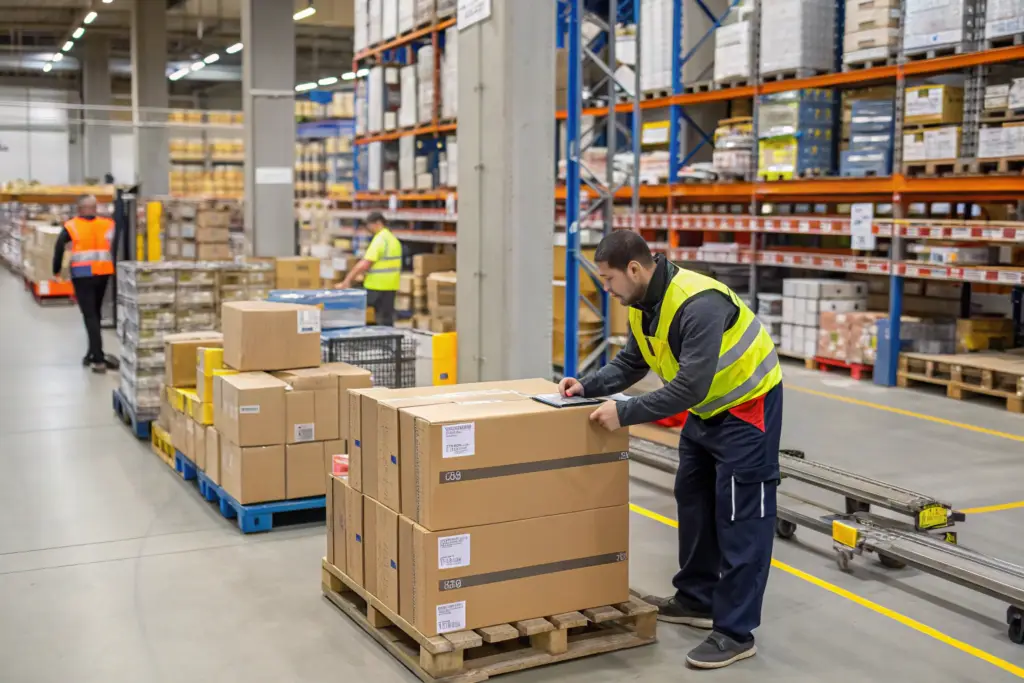
The traditional FOB clearance process is sequential. The goods arrive at the port. The broker files the entry. CBP reviews the entry, which may take a day or several days depending on the workload and the risk flags on the importer and the commodity. After the entry is accepted, CBP may or may not select the shipment for an exam. The goods are released after the exam or after the entry is accepted without exam. Only then can the trucker pick up the container. The process is linear and each step depends on the completion of the previous step.
The DDP pre-clearance process is parallel. The factory's broker files the entry before the vessel or aircraft arrives. For ocean freight, the entry can be filed up to 5 days before the estimated arrival date. For air freight, the entry is filed while the aircraft is in the air. CBP reviews the entry before the goods land. If the entry is accepted and there is no exam hold, the goods are released immediately upon arrival. The trucker is dispatched while the vessel is docking. The container is picked up within hours of discharge. This parallel processing compresses the destination transit time by 2 to 5 days compared to the sequential FOB process. The pre-clearance is possible under DDP because the factory's broker has all the information needed to file the entry long before the goods arrive. The commercial invoice, the packing list, the HTS classification, and the duty payment are prepared and submitted as soon as the vessel sails, not after it docks. Under FOB, the brand's broker often waits for the original documents from the factory before filing the entry. The factory sends the documents by courier. The courier takes 3 to 4 days. The entry is filed late. The goods sit at the terminal accruing storage while the documents travel. The US Customs pre-clearance procedures are available to any importer, but they require a proactive broker and a factory that provides accurate digital documents immediately. DDP aligns these requirements because the factory controls both the document production and the broker relationship.
How Does The DDP Model Enable A True Omnichannel Summer Strategy?
An omnichannel strategy means selling the same summer coat collection through multiple channels simultaneously: wholesale to department stores, direct-to-consumer on the brand's website, marketplace fulfillment to Amazon, and drop-ship to specialty boutiques. Each channel has different delivery requirements, different labeling and packing specifications, and different peak selling windows. Managing the logistics for an omnichannel launch under FOB is a coordination nightmare. The brand must orchestrate the factory, the forwarder, the port, the broker, the 3PL warehouse, and the individual channel requirements.
DDP simplifies the omnichannel logistics because the factory can manage the channel-specific routing at origin. The factory can pack and label the goods for each channel on the production floor. The wholesale units are packed in bulk cartons with retail-ready packaging. The DTC units are individually polybagged with branded inserts. The Amazon units are labeled with FBA shipment IDs and palletized to Amazon's specifications. The drop-ship units are packed in individual shipping cartons ready for final mile delivery. The factory then ships these channel-specific consignments under a single DDP master bill, clearing customs as one entry, and delivering to the brand's 3PL or directly to the individual channel destinations. The brand does not receive a container of mixed goods that must be broken down, re-labeled, and re-shipped at a US warehouse, incurring double handling and labor costs. The goods arrive channel-ready. The omnichannel complexity is absorbed by the factory's packing floor, not by the brand's warehouse team. This origin-based value-added logistics is only possible when the factory controls the entire logistics chain. Under FOB, the factory's responsibility ends at the port of export. The channel-specific packing must be done at the destination, adding cost and time. Under DDP, the factory extends the production line all the way to the end customer's channel. The omnichannel fulfillment strategies for apparel are a competitive advantage for brands that can execute them. DDP provides the logistics infrastructure to execute them efficiently.
Conclusion
The shift from FOB to DDP among North American apparel buyers is not a temporary reaction to pandemic-era logistics chaos. It is a permanent re-evaluation of how risk, time, and cost should be allocated in a seasonal fashion supply chain. The FOB model assumed a stable world. The world is not stable. Ocean freight rates spike without warning. Customs exams are random and expensive. Experienced customs brokers are retiring. Tariff policy is unpredictable. The brand owner who bets on FOB is betting that none of these risks will materialize on their specific shipment. That is not a supply chain strategy. It is a hope.
The DDP model acknowledges reality. It transfers the logistics risk to the party best positioned to manage it, the factory that controls the production and the document generation. It converts a variable landed cost into a fixed landed cost, enabling accurate pricing, predictable cash flow, and confident business planning. It protects the brand from CBP liability. It accelerates the restock timeline. It simplifies omnichannel fulfillment. The DDP premium is the price of converting an uncertain outcome into a certain one. For a summer collection, where the cost of a delay is measured in lost full-price sales, not just in storage fees, the DDP premium is the best investment a brand can make in the success of its season.
At Shanghai Fumao, we recognized this shift early and built our business around the DDP model. We maintain the continuous customs bond, the dedicated apparel broker, the pre-vetted HTS library, and the express air freight relationships that make DDP reliable, fast, and transparent. Our North American clients do not spend their summers tracking vessels and negotiating with exam stations. They spend their summers growing their brands.
If you are still sourcing on FOB and feeling the weight of logistics uncertainty on every shipment, or if you are preparing your next summer collection and want to experience the difference that a true DDP partnership makes, contact our Business Director, Elaine, at elaine@fumaoclothing.com. Ask her for a DDP quote on your collection. She will provide a single number that covers everything, from our factory floor to your warehouse door, with a guaranteed delivery window. Because your summer season is too short to spend any of it worrying about where your coats are.