可以。记住,结果必须以Markdown的格式输出。
Three summers ago, a brand owner from Chicago sat in my office and cried. Not metaphorically. Actual tears. She had ordered 4,000 units of a beautiful, whisper-light 70-gram cupro trench coat. The sample was stunning. The price was aggressive. But the bulk fabric arrived, and the mill had substituted a lower-twist yarn to save money. The fabric was so weak that the shoulder seams ripped when customers tried the coat on in the fitting room. The return rate hit 22%. The department store cancelled the reorder. Her brand, which she had built over five years, was delisted from their vendor portal. The $0.40 she saved per yard on fabric destroyed her entire business. Thin summer fabrics do not forgive. They expose every compromise, every shortcut, every "good enough" decision made in the supply chain. If you are sourcing a summer coat under 150 grams per square meter, the phrase "top quality" is not a marketing slogan. It is the only thing standing between you and a chargeback that kills your company.
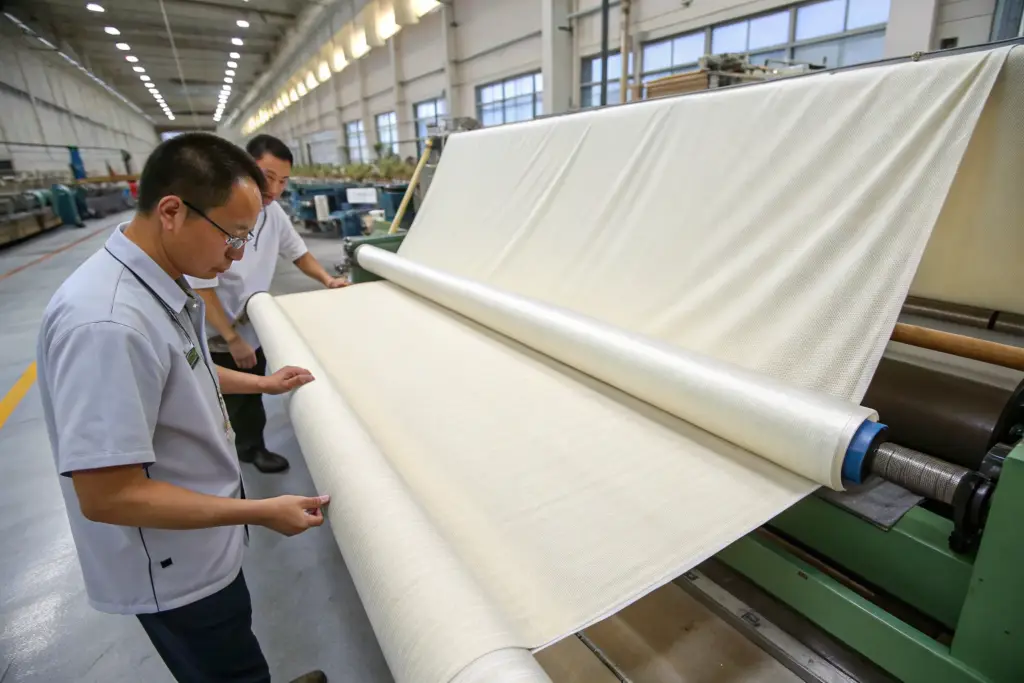
"Top quality" is non-negotiable for thin summer coat fabrics because the engineering margin for error shrinks to almost zero. A heavy wool overcoat can hide a weak yarn inside a thick weave. A 90-gram linen-viscose duster cannot hide anything. The fabric must have sufficient tensile strength to hold a seam under the strain of a moving arm, yet remain soft enough to drape without stiffness. The color must be uniform across the entire roll because any dye streak is visible in direct summer sunlight. The finish must resist pilling after three wears against a crossbody bag. A quality failure in a lightweight summer shell is not a cosmetic flaw. It is a structural collapse. At Shanghai Fumao, we reject approximately 12% of the lightweight fabric rolls delivered by our mills before they ever reach the cutting table because we know a marginal roll produces a catastrophic return.
You cannot negotiate physics. A thin fabric is an exposed nerve. Let me show you the specific points of failure, the tests that matter, and the real cost of betting your brand on a fabric that was "almost" good enough.
What Fabric Tests Expose Weaknesses In Lightweight Summer Coatings?
Standard textile testing is designed for medium-weight fabrics. A test that works for a 250-gram twill is not sensitive enough for a 100-gram crepe. You need a specialized battery of tests that simulate the actual abuse a summer coat endures. A summer coat is worn over bare arms. It is exposed to sunscreen, sweat, and the friction of a seatbelt. It is washed more frequently than a winter coat because it touches the skin. The testing protocol must reflect these real-world conditions, not just the abstract standards of a lab report.
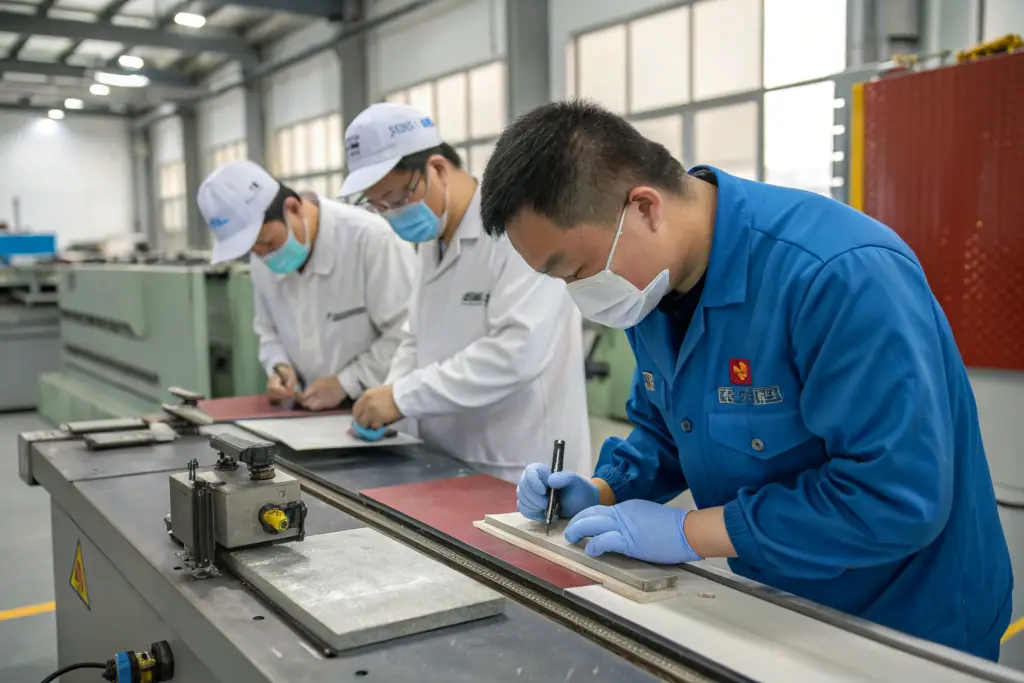
The three critical tests for lightweight summer coatings are the seam slippage test under low load, the Martindale abrasion test with a reduced weight, and the lightfastness test under extended UV exposure. Standard seam slippage uses a 6mm jaw opening, but for fabrics under 120 GSM, we test at a 3mm opening because even a tiny seam gap looks like a hole in a thin, unlined coat. Standard abrasion is 9 kPa of pressure, but we reduce it to 6 kPa to simulate the delicate friction of skin contact rather than heavy upholstery rub. Standard lightfastness is 20 hours under xenon arc, but we extend it to 40 hours because a summer coat lives in direct sunlight, not a dark closet.
These modified tests catch failures that a standard lab report would pass. A mill might provide a certificate that says the fabric meets the commercial standard, but that standard was written for a winter blazer, not for your tissue-weight kimono jacket. You must test for the actual use case.
How Does Seam Slippage Testing Differ For Fabrics Under 120 GSM?
Seam slippage is the silent killer of lightweight coats. The seam itself does not rip. The threads do not break. Instead, the weave of the fabric simply opens up under tension. The yarns slide apart, creating a gap along the stitch line. On a thick tweed, this gap is invisible because the fabric pile covers it. On a smooth 90-gram cupro, the gap looks like a ladder in a pair of stockings. The coat is not torn, but it is unwearable because the customer can see daylight through the side seam.
The standard test method, ASTM D434 or the newer ISO 13936, typically specifies a jaw separation of 6mm to determine failure. For a lightweight summer shell, that is far too generous. A 6mm gap on a 100-gram fabric is a visible canyon. At Shanghai Fumao, we have developed an internal standard where we consider a seam failed if the gap exceeds 2mm under a 5kg load for fabrics under 120 GSM. We also test the seam in the bias direction, not just in the straight grain. A sleeve seam is often cut on the bias for shaping, and bias seams in lightweight fabrics are dramatically more prone to slippage. I remember a specific incident with a lyocell-linen blend anorak. The mill's test report showed a passing seam slippage value, but they had tested the straight grain only. We tested the bias seam, and the gap opened to 4mm at just 3kg of force. We rejected the fabric lot and worked with the mill to increase the yarn twist and add a microdot fusible to the seam allowance in the pattern. This added $0.18 to the unit cost but eliminated a return reason code that would have cost $12 per returned unit in processing and liquidation. The seam slippage in woven fabrics is a textile engineering problem, not a sewing problem. The sewer cannot fix a fabric that refuses to hold a stitch.
Why Is Lightfastness More Critical For Summer Coats Than Winter Outerwear?
A winter coat sees maybe 20 hours of direct sunlight across an entire season. It is worn to the office, worn indoors, and hung in a dark closet. A summer coat, especially a viral style worn at outdoor brunches, garden parties, and beachside weddings, can log 20 hours of direct UV exposure in a single weekend. The sun is a relentless bleaching agent. A dye that fades gracefully over three winters will look patchy and cheap after two weeks of summer use.
The standard lightfastness rating for apparel is a grade of 4 on the blue wool scale, tested under 20 AFU of xenon arc exposure. For summer outerwear fabrics, we raise the bar to a grade of 5 and test under 40 AFU. This is the standard typically used for outdoor furniture, not fashion apparel. But a summer coat is effectively outdoor furniture that happens to be worn on a human body. The critical colors are the pastels. A dusty rose, a sky blue, a soft sage green. These colors are achieved with low concentrations of dye, and low dye concentration means less UV resistance. A pastel summer coat can fade two full shades in a week of heavy sun exposure if the dye chemistry is not optimized. We witnessed this with a client who sourced a cheap polyester duster from a mill that used a basic disperse dye instead of a high-lightfastness automotive-grade dye. The coat looked beautiful in the polybag. After one weekend at Coachella, the back panel was a different color than the front panel because the wearer had been facing the sun. The brand received 150 returns with the same photo: a two-tone coat. The textile colorfastness to light is not a detail. It is the defining characteristic of whether a summer coat looks premium or disposable after its first outing.
How Do We Prevent Pilling And Surface Abrasion On Delicate Summer Shells?
Pilling is the small, rough balls of fiber that form on the surface of a fabric. On a heavy sweater, pilling is annoying. On a sleek, lightweight summer blazer, pilling is a death sentence. The coat instantly looks five years old. The customer, who paid $120 for a "premium" layering piece, feels cheated. Pilling is caused by abrasion. The fabric rubs against a seatbelt, a handbag strap, the edge of a restaurant table, or the customer's own arm. Thin fabrics pill faster because the individual fibers are shorter and weaker, making them easier to pull out of the yarn structure and tangle into a pill.
We prevent pilling on delicate summer shells through a three-stage defense: yarn selection, fabric finishing, and wear simulation. We specify long-staple fibers for all lightweight shell fabrics. Short fibers have more loose ends, and loose ends become pills. We apply a bio-polish enzyme treatment during finishing that digests the micro-fuzz on the fabric surface without weakening the core yarn. Finally, we run a Martindale abrasion test with a silk friction pad, not the standard wool pad, to simulate the specific friction of skin and fine clothing linings. A fabric that passes the wool-pad test might still fail the silk-pad test because the friction coefficients are different.
The battle against pilling is won at the fiber level. You cannot fix a pilling problem with a better sewing machine. You fix it by choosing a cotton with a minimum staple length of 1.25 inches, a linen that has been wet-spun rather than dry-spun for smoother fiber alignment, or a polyester filament that is extruded as a continuous fiber rather than cut into short staples.
What Is Bio-Polishing And How Does It Save A Lightweight Viscose Coat?
Viscose, also called rayon, is a beautiful summer fiber. It drapes like a dream. It takes color brilliantly. It breathes. But raw viscose fabric has a dirty secret. It is covered in microscopic fuzz. These tiny fiber ends, created during the weaving process, stand up from the yarn surface. Under a microscope, the fabric looks like a freshly mown lawn. When the coat is worn, these tiny grass blades rub together and tangle into pills.
Bio-polishing is an enzymatic finishing process that shaves this lawn. The fabric is washed in a bath containing cellulase enzymes. These enzymes are biological catalysts that specifically digest cellulose, the material that makes up viscose fibers. The enzyme attacks the loose, weak micro-fuzz on the surface but does not penetrate deep enough to damage the strong, twisted yarn core. The result is a fabric surface that is permanently smooth. The hand feel becomes noticeably softer. The color clarity improves because light reflects off a flat surface instead of a fuzzy one. The pilling resistance grade on a Martindale test can jump from a grade of 2 to a grade of 4 after bio-polishing. This process adds about $0.25 per yard to the fabric cost and requires careful control of the enzyme concentration, temperature, and dwell time. If the enzyme is left too long, it eats through the yarn entirely and the fabric strength collapses. This is the kind of precision that separates a top-quality factory from a commodity mill. I recall a specific run of viscose summer dusters where the mill had skipped the bio-polish step to meet a cheaper price point. The first customer wash cycle generated so much surface fuzz that the coat looked like it had been through a war. The entire batch of 2,500 units was liquidated at a loss. The enzymatic bio-polishing in textiles is not a luxury add-on. It is the minimum standard for any viscose garment that claims to be "quality."
How Does The Martindale Test With A Silk Pad Differ From The Standard Wool Pad?
The Martindale abrasion tester is a machine that rubs a circular fabric sample against an abrasive surface in a Lissajous figure pattern, a complex looping motion that ensures the rubbing is not just in one direction. The standard abrasive is a wool woven fabric specified by the ISO 12947 standard. Wool is used because it is a consistent, standardized material that produces repeatable results. But wool is rough. It has scales. It is an aggressive abrasive that simulates the worst-case scenario of a coat rubbing against a rough upholstery fabric.
A summer coat rarely rubs against wool upholstery. It rubs against a cotton t-shirt, a bare shoulder, a silk blouse, or the smooth nylon webbing of a crossbody bag. These surfaces have a much lower coefficient of friction than wool. So why does this matter? Because some fibers, especially cheap polyester blends, perform deceptively well on the wool pad test. The rough wool actually tears the pills off the surface as they form, making the fabric look cleaner in the test than it does in real life. The silk pad test is less aggressive. It leaves the pills in place, revealing the true pilling tendency of the fabric over a longer wear period. At Shanghai Fumao, we run both tests. A fabric must pass the standard wool pad test at 2,000 rubs with a minimum grade of 4, and it must also pass the silk pad test at 5,000 rubs with a minimum grade of 3.5. The 5,000 rubs simulate a full season of casual wear. This dual-pad protocol has saved our clients from the silent pilling problem that only appears after the return window has closed and the customer has worn the coat five times. The abrasion and pilling testing methods must match the actual use environment, not just the laboratory standard.
Why Does Fabric Hand Feel Directly Impact A Summer Coat's Perceived Value?
The "hand feel" is the tactile sensation of touching the fabric. It is the first physical interaction a customer has with your coat. Before they check the seam. Before they try it on. Before they look at the price tag. They touch the fabric. That single touch frames the entire value perception. If the fabric feels cheap, thin, scratchy, or synthetic, the customer has already decided the coat is overpriced. No amount of design detail can recover from a bad hand feel. Summer fabrics are especially vulnerable to hand feel judgments because the coat is often worn against bare skin. A slight scratchiness that would be acceptable in a lined winter coat is intolerable in an unlined summer shell.
Fabric hand feel directly impacts the perceived value because the customer's brain equates softness with luxury and stiffness with cheapness in summer-weight garments. A top-quality 80-gram Tencel twill with a peach-skin finish will consistently command a retail price 30% to 50% higher than a mechanically similar 80-gram polyester crepe, even if the sewing quality is identical. The hand feel is the proxy for "expensive" in the customer's pre-conscious mind. It is the reason a $198 Eileen Fisher linen duster sells out while a $49 fast-fashion knockoff languishes on the clearance rack, even if the silhouettes are nearly identical.
The hand feel is engineered, not discovered. It is the result of fiber choice, yarn spinning method, weave construction, and chemical finishing. A top-quality factory treats hand feel as a primary specification, not an afterthought.

How Do We Source And Specify "Peach Skin" Finishes For Polyester Summer Shells?
Peach skin is a finishing technique that gives polyester microfiber fabric a texture similar to the skin of a ripe peach. It is slightly fuzzy, incredibly soft, and matte in appearance. It hides the synthetic sheen that makes cheap polyester look cheap. A peach-skin finish can transform a $3-per-yard polyester into a fabric that feels like a $10-per-yard silk blend. The process involves mechanically sanding the surface of the fabric with fine emery rollers, a process called sueding or emerizing. This breaks some of the surface fibers and creates a micro-nap.
The difficulty is consistency. Too little sanding, and the fabric remains slick and shiny. Too much sanding, and the fabric becomes weak and develops thin spots that tear during sewing. We specify the finish with three parameters. First, the sueding machine must run at a specific roller speed and pressure, calibrated for the exact weight and weave of the base fabric. Second, the fabric must pass a "baggy test" after sueding. We cut a swatch, pull it over a fist, and release it. If the fabric does not recover to a flat surface, the sueding has damaged the elastic structure of the weave. Third, the fabric must pass a 10-wash hand feel retention test. A cheap peach-skin finish washes off after three laundry cycles because the micro-fuzz is not mechanically locked into the yarn. A quality peach-skin finish, using a combination of mechanical sueding and a light silicone micro-emulsion softener, will maintain the peachy touch for the life of the garment. I once had a client who sourced a peach-skin anorak from a low-tier mill. The hand feel was gorgeous out of the polybag. After one wash, it felt like a cheap tent. The silicone had simply coated the fabric without bonding. The fabric finishing techniques for synthetic shells must combine mechanical and chemical processes to be durable.
Why Does The Choice Between Ring-Spun And Open-End Cotton Matter For A Summer Coat?
This is a level of detail that most brand owners never explore, but it is the single biggest factor in the hand feel of a cotton summer coat. Cotton yarn can be spun using two different technologies. Ring spinning is the traditional method. It twists the fibers slowly, creating a yarn with a helical structure where the fiber ends are mostly buried inside the yarn core. The resulting yarn is strong, soft, and has a natural luster. Open-end spinning, also called rotor spinning, is the faster, cheaper method. It uses a high-speed rotor to twist the fibers. The fiber ends are not well-controlled, so many of them protrude from the yarn surface. The resulting yarn is hairier, stiffer, and weaker.
For a summer cotton coat, especially an unlined one, ring-spun yarn is non-negotiable if you are positioning the product as premium. The customer feels the protruding fiber ends on an open-end fabric as a subtle scratchiness. It is not enough to cause a rash, but it is enough to make the coat feel "less expensive" than a ring-spun alternative. The open-end fabric also pills faster because those protruding ends are ready-made pill initiators. The cost difference is real. Open-end yarn might be 20% to 30% cheaper. But the downgrade in perceived quality wipes out that saving in the retail price you can command. We always specify "100% long-staple ring-spun combed cotton" on our fabric purchase orders for summer shells. "Combed" means the short fibers have been mechanically removed before spinning, which further reduces the hairiness. This specification adds cost, but it is the difference between a coat that feels like a luxury boutique item and one that feels like a promotional giveaway. The yarn spinning technologies are the invisible architecture of your garment's tactile identity.
What Are The Hidden Risks Of Using Cheap Substituted Lightweight Fabrics?
The substitution game is the oldest scam in the textile industry. You approve a sample made from a beautiful Italian-milled 100% linen. The bulk order arrives, and the fabric looks similar but feels different. The mill has substituted a lower-grade Chinese or Indian linen, or worse, they have blended in a cheap viscose or polyester without telling you. The fiber content label says "100% Linen," but a burn test reveals the synthetic content. The substitution saves the factory or the mill $0.80 per yard. It costs you your brand's integrity. Customers who know fabric will feel the difference. Even customers who don't know fabric will notice when the coat wrinkles differently than the one they tried on in the sample sale.
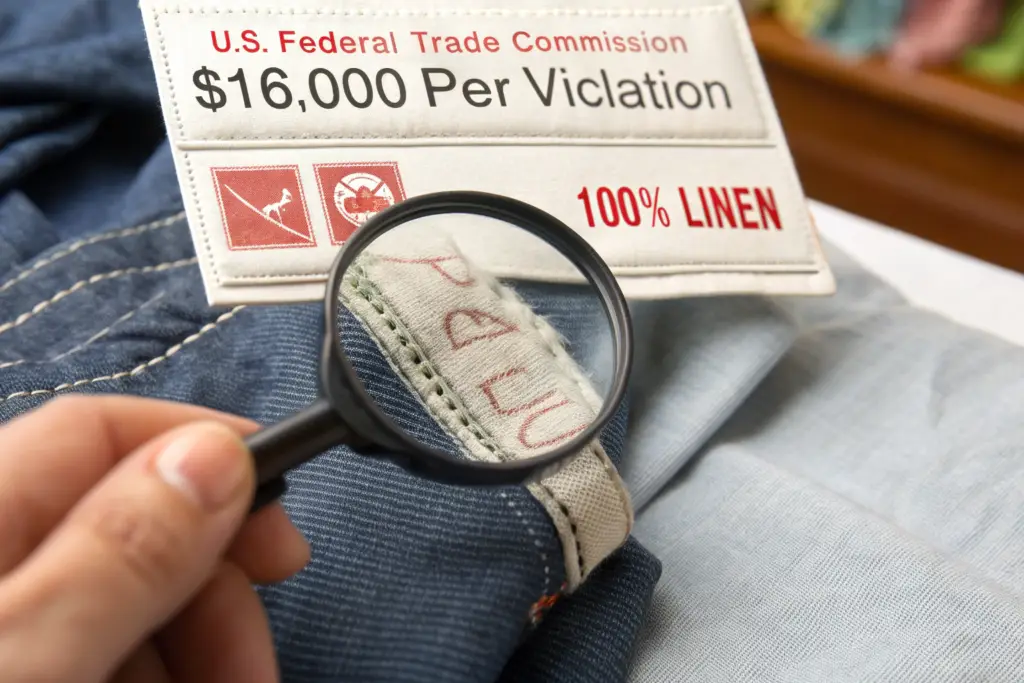
The hidden risks of cheap substituted fabrics include regulatory fines for false fiber content labeling, performance failures in washing and wearing, and the total loss of customer trust. The U.S. Federal Trade Commission requires accurate fiber content labeling under the Textile Fiber Products Identification Act. A garment labeled "100% Linen" that contains even 5% polyester is illegally misbranded. The fines are up to $16,000 per violation. Beyond the legal risk, a substituted fabric will fail the original quality tests. A linen-viscose blend disguised as pure linen will shrink 4% instead of 2%. A polyester blend disguised as silk will melt under a hot iron. The substitution is never a harmless shortcut. It is a time bomb.
You need a barrier between your brand and the temptation of the mills. That barrier is a factory with an in-house testing lab and a zero-tolerance policy on fiber content discrepancies.
How Do We Verify Fiber Content Before A Single Meter Is Cut?
A mill certificate is a piece of paper. It can be photocopied. It can be photoshopped. It can be genuinely issued for a different lot and then attached to your lot by "mistake." You cannot trust a certificate. You must verify the fiber content physically.
At Shanghai Fumao, we perform a fiber identification test on the head end of every single roll of lightweight fabric before it enters the cutting room. We use a combination of three methods. First, the visual burn test. A technician pulls a small yarn sample, holds it to a flame, and observes the behavior. Cotton and linen burn cleanly with the smell of burning paper and leave a fine ash. Polyester melts and drips with black smoke and a chemical smell. Wool and silk smell like burning hair. This test takes 30 seconds and catches the most egregious substitutions. Second, the solubility test. For blends, we dissolve a weighed sample in specific chemicals. Acetone dissolves acetate. Formic acid dissolves nylon. Sulfuric acid dissolves viscose. By measuring the weight loss after each chemical bath, we calculate the exact blend percentage. Third, for high-value orders, we send a sample to an external lab for a quantitative fiber analysis using the ASTM D629 standard. This provides a legally defensible report. This entire process takes 24 hours. It costs the factory money. It costs the brand nothing except the peace of mind that their 100% linen coat is actually 100% linen. I recall a situation where a mill sent us a "100% silk" fabric for a high-end summer kimono. The burn test smelled like burning plastic, not hair. The solubility test revealed 30% polyester. The mill's response was, "Oh, we sent the wrong roll." We dropped that mill from our approved vendor list. The fiber identification methods are the forensic science that protects your brand claim.
What Recourse Do You Have If A Supplier Delivers Substituted Fabric?
The time to discover the substitution is before you pay the balance, not after the goods are on the water. The purchase contract must give you specific rights. A vague "quality as per sample" clause is almost worthless in a legal dispute. You need a specific clause that states: "Fiber content shall match the approved Bill of Materials exactly. Any deviation in fiber content, blend percentage, or fabric weight exceeding a tolerance of +/- 3% constitutes a material breach. The buyer has the right to reject the entire lot, and the supplier shall refund the deposit in full within 14 days and bear all costs of return shipping or local disposal."
With this clause in place, your recourse is clear. You reject the lot. You do not accept a discount to take the defective fabric. A discount does not fix the regulatory liability. A discount does not fix the return risk. A discount just makes you a willing participant in the fraud. I have enforced this clause for a client exactly once. The substituted fabric was caught in our inspection. We informed the brand immediately, with photos and lab reports. The brand rejected the lot formally by email, referencing the contract clause. The mill initially pushed back, offering a 15% discount. The brand held firm. We quarantined the fabric in our warehouse. The mill eventually refunded the deposit because we had the physical evidence and the legal language. The brand found an alternate fabric, and we restarted production with a two-week delay. The delay was painful. The cost of accepting the substituted fabric would have been fatal. The textile sourcing contracts must include these specific rejection rights. A handshake deal on a WhatsApp message is not a supply agreement. It is a hope.
Conclusion
Top quality is not a feature. It is the foundation. In the world of thin summer coat fabrics, the margin between a premium garment and a landfill statistic is measured in tenths of a millimeter of seam slippage and grams of abrasion resistance. The fabric is not just the shell of your design. It is the entire sensory and structural experience of the coat. A quality failure in the fabric cannot be fixed by a better lining, a nicer button, or a more expensive photoshoot. The customer touches the fabric every single time they wear it.
The investments required to guarantee top quality are real. They include a higher raw material cost, a rigorous and sometimes ruthless inspection process, a willingness to reject borderline lots, and an in-house testing capability that most factories consider a luxury. At Shanghai Fumao, we consider these investments to be the cost of staying in business. Our brand partners do not come to us because we are the cheapest. They come to us because they have been burned by a cheap factory and they cannot afford another quality disaster. They come to us because they know we will reject a fabric roll that a commodity factory would cut and ship without a second thought. They come to us because a 0.5% return rate is worth more than a $0.50 lower FOB price.
If you are developing a summer outerwear line and the fabric quality is keeping you up at night, you are asking the right question. If your current factory does not have a light booth, a seam slippage tester, and a documented rejection policy for lightweight fabrics, you are exposed. Let us help you close that exposure. Reach out to our Business Director, Elaine, at elaine@fumaoclothing.com. Send us a swatch of your current summer fabric. We will run our full battery of lightweight tests on it and show you exactly where the weak points are, even if you never place an order with us. Quality is not proprietary. It is the standard we all should be building toward.